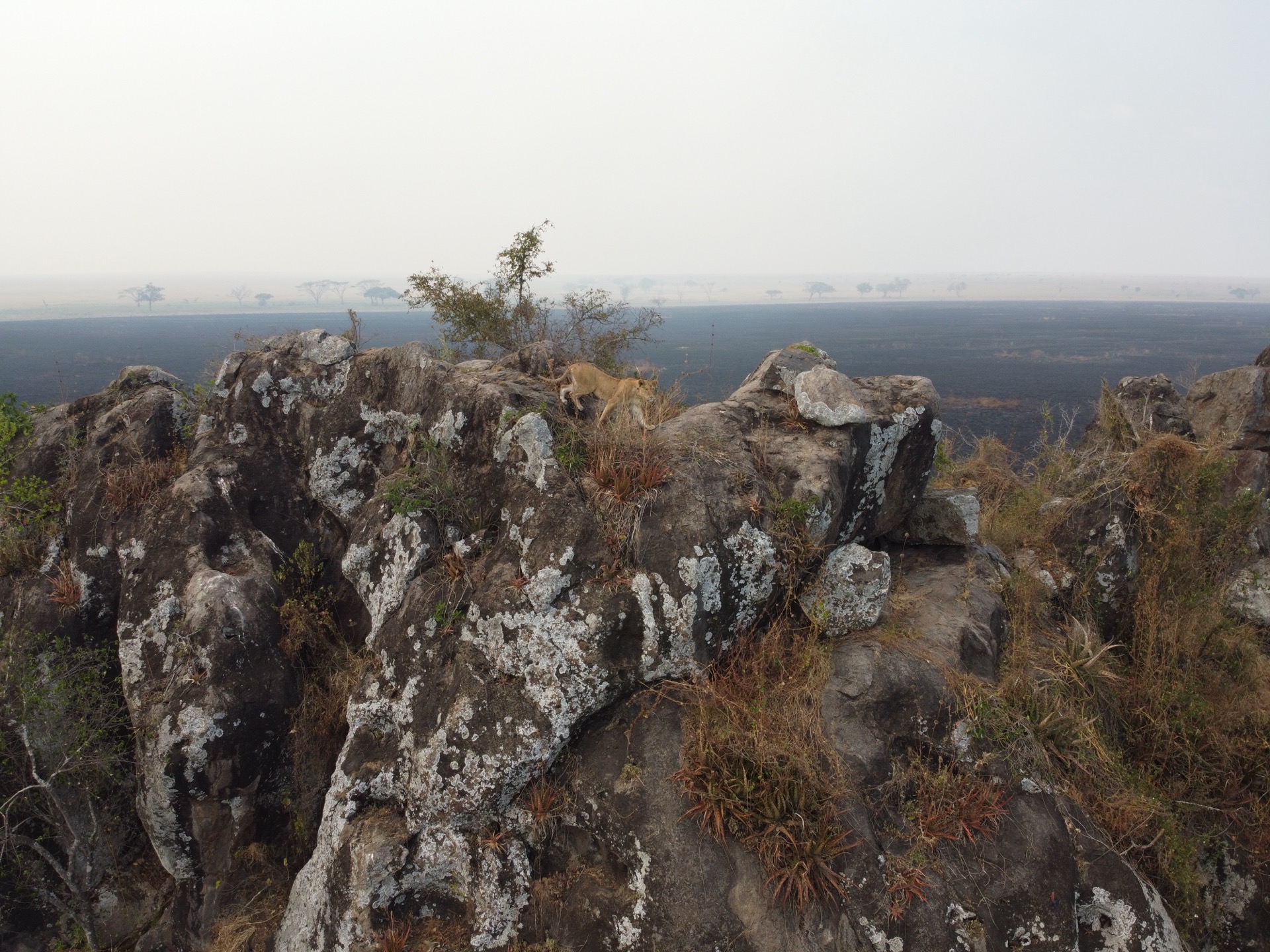
Tanzania
The Serengeti, the Great Migration, eight national parks, and a coastline that ends on Zanzibar. Here's how the pieces fit — and how to plan it without a commercial angle.
Tim Hennig — Northern Tanzania, July 2020
| Tanzania — At a glance | |
|---|---|
| Capital | Dodoma (official) · Dar es Salaam (commercial) |
| Safari circuits | Northern (Serengeti, Ngorongoro, Tarangire) · Southern (Ruaha, Nyerere) |
| Best months | June–October (dry season, best game viewing) 8 sources |
| Visa | Required · USD 50 single-entry on arrival for most nationalities 6 sources |
| Currency | Tanzanian Shilling (TZS) · USD widely used for safari costs |
| Park fees | Serengeti: USD 82.60/adult/day (peak) · Ngorongoro: USD 70.80/adult/day + crater fee 4 sources |
| Language | Kiswahili (national) · English (widely spoken in tourism) |
| Time zone | EAT (UTC+3) · No daylight saving |
| Gateway airports | JRO — Kilimanjaro International (northern circuit) · DAR — Julius Nyerere International |
Last verified: August 2026
Parks & regions
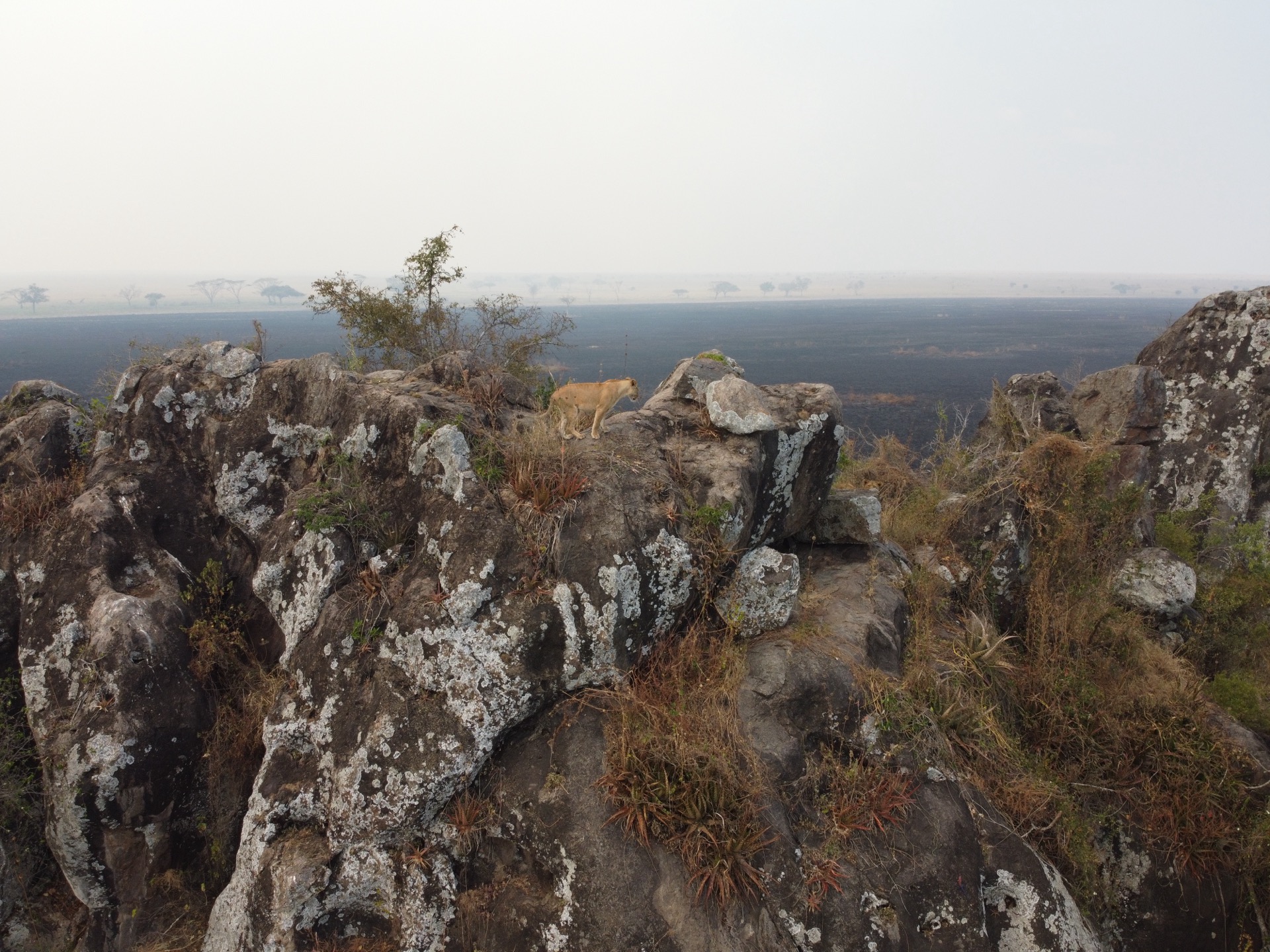
Serengeti National Park
- Best months: June–October (dry, north for crossings) · December–March (south for calving)
- Gateway: Kilimanjaro (JRO) → Arusha → 7–8h drive, or ~1h light-aircraft to central airstrips
- Signature: 1.3–1.5 million wildebeest, year-round predator density, Mara River crossings Jul–Oct
- Who it suits: first-time safari visitors, migration chasers, photography trips
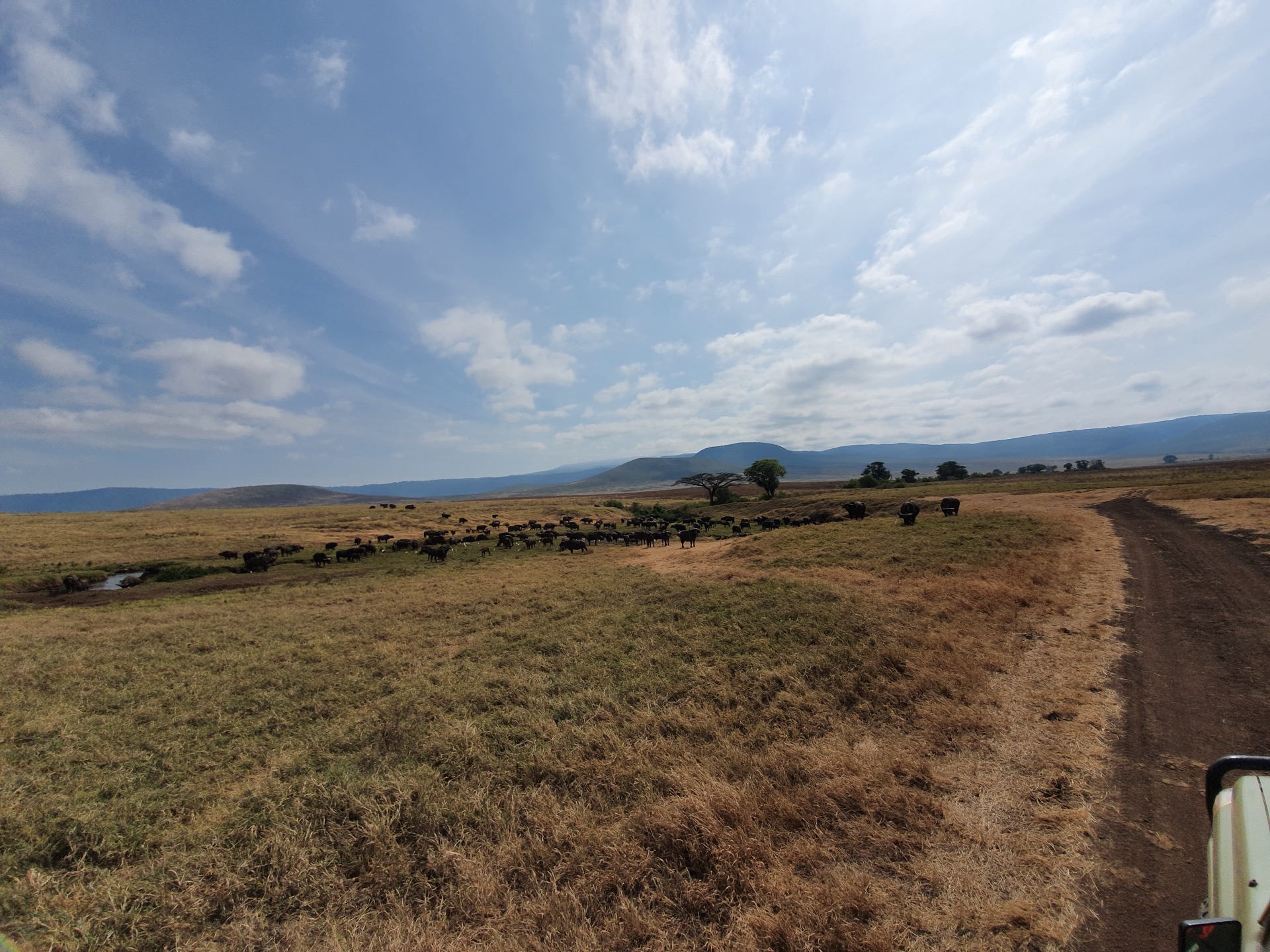
Ngorongoro Crater
- Best months: June–September (dry, cool on the crater rim); accessible year-round
- Gateway: Arusha → 3h drive; usually combined with Serengeti on the northern circuit
- Signature: world's largest intact volcanic caldera, dense Big Five population in one bowl, black rhino
- Who it suits: travellers who want guaranteed sightings in a compact area; pairs well with Serengeti
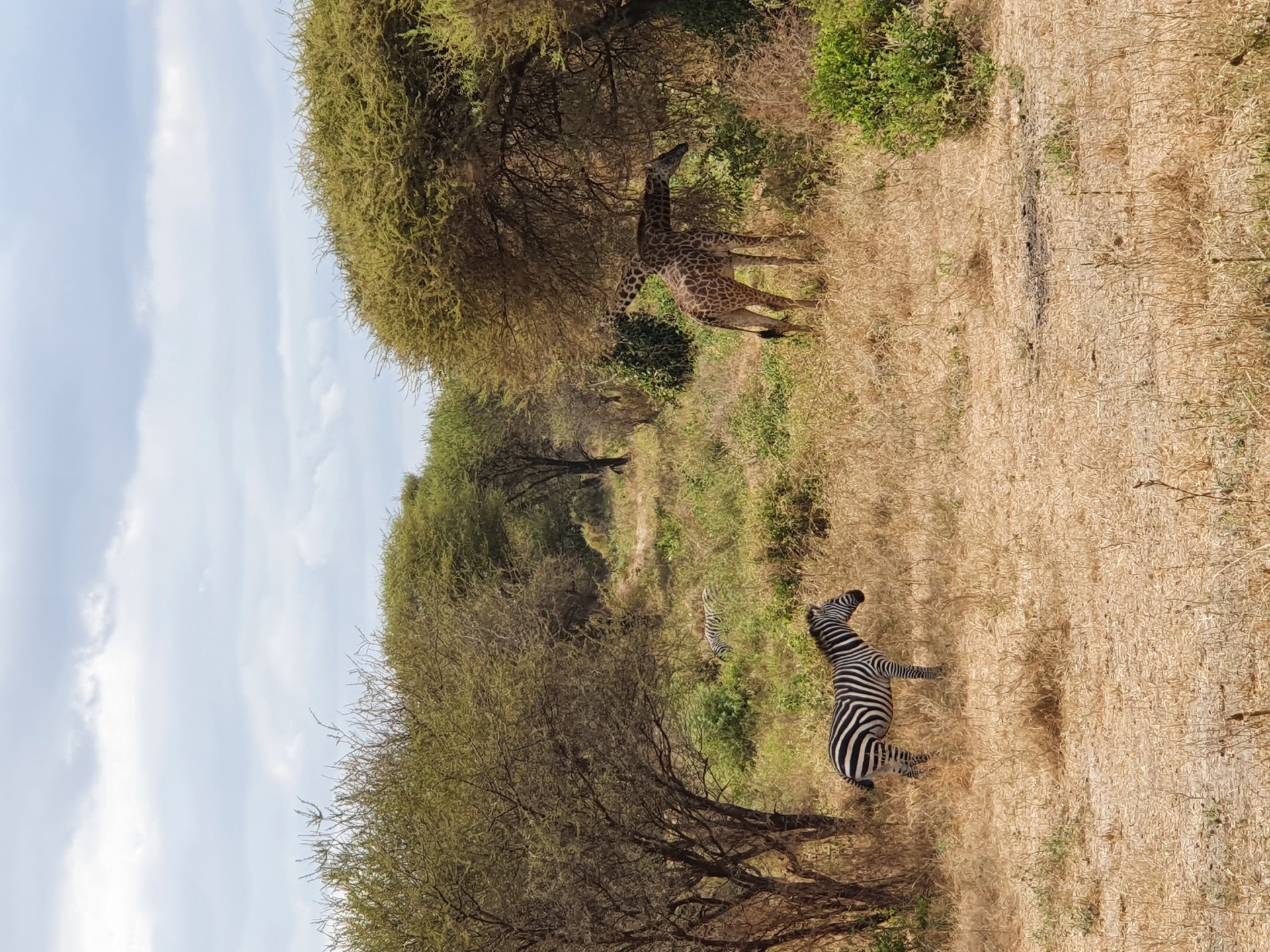
Tarangire National Park
- Best months: July–October (massive elephant herds at the Tarangire River, dry-season concentration)
- Gateway: Arusha → ~2h drive; often the opening leg of a northern circuit
- Signature: Africa's highest elephant density in the dry season, ancient baobab trees, tree-climbing lions
- Who it suits: elephant enthusiasts, second-time safari visitors, photographers wanting baobab landscapes
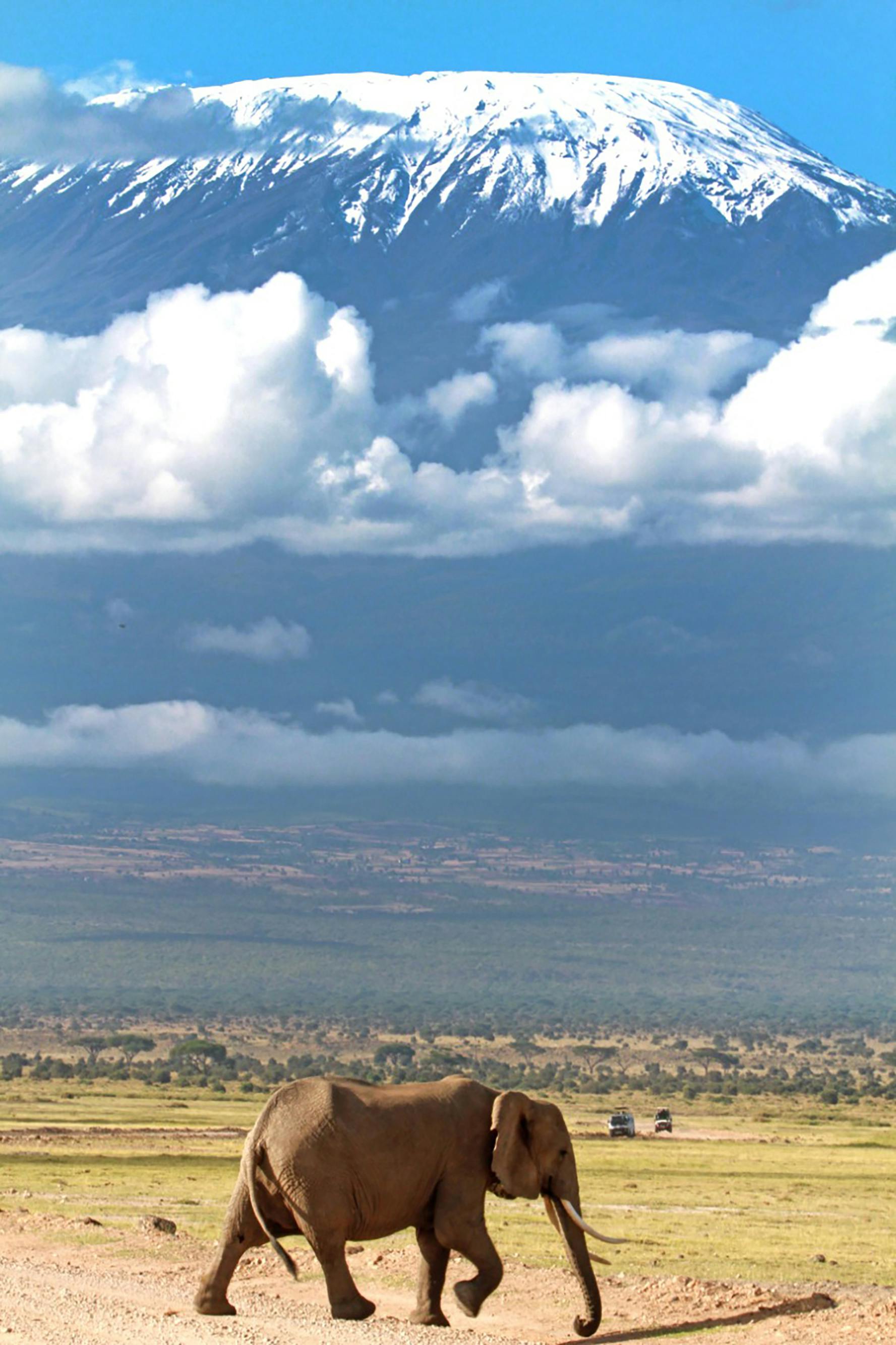
Mount Kilimanjaro
- Summit: 5,895 m Uhuru Peak on Kibo crater — highest point in Africa, highest free-standing mountain in the world
- Best months: January–March and June–October (dry windows); avoid April–May long rains
- Routes: Lemosho 8–9 days (best acclimatisation), Machame 6–7 days (most popular), Marangu (huts, lower success rate)
- Budget: USD 1,500–1,900 budget operators · USD 2,800–3,500 mid-range · park fee USD 82.60/day
- Ethical climbing: look for KPAP (Kilimanjaro Porters Assistance Project) certification when choosing an operator
Arusha — the northern circuit hub
Every northern circuit safari starts and ends in Arusha. It is the closest major town to Kilimanjaro International Airport (JRO, 50.6 km / 45–60 min), the staging point for all northern park routes, and where most operators, bush-flight connections, and logistics are based. Not a destination in itself, but understanding it makes the whole circuit easier to plan.
- Ngorongoro — 177 km / 3–4h drive
- Serengeti central — ~335 km / 5–6h drive or 1h light aircraft
- Tarangire — 118 km / ~2h drive
- Lake Manyara — 130 km / ~1.5–2h drive
When to go
The dry season, June through October, is the benchmark for Tanzania game viewing. Bush thins out, seasonal water dries up, and animals concentrate around permanent rivers and waterholes. This is when you see the most, and the northern Serengeti adds the Mara River crossings from July onward — the dramatic mass migrations across the water.
The calving season in the southern Serengeti runs roughly late January to March, when hundreds of thousands of wildebeest calves drop within a few weeks and predator action is intense. December through early March is also a short dry window with lower prices and lush green landscapes.
The long rains (Masika), April to May, are the only months to avoid on the northern circuit. Some camps close, roads can be difficult, and game viewing is harder with thick bush and scattered animals. But rates are at their lowest, and the southern circuit (Ruaha, Nyerere) handles the rains better.
Plan & practical
Trip types & itineraries
Frequently asked questions about Tanzania safari
How long do you need for a Tanzania safari?
A minimum of 5–7 nights on safari gives you enough time to cover 2–3 parks without spending most of your trip in transit. A week in-country (3 nights Serengeti, 1 night Ngorongoro, 1 night Tarangire) is the classic northern circuit. Add 3–4 nights on Zanzibar and you have East Africa's benchmark trip in 10–12 days. Longer is better — the migration rewards patience.
Is it possible to self-drive a Tanzania safari?
Technically yes, but practically uncommon and not recommended for first-timers. Road conditions vary widely, navigation in the parks requires experience, and a knowledgeable guide identifies animals and behaviour that most self-drivers miss entirely. Most operators use 4WD vehicles with pop-up roofs. Self-drives work best in Tarangire on day trips from Arusha.
What is the best park to see the Great Migration?
It depends on the time of year. For river crossings (the most dramatic spectacle), the northern Serengeti near Kogatende and the Mara River is the place — roughly July to October. For calving (equally dramatic for predator action), the southern Serengeti and Ndutu, January to March. The herds are somewhere in the ecosystem year-round. → Full migration calendar
Do I need vaccinations for Tanzania?
Yellow fever vaccination is required if you are arriving from a yellow fever endemic country. Otherwise, the standard recommendation is up-to-date hepatitis A, typhoid, and tetanus, plus malaria prophylaxis. Consult a travel clinic at least 4–6 weeks before departure — requirements change. → Entry requirements guide
Can I combine Tanzania safari with Zanzibar?
Yes, and it is the classic East African trip. Fly into Kilimanjaro (JRO) for the safari, then connect to Zanzibar International (ZNZ) — Precision Air and Coastal Aviation run multiple daily hops, roughly 1h direct or via Dar es Salaam. The dry season (June–October) suits both destinations perfectly. Most people do safari first, beach second.
Explore Tanzania
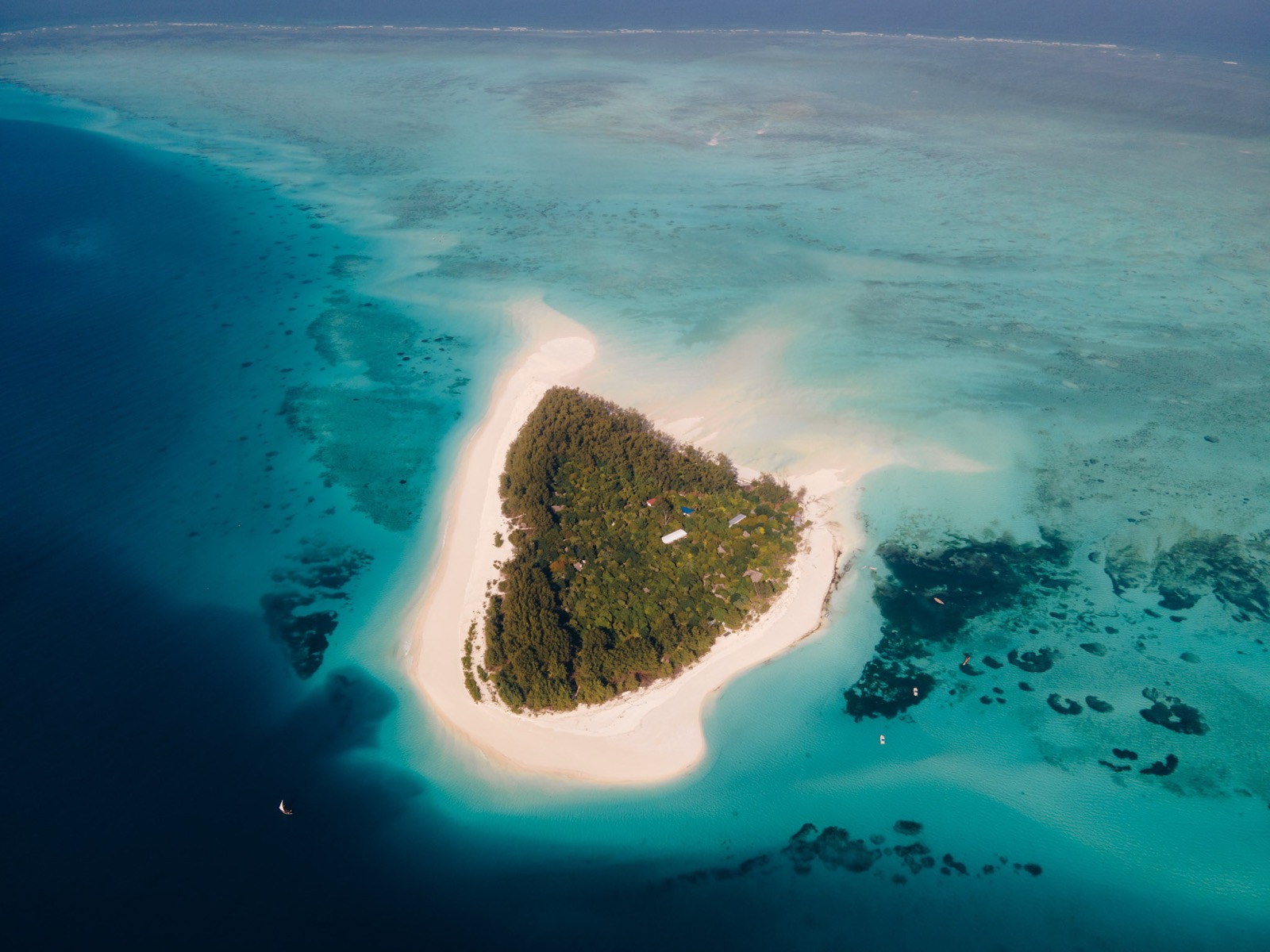

Tim Hennig, General Manager, Boutique Hotel Matlai, Michamvi Pingwe, Zanzibar.
I'm based on Zanzibar's east coast year-round and have travelled Tanzania's northern circuit. If you're trying to figure out how to combine safari and beach — parks, timing, budget, which combination makes sense for your dates — I'm happy to help directly.
Get in touch