
Facts & prices checked: 2026-06-24
The Serengeti covers roughly 14,763 km² and contains four entirely different ecosystems, each holding a different chapter of the migration at a different time of year. Choose the right one for your month and you get front-row seats. Choose wrong and you spend your game drives on transit roads. This guide is the zone map.
The zone mistake that ruins Serengeti safaris
Every August, guests arrive at camps in central Seronera expecting to witness the famous Mara River crossings — the classic migration image of thousands of wildebeest plunging into crocodile-filled water. What they get instead is a beautiful, but crossing-free, week in the central Serengeti. The crossings are happening. Just 80–100 km north.
I see this exact mistake made repeatedly, and it is not the traveller’s fault. Safari marketing uses the word “Serengeti” to sell crossings in August without making clear that the crossings happen in a specific corner of a park roughly the size of Northern Ireland. Booking a Seronera camp for an August trip is not a wrong Serengeti booking — it is a wrong zone booking. The difference matters enormously.
Zone selection is as important as month selection. Once you understand the four zones and what each delivers by month, the booking decision becomes simple.
Zone 1: Seronera and the central Serengeti
Seronera is the reliable heart of the park — the zone that never fully empties and the one that most first-time visitors base in. The reason is geography: the Seronera River runs through the centre of the park, providing permanent water that holds resident game all year regardless of where the migration herds are.
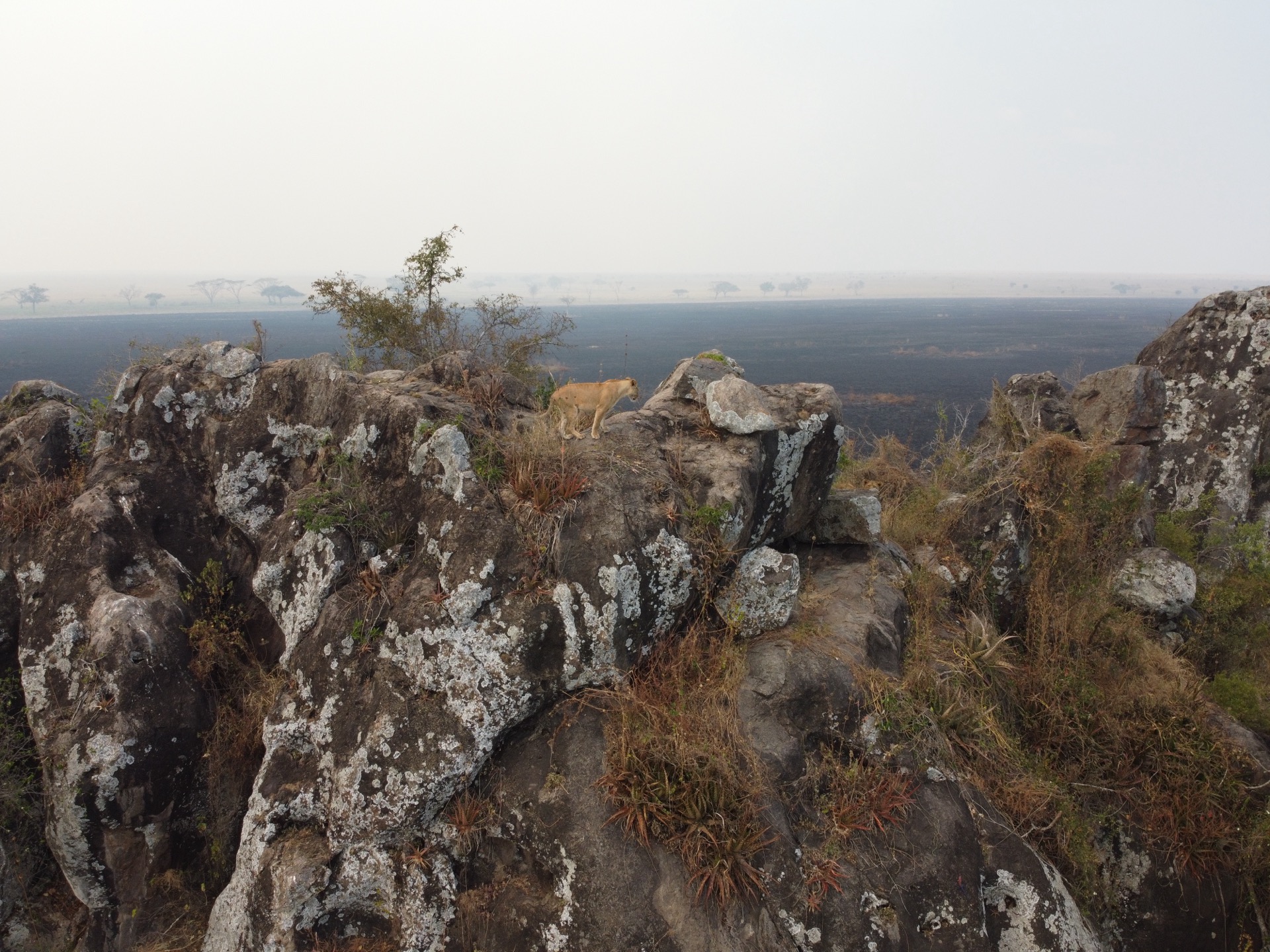
What Seronera delivers: The highest resident big-cat density in the Serengeti. The lion prides here have occupied the same kopje territories for decades, and the guides who work this circuit know individual animals by their ear notches. Leopards are reliably found in specific fig trees along the Seronera River — a good guide checks the same three or four trees on every morning drive. Cheetahs patrol the open plains on the Seronera’s fringes year-round. On a 4-night stay here, not seeing all three big cats would be genuinely unlucky. For a full comparison of Ndutu, Namiri Plains, and Seronera for cheetah sightings, see the Serengeti cheetah zones guide.
The honest trade-off: Seronera is the most-visited zone and the busiest at sightings. In peak months (July–September), you may arrive at a leopard sighting to find six or eight vehicles already waiting. This is the Serengeti at its most crowded. If you are there in November or January, it is a very different, much quieter experience.
When Seronera works best: Any month, but it shines outside peak migration windows. October and November — when herds begin drifting south through the central plains and vehicle numbers thin — is one of my favourite Seronera periods. The grass is greening after the short rains and the plains look cinematic.
When Seronera is not the right choice: August, if your primary goal is river crossings. June through September, if you specifically want to witness the northward migration spectacle. December through February, if calving is your target (Ndutu, two hours south, is where the action is).
Access: Seronera Airstrip is the main hub for the central park, with regular light-aircraft connections from Arusha, Kilimanjaro, and Zanzibar. It is also the entry point for overland travellers coming from Ngorongoro, which adds roughly 7–8 hours of driving from Arusha.
Zone 2: The northern Serengeti — Mara River country
The northern Serengeti around Kogatende and the Lamai Wedge is the most dramatic zone in the park during one narrow window — and that window is July through October.
This is where the Mara River forms the border between Tanzania and Kenya, and where the migrating herds pile up on the bank before launching themselves across. When a crossing goes — and it can take hours of watching before the herd commits — it is one of the most intense wildlife spectacles on earth. Crocodiles positioned in the current, wildebeest pouring in from bank to bank, the chaos of thousands of animals scrambling out on the far side. A single crossing can last 20 minutes and involve 5,000 animals.
What the north offers: Mara River crossings, July–October. The most active window is typically late July through September, with August and September as the statistical peak. Crossings are unpredictable on a given day — herds can wait at the bank for two days before going, or cross at dawn before you’ve had breakfast — so plan at least 3 nights minimum in the zone. A single-night itinerary to “see the crossings” is how people end up disappointed.
Why the north is worth the logistics: Despite being the most dramatic zone in August, the northern Serengeti has fewer vehicles per sighting than the equivalent area on the Kenyan Masai Mara side of the border. Because Kogatende is far from the main park gates, it is self-selecting for committed travellers. If crossing photography is important to you, this separation from the main tourist flow is meaningful.
Access: Kogatende Airstrip serves the northern camps and is the correct arrival point for river-crossing safaris. Seronera to Kogatende by light aircraft takes roughly 60 minutes. By road from Seronera, the northern crossing areas are 3–4 hours on game-drive roads — not unmanageable for a day trip but a significant burn of game-viewing time.
When the north is quiet: Outside July–October, the northern Serengeti holds resident wildlife (lions, elephants, some resident plains game) but the dramatic concentrations are gone. A November visit to the northern Serengeti without a specific reason — such as birding the transitional month — is better redirected to Seronera or the south.
Zone 3: The southern plains — Ndutu and calving season
The southern short-grass plains are the Serengeti’s most underbooked great experience. Wildebeest calving — the chapter that rivals the crossings for sheer wildlife intensity — happens here, and it gets less than a quarter of the marketing coverage of the August crossings.
From December through March, and peaking in February, hundreds of thousands of wildebeest converge on the Ndutu plains. The mineral-rich volcanic grass here produces the nutrition calves need to stand and run within minutes of birth. The result: a compressed, extraordinary few weeks during which predator-prey interactions happen at a density not seen anywhere else in Africa at any other time of year.
What calving season actually looks like: Lion prides position on the edges of the calving areas and hunt methodically. Cheetahs — faster and better suited to running down new calves — are seen hunting at close range on open plains with near-guaranteed sightlines. Hyena clans follow the herds through the night. On an active February morning, you can witness more kills before 09:00 than in a full week of dry-season game driving.
The Ndutu logistics: Ndutu lodges sit at the border between the Serengeti and the Ngorongoro Conservation Area — some technically inside the NCA rather than the national park. This affects which permits your operator needs but not your actual wildlife experience. Book camps positioned specifically in the Ndutu basin, not central Seronera camps, for February calving. The distance matters: driving from Seronera to the active calving areas adds 1.5–2 hours each way to your game drives.
When to go: Mid-January through the end of February is the peak window. December and March catch the margins — herds building and dispersing respectively — which are quieter but still good. April sees the herds beginning their northward drift and the southern plains thin out.
Why calving is underrated: August river crossings are photogenic and dramatic. But February calving offers equally intense drama with lower camp prices, fewer vehicles, and longer game-drive hours before the midday heat arrives. For a second or third Tanzania trip, the southern plains in February is the obvious upgrade.
Zone 4: The western corridor — Grumeti and the transit herds
The western corridor is the Serengeti’s least-visited zone, and if you are travelling in May or June specifically, it is the one to book.
The corridor runs westward along the Grumeti River toward Lake Victoria. The migration herds transit through here in May–June on their northward push from the southern plains, heading for the Mara River country in the north. Before they reach the Mara, they must cross the Grumeti — and the Grumeti has its own crossing drama.
The Grumeti crocodiles: The Grumeti River holds some of the largest Nile crocodiles in Africa. Adults here reach up to 5 metres in length. Unlike the Mara River — wider and with more escape routes — the Grumeti is narrower and the ambush is close. Grumeti crossings are violent and fast, with crocodiles positioned in the shallows in near-guaranteed intercept positions. This is a different spectacle to the Mara: smaller crowds, more concentrated kill.
Outside May–June: The western corridor is quiet. Resident hippos in the river pools, elephants in the acacia woodland, excellent birding along the river edge. For the hippo pods across all three Serengeti river systems — Seronera, Grumeti, and the Mara — see the Serengeti hippos guide. But the dramatic predator concentrations that follow the herds are absent. A June visit to the western corridor from a camp that also has game-drive access to the central Serengeti is a sensible combination — you get the Grumeti crossings plus a transition back to Seronera as the herds push north.
Remoteness: The western corridor is the most remote zone for vehicle access. Some road sections can be impassable after heavy rain (April–May), which is partly why this zone stays quiet even in May. If you are travelling in May, confirm with your operator that road access is viable for your specific dates.
Month-by-zone quick reference
| Month | Best zone | Primary reason |
|---|---|---|
| January | Southern Plains / Ndutu | Calving beginning, predators concentrating |
| February | Southern Plains / Ndutu | Calving peak — highest predator density of the year |
| March | Southern Plains / Central | Herds moving north, good predator action while it lasts |
| April | Western Corridor (if roads open) | Herds transiting north; long rains may limit access |
| May | Western Corridor / Grumeti | Grumeti crossings, fewer vehicles, crocodile drama |
| June | Western Corridor / Central | Grumeti crossings into northward push; transition month |
| July | Northern Serengeti (Kogatende) | Mara River crossings begin; herds arriving |
| August | Northern Serengeti (Kogatende) | Peak Mara River crossings, peak migration density |
| September | Northern Serengeti (Kogatende) | Crossings continue; still excellent |
| October | Northern / Central | Final crossings; herds beginning south return |
| November | Central Serengeti (Seronera) | Herds returning south, short rains, fewer vehicles |
| December | Central / Southern Plains | Herds building south, early calves possible |
Zone-hopping: combining zones on one trip
The most common question after understanding the zones: can I see more than one? Yes, with the right trip length and internal flights.
The 7-night split: A 7-night Serengeti trip in August could work as 3 nights Kogatende (Mara River crossings) plus 4 nights Seronera (resident big cats, central plains). Fly between zones — Seronera to Kogatende airstrip takes roughly 60 minutes by light aircraft. This combination gives you the crossings you came for plus the Seronera lion density that no month disappoints.
The February two-zone option: 3 nights Ndutu (calving peak) followed by 3–4 nights Seronera. Seronera in February has good big-cat activity as the resident prides benefit from the influx of calves drifting from the south. A flight between Ndutu and Seronera takes under 45 minutes.
What to avoid: Trying to cover three zones in a 7-night trip. Internal flights eat half-days, and each zone deserves 3 nights minimum to settle in and give the wildlife patterns time to reveal themselves. Two zones done properly beats three zones rushed.
Cost note: Internal light-aircraft hops add cost. Budget approximately USD 200–400 per person per sector depending on operator and aircraft. For a 7-night premium safari, this is worthwhile. On a tighter budget, pick one zone and commit to it fully — a 7-night stay in the right zone will always outperform a rushed three-zone itinerary.
Which airstrips serve which zones
Getting to the right camp means flying into the right airstrip. Here is the working list:
- Seronera Airstrip — Central Serengeti, Seronera zone. The main park hub. Most domestic flights to the Serengeti land here first.
- Kogatende Airstrip — Northern Serengeti, Mara River crossing area. The arrival point for all northern crossing camps. Seasonal: typically open June–October.
- Lobo Airstrip — Northern Serengeti, slightly south of Kogatende. Serves some north-Serengeti camps; further from the main crossing points than Kogatende.
- Ndutu Airstrip — Southern plains, Ndutu basin. Seasonal arrival point for calving-season camps. Confirm with your operator which strip your camp uses, as some use Seronera for the south with a ground transfer.
- Fort Ikoma Airstrip — Western Serengeti, outside the park boundary near the western corridor camps. Less commonly used but serves some Grumeti-area properties.
Always confirm your camp’s designated arrival airstrip when booking. The difference between landing at Seronera versus Kogatende and then driving is not a rounding error — it is 3–4 hours of game-viewing time.
For the timing dimension of this decision — exactly which weeks to travel for calving versus crossings — see the Great Migration calendar. For how the Serengeti fits into a full northern circuit including Ngorongoro and Tarangire, see the the full park overview. For costs, the the TANAPA entry fee breakdown covers the USD 82.60/adult/day TANAPA entry fee and how it is typically bundled. For a full northern circuit itinerary with real day counts, see the Tanzania 7-day safari guide. For families, check which zones have age restrictions on game drives in the traveling with kids on safari. If you’re considering the Kenyan side instead, our Serengeti vs Masai Mara comparison covers the cross-border tradeoffs in detail.
Frequently asked questions
What zone of the Serengeti is best for the Great Migration?
It depends entirely on the month. For river crossings (the most dramatic event): Northern Serengeti, Kogatende area, July–October. For wildebeest calving (predator concentration): Southern Plains / Ndutu, December–March, with peak in February. For the long migration journey between those two points (May–June heading north, November heading south): anywhere along the Central Serengeti or Western Corridor catches herds in transit. There is no single 'migration zone' — the herds circle the entire 14,763 km² park.
Is Seronera worth visiting even when the migration is elsewhere?
Yes, strongly. Seronera has the highest resident big-cat density in the Serengeti — the lion prides here have territories guides know by individual animals. Leopards use specific fig trees in the Seronera River valley that guides check on every drive. Cheetahs are more reliably seen on the Seronera plains than anywhere else in the park outside the southern calving season. A 3-4 night stay in Seronera in November is a very different but equally excellent Serengeti experience.
How far is Seronera from the Mara River crossings?
Approximately 80–100 km by road, or about 60 minutes by light aircraft from Seronera Airstrip to Kogatende Airstrip. By vehicle from Seronera, reaching the northern crossing areas takes roughly 3–4 hours of game-drive roads. This is why staying in the correct zone matters: if you base in Seronera in August hoping to drive out to see crossings, you burn most of your game-driving time on the road.
Can I visit multiple zones on one trip?
Yes — but budget for internal flights. The most efficient way to combine Seronera and the northern camps (or southern Ndutu) is a light-aircraft hop between airstrips. Seronera to Kogatende takes about 60 minutes. A 7-night Serengeti trip could split: 3 nights north (Kogatende for crossings) + 4 nights Seronera. Internal flights add cost but eliminate road transfer time between zones.
What is the Western Corridor and is it worth visiting?
The Western Corridor runs toward Lake Victoria along the Grumeti River. The migration herds pass through in May–June on their northward journey. The Grumeti River has some of the largest Nile crocodiles in Africa — ambush predators waiting for herds to cross. It is the least-visited zone and feels genuinely remote. Outside May–June, the Western Corridor is quiet with resident wildlife (hippos, elephants, birds along the river) but not the dramatic concentrations of the north or south. Worth visiting in May–June specifically; otherwise, Seronera or the north offer more.
What zone should I book for my travel month?
Quick guide: January–March → Southern Plains / Ndutu (calving and predators); April–May → Western Corridor / Grumeti (herds transiting north, but roads can be wet); June → Central Serengeti (herds beginning north migration, good transition); July–October → Northern Serengeti, Kogatende area (Mara River crossings); November–December → Central Serengeti (herds returning south, good big-cat season, fewer vehicles than August).