
Facts & prices checked: 2026-06-16
Ten days is the trip I quietly recommend more than any other. It is long enough to do the northern circuit properly and still land on the east coast with four or five nights to actually unwind, rather than collapsing for one night and flying home. Here is how it lays out, day by day, with the trade-offs I would tell you over a drink at the bar.
The shape of the trip
Three or four nights inland, one short flight, then four or five nights on Zanzibar. Do not be tempted to add a third region. People try to bolt on Tarangire, Lake Manyara, the southern parks and a north-coast beach all in ten days, and they spend half the trip in vehicles and on airstrips. Two regions, done well, beats five regions glimpsed.
Fly into Kilimanjaro (JRO), not Dar. It puts you an hour or so from Arusha and the start of the circuit, and you end the trip flying out of Zanzibar (ZNZ) instead of backtracking. If you want to add the Kilimanjaro climb to this trip, that is a separate 7–10 day commitment — it does not fit inside a 10-day itinerary unless you extend significantly.
Migration timing: what this itinerary actually catches
The wildebeest migration is a year-round loop, not a single event confined to one place or one month. Traditionally cited at roughly 1.3 million animals — though a 2025 Oxford satellite survey suggests the figure may be closer to 600,000, a debate that is genuinely unresolved — the herd moves clockwise through the Serengeti-Mara ecosystem across twelve months. Knowing which phase overlaps with your dates matters far more than any headline number.
January to March — calving season, southern Ndutu plains. The herd concentrates on the short-grass Ndutu plains in the south and southeast, with calving peaking in February over a roughly two-to-three week window. Predator pressure is at its annual maximum: lion, cheetah and hyena all converge on the dropped calves. If your 10-day window falls here, position your Serengeti nights in the south — at a Ndutu-area camp — not at the central Seronera lodges.
July to October — Mara River crossings, northern Serengeti. The crossing that fills every brochure: wildebeest throwing themselves into the Mara while Nile crocodiles wait below. Day-to-day timing is genuinely unpredictable; the herd may hold the bank for three days before moving at dawn without warning. For a real chance at a crossing, plan three to four nights in the far north — Kogatende or Lamai area — not the central Seronera. On a tight 10-day itinerary with only two Serengeti nights, this is difficult. Anyone who lists the Mara crossing as their single non-negotiable should extend to at least 12 days and include a dedicated northern camp leg.
April–May and November: avoid these months for safari. April and May are the long rains — muddy roads, some camps closed, unpredictable game movements. November brings the short rains building through the month. Both are lower-traffic windows with real limitations.
What a standard 10-day dry-season trip (June–October) delivers: reliable game viewing in all key habitats, year-round lion and elephant presence, and a reasonable chance of seeing migration movement — without any guarantee of a specific crossing. Come for the Serengeti as a whole ecosystem. The crossing is the drama; the plains in every season are the story.
Days 1-4: the northern circuit
Day 1 - Arrive, overnight near Arusha. Land at JRO, transfer to a lodge outside Arusha (45min-1h). You will be tired; this is a buffer night, not a sightseeing day.
Day 2 - Drive to Ngorongoro. Roughly 3-4 hours up to the crater rim, with a stop for lunch. Sleep on the rim so you are at the descent gate early.
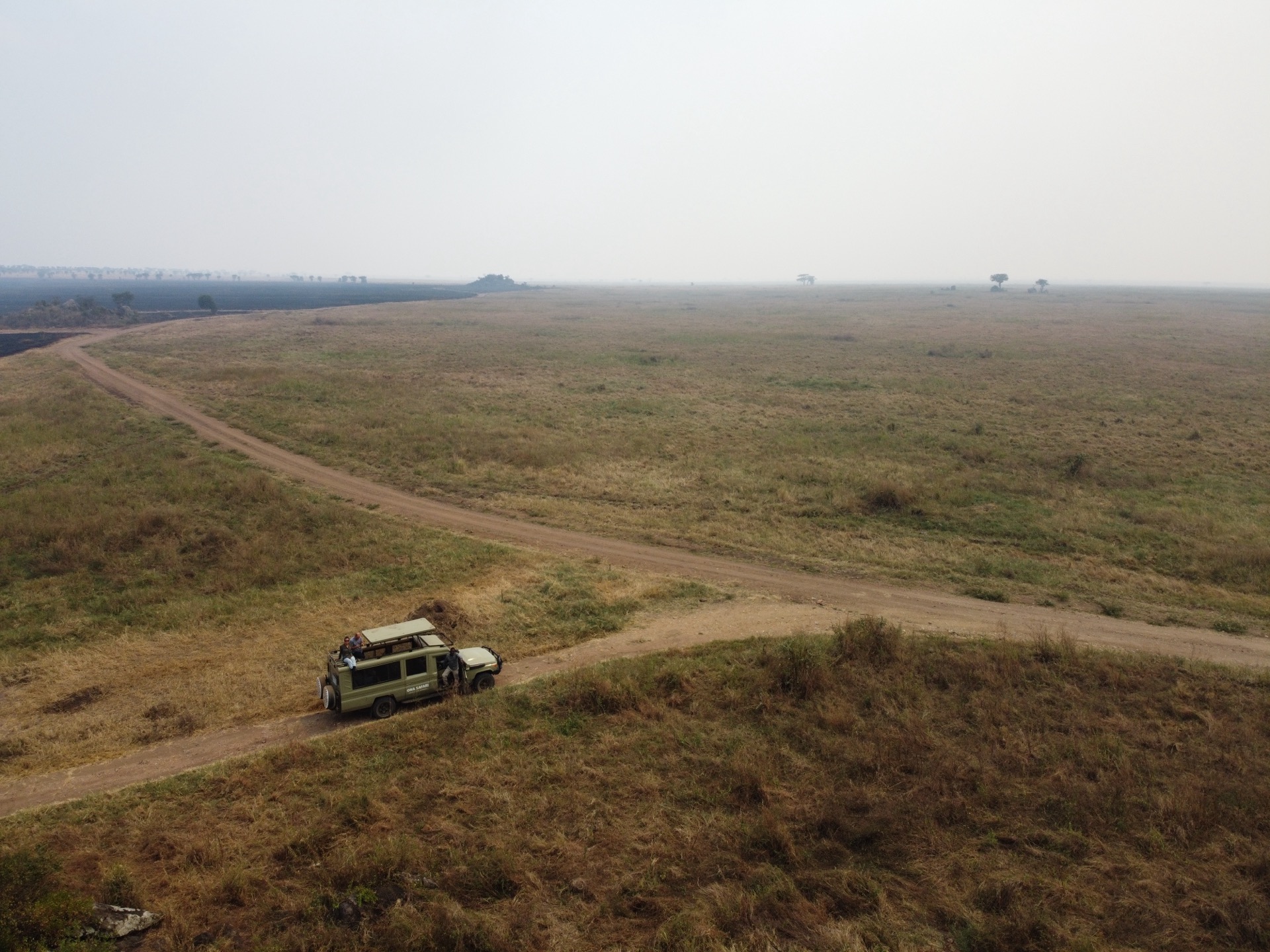
Day 3 - Ngorongoro Crater, then push into the Serengeti. Descend at first light for a half-day on the crater floor, lions, the resident black rhino if you are lucky, then drive on to the central Serengeti (Seronera) in the afternoon. It is a long day; some people instead split it and add a night. If your budget allows the extra night, take it.
Day 4 - Full Serengeti day. Morning and late-afternoon drives, the heat of the day spent back at camp. This is the day the trip earns its keep. Where the migration herds sit depends on the month: southern plains December-March, the western corridor and north mid-year.
A note on cost: the park and crater fees here are significant and change often, budget several hundred US dollars per person per day inside the conservation areas alone.
Day 5: fly to the coast
This is the leg that makes the whole thing work. A light-aircraft flight from a Serengeti airstrip (Seronera or similar) to Zanzibar runs around 2h-2h30 with a fuel or connection stop, versus a brutal full day back to Arusha by road. Bag limits on these flights are real, usually 15kg in a soft bag and nothing rigid; pack accordingly and confirm the exact limit when you book, as different operators and planes vary between 12kg and 20kg.
Pack everything for the safari into a soft duffel, not a hard-shell suitcase. At the end of the flight, you will likely route through Arusha or Dar before the short hop to ZNZ — some itineraries fly Seronera to Arusha, then Arusha to ZNZ directly, while others hop via Dar. Confirm the full routing when you book the internal leg, so you know whether you are spending an hour in an airside lounge or just walking across a small tarmac. I cover the connections, transfer times and what to expect at the ZNZ airport in detail on the getting-there page, link below.
Days 6-9: Zanzibar east coast
Land at ZNZ, transfer 1h15-1h30 to the east coast, Michamvi, Pingwe, Paje. I am biased, this is where I live and work, but the east coast is the right call after a safari: quieter than the north, long white beaches, and the kind of pace that suits people who have been getting up at 05:30 for days.
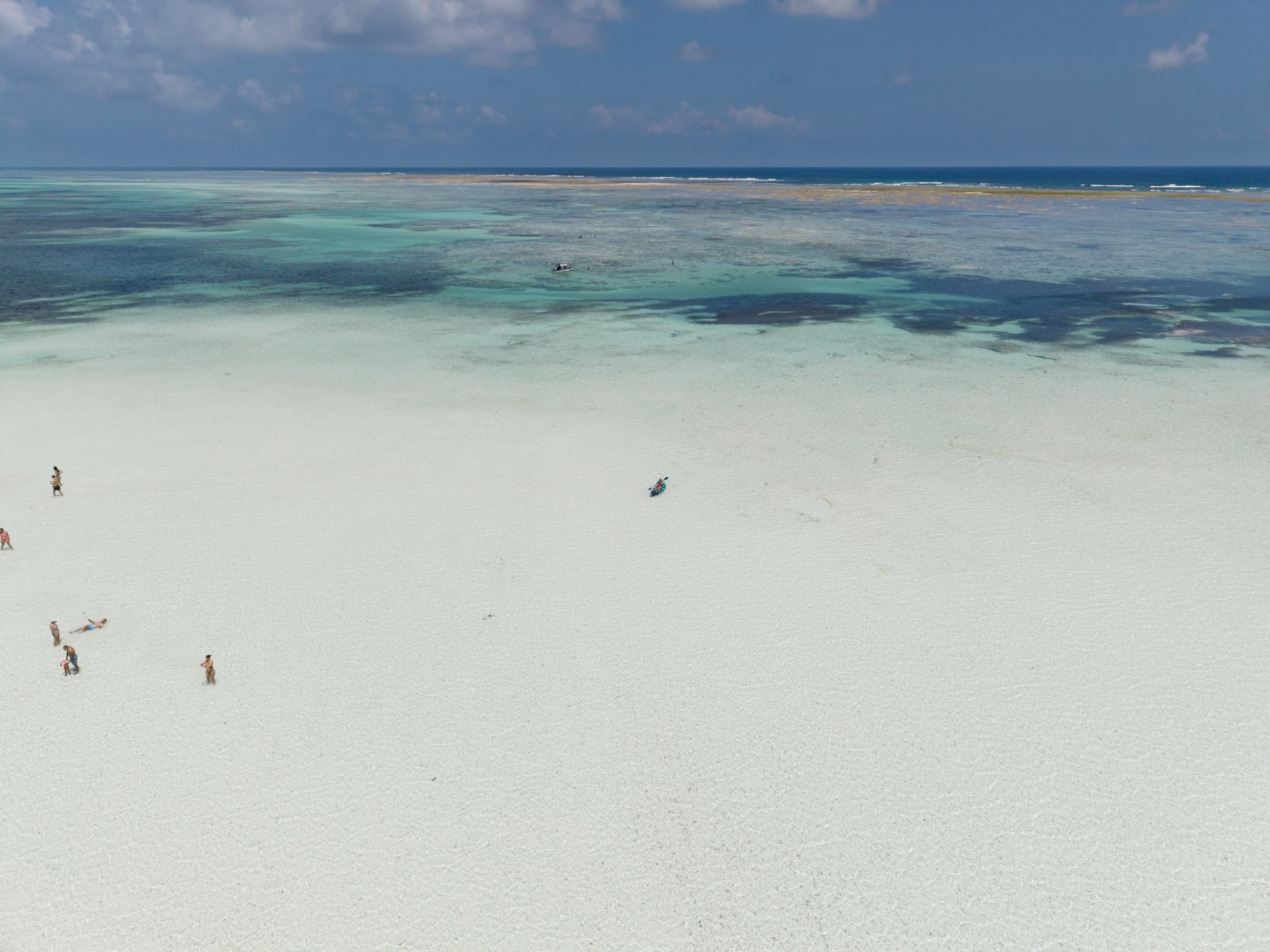
The honest trade-off is the tide. The east coast has a big tidal range; at low tide the swimming pulls back and you walk out across the flats, at high tide you swim off the beach. It is not a flaw, it is the rhythm of the place, and the dive and kite operators plan around it. If swimming at any hour is non-negotiable, factor in a hotel pool.
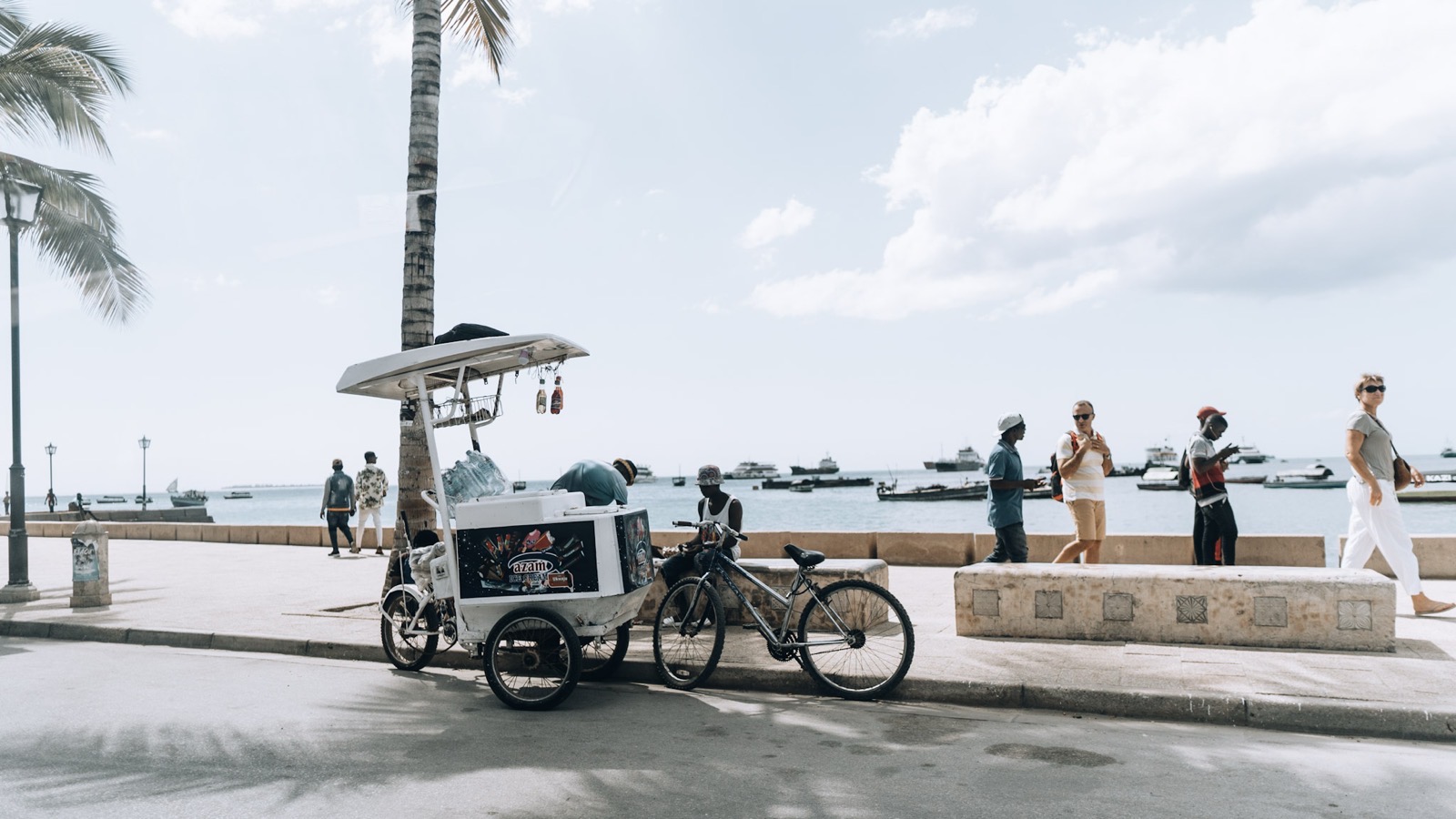
Fill the days lightly. A dhow sunset sail, a half-day in Stone Town (1h-1h15 each way), snorkelling at Mnemba, or simply nothing at all. After the bush, nothing-at-all is underrated.
What to skip: do not try to squeeze in a Stone Town overnight at the start and the east coast at the end. One base on the coast, with a day-trip into Stone Town, is calmer and cheaper than splitting hotels.
Day 10: fly home
Most long-haul departures from ZNZ leave in the evening, so you often get a final morning on the beach before the transfer. Confirm your international bag allowance, it is usually far more generous than the bush flight’s.
Who it suits, and the budget band
This itinerary suits first-time East Africa travellers, honeymooners, and anyone who wants wildlife and rest in one trip. It suits families with older children well. It does not suit hardcore safari specialists who want a week of nothing but game drives, they should drop the beach and add the southern parks.
All-in, plan USD 4,500-7,500 per person for mid-to-high range lodges, internal flights and fees. You can go lower with budget camps and simpler beach stays, or far higher with flying camps in peak season.
Variations: adjusting for more or fewer days
7 days: Cut the Ngorongoro overnight and do the crater as a day descent from a camp en route to the Serengeti. Drop to 2 nights in the Serengeti (tight but possible). Keep 4 nights on the coast — do not shorten the beach side, it is the recovery that makes the safari feel real.
12–14 days: Add Tarangire as your first stop (2 nights, excellent elephants in the dry season). Extend to 3 nights on the Serengeti for more migration coverage, and 5–6 nights on the east coast with a proper excursion day to Stone Town and one full-day snorkel at Mnemba. This is the trip that does everything without feeling rushed.
14 days with Kilimanjaro: Kilimanjaro adds 7–10 days on the mountain plus a day each side for altitude acclimatisation and descent. Combine it with a short beach stint: fly JRO, climb Kilimanjaro, 2 nights recovery in Moshi or Arusha, then a separate 5-day Zanzibar leg. The safari circuit and the mountain are difficult to pair in under 18 days without shortchanging one.
Getting there: the right flight approach from Europe
Most European visitors connect through one of four hubs — and the hub matters more than the airline.
Amsterdam (AMS) with KLM: The most direct option. KLM operates direct service to Kilimanjaro International (JRO) twice weekly, currently Thursday and Sunday, approximately 9–10 hours. No intermediate hub. The cleanest routing for a 10-day trip with tight margins.
Nairobi (NBO) with Kenya Airways: The busiest African hub for Tanzania connections. Kenya Airways flies direct to JRO from Nairobi, with connections from London, Amsterdam, Paris, and Rome. Connection times are typically 2–3 hours, manageable, and bags can usually be checked through to JRO. Some travellers add a Nairobi pre-trip night if the connection requires an overnight in Africa.
Addis Ababa (ADD) with Ethiopian Airlines: Competitive fares, particularly from Central and Eastern Europe. Ethiopian serves JRO and ZNZ directly from Addis. The ADD hub is a 24-hour airport and handles most African connections at any time of day.
Doha (DOH) with Qatar Airways or Dubai (DXB) with Emirates: Both serve ZNZ directly, which is convenient if you want to fly into ZNZ rather than JRO. The Middle Eastern hub airports are significantly more comfortable for stopovers of 3–8 hours than African hubs.
Multi-city booking: If you fly into JRO (safari) and out of ZNZ (coast), book as a multi-city trip — JRO inbound, ZNZ outbound. Most platforms handle this without issue, and it saves the cost and time of backtracking to the mainland airport.
Health and travel medicine: the 5-point pre-departure checklist
This is not a medical guide — but these five points prevent the most common mistakes.
1. Malaria: Northern Tanzania (including Zanzibar) is rated low-to-moderate malaria risk. Antimalarials are recommended for most visitors. Options: Malarone (Atovaquone/Proguanil), Doxycycline, or Lariam. Start before departure per your pharmacist’s instructions. Evening insect repellent on the coast is standard regardless of which antimalarial you use.
2. Yellow fever certificate: Required if arriving from a yellow fever risk country. Europe has no yellow fever transmission — most European visitors do not need this. But if your trip combines Tanzania with any West or Central African stop, confirm the requirement with your travel clinic.
3. Tanzania eVisa: Apply at evisa.go.tz. Processing: 7–14 working days. Apply at least 4 weeks ahead. Cost: USD 50 single entry. The same visa covers mainland Tanzania and Zanzibar.
4. Zanzibar ZIC insurance: Mandatory since October 2024. USD 44 per adult, USD 22 per child (under 17). Purchase at visitzanzibar.org. Checked in the jetway at ZNZ airport — uninsured passengers pay at the gate. Buy it at the same time as the eVisa; they are separate systems.
5. AMREF Flying Doctors: For anyone on bush flights or in remote parks, AMREF Flying Doctors emergency evacuation coverage (approximately USD 30–40 per person per week) is worth adding. Covers air evacuation from anywhere in East Africa to Nairobi. The risk on a 10-day safari is low — but the consequence of not having it if you need it is significant.
What to book in advance, and when
6–9 months ahead:
- High-end and luxury tented camp accommodation, particularly for July–August Mara River camps, which sell out almost a year in advance
- Christmas and New Year property bookings on both the mainland and Zanzibar
3–4 months ahead:
- Mid-range northern circuit lodges for the dry season (June–October)
- East coast boutique property bookings for July and August
- Internal bush flights — small aircraft have very limited seats, especially out of the Serengeti
4–6 weeks ahead:
- Tanzania eVisa — allow minimum 2 weeks, apply at least 4 to leave buffer for any resubmission
- Zanzibar ZIC insurance — can be bought right up to departure, but do it when you do the visa
- Travel insurance — buy when you make the first non-refundable payment, not just before you fly
1–2 weeks ahead:
- Stone Town excursions, spice tour, Mnemba snorkel — bookable through your hotel
- Airport transfers — have these confirmed before you land
Budget breakdown: where the money actually goes
On a mid-range version of this itinerary (per person, based on two adults sharing):
| Item | Approximate cost (USD) |
|---|---|
| Return international flights | 800–1,800 |
| Tanzania eVisa | 50–100 |
| Zanzibar ZIC insurance | 44 |
| Bush flights (Serengeti → ZNZ) | 400–700 |
| Safari lodge (4 nights, per person) | 1,200–2,400 |
| Park fees + crater descent (4 days) | 400–600 |
| Private vehicle + guide | 500–700 (shared across 2 people) |
| Zanzibar accommodation (5 nights) | 600–1,800 |
| Zanzibar meals, excursions, transfers | 300–600 |
| Tips (guide, camp staff, hotel) | 200–350 |
Total range: roughly USD 4,500–9,000 per person, with the safari quality tier and international flight cost being the biggest variables. Budget versions drop under USD 3,000 with camping safaris and guesthouses; flying camps in high season exceed USD 15,000.
Park fees decoded: the three layers most operators bundle invisibly
The budget table above shows aggregate costs. Inside the park-fee line are three separate charges — each applied per 24-hour period, not per calendar day — that most operators roll into a single all-in daily rate without itemising.
Layer 1 — Conservation entry fee per person. Serengeti: approximately USD 70–100 per adult per day for non-residents (the TANAPA tariff updates each year; verify at the point of booking). Tarangire: USD 59 per adult per day. Ngorongoro: approximately USD 70.80 adult entry per day; approximately USD 20 for children aged 5–15.
Layer 2 — Ngorongoro crater service fee per vehicle. This is the figure most itineraries bury. A separate USD 295 applies to each vehicle per crater descent, on top of the daily entry fee. Shared across four passengers that is USD 74 per person per crater visit. If your itinerary includes two separate descents, it doubles.
Layer 3 — Concession fees. Camps inside a national park or private concession often carry a further nightly fee per person, paid to the park authority or a community land trust. High-end Serengeti properties typically fold this into their published rate; budget camps outside the boundaries may not.
The arithmetic in practice. On a 4-night northern circuit covering one Ngorongoro crater descent and three Serengeti nights, combined park fees typically reach USD 400–600 per person before any accommodation, food or guiding cost. Ask for a fee itemisation before signing — if the operator won’t break it out, that tells you something about the rest of the quote.
Balloon safari. A shared hot-air balloon over the Serengeti costs USD 599 per person, covering the TANAPA ballooning permit of USD 40, camp transfer, and a champagne bush breakfast on landing. It is one of the few genuinely hard-to-replicate safari experiences anywhere. Book it when you confirm the lodge — flight seats sell faster than lodge beds in peak season.
If you are doing Zanzibar standalone — no mainland safari — the Zanzibar 7-day itinerary covers Stone Town, the spice tour, Safari Blue, Jozani, and east-coast beach time in a single week with real daily costs. Next, read how to get to Zanzibar for the flight connections, and the Zanzibar east coast guide to choose where on the coast to base yourself — if you want a boutique bay property, see the Matlai hotel at Michamvi Pingwe. Before you pack, our safari packing list covers the 15 kg duffel constraint and what actually earns its place on a northern circuit trip. For a full cost breakdown including the Ngorongoro crater fee and what operators don’t disclose upfront, see the Tanzania safari costs guide. The Tanzania safari preparation guide covers vaccinations, bush-flight luggage rules, tsetse fly clothing advice, and AMREF Flying Doctors insurance.
Frequently asked questions
Is 10 days enough for Tanzania and Zanzibar together?
Yes, and it is close to the sweet spot. You get 3-4 nights on safari and 4-5 nights on the coast without a single wasted day. Anything shorter and you are spending more time in transit than in the bush or the sea.
How much does a 10-day Tanzania and Zanzibar trip cost?
Plan on roughly USD 4,500-7,500 per person for mid-to-high range lodges, internal flights and park fees. Budget camping safaris and simpler beach guesthouses can pull it under USD 3,000; flying-camp Serengeti in peak season pushes well past USD 10,000.
What are the best months for this itinerary?
June to October is the dry-season standard, with strong game viewing and reliably good east-coast weather. Late December to February is the other window, hot and green with the calving season in the southern Serengeti. Skip the long rains in April and most of May.
Should I fly or drive between the parks and Zanzibar?
Fly the long legs. The bush flight from the Serengeti to Zanzibar saves you a full day versus driving back to Arusha. Driving the Arusha-to-Ngorongoro-to-Serengeti stretch is fine and scenic, but the coast leg should always be a flight.
Which Zanzibar coast suits the end of a safari?
The east coast around Michamvi, Pingwe and Paje. It is calmer, less built-up than the north, and a 1h15-1h30 transfer from the airport. You trade some swim-at-all-tides convenience for far better quiet, which after early game drives is exactly what you want.
Do I need to choose between Serengeti and Ngorongoro?
No, do both, they are next to each other. Ngorongoro Crater is a half-day in a contained ecosystem, the Serengeti is open plains you work over two or three drives. Pairing them gives you the fullest northern-circuit picture in the time you have.
What does the Great Migration actually look like on a 10-day trip?
It depends entirely on when you travel. January–March means calving season on the Ndutu short-grass plains — the most intense predator-prey period of the year, with lion, cheetah and hyena following dropped calves. July–October means Mara River crossings in the far north — you need at least 3 nights in the Kogatende area for a real chance. A standard 10-day dry-season trip gives reliable general game viewing year-round. No operator can guarantee a specific crossing event.
How do park fees work on a northern circuit safari?
Fees run in three separate layers per 24-hour period. (1) Park entry per person — roughly USD 70–100 per adult per day in the Serengeti, USD 59 in Tarangire. (2) A separate Ngorongoro crater service fee of USD 295 per vehicle per descent, on top of the daily entry. (3) Concession fees where applicable. Operators bundle all three into a single day-rate quote. Ask for the itemisation — combined fees on a 4-night northern circuit typically reach USD 400–600 per person before accommodation.