
Facts & prices checked: 2026-06-24
I talk regularly with guests who arrive from a travel agent or online booking platform with a vague price expectation — and are then surprised when the actual lodge invoice is higher. It is almost always a non-transparent fee structure. Here is the unvarnished version.
The three-layer rule for park fees
The most important thing first, because almost all websites get this wrong:
Tanzania national park fees consist of THREE separate layers, all charged per 24 hours:
- Person fee (conservation/entry fee): Per person, per day. This is what is usually quoted.
- Concession/accommodation fee: If you stay overnight inside a park, you pay an additional concession fee per person per night.
- Vehicle fee: Per vehicle, per day. On shared safaris: split between all passengers.
All published fees already include 18% VAT — but a lowball quote is sometimes built from the bare pre-VAT base rate, with VAT still to be added at settlement. This distinction almost never appears in the first price quote.
When comparing quotations: always ask “Are park fees fully inclusive of all three layers?”
Current park fees 2026 (non-residents)
| Park | Person fee/day | Notes |
|---|---|---|
| Serengeti | USD 82.60 | + concession fee for overnight stays |
| Ngorongoro | USD 70.80 | + USD 295/vehicle for crater descent |
| Tarangire | USD 59 | Cheapest northern circuit park; highest elephant density |
| Lake Manyara | USD 59 | Half-day park, often a day excursion |
| Kilimanjaro | USD 82.60/day | + camping USD 59/night or hut USD 70.80/night + rescue USD 23.60 |
| Jozani (Zanzibar) | USD 12 | Day ticket, mandatory guide included |
All published fees already include 18% VAT. Rates can change — official sources: TANAPA (tanapa.go.tz), NCAA for Ngorongoro.
Tarangire is Tanzania’s top destination for giraffe encounters — Maasai giraffe (Giraffa tippelskirchi) browsing the uppermost acacia and baobab foliage at park fees approximately 28% cheaper than the Serengeti. The Maasai giraffe behaviour guide covers necking combat (which can knock rivals unconscious), why the drinking posture is the most dangerous 30 seconds of a giraffe’s day, and the cardiovascular engineering — an 11 kg heart generating blood pressure twice that of humans — that makes the species possible at 5.5 m tall.
Ngorongoro in detail — why it costs more than it sounds
Ngorongoro is NOT a TANAPA national park — it falls under the NCAA (Ngorongoro Conservation Area Authority), a separate authority with its own fee structure.
Fee structure:
- Entry fee: USD 70.80/adult/day (VAT-inclusive)
- Children (5–15): USD 23.60/day
- Crater protection fee: USD 295/VEHICLE/descent (VAT-inclusive)
What this means: a jeep with 4 passengers pays for 1 day at Ngorongoro:
- Entry: 4 × USD 70.80 = USD 283.20
- Crater: USD 295
- Total: USD 578.20
Per person for a group of 4: USD 144.55. This rarely appears in the brochure price.
Total budgets by category
Budget camping safari
- USD 200–300 pp/day (includes parks, camping, vehicle, guide, meals)
- Sleeping: public campsites in or around the parks
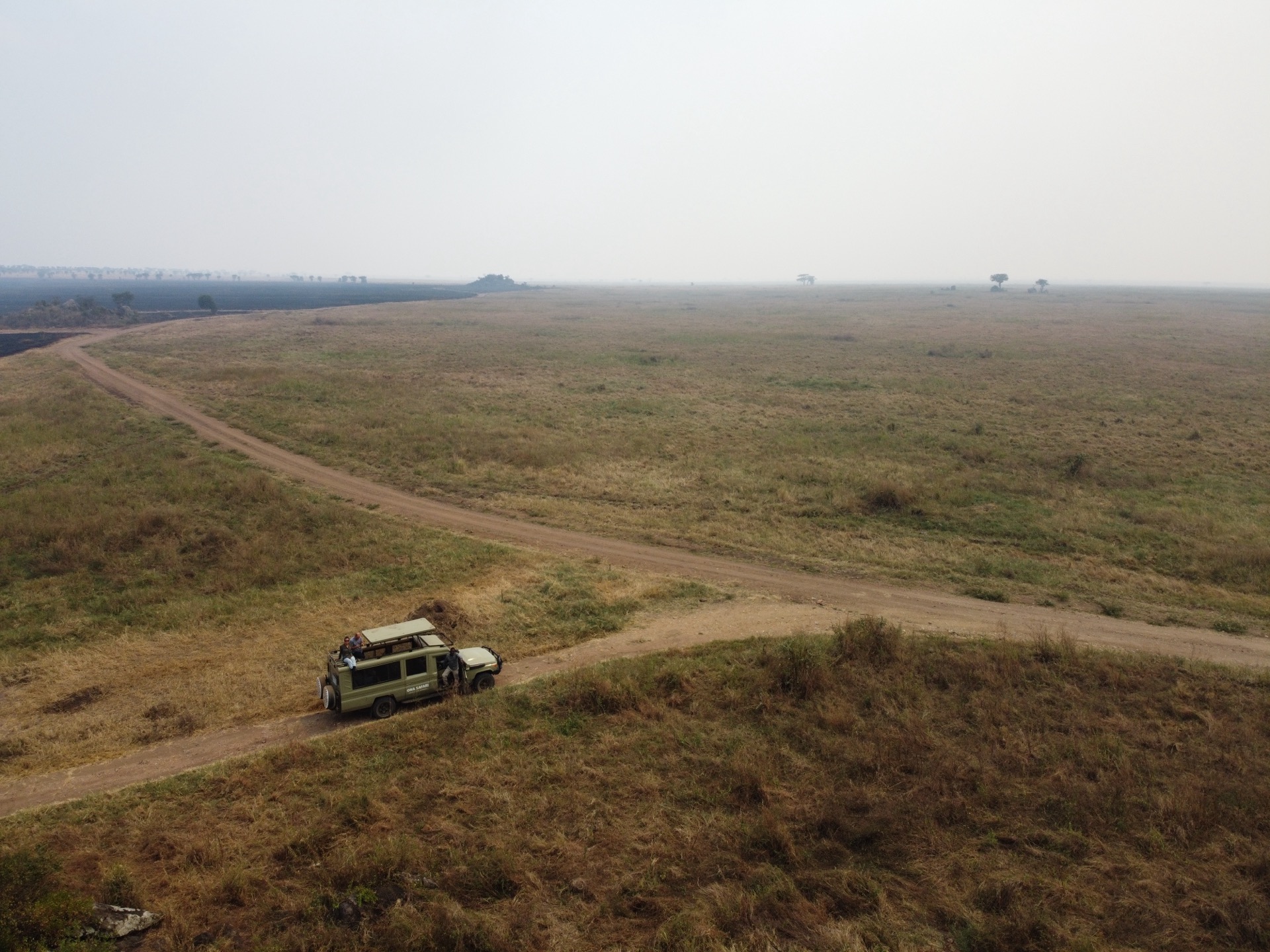
- Vehicle: shared with others (4–7 people)
- Meals: camp cooking, simple
7 nights Serengeti + Ngorongoro (budget): ~USD 1,400–2,100 pp (excluding flights)
Mid-range lodge safari
- USD 350–600 pp/day (all fees, lodge, full board, driver + guide)
- Sleeping: lodges and bandas on or near the parks
- Vehicle: shared or private
- Meals: lodge menu, typically good quality
7 nights northern circuit (mid-range): ~USD 2,450–4,200 pp (excluding flights)
Luxury tented camp / private camp
- USD 500–1,500+ pp/day (full-inclusive, private vehicle, alcohol sometimes included)
- Sleeping: private camps with luxury tents or private conservancies
- Vehicle: private, typically 2–4 people
- Meals: gourmet, often individually arranged
7 nights luxury: USD 3,500–10,500+ pp (excluding flights)
Understanding accommodation categories is central to building a Tanzania safari budget. The Tanzania safari accommodation guide covers the full spectrum — budget TANAPA public campsites (USD 35/night per person, hyenas common), mid-range tented camps (USD 100–300, full board, employed guides), high-end camps (USD 300–600, private vehicles), luxury sole-use (USD 600–2,000+), mobile camps that follow the Great Migration, and fly camp extensions. Includes the checklist for comparing camps and the guide-vs-room-rate argument.
Kilimanjaro: full fee calculation
For an 8-day Lemosho route (non-resident adults):
| Fee | Calculation | Amount |
|---|---|---|
| KINAPA conservation fee | 8 days × USD 70 | USD 560 |
| Camping fee | 7 nights × USD 50 | USD 350 |
| Rescue fee | 1 climb | USD 20 |
| Subtotal before VAT | USD 930 | |
| + 18% VAT | USD 167 | |
| Fees total | ~USD 1,097 |
Add: guide + porter team (USD 1,000–1,500 flat for the full crew), operator fee (equipment, transfers, meals). Total 8-day Lemosho route: USD 2,500–4,000 pp.
Tipping — the hidden cost factor
Tips are not a gesture of appreciation in Tanzania — they are the actual primary income for guides, drivers, and porters.
Guidelines:
| Role | Recommended/day | Basis |
|---|---|---|
| Safari guide (lead guide) | USD 15–20 | per person per day |
| Driver (if separate from guide) | USD 10–15 | per person per day |
| Camp cook/staff | USD 5–10 | per person per day |
| Kilimanjaro porter team (total) | USD 70–90 | per day for the whole team |
| Kilimanjaro lead guide | USD 20–25 | per day |
7-night safari with 1 guide + 1 driver: USD 175–245 in tips total for 2 people — not included in the safari price.
Tanzania’s cultural etiquette is practical once you know the core rules: greet before asking (Swahili culture places the relationship ahead of the transaction); cover shoulders and knees in cities and Stone Town; tip according to the established guide — see the Tanzania culture guide for Swahili greetings, Maasai photo etiquette, dress codes by context, and the right approach to tipping and giving.
What to check when comparing prices
Always ask:
- Are ALL park fees (entry + concession + vehicle + VAT) included?
- Is the Ngorongoro crater fee (USD 295/vehicle) charged separately?
- Is tipping for guide/driver included or extra?
- Are drinks included with meals?
- Shared or private vehicle?
Vehicle type and group size are two of the biggest variables in Tanzania safari cost — a private vehicle (exclusive use) costs USD 250–400 per day more than a shared booking. The Tanzania safari vehicle guide covers the Toyota Land Cruiser 70/76 pop-top configuration, seat allocation, shared vs private vehicle trade-offs, and the 7 questions to ask before you book.
Photography safaris have their own cost logic: a private vehicle (vs shared) adds significantly to the daily rate but gives full control over positioning, engine-off stops, and departure timing — all essential for serious telephoto work. The Tanzania photography safari guide covers gear choices (the 100–400mm zoom vs 400mm prime trade-off), the 15 kg soft-bag constraint on bush flights, which parks reward patience with exclusive shots, and why Ruaha and Nyerere deliver higher photography value per visitor despite less famous marketing.
Birding-focused safaris use the same parks and vehicles as standard game drives, typically at the same or slightly lower per-day cost — but with a specialist guide who carries a scope and builds species lists. Tanzania’s 1,100+ recorded species (including 53 confirmed birds of prey nationwide) include 500+ in the Serengeti alone; Lake Manyara’s flamingo flats (up to 640,850 flamingos in peak years), Tarangire’s 500+ species, and Zanzibar’s endemic Pemba sunbird add dimensions unavailable on a pure big-game focus. Our dedicated birding guide covers parks, species highlights, Zanzibar endemics, and how to add a birding specialist to a standard northern circuit.
Not comparable: A camping safari price with a lodge price. A budget operator with a luxury operator.
Northern circuit vs southern circuit — what costs what
Most European visitors plan the northern circuit (Serengeti, Ngorongoro, Tarangire, Lake Manyara). The southern circuit (Nyerere/Selous, Ruaha) is less known — and significantly cheaper for a comparable wildlife experience.
Northern circuit:
- Tanzania’s most popular route — high demand, stable high prices
- Serengeti: USD 82.60/person/day entry — the most expensive park on the circuit
- Lodges near Seronera (central Serengeti): highest demand, highest prices
- 7-night northern circuit mid-range: USD 2,500–4,500 pp (all-inclusive)
Southern circuit (Nyerere/Ruaha):
- Far fewer tourists — about 5% of the northern circuit visitor volume
- Park fees: approximately 30–40% cheaper than the Serengeti
- Accommodation: fewer lodges, but those that exist are often cheaper
- Practical advantage: boat safaris on the Rufiji (Nyerere) are often included — no extra excursion cost
- 7-night southern circuit mid-range: USD 1,800–3,500 pp (all-inclusive)
Who should consider the southern circuit: Visitors who would be bothered by the Serengeti’s July–August vehicle density, nature enthusiasts seeking rare species (African wild dogs, greater kudu, sable antelope), and budget-conscious travellers willing to trade the Great Migration spectacle for a quieter experience.
Ruaha in detail — Tanzania’s second-largest park at the lowest fee tier: Ruaha National Park covers 20,226 km² — bigger than the Serengeti alone — and charges USD 35.40 per adult per day (non-resident, 2024/25), the lowest fee tier of any major Tanzania safari park. Access is by domestic flight from Dar es Salaam to Msembe airstrip (approximately 1 hour 30 minutes; return flights USD 600–800 per person). The southern circuit standard combination is 3–4 nights in Nyerere plus 3–4 nights in Ruaha, connected by a 60–90 minute scheduled light-aircraft hop between airstrips. Ruaha’s dry-season draw is specific: wild dog denning in October–November (radio-collared packs with near-guaranteed morning sightings at the right camp), elephant concentrations along the Great Ruaha River, lion coalitions holding approximately 10% of the world’s lion population, and antelope species — roan, sable, lesser kudu — that do not exist on the northern circuit. Mid-range lodge rates run USD 450–650 per person per night; a 4-night Ruaha trip costs USD 2,500–5,500 per person sharing, depending on camp tier. The Ruaha guide covers the full park, species exclusive to the south, and the best camps by wildlife objective.
Walking safaris change the cost equation — most walking safari camps in Nyerere and Ruaha include guided walks in their all-inclusive rate rather than charging per walk. The trade-off is the camp rate itself tends to be premium (small guest count, specialist guides). The walking safari rules by park explains where walking safaris are permitted (Nyerere, Ruaha, private concessions — not Serengeti), what they actually involve, minimum age (12–16 depending on operator), and what fitness level is realistically required.
→ Nyerere (Selous) guide · Ruaha guide
Udzungwa Mountains — the third pillar of the southern circuit: Udzungwa Mountains National Park adds a completely different Tanzania experience to the Southern Circuit — USD 35.40 per adult per day (the same lowest fee tier as Ruaha and Mikumi), no flying costs required from a Dar-based circuit, bus access to Mang’ula gate, and budget camping inside the park. It is the only Tanzania park where the primary wildlife encounters involve two Critically Endangered endemic primates — the Iringa red colobus and the Sanje crested mangabey, both found nowhere else on Earth — and Sanje Falls (170 m, one of Tanzania’s tallest in the national park circuit). The park has no internal roads; all access is on foot. The Udzungwa Mountains guide covers hiking trails, endemic primates, birds, and how to combine it with Mikumi and Nyerere on a 10–12 day Southern Tanzania circuit.
Timing and costs in Nyerere: The park closes from end of March to May 31 (long rains). The cheapest open-season window is June and the Secret Season (September–December), when luxury camps like Roho ya Selous drop from USD 1,210 to approximately USD 950 per person per night — while wildlife quality remains high. Wild dog denning peaks in May–June, meaning the June reopening is also the strongest window for dog sightings. For a full month-by-month breakdown of what changes with the seasons and which window suits which priority, see the Nyerere best time to visit guide.
Seasonal price differences
Safari prices follow clear high- and low-season patterns:
| Period | Label | Price premium | Notes |
|---|---|---|---|
| Jan–Mar | Short dry / Ndutu | Low to mid | Calving season Serengeti; Ngorongoro green |
| Apr–May | Low season (rains) | Cheapest prices | Difficult roads, many lodges closed |
| Jun–Sep | High season | +30–70% above base | Great Migration, best wildlife viewing |
| October | Shoulder | Mid | Wild dogs active; Mafia whale shark season starts |
| Nov–Dec | Shoulder | Mid to high | New Year = most expensive nights of the year |
Concrete example: A mid-range Serengeti lodge that costs USD 600 pp/night in July can cost USD 350–400 pp/night in February. February game viewing in Ndutu (zebra and wildebeest calving) is often more spectacular than the equivalent July peak-season Serengeti circuit.
Booking strategy: For high season July–September: 6 months’ lead time minimum for popular camps. For shoulder October–November: 3–4 months.
Great Migration and costs: Timing a Tanzania safari around the Great Migration changes both what you see and what you pay. Calving season (January–March; Ndutu/south Serengeti) sees around 8,000 calves born per day at peak and the highest predator density of the year — typically 30–40% cheaper than high season and with far fewer vehicles. Mara River crossings (July–October; north Serengeti) are peak season — north Serengeti camps book up to 6 months in advance for August, and prices run 30–70% above low-season rates, but the crossing spectacle can justify it. The Great Migration guide breaks down every month of the circuit so you can match your budget and timing.
What is typically included in safari prices
This varies considerably by operator and category. The general rule:
Usually included:
- Full board (breakfast, lunch, dinner)
- Game drives (morning and evening)
- Park fees (if not explicitly listed separately)
- Driver/guide
- Drinking water during drives
Usually excluded:
- Alcohol (except at higher-end camps where it is often included)
- Tips
- Hot air balloon over Serengeti (USD 599 pp — always separate, never in the standard price)
- Laundry (sometimes included at luxury camps)
- Flights between camps (bush flights, USD 80–200/segment)
Always ask: “Is the beverage package included?” — Alcohol can add USD 200–400 over a 7-night safari if charged separately.
What people forget to budget for
Some safari costs land as unpleasant surprises because they don’t appear in the main quotation:
Hot air balloon (Serengeti): USD 599/person — always separate, never in the standard package. Spectacular experience, but optional and expensive. Confirm whether it’s on the lodge invoice or treated as an add-on.
Drinks: In mid-range lodges, drinking water is included; soft drinks are often included; alcohol is often separate (USD 5–12/drink). At luxury camps, “full board drinks” is frequently included. Ask before booking.
Internal bush flights: If your route involves flights between airstrips (Serengeti → Ngorongoro by plane rather than driving): USD 150–300/person/segment depending on distance and airline. Often listed as “light aircraft transfer” on a separate line. Note that bush flights impose a roughly 15 kg total soft-bag limit — hard suitcases are not accepted. The ban on camouflage clothing and the neutral-colour rule are two other Tanzania-specific requirements that catch first-time visitors off-guard. The Tanzania safari packing list covers the full checklist: what neutral colours to pack, why binoculars matter more than most cameras, which malaria prophylaxis options fit which itineraries, the Type G UK plug adapter requirement, and what to leave at home.
Maasai village visits: Most northern circuit operators offer Maasai village visits as optional extras, typically at USD 20–50 per person — sometimes included, more often charged separately at the boma. The standard visit (jumping dance, hut tour, beadwork market, roughly 1–1.5 hours) is partly theatrical rather than a genuine cultural encounter, but families do benefit economically and the ceremony elements are authentic traditions. If your safari touches the NCA or Tarangire corridor, budget for it as an add-on if it interests you, and lower your authenticity expectations for the standard format. For a full honest account of what village visits actually involve — and what more genuine cultural engagement looks like — our Maasai culture guide covers the cultural context, the age-grade system, the history of lion hunting and conservation, and which operators offer something beyond the standard programme.
Before you can plan the budget, you need to know what a Tanzania safari day actually looks like — and the practical details that affect your experience: the 15 kg soft-bag limit that shapes your packing decisions, the neutral clothing that works year-round, the USD cash you will need for tipping (USD 10–20 per person per day to your guide), and why staying silent at a waterhole for 20 minutes outperforms another circuit of the road. The Tanzania first safari guide covers all of this with a full day-by-day schedule, gear list, and honest expectations from the first game drive to the tip envelope at the end.
Medical evacuation insurance: AMREF Flying Doctors membership costs USD 30/person for 14 days — significantly cheaper than the alternative (a Medevac evacuation without insurance costs USD 10,000–50,000+). Not a hidden cost once you know it exists, but rarely mentioned in safari cost breakdowns.
Solo travellers: Single supplement and group-vs-private vehicle choice are the two cost factors that specifically affect solo visitors. Most lodges charge a solo occupancy supplement (ranging from a few hundred dollars per week to waived entirely in low season at certain operators). The workaround is booking a group joining safari from Arusha — shared vehicle, no single-supplement on the transport cost, natural social mixing with other travellers. The Tanzania solo travel guide explains both options clearly: joining safaris eliminate the supplement and connect you with other travellers; private vehicles give full schedule control at higher per-person cost — plus safety tips for Zanzibar and mainland Tanzania specific to solo visitors.
Children’s fees
Children pay reduced park fees on Tanzania safaris — but not everywhere and not always:
| Age group | Serengeti | Ngorongoro | Tarangire |
|---|---|---|---|
| Under 5 | Free | Free | Free |
| 5–15 years | ~50% discount | ~50% discount | ~50% discount |
| 16+ | Full price | Full price | Full price |
Lodge rates: Children’s rates vary significantly. Some lodges have no child option (adults only from 12+). Others offer “children’s rate” for under-12s (50–75% of adult price). Always confirm in advance.
Private vehicle with children: For families with children, a private vehicle is worthwhile — flexible breaks, own pace, no concerns about noise. Cost is roughly equivalent to 2 adults sharing a vehicle.
Family safaris have specific cost structures that reward planning: private vehicle hire (USD 250–350/day) is essential for families of 3+ — the flexibility to return early when a younger child needs rest outweighs the per-person savings of group seats. Most lodges offer 50–75% discounts for children under 12 sharing a room; children under 5 enter the main northern-circuit parks (Serengeti, Ngorongoro, Tarangire) free. The family safari planning guide covers age-specific recommendations, child malaria prophylaxis logistics, and the Zanzibar beach pairing as a structured rest phase. For the practical day-to-day logistics of travelling with kids specifically — Jozani and Prison Island timing, luggage limits, and Zanzibar’s compulsory child insurance — see Tanzania with children.
Adding a Zanzibar extension to a Tanzania safari is the standard combination — most travellers spend 3–7 days on the island after the game-drive circuit. For conservation-minded travellers, Chumbe Island Coral Park is the marine equivalent of the best safari parks: a short boat ride from Stone Town, the reef has been fully protected from fishing since 1994, and the result — 400+ fish species, 200+ coral species — is what East African reefs looked like before mass fishing. Overnight capacity is just 7 eco-bungalows (USD 280–400 per person per night, all-inclusive including mandatory government levies); day trips cost USD 90 per person plus a USD 25 conservation levy (USD 115 total) and include guided ranger snorkelling. The overnight experience is the reason to go: rangers interpret specific coral formations with scientific accuracy that no standard snorkel tour can match. The classic Stone Town day fills itself: a Zanzibar spice tour (USD 15–30 per person group; 2–3 hours at Kizimbani Farm or similar, 15 km from Stone Town; cloves, vanilla orchids, cinnamon bark, cardamom, ylang ylang) pairs naturally with a Stone Town walking tour — House of Wonders, the slave memorial, Freddie Mercury’s birthplace — in the same half-day. Lunch is often included at the farm. The spice tour guide covers which farms to choose, what you’ll see, and what to buy at the farm gate.
Zanzibar beach choice at the end of a Tanzania safari is among the most frequent questions we get. The key distinction: north coast (Nungwi, Kendwa) gives year-round swimming without tide-planning; east coast (Paje, Matemwe, Michamvi Pingwe) gives the shallow-water tidal flat photos, kitesurfing at Paje, and Mnemba Atoll snorkelling from Matemwe. For the complete beach-by-beach comparison — tidal patterns, who each beach suits, and which is most romantic — see the Zanzibar beaches guide.
On the north coast, Kendwa — 50–56 km from Stone Town, about 1 hour by road — is the Zanzibar sunset beach: west-facing, minimal tidal change (swimmable all hours, unlike the east coast which drains back hundreds of metres at low tide), and home to the Kendwa Rocks monthly full moon party. It sits 3 km south of Nungwi and works well as the final 3–4 nights of a northern circuit safari. The Kendwa beach guide has full logistics, accommodation range (budget bungalows USD 60–100, beachfront resorts USD 250–500), and a direct comparison with Nungwi.
Where you can genuinely save
Many costs on a Tanzania safari are fixed (park fees, VAT, vehicle size). But there are real savings if you know where:
1. Timing: The biggest lever. Same lodge, same package — in February often 30–40% cheaper than in August. And wildlife viewing in February (Ndutu, calving season) is often more spectacular than the high-season Serengeti crowds. Tanzania safari costs vary significantly by season — August–September peak typically costs 30–50% more than early dry-season rates in June, and green-season rates in March–May can be 60–70% lower at some lodges. The Tanzania best time to visit guide gives the month-by-month breakdown with wildlife conditions, migration timing, rainfall, and the case for the underrated February calving season versus the August river crossings.
2. Southern circuit: Nyerere (Selous) and Ruaha cost 30–40% less than Serengeti-Ngorongoro. Fewer tourists, similar or better wildlife density for certain species. For visitors not specifically seeking the wildebeest migration: a strong alternative.
3. Private safari for two: Two people sharing a private vehicle pay only ~15–20% more per person than in a group — but get: own pace, no strangers in the vehicle, more direct guide communication. For couples, the upgrade is often worth it.
4. Booking timing: Off-peak (October–November, January–March): 2–3 months’ lead time is sufficient. No 6-month advance booking required as in July. Some lodges offer 20–30% discounts on available capacity in late October.
What NOT to cut: A cheap operator with old vehicles, weak guides, or hidden fees saves upfront and costs later. Minimum quality: certified guide, vehicle under 5 years old, clear fee disclosure. For the full vetting process — TALA licensing, TATO membership, vehicle standards, and the exact questions that separate a legitimate operator from a risky one — see how to choose a safari operator in Tanzania.
The most cost-effective chimpanzee trekking in Tanzania is at Gombe Stream — reached by public boat from Kigoma (USD 3.50 each way) rather than the charter flights required for Mahale. The chimpanzee trekking permit at Gombe costs USD 100 per person versus USD 150 at Mahale, and park entry is USD 118/day; accommodation ranges from basic park bandas to mid-range lodges in Kigoma town. The Gombe trekking guide breaks down all logistics including boat options, permit costs, and how Gombe fits a western Tanzania circuit alongside Mahale and Katavi.
Deciding between Tanzania and South Africa on budget? The Tanzania vs South Africa comparison explains the self-drive Kruger option (lowest budget floor in Africa) versus Tanzania’s guided camp requirement, and when the Tanzania premium is worth paying.
Tanzania vs Kenya: for the Great Migration, both countries share the same wildebeest herd — the calving season (Ndutu, December–March) is Tanzania-only; the July–October river crossings happen on both sides of the border. Tanzania’s advantage for cost-conscious travelers: shoulder season savings (30–40% off accommodation in February); less crowded parks (significantly fewer vehicles per sighting than the Masai Mara in peak); and Zanzibar as a beach extension with no Kenyan equivalent. Kenya tends to run 20–30% cheaper for comparable quality lodges and has a more competitive budget-operator market. This side-by-side comparison has the full head-to-head.
Many Tanzania visitors add a Kilimanjaro climb to their safari itinerary — typically before the safari (so acclimatisation at altitude doesn’t compete with game drive energy) or after (with recovery time in Zanzibar). The Kilimanjaro routes comparison explains why route choice determines summit success (Lemosho 8-day: ~90%; Marangu 5-day: ~27–44%), what the park fees cover — USD 82.60/day conservation plus USD 59/night camping, VAT already included — and how to budget the climb alongside a northern circuit safari. A responsible mid-range 7-day Machame or 8-day Lemosho climb adds USD 2,800–4,000 to your Tanzania trip total.
Mount Meru trekking adds a distinctive 3–4 day option at USD 59 per person per day in Arusha National Park fees (USD 53.10 in low season) — substantially cheaper than Kilimanjaro — and doubles as acclimatisation for Kilimanjaro if you are combining both. The lower slopes of Meru pass through Arusha National Park (Cape buffalo, giraffes, Guereza colobus, flamingos on the seven Momella Lakes) making it the only African trekking route where an armed ranger is required because of buffalo. The Mount Meru trekking guide covers the full Momella Route, budget breakdown (USD 800–1,500 all-in versus Kilimanjaro’s USD 2,800+), and why the Kilimanjaro view from Meru’s summit at dawn is better than the Kilimanjaro summit itself.
→ Related guides: Tanzania safari preparation — vaccinations, packing, insurance · Tanzania northern circuit — full park sequence · Tanzania park fees — per-park breakdown · Zanzibar packing list — what to bring for the beach leg (dress code, reef sunscreen, ZIC insurance) · Mikumi — road-accessible safari from Dar es Salaam · Ngorongoro Crater — crater fee explained · Serengeti — season and costs · the main Tanzania guide
For the luxury end of the Tanzania safari market — private concessions, night drives, camp-size differences, and what USD 500–1,500+/night actually buys — see the luxury camp breakdown.
At the top end of Tanzania safari spend, mobile migration camps represent a distinct category — the Tanzania mobile camps guide explains what’s included, why they command premium pricing, and how they compare to permanent Serengeti lodges.
Frequently asked questions
What does a Tanzania safari cost per person per day?
Cost range by category (includes parks, accommodation, meals, transfer, guide): Budget camping safari USD 200–300 pp/day. Mid-range lodge (shared vehicle): USD 350–600 pp/day. Upper tented camp (private vehicle): USD 600–1,000 pp/day. Luxury private camp: USD 1,000–1,500+ pp/day. Rule of thumb: 7-night Serengeti/Ngorongoro mid-range costs approximately USD 3,500–4,500 pp all-inclusive, excluding international flights.
Why is Ngorongoro more expensive than expected?
Because Ngorongoro has two separate fees: (1) Standard entry fee: USD 70.80/person/day. (2) Crater descent fee: USD 295/VEHICLE per crater descent — not per person. A jeep with 4 people: USD 295 for the crater floor, so ~USD 74 pp. Per day with crater game drive: USD 70.80 + USD 74 = ~USD 145 pp in fees alone. This is frequently not disclosed in lower-priced safari quotations.
What exactly are Tanzania park fees?
Tanzania park fees consist of THREE separate layers, all per 24 hours: (1) Person fee (conservation/entry fee): per person, per day. (2) Concession/accommodation fee: per person, per night (for overnight stays inside the park). (3) Vehicle fee: per vehicle, per day. Published rates already include 18% VAT, but a lowball quote is sometimes built from the bare pre-VAT base rate with VAT still to be added at settlement — this is the most common transparency failure in online quotations — always ask whether the quoted figure is the final, VAT-inclusive rate.
What does Kilimanjaro cost in fees?
KINAPA fees (non-East African adults, 2024/25, already including 18% VAT): Conservation fee USD 82.60/person/day. Camping fee USD 59/person/night (all routes except Marangu). Hut fee USD 70.80/person/night (Marangu only). Rescue fee USD 23.60/climbing attempt. For an 8-day Lemosho route: 8 days conservation + 7 nights camping + the rescue fee comes to approximately USD 1,097 in fees alone.
Is tipping included in safari prices?
Generally NOT. Tipping for your guide and driver in Tanzania is a firm social norm, not optional. Guidelines: safari guides USD 15–20/person/day. Driver (if separate): USD 10–15/person/day. Camp staff: USD 5–10/person/day. Rule of thumb: 7-night safari, 1 guide + 1 driver = approximately USD 200–350 total in tips, which should be budgeted separately.
Is a group tour or private safari cheaper?
Group tours (shared vehicle, 4–7 people): cheaper per person, less flexible. Budget from ~USD 200 pp/day (camping) or USD 350 pp/day (lodge). Private safari (own vehicle + guide): more expensive per person but flexible — no waiting for others, own pace. From ~USD 500 pp/day. For two people: a private safari is often only 20–30% more expensive than a group trip and delivers significantly more value.