
Facts & prices checked: 2026-07-29
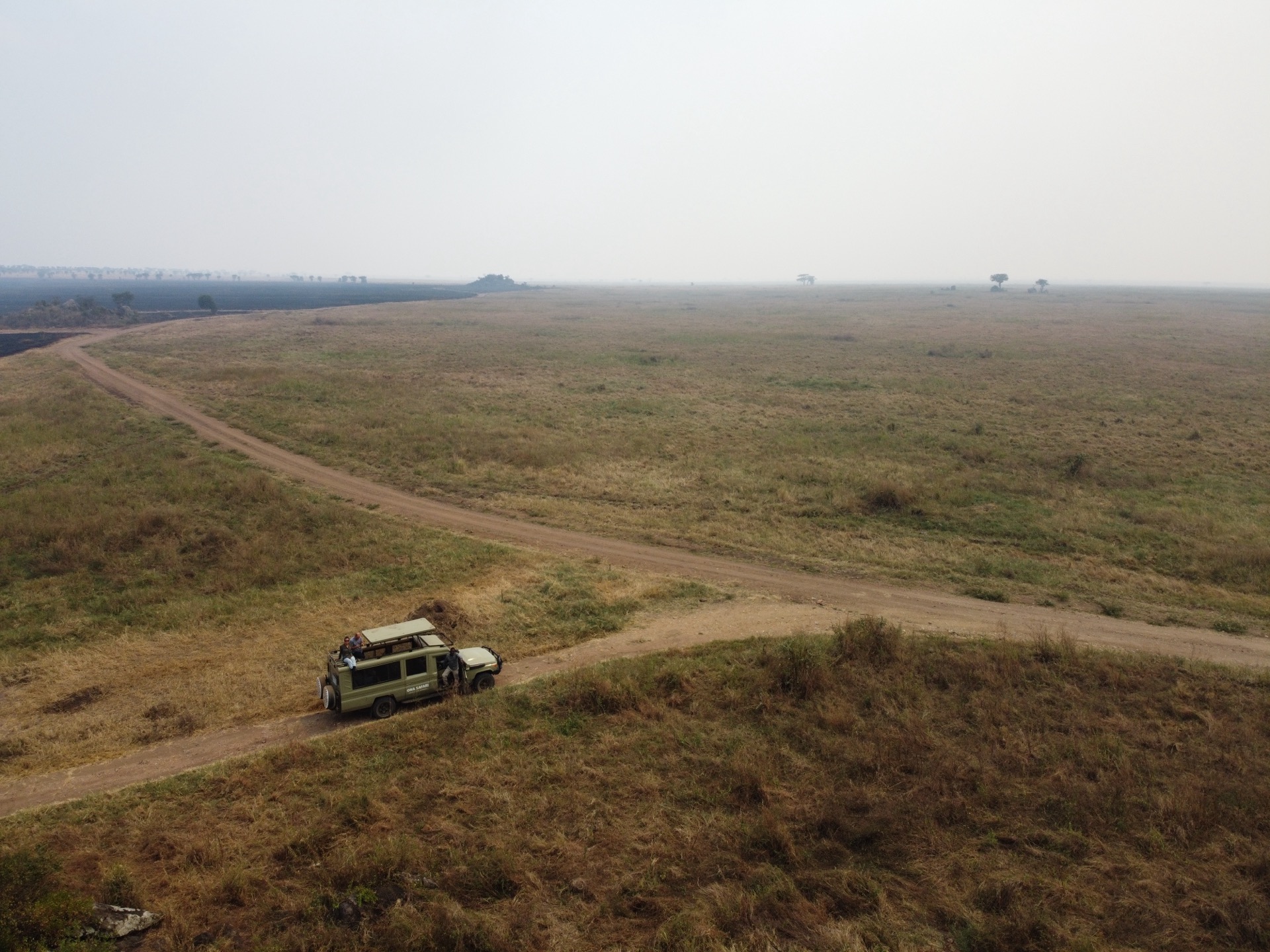
The first time I drove through the southern circuit I counted zero other vehicles during a morning game drive in Ruaha. I have been in the Serengeti during July where twenty safari cars encircled a single cheetah. The south is not worse — it is an entirely different kind of experience, and for a certain traveller it is the one they will remember longer.
Why the south is Tanzania’s least crowded secret
Tanzania’s northern circuit draws the bulk of the country’s tourism arrivals. The Serengeti, Ngorongoro Crater, and Tarangire are globally marketed, easy to reach from Kilimanjaro International Airport, and well-served by road links from Arusha. They are excellent parks for exactly those reasons.
The southern circuit — Nyerere National Park (formerly Selous), Ruaha, and Mikumi — receives a fraction of those visitor numbers. The parks lie in southeastern and south-central Tanzania, far from the main international gateway at Kilimanjaro. Most itineraries route through Dar es Salaam and require domestic flights rather than a simple road transfer. That combination of geography and logistics keeps the south quiet.
The practical effect for the traveller who makes the effort: game drives where you routinely have sightings to yourself, encounters with predators that do not come with an audience, and wildlife at a density that still impresses even after years of northern-circuit safaris. The southern circuit also carries lower park entry fees at two of its three parks. Ruaha and Mikumi both charge USD 35.40 per adult per day — versus USD 82.60 per day in the Serengeti or Nyerere.
The trade-off is real: logistics are more complex, accommodation options are fewer, and the remoteness that makes the south special also makes it harder to reach. Plan ahead, fly between parks, and allow more time than you think you need.
Nyerere National Park: boats, hippos, and the Rufiji River
Nyerere is the southern circuit’s anchor and its most distinctive park. At approximately 30,893 km² — about twice the size of the Serengeti — it is Tanzania’s largest national park and one of the largest in Africa. The park was carved from the former Selous Game Reserve in 2019, with the northern photographic zone becoming Nyerere (managed by TANAPA) and the southern hunting concessions remaining as Selous Game Reserve.
The Rufiji River runs through Nyerere’s heart and defines what makes it unique. This is the only major Tanzanian park that offers boat safaris. From a flat-bottomed motorboat on the Rufiji, you watch hippos in pods of 50 or more at close range, Nile crocodiles on the sandbars, and elephants coming down to drink at the bank — all at eye level, not from a vehicle three metres above the ground. The perspective changes everything. Add African fish eagle overhead, goliath heron in the shallows, and the silence broken only by the river current, and the Rufiji boat safari earns its reputation as one of Tanzania’s best wildlife experiences.
Wild dogs are Nyerere’s second headline. A 2025 peer-reviewed camera-trap survey recorded approximately 222 individuals with a density of 2.14 per 100 km², placing Nyerere’s population at an estimated 800–1,000 animals — Africa’s single largest documented wild dog population. The Selous-Niassa transboundary ecosystem (Nyerere plus Mozambique’s Niassa Reserve) is identified by scientists as one of the most critical remaining strongholds for the species globally, with fewer than 7,000 wild dogs surviving in the wild. The southern circuit’s signature wildlife moment — beyond the lions of Ruaha and the boat safaris of Nyerere — is the African wild dog. Tanzania’s Nyerere-Ruaha corridor holds one of Africa’s largest remaining populations. The hunting success rates and den-site timing covers both parks, the hunting success rate that makes them Africa’s most efficient predator, and the den-site observations that are unique to May–July.
Park fee: USD 82.60 per adult per day. Access: 30–45 minute domestic flight from Julius Nyerere International Airport in Dar es Salaam.
Ruaha National Park: Tanzania’s biggest and most remote
This southern circuit park covers 20,226 km², making it Tanzania’s second-largest national park by official area, set in the rugged landscape of the Iringa highlands about 130 km west of Iringa town. The Ruaha-Rungwa ecosystem as a whole spans approximately 50,000 km² — one of the most important conservation complexes in Africa.
The wildlife credentials are serious. Ruaha holds approximately 10% of the world’s lion population — a figure that sounds improbable until you run game drives and encounter five different prides in two days. One of the world’s largest elephant populations uses the park, alongside what Rough Guides describes as the largest giraffe population of any African reserve. The park checklist runs to more than 550 bird species across 80 recorded mammal species.
Wild dogs are present too: Ruaha holds Tanzania’s third-largest painted dog population, and the Ruaha Carnivore Project — working with the University of Oxford and wildlife research units — has reduced killings of wild dogs and other carnivores by 80% in its core study area over more than a decade. For a species with fewer than 7,000 individuals remaining worldwide, Ruaha is a critical refuge.
What Ruaha does not have is crowds. You fly in, you may be the only group at a sighting, and the size of the park means even in peak season the road network feels empty. Greater kudu and roan antelope are common here — species that barely register in the northern circuit. Sable antelope, rare elsewhere in Tanzania, are present in the Ruaha ecosystem.
Park fee: USD 35.40 per adult per day. Access: approximately 1.5–2 hours by light aircraft from Dar es Salaam.
Mikumi National Park: the accessible entry point
This park is the southernmost of the three parks and the one most different from the others. At 3,230 km² it is smaller, more manageable, and — critically — reachable from Dar es Salaam by road in approximately 5–6 hours via the A7 highway toward Morogoro. The park lies 300–320 km from Dar. Tanzania’s main A7 highway bisects the park, which makes Mikumi the most road-accessible major national park from Dar es Salaam.
That accessibility is Mikumi’s defining characteristic. For travellers who cannot afford fly-in costs, or who have only 2–3 days for a safari without the complexity of domestic flight logistics, Mikumi offers a credible alternative. Wildlife includes lions, elephants, hippos at the Hippo Pools, buffalo, zebra, wildebeest, and giraffes. The Mkata floodplain in the northern section of the park holds good concentrations of large mammals.
Mikumi is not Ruaha. The wildlife density and landscape scale are smaller, the park gets more day visitors from Dar (including school groups), and road noise from the highway is occasionally audible. But as a southern-circuit entry point — or as a 2-night standalone trip from Dar before or after Zanzibar — Mikumi delivers genuine safari value at a park fee of USD 35.40 per adult per day.
Southern vs. northern circuit: honest comparison
| Northern circuit | Southern circuit | |
|---|---|---|
| Anchor parks | Serengeti, Ngorongoro, Tarangire | Nyerere, Ruaha, Mikumi |
| Base | Arusha (road access) | Dar es Salaam (fly-in) |
| Park fees (typical) | USD 59–82.60/day | USD 35.40–82.60/day |
| Vehicle congestion | High at peak season | Near zero |
| Wild dogs | Rare | Common (best in Africa) |
| Boat safaris | Not available | Nyerere (Rufiji River) |
| Walking safaris | Limited | Available (Nyerere, Ruaha) |
| Great Migration | Serengeti (seasonal) | Not present |
| First-timer rating | Excellent | Better for repeat visitors |
| Access | Road + domestic flights | Primarily fly-in |
The comparison is not a verdict — it is a description of two genuinely different products. The north is the world’s best classic safari. The south is the world’s best antidote to a classic safari.
Both Nyerere and Ruaha offer walking safaris — the foot-level experience that TANAPA national park rules restrict in the northern circuit. The armed ranger rules and fly-camp circuits covers armed ranger requirements, fly-camp circuits, and what to expect at each southern circuit park.
Who the southern circuit is for
The southern circuit consistently suits one type of traveller: someone who has been on safari before and wants the experience without the other vehicles.
Photographers find the south more rewarding for exactly this reason — you can position your vehicle for a shot without navigating around three other cars. Wildlife encounters last longer when there is no pressure from a convoy of vehicles cycling through. At a wild dog sighting in Nyerere I once watched a pack for 40 uninterrupted minutes with no other vehicle. In the Serengeti’s central Seronera area during July, the same sighting would have attracted a dozen vehicles within ten minutes.
Wild dog seekers have a clear reason to choose the south: nowhere else in Africa offers a better chance of a sustained encounter with African painted dogs than Nyerere or Ruaha. Choosing between the two is not obvious — Nyerere holds the larger population (800–1,000 individuals, 2025 data) and a GPS collar network for locating packs, while Ruaha offers greater solitude and lower park fees (USD 35.40 vs USD 82.60 per day). The Nyerere vs Ruaha wild dog guide breaks down all the differences — season, cost, sighting reliability, and which park suits which type of traveller.
Travellers combining safari and coast benefit from the Nyerere-Zanzibar routing — fly Dar to Nyerere, safari for 3–5 nights, fly back to Dar, then either the 20-minute domestic flight or the 2-hour fast ferry to Zanzibar. The total transfer between Nyerere and Zanzibar is under 3 hours, making this one of the most efficient beach-and-safari combinations in East Africa.
Logistics: how to combine the southern parks
Dar es Salaam is the gateway. Julius Nyerere International Airport handles all international arrivals, and domestic departures to both Nyerere and Ruaha originate here.
The standard southern circuit itinerary pairs Nyerere with Ruaha: fly into Nyerere (30–45 min from Dar), spend 3–4 nights on boat and vehicle safaris, then take the 60–90 minute light-aircraft hop from Siwandu or another Nyerere airstrip to Msembe or Jongomero in Ruaha, spend 3–4 nights, and fly back to Dar. Total: 7–8 nights on safari, two entirely different ecosystems, negligible wildlife overlap between the parks.
Mikumi can be added as a road-accessible standalone — drive from Dar, 2 nights in the park, return to Dar. It works well as either the first night before flying deeper south, or as a standalone 2-night trip for travellers without fly-in budget.
Return light-aircraft flights between Dar es Salaam and Ruaha run approximately USD 600–800 per person. Budget the inter-park flight between Nyerere and Ruaha at roughly USD 200–300 additional. A 4-night Ruaha stay runs approximately USD 2,500–5,500 per person sharing depending on lodge category. It is not a cheap circuit — the remoteness premium is real — but the park fees at Ruaha and Mikumi are meaningfully lower than the northern equivalents.
One route this circuit does not run on: the TAZARA railway. The line cuts through this same undervisited swath of southern Tanzania on its way to Zambia, but it’s built for cross-border travel, not park access — there’s no TAZARA stop that gets you into Nyerere, Ruaha, or Mikumi. If the idea of that landscape by rail still appeals, our TAZARA railway guide covers the 1,860 km journey it actually is.
Best time to visit
July to October (dry season) is the prime game-viewing window for all three southern parks. Wildlife concentrates at permanent water sources, vegetation is low enough to see clearly, and the Rufiji River boat safaris operate at their best. Tracks in Ruaha and Nyerere are firm, and virtually all camps are open.
March to June (shoulder and denning season) is particularly interesting for wild dogs: packs anchor near den sites while pups are young, making sightings significantly more predictable. March and April bring some rain, but June into July is transitional and often excellent. Many camps offer lower rates in this window.
April to May (long rains) is the period to avoid. Many camps close, tracks become impassable in Ruaha, and boat operations on the Rufiji may be suspended. If you must travel, confirm your specific camps’ opening dates in advance — some luxury properties close for the full two months.
November to February (green season) brings green, rain-fed landscapes, the best bird diversity (migrant species are present), and significantly lower prices. Wildlife is more dispersed, but dedicated birders and photographers find this a rewarding window. Mikumi is particularly accessible year-round due to its road access.
For detailed seasonal breakdowns and the best months to see specific species, read our Tanzania when to go guide.
Plan the circuit: the full country-level planning guide — how to sequence the south into a full Tanzania itinerary. complete TANAPA fee tables — complete TANAPA fee tables for Nyerere, Ruaha, and Mikumi. what a southern budget looks like — what a southern circuit budget actually looks like. how the south ranks against the north — how the southern parks rank against the north. a ready-to-use south-plus-beach plan — a ready-to-use southern circuit plus Zanzibar combination.
The western Tanzania circuit extends beyond the southern circuit to Katavi National Park — one of Africa’s most remote and most rewarding safari destinations. The Katavi guide covers the extraordinary dry-season Katuma River wildlife spectacle (hippo pods of up to 600, buffalo herds of 2,000–4,000, concentrated lion prides) and how to combine it with Mahale Mountains chimpanzees on a 7–10 day western circuit.
Frequently asked questions
Is Tanzania's southern circuit better than the northern circuit?
Not better — different. The northern circuit (Serengeti, Ngorongoro, Tarangire) has the Great Migration, the highest wildlife diversity per game drive, and the best infrastructure. The southern circuit has near-zero vehicle congestion, wild dogs at much higher rates than the north, unique boat safaris on the Rufiji River at Nyerere, and lower park fees at Ruaha and Mikumi (USD 35.40/day versus USD 82.60 in the Serengeti). The south suits experienced safari travellers, photographers, and anyone who has done the northern circuit and wants something deeper.
How do I get to Tanzania's southern parks?
Most visitors fly from Dar es Salaam. Nyerere has its own airstrips and is approximately 30–45 minutes by light aircraft from Julius Nyerere International Airport. Ruaha is approximately 1.5–2 hours by light aircraft from Dar. Mikumi can be reached by road in approximately 5–6 hours from Dar via the A7 highway through Morogoro — the only southern park where road transfer is practical. The southern circuit is primarily a fly-in destination; roads to Nyerere and Ruaha are long and rough.
What animals can I see in the southern circuit that I can't see easily in the north?
African wild dogs are the headline difference. Nyerere holds an estimated 800–1,000 wild dogs — Africa's single largest documented population (2025 peer-reviewed data). Ruaha holds Tanzania's third-largest wild dog population. Wild dogs are significantly harder to find in the Serengeti ecosystem. Ruaha also holds approximately 10% of the world's lion population. Roan antelope, greater kudu, and sable antelope are more commonly seen in Ruaha than in the northern parks. Hippos and crocodiles are spectacular from Nyerere's boat safaris on the Rufiji River.
What is a boat safari in Nyerere and why is it special?
Nyerere's Rufiji River allows boat-based game drives — something no northern park offers. From a motorboat on the river, you watch hippos, crocodiles, and waterbirds at eye level, with elephants and buffalo coming to the banks to drink. The perspective is fundamentally different from a vehicle safari: quieter, closer to the water, and with a completely different range of species visible. Most Nyerere lodges include boat safaris as a core activity alongside vehicle game drives and walking safaris.
Is the southern circuit good for first-time safari visitors?
Generally no — the northern circuit is better for first-timers. The north has more reliable wildlife density, better infrastructure, and easier logistical access. The south rewards patience and prior safari experience. If this is your first time in Africa, do the north first. If you have done the north and want fewer vehicles, deeper experiences, and wild dogs: come south.
How long do I need for the southern circuit?
Plan for at least 7 nights. A typical combination: 3–4 nights Nyerere (boat and vehicle safari) plus 3–4 nights Ruaha (vehicle), connected by a 60–90 minute light-aircraft hop. Mikumi can be added from Dar as a standalone 2-night trip. Unlike the northern circuit where parks are geographically close, the southern parks are spread across a large area — moving between Nyerere and Ruaha requires flying. Budget 10+ nights if you want all three parks plus transfer days.