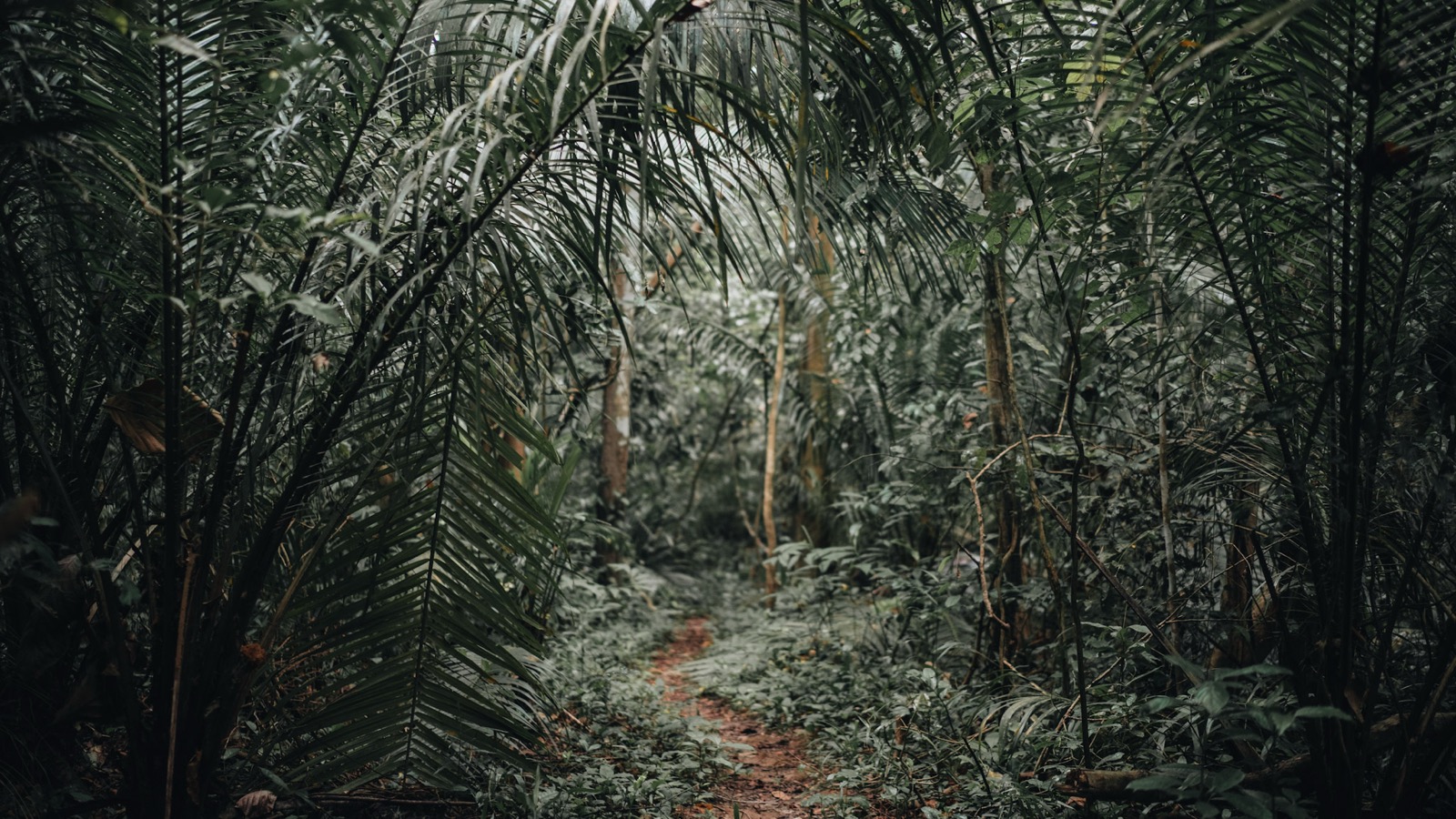
Jozani-Chwaka Bay National Park
Zanzibar's only national park and the last stronghold of the red colobus monkey — found nowhere else on Earth. A half-day that earns its place on every itinerary: the colobus are habituated, the mangrove boardwalk is short and worthwhile, and 50% of your entry fee goes directly to the villages surrounding the park.
Tim Hennig — Jozani Forest, Zanzibar
| Jozani — at a glance | |
|---|---|
| Location | 35–40 km SE of Stone Town · ~40–50 min by car; 25–35 min further to Paje |
| Entry fee | USD 10–15 per person, includes mandatory guide; 50% goes to local communities 2 sources |
| Opening hours | Approximately 07:30–17:00 daily |
| Visit time | 2–3 hours for colobus walk + mangrove boardwalk |
| Red colobus | Endangered endemic; ~3,000 in and around Jozani (roughly half the island population) 2 sources |
| Mangroves | 30-min boardwalk loop through tidal mangrove forest; crabs, mudskippers, herons visible |
| Zanzibar leopard | Camera-trap footage from 2017 is debated; not a visitor attraction; sightings extremely rare |
| Best combined with | Paje (east coast, 30 min further) for a full day away from Stone Town |
| Best for | Wildlife · nature · community ecotourism · half-day trip from anywhere on the island |
Last verified: August 2026
The Zanzibar red colobus
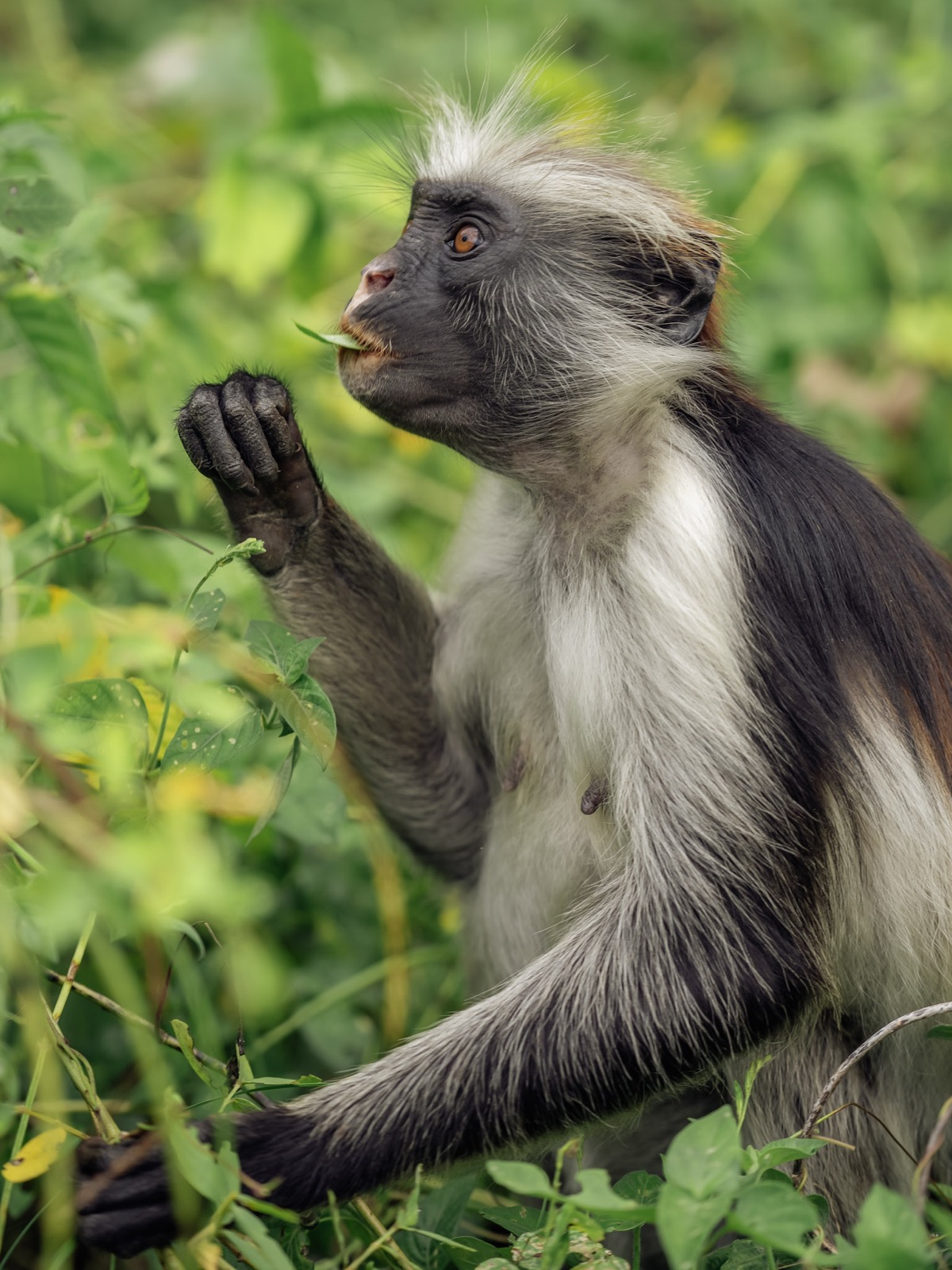
Piliocolobus kirkii — found nowhere else on Earth
- The Zanzibar red colobus (Piliocolobus kirkii) is endemic to the island — it is not found anywhere else in the world and is listed as Endangered on the IUCN Red List
- Approximately 3,000 individuals remain; roughly half the island's total population lives in and around Jozani, the rest in fragmented forest patches across Unguja
- The troops inside the park are habituated — they have been observed by researchers and visitors for decades and will approach within a few metres without disturbance
- Identification: red-brown back, pale grey-cream underside, dark face with white forehead fringe, long tail; they move in troops of 30–50 animals through the forest canopy
- The guide (included in your fee) will locate the nearest troop at the start of your visit — they range within a fairly predictable area and are usually found within 10–15 minutes of walking
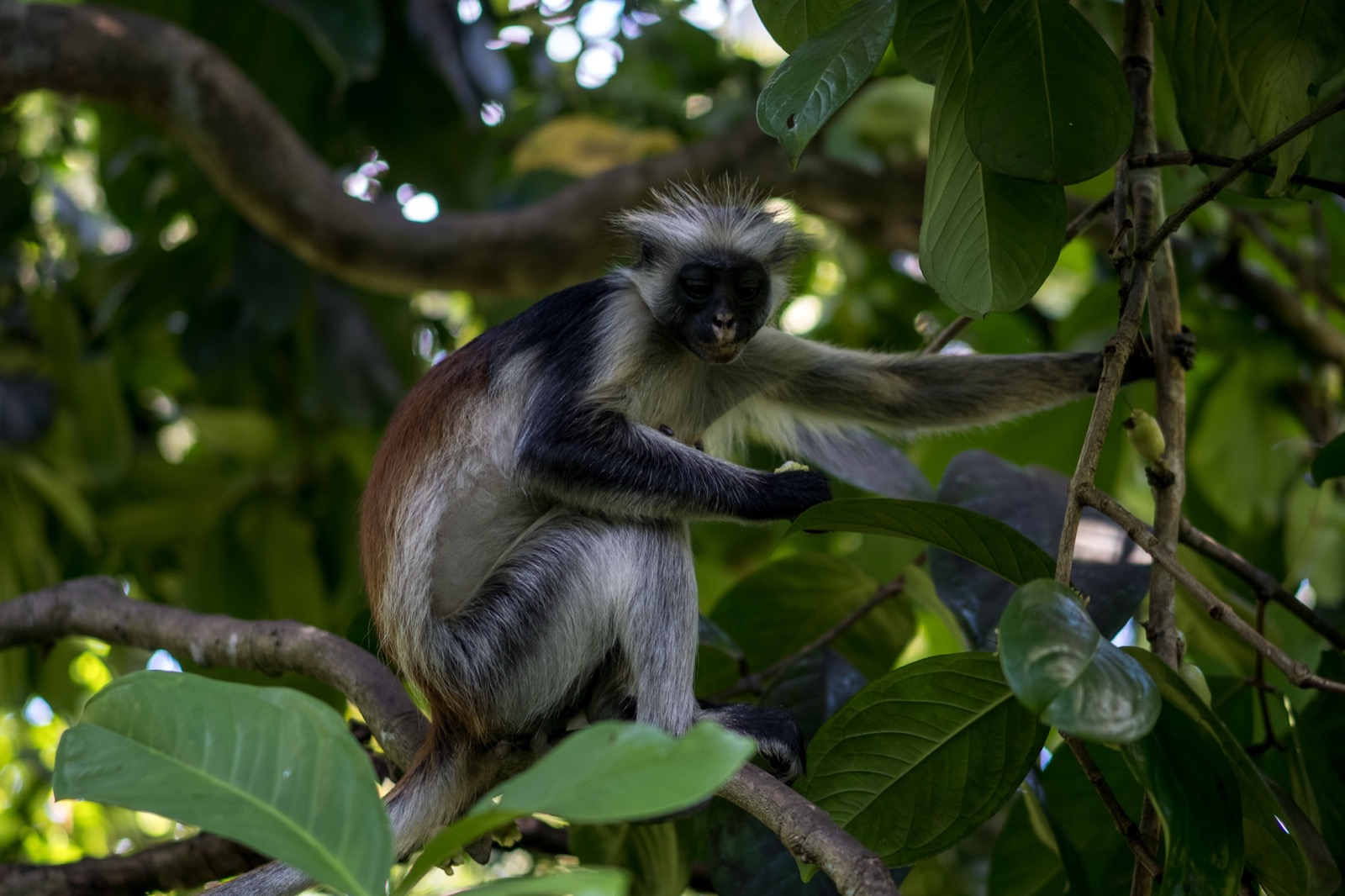
What to bring and how to behave
- Do not feed the monkeys — it disrupts natural foraging behaviour and has caused diet-related health problems in some individuals
- Do not touch them, even when they approach; they carry diseases transmissible to humans, and vice versa
- Keep at least 2 metres distance when possible; the monkeys will often close this gap themselves — stay calm and let them approach on their terms
- Good cameras with zoom lenses will give better shots than phone cameras in the dappled forest light; they move unpredictably but rest for long periods in the morning
- The best light for photography is early morning (before 10am) when the monkeys are most active and the forest is cooler
Mangrove boardwalk — Chwaka Bay
After the colobus walk, the same entry fee covers a 30-minute boardwalk loop through the tidal mangrove forest fringing Chwaka Bay. It's a different ecosystem from the groundwater forest — cooler, more open, with tangled prop roots and channels of tidal water running beneath the boards.
Things to look for on the boardwalk:
- Fiddler crabs: the males have one oversized claw used for display; they retreat into burrows as you approach but reappear if you stand still
- Mudskippers: amphibious fish that breathe air through their skin; they move across mud at surprising speed
- Mangrove kingfishers and green-backed herons: the boardwalk is a good birding spot; morning is better than midday
- Mangrove regeneration: the park and surrounding community have active replanting projects; many of the younger mangrove plants are tagged with conservation labels
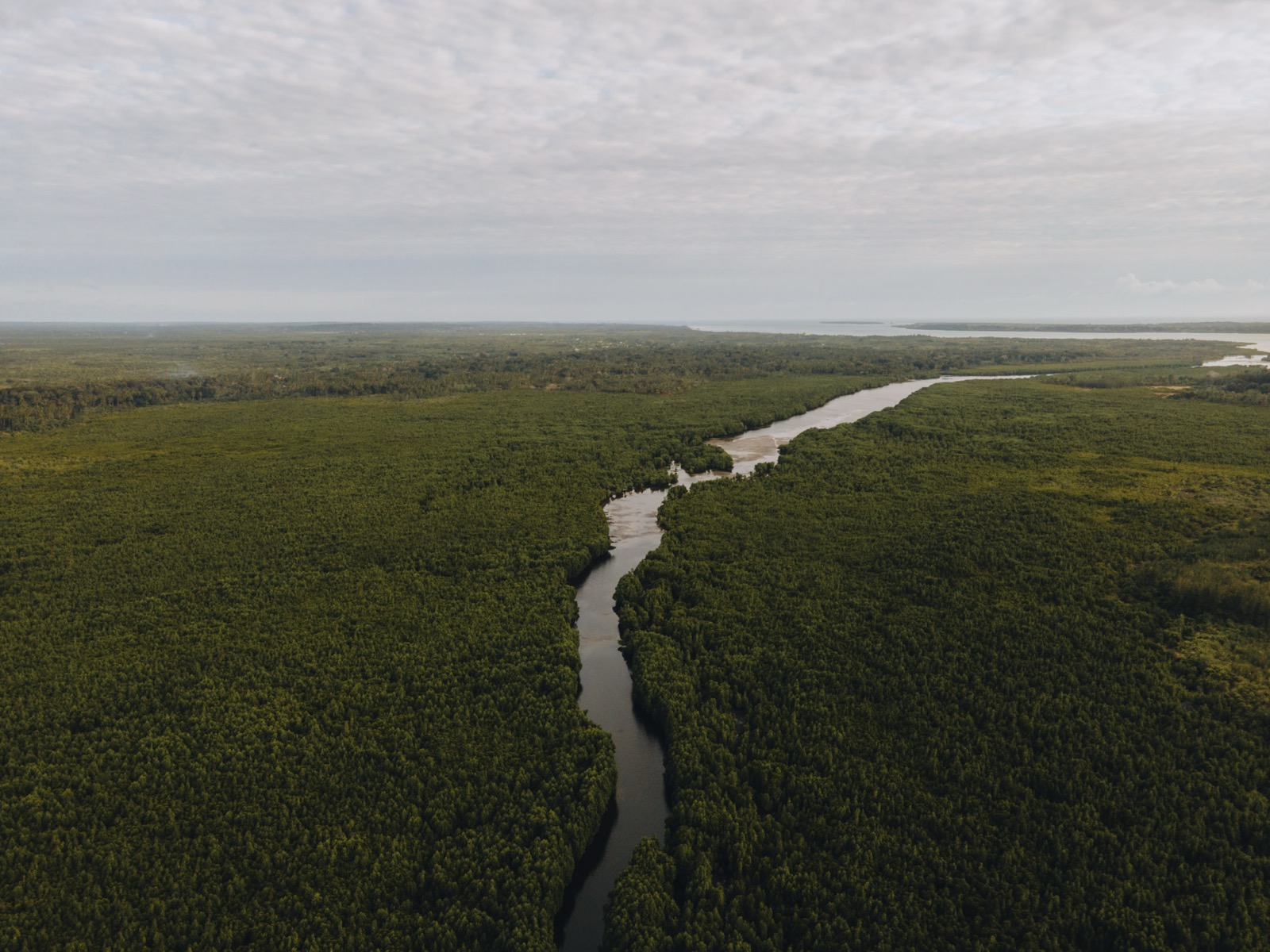
Mangrove aerial — Chwaka Bay from above
- Chwaka Bay is one of the largest shallow bays in Zanzibar — the mangrove forest fringing it covers hundreds of hectares
- The boardwalk gives a ground-level view of what you're walking through; the aerial perspective shows how extensive the ecosystem is
- Mangroves here are a critical nursery for the reef fish that sustain both the lagoon ecology and local fishing communities
- 50% of Jozani park entry fees go to surrounding villages (Pete, Uzi Island, Chwaka, Cheju) through a Community Conservation Programme established in 1995 — among the older models of this kind in East Africa
Practical — getting there, combining with the coast
Getting there from Stone Town
The most straightforward option is a private taxi from Stone Town (~USD 30–50 return, negotiated in advance, including waiting time at the park). Ask your hotel to help negotiate; the driver waits while you do the visit. Journey time is approximately 40–50 minutes on the main road southeast.
Alternatively, shared dala-dala minibuses run from Stone Town's Darajani terminal toward Pete village (near Jozani), but require a change and walk — add 30–45 minutes each way and plan around bus timing.
Combining with the east coast
Jozani sits halfway between Stone Town and the east coast beaches. The most common combination:
- Leave Stone Town at 8am
- Arrive Jozani by 9am — colobus walk + mangrove boardwalk (2–3 hours)
- Drive to Paje or Jambiani (~30 min) for lunch and an afternoon at the beach
- Return to Stone Town or onward to accommodation by evening
This is a full and satisfying day that costs around USD 30–80 per person depending on transport arrangements and what you eat.
What to wear and bring
- Light, long-sleeved shirt or layer — the forest has mosquitoes in the evening, less so in the morning
- Closed shoes or trainers — the boardwalk is good but the forest paths can be muddy after rain
- Sun protection — you're shaded in the forest but exposed on the boardwalk and en route
- Camera with zoom — phone cameras work but a 200mm+ lens gives much better colobus shots
- Water — the park sells drinks but bring your own for the walk
Jozani — questions answered
What is the entry fee for Jozani Forest?
USD 10–15 per person, including a mandatory guide. 50% of gate fees go to local community villages through a conservation programme. The park is open approximately 07:30–17:00 daily.
How far is Jozani from Stone Town?
Approximately 35–40 km, taking 40–50 minutes by car. A private return taxi costs around USD 30–50 including waiting time. Most visitors combine it with a half-day on Paje or Jambiani beach, which is 25–35 minutes further south.
What is special about the Zanzibar red colobus monkey?
The Zanzibar red colobus (Piliocolobus kirkii) is endemic — it exists nowhere else in the world. It is Endangered, with roughly 3,000 individuals remaining. The troops inside Jozani are habituated to humans and can be observed at close range under guide supervision.
Is there a Zanzibar leopard in Jozani?
The Zanzibar leopard was declared extinct in the 1990s. Camera-trap footage from 2017 (Journal of Threatened Taxa) is debated. You are extremely unlikely to see one; the colobus monkeys are the park's accessible wildlife.
Can you do Jozani without a guide?
No. A guide is mandatory and included in the entry fee. This is both a park rule and genuinely useful — the guide knows where the colobus troops are and interprets the ecology in both the forest and mangrove sections.
Continue your Zanzibar planning

Tim Hennig, General Manager, Boutique Hotel Matlai, Michamvi Pingwe, Zanzibar.
I live and work on Zanzibar's east coast year-round — managing Matlai, diving the reefs, watching the seasons. If you have a question the guides don't answer, I'm happy to help.
Get in touch