
Facts & prices checked: 2026-06-24
Ruaha is Tanzania’s open secret — the second-largest national park in the country (after Nyerere), bigger than the Serengeti alone, with elephant herds that dwarf anything on the northern circuit, antelope species most travellers have never seen, and a daily vehicle count in some sections that would not fill a single traffic light queue in the Serengeti’s central Seronera. The reason it is not better known is not that it is hard to reach (a 1-hour 30-minute domestic flight from Dar es Salaam) or that it lacks wildlife. It is simply that the northern circuit got there first with the marketing.
This guide is for travellers who have either already done the Serengeti or who are specifically looking for wilderness scale, elbow room, and the particular animals that make the southern circuit worth the separate journey.
What Ruaha is
Ruaha National Park covers 20,226 km² in the Iringa Region of south-west Tanzania, on the western edge of the Selous-Ruaha-Niassa ecosystem. For comparison: the Serengeti National Park covers 14,763 km²; the Ngorongoro Conservation Area adds another 8,292 km². Ruaha exceeds each of them individually, though not the two combined.
The park takes its name from the Ruaha River — a tributary of the Rufiji — which runs through the north of the park in a wide corridor of sand banks, riverine woodland, and deep pools. In the dry season (June–October), this river is the primary water source for a vast area of surrounding dryland and it becomes the park’s central gathering point for elephants, hippos, crocodiles, and the predators that follow them.
The landscape is different from the northern circuit in ways that matter. Ruaha is drier and more rugged — miombo woodland in the higher sections, mixed bushland with baobabs and commiphora in the lower zones, and the open river corridor cutting through it all. This is not the open grassland of the Serengeti, and the game-viewing style is different: slower, more tracking-focused, more dependent on habitat knowledge and the patience of a good guide.
Ruaha sits within Tanzania’s miombo woodland — the ecosystem that covers more of Tanzania than any other vegetation type and supports sable antelope, roan antelope, greater kudu, and the world’s largest wild dog population. The Tanzania miombo woodland guide covers what the ecosystem looks like through the seasons, the specialist wildlife, and why the southern circuit offers a completely different safari from the north.
Why Ruaha is underrated
Ruaha is less visited than any other major Tanzanian national park, and for reasons that have nothing to do with the quality of the experience. The domestic flight from Dar is one step more complicated than flying to Arusha and driving to the Serengeti. The north-south split of Tanzania’s tourist infrastructure — with most Arusha-based operators focused on the northern circuit — means Ruaha rarely appears in standard Tanzania packages.
The result: fewer than 10 vehicles in the same section of the park for an entire morning game drive is not unusual in Ruaha. In the central Serengeti, 50–100 vehicles at a single predator encounter is not unusual during peak season. For travellers who find the vehicle density of the northern circuit jarring, Ruaha represents the alternative: a genuine wilderness experience where the absence of other safari vehicles is the norm rather than the exception.
Wildlife: elephants above all
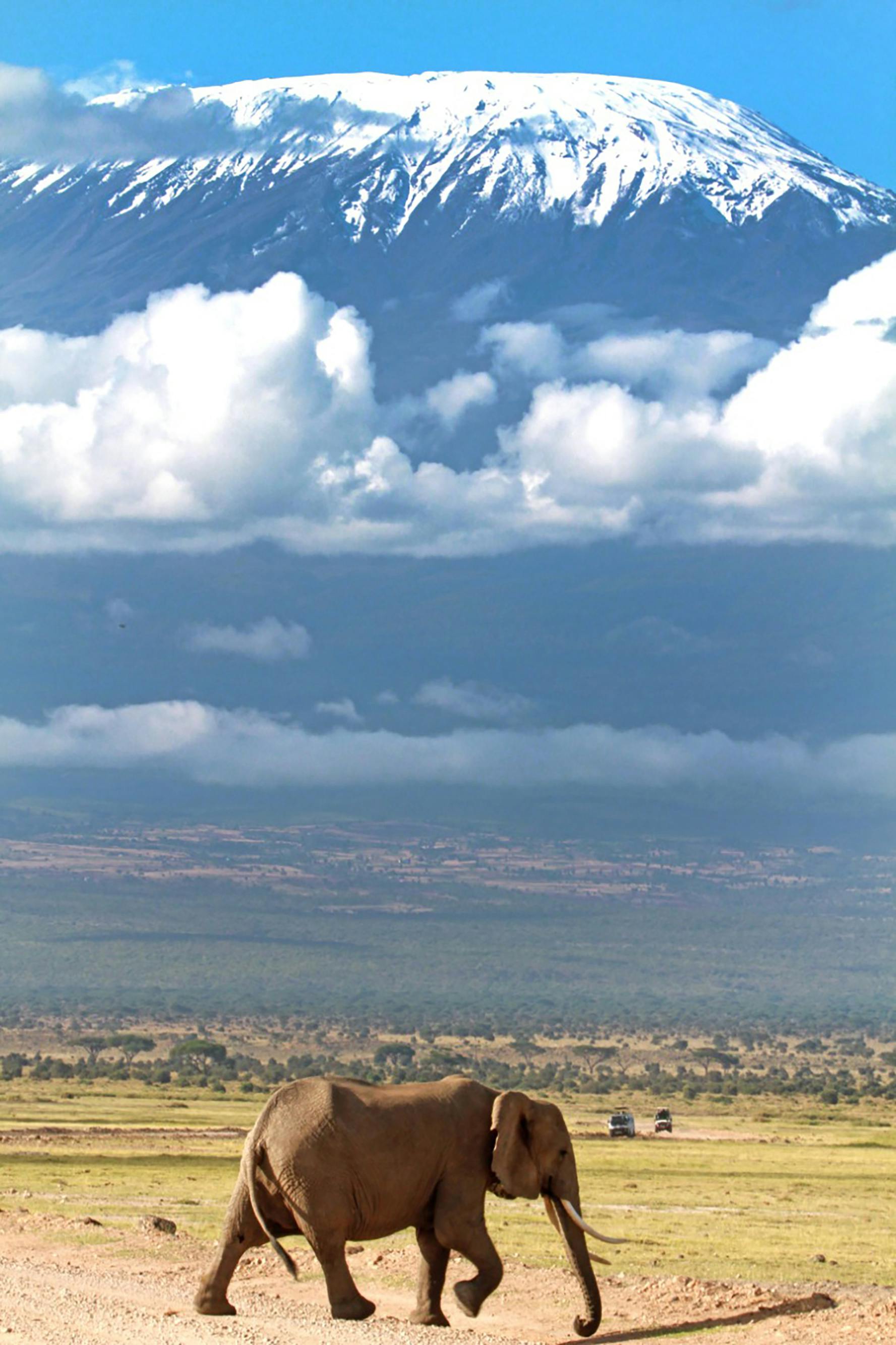
Elephants are Ruaha’s headline species and the primary reason the park matters to serious wildlife travellers. The Ruaha-Rungwa-Katavi ecosystem supports an estimated 10,000–20,000 elephants — one of the largest concentrations remaining in Africa south of the Sahara, in a region that saw catastrophic poaching losses in the 1970s and 1980s. The population has recovered significantly under protection, and the dry-season concentrations at the Ruaha River — herds of 50–200 animals gathering at the water simultaneously — are genuinely spectacular in a way that does not translate in photographs.
In the wet season (November–April) the herds disperse across the wider ecosystem. In the dry season they funnel toward the river, and game drives that follow the river corridor produce successive elephant encounters across the morning. Older bull elephants with exceptional tusks are present — Ruaha has some of the largest-tusked individuals remaining in Tanzania, partly because the area is remote enough to have remained relatively protected even during the worst poaching decades.
Wildlife: the antelope specialists
Ruaha is the best option in Tanzania for a suite of antelope species that are either absent or extremely rare on the northern circuit:
Greater kudu (Tragelaphus strepsiceros) are one of the most visually striking of Africa’s antelopes — large, rufous-grey with white body stripes, and males with spiral horns that can reach 1.8 metres. They are common in Ruaha’s thornbush and mixed woodland, particularly in the denser sections away from the main river. On the Serengeti plains they are essentially absent. Kudu are often seen on foot safaris where the guide can approach woodland cover quietly — vehicle approaches in thick bush are less reliable.
Sable antelope (Hippotragus niger) are more dramatic still: large, heavily built, with glossy black coats (in mature bulls), white facial markings, and backward-curving sabre horns reaching up to 1.5 metres. They are listed as Vulnerable on the IUCN Red List. Ruaha holds one of Tanzania’s most reliable populations. Sable prefer the miombo woodland zones in the higher sections of the park — they are not a river-front species and require specific driving to locate, but they are findable with a good guide who knows the current territories.
Roan antelope (Hippotragus equinus) share ecological space with sable, are less common, and are even rarer in the northern parks. Both species are diagnostic of the southern miombo woodland habitat that Ruaha protects and the Serengeti grasslands do not.
Lesser kudu, common waterbuck, Lichtenstein’s hartebeest, and topi complete the antelope picture. Ruaha’s antelope diversity across habitat types is exceptional for a single park.
Wildlife: predators and wild dogs
Lions are numerous and the combination of large prey (elephant, buffalo, hippo, and abundant antelope) with river-concentrated wildlife produces frequent predator-prey interactions in the dry season. The lion population density in Ruaha is considered one of the highest in Africa. Ruaha’s lion prides are Tanzania’s most documented specialists at hunting Cape buffalo — the dry-season Ruaha River concentrations (30,000 buffalo in the wider ecosystem) make this the most dramatic lion-buffalo arena in East Africa. The Tanzania Cape buffalo guide covers the full natural history, the “dagga boy” phenomenon, and why walking safari encounters with buffalo at Nyerere are a different category of experience.
Leopards use the riverine woodland extensively — more reliably findable from the river-facing camps than in the open bush.
Cheetah are present and occasionally seen on the open grassland sections, though Ruaha is more oriented to woodland species and cheetah are less abundant than in the open Serengeti.
Spotted hyena are common. Striped hyena — the nocturnal, more secretive cousin — are also present in Ruaha in numbers not seen in the northern parks; this is unusual and makes Ruaha one of the better places in East Africa to find both hyena species in the same park.
African wild dogs maintain resident packs in Ruaha, connected ecologically to the broader Selous-Nyerere-Ruaha population. Sightings are less reliable than in Nyerere — the Ruaha population is smaller and the park is large enough that packs range widely. But with local knowledge and morning drives in the right season, wild dog encounters are realistic, not exceptional.
Safari activities
Game drives are the core activity: morning and afternoon drives in a 4WD vehicle, guided by a camp naturalist. Ruaha’s camps are typically small (6–16 guests maximum at high-end camps) and the guiding ratio is better than at the large lodge complexes of the northern circuit. Drives routinely last 4–6 hours in the morning and 3–4 hours in the afternoon, with the midday used for meals and rest.
Walking safaris are available in Ruaha, as in Nyerere — one of the distinguishing features of the southern circuit parks. An armed TANAPA ranger accompanies each walking group alongside the camp guide. Morning walks of 2–4 hours cover 4–8 km and focus on tracking, plant identification, and the small details of the ecosystem that are missed from a vehicle. The dense bush areas and the riverine woodland are particularly rewarding on foot, where the guide can approach kudu and other species more quietly than a vehicle allows.
Night drives are available at some Ruaha camps — specifically those with private concession land adjacent to the park, or with TANAPA night-drive permits. Night drives in Ruaha produce bush babies, genets, civets, porcupines, and nocturnal birds including the giant eagle-owl. Predator sightings at night — lions and leopards on the move — are the main draw for guests who take the extra evening drive.
Getting there
Ruaha is a fly-in destination for the overwhelming majority of international visitors. The road alternative — from Dar es Salaam to Iringa (7–8 hours), then 130 km of rough 4WD track to Msembe (2–3 hours in the dry season, impassable in the rains) — is not appropriate for most international travellers without self-drive experience in off-road conditions.
By domestic flight from Dar es Salaam: Julius Nyerere International Airport (DAR) to Msembe Airstrip, approximately 1 hour 30 minutes. Operators: Coastal Aviation, Auric Air, Safari Air Link. Fares from approximately USD 80–130 per person one-way, though prices vary significantly with demand and booking lead time. Most camps can arrange the flight booking through their reservations process.
From Nyerere National Park: The connecting flight between Nyerere’s airstrips and Msembe is the southern circuit backbone — typically 60–90 minutes depending on routing and number of stops. Coastal Aviation operates this route with scheduled and charter options.
From Zanzibar (ZNZ): The standard routing is ZNZ to DAR (20-minute domestic flight or 2-hour ferry), then DAR to Msembe. Total travel time from Zanzibar airport to Ruaha landing: approximately 3 hours.
Soft luggage only: approximately 15 kg per person on bush flights. Check requirements with your camp at booking.
Costs and accommodation
Park fee: USD 35.40 per adult per day (TANAPA 2024/25). This is well below the Serengeti (USD 82.60) and significantly below the Ngorongoro fee structure once you include the USD 295-per-vehicle crater descent fee.
Accommodation:
- Budget-oriented camps outside or on the park boundary: approximately USD 80–150 per person per night, often not all-inclusive
- Standard mid-range tented camps within the park: USD 250–500 per person per night, typically all-inclusive
- Premium and luxury camps (Jabali Ridge, Kwihala Camp, Jongomero Camp): USD 700–1,500 per person per night, fully all-inclusive
Southern circuit package (Nyerere + Ruaha, 7 nights): with park fees and inter-park flight included, the total runs approximately USD 400–900 per person per day all-inclusive, depending on camp selection. This is a significant investment, but comparable to the Serengeti at premium camp rates.
The southern circuit: Nyerere and Ruaha paired
The standard approach is 3–4 nights in each park on the same trip, with the connecting flight between them. The two parks complement without repeating:
- Nyerere delivers: Rufiji River boat safaris, the densest wild dog population in Africa, walking safaris in dense woodland savannah, hippos and crocodiles at scale
- Ruaha delivers: elephant herds at the Ruaha River, the antelope specialists (kudu, sable, roan), high predator density in a more open landscape, walking safaris in drier bush country
Wildlife overlap between the two is limited — this is by design in the circuit’s ecology. Travellers who do both parks rarely feel they have repeated themselves. The internal flight takes 60–90 minutes and the transition between the two ecosystems is immediate.
Fly out of Ruaha to Dar (1 hour 30 minutes) and then onward to Zanzibar (20 minutes) or direct home from Dar. The complete southern circuit from arrival in Dar to departure from Dar is achievable in 10–12 days including travel days.
Planning a longer Tanzania western-circuit itinerary? Gombe Stream and Mahale Mountains on Lake Tanganyika are Tanzania’s chimpanzee trekking parks — a completely different ecosystem from Ruaha’s savanna. Our Gombe and Mahale chimp guide covers both parks, the Jane Goodall story, and how to combine a Ruaha stay with western Tanzania in one trip.
Best time to go
June to October (dry season): Peak window. Elephant herds concentrate at the Ruaha River from July onward. Vegetation is low, game drives cover more ground efficiently, and sightings per hour are at their highest. July to September is the peak for elephant concentrations and predator encounters. Some camps reach full occupancy — book 6–9 months ahead for July and August.
December to March (green season): Green and quiet. Calving season for many species means active predator behaviour — lions and wild dogs on active hunts. Migrant birds from Europe and Asia add to resident diversity. Accommodation prices are lower and availability is good. Some tracks in the western sections may be soft after rain but camps remain accessible.
March to May: Avoid entirely. The long rains make most tracks impassable. Many camps close for the season. The few that remain open operate at reduced service levels.
For full park fee breakdown including TANAPA’s Ruaha rates, see the fees guide. For comparison across the full Tanzania national park system, see the national parks guide, or the complete Tanzania guide index for every park and planning page. For the northern alternative, see the Tanzania Serengeti guide and the Tarangire elephant-season guide. For a month-by-month breakdown of conditions, elephant concentrations at the Great Ruaha River, and what to expect in each season, see the Ruaha best time to visit guide.
Frequently asked questions
Why is Ruaha so unknown despite being Tanzania's second-largest national park?
Three reasons. Geography: Ruaha is in south-west Tanzania, far from Kilimanjaro International Airport (JRO) where most international flights arrive — the northern circuit is geographically closer for most itineraries. Marketing: the Serengeti and Ngorongoro get the majority of tour operator promotion; Ruaha is barely mentioned in mainstream Tanzania travel guides. Logistics: Ruaha requires a domestic flight — roads from Iringa to the park gate are rough 4WD tracks. The result for travellers who come anyway: fewer than 10 vehicles in some park sections all day, compared to 100+ at a single popular animal in the Serengeti.
What animals will you see in Ruaha that you won't see in the Serengeti?
Four species distinguish Ruaha from the northern circuit: greater kudu (large spiral-horned antelope, reliable in Ruaha's thicker bush), sable antelope (black-coated bull with curved sabre-shaped horns, one of Africa's most striking antelopes), roan antelope (similar habitat to sable, rare in the north), and African wild dogs (own resident packs, though sightings are less reliable than in Nyerere). Plus elephant herds at a scale and density the Serengeti cannot match in the dry season.
How do you get to Ruaha?
Domestic flight from Dar es Salaam (DAR) to Msembe Airstrip in approximately 1 hour 30 minutes. Operators include Coastal Aviation, Auric Air, and Safari Air Link. One-way fares from approximately USD 80–130 per person. From Nyerere National Park, the connecting flight to Msembe takes 60–90 minutes. Luggage is restricted to approximately 15 kg soft-sided baggage — hard-shell suitcases are not accepted on most bush flights.
What does Ruaha cost?
Park fee: USD 35.40 per person per day (TANAPA 2024/25) — cheaper than the Serengeti (USD 82.60) and without Ngorongoro's separate crater descent fee. Accommodation: budget camps outside the park boundary at approximately USD 80–150 per person per night; standard tented camps within the park at USD 250–500; luxury camps (Jabali Ridge, Kwihala Camp, Jongomero) at USD 700–1,500 per person per night, typically all-inclusive. The southern circuit combination (Nyerere plus Ruaha, 7 nights, all-inclusive with flights) runs approximately USD 400–900 per person per day depending on camp selection.
When is the best time to visit Ruaha?
June to October is the dry season peak — wildlife concentrates at the Ruaha River and its pools, vegetation is low for easy sighting, and elephant herds of 50–200 animals gather at the water. December to March offers green scenery, migrant birds, and calving season (active predator behaviour), with lower prices. Avoid March to May: the long rains make most tracks impassable and many camps close entirely. Elephant sightings at the river are best from July to September.
How does Ruaha compare to Nyerere?
Different ecosystems and different specialist experiences. Nyerere offers the Rufiji River boat safari and the highest wild dog density in Africa. Ruaha offers larger elephant numbers at the Ruaha River, the antelope species (kudu, sable) absent from Nyerere, and arguably higher overall predator diversity including rare striped hyena alongside spotted hyena. Both allow walking safaris, which the northern circuit parks do not. The southern circuit pairs them because they complement each other without overlap.
Who should visit Ruaha?
Ruaha suits repeat Tanzania visitors who have already done the Serengeti and Ngorongoro and want something they have not seen — specifically the antelope species, the elephant scale, and the genuine remoteness. It also suits anyone who wants walking safaris, fewer vehicles, and a landscape that is drier and more varied than the Serengeti plains. First-time Tanzania visitors may find the northern circuit more rewarding for sheer species diversity and the migration spectacle.