
Facts & prices checked: 2026-06-25
Tanzania has two national parks where you can trek with habituated wild chimpanzees — and both of them are in the same unexpected corner of the country, on the eastern shore of Lake Tanganyika in western Tanzania. Gombe Stream, where Jane Goodall began her landmark research in 1960, and Mahale Mountains, a more remote park where habituation started in 1965 under Japanese primatologist Toshisada Nishida, are separated by approximately 150 km of lakeshore and no road between them.
Neither park is accessible by road. Both require flying to Kigoma and then continuing by boat or charter aircraft. Both have one habituated chimpanzee community open to visitors. Both limit tourist time with the chimpanzees to 1 hour per day. And both offer something fundamentally different from a savanna safari: an encounter with humanity’s closest living relative in dense montane forest, where the animal looks back at you with the same focus you direct at it.
Two parks, one lake, our closest relatives
The western Tanzania lakeshore is one of Africa’s least-visited safari destinations. Most Tanzania itineraries concentrate on the northern circuit — Serengeti, Ngorongoro, Tarangire — and rarely venture beyond Arusha or Dar es Salaam. The result is that Gombe and Mahale receive a fraction of the visitors of the northern parks, a small daily quota of which is all that can trek with the chimpanzees anyway.
Lake Tanganyika, which forms the western border of both parks, is not a minor geographical feature. It is the world’s second-deepest lake with a maximum depth of 1,471 metres, approximately 676 km long, and contains around 16% of the world’s available freshwater. Swimming in it after a chimpanzee trek — the lake runs clear and warm at the forest edge — is one of Tanzania’s unexpected experiences.
Chimpanzees (Pan troglodytes schweinfurthii, the eastern subspecies) are humanity’s closest living relative, sharing approximately 98.7% of our DNA. This biological proximity makes an encounter profoundly different from watching lions or elephants. A lion watches your vehicle with something close to indifference. A chimpanzee watches you with recognition — evaluating, curious, and clearly aware of the evaluation going both ways. Tanzania’s estimated chimpanzee population is approximately 2,700 individuals (WCS estimate), the majority in the western forests.
Gombe Stream: where primatology began
Gombe Stream National Park is one of Tanzania’s smallest national parks at 35 km², a strip of steep forest and ravines running down to the lake shore north of Kigoma. It was established as a national park in 1968, but Jane Goodall had already been working here for eight years by then. She arrived at what was then Gombe Stream Game Reserve in 1960 and began a study of wild chimpanzee behaviour that became, by any measure, the most influential long-term wildlife study ever conducted.
The key discovery came early: chimpanzees use tools. Goodall observed individuals stripping the leaves from grass stems and using the stem to probe termite mounds, extracting the insects to eat. This was not instinctive behaviour — it was learned, taught between individuals within the community, and varied between groups. When Goodall’s mentor, the paleoanthropologist Louis Leakey, received the news, he wrote back: “Now we must redefine tool, redefine man, or accept chimpanzees as humans.” The discovery permanently changed the boundary between what scientists considered human and what they considered animal.
Goodall subsequently documented chimpanzee hunting behaviour — coordinated hunts of red colobus monkeys by male chimps — and, more disturbingly, inter-community warfare: lethal attacks between rival chimpanzee communities over territory and females. The Gombe Stream Research Centre was founded in 1965 to formalise and expand this work. The Jane Goodall Institute’s research has continued without interruption since 1960, making it the world’s longest-running continuous chimpanzee study.
Trekking at Gombe works like this: guides and trackers use radio communication with research positions to locate the habituated community each morning. The trek itself can last anywhere from 30 minutes (if the chimps are near the lakeshore) to 5–6 hours (if they have moved deep into the upper forest). The terrain is steep and the forest is dense — proper walking shoes and a rain jacket are not optional. When you find the community, you have 1 hour with them. The park entry fee for non-residents is USD 118 per day; the trekking permit is USD 100 per person, booked separately through TANAPA.
Getting to Gombe requires flying to Kigoma airport and then continuing by boat along the lake shore — there is no road to the park. The local public water taxi from Kigoma operates Monday to Saturday and takes approximately 4 hours; faster private boat arrangements take 1–3 hours. The lake crossing is not a logistical inconvenience — it is part of the experience. The park gate is right on the water.
The best season for trekking is June to October during the dry season, when paths are drier and the chimps range more predictably at lower elevations. The park is open year-round.
Mahale Mountains: the remote alternative
Mahale Mountains National Park sits approximately 150 km south of Gombe on the same lakeshore, separated by open lake water and accessible only by air or boat. The park is substantially larger than Gombe — no confirmed km² figure is in the fact database, but it is a significantly larger forest block with mountain ridges that rise well above the lake. The park has no road access whatsoever. Charter flights from Kigoma land at Kasunga airstrip in approximately 45 minutes, followed by a mandatory boat transfer across Lake Tanganyika to reach the lodges. Speedboat from Kigoma takes 4–6 hours; the MV Liemba ferry, which operates twice weekly, takes approximately 10 hours.
The habituated community at Mahale is the M-group, first habituated in 1965 by Toshisada Nishida and his colleagues from Kyoto University — independent of Goodall’s work at Gombe, and equally rigorous. The M-group consists of approximately 60 habituated individuals, part of a total chimpanzee population within the park of over 1,000. Research has continued since 1965, making Mahale one of the world’s longest-running primate field studies alongside Gombe.
The trekking experience at Mahale is guided by trackers who know the M-group’s individual members and ranging patterns. Treks follow forested mountain slopes on paths that can be steep and muddy even in dry season. You have 1 hour with the chimps when found. The park entry fee is USD 94.40 per non-resident per day; the trekking permit is USD 100–150 per person through TANAPA.
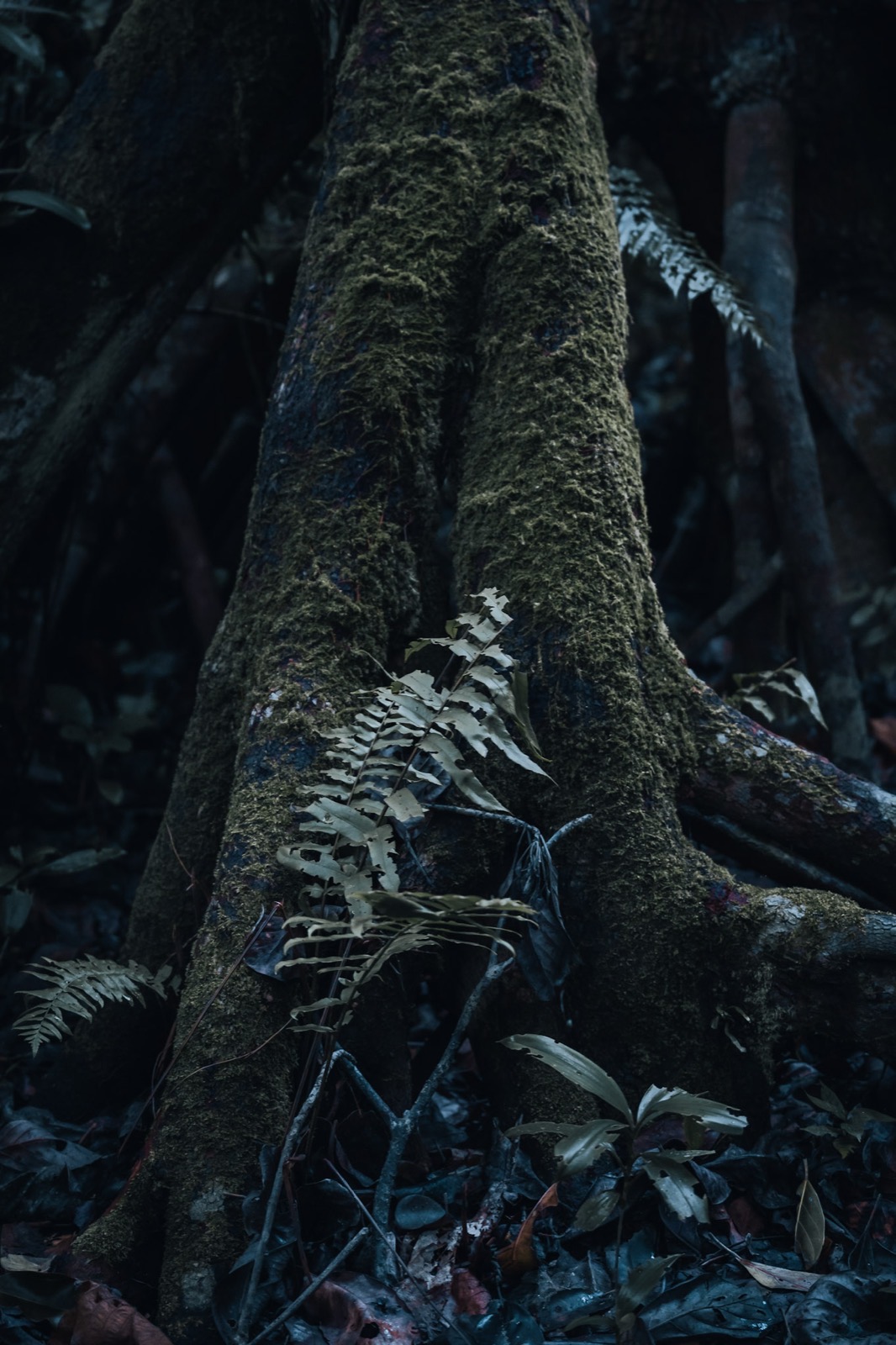
The setting is unlike anything else in Tanzania. In the early morning, cloud sits around the mountain peaks above the treeline while Lake Tanganyika below is brilliant blue and completely flat. The combination of high forest, lake, and mountain backdrop — with no roads, no villages visible, and no other tourists within sight — creates a genuine sense of wilderness that is rare even by Africa’s standards.
Accommodation at Mahale is limited to a handful of specialist camps. Greystoke Mahale — owned and operated by Nomad Tanzania, built from reclaimed dhow wood collected from local lakeside villages, sitting on a white-sand beach at the lake’s edge — is the flagship property. Published rates run from approximately USD 1,125 to USD 2,365 per person sharing depending on season, fully inclusive. Greystoke closes mid-March to early June due to the heavy rains making forest tracks impassable. The dry season from June to October, particularly August to October, is the best window for trekking.
Gombe vs Mahale: how to choose
Both parks deliver genuine encounters with wild habituated chimpanzees. The choice comes down to practical factors:
| Factor | Gombe | Mahale |
|---|---|---|
| Park size | 35 km² | Larger (no confirmed km² in DB) |
| Access from Kigoma | Boat, 1–4 hours | Charter flight 45 min, or speedboat 4–6 hours |
| Permit fee | USD 100 | USD 100–150 |
| Park entry fee | USD 118/day | USD 94.40/day |
| Historical significance | Jane Goodall, 1960; world’s longest chimp study | Nishida, 1965; continuous research since then |
| Setting | Forest to lakeshore beach; swimming after trek | Mountain forest, dramatic lake-mountain scenery |
| Accommodation options | Budget to mid-range; Kigoma as base | Exclusive camps; Greystoke from USD 1,125/person |
| Crowd levels | Low (permit limits apply) | Very low |
| Best season | June–October | June–October (August–October peak) |
| Min age | 12 years | 15 years |
Choose Gombe if: you are on a tighter budget, want to minimise travel complexity, are drawn to the Jane Goodall history, or are adding 1–2 nights of chimp trekking as an extension to a longer Tanzania itinerary.
Choose Mahale if: you want the most remote and exclusive wildlife experience in Tanzania, the mountain-lake scenery matters as much as the chimpanzees, you are comfortable with charter-flight logistics, and you are making western Tanzania a centrepiece rather than an add-on.
What you will see: chimpanzee behaviour
The 1-hour encounter with a habituated community gives you a compressed window into a social system that researchers have spent decades unravelling.
Grooming is the most consistent behaviour you will observe. Chimpanzees spend hours in pairs or small groups carefully working through each other’s fur, removing parasites and debris with fingers and lips. It is not primarily about hygiene — it is a social currency. Who grooms whom, for how long, and who initiates grooming reveals hierarchy, alliance, and relationship quality within the community. Watching a grooming session among six or eight adult chimps communicates more about primate social intelligence than any description can.
Tool use at Gombe specifically: the Kasekela community (Gombe’s main habituated group) continues to exhibit the behaviours Goodall first documented. Nut-cracking with stone anvils, termite-fishing with stripped grass stems, and leaf-sponging to extract water from tree hollows have all been recorded. A 2019 study found that even neighbouring communities at Gombe and Mahale show cultural variation in their tool-use traditions — the same ecological pressure producing different learned solutions.
Hunting is less predictable but documented at both parks. Groups of male chimpanzees coordinate hunts of red colobus monkeys, with different males taking different roles — chaser, blocker, ambusher. The discovery of organised chimpanzee hunting at Gombe in the 1960s was, at the time, nearly as scientifically explosive as the tool-use discovery.
Vocalisations: chimpanzees have a rich vocal repertoire — the pant-hoot call, used for long-distance communication, is a rising sequence of hoots building to a climax of screams. Hearing it through the forest before you see the animals is one of the memorable sounds in East Africa. At close range, the variety of calls — barks, grunts, screams, quiet lip-smacks during grooming — forms a constant acoustic backdrop to every social interaction.
Infant behaviour is reliably engaging. Young chimps play constantly — chasing, tumbling, swinging, and using adults as climbing frames. Juveniles frequently approach and interact with adult males, testing social limits with impunity that adults cannot extend to each other. The social learning between generations is visible in real time.
Male dominance displays: the alpha male and high-ranking males periodically conduct displays — charging runs, branch-shaking, ground-drumming with knuckles, and sustained screaming — to reinforce status or respond to perceived challenges. Witnessing a dominance display at 10 metres in dense forest is loud, dramatic, and a reminder that the familiarity of the encounter does not make the animals tame.
Logistics: getting to western Tanzania
The key gateway for both parks is Kigoma (airport code KIK), on the eastern shore of Lake Tanganyika. Kigoma is not on the northern circuit. It requires either a direct domestic flight from Dar es Salaam (Air Tanzania operates daily; approximately 3 hours) or routing via Dar with a connection. Most specialist Tanzania safari operators who handle western Tanzania can arrange the full logistics — domestic flights, boat or charter transfers, permits, and camp bookings — as a single package.
Combined itineraries work well in either direction:
- Northern circuit (7–10 days: Serengeti, Ngorongoro, Tarangire) → fly to Kigoma → Gombe or Mahale (3–4 days) → fly home from Kigoma or back through Dar
- Southern circuit (Nyerere + Ruaha, 7–10 days) → fly to Kigoma → Gombe or Mahale → fly home
- Gombe only, as a standalone 2-night add-on from Kigoma (the most budget-accessible option)
Luggage on light aircraft: most bush charter flights restrict to 15 kg soft-sided bags. Hard-shell suitcases are not accepted. Pack accordingly.
The dry season, June to October, is the optimal window for both parks — drier forest paths, more predictable chimp movements at lower elevations, and better overall trekking conditions. Gombe is technically open year-round. Mahale’s luxury camps including Greystoke close from mid-March to early June when the long rains make tracks impassable.
Tanzania has chimps — not gorillas
This is the most common confusion in East Africa itinerary planning.
Mountain gorillas (Gorilla beringei beringei) are found in three countries: Uganda (Bwindi Impenetrable Forest and Mgahinga Gorilla National Park), Rwanda (Volcanoes National Park), and the DRC (Virunga National Park). Tanzania has no mountain gorillas.
Chimpanzees (Pan troglodytes schweinfurthii) are found in Tanzania at Gombe and Mahale, with smaller populations at Rubondo Island in Lake Victoria (approximately 35–40 individuals, not open for trekking in the same way). Tanzania’s confirmed chimp trekking sites number exactly two.
The experiences are different in every practical sense. Gorilla permits in Uganda (Bwindi Gorilla Habituation Experience: USD 1,500 per person) and Rwanda are significantly more expensive than Tanzania chimp permits. Gorillas are substantially larger animals. The forest habitats differ. The 1-hour rule applies to both.
If you want both great apes in one East Africa trip, flying Dar es Salaam to Kigoma for Tanzania’s chimps, then Kigoma to Entebbe for gorillas at Bwindi, is logistically possible. It requires at minimum 10 days and adds two additional flight segments. Most travellers choose one or the other — Tanzania’s chimps are the correct choice if the primary motivation is the depth of the research history and the Goodall story.
Natural history and conservation
Chimpanzees share approximately 98.7% of their DNA with humans — more than they share with gorillas. The eastern subspecies (Pan troglodytes schweinfurthii) is classified as Endangered on the IUCN Red List. Tanzania’s estimated population is approximately 2,700 individuals (WCS estimate), the majority in the western forest corridor along the Lake Tanganyika shoreline.
The primary threats to chimpanzees at Gombe specifically are infectious disease and deforestation of land outside the park boundary. Gombe at 35 km² is small enough that chimpanzees regularly encounter the forest edges and the human communities beyond them. Disease transmission — including respiratory illnesses transmitted from humans to chimps — has caused documented mortality in the Gombe communities. The Jane Goodall Institute runs active conservation programs including reforestation of degraded land on Gombe’s periphery to expand the effective habitat corridor.
At Mahale, the park’s size and remoteness provide better natural buffering. The M-group of approximately 60 habituated individuals represents a small fraction of the park’s total chimpanzee population of over 1,000. Research at both sites contributes directly to conservation planning: the 65+ years of continuous data from Gombe and the parallel dataset from Mahale are among the most comprehensive wildlife population records in Africa.
I have been to Tanzania many times. The difference between watching chimpanzees and watching other wildlife is the recognition. A lion watches your vehicle with something close to indifference. A chimpanzee looks at you the way you look at it — direct, evaluating, interested. A juvenile at Gombe sat in a tree about 4 metres above my head and watched me with what I can only describe as curiosity. Not for 30 seconds. For about 8 minutes. I was watching a chimpanzee and the chimpanzee was watching me. It is the only time in Tanzania where the wildlife seems to be asking its own questions about you.
That 8 minutes of sustained, mutual attention from an animal that is not our species but is very close to it — that is what western Tanzania is worth the extra flight for.
Mahale Mountains National Park is more than just the place where the M-group lives — the setting on Lake Tanganyika, the forest hiking, the on-foot experience with no vehicles, and the combination with Katavi make it a distinct destination in its own right. The Mahale Mountains guide covers the park in full: the Greystoke experience, how to combine it with Katavi for the western Tanzania circuit, and what the chimp tracking day actually involves on the forest floor.
For logistics around the rest of Tanzania’s safari landscape, the Ruaha National Park guide covers the southern circuit’s flagship park, which can be combined with a western Tanzania extension for a two-week itinerary that touches four genuinely different ecosystems. Planning your first visit to Tanzania and working out how all the regions fit together? The full pricing picture across every park covers budget ranges across all park tiers. For a full breakdown of TANAPA 2024/25 entry fees across all parks — including Gombe (USD 118/day) and Mahale (USD 94.40/day) alongside the northern and southern circuit parks — see the Tanzania national park fees guide.
Frequently asked questions
Where can I see chimpanzees in Tanzania?
Tanzania has two national parks with habituated chimpanzees available for trekking: Gombe Stream National Park and Mahale Mountains National Park. Both are in western Tanzania on the eastern shore of Lake Tanganyika, and neither is accessible by road. Gombe is reached by boat from Kigoma in 1–3 hours. Mahale is reached by charter flight (45 minutes from Kigoma) or speedboat (4–6 hours). Gombe is one of Tanzania's smallest national parks at 35 km² and the more famous site due to Jane Goodall's research beginning in 1960. Mahale is larger, more remote, and typically more exclusive in feel.
What is the connection between Jane Goodall and Gombe?
Jane Goodall began her landmark study of wild chimpanzees at Gombe Stream in 1960 — then a game reserve, later a national park. Her key discovery was that chimpanzees use tools: she observed them stripping leaves from grass stems to extract termites from mounds, overturning the scientific consensus that tool use was uniquely human. She later documented chimpanzee hunting behaviour (coordinated hunts of red colobus monkeys), inter-community warfare, and complex social hierarchies. Gombe remains an active research site — the Gombe Stream Research Centre was founded in 1965 and the Jane Goodall Institute's research has continued for over 65 years, making it the world's longest-running continuous chimpanzee study.
How hard is chimpanzee trekking in Tanzania?
Physically demanding. Both Gombe and Mahale involve hiking through steep, dense tropical forest in heat and humidity. The terrain at Mahale especially involves ascending mountain slopes on unmarked paths following trackers. The trek can last anywhere from 30 minutes to 6 hours — entirely dependent on where the chimpanzees are when you set out. Bring proper walking shoes, a lightweight rain jacket, and 2+ litres of water. The minimum age is 12 years at Gombe and 15 years at Mahale. Trekking is not suitable for travelers with significant mobility limitations.
How do I book chimpanzee trekking permits in Tanzania?
Chimpanzee trekking permits are issued by Tanzania National Parks (TANAPA) and must be booked in advance. The permit fee is USD 100 per person at Gombe and USD 150 per person at Mahale, paid in addition to the park entry fee (USD 118 at Gombe, USD 94.40 at Mahale for non-residents). Demand at Mahale during dry season (June–October) can exceed daily supply — book several months ahead. Most specialist Tanzania safari operators handle permit booking as part of a western Tanzania itinerary. The maximum time with chimpanzees once located is 1 hour per day.
Is Gombe or Mahale better for chimpanzees?
Both offer exceptional encounters with habituated wild chimpanzees. Gombe is more accessible, less expensive, and carries the Jane Goodall historical weight. The setting — forest running down to a Lake Tanganyika beach — is wonderful. Mahale is harder to reach and more expensive, but the mountain-lake scenery is more dramatic, the forest is larger, and the remote location means significantly fewer visitors. Many travelers describe Mahale as the most intimate wildlife encounter in Tanzania. Budget travelers and those adding chimp trekking as a one- or two-night add-on should choose Gombe; travelers making western Tanzania a centrepiece of their trip should choose Mahale.
Does Tanzania have gorillas?
No. Tanzania does not have mountain gorillas. Mountain gorillas (Gorilla beringei beringei) are found in Uganda (Bwindi Impenetrable Forest, Mgahinga), Rwanda (Volcanoes National Park), and the DRC (Virunga). A common confusion when planning East Africa itineraries: Tanzania means chimpanzees at Gombe and Mahale; Uganda and Rwanda mean mountain gorillas. If you want both great apes in one trip, flying Dar es Salaam to Kigoma for chimps, then Kigoma to Entebbe Uganda for gorillas at Bwindi, is a logistically possible but ambitious combination requiring at least 10 days.