
Facts & prices checked: 2026-06-25
Most Tanzania safaris stay in the east and north. Serengeti, Ngorongoro, Tarangire — all within a few hours of Arusha, all connected by tarmac or well-graded roads, all visited by thousands of safari vehicles every week. Mahale Mountains National Park is approximately 400 miles from the Serengeti in the opposite direction, on the eastern shore of Lake Tanganyika in western Tanzania. There are no roads in. The only way to reach it is by charter flight or boat. There are no vehicles inside the park — chimp tracking is entirely on foot through montane forest on slopes that can be steep and demanding. The total accommodation capacity for the entire park is a handful of camps. The reward: habituated chimpanzees that have been studied continuously since 1965, a mountain-to-lake landscape that looks like nothing else in Africa, and a level of wildness that most safari travellers will never find on the northern circuit.
The other side of Tanzania
The northern circuit works because of infrastructure: roads, lodges, airstrips, a supply chain of tour operators in Arusha. Everything converges to make the Serengeti and Ngorongoro accessible, predictable, and comfortable for large numbers of visitors. Mahale is the structural opposite.
Kigoma is the gateway — a regional city on Lake Tanganyika’s eastern shore, served by commercial flights from Dar es Salaam (Air Tanzania operates daily, the journey taking approximately 3 hours). From Kigoma, charter aircraft reach Kasunga airstrip in approximately 45 minutes. After landing, a mandatory boat transfer on Lake Tanganyika delivers visitors to the lodges on the lake shore. There is no road between Kasunga and any camp. There are no roads at all inside the park. Greystoke Mahale, the flagship property, sits at least 60 kilometres from the nearest road by any route.
The park opened in 1985, established to protect the western forest corridor along the lake and the chimpanzee populations that live there. Tanzania has only two sites where habituated chimpanzees can be trekked: Mahale Mountains and Gombe Stream. Mahale is the larger, the more remote, and the more expensive of the two.
What makes the journey worthwhile is not just the chimpanzees — though they are exceptional. It is the combination: chimpanzees in montane forest on the slopes of mountains that descend directly to one of the deepest lakes in the world, with no other tourists within sight and no vehicle engine anywhere in the landscape. Serious safari travellers who have already done the northern and southern circuits often describe a week in western Tanzania as the trip that changes their reference point for what a wildlife encounter can be.
Lake Tanganyika — the lake that looks like an ocean
From the shore at Greystoke Mahale, Lake Tanganyika looks like the sea. The opposite bank — the DRC coast — is not visible. The lake is 676 km long, making it the world’s longest freshwater lake. At its deepest point it reaches 1,471 metres, making it the second deepest lake in the world after Lake Baikal. It holds approximately 18,750 cubic kilometres of water — about 16% of the world’s available freshwater.
The DRC holds approximately 45% of the lake; Tanzania holds approximately 41%. The view west from Mahale looks directly across to Congo. At sunset, the western horizon above the Congo side of the lake turns extraordinary colours — amber and deep red — reflected on the water below. The forest-covered mountain slopes behind the camp are in shadow by mid-afternoon, which means the whole visual composition — lake, far shore, sky — is lit from the west exactly when the light is most dramatic.
The lake is clear and warm at the surface, and swimming is possible from the beach at Greystoke. This is unusual in the context of a national park. There are no crocodiles in this section of the lake in significant numbers, and the camp’s beach is routinely used for swimming and kayaking. Cichlid fish are visible underwater; Lake Tanganyika is home to hundreds of endemic cichlid species found nowhere else on earth.
Hippos use the lake shallows and the shore at night. Fishing dhows from local villages on the northern shore move slowly along the lake in the mornings. The effect — white beach, clear water, mountain slopes behind, traditional boats in the distance, forest sounds from above — is not what most people picture when they imagine a Tanzania safari.
The M-group — habituated chimpanzees since 1965
Mahale’s chimpanzee story is distinct from Gombe’s. Jane Goodall arrived at Gombe in 1960 to begin the research that would become the longest-running chimpanzee study in the world. Five years later, independently and on a different methodology, Toshisada Nishida of Kyoto University arrived at Mahale to begin his own habituation project with a different community — what became known as the M-group.
Nishida’s work continued for decades. Kyoto University’s research program at Mahale has run continuously since 1965, making it one of the longest-running primate field studies anywhere. The M-group has approximately 60 habituated individuals drawn from a total chimpanzee population within the park of over 1,000. The M-group represents the habituated fraction — the individuals that have learned, over 60 years of patient contact with researchers and guides, that humans are non-threatening.
What habituation produces is not tameness. A habituated chimpanzee is still a wild animal that makes its own decisions in its own habitat. What it does not do is flee when you appear, or redirect its behaviour around your presence. The chimps of the M-group continue their social lives — grooming, feeding, playing, politicking within their hierarchy — with you sitting or crouching 10 metres away, watching. The encounter is not mediated by a vehicle window or a viewing platform. You are on the forest floor at the same elevation as the chimpanzees, separated by metres rather than the distance a vehicle normally maintains from wildlife.
This is the thing that makes the Mahale chimp encounter different from any other wildlife encounter in Tanzania. The proximity is real. The mutual awareness is real — the chimps know you are there and have decided you are not interesting enough to avoid.
I was at Mahale on the first morning. The guide found the M-group on a slope above the second valley. We had been climbing for about 90 minutes — steep, grabbing roots on the muddy path — when he stopped and pointed through the trees. I could not see anything. Then I noticed a branch moving. Then I saw a hand. Then I understood that there was an adult male chimpanzee sitting about 6 metres away watching us with obvious interest. He looked at us the way you look at something slightly boring that you are not particularly afraid of — a kind of flat curiosity. He reached up, broke a branch, peeled it with his teeth, and ate it. I had my camera on a 400mm lens and realised immediately that I did not need it. I switched to something wider. He sat for about twelve minutes before climbing slowly up the slope and out of sight. I spent that time doing very little other than watching him eat.
Chimp tracking — the on-foot experience
The tracking day starts at first light. Guides and trackers leave before visitors to locate the M-group, which may have moved several kilometres overnight. When the trackers have found the chimps, visitors are brought in. Maximum 6 visitors per habituated chimp group per day. Once you are with the chimps, you have 1 hour in their presence. These limits exist to minimise disturbance and reduce disease transmission risk.
Face masks are mandatory at all times during trekking. Human respiratory viruses can be fatal to chimpanzees — their immune systems have no resistance to pathogens that are minor inconveniences to us. Mahale enforces the 10-metre minimum distance rule between visitors and chimps. The guides monitor this continuously and will intervene if visitors drift closer.
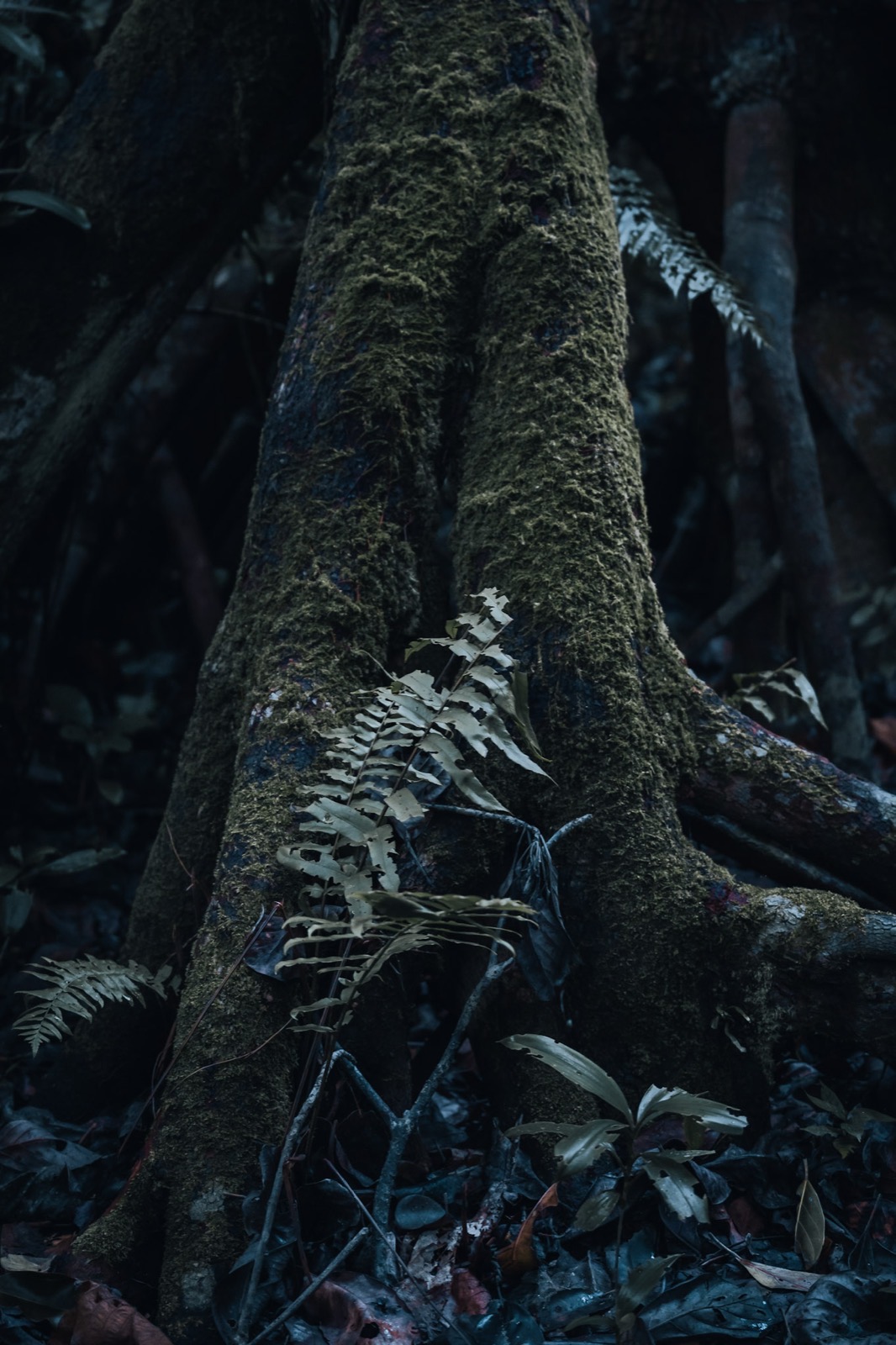
The forest on the mountain slopes is demanding. Paths are steep and root-covered; during the dry season they are manageable but strenuous; in wet season they are genuinely difficult. The chimps range according to food availability, which means on some days they are low on the slopes and the trek to find them takes under an hour. On other days they are high on the mountain and the approach takes most of a strenuous morning. Chimp trekking duration at Mahale typically ranges from 2 to 6 hours total for the day. Your guides assess conditions and adjust the approach accordingly.
When you find them, the behaviour you are likely to see includes:
- Grooming sessions: adults in pairs or small groups working through each other’s fur — the primary social currency in chimpanzee society; who grooms whom reveals the community’s current hierarchy and alliances
- Feeding: the chimps feed as they move, stripping bark, breaking fruit, pulling leaves; watching an adult peel a branch with its teeth and eat methodically is mundane and completely engrossing
- Infant play: juveniles chase, tumble, and use adults as climbing structures; they also approach adult males in ways that would not be tolerated between adults
- Dominance displays: male chimps conduct periodic charging displays — branch-shaking, bipedal running, ground-drumming — to assert or contest status; these happen at close range and are loud and dramatic; guides will direct you to stand still and avoid direct eye contact
- Vocalisation: the pant-hoot call rising through the forest before you see the animals; at close range, a constant low-level acoustic backdrop of grunts, barks, and lip-smacks
Adult male chimpanzees are substantially stronger than humans per unit of body mass and should be treated with respect even when habituated. The guides are experienced in reading body language and know the individual animals. Following their instructions during any display behaviour is non-negotiable.
Accommodation and the Greystoke experience
Greystoke Mahale, owned and operated by Nomad Tanzania, is the primary accommodation option for the park and one of the most distinctive camps in East Africa. It was built from reclaimed dhow wood collected from local lakeside villages — the tented chalets are heavy timber structures on stilts over a white-sand beach, with the lake directly in front and the forest rising immediately behind.
Published rates for the 2025–2026 season run from USD 1,125 per person sharing (low season: February to mid-March) to USD 2,365 per person sharing (peak season), fully inclusive. The fully inclusive rate at Greystoke includes chimp tracking permits, all meals, all drinks, camp activities (kayaking, paddleboarding, snorkelling), and boat transfers from the Kasunga airstrip. Park entry fees are additional.
The camp has no grid electricity — it runs on solar power. Satellite internet is limited or unavailable. The point of Greystoke is the total absence of the normal infrastructure of modern life: no road noise, no mobile signal, no light pollution. At night, the lake is black and completely silent except for hippos moving in the shallows and the forest sounds above.
Greystoke closes from mid-March to early June when the heavy rains make forest tracks impassable. The operational season is late May or early June through to approximately mid-March.
Mbali Mbali Mahale Lodge is an alternative operator on the lake shore offering what it describes as “barefoot luxury” at Mahale — a smaller, more affordable option for visitors who want the park experience without the Greystoke price point.
Getting to Mahale
By charter flight from Dar es Salaam: Approximately 2 hours, typically routing via Tabora or Kigoma. Charter flights during the dry season (June to October) are the primary access method for international visitors arriving through Dar or Kilimanjaro. Scheduled flights run approximately twice weekly during the main season; most visitors use private charters coordinated through their camp.
By charter flight from Kigoma: Approximately 45 minutes to Kasunga airstrip. This is the fastest option if you are arriving via commercial flight to Kigoma (Air Tanzania daily from Dar, approximately 3 hours). After landing at Kasunga, a mandatory boat transfer on Lake Tanganyika reaches the lodges. One itinerary from Greystoke describes the dhow ride from airstrip to camp taking approximately 90 minutes.
By boat from Kigoma: Speedboat takes 4 to 6 hours along the lakeshore to Lagosa on the park’s northern edge, then onward to the lodges. The MV Liemba ferry runs twice weekly from Kigoma and takes approximately 10 hours to Lagosa. Timber boats can take up to 15 hours. The boat routes are used mainly by budget visitors or those combining Mahale with a Kigoma base.
What to bring: Full wilderness kit. Layers matter — mornings on the lake can be cool before the sun rises above the mountain behind the camp, and mountain trekking at altitude gets cold even in dry season. Walking shoes with ankle support for steep forest paths, not trail runners. Camera with a fast mid-range lens (50-100mm equivalent) rather than a long telephoto — the chimps are close, the forest light is low, and you need depth of field more than reach. Soft bags only: most bush charter flights restrict to 15 kg with soft-sided luggage; hard-shell suitcases are not accepted.
The western Tanzania circuit
Mahale and Katavi National Park are the two parks that form the western Tanzania circuit — one of Africa’s finest two-park combinations. They sit approximately 45 minutes apart by charter flight. Most visitors to Mahale either combine it with Katavi directly or add Gombe Stream as a third stop.
Why the combination works: Katavi delivers the savanna wildlife spectacle — hippo pools at the Katuma River in the dry season hold several thousand animals, the densest hippo congregation in Tanzania; buffalo herds of several hundred animals graze the floodplains; lions and leopards work the edges. Mahale delivers forest wildlife (great apes) plus the lake. Together, the ecological contrast is complete: dry-season savanna at Katavi, montane forest and freshwater lake at Mahale, with no northern-circuit crowds at either location.
A practical western circuit itinerary: Fly Dar → Katavi (3–4 nights, July to October for dry-season hippo concentration) → charter to Mahale (3–4 nights) → charter to Kigoma → commercial flight back to Dar. Total: 7–10 days in western Tanzania. Tanzania’s southern and western circuit parks are best visited during the dry season from June to October.
Best season: July to October aligns both parks at their peak. Katavi’s hippo spectacle peaks in August to October as the dry season reduces the river system to a series of pools. Mahale’s chimp tracking is easiest in the same window, with the forest drier and chimps ranging at lower elevations, sometimes coming down close to the lakeshore in August to October.
Gombe Stream as an optional add: Gombe Stream National Park, approximately 150 km north of Mahale on the same lakeshore, is reachable by speedboat from Kigoma in 1 to 3 hours by charter boat (or up to 4 hours by public water taxi at USD 3.50 each way). Gombe at 35 km² is one of Tanzania’s smallest national parks — smaller and more accessible than Mahale, with budget accommodation options. Gombe’s habituated Kasekela chimpanzee community was the subject of Jane Goodall’s research beginning in 1960. Adding 2 nights at Gombe to a Mahale itinerary allows both great ape research sites to be visited in one western Tanzania trip; the combined logistics require routing through Kigoma.
The western circuit’s primary distinction from anywhere else in Tanzania is the cumulative effect of zero infrastructure. No tarmac roads, no telephone signal, no grid electricity, no chain hotels, no tour vehicles in convoy. The sense of being genuinely far from the normal rhythms of safari tourism — that is the thing that brings serious wildlife travellers to western Tanzania on a second or third trip, and keeps them coming back.
The most complete reference on Tanzania’s chimpanzee research history, the M-group versus the Kasekela community at Gombe, and the comparative trekking experience at both parks is the chimp-trekking comparison guide. For the other half of the western circuit, see the Katavi National Park guide — dry-season hippos, buffalo, and the most remote savanna in Tanzania. Wondering how the western circuit fits into a longer Tanzania itinerary that starts on the northern circuit? A typical approach is 7–10 days in the north, a flight to Dar, then a separate western leg — the safari cost breakdown covers budget ranges across all regions. For TANAPA 2024/25 entry fees (Mahale: USD 94.40 per non-resident adult per day), see the full TANAPA fee breakdown.
Frequently asked questions
How is Mahale different from Gombe?
Both parks have habituated chimpanzees studied since the 1960s — but Mahale is significantly larger than Gombe's 35 km², more remote (no road access at all), and more expensive (Greystoke Mahale from USD 1,125 per person per night versus budget options at Gombe). Mahale's M-group was habituated by Toshisada Nishida of Kyoto University starting in 1965; Gombe's research was by Jane Goodall starting in 1960. The chimp tracking experience is comparable in quality, but Mahale pairs naturally with Katavi for the full western Tanzania circuit, and the lake-and-mountain landscape at Mahale is more dramatic. Gombe is the choice for budget-conscious travellers; Mahale is the choice for those who want complete remoteness and the Greystoke experience.
How do I get to Mahale Mountains National Park?
Charter flight from Dar es Salaam (approximately 2 hours, typically routing via Tabora) or from Kigoma (approximately 45 minutes to Kasunga airstrip). After landing at Kasunga, a mandatory boat transfer on Lake Tanganyika reaches the lodges. Speedboat from Kigoma to Mahale takes 4 to 6 hours along the lakeshore; the MV Liemba ferry runs twice weekly and takes approximately 10 hours to Lagosa on the park's northern edge. There is no road access to the park whatsoever. Your lodge — Greystoke Mahale or any other operator — arranges all transfer logistics as part of the booking. Kigoma is served by commercial flights from Dar (Air Tanzania operates daily, approximately 3 hours).
What are the chimp tracking rules at Mahale?
Maximum 6 visitors per habituated chimp group per day. Once chimps are located, you have 1 hour in their presence. Minimum age is 15 years. Face masks are required at all times during trekking — human respiratory viruses can be fatal to chimpanzees, and Mahale enforces this rule strictly. The minimum permitted distance between tourists and chimps is 10 metres. No flash photography. Guides maintain appropriate distance and will direct visitors to stand still during dominance displays. Tracking starts at first light (typically 6:30–7:00 AM) and can take anywhere from under an hour to most of the day on foot depending on where the chimps have ranged.
What is Lake Tanganyika like at Mahale?
Extraordinary — the lake is 676 km long (world's longest freshwater lake), reaches 1,471 metres at its deepest point (second deepest after Lake Baikal), and is remarkably clear. At Mahale, lodges sit directly on the lake shore with forest-covered mountain slopes rising immediately behind. The water is warm and swimmable, and the Greystoke beach is a genuine white-sand beach — unusual for a national park setting. Lake Tanganyika is shared between the DRC (approximately 45%) and Tanzania (approximately 41%), so the view west from Mahale looks directly across to the Congo. Over 18,750 cubic kilometres of water; approximately 16% of the world's available freshwater.
When is the best time to visit Mahale?
Chimp tracking is possible year-round, but June to October (dry season) is preferred: forest vegetation is thinner, chimps range more predictably at lower elevations and sometimes come down close to the lakeshore, and the tracks are drier. The driest and peak months are August to October. The wet season (November to April) brings photogenic green forest and fewer visitors, but forest hiking is harder. Greystoke Mahale closes from mid-March to early June when heavy rains make forest tracks impassable. For the western Tanzania circuit (Mahale + Katavi), July to October aligns perfectly with Katavi's dry-season hippo spectacle.
Can you see other wildlife at Mahale besides chimpanzees?
Yes — Mahale Mountains National Park has over 350 bird species including forest, water, and migratory birds. The Tanzanian Masked Weaver is among the endemic species associated with the area. The forest has other primate species including nocturnal primates confirmed by ranger surveys. Hippos are in the lake and on the shore at night — hearing them from camp is common. The park also holds the giant pangolin, described as impossible to see elsewhere in Tanzania. Mahale has no lions, so foot tracking through the park is safer than walking safaris in lion country.