
Facts & prices checked: 2026-06-24
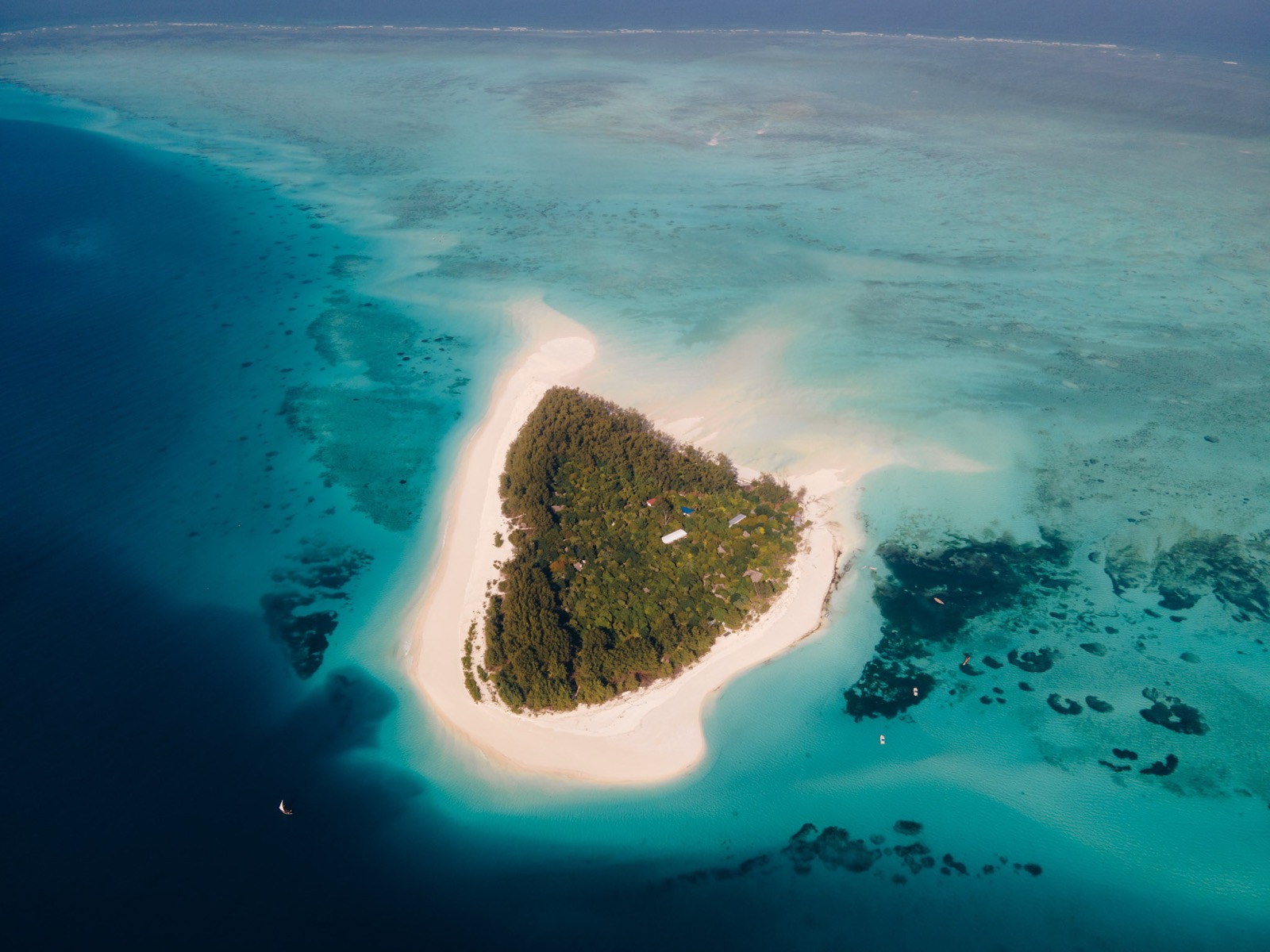
Chumbe Island is the quietest destination on any Zanzibar itinerary. It sits 40 minutes by boat south-west of Stone Town — barely 0.22 km² of coral rock and forest, with seven bungalows, a Victorian lighthouse, and one of the best-preserved reefs in the Indian Ocean. There are no beach bars, no jet skis, no surf schools. What it has is a reef that has been closed to fishing and anchoring since 1994 — long enough for the coral to recover into something genuinely rare in this part of the world.
I send guests here when they want snorkelling that is actually good, not just marketed as good. Chumbe is one of the few places where the gap between expectation and experience closes rather than widens.
What Chumbe Island is
Chumbe is a privately protected marine reserve managed by CHICOP — the Chumbe Island Coral Park, an NGO established in 1994. In that year the reef surrounding the island was declared a no-take zone: no fishing, no anchoring, no collection of marine life of any kind. The NGO finances this entirely through ecotourism revenue — no government subsidy, no external donor funding, no grants, making Chumbe one of the first self-financed marine protected areas in the world.
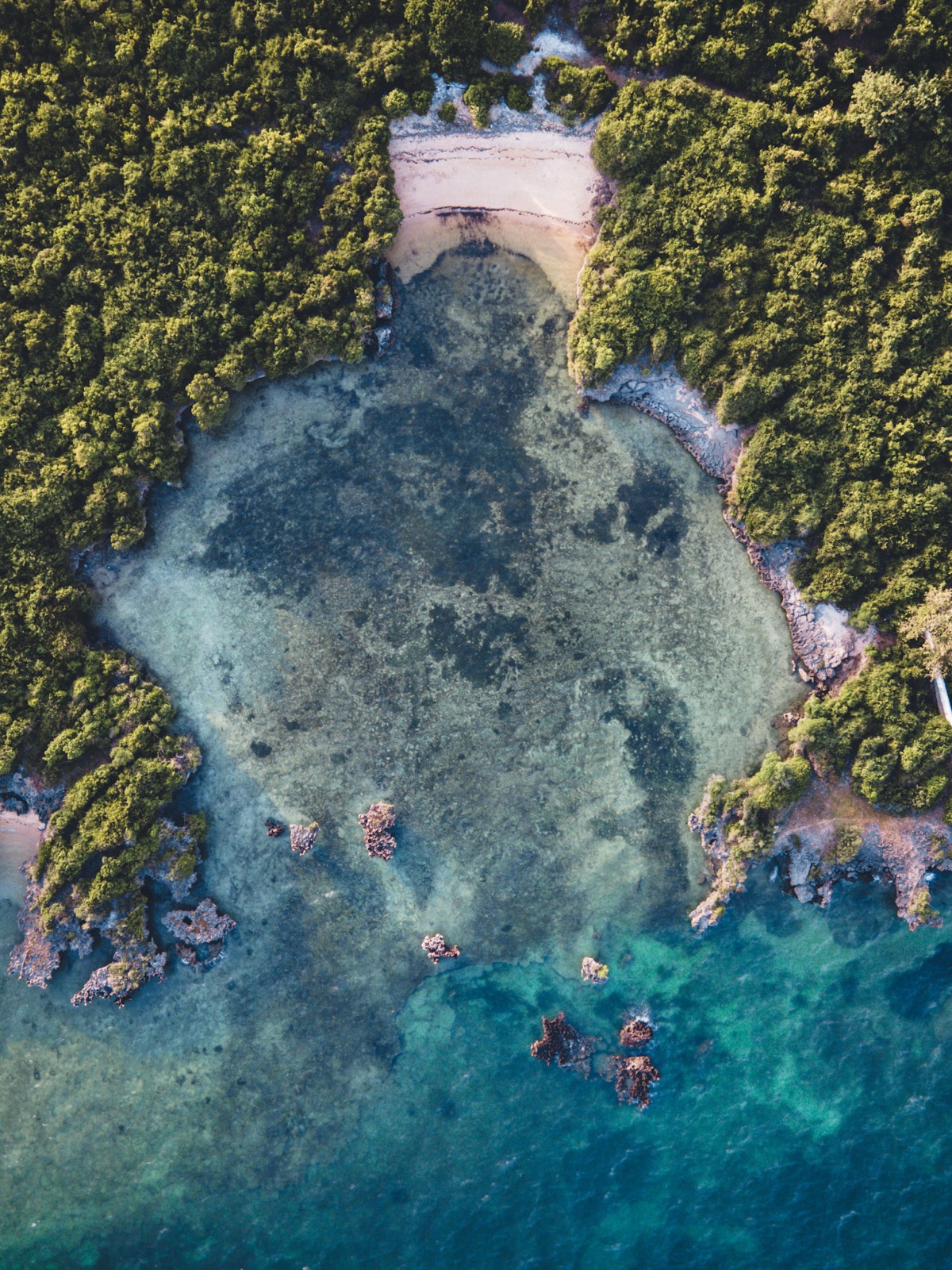
The island itself is long and narrow — approximately 800 metres from end to end — with a belt of coral rag forest covering the interior and the reef running along its western edge. The western exposure gives the reef shelter from the strongest swells and produces calm snorkelling conditions for most of the year. A Victorian-era lighthouse stands at the southern tip, built in 1904 and still operational.
The access restrictions are not a marketing device. The daily boat carries a capped number of guests. Seven overnight bungalows are the only accommodation on the island. No development has been added since the original construction in the 1990s. There are no other structures, no additional restaurant or bar beyond the guests’ dining area, and no visitors beyond the booked group for that day. This is what makes the conservation work: consistent, enforced limits on human pressure over multiple decades.
The reef: 30 years of protection
The results of three decades of no-take protection are measurable. Scientific monitoring by CHICOP and independent researchers has documented more than 200 species of stony coral and over 370 species of fish. Both figures are significantly higher than at comparable unprotected reefs in the same region.
What those numbers mean in practice: coral tables and branching formations that are structurally intact rather than broken or bleached, coral coverage that extends across the reef flat rather than occurring in scattered patches, and fish populations at densities that are visibly higher than at nearby reefs open to fishing. The bleaching events that damaged reefs across the Indian Ocean in 1998, 2016, and subsequent years hit Chumbe too — but the reef’s recovery rate, with no additional stressors from fishing or anchoring damage, has been faster and more complete than at reefs under ongoing human pressure.
Chumbe is a shallow reef — ideal for snorkelling, less suited to experienced scuba divers who want depth and current. Pemba Island to the north or Mafia Island to the south are the Tanzanian options for more dramatic dive conditions. Chumbe is a snorkelling destination, and within that category it is the strongest offering available from Zanzibar.
Snorkelling: what you will see
Green and hawksbill sea turtles are resident at Chumbe year-round, not seasonal visitors. Both species use the reef as feeding and resting habitat. The most reliable marker of how well the protection has worked is their behaviour: at most reefs, turtles dive and move away when approached. At Chumbe, they frequently approach snorkellers and resume feeding without alarm. Close encounters are not special here — they are typical.
Blacktip reef sharks and whitetip reef sharks are also resident. Both species are small (typically 1–1.5 metres) and entirely non-aggressive toward snorkellers. Sightings on a single session are common in the shallower sections of the reef. For guests who have not snorkelled alongside sharks before, CHICOP guides provide a briefing on what to expect and how to behave — the answer, essentially, is to continue snorkelling normally.
Fish diversity is the reef’s other defining feature. Napoleon wrasse — the large, distinctive humphead species that can reach 180 cm — are present and unhurried. Giant grouper, multiple parrotfish species in breeding coloration, triggerfish, moray eels coiled in coral crevices, surgeonfish in schools, and lionfish hovering in overhangs. The standard reef fish of the Western Indian Ocean are all here, at densities that make identification straightforward rather than a matter of luck.
The coral itself is worth looking at as closely as the fish. Table corals — Acropora species — cover sections of the reef flat at two to five metres depth, some of them several metres across and structurally complete. Brain corals, star corals, and the pale branching forms of staghorn coral fill the shallower sections. Coverage is the word: coral covering the substrate rather than coral scattered across it, which is what a healthy reef looks like before the fishing and anchor damage begins.
CHICOP assigns one guide to every four snorkellers. The guide is not optional. They enforce the hands-off protocol — no touching coral, no standing on the reef — navigate you through the most species-rich sections, and identify what you are seeing. This is not intrusive; it is useful. The ratio is low enough that you can ask questions and get answers.
Day trip or overnight
The majority of Chumbe visitors come on a day trip. Guests check in at Jungle Paradise Resort & Spa (the former Mbweni Ruins Hotel, a short drive south of Stone Town) at 09:30, the boat departs at 10:00 and arrives at Chumbe around 10:30–10:40, returning to the mainland in the mid-afternoon. The day-trip cost is USD 90 per person for Chumbe’s own package — boat transfer in both directions, snorkel equipment hire, a guided snorkel session, lunch prepared on the island, and the guided coral rag forest walk — plus a separate USD 25 Blue Economy Levy that the Zanzibar government charges every foreign adult visitor, for USD 115 total.
The day is well structured. You snorkel in the morning when conditions are best and the light is on the right angle for coral colour. Lunch is in the shade of the dining area. The afternoon allows time for the forest walk — CHICOP maintains a trail through the interior, where the guide explains the coral rag forest ecology and points out resident species including coconut crabs, a gecko species endemic to the Zanzibar region, and the insect community — and the lighthouse visit. You are back in Stone Town by late afternoon.
Staying overnight adds a different dimension rather than simply more time. The bungalows are off-grid and properly comfortable — see below — and the experience of being the only people on the island after the day-trip boat leaves is the real product of the overnight stay. At that point Chumbe becomes something quieter than almost anywhere accessible from Zanzibar.
The second reason to stay overnight rather than day-trip is turtle nesting — which requires being on the island after dark.
Turtle nesting season
Green sea turtles come ashore at Chumbe to nest between November and March, with peak activity in December and January. The nesting is not scheduled — turtles choose their site and timing — but CHICOP staff monitor the beach on nesting nights and bring overnight guests to observe from a respectful distance, without torches or flash photography. The protocol is strict: no light of any kind near the turtles until they have begun laying eggs, after which a dim red light may be used briefly for the guests to see.
Adult female green turtles run 100–150 kg. The process of excavating a nest, laying a clutch of 100–120 eggs, and covering the nest before returning to the water takes 45 minutes to an hour on a good night. The turtle does this slowly and with apparent concentration. It is quiet, unhurried, and completely different from any wildlife encounter in daylight.
Day-trip guests cannot see this because they leave the island in the afternoon. Overnight guests staying during November to March have a meaningful probability of a sighting on at least one of their nights, depending on how active the nesting season is that year.
The eco-bungalows
The seven bungalows were built in the late 1990s using coral rag stone and makuti palm thatch, designed with engineering systems intended to be entirely independent of mainland infrastructure. They are not glamping tents. They are solid, architecturally considered buildings with indoor-outdoor bathrooms that open to the ocean, sleeping areas with full reef views, and makuti-thatched roofs that moderate temperature without air conditioning.
The engineering systems include rainwater harvesting (the primary fresh water supply), composting waste systems, and roof-mounted solar panels for electricity. All are functional and maintained. The fresh water supply is sufficient for showers; the electricity is adequate for lighting and charging.
All-inclusive means precisely that. The rate — approximately USD 280–400 per person per night (including mandatory government levies), depending on season and group size — covers the Stone Town boat transfer in both directions, three meals per day (predominantly fresh fish and seasonal vegetables), all guided snorkel sessions, the forest walk, and any structured island activity. There is no bar menu, no room service charge, and nothing to purchase on arrival. Bring everything you need: sun protection, medication, reading material, any specific food preferences. Note the soft-luggage rule for the boat.
Seven bungalows means a maximum of fourteen guests if all rooms are double occupancy. Chumbe frequently hosts fewer. Booking through CHICOP’s website is essential — peak months (July–October, December–January) sell out weeks or months in advance.
When to go
Snorkelling conditions are best from July to October — the Kusi (south-east trade wind) season, when Indian Ocean surface water is clear and visibility on the reef reaches 15–20 metres — and again from December to February after the short rains clear. Both windows give calm water on Chumbe’s western coast, which is sheltered from the Kusi swell by the island’s own profile.
For turtle nesting, December and January are the most active months. A stay in early January combines peak nesting activity with good snorkelling conditions — the most complete version of the Chumbe experience.
April and May, the long rains, are the period to avoid. Seas around Zanzibar can be rough and the boat crossing becomes uncomfortable. CHICOP runs year-round and bookings are available in the rainy season, but it is the period of lowest booking rates for a reason. For a full month-by-month breakdown of Zanzibar weather and sea conditions, see the Zanzibar when-to-go guide.
Is Chumbe right for you
Chumbe is the right choice for snorkellers who want a genuinely protected, uncrowded reef and are willing to pay the access cost. The reef quality is meaningfully better than most accessible alternatives off Zanzibar — not marginally better, but categorically different in coral coverage and marine life density. Non-divers and beginner snorkellers are well served: the reef is shallow, the water is calm, and the guide manages safety and orientation throughout.
Chumbe is not the right choice for experienced divers seeking depth and current, for travellers on a tight budget who cannot absorb the day-trip cost, or for anyone expecting a beach day with sand and swimming. The island has no sand beach — it is coral rock shoreline. You are there for the reef, the forest, and the quiet. That is the product.
For the overnight stay: the combination of complete seclusion, conservation context, high-quality architecture, and turtle nesting access makes it a strong choice for travellers who want something more considered than a hotel beach. At the all-inclusive rate it costs more per night than most Zanzibar mid-range accommodation. By Indian Ocean private-island standards, it is reasonably priced.
From Stone Town, Chumbe is the natural extension of a visit that also includes Zanzibar’s diving and snorkelling at Mnemba or the north coast reef. Stone Town is the departure point for the daily boat. For a full picture of Zanzibar’s reef and marine life options, see the diving guide. If you are deciding between Chumbe and Pemba Island for marine activity, the short answer is: Chumbe for snorkelling; Pemba for scuba diving. Chumbe also features prominently in the Zanzibar responsible travel guide as the most credible model for conservation-funded tourism on the island.
Planning to visit more than one island in the archipelago? The Zanzibar island hopping guide covers how to combine Unguja, Pemba, Mafia, and Chumbe in one trip — with sample itineraries from 7 to 12 nights and practical logistics for the inter-island flights.
Frequently asked questions
What is CHICOP and why is the reef so well preserved?
CHICOP stands for Chumbe Island Coral Park — an NGO that has managed the reef as a private Marine Protected Area since 1994. No fishing, no anchoring, no collection of anything from the reef. Thirty years of consistent protection have produced measurable recovery: higher coral density, more species diversity, and fish and turtles that are noticeably less wary of humans than at heavily visited reefs.
How do you get to Chumbe Island?
By private boat, checking in at Jungle Paradise Resort & Spa (the former Mbweni Ruins Hotel, a short drive south of Stone Town) at 09:30 for a 10:00 departure — approximately 30–40 minutes to Chumbe. Day-trip guests and overnight guests travel on the same transfer. There is no public ferry to Chumbe. Book directly through CHICOP's website (chumbeisland.com); the boat does not run without a reservation.
How much does a Chumbe day trip cost?
USD 90 per person for Chumbe's own day-trip package (boat transfer, snorkel equipment, guided snorkel session with 1 guide per 4 guests, lunch, and the guided forest walk), plus a separate USD 25 Blue Economy Levy charged by the Zanzibar government to every foreign adult visitor — USD 115 total. Advance booking is mandatory — capacity per day is strictly limited.
What will you see snorkelling at Chumbe?
Green and hawksbill sea turtles are resident and reliably seen — they are less shy than at most reefs because of the low visitor numbers. Blacktip and whitetip reef sharks, Napoleon wrasse, giant grouper, large parrotfish, moray eels, and 370+ species of reef fish. Coral coverage is dense: table corals, brain corals, and branching staghorn formations at 2–8 metres depth.
Is Chumbe better than Mnemba for snorkelling?
Different strengths. Mnemba Atoll has better conditions for experienced divers — more depth, stronger currents, and dolphins offshore. Chumbe is shallower and calmer, making it the better option for non-divers and beginner snorkellers. Chumbe's coral is more intact than Mnemba's because of the stricter protection and lower visitor numbers. For someone without a dive licence, Chumbe is the stronger choice.
When do sea turtles nest at Chumbe Island?
Green sea turtles nest at Chumbe between November and March, with peak activity in December and January. The nesting happens at night — CHICOP staff monitor the beach and take overnight guests to observe from a respectful distance without torches or flash photography. Day-trip guests cannot access this as they leave before dark.
Can you visit Chumbe Island on a budget?
Not easily. The day trip at USD 115 per person (USD 90 plus the USD 25 government conservation levy) is the budget entry point, and overnight bungalows start at approximately USD 280 per person per night all-inclusive (including mandatory government levies). There is no cheap access to the reef. Chumbe is deliberately small and exclusive — that exclusivity is what keeps the reef in its current condition.