
Facts & prices checked: 2026-06-24
I live year-round on the east coast of Zanzibar, and I watch the reef from the water regularly. The 2024 bleaching event was visible from the surface. In areas that were previously dense with coral, whole patches went white, then brown. Some recovered. Some didn’t.
This is not a crisis only Zanzibar faces — 80% of monitored sites across the Western Indian Ocean experienced bleaching in 2024, driven by the same climate forces that cause bleaching events globally. But it is a reason to be specific about what responsible tourism in Zanzibar actually means in practice.
The coral reef: where things stand
The 2024 bleaching season was the most severe ever recorded in the Western Indian Ocean. NOAA and the International Coral Reef Initiative confirmed it as the fourth global coral bleaching event in recorded history. Tanzania, along with Kenya and the Seychelles, recorded the highest counts of bleaching and coral mortality in the region.
This follows a pattern: major bleaching events driven by El Niño occurred in 1998, 2007, and 2016. The 2024 event was worse than previous ones because sea surface temperatures were elevated for longer — a positive Indian Ocean Dipole combined with El Niño created sustained heat stress across much of the Western Indian Ocean.
The reef is not gone. Recovery happens, but it requires time (years to decades for complex coral structures) and, critically, the absence of additional stress. The additional stresses that responsible tourism can control are:
- Physical damage: fins brushing coral, hands touching polyps, anchors dropped on reef structures
- Chemical damage: oxybenzone and octinoxate (the main UV filters in standard sunscreens) are toxic to coral larvae in extremely small concentrations — parts per trillion — and have been shown to bleach coral in laboratory conditions
- Sediment stress: kicking up sand onto coral with fins smothers the polyps
None of these are caused only by tourism — coastal erosion, runoff, fishing nets, and boat traffic are larger contributors at scale. But they are the things individual travellers can directly control.
What to do:
- Use mineral sunscreen only (zinc oxide or titanium dioxide as the active ingredient). Apply 20 minutes before entering the water.
- Keep fins well above the reef and the sand. The “hovering snorkeller” position — body horizontal, fins high — is correct technique.
- Never touch coral, even healthy-looking coral. Oils from skin transfer to the polyp surface and create conditions for infection.
- Never stand on the reef flat. What looks like dead coral rubble may be encrusting life.
Dolphins: the ethical tour versus the problematic one
The spinner dolphins and Indo-Pacific bottlenose dolphins of Menai Bay Conservation Area near Kizimkazi are among the most visited wildlife in Zanzibar, and among the most studied for tourism impact. Peer-reviewed research has confirmed that boat tourism in the bay alters dolphin diel resting behaviour — the animals rest during the morning hours when boat pressure is highest, and the disruption is measurable.
Scuba Diver Life and marine researchers have separately documented that irresponsible dolphin tourism stresses the animals and disrupts feeding and mating behaviour. The problem is specific: operators who chase pods, enter the water directly among resting dolphins, and use engine noise to drive dolphins to the surface.
What distinguishes an ethical dolphin tour:
- The boat stops at distance and switches the engine off. Dolphins approach on their own terms, or they don’t.
- Swimming is permitted only when dolphins actively come to the boat — not chased.
- Guides limit the time spent with each pod and move on if dolphins show avoidance behaviour.
- Smaller boats (fewer than 10 passengers) cause less disruption than large launches.
What to avoid: Any operator who “guarantees” close contact with dolphins is by definition not operating ethically. You cannot guarantee close contact without chasing or herding. The morning departure time (06:00–06:30) matters — it’s when dolphins are resting in the bay before moving offshore for feeding. An operator leaving at 08:00 is competing with a dozen other boats for access to disrupted animals.
The honest Kizimkazi dolphin experience does not guarantee anything. A good guide creates the conditions for dolphins to choose the encounter. That is also, in my experience, when the genuinely memorable moments happen.
Red colobus: the only-here primate
The Zanzibar red colobus is found on no other island and nowhere on the African mainland. The global population is approximately 5,862 individuals. This is not a species on the edge of extinction — but it is a species with no fallback position. If it goes from Zanzibar, it goes entirely.
The population has already contracted: researchers have documented that red colobus has gone locally extinct at 4 previously recorded locations. 4 more sites hold only a single family group, meaning any disturbance at those locations could end the local population.
Jozani-Chwaka Bay National Park is where the most significant remaining population lives, and where most wildlife tourism takes place. The monkeys are habituated to humans to a degree that allows close observation — which is a double-edged condition. The same habituation that makes photography possible also makes them vulnerable.
Rules for red colobus interaction:
- Maintain a minimum 3-metre distance at all times
- Do not offer or place food on the ground where monkeys can access it (the habituated colobus in Jozani have been documented approaching humans for food — this reinforces dependency and changes their foraging behaviour)
- Do not make sudden movements or loud noises that cause the troop to flee
- Do not photograph with flash (they are in dappled forest light; adjust ISO instead)
- If a monkey approaches you, stand still and don’t reach toward it
The entry fee: USD 12 per person, going to park management and partly reinvested in community projects — schools and water systems in the villages around the forest. The surrounding communities have a financial interest in the park’s conservation, which reduces poaching pressure.
Sea turtles: what the guidelines actually say
The Mnarani Marine Turtles Conservation Pond in Nungwi is a community rehabilitation centre established in 1993, where approximately 50 green and hawksbill turtles are held in a natural tidal lagoon before release. Entry is USD 10; it is open 09:00–18:00 daily.
The guidelines for visiting are specific:
- Do not touch turtles in the sanctuary. The oils and bacteria from human skin transfer to the turtles’ shells and can cause health problems.
- Do not use flash photography near turtles at any time — in the water or on nesting beaches.
- Wild turtles encountered while snorkelling should be watched from above, not pursued underwater. If you swim toward a turtle, it will typically dive and may exhaust itself trying to escape if it cannot surface for air.
- On nesting beaches: if you see a turtle nesting at night, watch from at least 5 metres away and do not use any light source near the animal until it begins covering the nest.
Chumbe Island: what eco-tourism actually looks like
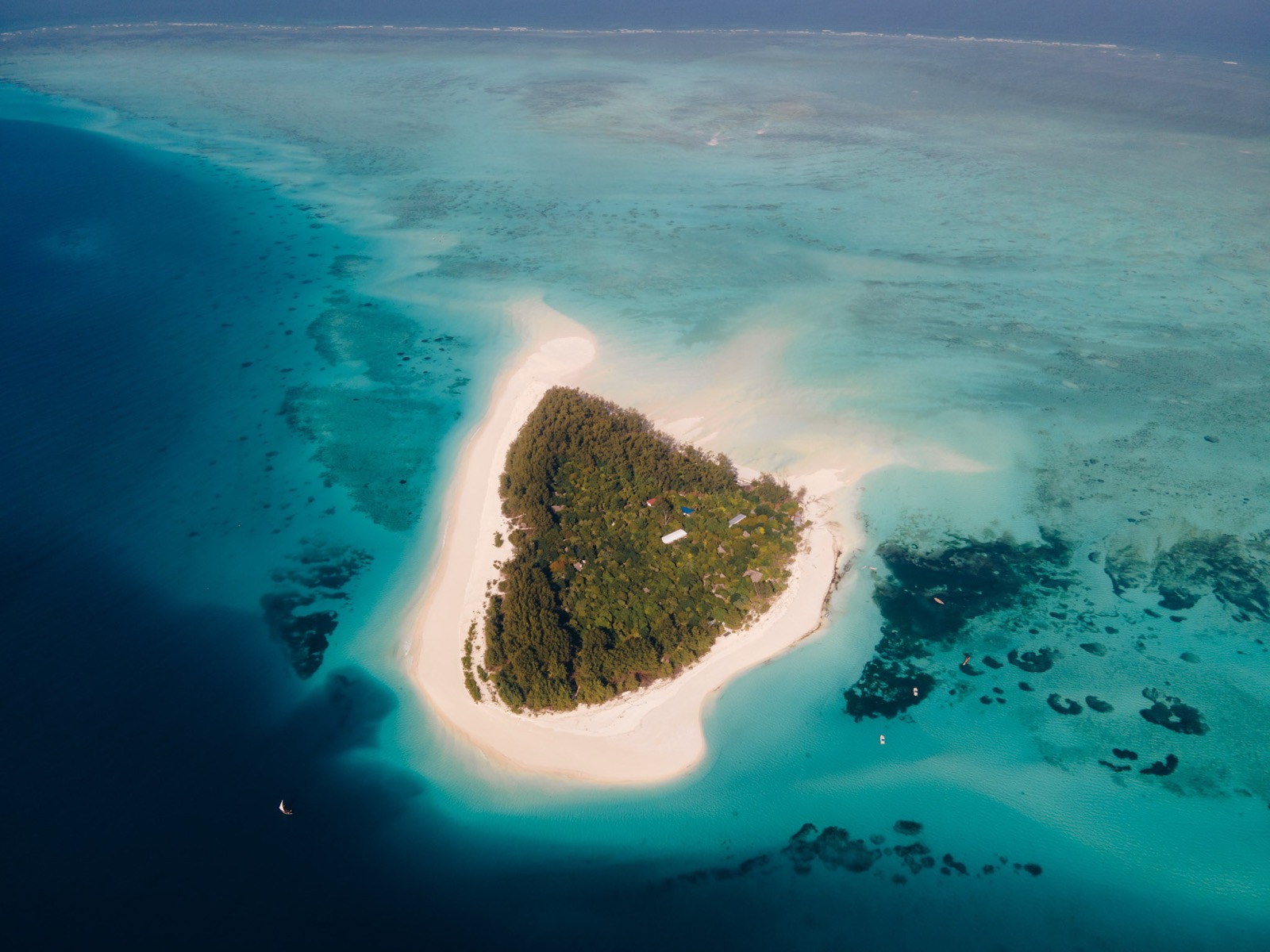
Chumbe Island Coral Park, approximately 12 km south of Stone Town off Zanzibar’s west coast, is the most instructive example of what responsible tourism can achieve when done correctly.
In peer-reviewed literature it is described as the first privately established and managed marine protected area in the world. Its reef sanctuary covers 33 hectares and has been entirely funded by eco-tourism revenue since the park’s establishment. The reef here — protected from fishing and anchoring since the park’s creation — documents over 200 coral species and 370 fish species.
The comparison with unprotected reefs elsewhere around Zanzibar is direct and visible in the water. Chumbe’s reef fish populations are measurably denser and more diverse than equivalent depths on unprotected sections of the west coast. This is what 30 years of no-take protection looks like.
Day visits run USD 100–150 per person and include: a guided snorkel of the reef sanctuary, a forest walk through the protected coral rag forest (home to the rare coconut crab and several threatened plant species), and lunch. Numbers are strictly limited — advance booking is essential.
Chumbe is the most credible case I know of for the argument that conservation-funded tourism is better for a destination than volume tourism.
Mangroves: the marine nursery behind the reef
Zanzibar’s mangrove forests are the foundation of the coastal marine ecosystem that makes the reef and the seafood possible. The dense root networks of the mangrove forest at Chwaka Bay (the largest mangrove area on the main island) shelter juvenile fish, shrimp, and crabs before they move to open reef — most commercially important fish species spend their juvenile phase in mangrove or seagrass habitat. The fish you eat at Forodhani Night Market, and the lobster at east-coast restaurants, almost certainly spent part of their lives in a Zanzibar mangrove root system. The health of Zanzibar’s reef and coastal fisheries is directly connected to whether the mangrove nursery is intact. The Zanzibar mangroves guide covers the ecology of Chwaka Bay in full — 5 of the archipelago’s 10 mangrove species present, how to kayak the tidal channels at high tide, blue carbon conservation programmes (targeting 17,000 ha), and why mangrove health is the foundation of the snorkelling, diving, and seafood quality that makes Zanzibar worth visiting.
Seaweed farming: the women-led sustainable livelihood
Zanzibar’s seaweed farming industry is one of the most direct examples of a local, women-led sustainable livelihood on the island. More than 23,000 farmers cultivate Eucheuma cottonii and Eucheuma spinosum on the east coast reef flat — 88% of them women. The seaweed farming guide explains the co-operative structure, how to visit responsibly (guided walks through co-operatives rather than unannounced wandering through working farms), and where to buy locally processed seaweed products — soap, lotion, tea — that keep more value in the producing communities.
Community-based octopus fishing: a model worth knowing
Zanzibar’s east coast fishing villages have implemented community-based octopus fishery closures that serve as one of the most successful small-scale conservation models in the Indian Ocean.
The approach is simple: communities voluntarily close specific reef areas to octopus harvesting for 2–4 months, then open them. During the closed period, octopus populations recover. Peer-reviewed research (confirmed in a PLOS ONE study) has shown that this approach increased octopus catches by over 700% in study sites. Blue Ventures, the marine conservation NGO that supports the model, has documented positive economic benefits for the fishing villages involved.
What this means for travellers: when you buy fresh octopus from a village in Jambiani or Michamvi, you are participating in an economy that supports conservation through closure compliance. The purchase matters. The alternative — buying from a resort where supply chains are opaque — does not.
The accommodation question: what “eco-lodge” means in Zanzibar
The term “eco-lodge” is used loosely in Zanzibar, as it is everywhere. Some clear markers of a genuinely conservation-oriented property:
Positive indicators:
- Sources food locally (ask where the fish, vegetables, and fruit come from — a specific local supplier is a good sign)
- Has a wastewater treatment system (most east-coast properties discharge directly to the reef flat without treatment — this is the norm, not the exception)
- Does not use single-use plastic amenities (soap, shampoo in individual sachets, plastic straws)
- Employs primarily local staff and pays above minimum wage
- Has relationships with a specific conservation project (turtle release, coral nursery, mangrove planting)
Greenwashing signals:
- “Eco” in the name without any specific environmental policy documented
- Claims of being “carbon-neutral” without a methodology
- Solar panels on the roof but a generator running most of the night
I run Matlai, a boutique hotel on Michamvi Pingwe. We source fish from the village boats that pull up in front of the property each morning. The coconut milk is pressed by the kitchen team from local coconuts. I mention this not as a sales pitch but because it illustrates what local sourcing actually looks like in practice — it is specific, it has a supply chain you can trace, and it involves personal relationships with the people who produce the food.
Practical responsible travel checklist
Before you go:
- Buy mineral (zinc-only) sunscreen before departing — it is hard to source locally
- Pack a reusable water bottle with a filter (tap water is not drinkable but filtered well water is available at most properties)
- Decline single-use plastic bags when shopping (Darajani Market) — bring a cloth bag
In the water:
- Sunscreen applied 20 minutes before entering the water
- Fins well above the reef and sand
- No touching coral, sea turtles, or dolphins
Wildlife guidelines:
- Jozani: 3-metre minimum distance from red colobus, no food, no flash
- Kizimkazi: book with an ethical operator (engine off, no chase), morning departure only
- Turtle sanctuary: observe only, no touch, no flash
Community spending:
- Buy fresh fish from village boats or market, not only from resort
- Book excursions through local guides (hired through your hotel is fine; street-tout excursions are less reliably ethical)
- Tip guides separately, in cash, at the end of a trip — your tip is often their primary income
Interested in contributing beyond tourism? The Tanzania volunteering guide covers conservation, marine, and community programs with minimum duration requirements and how to spot the ethical programs from the voluntourism products.
For the reef sites themselves — quality comparison, ethics of each location, what you will actually see — see the reef-site comparison guide. For the Kizimkazi dolphin tour in full — what ethical guidance looks like in the booking process, departure times, boat size — see the ethical dolphin-tour guide. For Chumbe Island booking and what to bring, see the Chumbe booking guide. For Jozani Forest entry details, opening times, and the full red colobus walk, see the full red-colobus walk guide. For where to stay in a way that supports local supply chains, see the ethical-accommodation guide.
Frequently asked questions
Is Zanzibar's coral reef damaged?
Yes. The 2024 coral bleaching season was the most severe on record in the Western Indian Ocean — approximately 80% of monitored reef sites experienced bleaching, and about 40% experienced moderate to extreme coral mortality. Tanzania, Kenya, and the Seychelles recorded the highest counts of bleaching and mortality in the region. NOAA and the International Coral Reef Initiative confirmed this as the fourth global coral bleaching event in recorded history. The 2024 bleaching was driven by El Niño plus a positive Indian Ocean Dipole — the same pattern that caused severe bleaching in 1998, 2007, and 2016.
How do I avoid harming the reef when snorkelling in Zanzibar?
Four rules: (1) Never touch the coral — even a brush from a fin can kill a polyp colony that took years to grow. (2) Don't wear standard sunscreen in the water — oxybenzone and octinoxate (the two main active UV filters in standard sunscreens) are toxic to coral larvae and bleach reef at very low concentrations. Use mineral sunscreen (zinc oxide or titanium dioxide) instead, and apply it 20 minutes before entering the water. (3) Watch your fins — keep them above the reef and away from the sand (sand kicked onto coral smothers polyps). (4) Don't touch sea turtles, even in designated turtle sanctuaries.
Are dolphin tours in Zanzibar ethical?
Some are; many are not. Peer-reviewed research confirms that boat tourism in Menai Bay alters dolphin diel resting behaviour — they are getting less rest because boats disrupt them throughout their resting period. The ethical tour operator turns the engine off and waits for dolphins to approach. The unethical one chases pods, jumps in the water among them, and guarantees 'swimming with dolphins.' Scuba Diver Life has documented that irresponsible dolphin tourism in Zanzibar stresses dolphins and disrupts feeding and mating. Ask before booking: 'Do you chase dolphins or wait for them to come to you?'
Where does the Jozani entry fee go?
Jozani Forest entry revenue goes to park management and is partly reinvested in local community projects, including local schools. This is a genuine community benefit-sharing model, not greenwashing — it was specifically designed to give the surrounding villages a financial stake in the park's protection. Zanzibar's red colobus, found only on this island, has approximately 5,862 individuals worldwide and has already gone locally extinct at 4 previously recorded locations.
What is Chumbe Island and why is it considered a model for responsible tourism?
Chumbe Island Coral Park, approximately 12 km south of Stone Town (a 30-45 minute boat transfer), is the first privately established and managed marine protected area in the world (confirmed in peer-reviewed literature). Its reef sanctuary covers 33 hectares and is funded entirely through eco-tourism revenue — a pure example of tourism paying for conservation. The reef is one of the best-protected in East Africa, with over 200 coral species and 370 fish species. Day visits run USD 115 per person (USD 90 CHICOP base rate plus a USD 25 government levy) and include guided snorkelling, a forest walk, and lunch.
How can I support local fishing communities in Zanzibar?
Buy fish at Darajani Market or from local village boats rather than only from resort restaurants (which typically import or use middlemen). Support seaweed farmers on the east coast, particularly women-run operations in Jambiani and Michamvi who grow Eucheuma seaweed as a primary income source. Ask your accommodation where its fish, vegetables, and fruit come from — a genuinely local supply chain is the most honest indicator of community integration. Note: Zanzibar has community-based octopus fishing closures that have been shown to increase catches by over 700% in some peer-reviewed studies — these are an example of sustainable fishing practice worth supporting by buying locally.