
Facts & prices checked: 2026-06-24
Most Zanzibar snorkelling reviews say the same thing: go to Mnemba and everything is beautiful. That is mostly true for Mnemba specifically, and less true for a lot of what gets sold as “snorkelling” near the popular resort beaches.
This guide ranks all the viable sites honestly, gives you the actual price range, and flags the ones that disappoint at the cost they charge.
How good is Zanzibar snorkelling — the honest answer
Zanzibar is not the Maldives or Raja Ampat. Coral bleaching events in 2016 and 2024 damaged significant sections of the shallower reefs around the north coast. Anchor damage and boat traffic near the high-volume sites have added to the pressure. A lot of what gets marketed as “snorkelling” is shallow, patchy reef with moderate fish density and visibility of 5–10 metres.
The exceptions — and they are real exceptions — are the protected marine areas: Mnemba Atoll Marine Reserve, Chumbe Island Coral Park, and Menai Bay Conservation Area. These sites have restrictions on access, genuine conservation management, and coral quality that holds up. The difference between snorkelling inside a Zanzibar marine protected area versus a random reef near a resort hotel is not marginal — it is a different experience.
Go to one of the protected sites. Book early. Manage your expectations at everything else.
Best snorkelling spots in Zanzibar — ranked
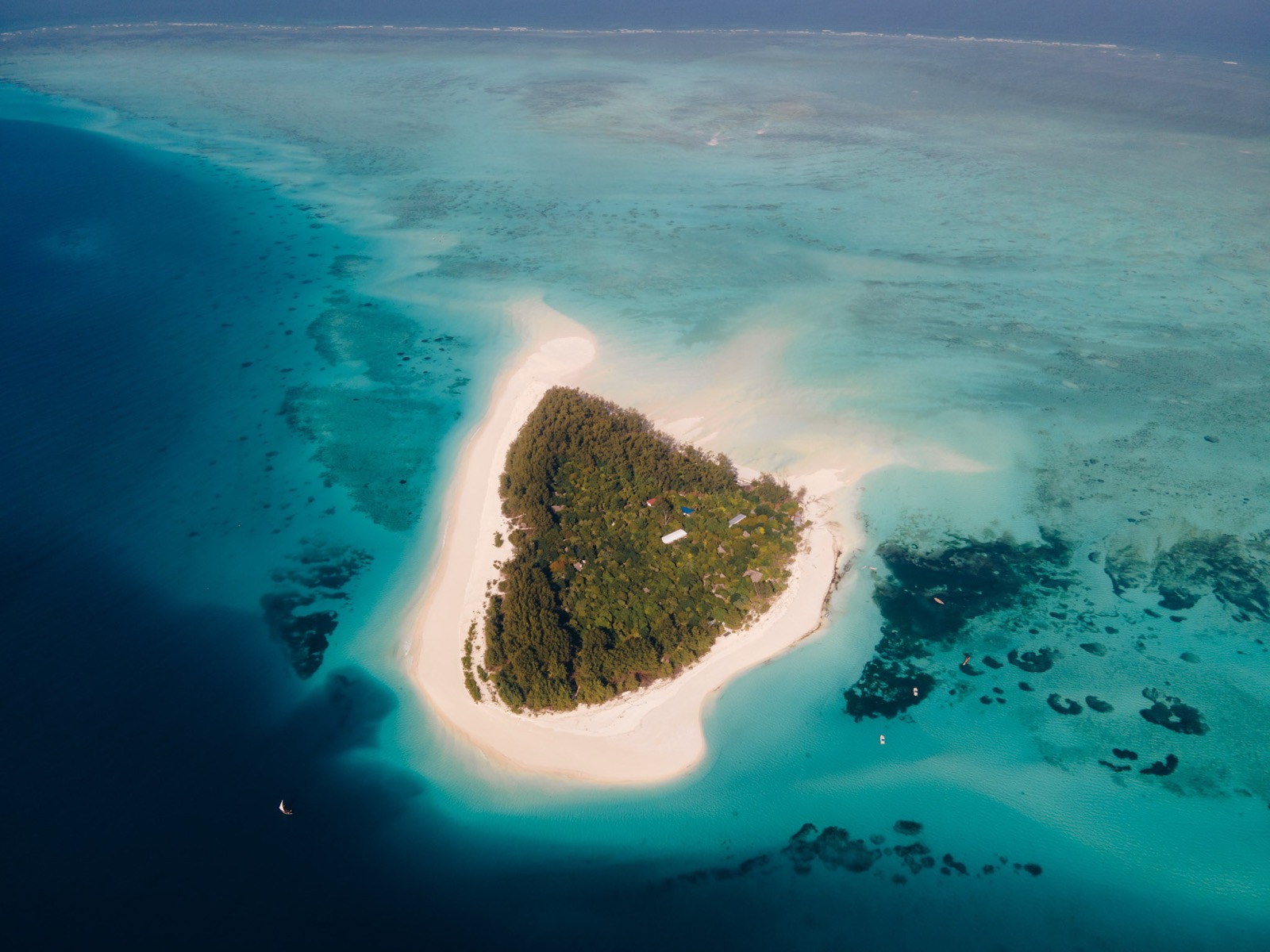
1. Mnemba Atoll (northeast coast)
Why: Best visibility on the island — consistently 20+ metres. Healthy coral under active restoration (CORDAP programme: October 2024 to September 2027, targeting 10% cover increase across 4 hectares). High fish density. Spinner and bottlenose dolphin pods visit the boats regularly.
How to get there: Boat from Matemwe (20 minutes, USD 30–40 per person) or Muyuni pier (10–15 minutes). From Nungwi or Kendwa: approximately 1 hour by boat, USD 45–80 per person.
Key caveat: Multiple operators run daily Mnemba trips. By 09:00, several boats with 8–15 snorkellers each may be at the same reef section simultaneously. Depart from Matemwe at 07:00 to reach the site before the main wave. See the full rundown of Mnemba Atoll for operator and timing advice.
Best months: October–March.
2. Chumbe Island Coral Park (southwest, near Stone Town)
Why: The most carefully managed marine protected area in Zanzibar. The Chumbe reef sanctuary has been no-take and no-anchor since 1994 — long enough that the coral and fish populations have recovered to a standard that stands apart from any other accessible site. Over 200 coral species and 370+ fish species have been recorded. The 1:4 maximum guide-to-visitor ratio means you are not sharing the water with a crowd.
How to get there: 40 minutes by private boat from Stone Town (organised through Chumbe Island itself, not beach touts). Access is pre-booked only — you cannot show up and ask for a boat.
Cost: USD 90 per person + USD 25 conservation levy (USD 115 total). This is not a cheap day trip but includes the guided snorkel, lunch, and island access. The price reflects genuine scarcity: visitor numbers are strictly limited.
Best months: October–March (calmer conditions on the west coast). The site is accessible year-round but rough seas can cancel trips in April–May.
See the Chumbe Island practicalities page for booking process and what the island eco-lodges offer.
3. Safari Blue — Menai Bay Conservation Area (south/southwest)
Why: Not a snorkelling-specialist trip — it is a full-day traditional dhow excursion that includes guided snorkelling on Menai Bay reefs as part of a sandbank-lunch-snorkel structure. What makes it worth including: the dhow format is leisurely, the turtles in Menai Bay are reliably spotted, and the reef sections visited have octopus, rays, and decent coral.
Cost: USD 82 per adult (official Safari Blue price, 2026). This is a full-day trip — you are paying for the entire experience (dhow, snorkel gear, fresh seafood BBQ lunch, sandbank stop), not just the snorkelling. A USD 10 Menai Bay Conservation Area entry fee has applied since September 2025 — confirm with your operator whether it is included.
How to get there: Fumba Point on the southwest coast (about 30 km from Stone Town). Most operators include hotel transfer from east coast or Nungwi.
What it is not: a focused snorkelling experience. The reef sections are good but not spectacular; the sea turtle encounter rate is high; the sandbank lunch is the emotional peak of the day for most people.
4. East coast reef flat (Michamvi, Paje, Jambiani — free)
Why: Every east-coast hotel sitting above a sand flat has access to a natural tidal aquarium at low tide. The reef flat is not what you would call world-class snorkelling — it is 30–60 cm of water at low tide, meaning more walking and peering than proper swimming. What you find: octopus (genuinely common in the pools), starfish, sea urchins, small parrotfish and wrasse, crabs.
Cost: Free. Walk from your hotel.
Best time: 90 minutes before and after low tide. At high tide the flat is submerged (snorkelling becomes possible but visibility near the seagrass beds is murky). The tide tables vary by a few minutes each day — ask your hotel.
Gear: A basic snorkel mask is worthwhile; fins are not necessary on the flat. Most east-coast lodges have a pair of masks to borrow; alternatively rent for USD 5–10 at a beach shop.
5. Tumbatu Island (northwest coast) — cheapest independent option
Why: Tumbatu is a sparsely visited island off Zanzibar’s northwest coast, accessed from Nungwi or Kendwa by local boat (approximately 20–30 minutes). The reef surrounding the island has less dive operator pressure than Mnemba and, in some sections, good coral and decent fish populations.
Cost: Local boat from Nungwi or Kendwa: approximately USD 10–15 per person round-trip plus a donation to the community. No official entry fee, but visitors are expected to compensate local guides. Access requires a local guide or community arrangement — you cannot just land on the island independently.
Restrictions: No drones, no intrusive photography. Modest dress on the island. This is a Muslim community; respect the norms.
Realistic assessment: Tumbatu is for travellers who want an independent, low-key snorkel away from the organised tour boats. The reef quality is inconsistent and harder to assess in advance than Mnemba. Not worth a special trip from the east coast, but a good option if you are staying near Nungwi and want a cheap alternative to the Mnemba boat crowd.
6. Pungume Island — Menai Bay (quiet alternative)
Why: Pungume is a small protected island inside Menai Bay Conservation Area, positioned as a quiet sandbank-and-snorkel option for travellers who find Safari Blue too group-oriented. Several operators offer half-day Pungume trips combining reef snorkelling and a picnic on the sandbank.
Cost: Operator-dependent; approximately USD 30–70 per person for a half-day. Menai Bay Conservation fee (USD 10, in effect since September 2025) additional.
Who it suits: Couples or small groups wanting a private-feel snorkel excursion. Not for anyone looking for the highest reef quality — Pungume is scenic and peaceful rather than spectacular.
What to pay: full price comparison
| Site | Distance from Stone Town | Transport | Snorkel cost (per person) | Gear included |
|---|---|---|---|---|
| East coast reef flat | 1h15 transfer | Walk from hotel | Free | Borrow/rent USD 5–10 |
| Tumbatu Island | 2h transfer + 30 min boat | Local boat USD 10–15 | ~USD 15–25 total | Usually no |
| Mnemba (from Matemwe) | 1h transfer + 20 min boat | Included | USD 30–40 | Usually yes |
| Pungume / Menai Bay | 30–45 min drive | Included | USD 30–70 | Usually yes |
| Safari Blue | 30–45 min drive | Sometimes included | USD 82 (full day) | Yes |
| Mnemba (from Nungwi) | 1h+ to Nungwi + 1h boat | Included | USD 45–80 | Usually yes |
| Chumbe Island | 40 min boat from Stone Town | Included | USD 90 + USD 25 levy | Yes + guide |
When to go
October–March (northeast monsoon): Best for Mnemba Atoll, Chumbe Island, and the north-coast sites. Calm water, clear conditions, highest visibility.
June–September (southeast trade wind / Kusi season): The east coast reef flat is at its best (offshore wind keeps the water clean). Mnemba is rougher from the north but still accessible most days. Visibility remains good at most sites.
April–May: Avoid for snorkelling. Long rains bring rough seas across the island, reduced visibility, and many operators suspend Mnemba and Chumbe trips entirely. Some east-coast reef flat snorkelling is still possible but conditions are unpredictable.
What to bring vs what to rent
Bring from home if you are a regular snorkeller: your own mask (fit matters more than quality for comfort) and a rash guard or long-sleeve UV shirt. A prescription mask if you need one.
Rent on arrival: fins (USD 5–10). Most organised boat trips supply fins and a basic mask. The masks supplied on organised tours are serviceable but often fog — bring your own mask if you want the best experience.
Do not bother bringing: your own wetsuit (Indian Ocean water is 25–29°C, a rash guard is enough). An underwater camera housing is worthwhile if you own one; disposable underwater cameras are expensive and low quality.
Snorkelling without a diving qualification
You do not need any certification to snorkel in Zanzibar. None of the sites listed above require open-water training. If an operator is pressuring you to do a try-dive or suggesting that snorkelling is “not enough” to see marine life, they are upselling.
The Mnemba Atoll surface — the section accessible to snorkellers — has some of the best marine life density on the island. Certified divers access different sites (the wall, deeper coral plateaus), but the snorkelling experience at Mnemba is not a consolation prize.
What to combine with a Zanzibar snorkel day
Snorkelling pairs naturally with these guides:
- Mnemba Atoll — detailed guide — full operator breakdown for the best snorkelling site
- our Chumbe Island write-up — booking process for the marine sanctuary visit
- diving in Zanzibar — if you want to go deeper (certified divers)
- Safari Blue and best activities — puts snorkelling in context of a full week
- the 7-day Zanzibar plan — how snorkelling fits into a week-long plan
- East coast where to stay — choosing the right hotel for reef flat access
Site-by-site comparison: everything in one table
| Site | Best for | Water depth | Visibility | Crowds | Price/person | Best season |
|---|---|---|---|---|---|---|
| Mnemba Atoll (from Matemwe) | Best overall; dolphins | 3–20 m | 20+ m | High by 09:00 | USD 30–40 | Oct–Mar |
| Mnemba Atoll (from Nungwi) | North coast guests | 3–20 m | 20+ m | Moderate | USD 45–80 | Oct–Mar |
| Chumbe Island | Marine biodiversity; couples | 0–15 m | 15–25 m | Very low (capped) | USD 90 + USD 25 levy | Oct–Mar |
| Safari Blue / Menai Bay | Turtles; full-day experience | 1–10 m | 8–15 m | Group (shared dhow) | USD 65–82 | Year-round |
| Pungume Island | Quiet alternative to Safari Blue | 1–8 m | 8–12 m | Very low | USD 30–70 | Year-round |
| Tumbatu Island | Budget; independent travellers | 1–15 m | 10–15 m | Very low | USD 15–25 total | Jun–Sep |
| East coast reef flat | Free; tide-pooling; kids | 0.3–1.5 m | Murky/clear | None | Free | Year-round (check tides) |
What to see at each site: the marine life breakdown
The question I am asked most at Matlai is not “which site is best?” but “what will I actually see?” The answer depends entirely on where you go and when.
Mnemba Atoll
The standout marine encounter at Mnemba is spinner and bottlenose dolphins — two species (Stenella longirostris and Tursiops aduncus) are documented in the waters around Matemwe year-round. On most early-morning departures, the boat passes through dolphin pods en route to or from the snorkel site. This is the best near-shore dolphin encounter on the island that does not require a separate dolphin-tour boat (which can stress the animals through repetitive chasing).
In the water at Mnemba:
- Bumphead parrotfish — large, schooling, unmissable
- Grouper (various species) in the coral heads
- Moray eels in crevices
- Reef sharks (whitetip and blacktip) — common, not threatening to snorkellers
- Parrotfish, surgeonfish, angelfish in the mid-water
- Hawksbill turtles — occasional, more common at Safari Blue
CORDAP’s active coral restoration project at Mnemba (October 2024–September 2027) is targeting a 10% increase in coral cover across a 4-hectare restoration area. The reef is being actively managed — do not touch or stand on coral.
Chumbe Island
Chumbe’s reef sanctuary has been a no-take, no-anchor marine protected area since 1994 — the first privately managed MPA in the world. The 33-hectare reef sanctuary has had over 30 years of recovery without fishing or anchor damage.
In the water at Chumbe:
- 200+ coral species (one of the highest counts on any accessible Zanzibar reef)
- 370+ fish species — surgeonfish, lionfish in surge channels, triggerfish, butterflyfish
- Hawksbill turtles — more reliably seen here than at most sites
- Octopus in the reef crevices
- The reef walls drop into clear water — visibility regularly 15–25 metres
The 1:4 maximum guide-to-visitor ratio means your guide identifies what you are looking at in real time. I have been here with guests who had never snorkelled before — the combination of managed reef and personal guidance makes it genuinely accessible and genuinely impressive.
Safari Blue / Menai Bay
The marine life at Menai Bay is different from the reef sites: this is a shallow, seagrass-and-sand bay environment where the signature encounters are sea turtles and rays rather than reef fish density.
In the water at Safari Blue:
- Green and hawksbill sea turtles — very reliable; Menai Bay is a known feeding ground
- Stingrays and spotted eagle rays — frequently visible on sandy patches
- Octopus — common in rock areas
- Indo-Pacific bottlenose dolphins (Tursiops aduncus) in the bay — documented by peer-reviewed research (PLOS ONE, 2016)
- Reef fish and moderate coral at the snorkel reef sections
Note on dolphins at Kizimkazi: the research paper (Amir et al., PLOS ONE 2016) confirms that boat tourism around Kizimkazi’s dolphin population alters their daytime resting behaviour — the dolphins shift to resting at night instead of the afternoon. Ethical operators limit engine approaches. If your boat chases dolphins or enters the water while the engine is running near the pod, that is a sign to choose a different operator next time.
East coast reef flat
The reef flat along Michamvi, Paje, and Jambiani is not a classic snorkelling environment — it is a tidal aquarium that reveals itself at low tide. The tidal range on the east coast is large: at low tide the sea retreats hundreds of metres, exposing pools 30–60 cm deep full of reef life.
What you find here:
- Octopus — genuinely common; they are the most surprising encounter for most guests
- Sea urchins (wear sandals/reef shoes)
- Starfish — various species on sandy patches
- Small parrotfish and wrasse in the coral heads
- Crabs, hermit crabs, and molluscs in the rock pools
- Seagrass patches where sea cucumbers are found
The north coast (Nungwi, Kendwa) does not have this experience — deep water there means no reef flat. The east coast reef flat is unique to the tidal beaches and is free to access from any east-coast hotel.
Best months by site: planning calendar
Not all sites peak at the same time. The key variable is which monsoon wind is blowing and what it does to sea conditions.
| Month | Mnemba/North | Chumbe/West | Safari Blue/South | East Coast Flat |
|---|---|---|---|---|
| January | Excellent | Good | Good | Good |
| February | Excellent | Good | Good | Good |
| March | Excellent | Good | Good | Good |
| April | Poor (rough) | Poor (rough) | Moderate | Poor (murky) |
| May | Poor (rough) | Poor (rough) | Moderate | Poor (murky) |
| June | Good | Moderate | Good | Excellent |
| July | Good | Moderate | Good | Excellent |
| August | Good | Moderate | Good | Excellent |
| September | Good | Moderate | Good | Excellent |
| October | Excellent | Good | Good | Good |
| November | Good | Good | Good | Good |
| December | Excellent | Good | Good | Good |
The pattern: The northeast monsoon (Kaskazi, roughly October–March) brings calm conditions to the north and northeast — optimal for Mnemba and Chumbe. The southeast trade wind (Kusi, June–October) is offshore on the east coast, keeping those waters clean and the reef flat productive. The long rains (April–May, Masika) shut down most organised boat trips island-wide.
Humpback whale bonus (July–September): Between 400 and 600 humpback whales pass through Zanzibar waters annually on their southward migration, July to October, peak July to September. While whale-watching is not a standard snorkel-trip add-on, some operators run dedicated lookout trips. Ask locally about current sightings.
How to book: avoiding the markup
Most snorkelling trips in Zanzibar are sold through three channels, at three different price points:
- Your hotel desk — usually 30–50% more expensive than booking direct, because the hotel takes commission. Convenient but costly.
- Tour desks in Stone Town or at beach hubs in Paje/Matemwe — better prices, comparable trips. Walk around and compare three quotes before booking.
- Directly with local operators at the boat jetty — the cheapest, especially for Mnemba from Matemwe. The boat captains at Matemwe pier offer the same trip your hotel sells for 30–50% less. The quality is the same.
For Chumbe Island: Book only directly through Chumbe Island Coral Park (chumbeisland.com). The island controls all access — there are no agents with allocation and you cannot show up on spec. The official package includes boat transfer from Stone Town (40 minutes, departing 10:00), guided snorkelling, lunch, and island access.
For Safari Blue: Booking the Official Safari Blue experience at USD 82 through their own office (Fumba Point or Stone Town desk) is the correct price. Third-party operators resell at various rates — some lower (USD 65 sharing boat), some higher if bundled with transfers.
Gear guide: what to bring, what to rent
The gear question I get most: should I bring my own snorkel set or rent on arrival?
Bring from home:
- Your own mask — fit is the single biggest factor in a good snorkel experience. A cheap mask that fits your face beats an expensive one that leaks. Take it in hand luggage.
- Rash guard or long-sleeve UV shirt — Indian Ocean water temperature is 25–29°C (warmer in January–March, cooler in July–September). You do not need a wetsuit, but a rash guard prevents sunburn on the surface and adds minor warmth on the longer Chumbe visits.
- If you wear glasses: a prescription mask. Available from online dive retailers before you travel; worth it for the entire holiday.
Rent on arrival (USD 5–10):
- Fins — available at every snorkel operator and most beach shops. Unnecessary on the east coast reef flat but useful for Mnemba and Chumbe.
- Basic mask — serviceable but often fog-prone. Spit in the lens and rinse before entering the water (old trick, still works).
Do not bother:
- Wetsuit — warm water, no need
- Underwater camera housing — worthwhile if you already own one, not worth buying for a single trip. Rent a GoPro if you want video.
Snorkelling with children
Zanzibar’s east coast reef flat is the best snorkelling environment for young children — shallow, calm, walkable, and filled with easily visible marine life. Children who have never snorkelled before do well on the flat because the water depth is non-threatening and there is no boat journey or open-water exposure.
For older children (8+) who are confident swimmers: Mnemba is appropriate with an experienced guide and a life jacket. Chumbe has strict capacity limits and the supervised 1:4 ratio makes it manageable for older children comfortable in deeper water.
Safari Blue includes children at reduced rates (check the current pricing at the operator desk) and the full-day dhow format works well for families — there are multiple snorkel stops, a beach lunch, and a sandbank break.
Avoid deep open-water sites without a guide for children, regardless of swimming ability — currents around some of the offshore sites are unpredictable.
The conservation picture: honest reef status
Zanzibar’s reefs are recovering — but the honest picture is mixed. Coral bleaching events in 2016 and 2024 damaged significant sections of the shallower reefs, particularly around the north coast resort areas where bleaching combined with anchor damage and boat traffic. The Mnemba Atoll restoration project (CORDAP, 2024–2027) is actively working to increase coral cover by 10% across 4 hectares — a positive but modest target that acknowledges the damage.
The marine protected areas (Chumbe, Menai Bay, Mnemba Atoll reserve) show measurably better coral and fish density than the unprotected reef areas near the main resort beaches. This is consistent global pattern: protection works where it is enforced.
What you can do:
- Do not touch, stand on, or collect coral (illegal and damaging)
- Use reef-safe sunscreen or a rash guard instead of chemical sunscreen
- Choose operators who do not anchor on live coral (Chumbe has no anchoring — mooring buoys only)
- Tip guides who provide conservation information — it reinforces the value of the guided experience
The reefs are worth visiting — and worth protecting for the people who visit after you.
Frequently asked questions
Is Zanzibar snorkelling good?
It depends entirely on where you go. Mnemba Atoll has world-class visibility (20+ metres) and healthy coral — one of the best non-diver reef experiences in the Indian Ocean. The reef near the main resort beaches (Nungwi, Kendwa) is more average — suffered bleaching and anchor damage. The east coast reef flat is interesting but shallow and best explored on foot at low tide rather than by mask and fins.
Do you need a boat for snorkelling in Zanzibar?
Not always. The east coast reef flat is walkable at low tide — many east-coast lodges are positioned directly above coral pools at low water. For the quality sites (Mnemba Atoll, Chumbe Island, Pungume) you need a boat. Most tours operate from main beach hotels or local jetties and include the boat in the price.
How much does snorkelling cost in Zanzibar?
Price varies by site: free (east coast reef flat at low tide) to USD 115+ (Chumbe Island). Day trips to Mnemba from Matemwe run USD 30–40 per person. Safari Blue full-day (Menai Bay) costs USD 82 per adult. Gear rental at most beach shops: USD 5–10. Most organised trips include gear.
When is the best time to snorkel in Zanzibar?
October to March (northeast monsoon) for Mnemba and north coast sites — calm seas, good visibility. June to September for the east and south coast (the southeast trade wind is offshore here, leaving the water calm). Avoid April and May — rough seas island-wide, reduced visibility, many operators suspend trips.
What fish and marine life will I see?
At Mnemba: bumphead parrotfish, grouper, moray eels, reef sharks, spinner and bottlenose dolphins (often). At Chumbe: 370+ fish species including surgeonfish, angelfish, lionfish in the surge channels. At Safari Blue / Menai Bay: turtles, rays, octopus. East coast reef flat: octopus, sea urchins, starfish, small reef fish in the tidal pools.
Is Mnemba Atoll worth the price?
Yes, if you go early. At USD 30–40 from Matemwe, Mnemba offers some of the best snorkelling visibility in the Indian Ocean — consistently 20+ metres. The honest caveat: it can get crowded (multiple boats by 09:00). Depart from Matemwe at 07:00 to reach the site before the rush. From Nungwi or Kendwa the trip costs USD 45–80 because of the longer boat ride — still worth it, but less cost-effective.
What is the difference between snorkelling and diving in Zanzibar?
Snorkellers access the surface reef — the top 0–5 metres of the underwater environment. At Mnemba, the snorkelling layer has excellent coral and high fish density; certified divers access the deeper wall and plateau sites with pelagic species. You do not need any certification to snorkel at Mnemba, Chumbe, or Safari Blue. If an operator pressures you into a try-dive, they are upselling.
Can I snorkel in Zanzibar if I cannot swim well?
Yes, with precautions. At organised boat trips (Mnemba, Safari Blue), life jackets are provided — you float face-down with the snorkel rather than swimming hard. The east coast reef flat at low tide is shallow (30–60 cm) and involves walking, not swimming, making it excellent for beginners. Chumbe has guided snorkelling with a strict 1:4 guide-to-visitor ratio, the most supported experience on the island.
Are there whale sharks near Zanzibar?
Whale sharks are not reliably encountered around Zanzibar itself. The dedicated whale shark season is at Mafia Island Marine Park, approximately October to March (peak December to February), where around 180–200 individual sharks have been documented in peer-reviewed research. From Zanzibar, a day trip to Mafia Island by light aircraft (approximately 20 minutes by light plane) and local boat is possible, with snorkel sessions costing approximately USD 60–100 per person plus transfer costs.