
Facts & prices checked: 2026-06-24
Seven days in Zanzibar rewards a clear structure: spend the first two nights grounded in Stone Town, understanding the city before you escape to the coast. Then move to the east and stay put. Changing hotels every day kills the rhythm — the tides do not care about your checkout time.
This is the itinerary I use as a starting point for almost everyone who visits for a week.
Before you arrive: three things to sort in advance
Most of Zanzibar is easy to arrange on arrival or a day ahead. Three things are not — leaving them to chance costs either money, a refused entry, or a worse experience.
1. ZIC inbound insurance — mandatory since October 2024
Since 1 October 2024, all foreign non-resident visitors to Zanzibar (Unguja and Pemba) must hold inbound insurance from the Zanzibar Insurance Corporation (ZIC) before or on arrival. Cost: USD 44 per adult, USD 22 per child aged 3–17, free for children under 3. The policy covers up to 92 days. Apply at inbound.visitzanzibar.go.tz before you fly — you must show the QR code at immigration. Entry can be refused without it. This is in addition to your own travel policy, not a replacement for it.
2. Malaria prevention
Zanzibar sits below 1,800 m and malaria transmission occurs year-round across the whole island. The CDC advises antimalarial prevention for all visitors. See a travel health clinic at least 4–6 weeks before departure.
3. Safari Blue — book before you leave Stone Town
Safari Blue fills quickly during the July–October high season. I tell every guest the same thing at check-in: book it on Day 2 or Day 3 morning while you are still in Stone Town, before you move to the east coast. The most common bad east-coast day I hear about is someone who decided at 09:00 they wanted Safari Blue and the next slot was four days away. Kizimkazi dolphin tours are more flexible but worth booking the evening before to secure a reliable ethical operator.
Day 1 — Arrive Stone Town
Your flight likely arrives mid-to-late afternoon, which is typical for international connections routing through Dar or Nairobi. The transfer from Zanzibar Airport to Stone Town takes 15–20 minutes (USD 15–20 for a private taxi).
Check in, drop your bags, and walk the medina before dark. Stone Town is confusing at first — the alleys do not follow a grid. That is the point. Get lost deliberately for an hour. Find the old Omani townhouses with their carved wooden doors, walk down to the waterfront at Mizingani Road, and start identifying your bearings by the landmarks: the Old Fort to your left, the Beit el-Ajaib (House of Wonders) colonnade ahead.
Dinner: Forodhani Gardens Night Market. Free to enter, open from approximately 18:00. Seafood mishkaki (skewers), Zanzibar pizza, sugarcane juice — most stalls charge USD 2–8 per item. Bring Tanzanian shillings or small USD bills; most stalls do not have card machines. Do not overeat. Tomorrow is a full day.
Day 2 — Stone Town: Old Fort, the old city, Prison Island (optional)
Stone Town became a UNESCO World Heritage Site in 2000, and the density of significant architecture in a compact area justifies half a day of slow walking. Start early — before 09:00, the alleys near the market are cooler and the light is better.
Morning: Old Fort (Ngome Kongwe). Built by the Omani Arabs on the ruins of a Portuguese chapel between 1698 and 1701, the fort is the oldest surviving building in Stone Town. Entry is free to the courtyard; the amphitheatre inside hosts weekly cultural shows. Browse the craft and artisan stalls if you are looking for gifts. Then walk north through the old Arab quarter — Hurumzi Street, Sokomohogo Street — to see the private carved-door townhouses.
Midday: skip Prison Island. It is 5.6 km northwest of Stone Town, 20–30 minutes by boat from the Forodhani pier (USD 30–40 per group boat return, plus USD 4 per person entry). The island houses a colony of giant Aldabra tortoises — some over 150 years old — which the photos make appealing. In reality the boat queue is long, the island is hot and largely featureless beyond the tortoises, and the time is better spent in Stone Town itself or resting before the spice tour. Go if you have a clear half-day and the tortoises are high on your list. Otherwise, use the afternoon.
Afternoon: coffee and architecture. Stone Town has several rooftop cafés with views across the channel to the mainland. This is a good moment to understand the geography: Dar es Salaam is 70 km west. The city you are in was the regional hub for East African trade for 200 years. At its peak, Zanzibar handled roughly 90 percent of the world’s clove production and was the main slaving port of the East African coast — facts that the physical architecture reflects in its layered Arabic, Indian, and European facades.
Evening: Forodhani again or a restaurant dinner. Stone Town has several proper restaurants beyond the night market — Lukmaan for Swahili food, Emerson Spice for a rooftop dinner, Mercury’s bar on the waterfront for a sundowner. This is your last town evening — enjoy it.
Day 3 — Spice tour morning, east-coast transfer afternoon
Today has two halves with a natural break at midday.
Morning: Spice tour (3–4 hours, USD 20–35 per person). Departs from Stone Town between 09:00 and 10:00. You visit working spice and coconut plantations in the inland hill villages north of the city. A good guide will have you taste raw cinnamon bark, smell ylang-ylang flowers, crush cardamom pods, and see the vanilla orchids climbing their poles. I have done this tour more times than I can count and still find it genuinely interesting — the agricultural history of these spices, and who controlled them, explains most of the 19th-century geopolitics of the Indian Ocean. Budget about USD 20–35 per person including guide, transport, and a small lunch.
After lunch: transfer to the east coast (1h15–1h30, USD 55–70 by private taxi). The road runs south from Stone Town, cuts through the interior agricultural belt, then descends to the coast at Chwaka Bay and Michamvi peninsula. The landscape changes from urban to scrubby bush to coconut groves to mangroves to tidal flats. Reach your east-coast hotel by mid-afternoon.
First afternoon: learn the tides. Ask your hotel what time the tide comes in and goes out tomorrow. The east coast has dramatic tidal variation — the reef flat can be completely exposed at low tide (impossible to swim, but extraordinary to walk) and fully submerged at high tide (excellent swimming, snorkelling directly from the beach). Plan your next four days around the tide chart, not the clock.
Day 4 — East coast full beach day
You have nothing to book today. That is deliberate.
The east coast rewards exactly this: time with no fixed schedule. Wake early if the tide is going out and walk the reef flat at dawn — the pools left by receding water at Michamvi Pingwe are some of the best natural aquariums I have found on the island. Starfish, sea urchins, small reef fish, anemones. Take shoes you can get wet.
At high tide, the water comes to the beach and the swimming is calm and warm. Most east-coast beaches have no significant wave break. The Indian Ocean here is sheltered by the outer reef — nothing like the west-facing ocean beaches of Portugal or Morocco.
If you are at a lodge with a pool: use it at solar noon when the sun is directly overhead. The beach at midday on the east coast, in any month, is hot enough to burn within 20 minutes. The shade and the pool are correct choices between 11:30 and 14:00.
Dinner at the hotel or a short walk to one of the village restaurants (Jambiani and Paje both have good local fish restaurants within 10–15 minutes on foot from most lodges, where a fish with rice and salad runs USD 5–10).
Day 5 — Jozani Forest + Kizimkazi dolphin tour
This is the most logistically active day of the itinerary, and it splits naturally into early-morning and mid-morning activities.
06:00–09:00: Kizimkazi dolphin tour (USD 35–50 per person). Kizimkazi village is at the southern tip of the island, about 30–40 minutes from Paje or Jambiani. Tours depart at first light — between 06:00 and 09:00 — when the sea is flattest and the spinner and bottlenose dolphin pods are most reliably active in the channel south of the island. Boats go out for 1–2 hours. The ethical caveat: many operators chase the dolphins aggressively. Choose an operator that lets the animals approach the boat rather than pursuing them into the water. Ask before booking.
09:30: Jozani Forest (USD 10 per adult, mandatory ranger guide included, approximately 1.5 hours). Jozani is the only indigenous forest remaining on Zanzibar and the habitat of the Zanzibar Red Colobus — a subspecies found nowhere else on earth. The forest is dense, cool, and quiet after the heat of the coast. The colobus troops are habituated to human visitors and come close; they are not tame, but they will feed within arm’s reach. At peak population Jozani holds approximately 5,862 colobus individuals. Guided walks are mandatory — you cannot enter without a ranger, and the fee supports both conservation and local communities (50% goes directly to village organisations).
Lunch back at your hotel by 13:00. Rest in the afternoon — the dolphin early start earns it.
Day 6 — Safari Blue full day
07:00 departure, return by ~16:00. Safari Blue is a full-day dhow excursion from Fumba Point, on the west coast of Zanzibar (about 30 km from the east coast — 45–60 minutes by transfer). The trip visits a sandbank in the channel, reef snorkelling, and has a fresh seafood BBQ lunch included. Sharing boat: from USD 65 per person. Private 2-person boat: from USD 90 per couple. Budget for the full day including transfer.
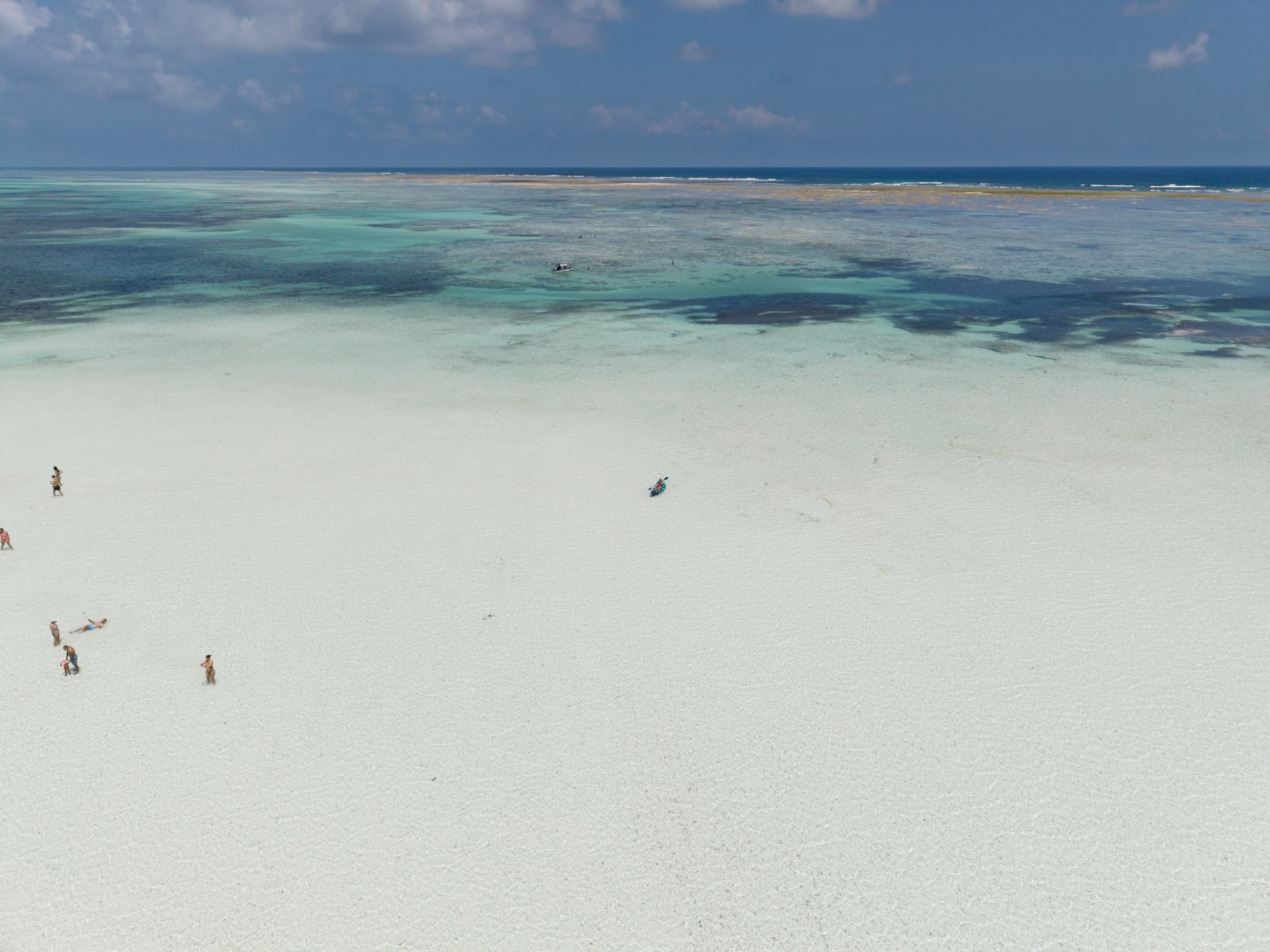
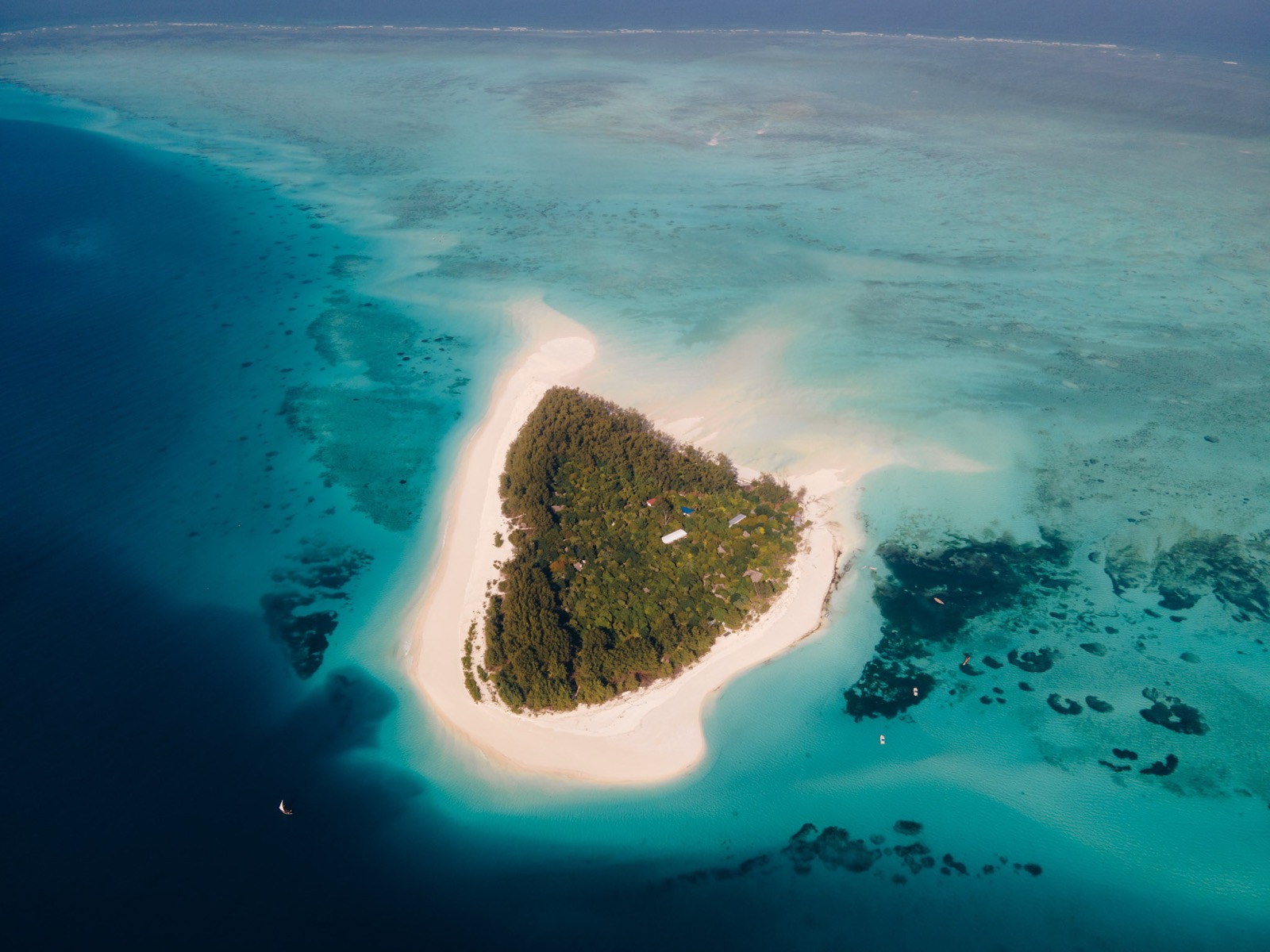
What Safari Blue does well: the sandbank stop is exactly as good as the photographs. At the right tide, a white strip of sand appears in open water with nothing visible in any direction but sea. The reef snorkelling varies in quality depending on the operator’s chosen sites — some have better coral than others. The seafood lunch is consistently good.
Alternative if you prefer reef over sandbank: Mnemba snorkelling. Mnemba Atoll Marine Reserve, off the north-east coast, has visibility of 15–30 metres and reef health that outperforms most of the in-shore sites. Day snorkelling trips from the Matemwe and Nungwi area run from USD 50–80 per person, with about 30–45 minutes on the water each way. This works better if you are staying in the north; from the east coast it is a long transfer day. If your east-coast hotel organises a Mnemba day trip, take it — but not both Mnemba and Safari Blue on consecutive days.
Day 7 — Final morning + depart
Kite lesson (optional, USD 55–70 per hour from Paje). If you are staying near Paje and the wind is up, Paje has some of the most consistent kitesurfing conditions in the Indian Ocean. A two-hour introductory lesson at one of the IKO-certified schools on the beach is a good use of a final morning for anyone curious about the sport. The Indian Ocean kite schools are staffed with patient instructors and the flat, warm water is ideal for learning body-drag before attempting the board.
Otherwise: last swim. Buy whatever you want from the local craft market (Jambiani has a small village market; Paje has several shops selling printed kanga cloth, locally carved wood, and Tingatinga paintings).
Transfer to ZNZ airport. Your transfer time from the east coast: allow 1h15–1h30 plus 90 minutes airport check-in minimum. International flights from ZNZ typically board by early afternoon for late-afternoon departures. Confirm your transfer with your hotel the night before.
East coast tides: the rhythm that runs your week
The east coast operates on tidal logic, not clock time. Understanding this before you arrive turns a confusing schedule into a natural one.
The beaches here have a very low gradient. At Chwaka Bay, the biggest tides expose seabed up to 1.5–2 km offshore at low tide — not a swimming sea, but a reef flat you walk in shoes you can get wet. At high tide the water returns to the beach and swimming is calm and warm, sheltered by the outer reef.
How to plan each day:
- Ask your hotel for the tide table when you check in; it shifts by roughly 50 minutes per day.
- Swimming and snorkelling: target the 2–4 hours around high tide.
- Reef flat walks and tidal pools: go at low tide — pools left by receding water hold starfish, urchins, anemones, and small reef fish.
- Seaweed farm visits in Jambiani: low tide only; the lagoon must be uncovered.
- Safari Blue and boat trips: operators time departures to the tide automatically.
What each east-coast area offers:
- Michamvi Pingwe: the most dramatic tidal flats on the east coast. At low tide the reef pools are among the best natural aquariums I have found without getting in a boat. At high tide the water reaches a tree-lined beach with excellent calm swimming.
- Paje: the widest beach at low tide; flat, shallow water makes it the island’s primary kitesurfing surface. Multiple IKO-certified schools operate along the beach road; an introductory two-hour lesson runs USD 55–70.
- Jambiani: best combination of village atmosphere and reef flat. The seaweed farming plots here are worked by the Mwani Mamas, a women’s collective whose monthly earnings Vogue reported at USD 250–300 — the first generation of financially independent women in their villages. Visits are only possible at low tide; your hotel can arrange a guided visit for approximately USD 10–15 per person. Easy to miss without planning.
What you will spend
| Item | Budget | Mid-range |
|---|---|---|
| East-coast accommodation (5 nights) | USD 40–70/night | USD 120–200/night |
| Stone Town accommodation (2 nights) | USD 50–80/night | USD 100–180/night |
| ZIC Zanzibar insurance (required) | USD 44/adult | USD 44/adult |
| Safari Blue full day | USD 65 | USD 65–82 |
| Spice tour | USD 20–25 | USD 30–35 |
| Jozani Forest entry | USD 10 | USD 10 |
| Kizimkazi dolphin tour | USD 35 | USD 50 |
| Airport transfers (both ends) | USD 30–45 | USD 55–70 |
| Food and drink (7 days) | USD 100–140 | USD 250–400 |
Total (excluding flights), per person: USD 650–1,000 budget / USD 1,400–2,200 mid-range.
Inbound links and further reading
This itinerary references the following guides — use them to go deeper on any section:
- Stone Town travel guide — architecture, what to see, restaurant recommendations
- Spice tour Zanzibar — what to expect, booking logistics
- Jozani Forest — colobus, guided walks, what the fee covers
- Kizimkazi dolphin tour — ethical operators, what to ask before booking
- Zanzibar best things to do — expanded activity list including Safari Blue and Mnemba
- East coast where to stay — Michamvi, Paje, Jambiani — how to choose
- Zanzibar kitesurfing (Paje) — Paje school options and when to go
- Tanzania + Zanzibar 10-day itinerary — adds a mainland safari leg to this structure
Frequently asked questions
Is 7 days enough for Zanzibar?
Yes — seven days is the sweet spot. You get two nights to genuinely explore Stone Town (most visitors rush it in one day), then five nights on the coast long enough to understand the tides and settle into a rhythm rather than just passing through. Anything under five nights on the coast feels like an extended airport layover.
Which side of Zanzibar is best for a 7-day trip?
The east coast — specifically the Michamvi, Pingwe, Paje, or Jambiani areas. The water is calmer and shallower than the north, the tidal pools at low tide are dramatic, and the village atmosphere is quieter. Nungwi (north) has better year-round swimming but a party-resort feel that not everyone wants after a safari.
What is the best time of year for this 7-day itinerary?
June to October for reliable dry weather and consistent east-coast winds (good for kitesurfing). Late December to February also works well — the northeast monsoon brings flat, warm seas ideal for Safari Blue and snorkelling. Avoid April and May (long rains). The east coast has a more distinct rainy season than the north.
How much does a 7-day Zanzibar trip cost per person?
Budget end (guesthouse, share activities): USD 600–900 for the week including accommodation and main activities. Mid-range (boutique hotel, private transfers, all activities): USD 1,400–2,000. Luxury (beach lodge, private boats): USD 3,000+. Flights to ZNZ are separate and vary widely — from ~USD 600 return from central Europe to USD 1,200+ in peak season.
Can I do Zanzibar as a Zanzibar-only trip without a mainland safari?
Absolutely. This 7-day itinerary is designed for Zanzibar standalone — no safari required. The combination trip (safari + Zanzibar) needs 10–14 days to feel unhurried. See the Tanzania + Zanzibar 10-day itinerary if you are adding the mainland.
Is the Zanzibar ZIC insurance mandatory and how do I get it?
Yes — since 1 October 2024, all foreign non-resident visitors to Zanzibar must hold inbound insurance from the Zanzibar Insurance Corporation (ZIC). The cost is USD 44 per adult, USD 22 per child aged 3–17, and free for children under 3. The policy covers up to 92 days. Apply at inbound.visitzanzibar.go.tz before you fly — you must show the QR code at immigration and entry can be refused without it. The ZIC policy is required in addition to, not instead of, your own travel insurance.
When is the best time to see dolphins at Kizimkazi?
Indo-Pacific bottlenose dolphins and spinner dolphins are present year-round in Menai Bay near Kizimkazi. The most reliable windows are June–October and December–February when seas are calmest. Tours depart between 06:00 and 09:00 when the animals are most active. Many operators chase the pods aggressively — choose one that lets dolphins approach the boat rather than pursuing them into the water.
Can I visit a seaweed farm on the east coast?
Yes, and it is one of the more interesting short stops in Jambiani. The Mwani Mamas women's farming collective works the lagoon there; Vogue reported their monthly earnings at USD 250–300, describing them as the first generation of financially independent women in their villages. Visits are only possible at low tide when the shallow lagoon is uncovered. Ask your east-coast hotel to arrange it — most can and the cost is typically around USD 10–15 per person.