
Facts & prices checked: 2026-06-16
Zanzibar rewards people who get off the lounger three or four times a week, then earn the rest of it doing nothing. I live on the east coast at Michamvi Pingwe, and these are the trips I actually book for guests, in roughly the order I’d send a first-timer.
Stone Town and Forodhani: do this first
Stone Town is the one excursion nobody regrets. It earned its UNESCO World Heritage listing in 2000 for one of the best-preserved Swahili coastal trading towns in East Africa — and the place still earns it. Our Stone Town write-up has the full practical detail on timing, what to see, and the Forodhani night market. A guided walk runs about two hours through the old quarter, the former slave market and Anglican cathedral, the Old Fort, and the carved-door streets that give the place its UNESCO status. Go late afternoon, around 16:00, so you’re shooting the alleys in warm light rather than midday glare. Allow half a day minimum; the old town does not reward a rushed two-hour tick.
Then stay for Forodhani night market on the waterfront. Entry is free. The grills fire up around 18:30 and run till late — plates of grilled prawns, Zanzibar pizza, and sugarcane juice pressed in front of you. Street food at the stalls runs USD 2–8 for a full plate. From the east coast it’s a 60-75 minute drive each way, so make a full evening of it rather than rushing back. For what to order and what each dish actually is, see the full food breakdown.
A note on the “spice tour” sold everywhere in town: the good versions are working farms inland near Kizimbani, where you walk the plot, crush cinnamon bark and nutmeg in your hand, and finish with a fruit tasting. The bad versions are a car park and a souvenir stall. A reputable spice tour runs USD 20–35 per person and takes 2–4 hours — anything cheaper is usually a shortcut version. Pair the farm with your Stone Town day and let your hotel pick the operator. Our full Zanzibar spice tour guide covers what to expect and how to choose a good one.
Mnemba Atoll: the snorkel day
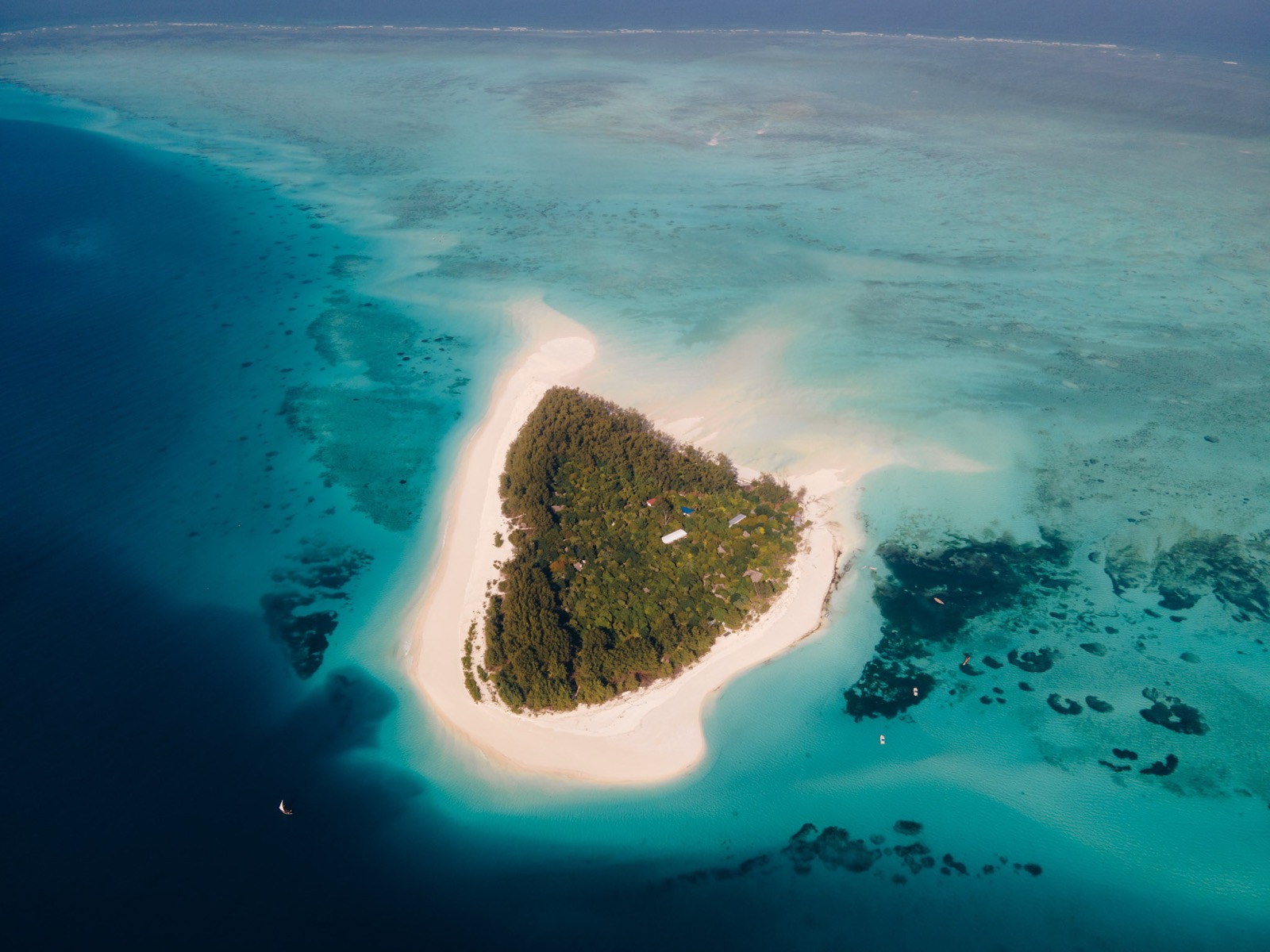
The best in-water day on the island is off the northeast tip, around the protected Mnemba Atoll. You launch by boat from Matemwe, a 30–45 minute ride, snorkel the reef edge, and on a good morning you’ll have turtles, parrotfish and visibility to 15–30 metres in the dry season. Go on the first boat, around 07:00. The reef is calm, the light is good, and you’re back before the dive boats and day-trippers crowd the same patch of water.
Budget USD 30–40 per person for a group snorkel trip from Matemwe, more for a private boat. You can’t land on Mnemba island itself — that’s a private resort — but the snorkelling is the reason you go, not the sand.
Best months are June to October (the Kusi season, with the strongest dry-season wind and clearest water) and December to February. Outside these windows the water is often hazy and the swell picks up.
Safari Blue and the south coast dhows
Safari Blue is the famous full-day Gangtag dhow trip from Fumba on the southwest coast: snorkelling, a swim off a sandbank that appears at low tide, lunch of grilled fish and tropical fruit, and a sail home. It’s genuinely good, and it’s genuinely busy — twenty-plus boats on a peak day. Budget USD 65–82 per person for the group trip (sharing-boat operators from USD 65; USD 82 for the official Safari Blue “Original Experience”).
Here’s the honest trade-off. If you want a social, high-energy day with rum punch on the sail back, book it. If you came to Zanzibar for quiet, charter a private dhow from your own coast instead, you’ll get the same water and the same lunch without the flotilla. From Michamvi I send guests on a private dhow off the Pingwe side and they rarely ask for the big trip afterwards.
Jozani Forest and the red colobus
Jozani-Chwaka Bay National Park is the only national park on the island and the only place on earth to see the Zanzibar red colobus — a monkey found nowhere else, with only 5,862 individuals surviving worldwide. A guided walk takes about an hour through the forest, then a raised boardwalk over the mangroves. Entry is USD 12 per person, with the mandatory guide included.
It’s a half-day, not a full one, and it sits conveniently on the road between the south and east coasts, so build it into a transfer day rather than a dedicated trip. The colobus troops near the entrance are habituated and easy to photograph; keep your distance anyway, touching them is banned and bad for them.
On the water: kitesurf and sunset dhows
If you kite, Paje on the southeast coast is one of the better spots in the Indian Ocean — big flat lagoon at low tide, steady cross-shore wind in the two windy seasons (roughly June–September, driven by the Kusi southeast trade wind, and December–February). Private lessons run around USD 55–70 per hour on the beach. Lessons and gear hire are easy to arrange without pre-booking; a multi-day course gets a beginner riding. See the full Zanzibar kitesurfing guide for school options and timing.
For a no-effort evening, a sunset dhow cruise from Nungwi or Kendwa is the cheapest bit of magic on the island. An hour or two on a wooden boat as the light goes, typically USD 35–45 per person. It’s the line I hear guests describe best at breakfast the next day.
Kizimkazi and south-coast dolphins
The dolphin encounter at Kizimkazi on the south coast is one of the most requested activities in Zanzibar and one of the least well-executed. The reality: a speedboat (typically USD 35–50 per person for the boat) follows an Indo-Pacific spinner or bottlenose dolphin pod until you can jump in near them. On a good morning you get in the water with dolphins. On a bad morning you spend 45 minutes watching boats chase a pod that wants nothing to do with any of you. Morning departures — around 07:00 — give the best odds before the fleet arrives.
The welfare picture is poor — there are too many boats, the pods are persistently followed, and the interaction is one-sided at best. A small number of operators swim with established resident pods early morning with a much lighter footprint, but identifying those from the pier at Kizimkazi is nearly impossible.
My honest read: if a genuine marine encounter matters to you, Mnemba snorkel gives you more reliable wildlife in far better conditions. If you specifically want dolphins and are fine with variable conditions and variable ethics, book through your hotel and go on the first boat before the fleet arrives — roughly 07:00. Never get in the water if the pod is running or bunched into a tight group; that means they are stressed, and it is not worth it.
Kizimkazi itself — the village — is worth a short stop for the old mosque (one of the oldest on the island) and the quiet beach, even if you skip the dolphin boats entirely.
How to build your activity week
Six nights on the island is the comfortable rhythm for most guests arriving from a safari. Here is a practical framework I use when guests ask how to structure it:
Day 1 (arrival): Settle in, beach, early night. You probably flew in on a long-haul and do not need an activity.
Day 2: Stone Town and spice farm. Leave mid-morning, do the farm first (cooler, before lunch), then transfer into town for the late afternoon UNESCO alleys, sunset at the seafront, Forodhani night market for dinner.
Day 3: Water day. Mnemba snorkel from the northeast if you’re on the east coast, or a private dhow from your own beach. Go on the morning tide, back by lunch.
Day 4: Jozani Forest (half day), then a quiet afternoon. The forest is on the south-coast road, easy to build into a transfer or timed alongside lunch at Kizimkazi.
Day 5: Safari Blue or a full charter dhow day on the south coast. This is the social, all-day trip with lunch on a sandbank.
Day 6: Open. Kitesurfing lesson if you’ve been watching the kites at Paje, a sunset dhow, or a second Stone Town visit if you want more time in the bazaars.
Day 7: Departure. If you have a late flight, Stone Town is ideal — check-out, store luggage at the hotel, spend the afternoon in the alleys and the market.
The activities above overlap slightly with the east-coast beaches at Paje, Jambiani and Michamvi, where a second hire car or a dala-dala can pick up Kizimkazi and Jozani along the south road. Let your hotel arrange the transfers rather than booking through the beach touts — the price is often the same and the driver is more reliably vetted.
Sea turtles and humpback whales
For marine wildlife beyond the reef, Zanzibar has two experiences worth planning around. Mnarani Marine Turtles Conservation Pond in Nungwi is a community rehabilitation centre established in 1993 — around 50 green and hawksbill turtles in a natural tidal lagoon, USD 10 entry, open daily 09:00–18:00. It is a 30-minute walk-in visit, not a half-day tour, and works well paired with a Nungwi snorkel trip. For a wilder encounter, green turtles nest on the beaches at Chumbe Island and are spotted regularly at Mnemba Atoll. From July to October, humpback whales pass through Zanzibar’s offshore waters — 400 to 600 whales annually along the East African coast — and several boat operators run half-day whale-watching trips during the peak July–September window. Full detail on all of these in the Zanzibar sea turtles and marine wildlife guide.
Underrated activities most guests miss
The headline experiences — Stone Town, Mnemba, Safari Blue, Jozani — earn their reputation. But a week on the island has room for quieter, slower things that rarely appear on tour-operator lists.
Mangrove kayaking near Michamvi. The mangrove channels behind Michamvi Pingwe are paddleable by kayak for roughly two hours at the right tide, threading through narrow root corridors that open into shallow, fish-rich lagoons. I can hear the birds from the property on still mornings. Tour operators offer guided versions combining kayaking, a village visit, and a local lunch — typically 2–3 hours on the water. The tide governs whether the route is even possible, so check before you book; your hotel can usually arrange it with an afternoon’s notice rather than days ahead.
Seaweed farm visit at Jambiani. The women of Jambiani’s east-coast lagoon have been farming seaweed on the tidal flats for generations. You can walk out to the frames at low tide — the lagoon exposes hundreds of metres of flat — and watch, ask questions, and understand a livelihood that has run alongside the tourist economy without being absorbed by it. Jambiani is the main hub for seaweed tourism visits; timing is tide-dependent, so check the schedule the evening before. There is nothing to book in advance and nothing to pay beyond a respectful contribution if the women offer a short explanation.
Swahili cooking class in Stone Town. A hands-on cooking class in a real Zanzibar kitchen runs around USD 45–68 per person for a half-day, and it is a better introduction to the island’s food than any restaurant meal. You learn the spice combinations that make pilau different from biryani, how to extract coconut milk properly, and why slow simmering over a coal-fired burner matters. A combined cooking class and spice farm tour — available through Viator and local operators — is approximately 4.5 hours and the most efficient way to do both. Book one day ahead; most operators don’t require more.
The Paje night market on Friday and Saturday evenings. Forodhani is well-known and gets tourist crowds; Paje’s beachfront night market operates on Friday and Saturday evenings from around 18:30 with live music, grilled fish, and local drinks and is almost entirely overlooked by visitors staying on the north coast. If you’re based on the east coast, it is the most convenient evening out on the island, and the crowd is genuinely mixed — local families, kiteboarders, fishing community — rather than purely visitors.
Freediving at Mnemba. Most people snorkel the atoll on the surface. Freediving certification gives you vertical access to the reef wall in a way that no snorkel mask can match — following a turtle down 10 metres on breath hold is a different experience entirely. A freediving instructor operates out of Stone Town. If you’re already PADI Open Water certified for scuba, the freediving Introduction course takes one day and opens up the reef in a completely new direction.
What to skip
Skip the captive “swim with dolphins” boats at Kizimkazi — the Kizimkazi section above has more detail on why. More broadly: skip any full-day trip that tries to combine more than two stops into one outing. The drive times between different parts of the island are 45 minutes to 1h30, so a tour that promises Stone Town, a spice farm, Jozani, Mnemba and a sandbank lunch in one day is either lying about what you will see or spending your whole day in a van. Separate the experiences across separate days and you will actually see them.
Avoid booking through beach touts. The papasi — beach vendors working on commission — are a persistent fixture at Forodhani, along Paje beach, and near the ferry port. The activities they sell are real; the operators they lead you to are not always vetted, the prices are inflated, and the driver quality varies. Booking through your hotel front desk — who deal with drivers and operators daily and know which ones are reliable — costs the same and comes with accountability. I have seen guests pay USD 90 for a Safari Blue trip a hotel would have arranged for USD 65 with a better boat.
How to adjust activities in the off-season (April–May)
The long rains run roughly April through May. Most activities are still possible, but the calculus shifts:
- Mnemba snorkel: visibility drops in the rains; the atoll is still diveable but the water is less clear and the swell more variable. Worth attempting on a calm morning but not worth anchoring the whole trip around.
- Kitesurf at Paje: the Kusi wind hasn’t arrived yet. Wind is lighter and less consistent — fine for learning basics, not ideal for experienced riders seeking mileage.
- Stone Town, spice farm, Jozani: all excellent in the rains. Fewer visitors, lower prices, and the forest at Jozani is arguably more atmospheric in soft green-season light than in the dry Kusi months.
- Safari Blue: runs year-round but check with operators — rough south-coast weather occasionally cancels the day.
Prices across most activities drop 15–30% in April and May, and the island is quiet in a way that the high season (June–October, December–February) never is. If you don’t need guaranteed sun and snorkel conditions, the rains are underrated.
For logistics, booking windows, and distances for all the best day trips from Stone Town and the east coast, see the Zanzibar day trips guide.
Next, line up where you’re based against these trips with our Zanzibar beaches guide, and work out timing with when to visit Zanzibar. On the water, Zanzibar covers the full range — the Zanzibar water sports guide brings together kitesurfing, scuba diving, snorkeling, whale shark swimming, dhow cruises, deep sea fishing, and kayaking in one place with season and cost breakdowns. For what’s below the surface, the Zanzibar snorkelling guide ranks every site (Mnemba, Chumbe, Safari Blue, east-coast reef flat) with honest prices; for certified divers, our diving write-up goes deeper. For a full comparison of Safari Blue, sunset dhow cruises and Nakupenda sandbank options — with honest pricing from USD 35 per person — see the Zanzibar dhow cruise guide. And for entry logistics before any of this begins, the Zanzibar entry requirements guide has the ZIC insurance and visa process step by step. If you want all of the above sequenced into a single week, the Zanzibar 7-day itinerary puts Stone Town, the spice tour, Jozani, Safari Blue, and east-coast beach time into a day-by-day plan with real costs. For a 3-base structure that distributes time between Stone Town, the north coast, and the east coast — with a tidal warning for Paje — see the Zanzibar 1-week itinerary.
Frequently asked questions
How many days do you need for Zanzibar activities?
Plan three to four excursion days inside a week. Stone Town and a spice farm pair into one day, Mnemba or Safari Blue each fill a day, and Jozani slots into a half day on the way somewhere. The rest of the week is beach, and that is the point.
What is the best thing to do in Zanzibar if you only have one day off the beach?
Stone Town in the late afternoon, then the Forodhani night market. You get the architecture in soft light, the history, and dinner from the grills. It is the single richest half-day on the island.
Is Safari Blue worth it?
Yes, with one caveat. It is a busy, social full-day dhow trip with snorkelling, a sandbank, and a seafood lunch. Go if you want a lively day on the water; skip it if you want quiet, and book a private dhow instead.
When is the best time for snorkelling at Mnemba?
June to October and December to February bring the clearest water and calmest mornings. Always go on the first boat out, around 7am, before the day-trip crowds and the afternoon wind arrive.
Do I need to book Zanzibar tours in advance?
For Mnemba and Safari Blue in high season, yes, a day or two ahead. Stone Town, spice farms and Jozani you can arrange the evening before through your hotel. Your front desk almost always beats the beach touts on both price and driver quality.
Can you swim with dolphins in Zanzibar?
You can at Kizimkazi in the south, but I rarely recommend it. The boats chase the pods and it is stressful for the animals. Mnemba gives you better marine life without the chase.
What underrated activities are worth adding to a Zanzibar itinerary?
Mangrove kayaking near Michamvi, a seaweed farm walk at low tide in Jambiani, a Swahili cooking class in Stone Town, and a sunrise kitesurfing session at Paje before the crowd arrives. None of these require advance booking more than a day ahead, and they round out a week without competing with the main-event days.
What should you avoid booking in Zanzibar?
Skip any packaged day that combines more than two geographically spread stops — the drive times are 45 minutes to over an hour between coasts, so a tour claiming Stone Town, Jozani, Mnemba and a sandbank in one day means you spend it in a van. Also avoid booking tours through beach touts at Forodhani or near Paje, who frequently work on commission from low-quality operators. Book through your hotel instead.