
Facts & prices checked: 2026-06-24
Zanzibar’s best days combine two things: the beach you came for, and something that earns it. Six day trips do that consistently — each one genuine, each one returnable to. Below is the honest guide to all of them: what to expect, how long, and what they actually cost.
At a glance: Zanzibar day trips compared
| Day trip | Departs from | Time needed | Best for | Approx. cost |
|---|---|---|---|---|
| Prison Island | Stone Town | Half day (3-4 hrs) | Families, history | USD 30-40 pp |
| Jozani Forest | East coast or Stone Town | Half day (3-4 hrs) | Wildlife, monkeys | USD 12 pp entry |
| Chumbe Island | Stone Town | Full day | Reef snorkelling | USD 115 pp |
| Kizimkazi dolphin tour | Kizimkazi (south) | Half day (3-5 hrs) | Marine wildlife | USD 25-40 pp |
| Mnemba Atoll | East or north coast | Half day (4-5 hrs) | Snorkelling, diving | USD 50-150 pp |
| Mchanga sandbank | East coast (Michamvi) | 2-3 hrs | Photography, swimming | Ask your hotel |
| Spice tour | Stone Town | Half day (2-4 hrs) | Culture, food | USD 15-25 pp |
Prison Island (Changuu Island)
Prison Island sits 5.6 km northwest of Stone Town — 20 to 30 minutes by boat from the Forodhani Gardens pier. It is the most accessible half-day trip from town and one of the easiest to combine with a Stone Town afternoon.
The name is misleading. The building standing today was constructed around 1893, originally intended to hold enslaved people and later prisoners — part of the same brutal trade infrastructure that ran through the Stone Town slave market on the mainland. But it was repurposed as a British quarantine station before it ever held anyone in that capacity, and it never actually functioned as a prison. The “Prison Island” name stuck anyway. Most visitors walk past the colonial-era buildings without knowing this history — worth knowing before you go.
Today the island is best known for its colony of giant Aldabra tortoises, introduced from the Seychelles. You can walk among them and watch them eat, but touching and feeding has been prohibited since November 2024 to reduce animal stress — observe from close range instead. Some individuals are estimated to be over 100 years old. It is genuinely endearing in a way that feels absurd until you’re standing next to one.
I send families to Prison Island first on this list because it works at any pace: quick morning trip, a swim in the clear water off the island, lunch back in Stone Town. The entry fee alone is now USD 22 per person (up from USD 4 after a September 2025 fee hike), plus a shared-boat cost that typically brings the per-person total to roughly USD 30-40. Boats leave when they fill — no need to pre-book, though your hotel can arrange a private boat if you want to control timing.
Practical notes: Go in the morning (cooler, better light for photos, fewer boats). The return boat waits for you on the island. Bring cash for the entry fee. The snorkelling off the island’s southern tip is decent but not exceptional — save serious snorkelling for Chumbe or Mnemba.
Jozani Forest
Jozani-Chwaka Bay National Park is 35-38 km southeast of Stone Town — 40-45 minutes by road. It is the only national park on Unguja (the main Zanzibar island), established in 2004, and it covers 50 km² of groundwater forest, swamps, mangroves, and coral rag scrublands.
The reason to go: the Zanzibar red colobus monkey. This is an endangered endemic subspecies found nowhere else on earth — 5,862 individuals survive island-wide, with roughly half (~3,000) living in Jozani specifically. The troops near the forest entrance are habituated to visitors and come within a few metres. It is one of those wildlife encounters that feels implausibly easy: no game drive, no waiting, no jeep — just monkeys moving through the canopy 3 metres above your head.
Guided walks are mandatory (guides are included in the entry fee, which runs around USD 12/adult for the standard forest walk). The route adds a raised boardwalk through the Chwaka Bay mangroves, explaining the tidal ecosystem and the fish nurseries beneath the roots. Total time for the full walk: around 2 hours.
I send guests to Jozani first thing in the morning — monkeys are active before 09:30, then they retreat into the canopy for the hottest part of the day. The 07:30 opening works well if you’re based on the east coast, since it’s only 30-40 minutes south down the coast road.
The community angle matters here: entry fees go to park management and are partly reinvested in local community projects, including schools in the surrounding villages. That is not a marketing line — it is part of the reason the forest is protected at all. The communities adjacent to the park have a financial stake in conservation. Worth knowing.
Best combination: Kizimkazi dolphin tour + Jozani Forest in one morning. Both are on the south side of the island. Depart 05:45 from the east coast, dolphin tour at Kizimkazi by 06:30, then drive 20 km north to Jozani for 10:00, back at your hotel by lunch. Total cost including transfers and entry: roughly USD 65-90 per person.
Chumbe Island
Chumbe Island is the most serious day trip on this list — and the one that requires the most planning. It is the first privately managed marine protected area in the world, and the first gazetted MPA in Tanzania. The 33-hectare reef sanctuary has been closed to fishing since 1994, and the coral cover shows it.
The snorkelling at Chumbe is in a different category from anything else you will do off Zanzibar. The reef is intact, dense, and alive in the way that most Zanzibar reefs no longer are. Visibility is consistently good; fish density is high; the coral formations go down further than you can follow on a breath hold. It is the best reef snorkelling I have personally seen on this island.
The island sits about 45 minutes by boat from Stone Town. Access is strictly controlled: book 2-3 days ahead for off-peak, at least 1 week for June-October high season. The number of day visitors is capped to protect the reef — you cannot walk in, and you will not find last-minute availability in peak season. Contact Chumbe Island directly or ask your hotel to arrange it.
The day trip includes guided reef snorkelling, a guided forest walk through the island’s native forest (home to nesting seabirds and coconut crabs), and lunch. It runs USD 90 per person for Chumbe’s own rate, plus a USD 25 government Blue Economy Levy per foreign adult — USD 115 total, which is higher than most Zanzibar day trips. It is worth it. There are also 7 eco-bungalows on the island for overnight stays if you want to extend it.
Practical note: Chumbe day trips depart from their Stone Town office. If you’re based on the east coast, factor in the 1 hour drive to Stone Town before the boat departure. It is a long day but a well-structured one.
Kizimkazi dolphin tour
Kizimkazi sits at the southwestern tip of Unguja — south down the coast road from Jambiani and Paje, 30-40 minutes from the east coast. Bottlenose and spinner dolphins are resident in the bay year-round; the tour consists of a speedboat that goes out to find the pods and — conditions allowing — lets you enter the water near them.
The important detail: go early. The best window is before 09:00, when fewer boats are competing for the same pods and the dolphins are least disturbed. After 09:30 the fleet multiplies and the experience deteriorates. From the east coast, that means departing around 05:45.
Tour price: approximately USD 25-40 per person for a shared boat, per trip. Most operators work out of the Kizimkazi pier; your hotel can arrange this.
I’m honest with guests about the trade-offs here. The dolphins are wild and resident, which is good. But on a busy morning, the number of boats chasing the same pod is genuinely problematic for the animals. If you want a quieter wildlife experience with more reliable sightings, Mnemba Atoll gives you dolphins, turtles, and exceptional reef in calmer conditions. If you specifically want the Kizimkazi dolphin encounter, go early and skip it if the pod is running or bunched — that means they are stressed.
For a detailed guide to the ethics question, species information (spinner vs bottlenose), and what a responsible operator actually looks like in practice, see the Zanzibar dolphins guide.
Best pairing: Kizimkazi + Jozani Forest in one morning. See the Jozani section above for the logistics.
Mnemba Atoll
The Mnemba Atoll sits northeast of the main Zanzibar island, accessed by speedboat from the east coast or north coast — typically 30-45 minutes from Matemwe or the east coast beaches. The private island in the centre is owned and operated by andBeyond (one of Africa’s top safari lodges); you cannot land there on a day trip. But you don’t need to — the reef around the atoll is the reason to go.
The marine diversity at Mnemba is among the best in the Indian Ocean. Regular sightings include spinner dolphins, green turtles, hawksbill turtles, reef sharks, manta rays (seasonal), and an extraordinary density of reef fish. Visibility in the dry season (June-October) can reach 20-30 metres. It is genuinely world-class.
Day trip options:
- Snorkelling trip: approximately USD 50-80 per person for a group day trip from Matemwe or the east coast, including boat and guide
- Dive trip: approximately USD 110-150 per person for certified divers — the wall dives around the atoll’s edge are the best diving on the island
The best time is the first boat out — around 07:00 — before the wind picks up and before the dive boats arrive at the same reef sections. High season (June-October) is also the best water clarity season, which creates a happy alignment: peak travel time and peak conditions.
From the east coast: Mnemba is closer to the north coast (Matemwe, Nungwi), but east coast guests can still access it. Most east coast hotels can arrange transfers to a Matemwe boat operator. The total trip — drive to Matemwe, boat out, 2-3 hours on the reef, boat back, drive home — is a full morning.
Mchanga Sandbank
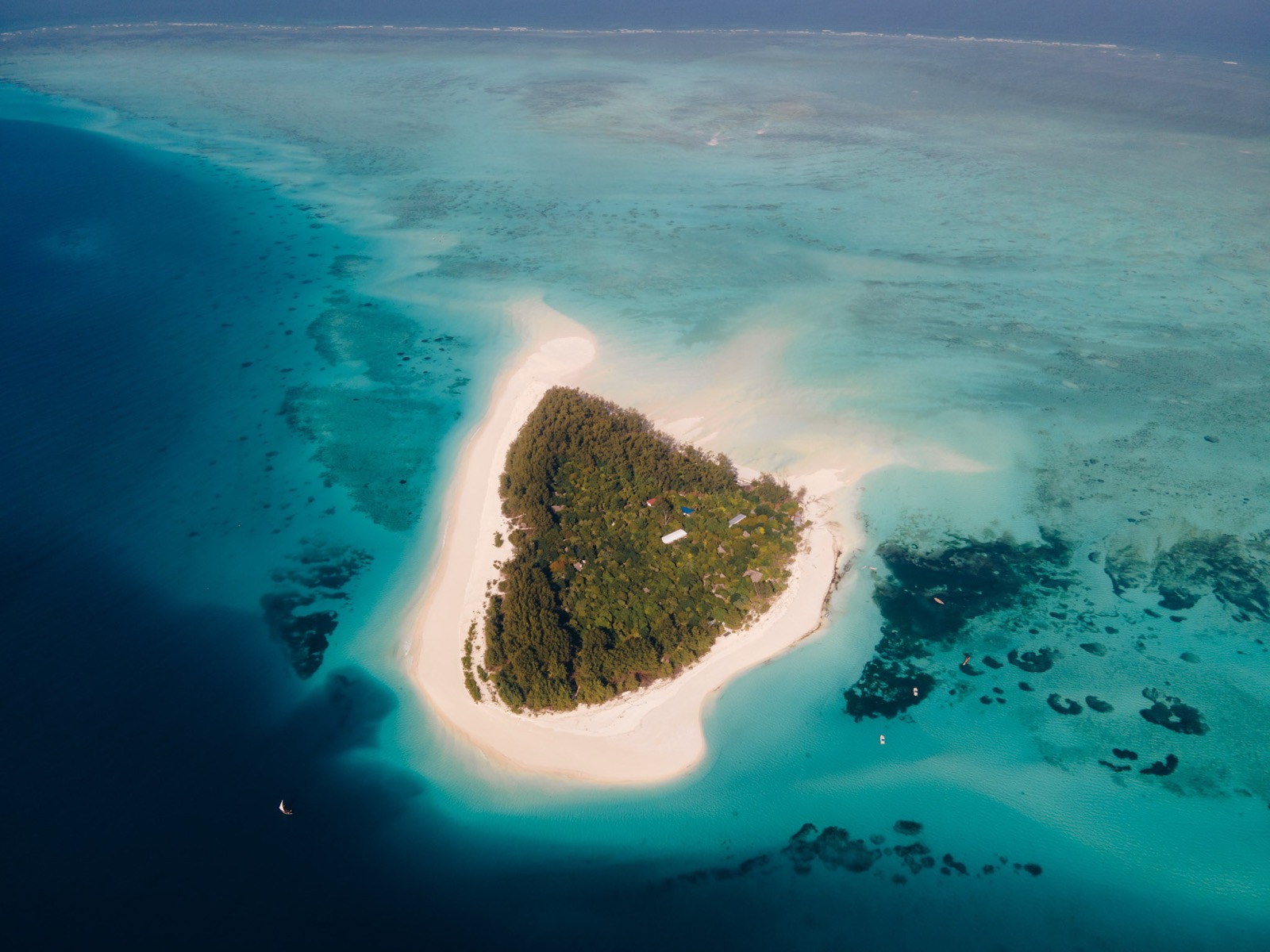
The Mchanga sandbank is the most local experience on this list and the most photogenic. It appears at mid-tide off Michamvi Pingwe on the east coast — a tidal sand formation that materialises out of turquoise water and disappears again as the tide rises. A short wade or swim from the beach at Matlai or Michamvi Pingwe.
I have photographed this sandbank from the drone more times than I can count. The DJI aerial shot of Mchanga — white sand surrounded by three shades of blue, no other boats, no other people in the early morning — is the single best image in this site’s photo library. It earns that. When the sandbank is at its best (mid-tide, the water halfway around it), it looks like a location from a film set.
The logistics are easy: ask your east coast hotel to arrange a dhow. Most properties on the Michamvi peninsula — including Matlai — can organise this in an hour with no advance booking. Time your visit using tide tables, targeting the period 2-3 hours after low tide when the sandbank has emerged but the surrounding water is still shallow and turquoise.
There is no entry fee and no formal operator. It is the kind of experience that costs almost nothing and is hard to forget.
Practical tip: Mid-tide, not dead low tide. At dead low tide the sandbank is fully exposed and surrounded by exposed reef flat rather than open water — less photogenic, harder to swim around. At mid-tide you get the classic half-island, half-water look.
Spice tour
Zanzibar was once the world’s largest clove producer, and the island’s interior — a short 10-15 km inland from Stone Town — still grows vanilla, cloves, cardamom, lemongrass, cinnamon, black pepper, and nutmeg on working farms. A half-day spice tour takes you through those farms, includes taste testing, and covers the island’s agricultural history alongside the obvious aromatics.
The full detail on which operators to choose, what the good tours cover, and how to tell the real working farms from the tourist-only setups is in the Zanzibar spice tour guide. In brief: good tours run USD 15-25 per person and include the farm walk plus tasting; they pair naturally with a Stone Town afternoon and are easy to book through any Stone Town hotel the evening before. Skip any operator who quotes below USD 10 — the quality difference is real.
Planning day trips from the east coast vs Stone Town
The logistics differ slightly depending on where you’re based.
From Stone Town:
- Prison Island: 20-30 min by boat — easiest day trip on the island
- Spice tour: 20-30 min inland — pairs naturally with Stone Town itself
- Chumbe Island: 45 min by boat — departs from Stone Town office
- Jozani: 40-45 min south by road — half-day with or without a car
- Kizimkazi: 1 hour south — dolphin tour + Jozani combo works well
From the east coast (Paje, Jambiani, Michamvi):
- Mchanga sandbank: short wade/swim from shore — no logistics needed
- Jozani: 30-40 min south down the coast road — closest major day trip
- Kizimkazi: 1-1.5 hours total — feasible for an early start
- Mnemba Atoll: 45-60 min by road to Matemwe, then boat — worth the drive
- Prison Island: 1.5-2 hours (drive to Stone Town, then boat) — easier from town; plan a Stone Town day around it
- Chumbe: same as Prison Island — factor in the Stone Town drive
The most common mistake: trying to combine east coast → Stone Town → Prison Island → Jozani in one day. The distances add up to a lot of van time. Stone Town + Prison Island is one day. Jozani + Kizimkazi is another. Mnemba is its own morning. Keep each day to one main excursion and one natural pairing — you’ll see more, travel less.
Practical tip on transport: Book through your hotel rather than from the beach. The price is usually the same and the driver is vetted. For longer combos (Kizimkazi + Jozani), arrange a private car from your hotel the evening before — shared minibuses exist but schedules don’t align with the early dolphin-tour departure.
Frequently asked questions
What is the best day trip from Zanzibar? Depends on what you want. For wildlife: Jozani Forest for Zanzibar red colobus monkeys (endangered endemic species, 5,862 island-wide, ~3,000 in Jozani specifically) — easy, 40 min from Stone Town, half-day. For marine life: Chumbe Island (world-class reef, requires advance booking) or Mnemba Atoll (USD 50-80 snorkelling day trip). For something quick and fun with kids: Prison Island (20-30 min by boat, giant tortoises, half-day).
Can you combine Jozani Forest and Kizimkazi dolphin tour in one day? Yes — this is the most popular south-island combination. Both are on the southern side of the island. Leave early: Kizimkazi dolphin tour first (best before 9am), then Jozani Forest. Back at your hotel by late afternoon. Arrange transport that covers both — most Stone Town or east coast hotels can organise this combo for around USD 60-80 total per person including entry fees.
How far in advance do you need to book Chumbe Island? Book 2-3 days ahead for off-peak visits; 1 week ahead for high season (June-October). Chumbe strictly limits visitor numbers to protect the reef — walk-in is not possible. Contact them directly or through your hotel. The day trip includes guided reef snorkelling and a forest walk, and starts and ends at their Stone Town office.
What is Prison Island (Changuu Island)? Prison Island is a small island 5.6 km northwest of Stone Town. Built around 1893, originally intended to hold enslaved people and later prisoners, it was repurposed as a British quarantine station before it ever held anyone that way — it never actually functioned as a prison. Today it is famous for its colony of giant Aldabra tortoises (introduced from the Seychelles). Boat trip 20-30 min each way from Forodhani Gardens pier.
Is Mchanga sandbank worth visiting from the east coast? Yes — it is the most photogenic spot on the east coast and sits just 10 minutes by dhow from Michamvi Pingwe. It appears most dramatically at mid-tide (partially exposed, partially surrounded by turquoise water). Time your visit using tide tables. Ask your hotel to arrange a dhow — most east coast hotels including Matlai can do this easily.
Are day trips possible during rainy season? Most day trips work year-round, but some conditions apply. Boat trips (Prison Island, Mnemba, Chumbe) can be rough in the long rains (March-May) — boats still run but the sea can be choppy. Jozani is lovely in green season and actually less crowded. Dolphin tours operate year-round; dolphins are less predictable in rough conditions. Spice tours: always fine.
Planning to spend the day in town rather than on an excursion? The Stone Town walking tour gives a specific 5-hour route from 15:00 to dinner.
For where these day trips sit within a full week, see the Zanzibar 7-day itinerary — it sequences Stone Town, Jozani, Mnemba, and a dhow day into a realistic day-by-day plan. For everything that happens in the water — snorkel sites ranked, reef conditions by season, what to see at each location — the full snorkel-site rankings covers Mnemba, Chumbe, Safari Blue and the east-coast reef flat in detail. Mnemba Atoll snorkeling and Chumbe Island coral details are covered in the Zanzibar snorkeling guide. For the full Jozani visit, the Jozani Forest guide has entry logistics, monkey behaviour, and how to combine it with Kizimkazi. To read more about the island’s most famous boat-based excursion beyond these day trips, the Zanzibar dhow cruise guide covers Safari Blue, Nakupenda sandbank, and sunset dhows with honest prices. And for the best overview of every activity on the island — with Tim’s personal ranking — see best things to do in Zanzibar.
Frequently asked questions
What is the best day trip from Zanzibar?
Depends on what you want. For wildlife: Jozani Forest for Zanzibar red colobus monkeys (endangered endemic species, 5,862 island-wide, ~3,000 in Jozani specifically) — easy, 40 min from Stone Town, half-day. For marine life: Chumbe Island (world-class reef, requires advance booking) or Mnemba Atoll (USD 50-80 snorkelling day trip). For something quick and fun with kids: Prison Island (20-30 min by boat, giant tortoises, half-day).
Can you combine Jozani Forest and Kizimkazi dolphin tour in one day?
Yes — this is the most popular south-island combination. Both are on the southern side of the island. Leave early: Kizimkazi dolphin tour first (best before 9am), then Jozani Forest. Back at your hotel by late afternoon. Arrange transport that covers both — most Stone Town or east coast hotels can organise this combo for around USD 60-80 total per person including entry fees.
How far in advance do you need to book Chumbe Island?
Book 2-3 days ahead for off-peak visits; 1 week ahead for high season (June-October). Chumbe strictly limits visitor numbers to protect the reef — walk-in is not possible. Contact them directly or through your hotel. The day trip includes guided reef snorkelling and a forest walk, and starts and ends at their Stone Town office.
What is Prison Island (Changuu Island)?
Prison Island is a small island 5.6 km northwest of Stone Town. Built around 1893, originally intended to hold enslaved people and later prisoners, it was repurposed as a British quarantine station before it ever held anyone that way — it never actually functioned as a prison. Today it is famous for its colony of giant Aldabra tortoises (introduced from the Seychelles). Boat trip 20-30 min each way from Forodhani Gardens pier.
Is Mchanga sandbank worth visiting from the east coast?
Yes — it is the most photogenic spot on the east coast and sits just 10 minutes by dhow from Michamvi Pingwe. It appears most dramatically at mid-tide (partially exposed, partially surrounded by turquoise water). Time your visit using tide tables. Ask your hotel to arrange a dhow — most east coast hotels including Matlai can do this easily.
Are day trips possible during rainy season?
Most day trips work year-round, but some conditions apply. Boat trips (Prison Island, Mnemba, Chumbe) can be rough in the long rains (March-May) — boats still run but the sea can be choppy. Jozani is lovely in green season and actually less crowded. Dolphin tours operate year-round; dolphins are less predictable in rough conditions. Spice tours: always fine.