
Facts & prices checked: 2026-06-24
Mnemba Atoll is the marine site that justifies the phrase “Zanzibar snorkelling” as a travel selling point. I have been in the water at most of the island’s main sites over many years. Mnemba beats them for visibility, coral health, and fish density — by enough that it is not a close comparison.
The complication is practical: the atoll’s quality has made it famous, and the boats show up in numbers. This guide gives you the honest version.
What Mnemba actually is
There are two distinct things that share the name Mnemba, and conflating them causes real confusion when booking.
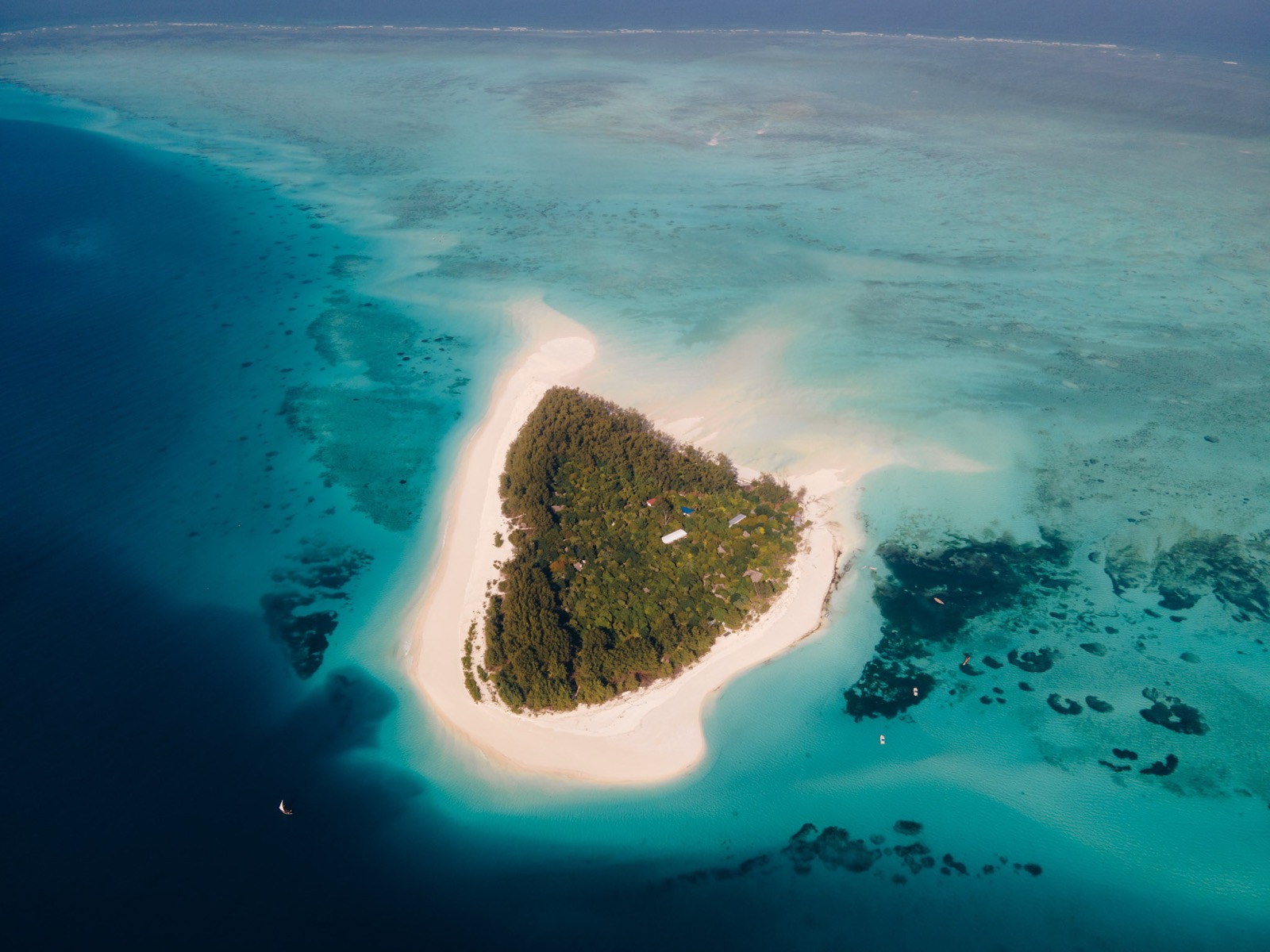
Mnemba Island is a small private island — roughly 500 metres across — sitting 3 km off the northeast coast of Zanzibar. It is home exclusively to &Beyond Mnemba Island Lodge: 12 beach bandas, maximum 24 guests, accessed by a 10–15 minute boat from Muyuni jetty. Non-guests cannot land on the island. Day visitors cannot enter the lodge grounds, use the beach, or access facilities.
Mnemba Atoll is the surrounding marine protected area — the reef system that encircles the island and extends beyond it. This is what day-trip snorkellers and dive operators access. It is a protected marine reserve with some of the healthiest coral in Zanzibar, and day access from a boat is possible for anyone on an organised trip.
The confusion matters because “Mnemba trip” in promotional materials almost always means the atoll, not the island. You will snorkel the reef, not walk the beach.
The snorkelling
The Mnemba Atoll reef is the best snorkelling site in Zanzibar. That is Reddit consensus, operator consensus, and my own view from repeated visits. The specifics:
- Visibility: consistently 20+ metres in good conditions, with some sites reaching 25–30 metres in the northeast monsoon period
- Coral: active restoration under way — CORDAP is running a coral reef restoration programme at Mnemba (October 2024 to September 2027), targeting a 10% increase in coral cover across a 4-hectare restoration zone
- Marine life: large fish populations including bumphead parrotfish, grouper, moray eels, and reef sharks. Spinner and bottlenose dolphin pods regularly join snorkel boats — you will see them approaching from 50 metres away before most of your group notices
- Bottom: mixed sandy and coral flat, with drops at the outer reef edge where large pelagics cruise
The crowding caveat. Multiple operators run daily Mnemba trips, and the boat concentration in the morning can turn a quiet reef into a busy swimming pool. A 07:00 departure from Matemwe gets you onto the reef before the wave of boats from Nungwi and the resort areas, which typically arrive between 09:00 and 10:00. If your operator departs at 09:30, you will be sharing the water with 40–60 other snorkellers from other boats. Worth asking specifically about departure times before booking.
How to get there and what you will pay
From Matemwe (recommended): Matemwe village is the nearest mainland access point — 3 km from the atoll, approximately 20 minutes by boat. Operators based in or near Matemwe offer the shortest journey and the best price: USD 30–40 per person for a half-day snorkel trip including gear and guide. This is the best-value Mnemba option on the island.
From Muyuni pier: Muyuni is the jetty used by the &Beyond lodge for guest transfers. Some snorkel operators also depart from here — boat time is 10–15 minutes. Price similar to Matemwe.
From Nungwi or Kendwa: The popular north coast resorts are about 1 hour by boat from the Mnemba reef. Operators from this area charge USD 45–80 per person partly due to the fuel cost of the longer run. You spend 2 hours in transit for a 1–2 hour snorkel window.
Private or premium boats: Operators offering private charter or premium small-group trips (max 6–8 passengers) run USD 80–125 per person. The main advantages are departure time control and not sharing the water with other groups.
All trip prices typically include: snorkel mask and fins, boat, life jackets, guide. Marine park entry fees may or may not be included — ask before booking.
Diving at Mnemba
Mnemba is Zanzibar’s most prominent dive site cluster. A certified diver accesses a different experience from the snorkeller: the outer wall, deeper coral plateaus, and specific named sites that the snorkel boats do not reach.
Main dive sites around Mnemba Atoll:
- Mnemba Wall: the outer reef drop, 10–30m, strong current at times, excellent for pelagic fish
- Aquarium: shallow (6–12m), excellent for beginner divers and macro photography — nudibranchs, pipefish, flatworms
- Big Wall: deeper section, sometimes with hammerheads in season
- Coral Gardens: mixed sandy and hard coral, generally calmer conditions, good for night dives
PADI open-water certification is sufficient for most Mnemba sites. Dive operators from Matemwe, Nungwi, and the main east-coast lodges all run regular Mnemba trips. Expect to pay USD 50–90 per dive inclusive of tank and guide, or USD 120–160 for a two-dive day trip including transport from the east coast.
Dive visibility at Mnemba consistently exceeds 20 metres in good conditions. In October–February it can reach 30 metres on calm days.
Staying on the island — &Beyond Mnemba Island Lodge
If you want the island rather than a day trip to the atoll, this is the only option.
&Beyond Mnemba Island Lodge is a barefoot luxury property with 12 individually positioned beach bandas. The maximum guest count is 24. The island is entirely pedestrian — no cars, no roads, no other buildings. Access is by a 10–15 minute boat transfer from Muyuni jetty; the 1h20 drive from ZNZ airport is included in your transfer logistics.
Pricing:
- From USD 2,150 per person per night (all-inclusive: meals, non-premium drinks, dive equipment, kayaks, paddleboards, snorkelling gear)
- USD 100 per person per night conservation levy (supports Mnemba Island Marine Conservation area operations)
- USD 5 per person per night infrastructure tax (Zanzibar’s tiered rate for 4- and 5-star properties, revised July 2023 — not the old flat USD 1 rate)
An all-in 5-night stay for two guests runs approximately USD 22,500–31,000 depending on season.
Closed: annually in April and May for maintenance and seasonal wildlife protection. The nesting turtle season on the island runs November to March — nesting activity is a genuine draw, and &Beyond runs a guest-participation monitoring programme.
The lodge is the right choice for: honeymoons, complete disconnection, certified divers who want unlimited reef access without a day-trip boat, and travellers for whom Zanzibar is an end-destination rather than a beach leg after a safari.
It is not the right choice for: anyone who wants to also see Stone Town and other parts of Zanzibar, families with very young children (bandas are close to water), or anyone whose travel budget doesn’t comfortably support USD 2,150+ per person per night.
When to go
October–March: The northeast monsoon period is the main season. Seas are calm, winds are light, visibility is at its best. This is peak season for &Beyond lodge and day-trip snorkelling alike. The December–February window has the warmest water temperatures — typically 27–29°C — and the highest plankton concentration, which attracts the dolphins.
June–September: Possible but the southeast trade winds (Kusi season) build chop on the northeast side of the island. Snorkelling is still good — visibility remains high — but the boat ride from Matemwe can be rougher, and the water temperature drops slightly (to around 25°C).
April–May: Avoid. The long rains bring rough seas, reduced visibility, and the &Beyond lodge closes. Most day-trip operators either suspend Mnemba trips or run them unreliably during this period.
The honest version
What is good: The reef quality at Mnemba is real. If you have snorkelled mediocre Caribbean sites or been disappointed by heavily bleached reefs elsewhere, Mnemba will genuinely surprise you. The fish density is high. The dolphins are not an occasional sighting — they visit the boats regularly enough that guides factor it into the trip. The active restoration programme means the reef is actively improving, not passively recovering.
What the marketing glosses over: It is not a private, quiet experience for most day visitors. Multiple boats. Visible other snorkellers in the water. The outer reef sections accessible to day snorkellers are different from the calmer dive sites — snorkellers stay closer to the surface in more exposed areas. Coral bleaching events in 2016 and 2024 affected portions of the reef; active restoration is addressing it, but some sections are notably less healthy than others.
The Matemwe advantage: Staying in Matemwe rather than Nungwi or the east coast puts you 20 minutes from the reef instead of 1 hour. If Mnemba is a priority, choose accommodation near Matemwe. See the Matemwe travel guide for where to stay.
What to combine with Mnemba
A Mnemba day trip pairs naturally with:
- the full dive-site breakdown: if you are a certified diver, the dive sites off Mnemba wall are covered in detail with operator recommendations
- Zanzibar best things to do: puts Mnemba in the context of a week’s worth of activities
- East coast where to stay: access from the east coast adds travel time but several operators run dedicated east-to-Mnemba transfers
- the one-week itinerary: Mnemba is slotted into Day 6 of the recommended week-long structure
Beyond Mnemba Atoll, Zanzibar’s archipelago offers world-class diving at Pemba Island and whale shark encounters at Mafia — the Zanzibar island hopping guide explains how to combine all three in a single trip.
The reef’s real condition — bleaching history and restoration
The honest picture of Mnemba’s reef requires some context that most day-trip operators skip entirely.
Zanzibar’s reefs experienced severe bleaching events in 1998, 2007, 2016, and again in 2024 — all driven by El Niño or Indian Ocean Dipole warming events that push sea temperatures above the thermal tolerance threshold for coral. The 2024 Western Indian Ocean bleaching season was confirmed as part of the world’s fourth global bleaching event (NOAA, April 2024), with Tanzania among the countries significantly affected. Tanzania’s hard coral cover nationally declined by 25% — from approximately 40% before 1998 to approximately 30% afterward — following the 1998 event alone.
What this means for Mnemba specifically: sections of the reef have been in a degraded state, and active intervention is required to recover them. CORDAP (the Coral Research & Development Accelerator Platform) is running a formal coral restoration programme at Mnemba Island from October 2024 to September 2027, targeting a 10% increase in coral cover across a 4-hectare restoration area and involving local communities in the work.
I want to be direct about what this means for a day visitor: parts of the reef look excellent — high fish density, active coral growth, good structure. Other sections, particularly areas affected by anchor damage and bleaching, show patchy hard coral cover interspersed with algal growth. The overall dive experience is still the best in Zanzibar. But “untouched and unspoiled” is not an accurate description, and operators who use that language are not being honest with you.
The active restoration work is actually a positive signal — not a reason to avoid Mnemba, but evidence that the people managing the marine reserve take it seriously. Going now supports that work. The reef in 2027 should be better than the reef today.
Sea turtles at Mnemba
The turtle angle at Mnemba Island is genuine and worth building into how you plan your visit.
Five species of sea turtle occur in Tanzania’s coastal waters: green, hawksbill, loggerhead, olive ridley, and leatherback — IUCN-listed from Vulnerable to Critically Endangered (green: Endangered; hawksbill: Critically Endangered; loggerhead, olive ridley, and leatherback: Vulnerable). Green and hawksbill turtles are the two species you are most likely to encounter snorkelling or diving at Mnemba.
Nesting season: The nesting period on Mnemba Island runs approximately November to March, with the island itself serving as a nesting beach for green turtles (the regularly-monitored, higher-volume nester) and hawksbill turtles (nesting in much lower, more sporadic numbers). &Beyond runs a guest-participation turtle monitoring programme for lodge guests during this period — guests can accompany staff on night monitoring walks when nesting activity is detected.
In the water: Green turtles in particular are regularly sighted in the Mnemba Atoll water column, grazing on seagrass beds around the reef perimeter. Snorkel guides know the sandy areas where turtles rest at depth on a slow day. Do not chase or touch turtles — keep a 2-metre distance and let them surface at their own pace. The turtle experience at Mnemba is passive and encounters are not guaranteed, but I have seen green turtles on the majority of Mnemba snorkel sessions I have done.
For lodge guests specifically: The island’s pedestrian-only policy and the zero-light-pollution environment make it one of the better places in East Africa to observe sea turtle nesting behaviour without the interference typically associated with turtle tourism at mass-visited sites.
Practical booking guide — how to choose your operator
Not all Mnemba day trips are equal, and the differences matter.
What separates operators:
- Departure time — a 07:00 departure from Matemwe gets you onto the reef before the crowd; a 09:30 departure puts you in the water at the same time as 4–6 other boats
- Boat quality — fibreglass semi-rigids are faster, drier, and more stable than traditional wooden dhows for the crossing; in June–September Kusi season, the difference is significant
- Group size — reputable operators run groups of 6–10; the cheaper options fill boats with 15–20 people, meaning more noise and less space in the water
- Guide competence — a good guide knows the specific reef sections with highest fish density and where to position the group relative to current
What to ask before booking:
- What time does the boat depart?
- How many people per boat?
- Is marine park entry included in the price?
- Which departure point — Matemwe jetty, Muyuni pier, or your hotel beach?
- Is snorkel gear included, and is the mask fitted (not a shared pool rack)?
Marine park entry fee: The Mnemba Atoll is a protected marine reserve. An entry fee applies to day visitors — confirm whether this is included in your quoted price or charged separately at the boat. Being asked to pay it as a cash supplement on the water, without a receipt, is a common situation. Ask about it at booking to avoid ambiguity.
From which base: If Mnemba is your primary reason for visiting the north of Zanzibar, staying in or near Matemwe is the right decision. The 20-minute boat crossing from Matemwe vs. the 1-hour run from Nungwi adds up over multiple trips. See the Matemwe travel guide for accommodation options at different price points.
Snorkelling vs. diving — which is right for you
Both activities access the Mnemba reef, but they access different parts of it.
Snorkelling: The standard day-trip format. You stay on the surface (0–3 metres) and cover a wider horizontal area. The reef flat and inner sections are most accessible — coral heads, reef fish, turtles, parrotfish. You depend on the reef coming up near the surface, which it does in many sections. The outer wall and deeper structure are not accessible without diving. Strong swimmers with snorkel experience get the most from Mnemba snorkelling; non-swimmers or weak snorkellers will feel pushed by any surface current, which does run at certain tide states.
Diving: Access to a completely different tier of experience. The named dive sites off Mnemba — the Wall, Aquarium, Big Wall, Coral Gardens — are at 6–30 metres and include the structure, fish species, and occasional large pelagics (hammerheads have been sighted at Big Wall) that the snorkel zone cannot reach. PADI open-water certification covers all main Mnemba sites. Expect USD 50–90 per dive including tank and guide; a two-dive day trip from the east coast with transport runs USD 120–160.
For beginners: Mnemba Atoll’s “Aquarium” site (6–12 metres, calm conditions) is consistently recommended as the strongest beginner dive in Zanzibar — excellent visibility, no aggressive current, high species density including nudibranchs, pipefish, and flatworms that reward slow diving.
If this is your first dive holiday or your first time diving in Zanzibar, our complete diving rundown covers the full picture — operator ratings, certification options, and how Mnemba fits the broader dive calendar.
Tide, current, and water conditions
Mnemba sits on the northeast tip of Zanzibar, exposed to the open Indian Ocean, and conditions vary in ways that day-trip operators don’t always communicate clearly.
Tidal range: Zanzibar’s east and northeast coast has a significant tidal range. At low tide, inner reef sections become very shallow, which can be good for snorkel access to coral heads — or bad if the exposed sections produce surge. The best snorkelling window is typically 2 hours either side of high tide on the inner reef sections.
Current: The outer reef sections can run moderate current, particularly with tidal movement. A strong current on the outer face is good for drift diving (effortless and fast), hard for snorkelling (tiring and potentially disorienting). Good guides position groups at the current-sheltered inner sections in adverse conditions.
Visibility: The 20+ metre visibility cited throughout this guide applies to the northeast monsoon period (October–March) in calm conditions. In the Kusi (southeast trade wind) season (June–September), surface chop reduces visibility slightly — expect 15–20 metres on rougher days. Post-rainfall visibility drops further. Ask your guide or operator what visibility was like in the 48 hours before your trip.
Water temperature: December–February is the warmest window, with temperatures typically 27–29°C — comfortable without a wetsuit. June–September drops to approximately 25°C. A 3mm shorty wetsuit is worth packing for the cooler season if you run cold; most operators have them available as rental.
Frequently asked questions
Can anyone visit Mnemba Island?
No. Mnemba Island itself is private — it is home to &Beyond Mnemba Island Lodge and non-guests cannot land on the island. Day visitors can snorkel the atoll reef from a boat; certified divers can access specific dive sites. The boat trips circle the reef rather than landing on the island.
How much does Mnemba snorkelling cost?
Day snorkelling trips to Mnemba Atoll cost USD 30–40 per person from Matemwe (the closest access point, 20 minutes by boat). Trips from Nungwi or Kendwa run USD 45–80 per person due to the longer boat ride — roughly 1 hour each way. Premium or private boats run USD 80–125.
Is Mnemba worth it?
Yes, with one caveat: go early. The reef itself is excellent — coral restoration is active, visibility is consistently 20+ metres, and the marine life density is high. The problem is that multiple boats arrive in the morning, creating a crowded experience in the water. A 07:00 departure from Matemwe gets you to the reef before the main wave of boats from Nungwi.
What is the best time to snorkel at Mnemba Atoll?
October to March (northeast monsoon) offers the calmest seas and best visibility. June to September works too but the southeast trade winds can build chop. Avoid April and May — rough seas, reduced visibility, and the &Beyond lodge is closed. The early morning slot (before 09:00 on the water) consistently outperforms midday regardless of month.
How far is Mnemba Island from Matemwe?
Mnemba Island sits 3 km offshore from Matemwe village, on Zanzibar's northeast coast. Boat time from Matemwe jetty is approximately 20 minutes. From Muyuni pier it is a similar 10–15 minutes. From Nungwi the boat ride is around 1 hour each way, which is why Matemwe-based operators offer better value for Mnemba day trips.
Is the coral at Mnemba healthy or damaged?
Honestly: mixed. The reef has experienced bleaching damage from El Niño events in 1998, 2007, 2016, and the 2024 Western Indian Ocean bleaching season — part of the world's fourth global coral bleaching event confirmed by NOAA. CORDAP is running an active restoration programme at Mnemba from October 2024 to September 2027, targeting a 10% increase in coral cover across a 4-hectare restoration zone. Some sections are in excellent condition; others are patchy. 'Untouched and unspoiled' is not accurate. It is still the best snorkelling in Zanzibar — go with realistic expectations.
What are the &Beyond Mnemba Island Lodge closure dates?
&Beyond Mnemba Island Lodge closes annually for seasonal maintenance approximately 8 April to 20 May. This aligns with the long rains (April–May), when rough seas make day trips unreliable and the island is impractical to access. Outside this window the lodge operates year-round. Confirm exact closure dates with &Beyond or your travel agent before booking, as these dates shift slightly year to year.
Can you see turtles at Mnemba?
Yes — green and hawksbill turtles are regularly sighted at Mnemba Atoll, both while snorkelling and diving. Tanzania's coastal waters host five turtle species (green, hawksbill, loggerhead, olive ridley, leatherback), IUCN-listed from Vulnerable to Critically Endangered — green is Endangered, hawksbill is Critically Endangered, and loggerhead, olive ridley, and leatherback are each Vulnerable. The nesting season on Mnemba Island runs approximately November to March. Lodge guests at &Beyond can join guest-participation turtle monitoring walks during nesting season. Day snorkellers encounter turtles on the reef flat without any guarantees — guides know the sandy resting areas.