
Facts & prices checked: 2026-06-25
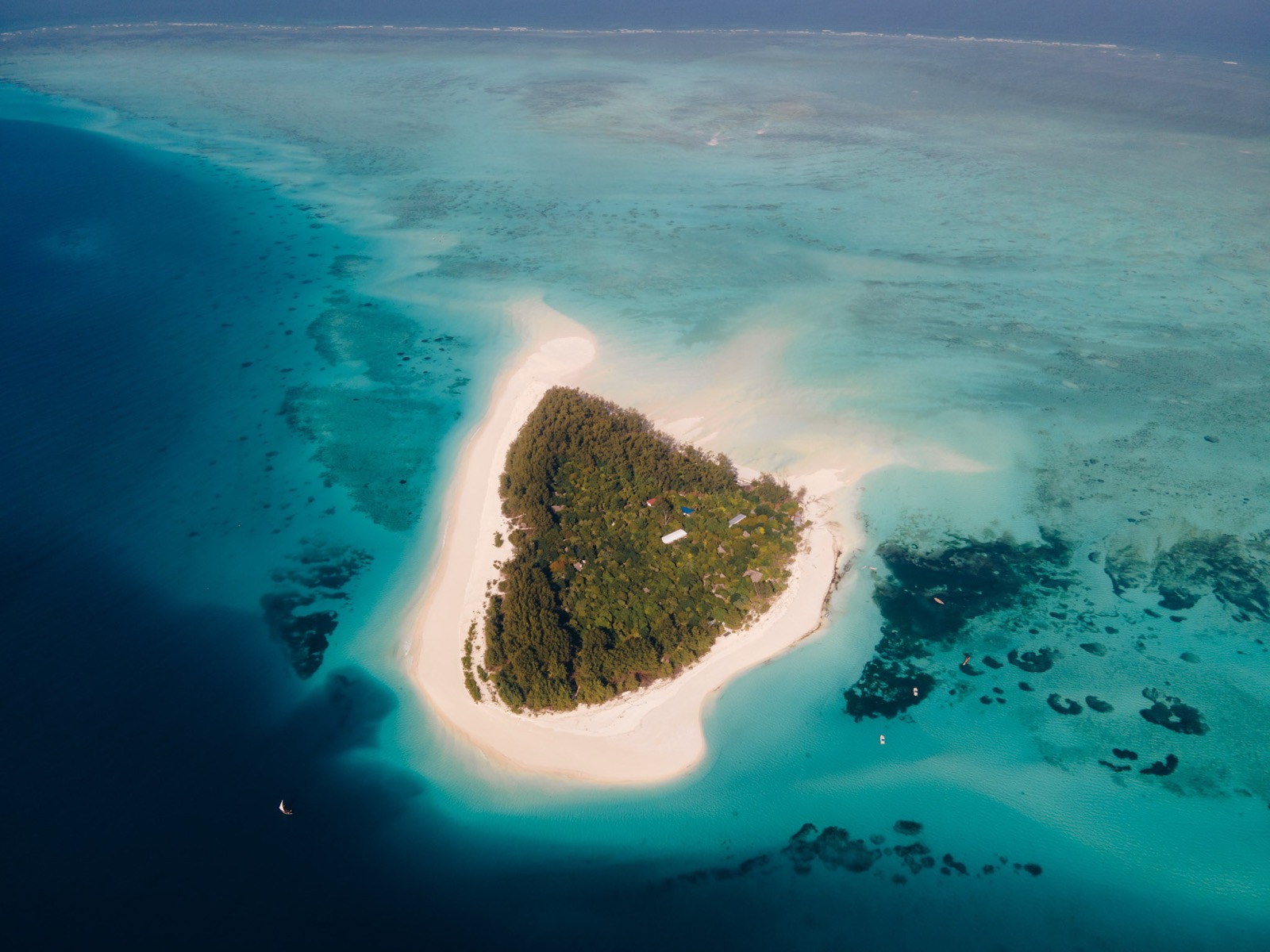
Zanzibar sits in a stretch of the Indian Ocean that happens to be very good for water sports. The east coast gets consistent trade winds from two monsoon cycles. The water is warm year-round — 26–28°C even in the coolest months. The coral reefs off Mnemba and Chumbe are among the most protected in East Africa. Whale sharks gather in the Mafia Island channel from October to March. And the Pemba Channel, 50 kilometres to the north, has walls that drop to 30–60 metres in visibility.
The result is an island where a complete beginner can learn to kitesurf on the same afternoon a certified diver is on a wall dive, and both are back on the beach for the same sunset dhow. This guide covers every water activity, with honest costs and the season that works for each.
Kitesurfing: Paje and the east coast
Paje on the southeast coast is East Africa’s kitesurfing capital. The reef creates a wide, shallow lagoon at low tide — flat water, waist-deep in places, no current. Two monsoon winds drive the conditions.
The kusi southeast trade wind runs from June to September: strong, consistent, the best season for intermediate and advanced riders. The kaskazi northeast trade wind arrives in December and runs through February: lighter, more moderate, the better window for beginners. April and May are off-season for kitesurfing — variable, gusty, and the months when most schools do maintenance.
IKO-certified schools in Paje charge around USD 55 per person per hour for group lessons (2 students sharing an instructor). Board-only rental without instruction runs USD 15 for one hour or USD 40 for a full day. The lagoon is forgiving enough that most beginners are body-dragging on day one and water-starting by day three.
From October onwards, the Mnemba current pushes south along the east coast, creating a transition period with variable but often exciting conditions before the kaskazi settles in December.
Full detail on schools, timing, and which spots suit which level: the full kitesurfing write-up.
Scuba diving: Mnemba Atoll to Pemba
The best dive sites in Zanzibar are in the north and northeast, concentrated around Nungwi and Mnemba Atoll. The atoll is the marquee experience: visibility consistently over 20 metres, reef fish in density, macro life including nudibranchs, moray eels, and leaf fish. The reef has suffered bleaching in 1998, 2007, 2016, and the 2024 El Niño-driven event, and active coral restoration is running through 2027 — go early in the morning before the tour boats arrive.
For certified divers who want more, Pemba Island an hour’s flight north is the jump: wall and reef dives with visibility of 30–60 metres, hammerheads at the North Horn site, mantas, and almost no other tourists. The eastern and southern sections of Pemba require advanced certification because of current; the western coast is accessible to all certified divers.
Mafia Island to the south has Chole Bay as its top dive site — calm, shallow sections accessible to beginners, with more advanced sites outside the bay requiring an Advanced Open Water certificate.
Costs: a single certified fun dive in Zanzibar runs USD 85–90 at most operators; two dives together cost USD 110–140. A PADI Open Water course is USD 450–550 depending on school. Pemba dive packages start from USD 323 per person with accommodation included.
The Zanzibar Hyperbaric Chamber is the only recompression facility in Tanzania — important context for any serious diver visiting the region.
Full guides: Zanzibar diving, Pemba Island diving, Mafia Island diving.
Snorkeling: accessible coral for everyone
No certification and no equipment experience needed — snorkeling in Zanzibar is the easiest entry point to the underwater world here. The top sites cover a wide range of effort and budget.
Mnemba Atoll is the high end: a northeast day trip by boat, visibility over 20 metres, dense marine life. Trips from Matemwe start at USD 30–40 per person; from Nungwi the boat ride is longer and prices are higher. The site gets crowded by mid-morning — go on the 07:00 departure whenever possible.
Chumbe Island Coral Park is the other outstanding option. The reef has been a no-take zone since 1994, and the effect is visible — more than 200 coral species and 370+ fish species in an area that hasn’t been fished in over 30 years. A day trip including the boat transfer costs USD 90 plus a USD 25 conservation levy — USD 115 total. It is the most intact coral reef in the western Indian Ocean that is accessible by day trip.
Prison Island is the Stone Town option: boats run in 20–30 minutes, entry is USD 22 (up from USD 4 after a September 2025 fee hike), and the round-trip dhow costs around USD 30–40. Coral health is modest compared to Mnemba or Chumbe, but it’s an easy half-day that combines the giant tortoise sanctuary with time in the water.
Kizimkazi and Menai Bay to the south are good for reef fish and dolphins. The Blue Lagoon at Michamvi offers guided snorkeling at USD 30–50 per person with an operator.
Gear rental from a beach operator typically costs USD 5–10. Water shoes are strongly recommended on the east coast — the reef flat at low tide has sea urchins.
Full guide: Zanzibar snorkeling.
Whale shark swimming from Mafia Island
Whale sharks gather in the Mafia Island Marine Park channel from October to March. This is a feeding aggregation driven by nutrient upwelling — not resident animals. November to January is the peak period. Mafia Island is the access point: fly from Dar es Salaam (around 40–60 minutes to Songo Songo, then a short boat transfer), or take a day trip from Zanzibar main island by boat.
Tours depart at 07:00 with hotel pickup at 06:30. A standard trip lasts two to five hours. The cost is USD 60–120 per person depending on operator; Dive Mafia and Afro Whale Shark Safari quote USD 60–80, while premium operators and those including longer transfers charge up to USD 120. The Mafia Island Marine Park daily entry fee is USD 23.60 per adult.
You snorkel alongside the sharks. The approach rule is a 3-metre minimum distance. No diving, no certification required. Sightings are very common in season — whale sharks are the reason most people visit Mafia — but no operator can guarantee a sighting on any specific day.
Full guide: Zanzibar whale sharks.
Dhow cruises: Swahili sailing
The dhow is the traditional Swahili sailing vessel — a lateen-rigged wooden boat that has worked these waters for centuries. There are three versions worth knowing.
Sunset dhow cruise: One to two hours on the water from Nungwi, Kendwa, or Stone Town as the sun drops. Shared group trips run USD 35–75 per person depending on operator and what’s included; private sunset charters start significantly higher. It is the most popular activity on the island for a reason — the light off the water in the last hour before dark is genuinely good.
Full-day dhow trip: Safari Blue from Fumba on the southwest coast is the famous version — snorkeling, a sandbank swim, grilled seafood and fruit lunch, rum punch on the sail home, and usually 20-plus boats out on a peak day. Budget USD 65–82 per person for the group version. If the social atmosphere appeals, book it; if you want the same water and food without the flotilla, a private charter from your own beach will deliver a comparable experience.
Overnight and charter dhow: Multi-day dhow charters are available for groups, typically arranged through tour operators in Stone Town or Nungwi. These are the quietest and most expensive option — private boat, flexible itinerary, no crowds.
One safety note: life jackets are not always provided by default on dhow cruises. Ask before you board.
Full guide: Zanzibar dhow cruise.
Stand-up paddleboarding and windsurfing
Stand-up paddleboarding is available at most beach hotels and water sports centres on the east coast. HI Zanzibar lists SUP rental from USD 10 for one hour, USD 15 for two hours, USD 20 for four hours, or USD 25 for a full day. No certification needed.
The trick with SUP in Paje is timing. On a calm morning before the kasi trade wind picks up — usually before 09:00 — the east-coast lagoon is genuinely flat. By midday, the kitesurfers own it. The best east-coast SUP session is an early-morning paddle before the wind arrives.
Windsurfing runs on the same wind and the same beach as kitesurfing. It is less common than kitesurfing now — Paje has tilted hard toward kite — but a few operators still offer boards and tuition. Michamvi and Pwani Mchangani are also listed for windsurfing. Wind conditions are the same as kitesurfing: kusi (June–September) for stronger wind, kaskazi (December–February) for more moderate conditions.
Deep sea fishing
Zanzibar fishing ranges from blue-water big game in the Pemba Channel — marlin, sailfish, yellowfin tuna, wahoo, dorado — to traditional ngalawa outrigger fishing on the east coast reef flats. Peak offshore season is November–March (northwest monsoon, calm seas). The Zanzibar fishing guide covers the Pemba Channel species, seasonal timing, traditional ngalawa fishing day trips from Jambiani and Matemwe, the community octopus management scheme, sport fishing operators, and spearfishing rules.
Offshore fishing from Zanzibar targets two distinct seasons. Billfish season runs November to March — striped marlin peak from December through March, black and blue marlin from September to December, sailfish also present through the billfish window. Tuna season peaks August to October/November — yellowfin tuna are the main target.
Year-round species include dorado, barracuda, wahoo, giant trevally, and kingfish. The Pemba Channel to the north is renowned for all three marlin varieties.
Charter pricing: a half-day trip starts from around USD 283 depending on operator and boat; a full-day trip typically costs USD 700–1,000 for the boat. Most charters take up to six to eight anglers. Catch-and-release is increasingly standard among reputable operators. Charter boats run from Nungwi and Stone Town; departure times are typically 06:30–07:00.
Sea kayaking and dolphin swimming at Kizimkazi
Sea kayaking is low-key but available from most beach hotels — no certification, no lead time. The most interesting kayaking is in the east-coast creek systems and the mangrove channels around Menai Bay. Uzi Island off the south coast has two local kayak operators who run mangrove tours through the tidal channels. A dawn paddle before the kite wind arrives gives the east coast to yourself.
The dolphin encounter at Kizimkazi on the south coast is Zanzibar’s most-requested marine wildlife activity and also its most ethically complicated. Spinner and Indo-Pacific bottlenose dolphin pods live in Menai Bay. The standard tour involves a speedboat — typically USD 35–50 per person — that follows pods until swimmers can enter the water. On a good morning you swim with dolphins. On a bad morning the fleet of fifteen boats spends an hour chasing a pod that wants nothing to do with any of them.
The honest advice: go on the first departure, around 07:00, before the fleet concentrates. Only enter the water if the pod is calm and moving slowly — not if they are running or bunched tight, which signals stress. The better operators hang back and let swimmers enter quietly rather than driving toward the animals.
Full guide: Zanzibar dolphins.
Practical notes and best season by activity
Water temperature: 26–28°C year-round. A wetsuit is unnecessary for snorkeling and swimming in any month. Divers who plan multiple dives per day in the kusi season (June–September) often wear a 3mm shorty for warmth.
Season summary by activity:
- Kitesurfing, windsurfing: June–September (kusi, stronger), December–February (kaskazi, moderate). Off-season: March–May.
- Scuba diving: June–October for visibility peaks (up to 30m at Mnemba); December–February for calm water and warm temperatures.
- Snorkeling: October–March for calmest conditions; June–October for peak visibility at Mnemba; avoid March–May (long rains reduce clarity significantly).
- Whale shark swimming: October–March from Mafia Island; peak November–January.
- Deep sea fishing — billfish: November–March. Tuna: August–October.
- Dhow cruises and SUP: Year-round; best in calm-water months (October–February).
- Sea kayaking: Year-round; best in early morning before the kusi wind picks up.
April–May: The long rains (masika) bring rough seas, reduced visibility, and partial or full closure for most water sports operators. If you’re visiting in this window, expect limited options and check with operators before arriving.
Marine park fees: Mnemba Atoll trips include a marine park contribution. Chumbe Island charges a conservation levy of USD 25 per person. Mafia Island Marine Park charges USD 23.60 per adult per day for dive and whale shark trips.
A note on coral: Zanzibar’s coral has been through four bleaching events — 1998, 2007, 2016, and 2024. Active restoration is ongoing at Mnemba (4 hectares, 2024–2027). The reefs are damaged in places and recovering. Chumbe Island’s no-take reef and the more remote Pemba sites remain the best coral health in the region.
I’ve spent enough time on Zanzibar’s water to say that the east coast on a calm November morning is one of the most beautiful places to be on a paddleboard — the ocean is flat, the kite schools are quiet before the wind comes up, and the reef is close enough to the shore to see the bottom through clear water. Later in the day it turns into a kitesurfer highway, which has its own energy. The range of activities here, from a gentle two-hour sunset dhow to a multi-day scuba trip to Pemba, is genuinely unusual for one small island.
For full breakdowns of each activity, the spoke guides cover each sport in depth: kitesurfing, scuba diving, snorkeling, whale sharks, dhow cruises, and dolphin swimming at Kizimkazi. For timing across your whole trip, the seasonal guide to timing your trip covers season, crowds, and pricing by month. To plan your week on the water alongside Stone Town and the spice farm, the week-long route plan sequences it all.
Frequently asked questions
What water sports can you do in Zanzibar?
Zanzibar offers the full range of Indian Ocean water activities: kitesurfing (Paje is East Africa's premier kite beach), scuba diving at Mnemba Atoll and beyond, snorkeling at Chumbe Island coral garden, whale shark swimming from Mafia Island (October–March), dhow cruises from Stone Town and Nungwi, stand-up paddleboarding, windsurfing, deep sea fishing for marlin and tuna, and sea kayaking through mangroves. The combination of warm water (26–28°C year-round), consistent trade winds on the east coast, and protected coral reefs makes Zanzibar unusual for water sports variety on one island.
What is the best season for Zanzibar water sports?
October to March is the best overall period: calm seas, good visibility, kitesurfing under the kaskazi northeast trade wind (December–February), and whale shark aggregations at Mafia Island. June to September brings the kusi southeast trade wind — the best conditions for experienced kitesurfers and windsurfers, and peak visibility at Mnemba Atoll (up to 30 metres). April–May (long rains) brings rough seas and reduced visibility; most operators scale back significantly. Water temperature stays 26–28°C year-round, so a wetsuit is not needed for snorkeling or swimming in any month.
Is Zanzibar good for beginner kitesurfers?
Yes — Paje on the east coast is one of the better beginner kite destinations in East Africa. The lagoon behind the reef creates a large, shallow, sheltered area where beginners can learn without current or swell. IKO-certified schools in Paje offer group lessons (2 students sharing an instructor) from USD 55 per person per hour. The kaskazi wind from December to February is consistent but not excessive — ideal for learning. The kusi from June to September is stronger and better suited to intermediate and advanced riders. April and May are avoided by beginners due to variable, gusty conditions.
What is the best snorkeling spot in Zanzibar?
Mnemba Atoll is the marquee snorkeling site — northeast of Matemwe, with visibility of 20 metres or more and dense reef fish populations. Trips from Matemwe start from USD 30–40 per person. Chumbe Island Coral Park is the other outstanding option: a no-take protected zone with 200+ coral species and 370+ fish species in a reef sanctuary. Prison Island is the most accessible from Stone Town (round-trip dhow roughly USD 30–40, USD 22 entrance fee since a September 2025 fee hike), though its coral is less impressive than Mnemba or Chumbe. Go early at Mnemba — the site gets crowded by mid-morning.
Can I see whale sharks from Zanzibar?
Whale sharks are found near Mafia Island, about three hours south of Zanzibar main island. Season runs October to March, with peak aggregations from November to January. Day trips depart at 7 am from Mafia Island accommodation; the activity costs USD 60–120 per person depending on operator, and lasts two to five hours. You snorkel alongside the sharks — no diving required, no certification needed. A 3-metre approach rule applies. Mafia Island Marine Park charges a daily entry fee of USD 23.60. Whale shark sightings are very common in season but not guaranteed on any single day.
Do I need to book water sports in advance in Zanzibar?
For kitesurfing courses: book at least a week ahead in peak season (December–February) as schools fill up quickly. For Mnemba Atoll snorkeling or diving: a day ahead is usually enough except over Christmas and New Year. For whale shark trips at Mafia Island: boat access is limited — book 2–3 days ahead. For dhow cruises and sunset trips: day-before booking is usually possible. For SUP, kayaking, and hotel beach rentals: no advance booking needed. If you want a private dhow charter rather than a group boat, especially in July or August, book at least a week ahead.