
Facts & prices checked: 2026-06-25
Pemba Island sits roughly 48-50 kilometres north of Zanzibar, surrounded by some of the deepest water in the region. The Pemba Channel drives strong currents along the eastern and southern coasts, nutrients rise from depth, and the result is marine life density that experienced divers describe as among the best in the Western Indian Ocean. Visibility reaches 30–60 metres. You will share the water with almost no one.
This is not a casual add-on to a Zanzibar beach holiday. Pemba is a destination that makes sense only if diving is the specific purpose of the trip. The logistics are real, the accommodation is limited, and the island has no tourism infrastructure outside a few eco-lodges and the upmarket Fundu Lagoon. For divers who have done Zanzibar and want to understand what the Indian Ocean actually offers, Pemba is the answer.
Why Pemba’s diving is different
The distinction between Pemba and Zanzibar diving is structural, not superficial. The Pemba Channel brings deep oceanic water — nutrient-rich, cool relative to the shallow-water reefs — directly to the island’s eastern and southern shores. Where most Indian Ocean dive destinations offer reef diving in relatively shallow bays, Pemba’s eastern wall begins in shallow water and drops into blue nothing. There is no sand bottom to descend to; the reef face simply disappears into depth.
This produces the conditions that serious divers look for: large pelagic fish using the current to hunt, visibility clear enough that you can see 30–60 metres in every direction, and reef walls covered in gorgonian fans and black coral at depth. It also produces the conditions that demand experience — the East African Coastal Current along the east and south coasts is strong, eastern and southern dive sites are for experienced divers only, and western coast sites (including Misali Island) are the entry point for intermediate divers.
The second difference is boat traffic. Zanzibar’s Mnemba Atoll runs multiple dive boats out every morning; popular sites see 20–30 divers simultaneously. At Pemba, a busy day at a dive site might mean two boats. The 2019 CORDIO survey of western Pemba recorded 26% average hard coral cover at 12 SCUBA sites — solid for East Africa, though not untouched, with some fishing pressure effects visible on fish populations. The no-take zone at Misali Island Marine Conservation Area tells a different story: 42 genera of hard corals, and drop-off reefs with twice the coral species of the surrounding channel areas.
I have watched divers come back from Pemba site briefings with the quiet expression of people who have been genuinely surprised. Not by a single animal encounter, but by the aggregate: the visibility, the fish density relative to expectations, the silence of diving without a convoy of other divers. The Channel delivers something the popular sites have mostly lost.
Marine life: what makes it worth the trip
The Pemba Channel is productive water. Nutrients from depth feed a food chain that terminates in animals you rarely see at crowded reef destinations.
Sea turtles are the most reliable encounter. Misali Island Marine Conservation Area is an active nesting site — green turtles outnumber hawksbill turtles at a 3:1 ratio, with green turtle nesting peaking in April and hawksbill nesting peaking in August. In the water, turtles are seen at multiple sites year-round. They are not habituated to dive boats in the way Mnemba’s turtles sometimes are — encounters feel genuinely wild.
Reef sharks — primarily whitetip and blacktip reef sharks — are common at the wall sites. Napoleon wrasse (Humphead wrasse), large grouper, and schools of barracuda appear with the consistency of sites where fish are not regularly chased by spearfishers. Eagle rays patrol the edges of the wall.
Hammerhead sharks are the seasonal headline: July–October, at depth on the eastern wall sites. They are not guaranteed. What is guaranteed is that July through September is the correct window, experienced local guides know the aggregation tendencies, and the dives where they appear are serious dives — current, depth, wall edge. Plan around them, but do not plan only around them.
Manta rays are present and reported at several sites, though encounters are more variable than at Mafia’s dedicated cleaning stations. First-hand accounts note manta encounters alongside whale shark sightings in the same dive window.
Humpback whales pass through the Pemba Channel on the East African migration route between July and October, with peak sightings in July–September. Between 400 and 600 humpback whales are documented yearly along the East African coast. During safety stops at 5 metres in July, the whale song carries through the water. It is an acoustic experience divers do not anticipate.
Dugongs are sighted along the Pemba–Zanzibar channel — it has been recognised as an important dugong habitat since 1981. Encounters are rare and unpredictable, but Pemba is one of the few places in East Africa where dugong sightings remain possible.
The key dive sites
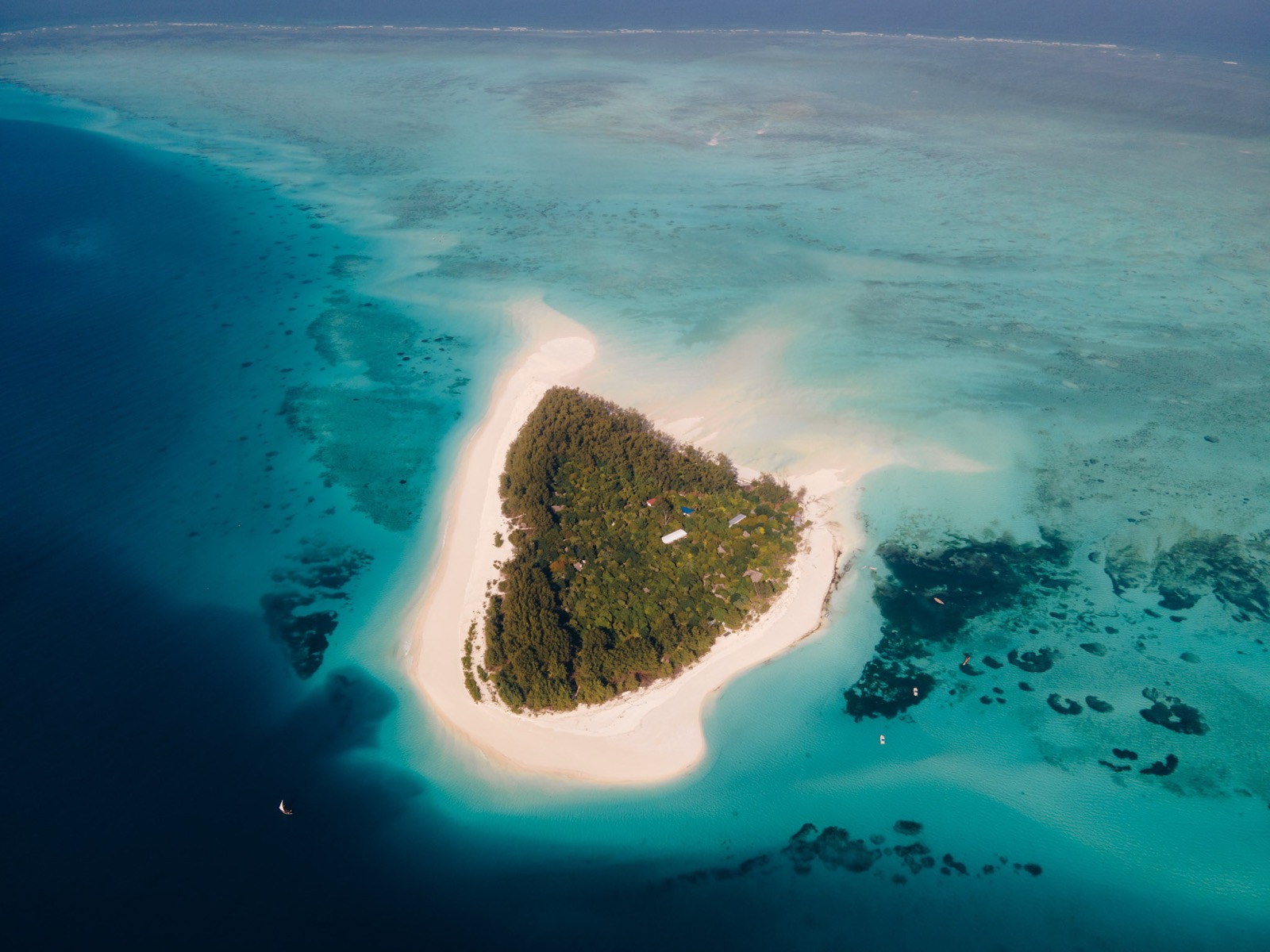
Misali Island Marine Conservation Area is the accessible entry point. Established in 1998, the no-take zone has had measurable effect on fish populations and coral recovery. Dive depths do not exceed 18 metres, making it suitable for intermediate and even beginner divers under guidance. The coral garden west of the island offers dense hard coral cover and dramatic drop-offs. Green and hawksbill turtles, reef sharks, and the 42-coral-genera diversity make this a full morning’s diving without reaching the channel itself. Transfer from the Pemba coast takes approximately 50–60 minutes by boat. The daily conservation fee is USD 10 per person.
A note on the 2024 bleaching: a research study on Misali described spring 2024 as producing one of the most severe bleaching events on record at the site, partly attributed to El Niño conditions. Long-term co-management studies show Misali has recovery capacity after previous bleaching events. The structural complexity of the reef — the drop-offs and coral mountains — remains intact; coral cover and colour require a few years to rebuild. This is relevant context for divers who visited Misali pre-2024 and expect the same specific appearance.
The western coast reef sites — accessible from Fundu Lagoon and the west coast eco-lodges — offer the progression from Misali toward more demanding dives. Gorgonian fans, schooling fish, and reef wall sections reachable by intermediate divers. The western coast is the zone where the current is manageable; it is where most multiple-dive days based from the lodges begin.
The eastern and southern wall sites are where the channel dives begin. These are for experienced divers only — strong surface currents from the East African Coastal Current, wall dives with significant depth, and the conditions that produce hammerhead and large pelagic encounters. A local guide with knowledge of the current patterns on the day is not optional for these sites. Plan these dives in the morning when visibility and conditions are typically best.
Hammerhead sharks at Pemba
Hammerhead aggregations at specific Pemba Channel sites in July–October are the reason some divers travel specifically to the island. The mechanics: cooler, nutrient-rich water from the channel upwelling during the southeast monsoon (Kusi) season brings baitfish concentrations. Hammerheads follow the food chain. The aggregations are at depth on the wall sites — sightings occur typically at 20–35 metres.
Several things are true simultaneously: July–September is the correct window; no specific site or dive guarantees an encounter; local guides who have been running these sites for years know where to look and in what conditions. The difference between a guided dive with a lodge that knows the channel and a random dive-boat arrangement is significant for these specific encounters.
Hammerhead dives are not beginner dives. Advanced certification, logged experience in current diving, and a correct buoyancy at 25 metres are prerequisites. Fundu Lagoon’s dive centre will brief you on this and will not take unprepared divers to the wall sites. This is the right approach.
If you visit Pemba primarily for hammerheads and miss them, the remaining diving is still exceptional. Set the expectation correctly: Pemba is worth the logistics for the whole package, with hammerheads as the highest-probability encounter during a specific window.
Humpback whales in the Pemba Channel
The humpback whale migration along the East African coast follows the Pemba Channel between July and October, with late July through September as the peak window. Late August through early October marks returning whales heading south. Between 400 and 600 humpback whales are documented annually along this coast.
Humpbacks are typically encountered at the surface and from the dive boat. During the July–September window, whale song is audible underwater — particularly during decompression stops and the ascent phase of wall dives. This is not a promotional claim; it is acoustic physics. Humpback song carries for significant distances through seawater, and at Pemba’s eastern sites during peak season, hearing it during a safety stop at 5 metres is a near-certainty.
Surface encounters — breaching, fin-slapping — are reported on boat transfers between sites during peak season. These are not guided whale-watching excursions; they are incidental encounters during dive logistics. Whether this adds value or merely adds pleasant noise to a dive day is a matter of perspective. For divers who have done the research and specifically planned a July trip, the acoustic encounter is often cited as one of the unexpected highlights.
Best season and conditions
June to October (the Kusi, southeast monsoon) is the primary dive season. The southeast monsoon brings cooler water, stronger currents, and the best visibility conditions — 30–60 metres on clear days. This is also the hammerhead window (July–October) and humpback whale season (July–September). Seas are generally calmer on the western side of the island; the eastern wall sites are accessible in calm windows during this period.
July–September is the peak of peak. All the large pelagic activity concentrates in this window, visibility is typically at its best, and the water temperature sits around 25–26°C. This is when Pemba earns its reputation.
October is a transition month. The Kusi winds down, the late humpbacks return south, and the northeast monsoon (Kaskazi) begins to establish. Conditions can still be excellent; the eastern sites become progressively more accessible as current eases.
November to April (Kaskazi): the dive season continues on the western and Misali sites. Visibility is lower on average (but still good by Indian Ocean standards). Seas can be rougher in December–March. The east coast sites become more accessible again. Manta ray and whale shark sightings are reported in this window, though these encounters are more variable than the July–October pattern.
Water temperature year-round: approximately 25–29°C — consistent with the wider Zanzibar sea temperature range. No wetsuit required for most divers; a 3mm shorty is adequate for longer dives.
Dive operators and accommodation
Pemba has very little dive tourism infrastructure compared to Zanzibar or Mafia. There are effectively two tiers:
Fundu Lagoon is the premium option and the most established dive base on Pemba. An eco-resort on the southwest coast, accessed by speed boat from the port. The in-house dive centre runs the western coast sites and Misali day trips, and the guides have the channel knowledge for the eastern wall dives during hammerhead season. Diving costs approximately USD 130–200 per dive depending on the arrangement. Accommodation and dive packages are available, but at a luxury-resort price point well above the budget-tier USD 323 figure quoted by other operators on the island — get a direct quote.
Liveaboard/catamaran charters are the way to dive directly from the vessel and move between sites daily rather than base at one shore lodge — Zanzibar Yacht Charter (operating since 1999) and similar dive-charter operators run these across the Pemba Channel. Pricing varies significantly by operator, season, and itinerary length, so get a current quote directly rather than assuming a fixed nightly rate.
Smaller eco-lodges on the west coast (several properties, USD 80–200/night) offer integrated or bookable diving and are the middle tier. Quality varies; check recent reviews before booking.
Gecko Nature Lodge and Swahili Divers offer diving arrangements for independent travellers on a tighter budget — diving costs approximately USD 130 with accommodation or USD 200 without at this tier.
Guesthouses in Chake Chake (USD 20–60/night): the budget option for serious divers willing to arrange external dive logistics. Day trips to lodge dive operations are feasible.
Book far in advance for July–September. Pemba’s accommodation capacity is small and the peak window is well-known to the regional dive community.
Getting to Pemba
Three airlines operate non-stop flights between Zanzibar and Pemba: Coastal Aviation, Auric Air, and FlexFlight. The flight takes approximately 30 minutes. Flight frequency varies by direction and season (roughly 30-52 flights per week as of 2026), departing generally between 08:25 and 15:20. Flights also run from Dar es Salaam in approximately 1 hour. A one-way flight from Dar es Salaam to Pemba runs around USD 150. Flight distance Zanzibar–Pemba is 124 km.
The ferry from Zanzibar runs to Mkoani Port on Pemba’s southern tip, operated by Zan Fast Ferries and Azam Marine with approximately 3 weekly crossings. The journey takes approximately 2 hours. Most divers who have done this crossing once take the flight thereafter. This is not snobbery — it is practical information about a long sea crossing in conditions that can be rough in the wet season, arriving on an island where you then need additional transfer to the north or west coast lodge.
From Fundu Lagoon, guests are met at the port by speed boat. Other lodges arrange road or boat transfers depending on their location on the island. Confirm logistics with your accommodation before travel.
How Pemba compares to Zanzibar and Mafia diving
Pemba vs Zanzibar (Mnemba Atoll): Mnemba is an excellent day trip from a Zanzibar beach base — warm, fish-heavy, turtle encounters, accessible to intermediate divers. The site is genuinely beautiful. It is also shared with significant dive boat traffic on peak days. Pemba requires an overnight commitment, no other boats, different scale of marine life, and serious current dives that Mnemba does not offer. These are not competing options for the same traveller; they are different choices for different trips.
Pemba vs Mafia Island: Both are genuine Indian Ocean dive destinations rather than accessible reef diving add-ons. Mafia’s claim is the whale shark aggregation (October–March) and manta rays (daily in November–December), inside an 822 km² marine park with better infrastructure than Pemba. Pemba’s claim is the wall dives, the pelagic channel action, hammerhead aggregations July–October, and a level of solitude that Mafia’s growing popularity is beginning to erode. If your priority is whale sharks and comfortable logistics, Mafia. If your priority is walls, pelagics, and diving somewhere that has not yet discovered influencer itineraries, Pemba.
The honest position: Pemba is one of the best dive destinations in the Western Indian Ocean. The trade-off is deliberate — the island’s limited infrastructure is what keeps it the way it is. Divers who arrive expecting Zanzibar service levels will be disappointed. Divers who arrive expecting the diving to deliver everything the logistics complexity suggests will not be.
Pemba’s real draw for serious travellers is its diving — the Pemba Island diving guide covers the Pemba Channel walls, hammerhead season, how to get there, and what makes this one of the best-kept secrets in the Indian Ocean.
→ Related guides: Pemba Island overview · Mafia Island diving — whale sharks and manta rays · Zanzibar diving — Mnemba Atoll guide · the main Zanzibar guide
Frequently asked questions
Is Pemba Island good for diving?
Yes — widely considered one of the best dive destinations in the Western Indian Ocean by serious divers who have made the trip. Visibility reaches 30–60 metres, among the highest in the Indian Ocean. Misali Island Marine Conservation Area has 42 genera of hard corals and dramatic drop-off reefs with twice the coral species of surrounding areas. The key advantage over Zanzibar diving: almost no other boats. Dive sites that would be crowded at other destinations see one or two boats on a busy day at Pemba. The trade-off is limited accommodation and more complex logistics.
When can you see hammerhead sharks at Pemba?
Hammerhead sharks aggregate at sites in the Pemba Channel during the cooler-water months, typically July–October. The aggregations are at depth — sightings are typically at 20–35 metres on the wall dives, on the eastern and southern coasts where the Pemba Channel runs deep. They are not guaranteed but July–September is the best window. Diving with a guide who knows the specific aggregation sites is essential; these dives also require Advanced certification and experience in current diving.
How do I get to Pemba Island for diving?
Coastal Aviation, Auric Air, and FlexFlight run scheduled flights from Zanzibar to Pemba (Wawi Airport) — approximately 30 minutes. Flight frequency varies by direction and season (roughly 30-52 flights per week as of 2026), with departures generally between 08:25 and 15:20. Flights also run from Dar es Salaam (about 1 hour). The ferry from Zanzibar to Mkoani Port on Pemba takes approximately 2 hours — most divers who have made this crossing once opt for the flight thereafter. Once on Pemba, Fundu Lagoon transfers guests by speed boat from the port.
What accommodation is available at Pemba Island for divers?
Accommodation on Pemba is limited compared to Zanzibar or Mafia. Fundu Lagoon is the premium option — an eco-resort with its own dive centre. Several smaller eco-lodges on the west coast at USD 80–200 per night offer integrated or bookable diving. Basic guesthouses in Chake Chake serve budget travellers. For a different style entirely, liveaboard/catamaran dive charters (operators like Zanzibar Yacht Charter) let you dive straight from the vessel and move sites daily — get a direct quote rather than assuming a fixed rate. Budget-tier dive-and-stay packages elsewhere on the island start from around USD 323 per person, though Fundu Lagoon's own dive-week packages sit at a much higher, separate luxury-resort price point (get a direct quote). Book months in advance for peak season (July–October).
How does Pemba Island diving compare to Mafia Island diving?
Both are exceptional, but different experiences. Mafia is better known, has more accommodation options, and offers whale sharks October–March, manta rays daily in November–December, and an 822 km² protected marine park. Pemba is harder to reach, less developed, with almost no dive tourism infrastructure outside Fundu Lagoon and a few eco-lodges. The diving itself: Pemba's wall dives are dramatic — the eastern and southern Pemba Channel is deep with strong current, suited to experienced divers. Pemba sees hammerhead aggregations that Mafia typically does not. Choose Mafia for whale sharks and managed infrastructure; choose Pemba for walls, pelagics, and genuine solitude.
What experience level is needed for Pemba Island diving?
It depends on the dive site. Misali Island Marine Conservation Area has sites with a maximum depth of 18 metres accessible to beginners and intermediate divers. The eastern and southern Pemba Channel is for experienced divers only — the East African Coastal Current produces strong surface currents, and the wall dives require comfortable current management and Advanced Open Water certification minimum. Most Fundu Lagoon guides will assess experience at the dive briefing before allocating sites. Do not misrepresent your certification level; the consequences of being out of depth on a current dive are serious.