
Facts & prices checked: 2026-06-25
Mafia Island has some of the most unspoiled diving in the Western Indian Ocean — and it has largely stayed that way because the island is genuinely difficult to reach.
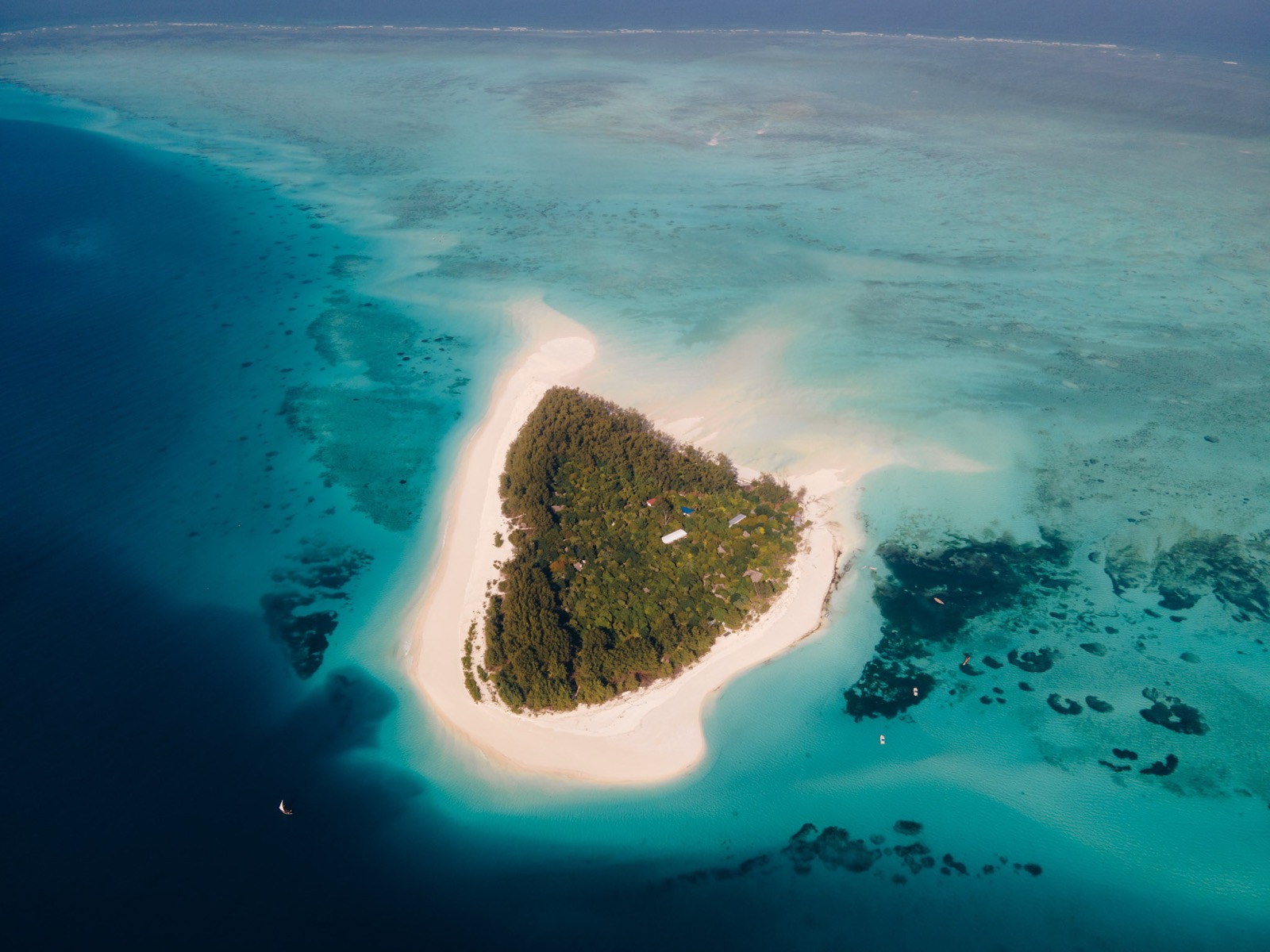
There are no day-trip crowds from Zanzibar or Dar es Salaam. There are no budget beach hostels funneling in groups of newly certified divers. The marine park covers 822 km², Tanzania’s first and one of East Africa’s largest marine protected areas, and the result is visible underwater: fish biomass that feels like it belongs to a different decade, coral gardens almost entirely free of anchor damage, and dive sites where you can genuinely descend and hear nothing except the reef.
I have spoken to divers who have covered Mnemba Atoll, Pemba Channel, the Similan Islands, and Mozambique’s Bazaruto Archipelago — and come back saying Mafia was different. Not because of a single marquee site, but because the cumulative effect of undisturbed reef feels rare in a way that is getting harder to find.
Why Mafia Island diving is different
The Mafia Island Marine Park (MIMP) was established as Tanzania’s first marine park and covers 822 km² of reef, seagrass, mangrove, and open water. Fishing nets with a mesh size smaller than 2.5 inches are prohibited throughout. Dynamite fishing — which scarred reefs across Tanzania in earlier decades — is actively enforced against.
The practical outcome for divers is a degree of fish biomass and coral health that most Indian Ocean sites no longer have. Tanzania’s hard coral cover declined sharply after the 1998 El Niño bleaching event, dropping from around 40% to 30% nationally. The 2024 bleaching season was severe across the Western Indian Ocean. Mafia has not been immune — but the combination of active park management, low visitor pressure, and cooler upwellings in parts of Chole Bay has produced recovery rates that outpace most comparable sites.
Kitutia Reef, the most studied site in the park, had the highest coral genus diversity of any reef surveyed in the Mafia Island Marine Park complex in 2022 research: 40 genera. That number is a useful indicator of ecosystem health; a healthy tropical reef has diverse coral genera rather than a few dominant, opportunistic species.
The baseline visitor pressure comparison with Zanzibar is stark. Mnemba Atoll can see dozens of dive boats on a peak-season morning. Mafia’s sites rarely see more than two boats simultaneously — most mornings, one.
Marine life you will encounter
The species list at Mafia is long, but the animals that define what makes the island a genuine dive destination are these:
Whale sharks are present in Mafia waters year-round, with the most reliable encounters from October through March (peak December–February). This is a longer reliable window than most Indian Ocean whale shark aggregations. The Marine Megafauna Foundation has documented seasonal aggregations here; the animals feed on surface plankton blooms and are accessible to snorkellers, not just divers.
Manta rays in November–December are described by operators who have run these waters for years as extremely common and seen daily. The season broadly extends from November through April, but the November–December concentration is the peak.
Green and hawksbill sea turtles are year-round residents. Green turtles haul ashore on Mafia’s beaches to nest, with a peak in April–May; hatchlings emerge June–September, and July is considered the best month for watching them. Sea Sense has protected over 230 nests on Mafia through its conservation programme. In-water encounters are frequent year-round; the hatchling-emergence season makes June–September particularly reliable for turtle behaviour.
Humpback whales pass Chole Bay and Ras Mkumbi in late August to early October, returning southward on their annual migration. These are surface encounters from boats rather than dive encounters, but they sometimes occur while dive boats are transferring between sites.
Reef species across the sites include dogtooth tuna, barracuda, snapper, grouper, eagle rays, reef sharks, moray eels, and a nudibranch diversity that rewards macro photographers with a dioptre. Dugong — seagrass-dependent and historically present in the Rufiji-Mafia area — are technically possible but genuinely rare; a small breeding population exists in these waters, and Sea Sense has documented evidence of their presence.
The key dive sites
Kinasi Pass is the signature dive at Mafia and the one that separates experienced divers from beginners. Kinasi Pass is the main channel into Chole Bay — a drift dive with two walls: a deep shelving reef running to 20–26 metres, and a shallower inner wall at around 6 metres. Mid-pass sits a 26-metre coral spire of ancient coral rock that in strong current conditions is alive with fish. Best done on slack high tide. Big pelagics — barracuda in formation, tuna, rays — are the reward. This is not a site for Open Water divers on their third dive; it is a site for people who are comfortable in current and can enjoy the ride without fighting it.
Kitutia Reef (Chole Bay) is the counterpoint: shallow coral gardens, 40 documented coral genera, diverse reef fish, morays in the crevices, and low current that makes it accessible to any Open Water certified diver. Tanzania Tourism lists it as one of the primary dive sites on Mafia Island. It is also genuinely excellent for underwater photography — high-clarity water, good light penetration in the shallower sections, and subjects that are not pressured enough to be skittish.
Forbes Bay is an offshore site with deeper profiles and a different character: reef sharks are more consistent here than at the inshore sites, eagle rays cruise the outer slope, and dogtooth tuna are regular. Better suited to advanced divers or those with a few Mafia dives already logged.
Dindini North and South are wall dives with healthy coral structure. Sea turtles are frequent visitors — this is one of the more reliable sites for turtle encounters in the mid-water column. The walls extend into the open water and give a sense of scale that the inshore sites do not.
Mbwande Corner is a current dive with juvenile whale sharks reported in season. It requires timing and conditions to be right; not every Mafia visit includes it, but operators know when to call it and when to skip it.
Whale sharks and manta rays: the pelagic season
Whale sharks at Mafia are present year-round according to Marine Megafauna Foundation research, but the reliable encounter season runs October through March, with the peak in December–February. The snorkelling tours depart daily at 07:00 (with lodge pickup at 06:30), last 2–5 hours depending on how quickly sharks are located, and include water, snacks, community fees, and equipment. Pricing spans a real range: budget trips from USD 30, most standard tours USD 50–100 per person, and full-day premium packages up to USD 200.
The rule for whale shark encounters is universal: snorkel, not scuba. Whale sharks feed at the surface on plankton and fish spawn. Scuba divers below disturb the feeding and miss the encounter; snorkellers in the surface film with the animal are what works. Mafia’s operators understand this and enforce it.
Manta rays peak in November–December — Spanish Dancer Divers, one operator with long experience in these waters, describes them as “extremely common and seen daily” during those two months. The broader season extends November through April. Unlike whale sharks, mantas are encountered during dives as well as surface sessions; they frequent cleaning stations and current-fed sites such as Kinasi Pass.
The comparison with Zanzibar’s south coast whale shark aggregation at Kizimkazi is instructive. Zanzibar concentrations are often intense for shorter windows. Mafia’s season is longer and more diffuse — October through March, with fewer peak days but more consistent encounter probability across the season. If a first whale shark encounter is the priority and you can be flexible on dates, Mafia’s six-month window gives better options than a shorter aggregation period.
Sea turtles: year-round residents
Green turtles haul ashore on Mafia’s beaches to nest between February and July, peaking in April–May; hatchlings emerge June through September. Sea Sense has run a protection programme on Mafia for nesting turtles; over 230 nests have been actively protected under the programme.
In the water, turtles are year-round at most Mafia dive sites. The hatchling-emergence season (June–September) makes encounters more frequent because more animals are moving through coastal waters. Kitutia Reef and Dindini are the most consistently mentioned sites for in-water turtle encounters. Hawksbill turtles, which prefer steeper reef walls for feeding, are more common at the wall sites; green turtles are found at both reef and open-water sites.
Night turtle watches on Juani Island (April–May, the nesting peak) involve a boat transfer and ranger accompaniment — dry-land observation of nesting females on the beach. This is an emotionally striking complement to daytime diving encounters with the same species in the water.
Best season for diving
June–October (dry season): The cleanest conditions. Calmest seas, most reliable visibility, and the combination of turtle nesting season on the beaches with excellent reef fish behaviour below. The Kusi trade wind blows from the south in June–August and can make the outside-the-bay sites more exposed, but Chole Bay sites remain diveable. Visibility in dry season at Mafia is typically in the range that makes the sites genuinely rewarding for photography. Temperature stays between 25–29°C.
October–March: The whale shark and manta ray window opens in October. November short rains bring some rough days but not consistently; December–February is often good diving combined with peak whale shark encounters. March becomes more transitional.
April–May: Avoid for diving. The long rains bring rough seas, reduced visibility, and most operators scale back operations significantly. Some lodges close entirely.
The pragmatic summary: if diving is the primary purpose, June–October gives the best conditions; if whale sharks and mantas are the specific goal, plan for November–February and accept that some dive days may be disrupted by weather.
Dive operators on the island
Mafia is a small island and all operators access the same primary dive sites. The main dive operations are lodge-based:
Kinasi Lodge runs its own dive operation and is one of the established names for Mafia diving. The lodge has a sociable, active atmosphere suited to dive-focused trips.
Pole Pole Bungalows offers Full Board Plus rates from USD 290 per person per night (2025–2026 season) that include accommodation, all meals, and select activities. Tanzania Odyssey lists Pole Pole starting from USD 250 per person for shorter packages. Pole Pole is located approximately 30 minutes by road from Kilindoni airport.
Butiama Beach (Butiama Marine Camp) operates dive packages and is worth noting that their published rate materials flag that marine park fees are subject to change — confirm current fees directly before booking.
Independent dive operations exist in Kilindoni, but for most visiting divers the lodge-based option is simpler given that Mafia’s roads and logistics reward staying close to the water.
Marine park fee: USD 23.60 per adult per day (USD 11.80 for children aged 3–15), payable at the park office, applicable to the full duration of your stay within park boundaries. Budget this into your trip — it is separate from lodge costs and dive package costs.
Equipment rental is available on-island but ranges in quality. Bringing your own mask, fins, and wetsuit is recommended for fit, hygiene, and certainty. BCD and regulator rental is reliably available at the main lodge operations.
Experience level and site selection
Most Mafia dive sites are accessible to Open Water certified divers with basic buoyancy control.
Complete beginners (Discover Scuba/first dives): Kitutia Reef and the sheltered sections of Chole Bay. Shallow, low current, high coral genus diversity (40 genera at Kitutia), and forgiving conditions for learning buoyancy.
Open Water certified divers: Most sites are accessible, including Kitutia, Dindini North and South, and Forbes Bay in calm conditions. The variety of these sites across a week gives enough material that repetition is not a problem.
Advanced divers: Kinasi Pass and Mbwande Corner in current conditions. These require comfort with drift diving and current reading. The 26-metre spire at Kinasi Pass and the pelagic encounters at Forbes Bay justify the step-up in experience requirement.
Most operators do a quick skills assessment before directing divers to sites — a good sign, not an obstacle. If you have not dived in six months or more, mention it; a refresher dive in calm water at Kitutia before heading to Kinasi Pass in current is time well spent.
Getting to Mafia Island
By air: Coastal Aviation and Auric Air run scheduled flights from Dar es Salaam to Kilindoni Airport — approximately 30 minutes. Charter flights from Zanzibar take about 20 minutes. From Arusha the journey is approximately 3 hours by scheduled prop aircraft. Mafia-based lodges arrange transfers from the airstrip.
Luggage: Domestic flights to Mafia carry a 15 kg soft-bag limit. No hard-sided cases. Arrange any large dive equipment with your lodge in advance — most can hire out what you need, making it practical to fly light and rent on arrival.
Cash: No ATM on Mafia Island. Withdraw sufficient USD in Dar es Salaam or at Zanzibar airport before flying. The marine park fee and most incidental expenses are cash-only — a card machine won’t save you out here even if a lodge has one, since the mobile signal it needs is unreliable this far from Zanzibar’s main network.
Health: Mafia is a malaria risk area. Antimalarial precautions are required — same risk level as mainland Tanzania. Nearest equipped facility for anything serious is Dar es Salaam; AMREF Flying Doctors membership is a practical backstop for longer stays.
Build a buffer day into any itinerary connecting to a fixed international return flight. Local flights to Mafia are weather-dependent and occasionally cancelled at short notice.
Combining Mafia diving with Zanzibar
The logic of combining both destinations on one trip is strong. They are genuinely different diving experiences rather than duplicates:
Zanzibar diving centres on Mnemba Atoll — excellent coral diversity, good turtle encounters, but higher visitor pressure and some bleaching-related damage at shallower sites. Zanzibar diving is an accessible, well-organised product with dozens of operators competing for your business; Mafia is a smaller, more expedition-feel operation with lower pressure and better undisturbed fish biomass.
A practical itinerary for a serious dive trip: fly into Zanzibar, spend three or four days diving Mnemba (or Pemba Channel, 30–60m visibility for the dedicated), then a 20-minute charter to Mafia for four to five days of lodge-based diving. The two islands cover different depths, different current profiles, different species mix. They complement rather than repeat.
The reverse route — Mafia first, Zanzibar second — also works well, particularly if you time Mafia for whale shark season (October–March) and use Zanzibar for the more structured dive training environment that suits post-pelagic days when you want longer bottom times on structured reefs.
Chumbe, 40 minutes from Stone Town, is a third option for a snorkelling-focused day between dive days: 200+ coral species and 370+ fish species in a protected reserve with a 1:4 guide ratio.
Frequently asked questions
Is Mafia Island good for diving? Yes — widely considered one of the best dive destinations in East Africa. The Mafia Island Marine Park (822 km²) is Tanzania’s first marine park, and Kitutia Reef alone has 40 documented coral genera — the highest genus diversity of any surveyed reef in the park. Fewer boats, better coral health, a longer whale shark season (October–March), and sites that rarely see more than two dive boats simultaneously.
When is the best time to dive at Mafia Island? June–October gives the best overall conditions: dry weather, calm seas, and green turtle nesting season on the beaches. October–March adds whale sharks and manta rays (peak November–December for mantas). April–May is rough — most operators reduce diving significantly.
What marine life can you see? Whale sharks (October–March), green and hawksbill turtles (year-round), manta rays (daily November–December, season extends through April), humpback whales off Chole Bay and Ras Mkumbi late August to early October, reef sharks, eagle rays, barracuda, dogtooth tuna, and 40+ coral genera on Kitutia Reef.
Do I need advanced certification? No — most sites suit Open Water divers. Kitutia Reef is ideal for beginners (shallow, low current, 40 coral genera). Kinasi Pass (26-metre spire, strong current) suits advanced divers or experienced drift divers.
How do I get to Mafia Island? Scheduled flights: Dar es Salaam ~30 minutes, Zanzibar ~20 minutes (Coastal Aviation or Auric Air). Pack soft bags only (15 kg domestic limit). No ATM on the island — bring USD cash.
What does diving cost at Mafia? Marine park fee: USD 23.60 per adult per day. Whale shark snorkelling tours: USD 30–200 per person depending on tier (budget from 30, standard 50–100, full-day premium up to 200). Lodge dive packages (e.g., Pole Pole Full Board Plus): from USD 290 per person per night including accommodation, all meals, and select activities.
For the full Mafia Island overview — logistics, accommodation, who the island is and is not right for — see the full Mafia Island write-up. For comparison diving across Tanzania’s islands, see the wider Zanzibar diving comparison and Pemba for the highest-visibility channel diving in the Western Indian Ocean. The full Chumbe Island profile covers East Africa’s most protected private reef reserve — excellent for snorkellers and non-certified divers.
Frequently asked questions
Is Mafia Island good for diving?
Yes — widely considered one of the best dive destinations in East Africa. The Mafia Island Marine Park (822 km²) is Tanzania's first marine park, resulting in coral health and fish biomass that surpasses most Zanzibar dive sites. Kitutia Reef alone has 40 documented coral genera. The main advantages over Zanzibar: far fewer dive boats, better coral health, a longer whale shark season (October–March), and dive sites that rarely see more than two boats on a given day.
When is the best time to dive at Mafia Island?
June–October is the best overall diving season: dry conditions, calmest seas, and abundant fish life. This is also when green turtle hatchlings emerge on Mafia's beaches (June–September, nesting itself peaks April–May), so turtle encounters in the water are frequent. October–March adds whale sharks and manta rays but some days can be rough. Manta rays peak in November–December and are described as extremely common and seen daily during those months. April–May has the roughest conditions and most operators reduce diving.
What marine life can you see diving at Mafia Island?
Whale sharks (October–March, peak December–February), green and hawksbill sea turtles (year-round — nesting peaks April–May, with hatchlings emerging June–September), manta rays (most common November–December through April), reef sharks, eagle rays, humpback whales off Chole Bay and Ras Mkumbi late August to early October, barracuda, dogtooth tuna, and high-diversity reef fish. Kitutia Reef has the highest coral genus diversity of any surveyed reef in the Mafia Island Marine Park — 40 genera. A small breeding dugong population exists in the Rufiji-Mafia area, though sightings are extremely rare.
Do I need advanced certification to dive at Mafia Island?
No. Most Mafia dive sites are accessible to Open Water certified divers. Kitutia Reef is particularly suitable for beginners — shallow coral gardens, high genus diversity (40 coral genera), low current, good visibility. Kinasi Pass is a current dive best done on slack high tide with a 26-metre spire of coral; advanced divers or those with drift diving experience are better suited to this site. Most operators assess conditions and direct you to the appropriate site for your certification level.
How do I get to Mafia Island for diving?
Coastal Aviation and Auric Air run scheduled flights from Dar es Salaam to Kilindoni Airport on Mafia — approximately 30 minutes. Charter flights from Zanzibar take about 20 minutes. Most dive lodges (Kinasi Lodge, Pole Pole, Butiama Beach) operate dive packages that include transfers from the airstrip. Domestic luggage limits on these routes are typically 15 kg soft-bag — coordinate any large dive equipment with your lodge or airline in advance.
What does it cost to dive at Mafia Island?
All divers inside the Mafia Island Marine Park pay a daily marine park service charge of USD 23.60 per adult per day (USD 11.80 for children aged 3–15). This is payable at the park office and applies to the entire duration of your stay within park boundaries. Most Mafia lodges sell all-inclusive dive packages that bundle accommodation, meals, and diving — Pole Pole Resort starts from USD 290 per person per night on full-board-plus rates. Whale shark snorkelling tours span a wider price range than a single number suggests: budget options from USD 30, most standard tours USD 50–100 per person (2–5 hours, with pickup, water, snacks, and community fees included), and full-day premium packages up to USD 200.