Facts & prices checked: 2026-09-18
I live in Michamvi Pingwe — and have for years. That is why I can say what no guidebook writes: Michamvi is what most travellers are looking for when they say “a quiet, authentic beach” — but it is also what many miss because it doesn’t come up first on Google.
What Michamvi is
The geography: Michamvi Pingwe is a peninsula at the southeast tip of Zanzibar. Sea turtles are still commonly spotted in the waters around Pingwe. The village sits between two bays: the wider north bay (where most hotels are) and the smaller south bay (quieter, more fishing-village character).
The difference from the rest of the east coast: Michamvi has less kite wind than Paje. That means fewer young backpackers, less party atmosphere. The main draw is the water itself and the sandbank.
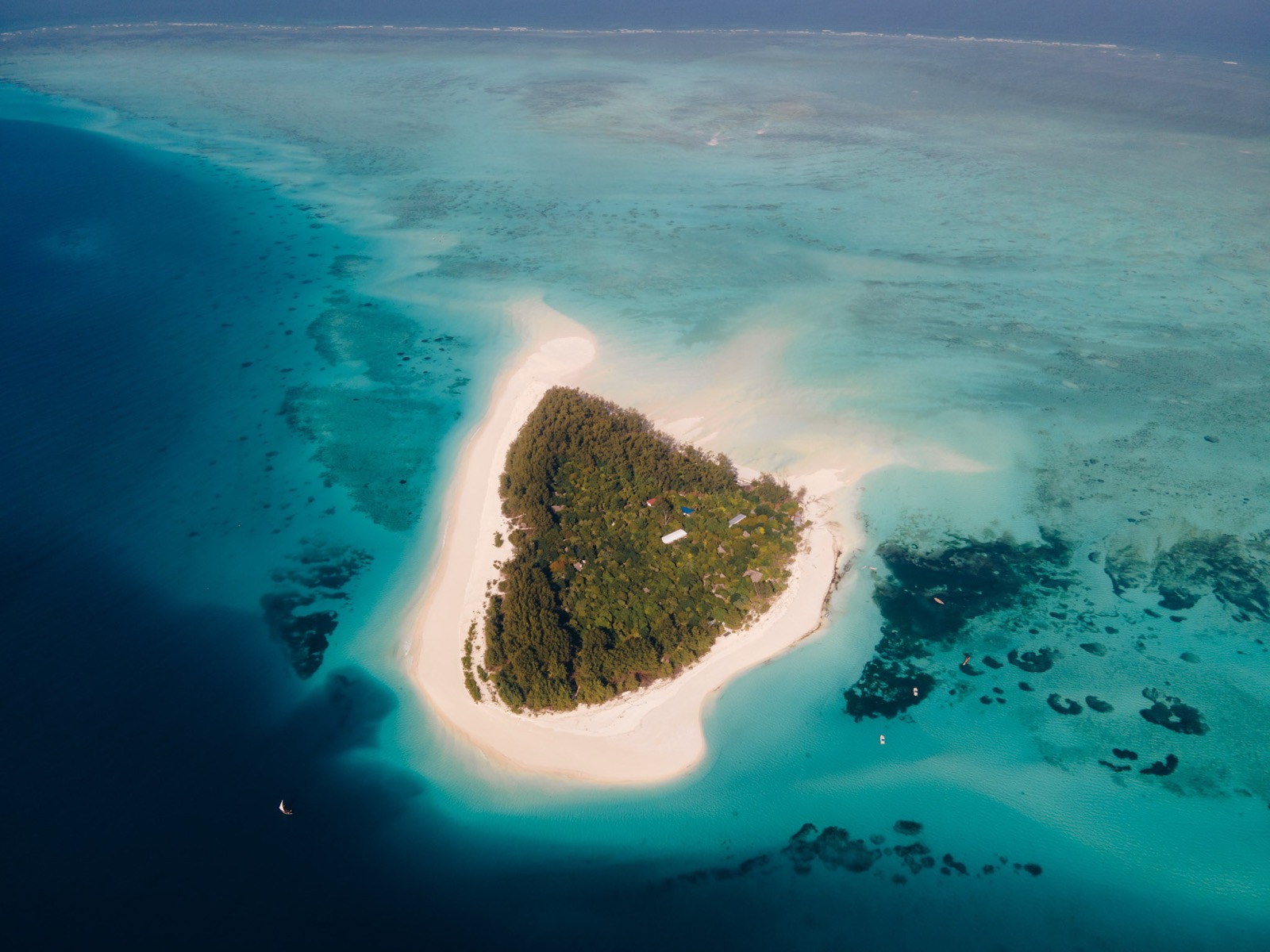
What Michamvi has that other beaches don’t: The Mchanga sandbank. This is a reef plateau that appears as a white surface rising from turquoise water at low tide. It is only reachable by swimming through a natural channel (~5 minutes) or wading through shallow water. On the sandbank you stand knee-deep to shoulder-deep in warm, turquoise-clear water, surrounded by nothing but horizon.
The Mchanga sandbank — practical details
When it appears:
At water level below ~1.2 m (measured at the reef). This corresponds to the lower third of the tidal cycle. Access window: approximately 4–6 hours per day.
How to get there:
From Matlai or hotels in the north bay: about 15–20 minutes on foot along the reef at low tide, or a short swim through the channel. Your hotel will tell you exactly.
What you do there:
Stand. Swim. Watch the sunrise. There are no sunloungers, no bar, no shade — that is the point. It is a natural experience.
What to bring: Sunscreen (water reflects UV strongly), a water bottle, mask and snorkel (the reef around the sandbank has fish and coral), no footwear needed (the sand is fine).
Where to stay in Michamvi
Boutique-Hotel Matlai
Directly on the north bay, access to the Mchanga sandbank, small property (6 rooms across Asili House and Villa Kidosho), restaurant with local cuisine, swimming pool. This is where I live and work.
Pearl Beach by Sansi (formerly Ras Michamvi Beach Resort)
Larger property on the south side of the peninsula, private bay.
The Palms Zanzibar
Luxury option nearby, smaller private villas.
Booking tip: Your accommodation choice matters more in Michamvi than in Nungwi or Paje — the peninsula has few external restaurants or bars. The hotel is the centre of your stay. Before booking, ask about sea views, pool, beach/water access, and meal options.
Sunrise in Michamvi
The east coast faces east — the sun rises directly out of the ocean. Michamvi has particularly good morning-light quality: little development on the horizon, clean air after the night. For photography: 05:45–06:30 (sunrise falls between 06:10 and 06:45 depending on the season). The sandbank plus sunrise plus red light: one of the best images on Zanzibar.
From Michamvi
Kizimkazi: 30 km south, 35 minutes. Dolphin tours available. → more on the dolphin tours
Jozani Forest: 25 km, 25 minutes. Red colobus monkeys. → the red colobus guide
Paje: 20 km south, 20 minutes. For kitesurfing or cheaper food options. → the Paje write-up
Stone Town: 65 km, ~70 minutes. Full day trip. → the Stone Town breakdown
The tide calendar: planning the sandbank
The Mchanga sandbank does not appear at all times. Understanding why makes it manageable.
How tides work at Zanzibar:
Zanzibar has semi-diurnal tides — two high waters and two low waters per day. The cycle shifts ~50 minutes later each day. If low tide is at 09:00 today, tomorrow it will be around 09:50.
When the sandbank is accessible:
At water level below ~1.2 m — roughly the lower quarter of the tidal cycle. Depending on the moon phase: 3–6 hours per day. At new moon and full moon (spring tides) the low-water level is deeper — optimal sandbank conditions. At half moon (neap tides) the low water is shallower — the sandbank may not fully appear.
Practical planning:
Website for tide times: tides.today → Location: Zanzibar East / Michamvi. Your hotel will share low-tide times for your stay dates. Simplest approach: at check-in ask “When is low tide today?” and plan around that.
The ideal scenario: Low tide falls in the early morning (06:30–10:00). That combines sunrise over the ocean with the sandbank in perfect light. This happens roughly 14 days per month. When your dates align with it, it is one of those experiences that is difficult to describe — and difficult to forget.
Snorkelling around Michamvi
The reef in front of Michamvi is accessible for snorkelling but different from Mnemba or Chumbe.
What you’ll see:
The east coast reef has moderate coral coverage (2016 bleaching damaged parts), but in the transition zones between seagrass and reef there is active reef life:
- Green sea turtles — in the seagrass areas (3–8 m depth) where they feed
- Octopus on the reef floor (well camouflaged — look carefully)
- Butterflyfish, parrotfish, trumpetfish, moray eels
- Sea urchins in rock crevices (neoprene socks or water shoes worth having)
Guided snorkel trip from Michamvi:
Hotels organise boat snorkelling to the best section of the reef (~20–40 minute boat ride, USD 20–40 per person including equipment). The deeper sections (~8–15 m) have better coral quality than the inner lagoon.
Free snorkelling:
At low water on the sandbank: the water over the reef on the way to the sandbank has butterflyfish and small reef dwellers. Bring a mask and snorkel and look on the way to the sandbank — free and spontaneous.
Boat excursions: sunset cruise, Blue Lagoon and Starfish
Beyond the reef right in front of your hotel, the two boat trips most guests actually book are a sunset run around the peninsula and a snorkelling loop to two nearby spots. Real, current numbers from a hotel booking this month:
Sunset ngalawa cruise to Michamvi Kae: About USD 80 for 2 people, including the taxi back to your hotel afterward — you sail out from Michamvi Pingwe, round the tip of the peninsula, and watch the sun go down over Chwaka Bay from the water. Paid in cash straight to the captain; village boats don’t take cards. The departure time isn’t fixed weeks out — hotels get the exact time from the captain a few days before, based on that day’s tide and sea state, and it’s worth following that advice rather than insisting on a specific hour.
Blue Lagoon and Starfish, combined: Booked together as one trip, about USD 70 for 2 people, same cash-only arrangement. Blue Lagoon (south of Michamvi) has the better reef snorkelling; Starfish Beach (north) is the shallow sandy spot with the large starfish. Timing gets reconfirmed the morning of, again for tide reasons.
A newer alternative — Malkia Dhow: A more design-forward private charter based at Michamvi Kae itself (Instagram malkiadhow_zanzibar) rather than the usual Pingwe-side local captains. It’s noticeably pricier — its own list runs USD 110–150 for a sunset/mangrove cruise and USD 240–280 for the sandbank or snorkelling trips — and since it departs from Kae, not Pingwe, you’ll need an extra taxi there and back (~USD 20). Worth flagging: this is new enough on the peninsula that I don’t have much independent experience with it yet, so treat it as one more option to ask about rather than a confirmed upgrade over the standard local-captain trips.
The sandbank experience: what actually happens
I live here and go out to the sandbank more than most guests. Here is what I notice each time:
The moment you’ve swum through the last channel and stand on the sandbank, something quietens. The water is shoulder-deep, warm, that turquoise colour that looks like a design choice from above, not like reality. The only sounds are gentle surf and wind running across the flat surface.
Guests I’ve brought out here often just stand for 10 minutes without moving. No photographs. No talking. That is the indicator: it is not an activity — it is a state.
In the early morning, when low tide coincides with sunrise, the combination of light and water is almost impossible to photograph accurately. Red morning light on turquoise water, white sand, nobody else in sight — this is what Michamvi is known for among the people who’ve been here.
Food and local atmosphere in Michamvi
Michamvi is not a tourist centre — it is a fishing village with a few boutique hotels.
Eating at your hotel:
Most properties in Michamvi have their own restaurants — because there are almost no alternatives. Matlai cooks fresh fish daily (from the local fisherman), coconut curry, pilau, grilled dishes. Breakfast is available early (05:30 on low-tide mornings) on request.
Local food in the village:
In Michamvi village there are a few simple restaurants (mama-kiosk style): wali na kuku (rice with chicken), ugali na samaki (maize porridge with fish), tea. USD 2–5 per meal. Not for gastronomic experiences — but authentic and inexpensive.
Fresh fish from the fisherman:
In the morning, when the ngalawa boats return, you can buy directly. Red snapper, squid, mackerel, occasionally barracuda. Hotels often buy their daily fish this way — ask if you can come along.
Long stays and digital nomads in Michamvi
Michamvi is quiet — which is a specific advantage for anyone staying more than a week. Without the kite school circuit of Paje or the resort-hotel churn of Nungwi, the pace here is slower by default. Monthly stays (21 nights or longer) are common at smaller lodges; rates typically drop 30–40% compared to the nightly walk-in price, and this is negotiable directly with the property.
The practical DN rhythm here: Vodacom 4G reaches the beachfront at some angles, but video calls are unreliable. Matlai has Wi-Fi, though speed varies. Stone Town (65 km, ~70 minutes each way) is the reliable working alternative — I know guests who go in on Tuesday mornings, use a café with good internet, and return for the evening. Once a week is about the right cadence for Michamvi long-stayers who need serious internet.
What makes Michamvi work for longer stays: The sandbank never gets old. The morning routine — early beach walk, sandbank at low water, coffee on the terrace — is genuinely sustainable as a daily rhythm in a way that noisier destinations are not. I have been doing this for years. The quiet resets.
Michamvi with families
Michamvi works for families — with clear conditions.
The honest age assessment: Families with children under 8 need a pool. The tidal variation at Michamvi means the lagoon is sometimes too shallow or too rough for young children to swim freely. A property with a clean pool removes this dependency entirely. The Mchanga sandbank itself (knee-deep to shoulder-deep, warm, flat) is one of the most naturally child-friendly water experiences on Zanzibar — but it only appears at low tide.
What children do well here: The sandbank works well for children from about age 4 — shallow, clear, warm, and they can walk around freely. The morning fishing boats are interesting and accessible for curious children. Kizimkazi dolphin tour (30 km, 35 min) is realistic as a day trip from Michamvi for children aged 5 and up.
What to check before booking: Pool size and hours, whether the property stocks children’s beach equipment (masks, floaties), and meal flexibility (Michamvi lodges may not have dedicated children’s menus — ask).
Best time to visit Michamvi
June to October (Kusi wind):
On the east coast, the southeast trade wind brings more breeze — good kite conditions in Paje, but in Michamvi the sea can be somewhat rougher. Even so: the lagoon is sheltered by the reef, sandbank access remains possible. Moderate prices, medium visitor numbers.
December to February:
Peak season. Calmest sea, best conditions, sandbank at its best (no strong winds). Highest prices. Book 2–3 months ahead.
March to May (long rains):
Daily rain showers, sea can be rougher. Very few tourists. Lowest prices. For travellers who want quiet and low rates: workable, but adjust expectations.
November:
Short rains — moderate weather, moderate prices. An often underestimated window: fresh vegetation, relatively calm sea, few other travellers.
Why I like November best: Short rains, fresh air, almost no other visitors, lower hotel rates. The sandbank in the morning under oblique November light, nobody else out there — that is a different experience from December peak season when 10 guests are on the sandbank plateau at once. The vegetation is greener after the short rains, the light is more dramatic, and the reef fish in the lagoon channel are more active than in the dry months. For anyone with flexibility, early to mid-November is the most underrated window on the whole east coast.
The Rock Restaurant
The Rock Restaurant is the most photographed building in Zanzibar — and it sits on Pingwe Beach in Michamvi.
Founded in 2011, it occupies a small coral outcrop in the Indian Ocean. The famous image — white-painted restaurant on dark coral, blue water surrounding it on all sides — has appeared in every major travel publication covering Zanzibar. Whether you arrive on foot across wet sand at low tide, or by the restaurant’s small boat at high tide, the approach is part of the experience.
Practical details:
- Fixed lunch seatings: 12:00 or 14:00; open until 22:00
- Food budget: USD 30–60 per person; grilled lobster USD 65; house seafood platter (cigal, king prawns, octopus, calamari) USD 30 as an add-on
- Access: walk across the sand at low tide; take the restaurant’s boat at high tide
- Distance from Matlai: approximately 20 minutes by road
- Reserve in advance — the restaurant has limited covers and books up quickly
What to expect inside: The famous photo is taken from shore. Inside, the dining room is intimate and small, with ocean views in every direction. Fresh catch of the day, candlelit tables in the evening. The setting is extraordinary; the food — particularly the octopus and the seafood platters — is genuinely good. This is not a restaurant that coasts on its reputation.
I have eaten here several times. The Rock is worth a dedicated trip from anywhere on the east coast. The best single-day combination from Michamvi: sandbank at low tide in the morning, then taxi to The Rock for the 12:00 lunch seating. Two of Zanzibar’s most distinctive tidal experiences in one day — both on the same peninsula, separated by a 20-minute drive and a change in the tide.
Michamvi Kae: The Other Side of the Peninsula
Most visitors to Michamvi stay on the Pingwe side. But the Michamvi Peninsula has a second, mostly unknown beach area that rewards the traveller who looks for it.
Michamvi Pingwe (east/southeast side) faces the open Indian Ocean. This is where the Mchanga sandbank appears, where The Rock sits, where Matlai, Zawadi, and Karafuu Beach Resort are located. The sun rises here directly out of the sea. This is the Michamvi that most visitors mean.
Michamvi Kae (west side) faces back toward the protected lagoon, looking westward toward the mainland. It is one of the only locations on Zanzibar’s east coast where you can watch the sun set over the water — the peninsula’s orientation makes this possible. Swimming conditions here are calmer and more sheltered through the tidal cycle than on the Pingwe side. Guest accounts describe Michamvi Kae as quiet and isolated with limited local village life — even quieter than Pingwe.
Which side to choose: If the Mchanga sandbank, The Rock Restaurant, and sunrise are your priorities — Pingwe. If you want calmer swimming, sunset views over the water, and the most secluded setting on the peninsula — Kae.
In practice, staying on the Pingwe side and walking to Kae for a sunset is the best of both. The walk along the peninsula track takes 20–25 minutes. I do this occasionally — turquoise sandbank in the dawn light, then the walk to Kae for orange sunset over the lagoon in the evening. The change between the two sides is striking: same peninsula, completely different quality of light, water, and atmosphere.
Practical notes
Money and shops: Michamvi got its first ATM recently, opposite the Karafuu Hotel — useful, but new enough to treat as a backup rather than a guarantee. For supplies, Ali Miraji on the main road is the biggest shop in the village, with several smaller local shops around it. Bring some cash from Stone Town regardless, since village banking is still newer than what you’ll find in town.
Transport: The track into Michamvi (last 5 km) is unpaved. Fine with a normal car in the dry season; 4WD advisable in the rains. Boda-boda motorbike taxis run throughout the year without issue.
Power and internet: Hotels use solar power. Internet is available but slow (LTE coverage patchy). For remote work: Vodacom offers 4G signal at some points, but video calls are unreliable. Stone Town or Nungwi are better for remote work.
Mosquitoes: The tidal zone with seagrass lagoon creates somewhat elevated evening mosquito activity. Long-sleeved evening wear and repellent for the sunset hours. DEET-based repellent (30–50% concentration) is the most reliable option; natural citronella variants are available locally but less effective. A mosquito net is standard equipment in all Michamvi hotels — confirm it is properly fitted on arrival.
→ Related guides: East Coast overview — tides, villages, beaches · Paje — kitesurfing and the lagoon · where the best beaches are · planning a romantic stay · Kizimkazi dolphins · browse the guide index
Frequently asked questions
What is the Mchanga sandbank?
At low tide — when the water level drops below approximately 1.2 m — a white sandbank appears in front of Michamvi Pingwe. It is accessible for 4–6 hours per tidal cycle. The surrounding water is knee-deep to shoulder-deep, turquoise, and warm. You reach it by swimming through a natural channel (5 minutes) or wading through shallow water. It is the reason Michamvi is known among insiders as one of Zanzibar's most beautiful beach experiences.
What is the difference between Michamvi and Paje?
Both are on the east coast and have the same tidal logic. Paje: livelier, kite-focused, cheaper prices, more backpackers. Michamvi: quieter, fewer tourists, more boutique-hotel concentration, no kitesurfing (weaker wind), and the Mchanga sandbank as a distinct feature. Michamvi suits couples, quiet-seekers, and anyone looking for a more personal stay without full luxury pricing.
When does the Mchanga sandbank appear?
At low tide — roughly 4–6 hours per tidal cycle. The timing shifts ~50 minutes later each day. On some days the optimal low-water window is early morning (07:00–10:00) — perfect for a sunrise sandbank visit. Other days it falls midday or evening. Check tides.today (Zanzibar East) for your exact dates. Your hotel can tell you the low-tide times for your stay.
What does accommodation cost in Michamvi?
Michamvi has no budget options — properties are predominantly mid-range to boutique. Price range: USD 120–400 per night (double room with breakfast). Boutique-Hotel Matlai (directly on the water with sandbank access): USD 250–400. A few simpler guesthouses at the village edge: USD 60–100. For budget travel, Paje is the right place — not Michamvi.
How do you get from the airport to Michamvi?
ZNZ airport to Michamvi: ~65 km, ~75 minutes, transfer USD 40–60. Stone Town to Michamvi: ~65 km, ~70 minutes, USD 40–55. Dalla-dalla is cheaper (~USD 2) but significantly longer. The last 5 km of road into Michamvi is unpaved — a normal car manages in dry season; 4WD is advisable in the rains.
What excursions can you do from Michamvi?
Kizimkazi dolphins (30 km south, 35 minutes). Jozani Forest (25 km, 25 minutes). Paje day trip for kitesurfing (20 km south, 20 minutes). Stone Town day trip (65 km, ~70 minutes). Locally, hotels arrange a sunset ngalawa (outrigger canoe) cruise around the peninsula tip to Michamvi Kae — about USD 80 for 2 people including the return taxi — and a combined Blue Lagoon and Starfish Beach boat trip for about USD 70 for 2. Both are cash-only, paid directly to the local captain, with the exact departure time set by the captain a few days out based on tide and sea conditions. The remoteness of Michamvi makes it ideal as a retreat base — excursions are possible but not required.
Is The Rock Restaurant worth visiting from Michamvi?
The Rock Restaurant (founded 2011) sits on a coral outcrop in the Indian Ocean on Pingwe Beach — at low tide you walk to it; at high tide a small boat brings you. Fixed lunch seatings at 12:00 and 14:00; open until 22:00. Budget USD 30–60 per person for food; grilled lobster USD 65; house seafood platter (cigal, king prawns, octopus, calamari) USD 30 as an add-on. It is one of Zanzibar's most photographed spots and worth the trip from anywhere on the east coast. Reserve in advance — the restaurant has limited covers and fills quickly. From Matlai: approximately 20 minutes by road.
What is the difference between Michamvi Kae and Michamvi Pingwe?
Michamvi Peninsula has two distinct beach sides. Michamvi Pingwe (east/southeast) faces the open Indian Ocean — this is where the Mchanga sandbank, The Rock Restaurant, Matlai, Zawadi, and Karafuu are. Sunrise rises directly out of the sea here. Michamvi Kae (west side) faces back toward the sheltered lagoon and is one of the only spots on Zanzibar's east coast where you can watch the sun set over the water. Kae has calmer, more sheltered swimming conditions. Choose Pingwe for the sandbank and sunrise; choose Kae for calmer seas and sunset views.