
Facts & prices checked: 2026-07-18
Most guidebooks describe the Mnarani Marine Turtles Conservation Pond as a “turtle aquarium” — which sets a completely wrong expectation. There’s no concrete tank, no glass wall, no controlled zoo setting. It’s a natural tidal pool that fills and empties with the Indian Ocean, where injured and recovering sea turtles live until they’re released. That distinction matters before you go.
I’ve been there several times. Here’s what you actually find — and how to plan the visit so it delivers the right experience.
What Mnarani is — and isn’t
What it is: a community-based rehabilitation centre established in 1993 by local fishermen in Nungwi. The original motivation was practical and direct: fishermen occasionally caught sea turtles as unintended bycatch in their nets. Instead of killing the animals or ignoring them, the fishermen created a place where injured or exhausted turtles could recover before being released back into the ocean. The model — fishermen as conservation partners, not adversaries — was ahead of its time for the region.
Today Mnarani is home to around 50 sea turtles at various stages of rehabilitation. Some came in through net bycatch, some through beach strandings, some from exhaustion. A number are temporary guests on their way to release. Others have lived there for longer periods because their injuries make a full return to the sea impossible.
What it isn’t: a zoo, a show venue, a “guaranteed interaction experience.” If you’re coming to ride, hold, or pose turtles for an extended photo session, you’re in the wrong place. That’s not a criticism — it’s a description. Mnarani exists for the turtles, not for visitor entertainment. That’s exactly what makes it one of the most honest conservation sites on Zanzibar.
Practical information at a glance
| Detail | Information |
|---|---|
| Entry | USD 10 per person (non-residents) |
| Hours | Daily 09:00–18:00, year-round |
| Location | Northernmost end of Nungwi Beach, eastern side |
| Walk from centre | About 10 minutes toward the lighthouse |
| Booking | Not required |
| Visit length | 30–45 minutes |
| Annual release day | in February |
| Established | 1993 |
Nungwi’s second turtle centre — the Baraka Natural Aquarium — is also on the eastern beach, about 15 minutes’ walk away. If you want to see both, they combine easily into one morning. If you’re only choosing one, Mnarani is the ethically clearer pick, because entry fees demonstrably fund its rehabilitation and hatching programmes.
How to get there
From Nungwi’s main tourist strip — where the resorts, restaurants, and bars cluster along the west beach — head toward the east beach and follow the path around the headland. The lighthouse is your landmark. The pond sits on the eastern side of the headland, right at the water’s edge.
If you have no sense of direction: just ask a fisherman or local resident for “Mnarani” or “turtle pond.” Signage is minimal, but everyone in the village knows the spot. Asking “Mnarani?” usually gets an immediate point in the right direction — it isn’t hidden, just not heavily signposted for tourists.
By rental car or scooter: the northern end of Nungwi’s main road ends at the village core. Park before the village, then walk. The final stretch through the village and to the east beach isn’t drivable.
Green turtle vs. hawksbill: the two species in the pond
Mnarani is home to both turtle species regularly found in Tanzanian coastal waters. They look similar at first glance but differ substantially in size, diet, and threat status.
Green turtle (Chelonia mydas) — IUCN: Least Concern (reassessed from Endangered in October 2025, following a global population increase of over 28% since the 1970s)
The green turtle is the larger of the two species. Adult females reach a shell length of around 90–110 cm and typically weigh 110–130 kg. The shell itself isn’t green — it’s olive-brown to yellowish; the name comes from the green fat beneath the shell, produced by their plant-based diet. Adult green turtles feed almost exclusively on seagrass and marine algae. That sounds harmless, but it’s biologically significant: through their grazing effect on seagrass meadows, green turtles actually help keep those marine ecosystems healthy.
At the pond, green turtles are easy to spot by their broad, rounded head and relatively smooth, wide shell. In the pool they’re often found sunning themselves on the rock ledges — sea turtles are cold-blooded animals that take their body temperature from their surroundings.
Hawksbill turtle (Eretmochelys imbricata) — IUCN: Critically Endangered
The hawksbill is noticeably smaller: adults average 40–70 kg, with a shell length typically of 65–90 cm. The key identifying feature is the beak: narrow, curved, resembling a hawk’s — which is where the English name comes from. This specialised beak lets hawksbills pull sponges out of tight reef crevices. Sponges are toxic to almost every other animal, but the hawksbill has evolved a resistance to those toxins.
Historically, the hawksbill’s patterned shell was the main source of “tortoiseshell” — the amber-coloured natural material used well into the 20th century for combs, eyeglass frames, jewellery, and decorative objects. That trade pushed the species to the brink: an estimated 20,000–25,000 nesting females remain worldwide.
Tanzanian waters host five sea turtle species in total — alongside the green turtle and hawksbill, also the loggerhead (Caretta caretta), olive ridley (Lepidochelys olivacea), and leatherback (Dermochelys coriacea). IUCN status ranges from Least Concern (the green turtle, reassessed October 2025) to Critically Endangered (hawksbill and leatherback), with the loggerhead and olive ridley listed as Vulnerable. At Mnarani’s pond, you’ll generally encounter the region’s two most common species.
Conservation history: 30 years of community-based protection
Mnarani didn’t come out of an NGO office. Its founding story is simpler than that, and more convincing because of it.
In the early 1990s, fishermen in the Nungwi area regularly caught sea turtles as bycatch. The animals were often injured — net cuts, exhaustion from prolonged entanglement — but alive. There was no organised way of handling these finds: some animals were killed, some thrown back, and most didn’t survive being returned to the sea in a weakened state.
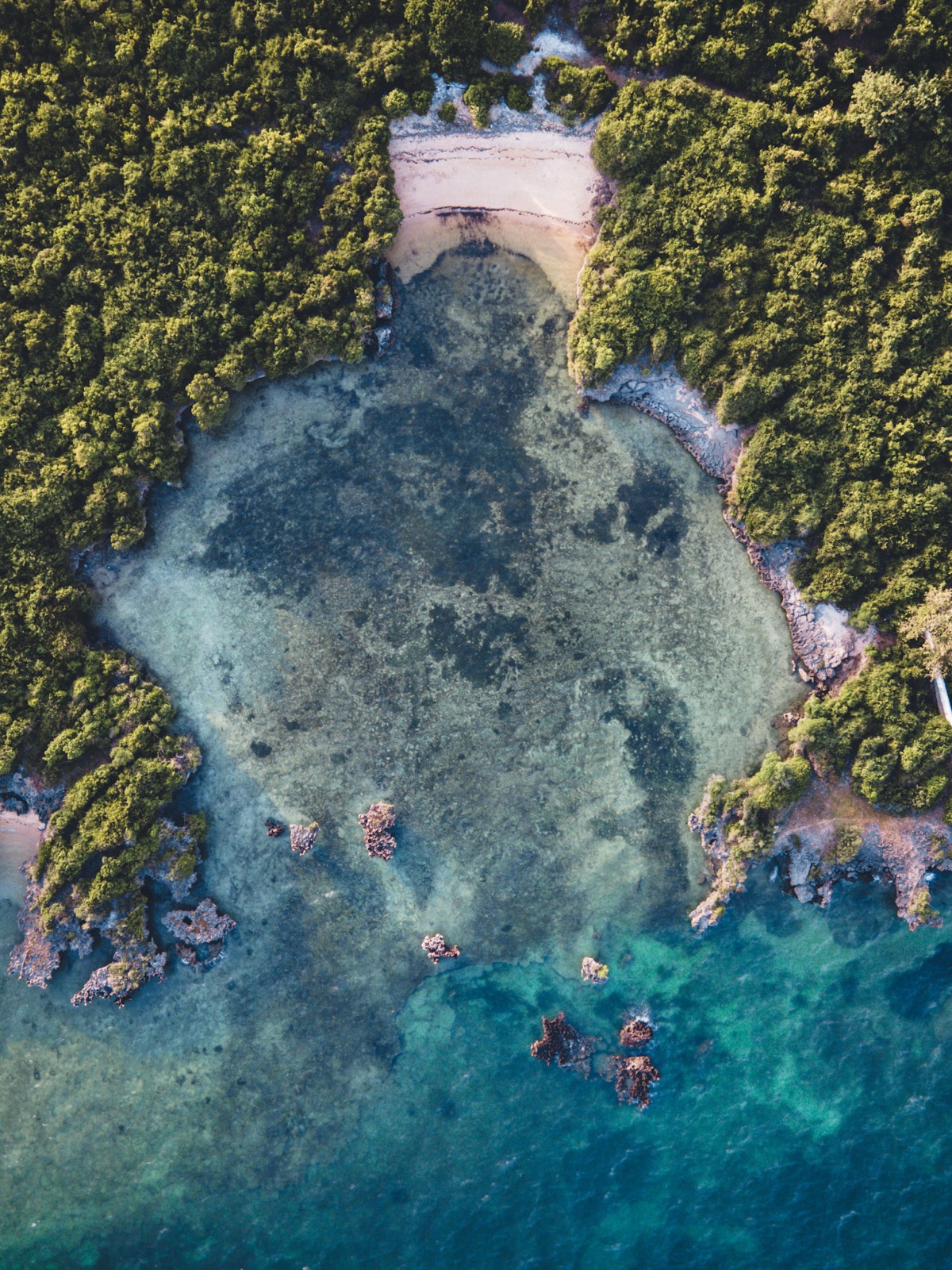
The question that led to Mnarani’s founding was a practical one: could the animals be held temporarily until they were strong enough for the ocean again? The answer was the natural tidal pool at the northeastern end of Nungwi Beach — a rock lagoon that fills and empties with the tides, providing a natural seawater cycle with no technical infrastructure required.
The model that emerged in 1993 was unusual for East Africa at the time: instead of framing fishermen as the problem, it brought them in as the first line of defence. A fisherman who accidentally caught a turtle brought the animal to Mnarani rather than ignoring or hiding it. The rehabilitation centre handled the care; the fisherman faced no negative consequence.
That model has held for three decades. Mnarani is now considered one of East Africa’s early successful examples of community-based conservation — not because it’s especially large or technically sophisticated, but because it works.
On my first visit I spoke with one of the original founding fishermen. He described finding turtles in his nets in the early 1990s — alive, injured, still savable — and how the feeling of simply letting them die became increasingly unbearable. No NGO-speak. A man who solved a practical problem in a practical way. That conversation taught me more about sea turtle conservation than any information board ever has.
What you actually experience on site
The centrepiece is the tidal pool: a natural rock lagoon that fills with seawater at high tide and partly drains at low tide. The turtles move freely within it — some resting on the rock surfaces, others swimming slowly through the pool. In calm water, visibility from the edge is excellent — the turtles often come close enough that you can watch individual animals clearly.
What you’ll see:
Green turtles (Chelonia mydas) are the more common species in the pool. As adults they’re mostly herbivorous — seagrass and algae — and they get their name not from their shell colour (which is actually olive-brown) but from the green colour of their fat, produced by their seagrass diet. Adult specimens can be considerably larger than many visitors expect.
Hawksbill turtles (Eretmochelys imbricata) are smaller and identifiable by the narrow, curved beak that resembles a hawk’s and gives the species its English name. They feed mainly on sponges in coral reefs — food that would be toxic to most other animals. Their shells were historically the primary source of “tortoiseshell” for combs, jewellery, and eyeglass frames, which contributed significantly to pushing their populations to critical lows.
Every animal’s story:
On request, Mnarani’s staff will tell you the individual story of each turtle: how the animal was found, what injury it had, how long it’s been in the pool. These stories are really the heart of the visit. A turtle with a healed net cut on its rear flipper isn’t an abstract conservation talking point — it’s concrete evidence of what bycatch actually means.
Best time to visit and feeding times
The question of the “best time” for a Mnarani visit has two answers: a practical one and an experiential one.
Practically: early morning — between 09:00 and 11:00 — is ideal. The light is softer and better for photos than the harsh midday sun. The air is still cool, which makes the walk around the headland more pleasant. And most importantly: there are barely any other visitors yet. Arrive at Mnarani between 09:00 and 10:00 and you’ll often have the pool almost to yourself — which improves both the quality of observation and the conversations with staff considerably.
Feeding times: the centre feeds the turtles as a fixed part of the rehabilitation regime, and visitors who ask are usually invited to hand out some of that food themselves — algae and seagrass collected by local fishermen for the green turtles, species-appropriate reef food for the hawksbills. Ask staff about the current schedule; it shifts with the season and which animals are in residence, but usually falls in the morning. Bringing your own food isn’t the point — use what staff give you, and let them show you how.
Afternoon: the hot midday hours are quieter but less pleasant. From around 15:00 the light softens again. If you want to combine the visit with the evening atmosphere at Nungwi’s west beach — Mnarani in the afternoon, sunset from the west beach — don’t leave it until 18:00: the walk back through the village takes 10 minutes.
The hatching programme: the other half of the work
Alongside rehabilitating injured animals, Mnarani runs an active hatching programme. Eggs collected from at-risk nesting sites are incubated in a secured area. Sea turtle eggs take around 50 days to hatch after being laid — the exact duration varies with sand temperature. Warmer nests produce more females; that’s not a myth, it’s temperature-dependent sex determination (TSD), which works this way across all sea turtle species.
The annual turtle release day happens in February: a community event where the year’s hatchlings are released on Nungwi Beach and take their first steps into the Indian Ocean. If you can build this date into your travel plans, do it. The release is a genuine community moment — fishermen, villagers, children, and visitors together on the beach as tiny turtles make their first crossing through the sand. Few conservation events on Zanzibar carry that kind of weight.
Snorkelling with wild turtles: Mnarani as a starting point
Mnarani shows turtles in a rehabilitation context. If you’d also like to see wild sea turtles in the open ocean afterward, Nungwi gives you good options.
The Nungwi reef right off the beach: the reef directly off the Nungwi headland is one of the few spots on Zanzibar where you can get in the water even at low tide — because the reef drops off steeply rather than running flat. Turtle sightings are possible here, but not guaranteed. Local snorkel guides know the best spots.
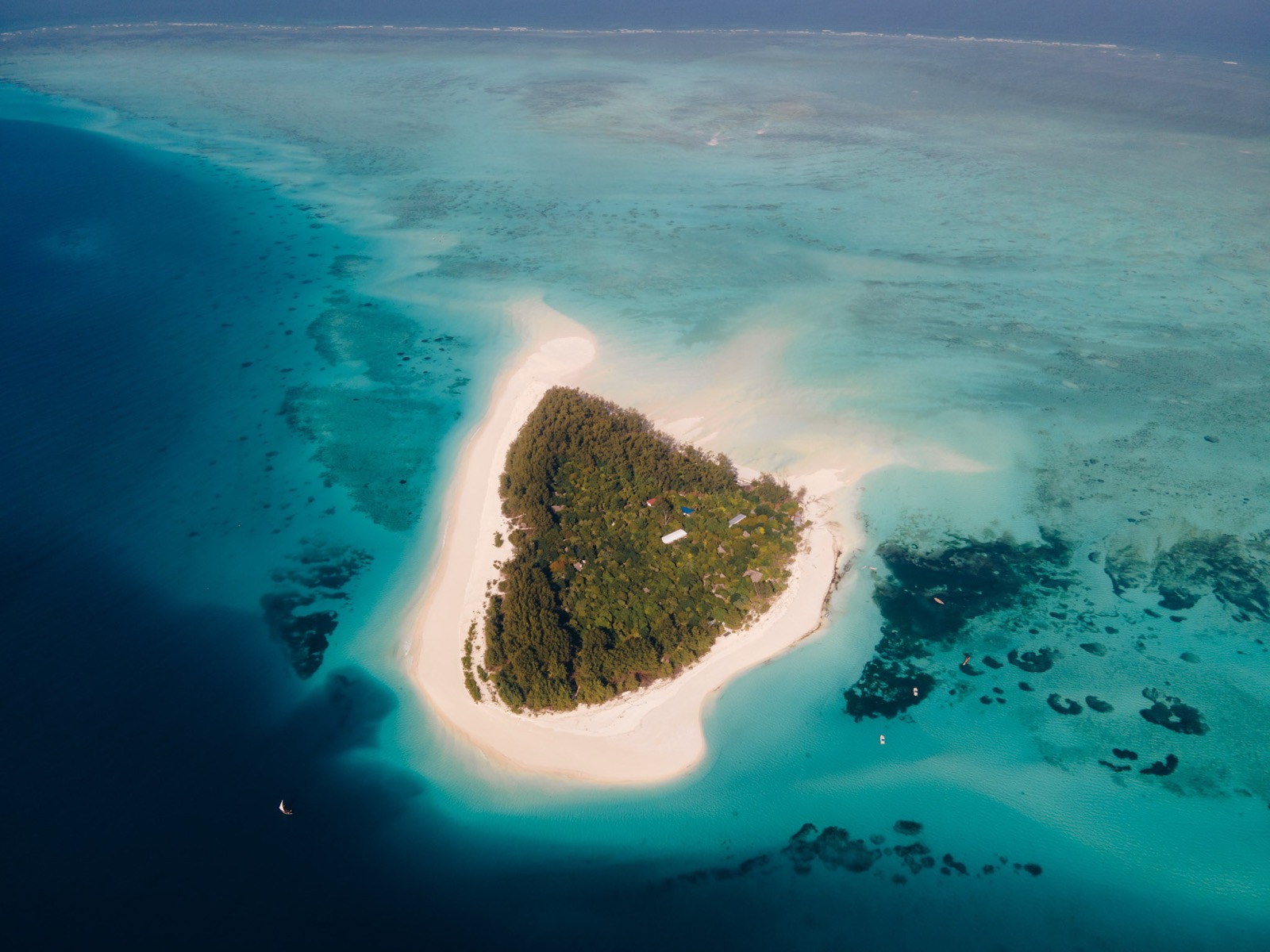
Mnemba Atoll: the best snorkelling within reach of Nungwi is at the atoll, roughly 3–4 km offshore east of Matemwe. The atoll is a private reserve with one of the region’s healthiest coral reefs. Green turtles and hawksbill turtles are regular sightings here — not guaranteed, but the odds are very good, especially in the morning during the first two hours after sunrise. Snorkel trips from Nungwi Beach to Mnemba Atoll take over an hour each way because of the boat ride; from Matemwe it’s around 15–20 minutes each way, at a noticeably lower boat surcharge.
Combining an early-morning Mnarani visit with a mid-morning Mnemba snorkel trip is one of the densest wildlife programmes Zanzibar has to offer — and the two fit neatly into a single pre-midday block.
Proper behaviour: the rules
Mnarani isn’t a zoo with “no touching” signs everywhere. It’s a place where staff are responsible for the animals and communicate clear expectations. Here’s what matters:
No touching. The turtles are wild animals in rehabilitation. That applies even when an animal comes close or rests on a rock ledge within reach — and even if a guide or another visitor invites you to. Touching stresses the animals, can delay their rehabilitation, and spreads pathogens. In practice, enforcement is inconsistent — recent visitor accounts describe staff letting people touch and even swim right up against the turtles — but that’s not something to follow just because it’s on offer.
No sunscreen before getting in the pool. If you’re entering the tidal pool, rinse off any sunscreen first, or skip it and wear a rash guard instead. The chemicals in most sunscreens wash straight into the water the turtles live in.
No flash photography. Flash disorients sea turtles — that’s biologically grounded, not bureaucratic. Standard daylight photos work fine without flash; the lagoon is open and the light is sufficient.
Feeding is fine, using what staff give you. Staff feed the animals as part of their rehabilitation programme and will often hand you some of that food to give a turtle yourself. That’s different from bringing your own food — outside food disrupts natural feeding behaviour and can cause digestive problems, so stick to what’s provided.
Keep the water channels clear. The lagoon connects to the open ocean through tidal channels. Don’t block these — the turtles need unobstructed access between the pool and the sea.
No riding or holding. Riding or holding sea turtles in Tanzania is illegal and can result in fines. If you see operators offering or tolerating this elsewhere, decline.
Not every visitor sticks to the no-touch rule, and not every staff member enforces it — that’s the honest state of things there. Follow it anyway. An animal carrying a bycatch scar doesn’t need any extra human strain added to it, whatever the person next to you is doing.
How Mnarani differs from Zanzibar’s other turtle experiences
Zanzibar has several places where you can encounter sea turtles. The differences are substantial:
Mnarani vs. Mnemba Atoll: at Mnemba Atoll, turtle sightings while snorkelling are possible — but not guaranteed. These are wild animals on their own schedule. Mnarani offers certainty (the turtles are always there) at the cost of the wilderness factor. The Mnemba experience is an ocean encounter on a world-class reef; Mnarani is close-range conservation contact. There’s no real comparison, because they’re two different things.
Mnarani vs. Chumbe: Chumbe Island has nesting green turtles on its beaches and turtle sightings while snorkelling in its protected reef. It’s a strict marine reserve; a day visit costs USD 90 plus a USD 25 conservation levy — USD 115 total. Chumbe is the more comprehensive marine conservation experience; Mnarani is the more direct, accessible conservation contact. The USD 105 price difference isn’t a quality judgement — they’re simply different offerings.
Mnarani vs. Baraka Natural Aquarium: both sit on Nungwi’s east beach a short walk apart. Mnarani (established 1993) is the older of the two facilities and is also generally considered the more ethically transparent choice, because its non-profit structure and release programme are well documented. If you’re only visiting one, it’s Mnarani.
Tim’s observation
My first time there, I went in with low expectations — some touristy turtle tank, I figured. What surprised me wasn’t the turtles themselves, but a conversation with a fisherman who had co-founded the centre. He described finding turtles in his nets regularly in the early 1990s — alive, injured, but still savable — and how the feeling of simply throwing them back or letting them die became increasingly unbearable. No NGO-speak. A man who solved a practical problem in a practical way.
That conversation taught me more about sea turtle conservation than any information text ever has. Hawksbill turtles are close to extinction: an estimated 20,000–25,000 nesting females remain worldwide. Green turtles were reassessed as Least Concern in October 2025 after decades of recovery — but they’re still long-lived animals that take decades to reach sexual maturity, which makes every loss compound slowly but surely. Mnarani rehabilitates a small fraction of these animals. The scale is modest. The logic behind it — fishermen as the first line of defence, not enemies of the turtles — is right.
Building Mnarani into your Nungwi itinerary
As a morning activity: the best window is between 09:00 and 11:00 — cool, ahead of the first snorkel boats, good light for photos. That leaves plenty of time for an unhurried visit and still the rest of the morning free for snorkelling from Nungwi Beach or a trip to Mnemba Atoll.
Combine it with: a Mnemba Atoll snorkel trip (an afternoon start works well), reef snorkelling right off Nungwi, or an evening dhow sunset sail. Mnarani is compact enough that it doesn’t take up a whole day — 30–45 minutes is realistic if you also talk with staff. An hour is relaxed.
From the east coast: Nungwi sits 60–90 minutes’ drive from Paje, Jambiani, or Michamvi. With a private transfer (roughly USD 40–60 depending on the operator), a day trip is entirely workable: Mnarani in the morning, snorkelling or beach time in Nungwi, drive back in the afternoon. A public dala-dala is slower and ties you to other passengers’ schedules, but it works for travellers with more time and less budget.
For the complete picture of all of Zanzibar’s turtle experiences — Mnemba Atoll, Chumbe Island, Misali Island, and nesting-season timing — see the Zanzibar sea turtles guide.
Related guides
Frequently asked questions
How much does entry to the Mnarani turtle pond cost?
Entry to the Mnarani Marine Turtles Conservation Pond is USD 10 per person for non-residents. No booking required — just walk in. The pond is open daily from 09:00 to 18:00, year-round.
Where exactly is the Mnarani turtle pond in Nungwi?
The Mnarani Marine Turtles Conservation Pond sits at the very northern end of Nungwi Beach, on the eastern side of the headland. It's about a 10-minute walk from Nungwi's tourist centre, heading toward the lighthouse. There's no major signage — any fisherman will point you the right way if you ask for 'Mnarani'.
Can you swim with the turtles at Mnarani Conservation Pond?
Visitors can enter the natural tidal pool and get very close to the turtles, and staff will often let you hand-feed them algae or seagrass. Actively touching a turtle is a different thing — don't do it, even if a staff member or another visitor is doing it; contact stresses the animal, can delay its rehabilitation, and spreads pathogens. If you're getting in the water, don't wear sunscreen — the chemicals wash off onto the turtles and the pool. Rinse off first or wear a rash guard instead. Photography without flash is fine.
When was the Mnarani turtle pond established?
The Mnarani Marine Turtles Conservation Pond was established in 1993 — originally by local fishermen who kept catching sea turtles as unintended bycatch in their nets. The community project worked with the fishermen rather than against them, making it one of East Africa's early successful community-based conservation models.
What turtle species live in the Mnarani pond?
The Mnarani Marine Turtles Conservation Pond houses both green turtles (Chelonia mydas, IUCN Least Concern since October 2025) and hawksbill turtles (Eretmochelys imbricata, IUCN Critically Endangered). Both species occur in the waters around Zanzibar. Green turtles are usually noticeably larger — adult specimens can be big enough to surprise first-time visitors.
What's the difference between a green turtle and a hawksbill turtle?
Green turtles (Chelonia mydas) are the larger species: adult females typically weigh 110–130 kg, males somewhat less. Their name doesn't come from their shell colour but from the green fat beneath the shell, produced by their seagrass diet. Hawksbill turtles (Eretmochelys imbricata) are noticeably smaller — averaging 40–70 kg — and identifiable by a narrow, curved beak that resembles a hawk's.
When is the annual turtle release day at Mnarani?
The annual turtle release day at Mnarani happens in February. It's a community event where the year's hatchlings are released on Nungwi Beach. If you can time your visit around it, it's one of the most striking conservation events on Zanzibar.
Can you see wild sea turtles snorkelling after visiting Mnarani?
Yes — wild turtle sightings are possible snorkelling at the Nungwi reef and especially at Mnemba Atoll. At Mnemba Atoll, green turtles and hawksbill turtles are regular companions while snorkelling over the reef. Sightings aren't guaranteed — they're wild animals — but the odds are good, particularly in the morning.