
Facts & prices checked: 2026-06-25
Most Zanzibar wildlife guides lump turtle sanctuaries, wild nesting beaches, and “swim with turtles” snorkel trips together as if they’re the same thing. They aren’t. The experience at Mnarani Marine Turtles Conservation Pond in Nungwi is fundamentally different from spotting a turtle at Mnemba Atoll, which is again different from what you’ll find on the nesting beaches at Chumbe Island. Understanding which one you actually want is where this guide starts.
The short version: if you want guaranteed turtle contact, Mnarani is the right answer. If you want a wild encounter, Mnemba is the place to try — with no guarantees. If you want to support serious conservation and experience a genuinely protected ecosystem, Chumbe Island is the most rewarding of the three, and also the most expensive.
I’ve visited all of them. Here is what each one is actually like.
The honest picture: what you will actually see
Let me set expectations before you book anything.
Mnarani is a rehabilitation centre. The turtles there are not performing animals or a curated wildlife show — they are recovering from fishing-net injuries, exhaustion, and entanglement. Some will be released back to the ocean eventually. The experience is in a natural tidal lagoon: you walk along the water’s edge, you can see the turtles clearly from the rocks or from waist-deep in the water, and the staff explain what each animal’s story is. It is genuinely moving. It is also a 30–45 minute experience, not a three-hour tour. Go with that expectation and it is excellent. Go expecting a wildlife park and you will feel slightly underwhelmed.
Mnemba Atoll is wild ocean. Turtles are spotted regularly at the reef edge — but regularly means maybe three times a week on a good week, not every morning. I’ve had days at Mnemba where the turtles showed up within ten minutes of entering the water. I’ve had days with nothing. The turtles are not the main reason to go to Mnemba — the reef, the coral, and the fish population are. The turtles are the bonus.
Chumbe Island is the one that stays with you longest. The snorkelling inside the protected reef is the clearest water I’ve seen around Zanzibar. Green turtles nest on the beach. The island’s entire ecosystem has been protected since 1994 and it shows. But you pay for it — USD 90 day visit plus a USD 25 conservation levy, USD 115 total — and the boat journey from Stone Town takes around 45 minutes each way. Worth it if marine conservation and clear water matter to you. Not worth it if you just want a tick on a list.
Mnarani Marine Turtles Conservation Pond — the full guide
Mnarani Marine Turtles Conservation Pond was established in 1993, making it one of the oldest community-based sea turtle conservation programmes in East Africa. The origin story is significant: it was set up specifically to rehabilitate turtles caught as bycatch in fishing nets. Local fishermen who had been inadvertently trapping turtles became the programme’s first supporters — a practical conservation model that worked with the fishing community rather than against it.
The centre sits at the northern end of Nungwi Beach, on the eastern side of the headland. Getting there from the main Nungwi tourist strip takes about 10 minutes on foot — walk toward the lighthouse and follow the path around to the eastern shore. There are no big signs; ask any fisherman for “Mnarani” and they’ll point you right.
What’s there:
The conservation pond is a natural tidal lagoon — not a concrete tank or a built enclosure. The tidal pool fills and empties naturally with the Indian Ocean. Inside it, around 50 sea turtles — a mix of green turtles (Chelonia mydas) and hawksbill turtles (Eretmochelys imbricata) — live at various stages of rehabilitation. The turtles range in size from juvenile to fully adult; the adult green turtles can be large enough that the scale surprises first-time visitors.
Entry and hours:
- Entry: USD 10 per person (non-residents)
- Open: 09:00–18:00 daily, every day of the year
- No booking required — walk in
The hatching programme is the other half of the work that happens here: eggs collected from at-risk nesting sites are incubated at the centre and hatchlings released into the ocean. The annual turtle release day happens in February — a community event where the year’s hatchlings are released on Nungwi Beach. If your trip coincides with it, attending is worth rearranging your schedule for.
The second Nungwi turtle centre:
There are two turtle centres in Nungwi within walking distance of each other. The second is Baraka Natural Aquarium, also on the eastern beach. Mnarani (established 1993) is the older of the two and is generally considered the clearer ethical choice — it is non-profit, focused on rehabilitation and release, and runs the hatching programme. Baraka charges a separate entry fee and operates on a slightly different model. Both are worth visiting if you have time, but if you’re choosing one, Mnarani is the one.
Ethical behaviour at Mnarani:
Conservation guidelines advise no-touch — the turtles are wild animals in rehabilitation, not pets, and contact stresses them and can spread pathogens. In practice, staff don’t always enforce this consistently, and recent visitor accounts describe touching and swimming right up against the turtles; that doesn’t make it a good idea, so follow the no-touch rule regardless of what’s on offer. Hand-feeding with the algae or seagrass staff provide is fine — don’t bring your own food. Photography is fine (no flash in the lagoon; it disturbs the turtles). If you’re getting in the water, rinse off any sunscreen first or wear a rash guard — the chemicals leach into the pool the turtles live in. Don’t block the water channels the turtles use to move between the pool and the sea. The lagoon is an active tidal environment; the turtles need unobstructed access to it.
For the full walk-through — exact directions from the Nungwi strip, feeding times, the hatching programme, and how the two species compare up close — see the dedicated Mnarani Conservation Pond visitor guide.
Wild sea turtles: nesting and ocean encounters
Chumbe Island
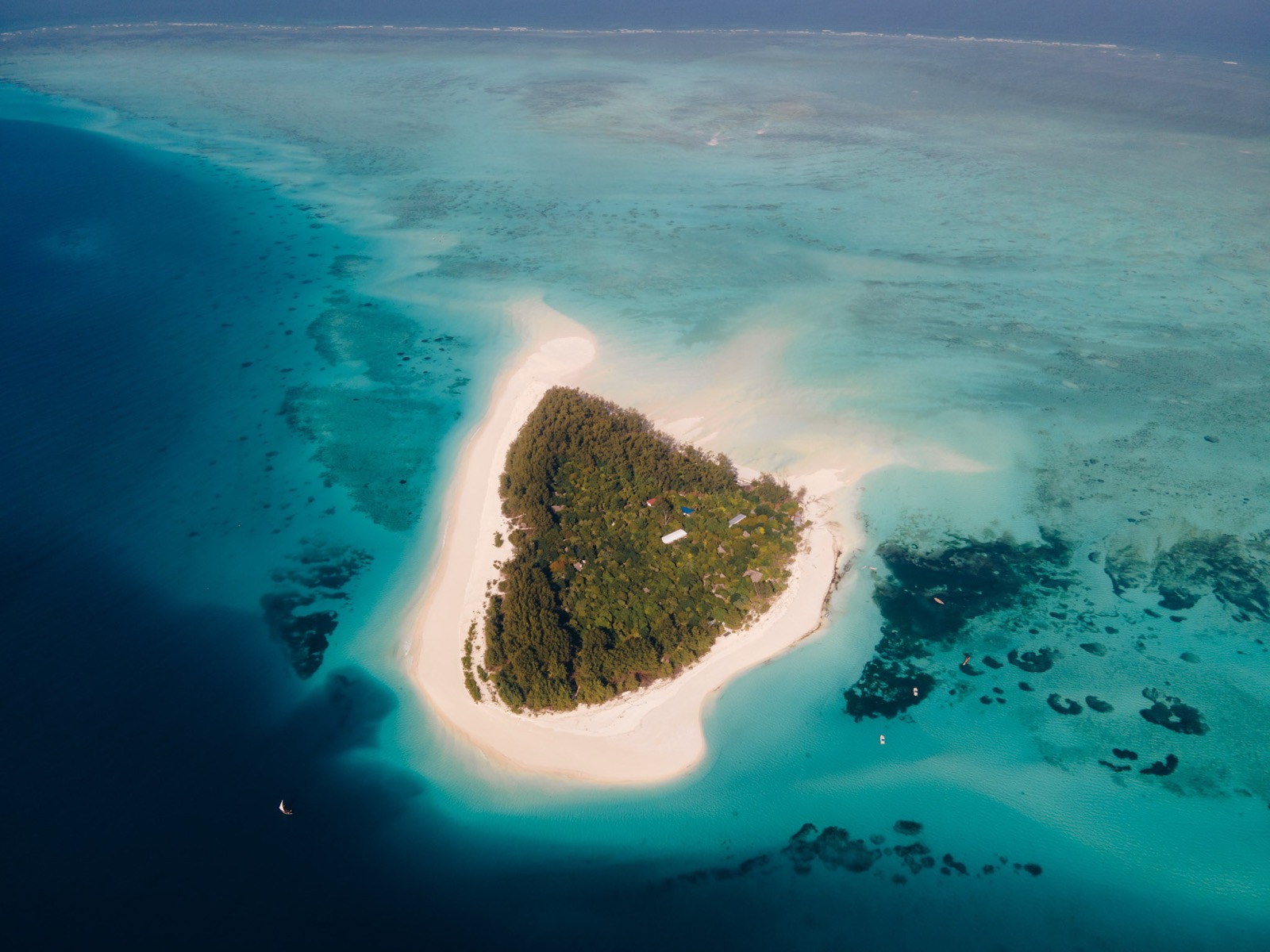
Chumbe’s coral park is a small coral island 12 km south of Stone Town, protected as Zanzibar’s first marine park since 1994. Green sea turtles nest on Chumbe’s beaches — this is one of the few remaining active nesting sites in the Zanzibar archipelago. The island’s reef is a strict no-take zone and has remained largely intact since protection began.
A day visit costs USD 90 per person plus a USD 25 conservation levy — USD 115 total, making it the most expensive marine experience in Zanzibar. The boat departs from Stone Town’s Mbweni jetty and takes around 45 minutes each way. What you get: guided reef snorkelling in some of the clearest water around Zanzibar, a guided forest walk where you may see the rare coconut crab, and the chance to see sea turtles both in the water and, outside nesting season, resting near the beach.
The USD 115 total is not cheap. I think it’s justified. The reef inside Chumbe’s protected zone is genuinely different from anywhere else I’ve snorkelled around Zanzibar — the coral density and fish populations reflect 30 years without any extraction pressure. If that kind of undisturbed ecosystem matters to you, it is the right day to spend money on.
Misali Island (Pemba)
Misali Island, off Pemba’s west coast, holds one of the most significant sea turtle nesting sites in the wider region. The nesting population runs at a 3:1 ratio of green turtles to hawksbills, with green turtle nesting peaking in April. Misali is also a designated marine protected area with restricted fishing inside the reserve boundaries.
Getting to Misali requires travelling to Pemba first — a 30-minute flight or a roughly 2-hour ferry to Mkoani from Zanzibar — then arranging a local boat. It is a serious trip, not a day excursion from Nungwi. But for travellers who have already included Pemba itself in their itinerary, Misali is an extraordinary add-on: wild turtle nesting, a largely undisturbed reef, and genuinely few other visitors.
Mnemba Atoll
Mnemba’s reef off the northeast coast of Zanzibar is the island’s most famous snorkelling site. Green turtles are resident in the waters around the atoll and are sighted regularly — but this is an open-ocean encounter, not a guaranteed one. On mornings when conditions are calm and you’re one of the first boats in the water, turtle sightings are common. On busy afternoons with multiple boat groups, the turtles tend to stay deeper.
My honest assessment: if a turtle sighting is the single thing you’re optimising for, Mnarani gives you certainty that Mnemba doesn’t. But if you want a wild encounter on a world-class reef as part of a broader snorkel trip, Mnemba is the better day out. The turtles at Mnemba are wild, unhabituated, and move through the reef on their own schedule. That’s a different experience from the lagoon at Mnarani — neither is better or worse; they are simply different things.
Humpback whales: July to October
Sea turtles aren’t the only marine megafauna in Zanzibar’s waters. From July to October, humpback whales pass through on their annual southward migration along the East African coast. The peak months are July to September, with between 400 and 600 humpback whales travelling along this route each year.
I haven’t personally had a sighting from the east coast at Michamvi — the whales tend to pass further offshore, and the waters between Zanzibar and the mainland are not where the densest sightings occur. The better vantage point is typically from boats departing the north coast or west coast, heading 10–20 km offshore.
Whale-watching trips:
Several boat operators in Zanzibar run seasonal whale-watching trips during July–September. These are generally half-day departures (3–4 hours) on larger, more stable vessels than the standard snorkel dhows — conditions further offshore require a seaworthy boat. Prices vary but typically run USD 60–100 per person for a group trip.
What to expect vs what’s guaranteed:
Whale-watching in Zanzibar is not like whale-watching in Baja California or the Azores, where species density and established populations make sightings nearly certain. The East African humpback corridor runs through Zanzibar’s waters, but the channel is wide and the whales move through at their own pace. I’d describe a genuine whale encounter on a Zanzibar boat trip as likely in peak season, not certain. If you’re building a trip specifically around whale-watching, a specialist operator running dedicated whale-research trips will give you better odds than a general dive centre offering it as a seasonal add-on.
The season also overlaps neatly with Zanzibar’s second dry season (June–October), so the combination of calm seas, clear visibility for snorkelling, and whale migration makes this a strong time to be on the island for marine wildlife broadly.
What else to combine on a wildlife day
If you’re based in Nungwi
Mnarani is a 10-minute walk from the main Nungwi strip. The obvious combination is a morning at the turtle pond (09:00–10:00 or 10:30) followed by a snorkel trip from Nungwi to the reef or a boat out to Mnemba Atoll in the afternoon. The two activities complement each other well: Mnarani gives you close-up time with turtles in a protected setting; Mnemba gives you wild ocean perspective. By the time you’re back from Mnemba, Terrace Nungwi on Nungwi’s western beach is set up for the sunset.
The Baraka Natural Aquarium (the second turtle centre) is also within 15 minutes’ walk on the eastern beach — if you have time and want to see both, the morning slot at Mnarani followed by a brief stop at Baraka before your snorkel trip is entirely manageable.
If you’re based on the east coast
Nungwi is 60–90 minutes by road from the east coast villages (Paje, Jambiani, Michamvi). That makes Mnarani a comfortable day trip: leave at 08:30, arrive by 10:00, spend time at the pond, then either take a snorkel trip from Nungwi or head back via the east coast road with a lunch stop somewhere on the northern route. A private transfer makes the timing more flexible; a shared transfer works but locks you into someone else’s schedule.
Alternatively, for east-coast visitors who care specifically about wild turtle encounters, a snorkelling day at Mnemba Atoll from Matemwe — which is closer to the east coast than Nungwi — offers the chance of turtle sightings without crossing the entire island.
Chumbe Island combination
Chumbe departs from and returns to Stone Town. If your route includes a day in Stone Town, combining Chumbe in the morning with Stone Town’s old town and Forodhani night market in the afternoon is one of Zanzibar’s best single days. You need to book Chumbe in advance — departures are limited and group sizes capped. Check current availability and logistics via the visa-and-logistics guide for practical Stone Town logistics and ferry timing.
Responsible wildlife tourism: Tim’s rules
These apply regardless of which turtle experience you choose.
Feeding is fine at Mnarani, using what staff give you. Food from outside disrupts the turtles’ natural foraging behaviour and can cause digestive problems, so don’t bring your own — but if staff hand you algae or seagrass to feed a turtle yourself, that’s part of how they run the place.
No touching, anywhere. At Mnarani this doesn’t always get enforced — you’ll likely see other visitors touching or even swimming right up against a turtle — but don’t join in. Contact stresses the animal, can delay its rehabilitation, and spreads pathogens. In the open ocean the same rule applies even more firmly: if a wild turtle comes close to you while snorkelling, hold still and let it move in its own direction. Chasing a turtle underwater is stressful for the animal and almost always ends with the turtle diving away from you anyway.
No sunscreen in the water. If you’re getting in at Mnarani or snorkelling anywhere near turtles or reef, rinse sunscreen off first or wear a rash guard instead. The chemicals in most sunscreens are harmful to turtles and coral.
No flash photography. Flash disorients turtles — both in the water and on nesting beaches at night. Standard camera modes work fine in daylight at Mnarani’s open-air lagoon. At Chumbe and on wild nesting beaches, red-light torches are used by guides at night (not white light, not flash) to avoid disrupting nesting females.
No blocking nesting sites. If you’re on a beach at night and a nesting female comes ashore, stay back, stay low, move slowly, and let the guides manage the distance. Turtles abort nesting if disturbed by light or movement at the wrong moment — a female that abandons a nesting site may struggle to find another suitable location.
Report sightings for conservation data. The Sea Sense organisation and Zanzibar’s Department of Fisheries both collect turtle sighting data. If you see a tagged turtle (a metal or plastic tag on a rear flipper) at Mnemba or anywhere else, record the tag number and location and report it. These data points help conservation teams track population movements, growth rates, and the success of release programmes like Mnarani’s.
Boat safety on whale-watching trips. If you book a whale-watching trip, the operator should be maintaining at least 100 metres’ distance from any whale group and approaching from the side — not head-on, not from behind. If your boat operator is doing something different, it is reasonable to say something. International whale-watching guidelines exist specifically to prevent the kind of harassment that drove humpback whale populations down in the first place.
Related guides
Frequently asked questions
Where can I see sea turtles in Zanzibar?
The main place is Mnarani Marine Turtles Conservation Pond in Nungwi, a rehabilitation centre established in 1993. It houses around 50 green and hawksbill turtles in a natural tidal lagoon. Entry is USD 10 and it is open daily 09:00–18:00. There is also a second turtle centre in Nungwi, Baraka Natural Aquarium, within walking distance.
Can you swim with sea turtles in Zanzibar?
You can enter the water at Mnarani Conservation Pond and get close to the turtles, and staff will often let you hand-feed them. Actively touching one is a different matter — don't, even though enforcement is inconsistent and you'll see other visitors doing it. These are rehabilitating wild animals, not pets, and contact stresses them and spreads pathogens. If you're getting in the pool, skip the sunscreen or rinse it off first.
When is the best time to see turtles in Zanzibar?
Mnarani is open year-round, so there is no bad month. For wild turtles nesting, the green turtle peak on Misali Island (Pemba) is April. At Chumbe Island, green turtles nest on the island's beaches. Humpback whales (a related marine wildlife experience) pass through Zanzibar from July to October.
How much does Mnarani turtle sanctuary cost?
Entry to Mnarani Marine Turtles Conservation Pond is USD 10 per person for non-residents. Baraka Natural Aquarium, the second centre in Nungwi, charges a separate fee. Both are within walking distance of each other at the north end of Nungwi Beach.
Are there sea turtles at Chumbe Island?
Yes — Chumbe Island is a strict marine reserve and sea turtles nest on its beaches. The island has 200+ coral species, 370+ fish species, and is one of the best-preserved reef ecosystems in East Africa. Day visits cost USD 90 plus a USD 25 conservation levy — USD 115 total. Snorkelling with turtles in the water is possible.
When do humpback whales visit Zanzibar?
Humpback whales pass through Zanzibar waters during their annual migration from July to October, with the peak in July to September. Between 400 and 600 humpback whales travel along the East African coast each year. Boat operators in Zanzibar offer whale-watching trips during the peak season.