Facts & prices checked: 2026-06-22
WildToSea earns a small commission on some links, at no extra cost to you. We only point to gear and tours we'd actually use on the ground in Tanzania and Zanzibar. How we make money →
Full disclosure before anything else: I am Tim Hennig, and I manage Matlai. My mother Inge owns it. I have a direct financial interest in recommending it, which is why I am not going to pretend otherwise. What I can offer is the view from someone who actually lives on the property and spends every morning on the same beach you would be booking. Take that for what it is worth.
If you want a fully independent comparison of all four east coast villages, it is in the Zanzibar east coast where-to-stay guide. This page is specifically about Matlai.
The location
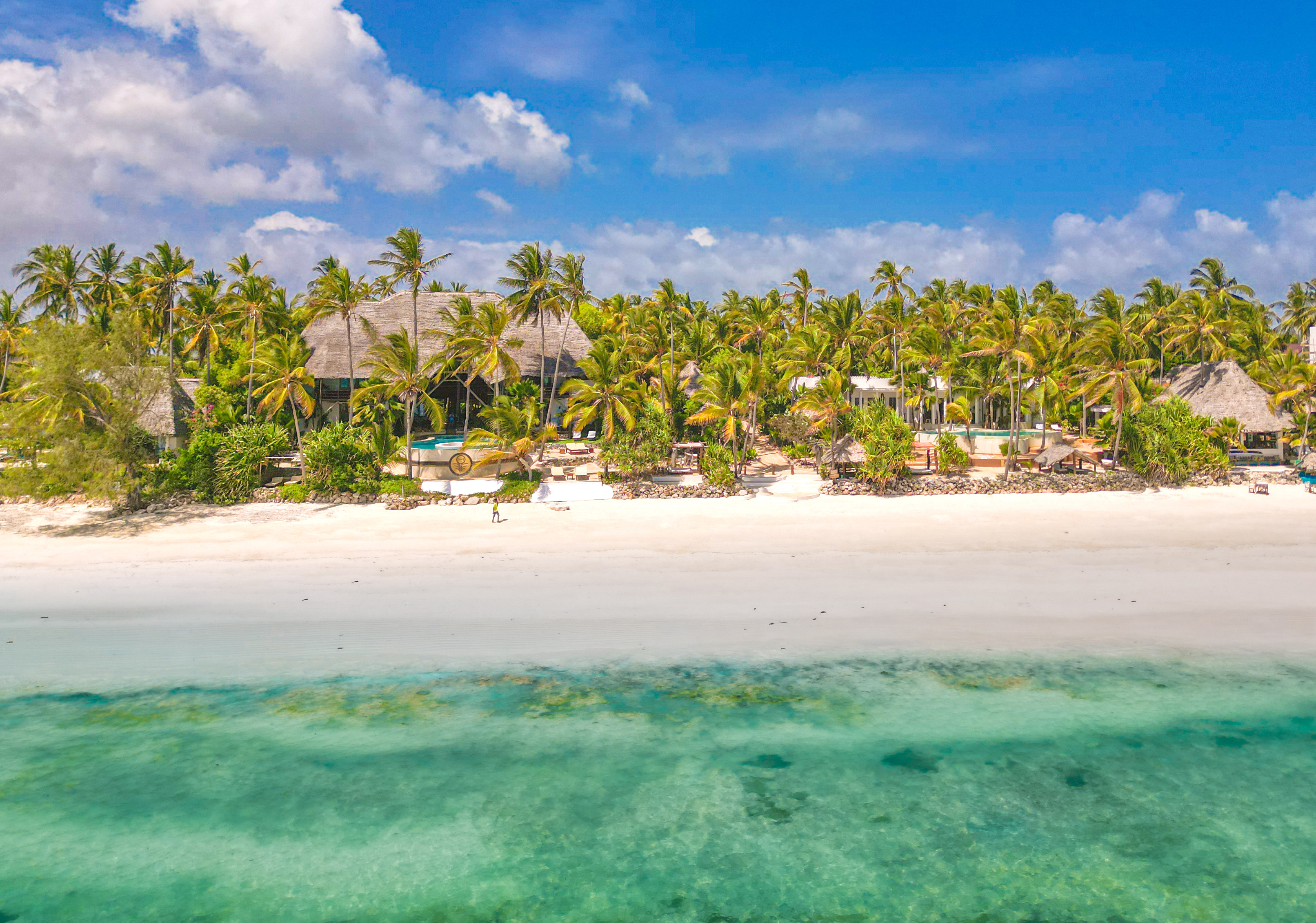
Michamvi Pingwe sits at the southern tip of a small peninsula at the north end of Zanzibar’s east coast. The property is at the eastern side of the peninsula — sunrise-facing, not sunset-facing, which surprises some guests. The western coves, a five-minute walk, face the sunset and are often quieter than the main beach.
The bay curves around the peninsula in a way that partially shelters it from the tidal retreat that defines the open east-coast beaches. At low tide in Paje or Jambiani, the water pulls back hundreds of metres to the reef and swimming becomes impossible for several hours. At Chwaka Bay further north, the seabed can be exposed up to 1.5–2 km offshore at low tide. In our bay, the water stays closer — the best swim window is not restricted to 2–4 hours around high tide as it is on the open coast. You can swim at any state of the tide, which is not something most east coast properties can say without qualification.
We sit about 1.2 km from the centre of Michamvi village by road, directly on the beach.
Michamvi Pingwe vs the rest of the east coast
The east coast of Zanzibar divides roughly into four villages, each with a different character:
- Paje — the kite-surfing hub, with multiple kite centres, beach food courts, parties, and a young traveller/digital nomad energy. Not the right base for couples who want quiet.
- Jambiani — south of Paje, markedly quieter and more relaxed, with a cluster of boutique hotels and a good local restaurant scene. The preferred east coast option for couples who do not want to be in Paje.
- Bwejuu — smaller, less developed, used primarily by travellers looking to be away from both the kite crowd and the boutique hotel strip.
- Michamvi Pingwe — the northernmost village on this stretch, set on a peninsula that changes the tidal geometry completely. The bay here holds water better than any of the others.
What makes Michamvi distinctive is not marketing — it is physics. On the open beaches at Paje, Jambiani, and Bwejuu, the east-coast flat slope means the sea retreats far at low tide. The best swim window shifts approximately 50 minutes later each day and lasts perhaps 2–4 hours around high tide. The rest of the time you are walking on exposed tidal flats, which are visually dramatic but not swimmable. On the Michamvi peninsula, the bay’s curved geometry breaks this pattern. We lose depth at low tide, but we do not lose the water.
The trade-off is location. Paje has more going on in the evenings. Jambiani has more dining options. Michamvi is quieter and further from the airport by approximately 15–20 minutes more driving time. The right choice depends on what you want from a week on the coast.
The property
6 rooms. That is the whole point.
The size is not a limitation — it is the product. Six rooms means I know who is arriving three days before they land. It means breakfast is adjusted before you ask. It means the person who handles your booking is the same person who makes sure your room is cold when you check in. There is no front desk, no queue, and no rotation of staff who have not been briefed on you.
Two buildings:
Asili House holds four rooms. It is the main building, closer to the beach, with direct access to the bay. Each room has air conditioning, a private infinity pool, and an unobstructed ocean view.
Villa Kidosho holds two rooms. These are quieter and slightly more private — suited to couples who genuinely want to be left alone. Same infinity pool standard, same ocean view.
Both buildings share the beach, the spa, Zatiny restaurant, and all other facilities. Guests from either building use everything.
The water and the Mchanga sandbank
The swimming advantage is the thing most guests mention first in reviews. It is real. The bay does not perform the same tidal retreat as the open coast. At low tide we lose depth but we do not lose the beach — there is no kilometre of exposed tidal flat between you and the water.
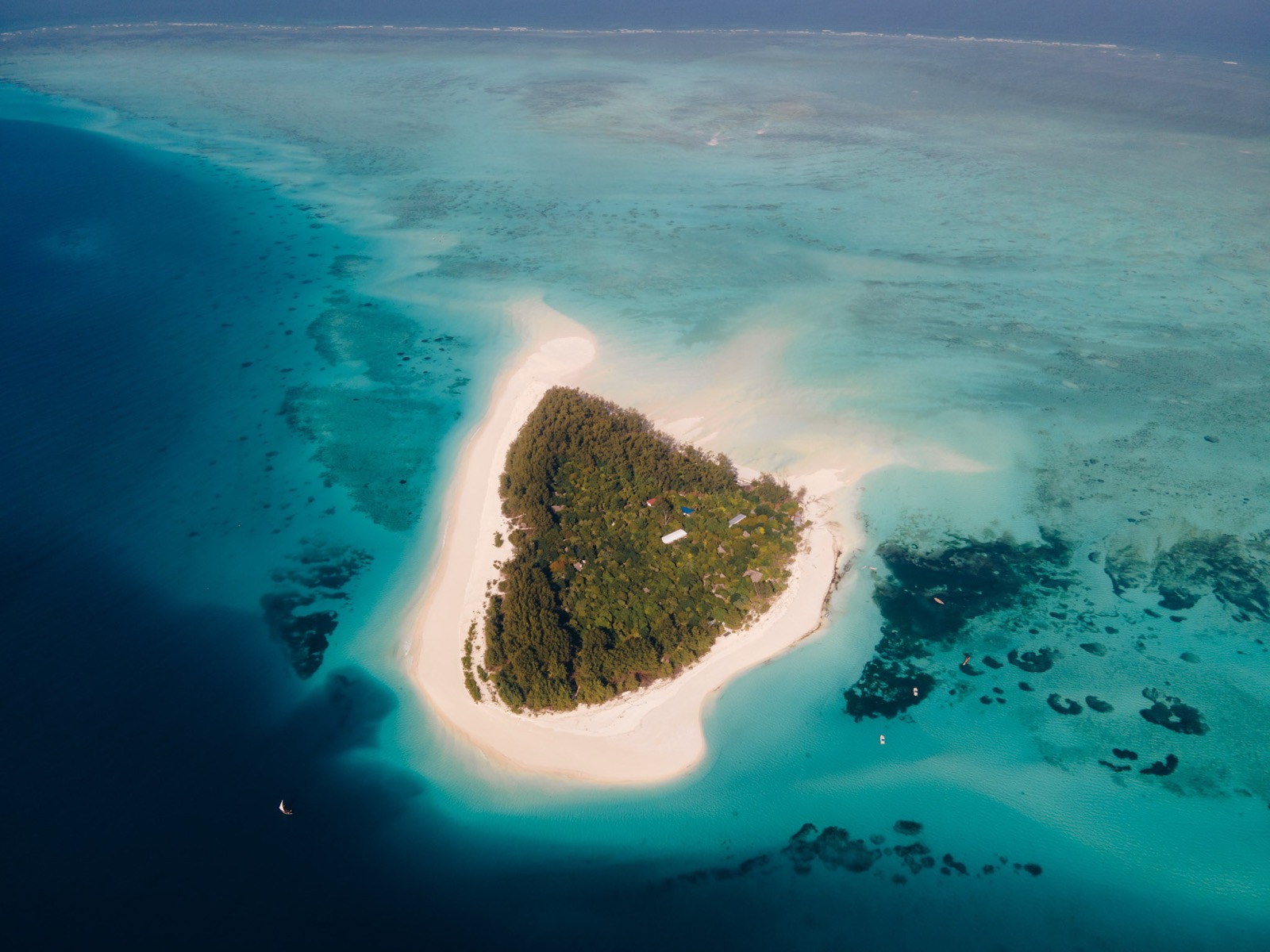
A short wade or swim offshore, Mchanga Island appears at low tide — a white sand sandbank surrounded by coral. It is tidal, meaning it only exists when the water has gone out sufficiently. The operational tide threshold at which Mchanga is accessible is 1.20 m — below that, enough sand has emerged to land a boat on. We give guests a tide schedule on arrival so they can plan around it.
When to go:
- The sandbank is at its best on a running ebb, mid-morning in the dry season (June–October) when the water clarity is highest and the light is overhead rather than low-angle.
- The crossing takes about 10 minutes by local boat or 10–15 minutes by kayak depending on conditions.
- At extreme low tide on spring tides, Mchanga can become almost fully exposed — a broad arc of white sand with coral pools around it. The more dramatic the tide, the larger the sandbank.
- Avoid going out in the first 30 minutes of the ebb — the water is still murky from the turn. Wait until the ebb has been running for an hour.
Beyond Mchanga, the outer reef is visible from the sandbank but should not be approached without a guide — the current at the reef edge can be strong. We arrange guided snorkelling to the reef and to a shallow coral garden, the Blue Lagoon, which is closer and calmer and suitable for swimmers who are not confident in open water.
For more on diving and snorkelling across the island, see our Mnemba reef and Zanzibar diving guide.
Sunrise photography at Michamvi
One reason I am glad I ended up on the east coast rather than the north: every morning the sun comes up directly over the ocean. On the north coast at Nungwi and Kendwa, the sun rises behind the island. On the east coast, the sun rises over the water — you watch it come out of the Indian Ocean from your pool terrace.
The Michamvi peninsula amplifies this. Because we face slightly north-east rather than due east, the sunrise catches the water at an angle that creates a long track of gold across the bay. The western coves on the other side of the headland catch the colour a few minutes later, reflected back from the far shore.
Practical notes for photographers:
- Civil twilight begins approximately 20–30 minutes before sunrise — Zanzibar’s near-equatorial latitude means a short twilight, not a long one. That is your window for blue-hour shots of the bay with ambient light still in the sky.
- The best position for sunrise photography is from the water’s edge on the main beach, facing north-east. The foreground is coral-patterned sand when the tide is out; open water when the tide is in — two completely different compositions.
- Mchanga at sunrise on a low tide is the marquee shot: the sandbank lit by low-angle light, surrounded by turquoise water, no other structures in frame. Getting there requires wading or swimming out before dawn, or arranging a kayak or boat for 05:30–06:00.
- Water shoes are non-negotiable on the exposed east-coast flats — the tidal reef has sharp coral and sea urchins that will end a photography session immediately.
- The Kusi wind season (June–October) gives the clearest skies and cleanest light. The Kaskazi season (December–February) is warmer but can have higher humidity. April–May is long rains — overcast most mornings.
I shoot from the beach most days. The light is genuinely different here from anything I saw on the north coast, and most of my favourite photographs from four years on this island came from mornings within 100 metres of the property.
Bustani Spa
Bustani Spa is a separate building set back from the beach in the garden. Treatments include traditional Zanzibari oil massage, couples sessions, and longer wellness packages. The spa can be booked on a session basis or as part of a digital detox or wellness retreat — structured programmes from three to fourteen days combining spa treatments, yoga, and meditation.
Couples massages use traditional Zanzibari oils combined with Swedish relaxation technique. Sessions run 60 and 90 minutes. Booking in advance is recommended in peak season (June–October and December–January) as the spa has limited daily treatment slots.
Zatiny restaurant and dining
Zatiny is the on-site restaurant and bar. It draws on fresh Indian Ocean seafood, a Zanzibari-spiced kitchen, and cocktails made with local spirits. The menu changes with what is available that day from local fishermen and the market in Stone Town. We do not serve a fixed menu — the kitchen tells you what is fresh.
Outside guests can book dinner at Zatiny by reservation. We do not run a beach bar open to walk-ins.
Two other dining options specific to Matlai:
Floating breakfast — served in your private pool on a purpose-built floating tray. Available on request, no surcharge, typically runs 07:30–10:00.
Private beach dinner — candlelit table set directly on the sand, arranged on request for couples. Usually sunset into evening. Give us 24 hours notice.
Activities from Matlai
The property does not operate activity packages, but we arrange the following for guests:
- Mchanga sandbank — short wade or swim from shore, tide-dependent (kayak/boat available on request). Threshold: 1.20 m tidal height or below.
- Snorkelling — reef and Blue Lagoon, guided, half day
- Kayak and SUP — available from the beach, included in rates
- Sailing — Gypsea Sailing operates from Jambiani, further south than Paje (real east-coast order is Michamvi, then Bwejuu, then Paje, then Jambiani) — closer to an hour’s drive, not a quick hop. A boutique operation and one of the standout east-coast experiences we recommend to guests who want to be on the water properly rather than in a motorboat.
- Spice tour — we work with a guide who does a genuine farm visit rather than the tourist show. See the spice tour write-up for what to look for. A note: the best fresh spices in Zanzibar are at Darajani Market in Stone Town, not at the farm — the market turns stock daily.
- Stone Town day trip — we recommend a full day, not half. Transfers arranged. See the Stone Town day-trip guide for what is worth the time.
- Open-air cinema — set up in the garden on request, via the house manager. Film, cushions, blanket. Works best in the dry season when a clear sky is reliable.
- Uzi Island — off Zanzibar’s south coast, accessible via a low-tide mangrove causeway called Moses Road. No hotels, no tourist infrastructure. Two local operators run kayak tours through the mangroves. This is not for every guest — come prepared for the unexpected. Ask us to check conditions before you plan around it.
For kitesurfing, the right base is Paje — about 20 minutes south of us. We send guests there for lessons. See the Paje kitesurfing and kite schools guide for operators and what to expect.
Getting here
From ZNZ airport: USD 60 for the private transfer, payable at the hotel. Allow 1h15–1h30 depending on traffic through Zanzibar Town. We arrange the transfer if you book directly; otherwise any taxi at the airport can bring you.
From Stone Town: roughly 1 hour 15 minutes to just under 1.5 hours by road, depending on conditions. This compares to approximately 55 minutes to Paje — Michamvi adds about 15–20 minutes of travel time, in exchange for the bay location.
Check-in / check-out: 2:00 PM check-in, 10:30 AM check-out. Early arrivals can leave luggage and use the beach. Late checkout on request and subject to same-day availability.
The honest trade-offs
Matlai is not the right hotel for everyone. Here is what you give up:
- Nightlife and social energy. There is none. Paje has restaurants, beach bars, and people. Michamvi Pingwe is quiet. If that sounds like a problem, go to Paje.
- Kite infrastructure. Matlai is not a kite base. Kitesurfers should stay in Paje.
- Large resort facilities. No pool bar, no gym, no tennis court, no kids club. Six rooms and a spa.
- Distance from airport. Paje is ~55 minutes from the airport; we are approximately 1h15–1h30 depending on traffic.
- Price. We are not cheap. We are not a budget option or a mid-range compromise.
If none of those matter to you — if you want a quiet bay, swimming at any tide, very attentive service, and a small property run by people who live on site — then this is likely the right fit.
What is and isn’t included
Rates include breakfast (served on the terrace or as a floating pool breakfast on request), airport transfer on arrival, house kayaks and SUPs, and the open-air cinema set-up. Spa treatments, guided excursions, and additional meals at Zatiny are charged separately.
Matlai does not include all-inclusive drinks packages, transfers between excursions, or any government-mandated taxes, which are listed separately on the rate sheet and payable at the hotel. Breakfast is generous — eggs cooked to order, fresh tropical fruit, Zanzibari spiced bread — and most guests find they do not need lunch on lighter days.
Direct bookings carry no OTA commission markup and come with a few small extras we cannot offer through third-party platforms: flexible check-in windows, priority spa booking, and the ability to request the open-air cinema, pool breakfast, or beach dinner at time of reservation.
When to come
The dry season (June–October) is the best time on the east coast: clear skies, low humidity, and reliable wind keeping temperatures comfortable. The Kusi trade wind runs through this period.
January–February is a shorter dry window with warmer water and lower demand. A good time for a honeymoon.
April–May is long rains season. We close for part of this period, along with many smaller properties on the coast. Check availability before planning.
For the full month-by-month breakdown, see our month-by-month guide.
→ Book or enquire at hotelmatlai.com
For a full comparison of all four east coast villages, see the east coast village comparison. For Zanzibar entry requirements and arrival information, see Zanzibar visa and entry details and how to reach the island.
Frequently asked questions
How many rooms does Boutique-Hotel Matlai have?
Six rooms across two separate buildings: Asili House with four rooms and Villa Kidosho with two rooms. Both have private infinity pools and direct ocean views. The small room count is intentional — it keeps the service personal and the property quiet.
Is Matlai good for swimming — what about the tides?
Yes, and this is the main reason to choose Michamvi Pingwe over the other east coast villages. The bay curves around the peninsula, which shelters it from the full tidal retreat that affects the open beaches at Paje, Jambiani, and Bwejuu. Water stays closer at low tide here than anywhere else on the east coast. You can swim at any hour; on the open beaches you can't.
How far is Boutique-Hotel Matlai from Zanzibar airport?
1h15–1h30 by road, depending on traffic. The airport transfer costs USD 60, paid at the hotel. Check-in is 2:00 PM; early arrivals can leave luggage and use the beach. Check-out is 10:30 AM.
Is Matlai a good honeymoon hotel?
It is what most honeymoon couples at Matlai tell us they wanted: very small, very quiet, private pools, a spa, and candlelit beach dinners possible on request. There is no evening entertainment, no organised social programme, and no beach bar noise. If you want seclusion and to be left alone while still having attentive service, it works well.
What restaurants are at Matlai?
Zatiny is the main restaurant and bar — open to guests and by reservation to outside visitors. It serves fresh seafood, Indian Ocean–influenced cooking, and cocktails. Floating breakfast served in your private pool is available on request. Private beach dinners can be arranged for couples.
Is Matlai a luxury hotel or mid-range?
Positioned as boutique luxury. It is not cheap, but independent reviewers consistently describe it as good value relative to comparable properties, which tend to charge more than double. If you are comparing purely on price, Matlai is expensive by Zanzibar standards. If you are comparing on privacy, service quality, and bay location, the value holds.
When does the Mchanga sandbank appear and how do you get there?
Mchanga Island is a tidal sandbank a short wade or swim offshore (free hotel kayaks and a boat for non-swimmers are also available on request). It appears when the water drops sufficiently — the operational threshold is a tidal height of 1.20 m or below. We give guests a tide schedule on arrival. The sandbank is at its best mid-morning during the dry season (June–October) when water clarity is highest. At spring low tides it can be almost fully exposed, with a broad arc of white sand and surrounding coral pools.
How does Michamvi compare to Paje and Jambiani for a beach holiday?
Paje is the kite-surfing hub — energetic, with beach food courts, bars, and a younger crowd. If you want water sports and social atmosphere, go to Paje. Jambiani, just south of Paje, is much quieter and better suited to couples. Michamvi Pingwe adds one feature neither of those villages has: a bay that stays swimmable at any tide, rather than retreating to tidal flats for several hours each day. The trade-off is that Michamvi is the furthest from the airport — approximately 15–20 minutes more driving time than Paje.