
Facts & prices checked: 2026-06-24
Stone Town is one square kilometre of UNESCO-listed history — compact enough to walk completely, dense enough to fill a full afternoon. I have walked this route dozens of times hosting guests, and this is the version that consistently works: starts at a recognisable anchor, moves in a logical arc, times itself to the sundowner and the night market, and finishes with dinner without doubling back.
The route is 5 hours including all stops. Start at 15:00, finish at 20:00.
How the route works: one direction, no backtracking
The mistake most people make in Stone Town is starting at the wrong time and in the wrong direction. They arrive at midday, walk in the heat, get confused in the alleys, eat a rushed lunch at a tourist cafe, and leave before Forodhani opens at 18:00 — missing the best part of the day entirely.
This route is timed backwards from dinner. Forodhani night market opens at 18:00. Africa House sundowner is best at 17:30. The Anglican Cathedral needs 30-45 minutes. The alleys need at least an hour to do properly. That calculation lands you at 15:00 as the right start.
The route runs south first (seafront → slave market), then inland and north (UNESCO alleys → Darajani → Jaws Corner), then back west to the seafront for sunset and dinner. You walk in a rough arc rather than retracing your steps, which means you are always seeing something new until the final moment.
Stone Town was inscribed as a UNESCO World Heritage Site in 2000. The 1.0 km² core was already a protected conservation area from 1985 under the Town and Country Planning Act. That designation explains why the buildings you walk past still look like the 19th century — coralline ragstone walls, mangrove timber frames, thick lime mortar — despite a century and a half of occupants.
Step 1: Forodhani Gardens and the Old Fort (15:00)
Arrive at Forodhani Gardens on the seafront. The sea is in front of you. The Old Fort (Ngome Kongwe) is immediately to your right, and the former site of the House of Wonders (Beit el Ajaib) is to your left along the seafront road.
The Old Fort is your orientation anchor. Built by the Omanis between 1698 and 1701 on the ruins of a Portuguese chapel, it is one of the oldest structures in Stone Town. The exterior walls are the most interesting thing about it for the purposes of this walk — you can read the Portuguese foundation stones in the lower sections, and the Omani construction sitting on top of them. In normal years the interior holds craft stalls, a small outdoor stage, and a tourist information desk — worth a quick look if you have 15 minutes. It has been closed for renovation since around January 2026 with no confirmed reopening as of September 2026, so check current status before planning around the interior.
Stand with the fort behind you and the sea ahead. The garden in front of you is empty at 15:00. By 18:00 it will be full of grills and people. This is your anchor point for the whole afternoon. You will be back.
Take a moment to look south along the seafront. The Beit el Ajaib — the House of Wonders — is the large white structure to your left. It has been under structural restoration for years; the interior is closed. The exterior is still impressive: the tallest building in 19th-century East Africa, with a facade of Omani-style arched verandas stacked four floors high. Walk past it and appreciate it for what it is.
Step 2: The Anglican Cathedral and slave market memorial (15:15)
Walk south along the seafront, then turn inland. The Anglican Cathedral (Christ Church Cathedral) is a 10-minute walk. Ask any local if you lose your bearings — it is well signposted.
Entry is roughly USD 5 and includes the cathedral above and the memorial chambers below. Allow 30-45 minutes. Do not rush this.
The slave trade history here is the weight you carry through the whole walk. Between 1830 and 1873, around 600,000 people were sold at the market that stood on this site. Stone Town was the main slave-trading port of East Africa. The trade was abolished in Zanzibar in 1873 under British pressure; construction of the Anglican cathedral on the site began that same year, the building opened in 1879, and it was formally consecrated in 1903. The Universities Mission to Central Africa purchased the site specifically to build on top of it.
The memorial chambers in the basement are a sober installation — narrow stone rooms with figures of chained people. A word on contested history: historian Glassman argued in peer-reviewed work (Ethnologie française, 2020) that these basement rooms were actually used as cold storage after the slave market closed, not as holding chambers during it. Present this to your group as what it is — contested historiography, not settled consensus. The exhibition inside the cathedral handles the wider trade history comprehensively. What is not contested is the scale of the trade, the location of the market, or the cathedral’s role as a deliberate act of memorial.
The architecture of the cathedral itself reflects the cultural layering of Stone Town: Victorian church design with Islamic archway details in the interior. Worth looking at carefully.
After the cathedral, you are inside the alleys. Lukmaan Restaurant is close by — on New Mkunazini Road just behind the cathedral. If you need to eat before the night market, this is where locals eat: full meals for TZS 5,000-8,000 per dish (about USD 2-3). It is not on the main tourist circuit, which is exactly the point.
Step 3: Getting lost in the UNESCO alleys (16:00)
This is the main event. Walk north from the cathedral into the lanes. Do not follow a specific map route. The town is 1.0 km² — you cannot get seriously lost. If you hit the seafront, you have gone west. If you hit the main road, you have gone east. The lanes are between.
What to look for as you walk:
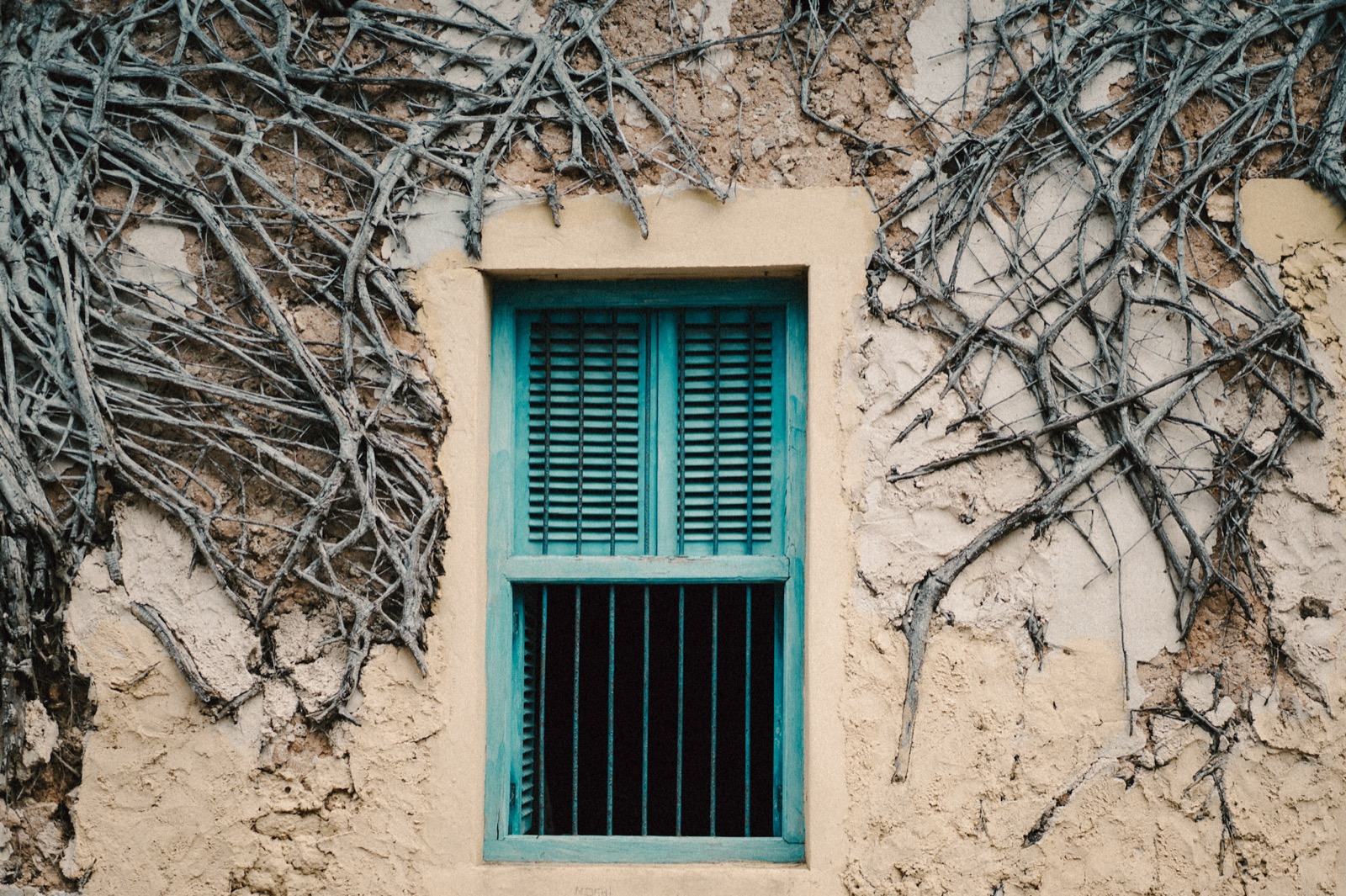
Carved doors. Stone Town has hundreds of carved wooden doors, and they tell you something about who built them. Omani-style doors have intricate geometric patterns carved into horizontal panels, with large ornamental brass studs (originally used to stop the door being rammed by war elephants — the studs pre-date their use here, but the tradition followed the craftsmen). Indian-style doors typically have a prominent curved or semicircular arch above the door frame and different carving motifs. You can date approximately when a building was constructed by looking at the door.
Overhanging balconies. The second and third floors of many buildings extend out over the lane on carved coral brackets. These are not decorative extras — they are a climate response. The overhangs create shade at street level and catch the cross-breeze at the upper floors. In a town built from materials that hold heat, this is important engineering.
Tailors sewing in doorways. In the narrow lanes, tailors sit with manual sewing machines and work by the light of the doorway. It is a common scene and one worth pausing for. The kangas and kikois they work with are the fabric of daily Zanzibari life — a practical gift to buy if you want something that is actually used locally.
The call to prayer. Stone Town is home to numerous mosques — the exact count depends on which you include — and the calls overlap at prayer times in a way that is audible throughout the alleys. If you are walking between 15:00 and 16:00, you will hear Asr prayer at some point. Let it happen around you rather than walking through it.
I tell my guests: put your phone away for 20 minutes in the alleys and just walk. The combination of smells (cloves, cardamom, wood smoke, salt air, the occasional hint of something less pleasant), sounds, and textures is the thing to experience — not to photograph.
Step 4: Darajani Market for spices (16:30)
Darajani Bazaar is the general market serving the whole of Stone Town — vegetables, fruit, fish, meat, and the spice hall. Find your way to it by heading toward the eastern edge of the old town.
Buy your spices here, not at the tourist stalls near the cathedral or the Old Fort. The reasoning is simple: Darajani supplies the town’s restaurants and households, so stock turns over daily. Fresher turnover means more aromatic spices. The stalls near the main tourist circuit buy in bulk and may have held the same stock longer.
What to buy: cloves (Zanzibar is one of the world’s largest producers — the smell of a handful of fresh cloves is extraordinary), cinnamon (real Ceylon cinnamon is noticeably more fragrant and milder than the cassia sold in most Western supermarkets), cardamom, vanilla pods (look for dark, plump, oily pods — thin dry ones have lost most of their flavour), and attars (concentrated Swahili coast perfume oils, usually based on oud, rose, or sandalwood). A modest shopping spree runs USD 10-20 for genuine quantities.
The market building itself has character: an old structure with separate sections, low ceilings, and the particular density of a market that serves a whole town’s needs rather than tourists. Budget 10-15 minutes and leave before you are overwhelmed by it.
Step 5: Mercury House — a quick detour (16:45)
Farrokh Bulsara was born in Stone Town on 5 September 1946 and grew up here for his early childhood before leaving at age 8 for schooling in India. He later moved to England, changed his name, and became Freddie Mercury of Queen.
Mercury House is in the alleys near Kenyatta Road — ask locally if you cannot locate it on a map. Since 2019 it has operated as a small, staffed paid museum (USD 10 adult, open daily roughly 10:00–18:00) covering his early life with photos and exhibits — compact, but a real museum, not just a plaque. Whether it moves you depends entirely on how much you care about Queen. For those who do, it is genuinely affecting — the distance between that quiet alley and the stage at Wembley is almost impossible to hold in one thought. For those who do not care about Queen, the carved door next to it is excellent regardless.
Allow 5-10 minutes.
Step 6: Jaws Corner tea break (16:55)
Find Jaws Corner. It is in the northern part of the old town and is known to every local — ask anyone. It is not a named establishment; it is an informal square around a tea stall that has become a neighbourhood institution.
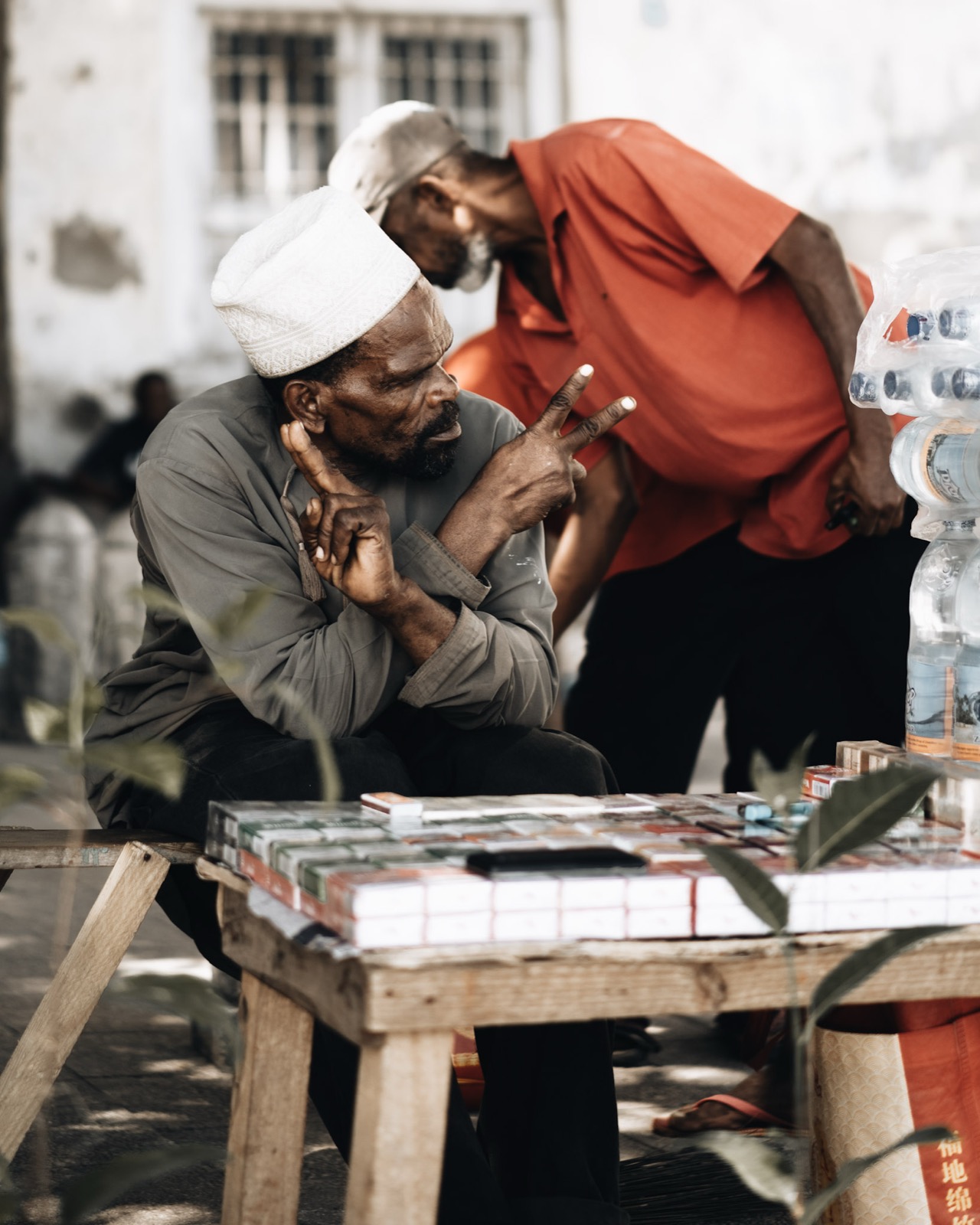
Local men sit here, play bao (the ancient East African board game — a track of wooden cups, seeds or stones, deep strategic play), and drink strong chai from small glass cups. Tourist presence is minimal. You pay a few hundred shillings for a chai, find a low stool, and sit in it.
This is the best 15-minute stop in Stone Town for anyone who wants to see what the town actually is beyond the tourist loop. Nobody will bother you. Nobody is trying to sell you anything. The pace here is completely different from the cathedral and the craft stalls. Sit long enough to feel the difference.
If someone invites you to play bao: yes. The rules take 3 minutes to learn and the game takes 20 to play. It is worth the detour from your schedule.
Step 7: Africa House sundowner (17:30)
Work back toward the seafront. The Africa House Hotel is on Shangani Street, on the western edge of Stone Town — one of the original grand buildings facing the Indian Ocean. The Sunset Bar is on the open terrace on the upper floor.
Aim to arrive at 17:30. Drinks are around USD 5 each — cold beer, cocktails, soft drinks. The bar is open from 9:00 AM through midnight, so there is no rush to get in, but arrive before 18:00 if you want the actual sunset over the water rather than the afterglow.
The view from the terrace is dhows on the water, the horizon going amber, the seafront below. It is the most reliable good-view spot in Stone Town with a drink in hand. The warning on the food is real: the kitchen has had mixed reviews. Stick to drinks and save your appetite for Forodhani in 30 minutes.
I have watched the sunset from this terrace dozens of times. The first time I brought guests here, one of them sat completely silent for 20 minutes watching the light change on the water. Some places earn their reputation.
Step 8: Forodhani night market (18:00)
Walk the few minutes back to Forodhani Gardens. It should be opening as you arrive.
What to order:
- Zanzibar pizza — not pizza in the Italian sense. A stuffed crepe cooked on a flat griddle, filled with minced meat, egg, vegetables, and various additions. Order it fresh and watch it cook. It is Zanzibar’s most distinctive street food.
- Urojo (Zanzibar mix soup) — a tangy, tamarind-based broth with bhajia, banana, potato, and additions depending on the stall. It is the local answer to a soup-stall dish and comes in a small bowl. Try one.
- Sugarcane juice pressed to order — a tall glass of fresh juice pressed from stalks in front of you. In the evening heat after 5 hours of walking, this is the right drink.
- Mshikaki (spiced meat skewers) — order them from a stall where you can see them grilled fresh. The pre-cooked skewers sitting under lights are the ones to avoid.
- Grilled seafood — prawns and fish grilled to order. Agree the price before you hand anything over. The quote is not the final price; negotiating is expected.
Practical notes: Forodhani runs on Tanzanian shillings cash only — no cards. Bring small bills. The market runs until approximately 21:00. You do not need to rush through dinner; the energy stays good until the later stalls start packing up.
The first number a vendor quotes is not the real number. This is normal and not hostile — it is how the market works. Agree a price before you take anything, be polite about it, and pay what you agreed.
What to do next (optional additions)
Live taarab, if the night lines up: Live taarab music is performed weekly at the Old Customs House in Stone Town — the exact evening varies, so confirm the current schedule locally or with your hotel. Taarab originated in Zanzibar in the 1880s and weaves African rhythms, Arab maqam scales, Indian instruments, and dense Swahili lyric poetry into something specific to this coast. The performance is seated and slow; the lyrics are dense with archaic vocabulary and double meaning. If your dates line up with a performance night, consider taarab instead of (or after) Forodhani — the atmosphere is local rather than tourist-directed.
Second-night dinner: If you are staying a second night, consider the Emerson on Hurumzi rooftop. The set 3-course dinner costs USD 45 per person excluding drinks and must be booked in advance — it fills up. The rooftop has a view across the Stone Town roofline and runs at 19:00. It is a longer, more formal alternative to Forodhani and works best on a second visit when Forodhani is already done.
Next morning: The spice farm excursion runs 20-30 km inland and pairs naturally with a Stone Town start. Good tours run USD 15-25 per person. Leave by 09:00 to be back by early afternoon. For context on the rest of what Stone Town offers — history, architecture, the House of Wonders, where it fits a full week — see the broader Stone Town rundown.
Where to next: For the full context on Stone Town’s history and what you’ve just walked through, the deeper look at Stone Town is the companion read to this itinerary. For Stone Town’s restaurants in full — Emerson on Hurumzi, Lukmaan, Africa House — see the Stone Town restaurants guide. If you’re planning the rest of your Zanzibar week, the full 7-day route shows where Stone Town sits relative to the beaches, Jozani, and the east coast. For what to buy, where to bargain, and the Darajani rules — the shopping breakdown fills in the detail on spices and craft markets. For every other way to spend a day on the island, the rundown of day trips covers Prison Island, Jozani, Chumbe, and Mnemba.
Frequently asked questions
Why start at 15:00 for a Stone Town walking tour?
Three reasons. First, the light in the afternoon is far better than midday — the coral-stone walls glow amber from 16:00 and the alley photography is genuinely good. Second, the temperature is lower than midday; the lanes hold the heat but 15:00 is more bearable than 12:00. Third, starting at 15:00 brings you naturally to Africa House for the 17:30 sundowner and Forodhani at exactly 18:00 when it opens. The whole route is timed to end at dinner, not mid-afternoon when you need to figure out where to eat.
Do I need a guide for this walking tour?
Not strictly. The route above is self-navigating, and the slave market has its own comprehensive exhibition. That said, a good guide does turn the maze into a story — knowing which door belongs to which merchant family, what the different carving styles mean, which mosque is which era. Budget around USD 20-30 for 2 hours. If you hire one, tell them your goal is to walk first, then they can fill in history as you go — not to be led in a loop of souvenir shops.
Is Forodhani Gardens safe at night?
Yes, broadly — Forodhani is one of the most popular and well-lit spots in town and runs a solid tourist crowd through 20:00. The wider old town is generally safe by day and into the early evening on busy streets; late at night, stick to lit, populated areas. The main low-level hazard is persistent (but generally harmless) approaches from guides and vendors in the market — a polite 'no thanks' is sufficient.
What should I buy at Darajani Market?
Spices: cloves (Zanzibar is one of the world's largest producers), cinnamon (proper Ceylon cinnamon, much more fragrant than the supermarket version), cardamom, vanilla, and attars (concentrated perfume oils from the Swahili coast). Buy here rather than at the souvenir stalls near the cathedral — the stock at Darajani turns over faster (it serves the whole town's cooking), meaning fresher, more aromatic spices. Vanilla pods: look for plump, oily pods. A small bundle of cloves is worth having just for the smell on the flight home.
What is Jaws Corner?
A tea stall informal square in the north part of the old town — no fancy name, just a landmark that locals call by this name. It is where local men sit, play bao (the East African board game), drink strong chai from small glasses, and watch the world. Tourist presence is minimal. You buy a chai for a few hundred shillings, find a low stool or wall section, and just sit in it. It is the best 15-minute stop in Stone Town for anyone who wants a glimpse of non-tourist daily life.
Is this route different from the general Stone Town guide?
Yes. The general Stone Town guide gives you context and history. This guide tells you exactly where to stand at 15:00, which direction to walk, when to stop, and what to order for dinner. It is a turn-by-turn route, not an overview. Use both: the Stone Town guide to understand what you are seeing; this walking tour to actually navigate the day.