
Facts & prices checked: 2026-06-24
Zanzibar is a single island but it has at least five distinct beach characters. The north coast and east coast are the two most significant, and they suit very different types of traveller. Understanding that difference before you book is the most important decision of a Zanzibar trip.
The five areas: what they are and who they suit
| Area | Best for | Tides | Vibe |
|---|---|---|---|
| Nungwi / Kendwa | All-day swimming, sunsets, resort scene | Mild | Lively |
| Paje | Kitesurfing, nightlife, digital nomads | Strong | Active |
| Jambiani | Couples, quiet beaches, local character | Strong | Relaxed |
| Michamvi | Seclusion, tidal walks, east-coast feel | Strong | Very quiet |
| Matemwe / Muyuni | Mnemba Atoll diving, upmarket quiet | Moderate | Boutique |
| Stone Town | Culture, museums, history, day trips | N/A | Urban |
North coast: Nungwi and Kendwa
Nungwi and Kendwa share the northwest tip of the island. The reef curves around here in a way that protects the beach from the strongest tidal movement, which means swimming is possible most of the day in most conditions — unlike the exposed east coast, where you plan your swim around the tide chart.
This is the reason most beach-focused first-timers end up here, and the resort infrastructure reflects it: Nungwi has the widest selection of hotels on the island, from budget guesthouses from USD 44/night to the larger resort properties like Nungwi Dreams and Zuri Zanzibar. Kendwa is slightly smaller and quieter than Nungwi, positioned just around the headland with arguably the island’s best sunset view over open water.
What Nungwi/Kendwa is:
- Best sunsets on Zanzibar — the west-facing tip catches the full Indian Ocean horizon
- All-day swimming without tide planning
- Turtle conservation at Mnarani Marine Turtles Conservation Pond (established 1993, USD 10 entry, ~50 turtles) at the north end of Nungwi Beach
- Lively beach bar scene, dhow sunset cruises, water sports
- Higher density of accommodation and restaurants than any other part of the island
What it is not: quiet. If you are looking for empty beaches, birdsong instead of music, and five-minute walks between neighbours, Nungwi in high season is not it.
Best for: families with young children wanting guaranteed swimming, couples wanting sunset views and a social atmosphere, week-long beach holidays prioritising ease.
East coast: Paje, Jambiani, Michamvi
The east coast is where I live, and it is where I bring my recommendation for most first-time visitors who want more than a straightforward beach holiday.
The defining feature is the tide. The east coast faces the open Indian Ocean, and the tidal movement here is dramatic: at low tide, the reef flat extends hundreds of metres and water retreats to knee depth. At high tide, the sea comes in warm and calm, and the swimming is excellent. You do not fight the tide — you learn it, and once you do, the tidal rhythm becomes the most interesting part of staying here.
Paje is the original kite capital of Zanzibar. The consistent Kusi south-east wind from June to October, combined with the flat lagoon at low tide, makes it one of East Africa’s best kitesurfing locations. Off-season, Paje has a well-developed digital nomad and backpacker scene, solid restaurants, and lower prices than Nungwi. A beginner kite course in Paje runs USD 350–500 for 9–12 hours.
Jambiani is south of Paje and noticeably different in character. Jambiani has a genuine fishing village feel that Paje has largely lost to tourism. The boutique hotels here are among the most interesting on the island — small, personally run, excellent food. Couples and honeymooners who want calm over party atmosphere consistently prefer Jambiani.
Michamvi is the quietest of the three main east coast villages. Less developed, fewer amenities, but the beaches are extraordinary and the feeling is genuinely remote despite the village infrastructure. Michamvi Kae at the southern end of the peninsula has west-facing frontage that catches sunsets over the channel — rare on the east coast.
What the east coast is: tidal, windy in Kusi season (June–September), local character, lower prices at the same quality level, and the full experience of the Indian Ocean reef ecosystem rather than a lagoon in front of a resort.
Best for: kitesurfers (Paje), couples wanting quiet and local character (Jambiani), travellers who want the authentic Zanzibar experience alongside good service and food, budget-to-mid-range travellers.
East coast culture: seaweed farming and the Mwani Mamas of Jambiani
Staying on the east coast means living alongside one of East Africa’s most unusual coastal economies. Tanzania has more than 23,000 seaweed farmers, with over 80% being women — and the industry is centred on the tidal flats of Jambiani and the surrounding villages.
The Mwani Mamas are a well-documented women’s farming cooperative in Jambiani. Vogue profiled them as “the first generation of financially independent women” in their community; members earn around USD 250–300 per month from seaweed cultivation — income that flows directly into household decision-making. Visits run only at low tide when the shallow lagoon is uncovered; the timing ties your visit to the tidal schedule, which is part of why it works as an activity on an east coast stay.
What you observe is practical rather than performative: women in knee-deep water tying Eucheuma seaweed cuttings to rope lines between wooden stakes, working fast before the tide returns. The farmed seaweed is dried on shore and sold into cosmetics and food-processing markets. It is the actual working tidal economy, not a staged demonstration.
How to include it in your stay:
- Schedule visits on low-tide mornings — your hotel can pull the tide chart the night before
- Jambiani guesthouses offer combined walking tours (fishing village, seaweed farm, local home) lasting two to three hours
- Paje also has seaweed farming but Jambiani is the main hub for organised visits
I find this the most genuinely Zanzibari hour available from an east coast base. The tidal flat at low tide is striking on its own terms — all that sand extending to the reef edge, women working in the shallows, dhows moored just beyond the farm lines — and it is something the north coast resort experience simply does not show you.
Northeast: Matemwe and Muyuni
Matemwe is the launching point for Mnemba Atoll — the most significant reef system around the main island of Zanzibar. If you are a serious snorkeller or diver and Mnemba is on your list, staying in Matemwe cuts the boat journey from 20 minutes (versus 60–80 minutes from Nungwi) and reduces the cost of daily access considerably.
Matemwe has developed into one of the island’s quietest and most upmarket corners. There are no party bars and limited food options outside the hotel restaurants, but the hotels here tend to be excellent. The tides exist but are less dramatic than at Paje.
Muyuni, just south of Matemwe, is even quieter — a handful of properties in an almost undeveloped stretch. The access to the outer reef is the main draw.
Best for: divers and dedicated snorkellers, travellers wanting quiet and quality without the north coast’s energy, anyone specifically targeting Mnemba as the focal activity of their trip.
Mnemba Atoll: what the reef means for the northeast decision
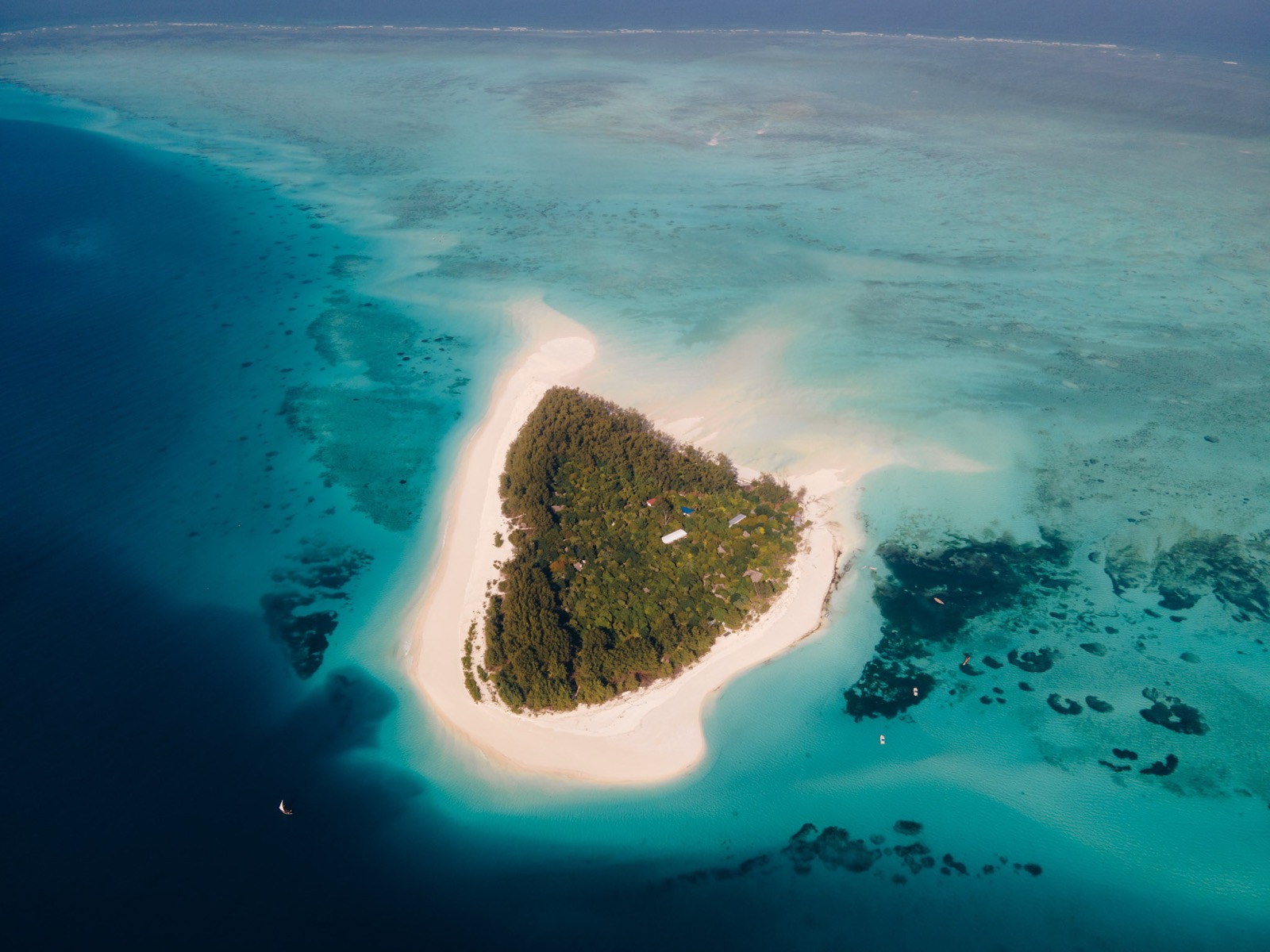
Mnemba Atoll is the specific reason Matemwe commands a premium over other quiet corners of the island. The atoll sits about 15 minutes by boat from Muyuni jetty at the northeast tip — the same boat trip that takes over an hour from Nungwi and costs significantly more at that distance.
What makes Mnemba the reference reef:
- Green and hawksbill turtles feed in Mnemba’s waters and nest seasonally on the island
- Macro life: nudibranchs, moray eels, leaf fish, shrimps, mantis shrimps on most dives
- CORDAP is running an active coral restoration project (October 2024–September 2027) targeting a 10% increase in coral cover across a 4-hectare restoration area, involving local community divers
- A snorkelling day trip from Matemwe costs approximately USD 30–40 per person — the same reef accessed from Nungwi adds over an hour of boat travel each way and costs more
The island itself: &Beyond Mnemba Island Lodge has 12 bandas with a maximum of 24 guests, rates from USD 2,150 per person per night plus a USD 100 per person per night conservation levy. Day visits are not available to non-guests; the island is private.
For most travellers, the practical calculus is straightforward: if diving or snorkelling Mnemba is on the itinerary but staying on the island is not, Matemwe is the base that makes every Mnemba day financially and logistically sensible.
I dived Mnemba from a Matemwe boat — the coral gardens past the southern tip held more fish than anything I saw elsewhere on the main island. The 15-minute crossing also means that a half-day snorkel trip does not consume the whole day, which a Nungwi departure inevitably does.
Stone Town
Stone Town is not a beach destination. The town waterfront is not swimmable — the water is shallow, boat-busy, and unsuitable for swimming. The value of staying in Stone Town is access to Zanzibar’s UNESCO-listed historic district, its Arab merchant houses, the Anglican Cathedral, the Old Fort (built 1698–1701), Darajani Market, and the Forodhani night market.
Most visitors split their time: 1–2 nights in Stone Town at the start of the trip (to do the history, the spice tour, the market), then relocate to the coast. A full week in Stone Town without the beach makes sense for travellers on a cultural-focused itinerary — but it is a different kind of trip.
Stone Town guesthouses range from budget options to the heritage hotels like Emerson on Hurumzi or the Zanzibar Coffee House. Prices sit below the north coast resort scene at equivalent quality levels.
Offshore islands: Chumbe and Mnemba
For the ultra-private, ultra-conservation-focused stay, Chumbe Island (7 eco-bungalows, strict marine reserve, USD 90 day visit + USD 25 levy = USD 115 total) and Mnemba Island (&Beyond Lodge, 12 bandas maximum 24 guests, from USD 2,150 per person per night plus USD 100 conservation fee) occupy the top end of Zanzibar’s accommodation scale. These are not alternatives to the main island — they are specific full experiences for specific travellers. The Chumbe Island eco-lodge guide covers the bungalow system in detail: rainwater harvesting, solar power, all-inclusive pricing (USD 280–400 per person per night, including mandatory government levies), the check-in/check-out rhythm, turtle nesting access for overnight guests (November–March), and why December–January is the best single booking window.
Price guide by area and tier
| Area | Budget | Mid-range | Luxury |
|---|---|---|---|
| East coast (Paje/Jambiani) | USD 11–50/night | USD 80–180/night | USD 200–400/night |
| North coast (Nungwi/Kendwa) | USD 44–80/night | USD 120–220/night | USD 250–500/night |
| Matemwe / northeast | USD 80–150/night | USD 180–300/night | USD 300–600/night |
| Stone Town | USD 20–60/night | USD 80–150/night | USD 200–350/night |
| Offshore islands | — | — | USD 2,150+ pppn |
These are per-room per-night figures for double occupancy. High season (July–August and December 20–January 5) pushes prices 30–50% higher than shoulder rates.
When to book: seasons, demand, and what peak pricing means
Zanzibar has two distinct demand peaks that drive both availability and pricing. Understanding the timing before you commit saves money and removes frustration.
High season — July–August and December 20–January 5:
- Prices run 30–50% higher than shoulder rates across all areas
- Nungwi and Kendwa need to be booked 3–6 months in advance — school holidays in Germany, UK, Italy, and France all align with July–August, and the north coast fills fast
- Boutique east coast properties in Jambiani and Matemwe also sell out months ahead in this window
Best value windows — May–June and September–October:
- The long rains end in May; June is often excellent weather at prices still below the July–August peak
- September sees crowds drop while conditions on the north coast remain good
- East coast kitesurfing (Kusi season) is still active through September
Kitesurfing season alignment:
- Kusi (June–October, peaking July–August): The main season. Consistent SE trade winds; Paje prices rise with kite-travel demand
- Kaskazi (December–mid-March): Second kite season; seaweed accumulation on east coast beaches increases during this wind direction
- Transition months (April–May and October–November): Winds unreliable, not recommended for kitesurfing; the best budget window for flexible travellers
Booking lead times by property type:
- Budget/mid-range east coast: 4–8 weeks ahead outside peak
- Mid-range north coast: 2–4 months ahead for July–August
- Boutique properties (Jambiani, Matemwe): 3–6 months ahead in peak season
- Offshore islands (Mnemba, Chumbe): 6–12 months in advance — Mnemba’s 12-banda, 24-guest maximum fills long ahead of peak dates
The most common avoidable mistake is booking Nungwi in July at two weeks’ notice and paying significantly above market for the only remaining availability.
How to choose
If your priority is swimming flexibility: North coast (Nungwi or Kendwa). No tide planning needed, more consistent beach access throughout the day.
If your priority is kitesurfing: Paje, June to September. The Kusi wind is reliable and the flat lagoon at low tide is what the kite schools are built around.
If your priority is a quiet couple’s retreat: Jambiani or Matemwe. Both have excellent boutique hotels, low noise levels, and local character.
If your priority is diving or snorkelling: Matemwe for Mnemba access (20-minute boat ride), or Nungwi for access to the north reef sites and dive operators.
If your priority is culture: Start in Stone Town (1–2 nights), then relocate to the coast.
If budget is the primary constraint: East coast generally beats north coast at the same quality level, and Jambiani is lower-priced than Paje while being more attractive.
If you have 10+ days: Split the trip between Stone Town (2 nights), the east coast (5–6 nights), and Nungwi/Kendwa (2 nights) for a complete read of the island.
Tim’s honest assessment
I have spent years on the east coast, and my baseline recommendation for most first-time visitors is still the east coast — specifically Jambiani or Michamvi — with a night or two in Stone Town at the start. The tidal beach is part of the experience, not an obstacle, and the character of the east coast villages is richer than anything the north coast resort strip offers.
The exception is families with very young children, couples who genuinely want seamless beach-and-pool and no planning, and anyone coming primarily for one or two hotel properties that happen to be in Nungwi. In those cases, the north coast is the right call.
The biggest mistake I see is booking into Nungwi because it seems simpler, then spending three days of a week-long trip doing excursions that leave from the south or east coast, adding two hours of driving each way. Pick your base according to what you are actually going to do.
Weighing Zanzibar against other Indian Ocean options? The Zanzibar vs Seychelles comparison makes the case directly. For the coast-vs-coast decision specifically — Nungwi vs Paje, swimming vs kitesurfing, tides vs sunsets — see the Zanzibar north coast vs east coast guide. For the full east coast breakdown — specific villages, tidal pools, what each beach is like at different tide heights — see the Zanzibar east coast where-to-stay guide. For Nungwi in full detail — turtle sanctuary, beach bars, dive centres, getting there — see the full Nungwi write-up. For a complete trip budget by accommodation tier — daily costs, excursion fees, what to carry in USD — see the full trip-cost breakdown. To understand the tidal rhythm before you book an east coast property, read our seasonal timing guide and its section on east coast tides. For the practical side — SIM cards, dress code, tipping, transport costs — see the practical tips roundup. If you’re specifically looking at all-inclusive options, the Zanzibar all-inclusive guide covers what’s actually included, which properties are worth it, and when AI makes sense vs. when you’ll miss out on the island’s best food.
Frequently asked questions
What is the best area to stay in Zanzibar?
It depends on the type of trip. Nungwi and Kendwa on the north coast are best for all-day swimming, sunsets, and a lively resort scene. Paje and Jambiani on the east coast are best for kitesurfing, tidal reef walks, and a quieter atmosphere. Matemwe is best for Mnemba Atoll diving and snorkelling. Stone Town is best for culture, history, and day trips. Each has a very different character.
Is the east coast or north coast better in Zanzibar?
The north coast (Nungwi/Kendwa) is better for all-day swimming — tides are less extreme and the beach stays swimmable throughout the day. The east coast is better for kitesurfing (consistent Kusi wind June–October), tidal reef walks, and a quieter, more local atmosphere. I live on the east coast and find it better for most travellers who want the real Zanzibar experience — but families and couples wanting effortless beach time often prefer Nungwi.
How much does accommodation cost in Zanzibar?
Prices span a very wide range. Budget guesthouses and bungalows from USD 11–40/night. Mid-range boutique hotels USD 80–220/night. Luxury resorts USD 200–400+/night. Ultra-luxury (Zawadi, Mnemba Island Lodge) from USD 900/night all-inclusive to USD 2,150+ per person per night. The east coast generally has better value than the north coast at the same quality level.
Where should first-time visitors to Zanzibar stay?
For first-timers, I usually recommend the east coast between Jambiani and Michamvi for a week, with one or two nights in Stone Town at the beginning. The east coast gives you the authentic tidal beach rhythm, good access to all major excursions (Jozani, Safari Blue, dolphins), and a mix of local and tourist infrastructure. Nungwi is an easier first week if the tide rhythm feels daunting.
Should I stay in Stone Town or on the beach in Zanzibar?
Most visitors should split — 1–2 nights in Stone Town for the UNESCO Old Town, museums, Forodhani market, and spice tour, then move to the coast for the rest of the trip. Stone Town has no beach of its own, and the town waterfront is not swimmable. A full week in Stone Town makes sense only if culture is the primary purpose of the visit.
Where is the quietest place to stay in Zanzibar?
Jambiani is the quietest of the main east coast villages — noticeably calmer than Paje, with boutique hotels and a fishing-village character that Paje has mostly lost. Matemwe on the northeast coast is also very quiet and upmarket. For total privacy, Chumbe Island (7 eco-bungalows, strict marine reserve) and Mnemba Island (12 bandas, maximum 24 guests) are the two ultra-exclusive options.
Is Nungwi or Paje better for families?
Nungwi is generally better for families: calmer, less extreme tides, a natural rock lagoon at the northern tip, and more consistent swimming conditions. Paje has a wide tidal flat that children love to explore, but the tide-dependent swimming can frustrate parents. For families, see the Zanzibar family guide for specific property types.
How far is Zanzibar airport from the main beach areas?
Zanzibar International Airport (ZNZ) is approximately 8 km from Stone Town — about 15–20 minutes by taxi, commonly priced at USD 10–15. To Nungwi on the north coast, expect roughly 1 hour and USD 45–55. To Paje or Jambiani on the east coast, expect about 1 hour and USD 40–60. Mnemba Island's access jetty at Muyuni involves a chauffeured transfer from the airport followed by a 15-minute boat. There is no rail or bus link to the beach areas — taxi or hotel transfer is standard. Book your transfer in advance during high season to avoid haggling at the arrivals area.