
Facts & prices checked: 2026-06-25
Chumbe Island’s seven eco-bungalows are not an afterthought. They are the financial engine of the entire conservation operation. Every overnight rate paid goes directly into managing the 33-hectare reef sanctuary and the coral rag forest reserve — the only funding model CHICOP uses. When you stay, you are not buying a hotel room. You are paying for the island to remain what it is.
That context matters for understanding what the overnight experience delivers: not luxury in the conventional sense, but something more specific. Seclusion that is genuine rather than designed. A reef that has been closed to fishing for 30 years. The island after the day-trip boat leaves.
The bungalows
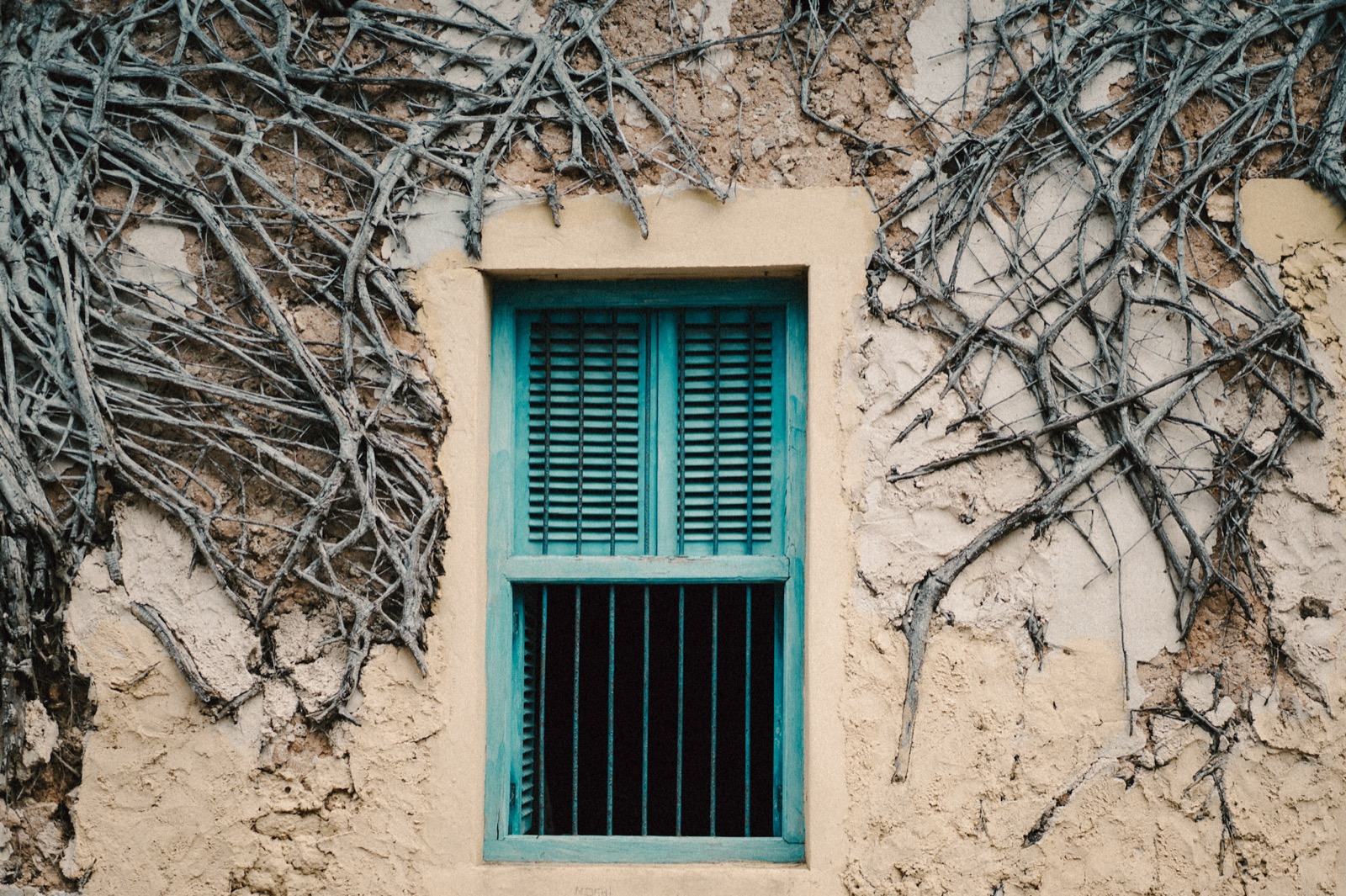
The seven bungalows were completed in the late 1990s using coral rag stone cut from the island and makuti palm thatch brought from the mainland. The construction followed a design brief requiring zero dependency on mainland infrastructure: no grid power, no municipal water supply, no sewage connection. That brief was met, and the engineering systems have operated continuously since.
Each bungalow is a separate structure — no shared walls, no corridor connecting them to a main building. The layout is simple: a sleeping area with views toward the reef, a veranda facing the water, and an indoor-outdoor bathroom that opens on one side to the ocean air. The makuti thatch moderates temperature without air conditioning. At night, with the doors open to the channel, the bungalows are genuinely cool.
The systems that run them: rainwater collected from the roof provides the fresh water supply — sufficient for showers, adequate for the amount of guests the island supports. Solar panels on the roof provide electricity for lighting, phone and camera charging, and basic electrical needs. Composting systems handle waste. There are no roads on the island and no power lines. This is not a design gesture. It is the physical reality of a genuinely off-grid property, confirmed independently by Washington Post and by The Long Run’s certification process.
What this means in practice: bring a power bank if you want to keep multiple devices charged. Expect the electricity to be adequate rather than abundant. The water pressure is workable. The accommodation is repeatedly described by guests as “rustic but really special” — a phrase that appears in reviews from multiple independent sources, which suggests it is accurate. It is not a standard hotel room. It is considerably more comfortable than the word “eco-lodge” sometimes implies.
Pricing and what is included
The all-inclusive overnight rate runs approximately USD 280–400 per person per night (including mandatory government levies), depending on season and occupancy. The range reflects seasonal variation and single-supplement pricing for solo occupancy of a bungalow.
All-inclusive at Chumbe means precisely that. The rate covers:
- Return Stone Town boat transfer (30–40 minutes each way)
- Accommodation in one of the 7 bungalows
- Three meals per day — predominantly fresh fish, local vegetables, and fruit grown or sourced on the island where possible
- All guided snorkel sessions on the reef sanctuary (1 guide per 4 guests)
- Guided coral rag forest walk
- Lighthouse visit
- Marine park entry and conservation levy
There is no bar menu to run up a tab against. There is no room service charge, no Wi-Fi surcharge, no optional extra fee. Nothing is sold on the island. Bring everything you need — sun protection, medication, specific food preferences — and the rate is the rate.
Children under 12 pay half the day-trip rate. Discuss family overnight pricing directly with CHICOP when booking; rates are confirmed on enquiry.
Check-in, check-out, and the daily rhythm
Check-in is at 09:30. The morning boat from Stone Town arrives at Chumbe carrying both day-trip guests and overnight guests together. From arrival until approximately mid-afternoon, the island holds both groups: day visitors doing their guided snorkel session, lunch, and forest walk, while overnight guests settle in.
The day-trip boat leaves in the mid-afternoon. After it goes, the island holds only overnight guests and the small CHICOP staff team. This transition — from an island with a structured group schedule to one that is essentially yours — is what overnight guests consistently identify as the experience they came for.
From mid-afternoon until the following morning’s check-out at 08:30, the rhythm is yours to set. A second snorkel session at dusk, when the evening light hits the reef differently and certain species are more active. Dinner at the communal dining area. The forest at night, when the coconut crabs emerge and the fruit bats are active around the lighthouse. The lighthouse itself, built in 1904, still operational, and accessible for guests with the guide.
Dawn is the best argument for an overnight stay. The reef at 05:30–06:00, before the day boat arrives, in calm water with the light just beginning to catch the coral. I have spent one night on Chumbe and the early morning snorkel was the clearest distinction between the overnight experience and the day trip: you are in the water with no other guests, on a protected reef, with the fish in their normal dawn behaviour rather than the mildly disrupted behaviour of a reef that has had people in it all morning.
Turtle nesting season
Green sea turtles (Chelonia mydas) nest on Chumbe’s beaches between November and March, with peak activity in December and January. This is the primary activity available exclusively to overnight guests.
The nesting process: female turtles come ashore at night to excavate a nest in the sand, lay a clutch of eggs, and return to the sea. The process takes 45 minutes to an hour from emergence to departure. CHICOP staff monitor the beach on active nights and bring overnight guests to observe from a respectful distance — no torches until the turtle has begun laying, no flash photography, no noise, a fixed distance maintained throughout.
Adult female green turtles reach 100–150 kg and move slowly on land. The experience of watching a large marine animal doing something unhurried and ancient at close range, in near-darkness, is not comparable to anything that happens in daylight or with more guests present.
Day-trip guests cannot see this. They leave before dark. For anyone staying December to January, the probability of seeing at least one nesting event during a multi-night stay is meaningful — though CHICOP cannot guarantee it, as nesting is not scheduled.
Humpback whales pass by Chumbe Island between July and October, during the south-east trade wind season. CHICOP occasionally spots them from the island. This is a secondary benefit of the July–October window rather than a guaranteed programme activity.
When to book and what season to choose
The island is closed from April to mid-June during the long rains. In September and October, occasional showers occur but operations continue. The two main booking windows, and what they offer:
July to October: Dry season. Best snorkelling visibility — up to 15–20 metres in the channel. No rain interruptions. Calm water on the western reef. High season for bookings — July and August especially sell out months in advance. Book as early as possible.
December to January: Turtle nesting peak. Good snorkelling conditions after the short rains (Mvuli) clear in late November. Less advance-booking competition than July–October, but December is a popular month for families and honeymooners. January is the single best month to combine nesting activity with good reef conditions.
To book: directly through CHICOP at chumbeisland.com. Third-party agents list Chumbe but do not have live availability management. Confirm directly with the operator.
The reef: what you will actually see
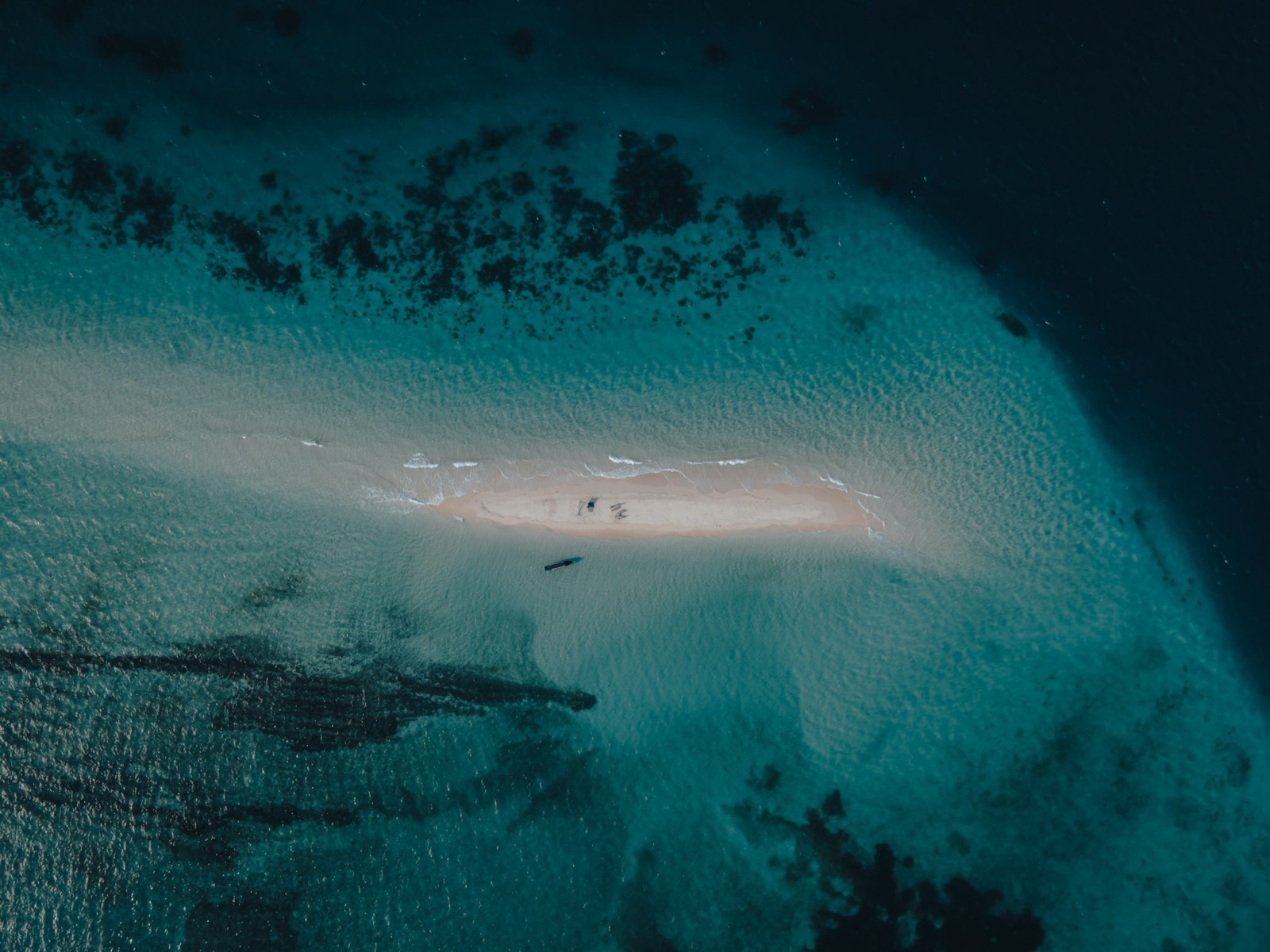
The reef at Chumbe runs along the island’s western edge — a shallow snorkelling reef that sits between roughly 2 and 8 metres at its most accessible sections. This is not a dive reef. It is a snorkel reef, designed by geography for a mask and fins rather than a tank, and the protection regime has been matched to that reality.
Zanzibar reefs at their best contain branching Acropora corals, brain corals, sea fans, and soft corals — the full structure of a functioning Indo-Pacific reef ecosystem. Chumbe’s reef holds all of these, with the structural integrity you get from 30 years of no fishing, no anchoring, and a strict guide-to-guest ratio of 1:4 that keeps fin contact with coral minimal. CHICOP reports that the reef hosts over 200 species of hard coral, though this figure comes from CHICOP’s own documentation rather than from independently cross-verified scientific sources. What is independently confirmed: Zanzibar reefs are home to hundreds of coral and reef fish species, and protected reefs like Chumbe retain the structural complexity that unprotected reefs lose over time.
The 2024 global bleaching event — the fourth major global bleaching event on record — affected Chumbe’s reef at both shallower and deeper sites, producing measurable bleaching and some coral mortality. CHICOP documented this in a published case study, which is itself a marker of the monitoring commitment that most comparable sites do not make. The context for that data matters: long-term monitoring of Zanzibar reefs shows signs of recovery at remote, well-protected reefs compared with reefs under direct human fishing pressure. Chumbe’s protection record means it enters each bleaching event from a stronger baseline.
I went in at first light, before the morning programme, when the water was glassy and the fish were doing what fish do when nobody is watching. The parrotfish were grazing the coral face in slow passes. A hawksbill turtle came through at about 4 metres, unhurried, and turned south along the reef wall without acknowledging me at all. That indifference — the fish and turtles operating on their own schedule in their own space — is the direct product of 30 years without a spear or a net. You can feel the difference from reefs that are nominally protected but not enforced.
Getting to Chumbe: the boat logistics
Chumbe Island has no scheduled public ferry and no water taxi connection. The only way to reach it is on the CHICOP boat, which runs specifically for booked guests and is included in both the overnight and day-trip packages.
Everyone checks in at the same point: Jungle Paradise Resort & Spa (the former Mbweni Ruins Hotel), a short drive south of Stone Town. Check-in is at 09:30, the boat departs at 10:00, and the crossing to Chumbe’s eastern landing takes 30–40 minutes. CHICOP will confirm arrangements for getting from your hotel to the check-in point when you book.
The crossing goes south from Stone Town across the channel. In the dry season between July and October, the channel is typically calm; outside that window, and particularly in March–April before the closure, the crossing can be choppy. Nothing technical or dangerous on a normal day, but if you are prone to motion sickness, take precautions before departure rather than after. No seasickness medication is available on the island.
There is no last-minute access. The CHICOP boat does not run on demand, does not collect guests from arbitrary points along the coast, and does not operate during the April–June closure. Your booking confirmation will specify exactly where to be and when.
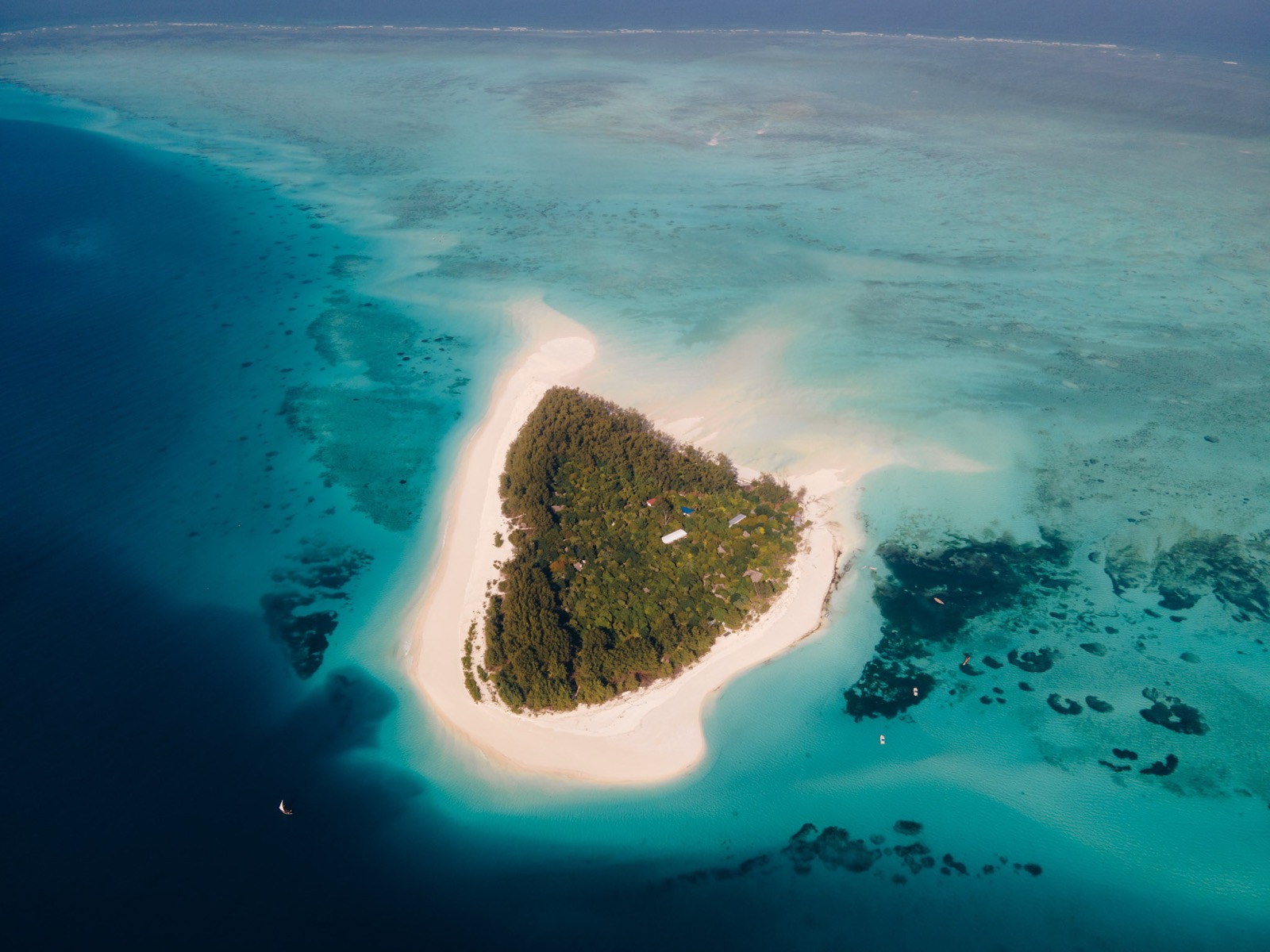
What the island looks like from the water, on approach, is something the photographs do not prepare you for: a low strip of palms and coral rag above the tide line, a white lighthouse column visible above the canopy, and then — as you get within a few hundred metres — the reef itself visible through the hull shadow, pale coral heads and patches of sand at 3–4 metres beneath the boat. The first thing I noticed was not the island but the water colour changing: the brown-green of the Stone Town channel gives way to a clear, pale blue-green over the reef that you don’t see anywhere on the mainland coast.
Why no day visitors after mid-afternoon
CHICOP’s operating model limits the island to day visitors plus a maximum of 14 overnight guests. On most nights the actual overnight count is fewer — 6 to 10 is typical. This is not a commercial scarcity calculation. It is a direct conservation management decision.
The reef’s no-take-zone status under Tanzanian marine protected area regulations prohibits fishing, anchoring, and extraction anywhere within the 33-hectare sanctuary. Limiting guest numbers extends that logic above the waterline: fewer people mean less disturbance to nesting turtles, less foot traffic in the coral rag forest, and a guide-to-guest ratio (1:4 in the water) that makes it possible to keep fins and hands away from coral. The Long Run’s certification of Chumbe describes this as genuine zero-impact design — a term that in most eco-tourism contexts is marketing language, but at Chumbe describes an engineering and operational reality.
Day visitors arrive on the same morning boat as overnight guests and follow a structured schedule: guided snorkel, lunch, guided forest walk, departure. The schedule is not arbitrary. It is designed so that the day visitors complete their activities and leave before the reef and forest enter their quieter afternoon period.
The day-trip boat leaves in the mid-afternoon. I was standing on the jetty when it went — watching the boat clear the reef line and turn north toward Stone Town — and the change was immediate. The guided-tour energy of the morning dissolved. The CHICOP staff shifted register. The island became something smaller and quieter, and the overnight guests stopped being visitors and started being, briefly, residents.
Conservation history: 30 years of reef protection
Chumbe Island Coral Park holds two distinctions that are genuinely rare in conservation history: it was the first marine protected area to be formally gazetted in Tanzania, and it was the first privately managed marine protected area in the world. These are not marketing claims. The private-management model — a non-governmental organisation holding the management agreement for a state marine reserve — was without precedent when CHICOP established it.
The reef sanctuary itself was gazetted by the Zanzibar government in 1994. The formal framework for the island’s land area followed in 1995, when a management agreement was signed between CHICOP and MANREC (Tanzania’s Ministry of Natural Resources and Environment) covering the lease and management of the island’s terrestrial area. The reef sanctuary covers 33 hectares. The operating principle from the beginning was conservation-through-tourism: no government subsidy, no external donor funding, no grants. The overnight rate and the day-trip fee are the entire budget. What the guests pay is what pays the rangers, the boat fuel, the scientific monitoring programme, and the maintenance of the bungalows and infrastructure.
Expert Africa, in its independent review of the property, describes CHICOP’s model as a “trail-blazing, award-winning example” of ecologically sensitive lodge development — language they use rarely and that in this case reflects a genuine track record rather than hospitality marketing.
The 2024 global bleaching event tested what 30 years of reef protection actually delivers. Bleaching and some coral mortality were recorded at both shallow and deep sites on Chumbe’s reef during the fourth major global bleaching event. CHICOP published the data in a peer-reviewed case study — a level of monitoring transparency that most privately managed dive and snorkel sites do not maintain. The scientific record from Zanzibar reefs more broadly shows that remote, protected reefs show signs of recovery over time, and that the differential between protected and unprotected reefs widens as fishing pressure increases on unmanaged sites. Chumbe’s 30-year no-take record means the reef enters each stressor — bleaching event, storm surge, temperature anomaly — from a stronger structural baseline than comparable reefs that have remained under fishing pressure since the 1990s.
Staying overnight at Chumbe carries a specific feeling that you do not get at most lodges, however high the conservation credentials: the knowledge that the particular ranger who walked you through the forest that afternoon is employed because you paid to be there. No grant committee, no government allocation, no corporate sponsor. The reef patrol that keeps nets off the sanctuary runs on the same budget as your dinner. It is a closed loop, and understanding that changes how you experience the place.
Chumbe overnight vs. Mnemba overnight
The two ultra-exclusive island overnight options accessible from Zanzibar:
Chumbe: 7 bungalows, USD 280–400 per person all-inclusive (incl. mandatory levies), conservation-focused, snorkelling reef (shallow, 2–8 metres), South of Stone Town (40-minute boat). Not-for-profit. Closed April–June.
Mnemba (andBeyond): 12 bandas, maximum 24 guests, from USD 2,150 per person per night plus USD 100 conservation fee, luxury resort, diving focus (deeper water, stronger currents), Northeast of Zanzibar off Matemwe. Rates include transfers and meals but the positioning is premium hospitality rather than conservation tourism.
The comparison is useful for what it clarifies: Chumbe is the right choice if the reef conservation and the seclusion are the product. Mnemba is the right choice if you want luxury hospitality with a marine setting. The reef quality at Chumbe is widely considered superior for snorkelling because of the stricter and longer protection history. Mnemba’s dive conditions are better for experienced divers.
The Chumbe Island main guide covers the full picture: reef ecology, day-trip logistics, fish and coral species, and the comparison between day trip and overnight in brief. This guide is the detail layer for overnight guests. For the broader context of Zanzibar responsible travel and why Chumbe is the clearest case study for conservation-funded tourism working, see the responsible travel guide. Chumbe also features in the Zanzibar honeymoon guide as the recommendation for travellers who want seclusion over amenities.
Frequently asked questions
How much does it cost to stay overnight at Chumbe Island?
The all-inclusive overnight rate runs approximately USD 280–400 per person per night (including mandatory government levies), varying by season and occupancy. This covers the Stone Town boat transfer in both directions, all meals (three per day, predominantly fresh fish and local vegetables), guided snorkel sessions, the forest walk, and all guided island activities. There is nothing to pay on arrival beyond what is booked in advance. A single-supplement applies if you book solo occupancy of a bungalow.
What is included in the Chumbe Island overnight package?
Everything: return Stone Town boat transfer (30–40 minutes each way), accommodation in one of 7 eco-bungalows, three meals per day, guided snorkel sessions on the 33-hectare reef sanctuary (1 guide per 4 guests), guided coral rag forest walk, lighthouse visit, and any structured island activity. The marine park entry fee and conservation levy are included. There is no à la carte menu, no bar tab, and no optional extras — the rate is genuinely all-inclusive.
When should I stay overnight at Chumbe rather than doing a day trip?
Stay overnight if you want to snorkel at dawn before the day-trip boat arrives, observe turtle nesting (November to March, overnight guests only), or simply experience the island without other guests present. The day trip is excellent but structured — you follow a fixed schedule and leave in the afternoon. The overnight stay gives you the island at its quietest and the reef at its most undisturbed.
How many bungalows are there and how do I book?
There are 7 eco-bungalows on Chumbe Island, making maximum occupancy 14 guests at double occupancy — though the island frequently hosts fewer. Book directly through CHICOP's website (chumbeisland.com). Peak months (July–October and December–January) sell out weeks to months in advance. There is no third-party booking agent with live availability — the operator manages bookings directly.
What is the Chumbe Island eco-lodge actually like?
The bungalows are built from coral rag stone with makuti palm thatch roofs — solid construction, not glamping tents. Each has an indoor-outdoor bathroom open to the sea, a sleeping area with reef views, and a veranda. The systems are genuinely off-grid: rainwater harvesting for fresh water, solar panels for electricity, composting waste systems. The electricity is sufficient for lighting and charging. Reviewers consistently describe them as rustic but genuinely special — not a standard hotel room, but considerably more comfortable than the word 'eco-lodge' sometimes implies.
Is Chumbe Island open year-round?
No. The island closes during the long rains, approximately April to mid-June, when sea conditions are unsuitable for the boat crossing and operations are suspended. Occasional showers occur in September and October but the island remains open. The best windows for overnight stays are July to October (dry season, best snorkelling visibility of 15–20 metres) and December to January (turtle nesting peak, good snorkelling conditions after the short rains clear).
Can children stay at Chumbe Island eco-lodge?
Yes. Children under 12 pay half price for the day trip; children under 2 are free. For overnight stays, families with children are welcome — the island environment is naturally suitable for older children curious about marine life, coral rag forest ecology, and the lighthouse. The main practical consideration is the 30–40 minute boat crossing, which can be choppy outside the calm season. Discuss specific requirements directly with CHICOP when booking.
What is the conservation history of Chumbe Island and why does it matter?
Chumbe Island Coral Park was the first privately managed marine protected area in the world, with formal protection established in the mid-1990s under a management agreement between CHICOP and Tanzania's Ministry of Natural Resources. The entire operation runs on ecotourism revenue alone — no government subsidy, no donor funding. The result is measurable: the reef at Chumbe shows better long-term recovery outcomes than unprotected Zanzibar reefs that remain under fishing pressure, making the 30-year no-take record one of the clearest success stories in African marine conservation.