
Facts & prices checked: 2026-06-24
Two Indian Ocean islands. Both famous for beaches. Both marketed as paradise. They are not the same destination, and the difference matters more than most comparison articles admit. I live in Zanzibar — at Michamvi Pingwe, where I run a boutique hotel, on the east coast — and I have a stake in being honest about this: Seychelles does some things better. Zanzibar does most things better, for most people.
Here is how to make the actual decision.
The real question: what kind of trip do you want?
Before comparing beaches and prices, ask yourself one question: do you want a destination or just a beach?
Seychelles is, in its purest form, a beach destination. The infrastructure is built around delivering beautiful beaches with maximum comfort and minimum disturbance. That is not a criticism — it is genuinely world-class at exactly that.
Zanzibar is a destination with a beach. Stone Town is a UNESCO World Heritage city. Swahili culture goes back 2,000 years. Tanzania’s safari parks — Serengeti, Ngorongoro, Tarangire — sit 1 hour away by air. The island grows spices, has endemic wildlife found nowhere else on Earth, and has a food culture that does not exist anywhere else. You add a beach to all of that, and it becomes something different from what the Seychelles offers.
If the only thing you want from two weeks in the Indian Ocean is to sit on the most beautiful beach possible without thinking about anything else — and you have the budget — Seychelles wins that specific contest. If you want to come home with more than a tan and some photographs, Zanzibar is the right call.
Budget: the most honest comparison
The single biggest practical difference between these two destinations is money.
Zanzibar covers an unusually wide budget range. Budget guesthouses on the east coast start at USD 30–50 per night. Mid-range boutique hotels — the kind with a proper pool, good food, and a beach — run USD 80–220 per night. Luxury resorts with full facilities run USD 200–400+ per night. Entry to Tanzania costs USD 50 for a single-entry visa (or USD 100 for US passport holders who require multiple-entry). The mandatory Zanzibar inbound insurance adds USD 44 per adult. A whale shark snorkelling trip at Mafia Island costs USD 60–100.
The Seychelles operates at a different altitude. It is not that budget travel is impossible — it is that the floor is significantly higher, the value at every tier is lower, and the mid-range in Seychelles is priced roughly where Zanzibar’s luxury tier sits. A couple doing 10 nights will typically spend USD 3,000–8,000 more in Seychelles than they would in Zanzibar for comparable comfort.
That gap matters for most people. It is the clearest reason that Zanzibar hosts far more first-time Indian Ocean travellers: you can actually afford to go. A family with two children, two weeks, and a realistic budget does not have the same options in Seychelles as it does in Zanzibar.
Beaches: a genuinely honest comparison
I am going to give this to Seychelles — marginally, honestly.
The Seychelles beaches I have seen photographs of (and heard described by guests who have done both) have something Zanzibar does not: granite boulders framing perfect white sand with clear water that stays swimmable at any state of tide. Anse Lazio on Praslin and Anse Source d’Argent on La Digue are aesthetically exceptional in a way that is very hard to match anywhere.
Zanzibar’s north coast — Nungwi and Kendwa — is legitimately beautiful and underrated by people who have not been. Protected water, white sand, sunsets directly over the Indian Ocean. Not in a different league from Seychelles, just slightly different.
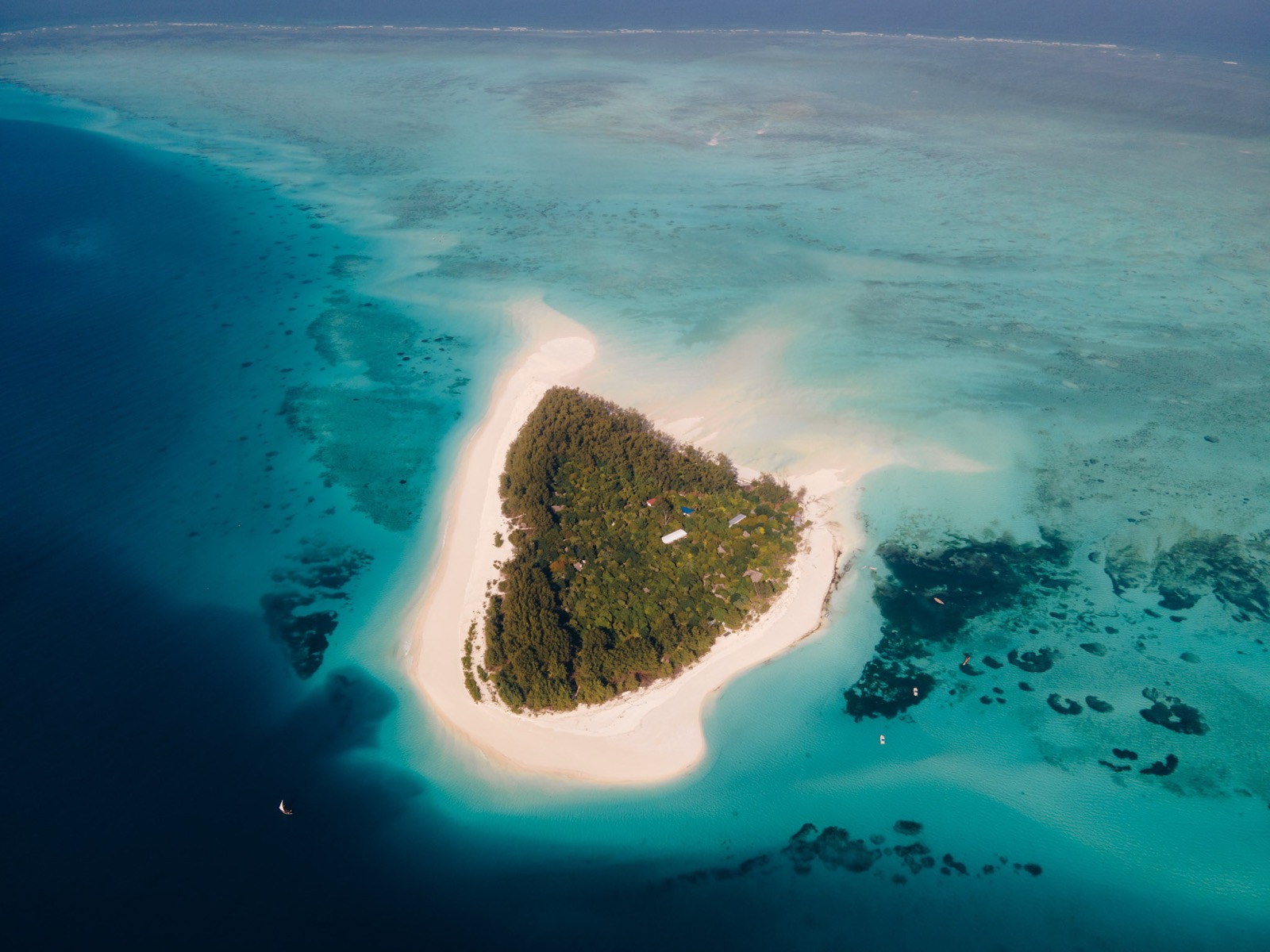
Where Zanzibar is genuinely unique: the Mchanga sandbank at Michamvi Pingwe. At ebb tide, a sandbank rises from the shallow water a short wade or swim from my hotel. You cross warm, turquoise water to an exposed sandbar surrounded by coral. I have not seen anything in any Seychelles travel photography that replicates the particular visual of that tidal sandbank — it is the most distinctive single beach experience on Zanzibar, and it is only accessible from the east coast.
The east coast tidal dynamic — where the sea retreats significantly at low tide, exposing reef flats — is sometimes described as a problem. Guests who plan around it find it extraordinary. Guests who expect a pool-beach experience without tide planning find it irritating. Know what you are getting before you book an east coast property.
Safari access: the factor that decides most
This is the comparison that has no counterargument.
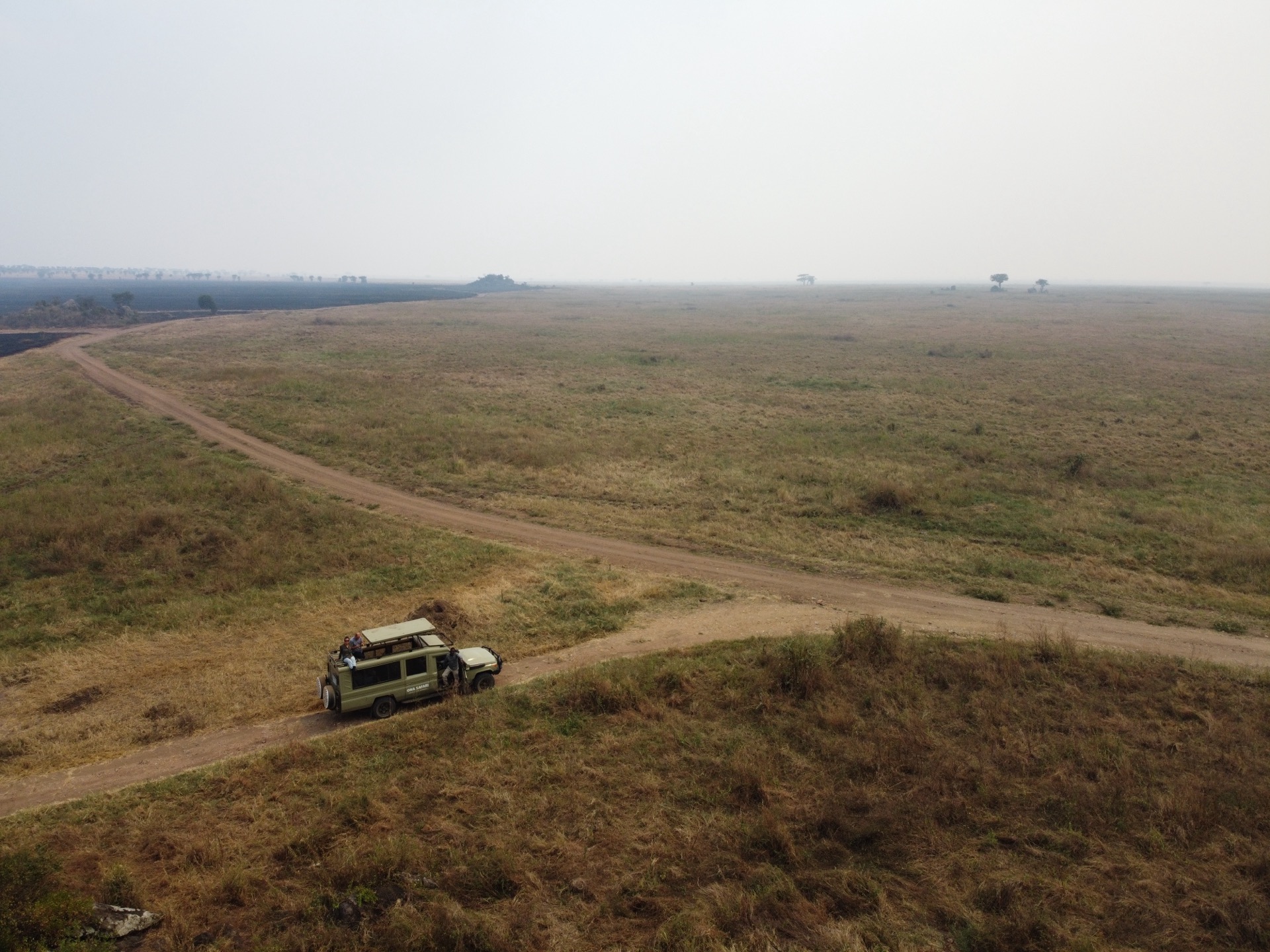
Zanzibar is approximately 1 hour by air from Arusha, the gateway to Tanzania’s northern safari circuit: Serengeti, Ngorongoro Crater, Tarangire, Lake Manyara. The classic combination — 7 to 10 days safari followed by 5 to 7 days Zanzibar — is one of the best itineraries in international travel. You land in Kilimanjaro or Arusha, do the safari, fly to Zanzibar for the beach finish, fly home direct. It is seamless, it is bookable without complications, and it is the reason most people who do Tanzania choose to add Zanzibar.
Getting from Seychelles to a Tanzania safari and back involves routing through Nairobi or Dar es Salaam, adding flights, adding days, adding significant cost. Almost no one does it. The destinations feel geographically related on a map but are logistically disconnected in practice.
If a Tanzania safari is any part of your trip — now, or in future plans — Zanzibar is the only sensible beach pairing. This single factor decides the choice for a large proportion of people who would otherwise be genuinely undecided.
Getting there: routing, entry costs, and what you need before you fly
The routing logic is clearest from Europe. London Heathrow to Zanzibar takes approximately 12 to 17 hours with at least one connection — no direct London–Zanzibar service currently operates. The most common connecting hubs are Dubai (direct from Zanzibar takes around 5 hours 25 minutes), Doha, Nairobi, and Addis Ababa. From German-speaking Europe, Condor operates direct Frankfurt–Zanzibar flights using Airbus A330neo aircraft. I typically fly through Dubai or Addis Ababa depending on the season and fare: both add one stop to an otherwise manageable journey, and the connection times are predictable.
Once in Zanzibar, the internal leg to a Tanzania safari is one of the most efficient pieces of travel logistics in East Africa. Direct flights from Zanzibar to Kilimanjaro International Airport (JRO) take 1 hour 5 minutes across approximately 389 km. Operators include Precision Air, Air Tanzania, and Coastal Aviation. This is what makes the Tanzania safari–Zanzibar combination genuinely practical: you are not routing through Nairobi or adding a full day to your itinerary — you are boarding a one-hour regional flight the same afternoon you leave the beach.
Entry costs for Zanzibar are straightforward to calculate before you book. Most nationalities pay USD 50 for a Tanzania tourist visa; US citizens pay USD 100 for a multiple-entry visa. Since October 2024, all foreign visitors must also purchase mandatory inbound travel insurance from Zanzibar Insurance Corporation (ZIC) — USD 44 per adult, approximately USD 22 for children aged 3–17, free for children under 3. The policy includes medical evacuation coverage and is valid for up to 92 days from arrival. For most European visitors, total entry costs are approximately USD 94 per person (visa plus insurance). The ZIC insurance is purchased before arrival and is entirely separate from any existing travel insurance you hold.
I went through the ZIC insurance process before my last re-entry: online, under 10 minutes, produces a QR code for immigration. It is one of the more sensibly designed mandatory insurance schemes I have encountered at any island destination.
Culture and history: Zanzibar’s biggest advantage
Stone Town is the part of this comparison that Seychelles simply cannot match.
The old city of Stone Town — Mji Mkongwe — was inscribed on the UNESCO World Heritage List in 2000 as an outstanding example of a Swahili coastal trading town built in coral ragstone. The buildings here carry 2,000 years of layered history: Swahili traders, Omani sultans who moved their court here from Muscat in the 1830s, Indian merchant families, British colonial administrators. Sultan Said moved the entire Omani court to Zanzibar in 1832, and the Old Fort standing at Forodhani Gardens was built by the Omanis between 1698 and 1701 on the ruins of a Portuguese chapel.
Freddie Mercury was born here in 1946, in a house in the narrow lanes of Stone Town. The Zanzibar slave trade — East Africa’s largest — operated from this port until 1873; the site of the last slave market now holds an Anglican cathedral. The Forodhani Gardens Night Market runs every evening: Zanzibar pizza and Urojo (Zanzibar Mix soup), street food that exists nowhere else, in a seafront square that has been the town’s social centre for centuries.
Taarab music — a hybrid of Swahili poetry, Egyptian orchestral tradition, and Indian melody — is still performed here live. It is a living musical tradition, not a curated performance for tourists.
The Seychelles has beaches and resorts and a Creole culture that is genuinely pleasant. It does not have anything resembling this density of history. If cultural depth matters to your trip, there is no comparison.
Diving and snorkelling
Both destinations offer excellent underwater experiences. The profiles are different.
Zanzibar’s headline diving site is Mnemba Atoll, off the northeast coast at Matemwe — a protected marine reserve with strong coral coverage and exceptional fish diversity. Day trips run from Matemwe by boat, approximately 15 to 20 minutes out. An active coral restoration project (CORDAP-funded, October 2024 through September 2027) targets a 10% increase in coral cover across a 4-hectare area. Pemba Island — accessible from Zanzibar by flight — is considered by serious divers to be among the best wall diving in East Africa, with dramatic drop-offs on the western coast that are accessible to experienced divers.
For wildlife encounters, Zanzibar’s Kizimkazi coastline is home to Indo-Pacific bottlenose dolphins and spinner dolphins in Menai Bay. Whale shark snorkelling is available seasonally.
Seychelles diving is excellent and less crowded — fewer boats, better visibility at many sites, some truly remote atolls for those willing to pay for liveaboard access to outer islands. If diving is the primary purpose of the trip and budget is not the constraint, Seychelles outer-island diving edges ahead. For most visitors doing snorkelling day trips or recreational dives, both destinations deliver comparable experiences.
Marine health: what the 2024 bleaching event means for your underwater experience
Both destinations were affected by the 2024 Indian Ocean bleaching event, and travellers planning a snorkelling or diving-focused trip should understand the current state of the reefs rather than rely on pre-2024 travel photography.
The Western Indian Ocean recorded severe heat-stress accumulation in 2024, resulting in bleaching and mortality across reef systems in Tanzania, Kenya, and further into the Seychelles. This is not unique to one destination — the bleaching was regional. The relevant question for your trip is not whether bleaching occurred, but what the recovery trajectory looks like and whether active intervention is underway.
At Zanzibar’s Mnemba Atoll, the answer is documented and specific. CORDAP (Coral Research and Development Accelerator Platform) is running an active restoration programme from October 2024 through September 2027, targeting a 10% increase in coral cover across a 4-hectare restoration area. This is a formally funded, multi-year programme with measurable targets — not a marketing claim. The restoration work operates in parallel with the existing dive and snorkel operation.
What this means in practice:
- Fish populations and turtle encounters remain strong. Mnemba is a confirmed nesting site for green turtles, and sightings on dive and snorkel trips are consistently reported.
- Coral density is in active recovery — solid rather than untouched, with measurable improvement documented since the 2016 bleaching event.
- The northern drift site and deeper sites still produce hammerhead and whitetip reef shark sightings under the right seasonal and current conditions.
I have dived Mnemba at various points since 2020. The 2024 bleaching was real and visible at shallower reef areas. The fish life — Napoleonfish to 2 metres, dense schooling species, consistent turtle encounters — remained intact. Anyone going primarily for coral aesthetics should calibrate expectations; anyone going for the full marine experience will not be disappointed.
Food
Zanzibar wins here, and it is not particularly close.
The island’s food culture is a direct product of its history: Swahili cooking traditions layered with Omani spice trade influence, Indian merchant kitchens, and the seafood of an island surrounded by productive fishing grounds. Urojo — Zanzibar Mix soup, a tamarind and coconut broth with potato, cassava, eggs, chickpea fritters, and chilli — exists nowhere else in the world. Zanzibar pizza, a street-food invention (minced meat, egg, cheese, and vegetables wrapped and fried in a dough envelope), is the night-market staple at Forodhani Gardens.
The spice context is real too: Zanzibar was the world’s leading clove exporter for much of the 19th and 20th centuries. Fresh spices at Darajani Market in Stone Town — cinnamon, cardamom, turmeric, vanilla — are better quality and more freshly stocked than the tourist-oriented spice farms because the market serves hotels and households daily.
Seychelles has a Creole cuisine that is pleasant — fresh fish, coconut, chilli — but does not carry the same cultural depth or distinctiveness. You will eat well in Seychelles. In Zanzibar, you will eat things you cannot eat anywhere else.
Decision table: 10 traveller profiles
| Traveller type | Recommended destination |
|---|---|
| First-time Indian Ocean beach holiday, mid budget | Zanzibar |
| Honeymooners, maximum beach luxury, budget not a concern | Seychelles |
| Combining with Tanzania safari | Zanzibar (only practical option) |
| Families with children, varied activities | Zanzibar |
| Serious divers, remote outer islands, liveaboard | Seychelles |
| Cultural travellers, history, architecture | Zanzibar (strongly) |
| Photographers wanting dramatic single-image beaches | Seychelles (Anse Lazio) |
| Wildlife seekers (colobus, dolphins, whale sharks) | Zanzibar |
| People who want guaranteed all-day swimming | Both — north Zanzibar or Seychelles equally |
| Solo travellers, social scene, budget flexibility | Zanzibar |
Can you do both?
Logistically: yes. In practice: most people should choose.
The Seychelles’ closest hub is Mahé (Seychelles International Airport). Connections from Zanzibar run via Nairobi or Dar es Salaam. Adding Seychelles to a Tanzania safari–Zanzibar combination adds significant routing complexity and cost, and a two-week trip cannot do all three things at depth.
If you have done both already and are building a longer Indian Ocean itinerary — three weeks, generous budget — doing Zanzibar for the first week, Tanzania safari in the middle, and Seychelles for the final beach stint is a logical arc. For most people planning one to two weeks, however, picking one destination and going deep is a better trip than doing both at half-depth.
My honest read: most people who ask “Zanzibar vs Seychelles?” and are genuinely undecided should go to Zanzibar first. The cost savings can fund a Tanzania safari as part of the same trip. They can do the Seychelles — which will still be beautiful and expensive — later.
If you’re still deciding between Indian Ocean destinations, see the Zanzibar vs Maldives guide for the overwater bungalow question, or the Zanzibar vs Mauritius guide for the price comparison, safari combination, cultural depth, and luxury tier differences between these two destinations. For the within-Zanzibar decision — north coast (Nungwi) vs east coast (Paje/Michamvi) — see the Zanzibar north vs east coast guide. For where specifically to base yourself once you’ve decided on Zanzibar, the Zanzibar where to stay guide covers every area with honest trade-offs. For the safari side of a Tanzania–Zanzibar combination, the Serengeti vs Masai Mara guide explains which park to prioritise if you only have time for one.
Frequently asked questions
Is Zanzibar cheaper than the Seychelles?
Yes — significantly. Zanzibar covers a wide budget range from USD 30/night guesthouses to USD 400+ luxury resorts. The Seychelles operates primarily at mid-luxury to ultra-luxury prices, typically 3–5× higher than equivalent Zanzibar accommodation. For a couple spending 10 nights, the cost difference can easily be USD 3,000–8,000+.
Are the beaches better in Zanzibar or the Seychelles?
Seychelles has a slight edge in pure beach aesthetics — granite boulders, crystal water, and fine sand make places like Anse Lazio exceptionally photogenic. Zanzibar's north coast (Nungwi, Kendwa) is beautiful and underrated. The east coast's dramatic tidal range means the sea retreats significantly at low tide — but Zanzibar's Mchanga sandbank at Michamvi Pingwe, reached by wading or a short swim from shore, is unlike anything in the Seychelles.
Can I combine Zanzibar with a Tanzania safari?
Yes — easily. Zanzibar is 1 hour by air from Arusha (the safari gateway). A classic combination: 7–10 days Tanzania safari (Serengeti, Ngorongoro, Tarangire) then 5–7 days Zanzibar. This combination is impossible to replicate from the Seychelles — the routing and cost make it impractical.
Does Zanzibar have wildlife like the Seychelles?
Different wildlife. Zanzibar has the endemic Zanzibar red colobus monkey (Jozani Forest), spinner dolphins at Kizimkazi, and whale sharks seasonally. Seychelles has unique birds (Aldabra species) and giant tortoises. For Big Five, neither works — but Zanzibar is 1 hour from Tanzania's world-class parks.
What is the biggest cultural difference?
Zanzibar wins on culture. Stone Town is a UNESCO World Heritage old town with 2,000 years of layered Swahili, Omani, Indian, and British history — birthplace of Freddie Mercury, living taarab music tradition, and the site of East Africa's former slave trade. The Seychelles has genuinely beautiful beaches but little historical or cultural depth to explore beyond them.
When is the best time to visit each destination?
Both destinations are affected by Indian Ocean weather patterns. Zanzibar: June–October is peak dry season (best for safari pairing). Seychelles: December–March and June–September are most popular. Both have shoulder seasons that offer lower prices and fewer crowds. For Zanzibar specifically, the best timing often comes down to one thing: are you combining it with a Tanzania safari, or going for the beach alone?
What are the entry requirements and costs for Zanzibar?
Most nationalities need a Tanzania tourist visa (USD 50; US citizens pay USD 100 for a multiple-entry visa) plus mandatory Zanzibar inbound travel insurance from ZIC (USD 44 per adult, approximately USD 22 per child aged 3–17; children under 3 are free). Total entry cost for most European visitors: approximately USD 94 per person. The ZIC insurance includes medical evacuation coverage and must be purchased before arrival at the official online portal. It is separate from any existing travel insurance you hold.
Has coral bleaching affected diving and snorkelling in Zanzibar?
The 2024 Indian Ocean bleaching event affected reef systems across the Western Indian Ocean, including waters around Zanzibar. At Mnemba Atoll — the primary snorkelling and diving site accessible from Matemwe — CORDAP is running an active coral restoration programme from October 2024 through September 2027, targeting a 10% increase in coral cover across a 4-hectare restoration area. Fish populations and turtle encounters remain strong. Current conditions are best described as active recovery: solid coral density and exceptional marine life.