
Facts & prices checked: 2026-06-16
The short answer
The Serengeti and the Masai Mara are not rivals so much as two doors into the same room. They share one ecosystem, one migration and one famous river. The border between Tanzania and Kenya runs straight through it, and that line decides almost everything about cost, crowds and how you get around.
Pick the Masai Mara if you have a short trip, you are coming via Nairobi, and you want the river crossings with minimal travel. Pick the Serengeti if you have more days, you want space and lower vehicle density, and you care about the calving season in the south. If you can spend seven to ten days, do both.
Size and feel
This is where the two part company. The Serengeti National Park covers roughly 14,763 km2, and the wider Serengeti ecosystem is far larger again. The Masai Mara National Reserve is about 1,510 km2, with the surrounding conservancies adding more. So the Mara is roughly a tenth of the park area, which has two consequences.
The Mara is concentrated. Game is dense, sightings come quickly, and you rarely drive long before something happens. That is brilliant for a first safari or a tight schedule. The flip side is vehicle density: at a good sighting in high season the Mara can draw a crowd of trucks, and some reserve zones cap nothing.
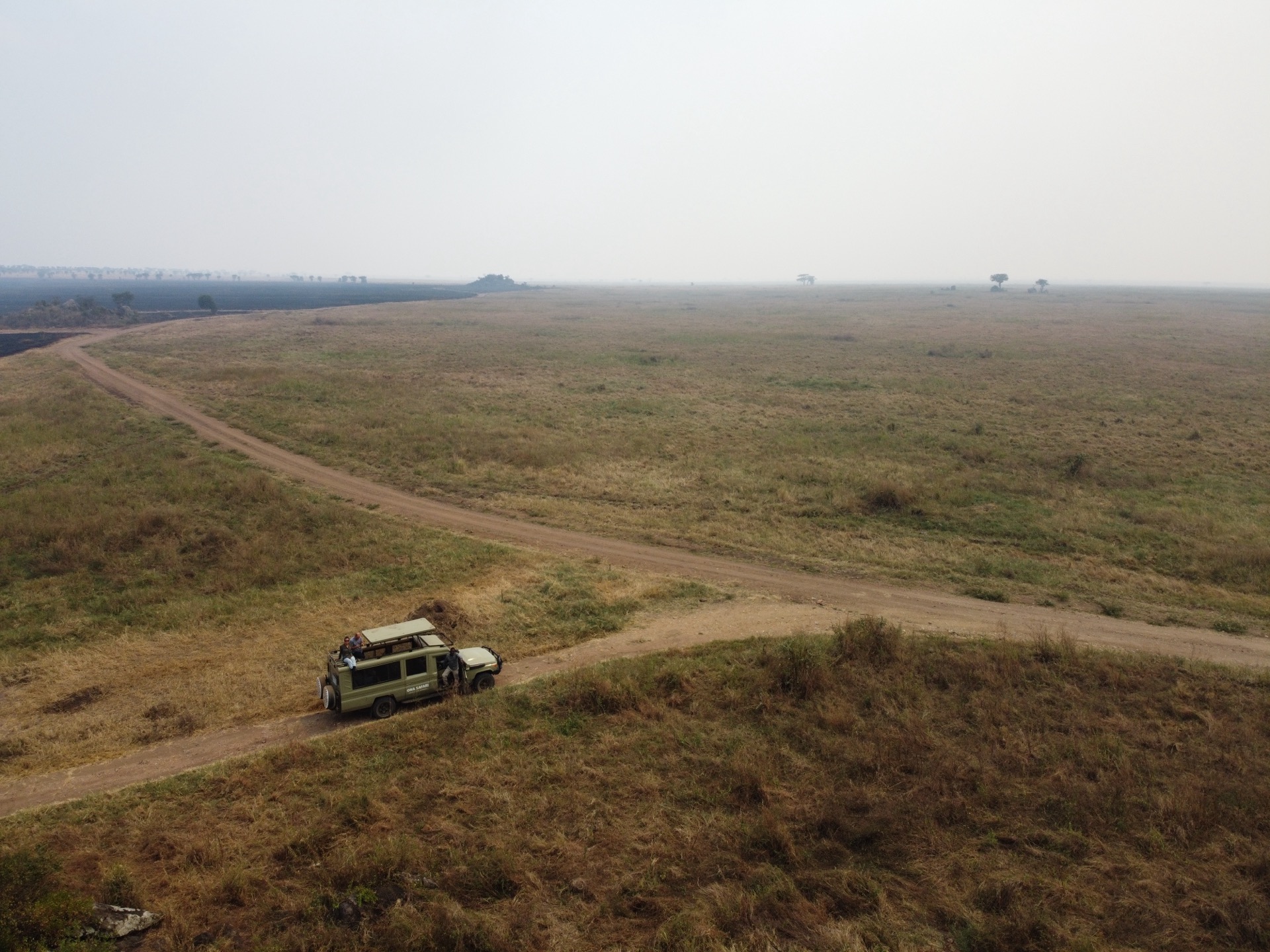
The Serengeti gives you room. You can spend a morning seeing very few other vehicles, especially in the central Seronera less so, and the north and west far more. The trade-off is distance. Driving between Serengeti regions eats hours, which is why many people fly internally.
River crossings: same river, two sides
The crossings everyone pictures, wildebeest plunging into crocodile water, happen on the Mara River. The river straddles the border, so you can watch from the Kenyan Mara or from the Tanzanian northern Serengeti around Kogatende. The window is roughly July to October, peaking August to September, though the herds cross back and forth unpredictably and no guide can promise a crossing on a given day.
The honest difference: the Kenyan side often has more guaranteed herd presence in peak weeks and easier logistics from Nairobi. The Tanzanian Kogatende side frequently has fewer vehicles at the same river. If crowds bother you more than convenience, lean Tanzanian north.
Cost and crowds
For a short three to four day trip, the Mara usually wins on cost. Nairobi to the Mara is a quick light-aircraft flight or a long but doable road transfer, and the small area means you are not paying for big internal hops.
The Serengeti rewards length. Park fees, conservation levies and internal flights stack up, so a two-night Serengeti dash rarely makes financial sense, you spend on access and barely use it. Give it four to six days and the per-day value improves sharply. Serengeti park fees are USD 82.60 per adult per day (TANAPA 2024/25); Mara National Reserve fees are actually higher since a 2024 increase — USD 100/day (January–June) to USD 200/day (July–December) — with private conservancies charging a separate USD 60–120/day instead of, not on top of, the reserve fee for guests staying there.
When to pick which
- July to October: either side, for the crossings. Toss-up, decide on budget and crowd tolerance.
- Late January to March: Serengeti, hands down, for the southern Ndutu calving season and the predators that follow it. The Mara has no equivalent.
- A first, short safari from Nairobi: Mara.
- A longer, slower trip from Arusha or Kilimanjaro: Serengeti.
What to skip: do not bolt a single Serengeti night onto a Kilimanjaro climb and call it a safari. You will spend the day driving and the money on fees for almost no game time. Either commit three-plus days or save the Serengeti for a dedicated trip.
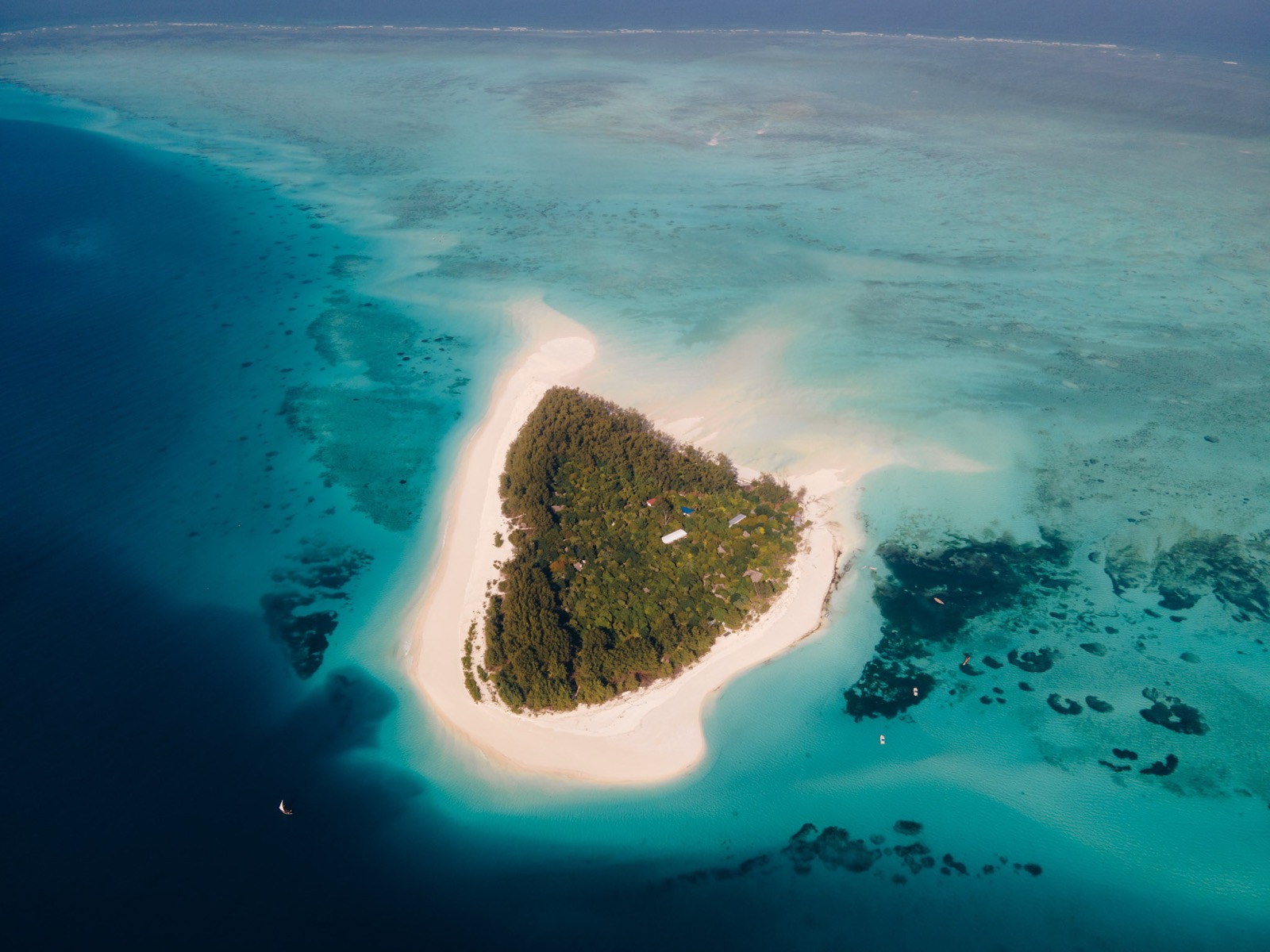
A first-hand note. I run a hotel on Zanzibar, and the guests who come back happiest are the ones who paired a proper Serengeti stretch with the islands afterwards, four or five days inland chasing cats, then a flight to the coast to do nothing at all. The ones who rushed a two-night Serengeti before flying to me always wished they had given it longer.
Doing both
It is very doable. The clean version is a few nights in the northern Serengeti, then a light-aircraft hop or a formal border crossing into the Mara, or the reverse. You will pay twice for park access and for the cross-border move, so budget for that, but you get both the open Serengeti and the dense Mara in one run. Seven to ten days including transfers is the comfortable range.
If you would rather keep it to one country and add real downtime, pair the Serengeti with the coast. See our Tanzania and Zanzibar safari-and-beach planning and the best time to visit the Serengeti for month-by-month timing.
Wildlife beyond the migration
This comparison often centres entirely on the migration and the crossings, but both areas have resident wildlife worth understanding independently of where the herds are.
Serengeti non-migration wildlife:
- The Serengeti has the largest lion population in Africa. Pride territories are established and well-documented; a good guide knows individual lions by sight and can locate them on any given morning.
- The Seronera valley’s riverine woodland is one of the best leopard habitats in East Africa. Several individuals have territories centred on specific trees that are visited repeatedly.
- Cheetahs are abundant on the open plains year-round, with the highest density on the short-grass southern plain.
- The Serengeti carries resident populations of elephant, buffalo, giraffe, zebra, impala, Thomson’s gazelle, Grant’s gazelle, warthog, baboon, and most East African plains species.
- The western corridor in particular has enormous buffalo herds and exceptional topi density.
Masai Mara non-migration wildlife:
- The Mara is excellent for lions year-round; the Marsh Pride (now several generations old) is one of the most studied and viewed lion groups in the world.
- Cheetah density is high on the open plains around the Mara Triangle. Malaika and other named cheetahs with cubs have been continuous tourist favourites.
- Black rhino are present in the Mara in greater numbers than in the Serengeti; the southwestern Mara conservancies have protected populations.
- Elephants are common, particularly in the Mara Triangle.
The key difference: If you are travelling outside the July–October crossing window and the Serengeti calving window (January–February), the Mara’s smaller size means wildlife is more concentrated and you can cover meaningful ground in 2–3 days. In the Serengeti outside those windows, you need more days to consistently find the same density of sightings.
The migration in numbers
The migration is the single biggest reason most people choose between these two parks, yet the numbers behind it are contested in ways worth knowing before you go.
- Population (official): TAWIRI’s 2023 aerial census counted 1,366,109 ± 231,741 wildebeest in the Serengeti-Mara ecosystem — a figure consistent with decades of aerial surveys that stabilised around 1.3 million after a peak of roughly 1.4 million in 1977.
- Population (contested): A 2025 Oxford University AI satellite survey produced estimates of 502,917 to 533,137 wildebeest for the same ecosystem in 2023 — less than half the official aerial count. Scientists disagree on which methodology captures the truth; both sets of figures appear in peer-reviewed sources.
- Historical baseline: wildebeest numbered approximately 250,000 animals in 1960, grew rapidly after rinderpest was controlled, and stabilised around 1.3 million as grazing capacity capped the population.
- Year-round movement: the migration is not a seasonal event that starts and stops. It follows a roughly 800 km clockwise annual loop driven by rainfall and grass quality — there is no month when the herds are absent from the ecosystem, only months when they are in a different section of it.
- The wider column: the wildebeest are accompanied by roughly 200,000 zebra and approximately 400,000 Thomson’s gazelle. When guides quote totals of 1.5–2 million, they are usually counting the full column. Neither figure is wrong; they are measuring different things.
- Ecosystem scale: the Mara-Serengeti ecosystem covers approximately 9,700 square miles across Tanzania and Kenya, which is why tracking the herds requires knowing the calendar, not just the park boundary.
The number debate matters practically. Knowing the loop means you stop treating the migration as an event at a fixed location and start treating it as a condition of the ecosystem that your travel dates either intersect or miss. From the Zanzibar end, where I spend most of my time, the guests who plan the best safaris are invariably the ones who understood the calendar before they booked the camp.
Accommodation comparison
Both areas have camps across every price tier, from public campsites to ultra-premium fly camps.
Serengeti camp styles:
- Central permanent lodges (Seronera area): the classic, year-round bases; best for lion and leopard.
- Northern crossing camps: positioned on or near the Mara River; fill first and cost most in July–September. Several have elevated river-view platforms with direct crossing sight-lines.
- Southern seasonal camps (Ndutu basin): move or open/close around the calving season. Typically more casual and bush-focused.
- Western corridor camps (Grumeti): exclusive concession areas with limited vehicle numbers; premium pricing for genuinely uncrowded game driving.
- Mobile/seasonal camps: relocate two to three times per year following the herds. The most expensive option and the most committed to finding the migration.
Masai Mara camp styles:
- National Reserve camps: inside the NR boundary, regulated by the local authorities, with rules on vehicle numbers at sightings that are not always enforced.
- Private conservancy camps: the best Mara experience for serious wildlife viewers. A dozen-odd conservancies surrounding the NR — Naboisho, Olare Motorogi, Mara North, Ol Kinyei and others — charge a conservancy fee on top of camp rates but allow night drives, bush walks, off-road driving, and have strict vehicle limits at sightings. These are the ones the best operators recommend.
- Budget and public campsites: exist within and around the NR; the no-frills option for those willing to trade comfort for cost.
Price parity: Comparable lodge tiers are broadly similar in price across both areas. The Serengeti’s distances mean internal flight costs add up more over a multi-night stay. A Mara trip can be done by road from Nairobi (4–5 hours) whereas the Serengeti is almost always flight-dependent from Arusha or Kilimanjaro.
Getting there: practical logistics
To the Serengeti: Fly into Kilimanjaro International (JRO) or Arusha Airport, then take a light aircraft to the relevant Serengeti airstrip. Flight time from Arusha to Seronera is around 45 minutes; Arusha to the northern Kogatende strips is closer to 1h15. Precision Air, Coastal Aviation, Auric Air, and Regional Air all run scheduled and charter services. Road from Arusha to the Serengeti entrance is 3–4 hours to the gate, then further to your camp.
To the Masai Mara: Fly into Nairobi’s Jomo Kenyatta International (NBO), then take a 45-minute light-aircraft flight to one of the Mara’s airstrips (Kichwa Tembo, Ol Kiombo, Olare Orok, Musiara). Safarilink, Air Kenya, and various charter operators run frequent daily connections. Alternatively, it is a 5–6 hour road transfer from Nairobi, which some operators use to add game viewing en route via the Rift Valley.
The border crossing: If combining both in one trip, the main formal border crossing point used by safari operators is at Isebania/Sirari (Tanzania–Kenya border west of the Mara). Some operators fly both legs and manage the border paperwork. It adds complexity and cost but is not logistically difficult — experienced operators do it routinely.
Hot air balloon safaris: Serengeti has the edge
A balloon safari is available in both parks, but the Serengeti has the more established infrastructure and is more consistently included in Tanzania operator packages.
- Cost: USD 599 per person for a shared one-hour flight, including the TANAPA ballooning permit fee (USD 40) and a champagne bush breakfast served on a table in the bush on landing.
- Duration: approximately one hour in the air, depending on wind and weather. Total excursion time from pre-dawn pick-up to return is typically 3–4 hours.
- Launch time: pre-dawn, usually around 06:00, to catch the first light over the plains when game is most active.
- Best location: the central Seronera area for year-round access; the northern Serengeti strips during July–October when there is a chance of drifting above the migration column and watching crossings from altitude.
- Booking lead time: 6–8 weeks ahead during July–September; peak balloon slots fill alongside camp beds.
The Masai Mara has balloon operators — primarily operating from camps near the Mara Triangle and Governor’s Camp — at comparable prices. The Mara landscape is also excellent from altitude and the balloon experience is broadly equivalent in quality. The practical difference is integration: Serengeti balloon bookings are a standard line item in most Tanzania operator packages, while Mara balloon trips are usually arranged separately through Nairobi-based operators.
I have not personally been up — my end of this ecosystem sits at sea level. But the guests who return from Serengeti balloon flights describe a consistent reaction: from a vehicle the plains feel large, but from 200–300 metres above them, with animals visible in every direction and no engine noise, the scale becomes visceral rather than intellectual. If you are budgeting for a Serengeti stay, build the balloon in from the start rather than deciding at camp — USD 599 per person is easier to absorb in a planned budget than as a last-minute addition.
Summary: which one to choose
Choose the Serengeti if:
- You have 4 or more nights to dedicate to the park
- You want calving season (January–February) — the Mara has no equivalent
- You care about uncrowded game driving and space
- Your trip starts/ends in Arusha or Kilimanjaro rather than Nairobi
- You plan to add Zanzibar as a beach end to the trip
Choose the Masai Mara if:
- You have a short window (3–4 nights) and want maximum wildlife density per drive
- You are flying into Nairobi and want a clean, straightforward connection
- The river crossings are your primary goal and you do not have 5+ nights for the Serengeti
- You want access to private conservancy walking and night drives alongside the migration
Do both if:
- You have 7–10 days for the safari portion
- You want to compare the experience on both sides of the border directly
- Budget for the cross-border logistics is not a constraint
Photography: which is better for it?
Wildlife photographers often ask which side produces better images. The honest answer: it depends more on light, guide placement, and time of year than on which country you are in. That said, there are differences.
The Serengeti advantage: More open terrain in the central and southern plains means longer, unobstructed sight-lines. The Ndutu basin during calving season is genuinely one of the world’s best wildlife photography locations — flat, open, dawn light across the grass, and subjects every 50 metres. The northern Serengeti crossing sites on the Tanzanian bank often have better positioning options with fewer competing vehicles than the Kenyan side.
The Mara advantage: The Mara’s smaller area means shorter drives to subjects, more time at sightings. The private conservancy areas allow off-road driving and positioning that is not available in the national reserve or the Serengeti — you can track a hunting cat off the road and reposition without staying on the track.
The common constraint: Neither area allows vehicles off-road within the national park or reserve boundaries — the distinction is private conservancy (both countries have them) vs national reserve/park. If off-road positioning matters for your photography, a private conservancy is the right choice regardless of country. The very best wildlife photography camps in East Africa are almost exclusively in conservancy zones with strict vehicle limits, off-road access, and dedicated photographic vehicles with lower sides and camera rests.
For the full month-by-month breakdown of where in the Serengeti to be, see our Great Migration calendar. For the full Tanzanian park context, see the Serengeti National Park guide and the best national parks in Tanzania comparison.
Frequently asked questions
Are the Serengeti and Masai Mara the same place?
They are one continuous ecosystem cut by the Tanzania-Kenya border. The southern and larger part is Tanzanias Serengeti; the northern fringe is Kenyas Masai Mara. The wildlife and the migration move freely across the line, but you cannot drive between them on safari, you fly or cross at a formal border post.
Which one is better for the river crossings?
Both share the Mara River, which is where the dramatic crossings happen. The window is roughly July to October. You can watch crossings from the Kenyan Mara or from Tanzanias northern Serengeti around Kogatende, often with fewer vehicles on the Tanzanian side.
Is the Masai Mara cheaper than the Serengeti?
For a short three to four day trip the Mara is often cheaper to reach, with quick flights from Nairobi and a smaller area to cover. The Serengeti suits longer itineraries; park fees, internal flights and distances add up, but you get far more room per day.
When is the best time for each?
For crossings, July to October on the Mara River for both. For the calving season and big-cat action go to the southern Serengeti and Ndutu in late January to March. The Mara has no real calving spectacle, so green-season Serengeti is the stronger pick then.
Can I visit both in one trip?
Yes, and many do. The cleanest route is a few nights in the northern Serengeti, then a light-aircraft hop or border crossing into the Mara, or the reverse. Budget extra for the cross-border logistics and a second set of park fees.
How many days do I need?
For the Mara alone, three full days is workable. For the Serengeti, give it four to six because the distances between regions are large. Combining both comfortably needs seven to ten days including transfers.
Can I do a hot air balloon safari in the Serengeti?
Yes. The standard Serengeti balloon safari costs USD 599 per person for a shared one-hour flight, which includes the TANAPA ballooning permit fee of USD 40 and a champagne bush breakfast on landing. Launches are pre-dawn, typically around 06:00. The Masai Mara also has balloon operators at comparable prices, but the Serengeti product is more integrated into mainstream Tanzania safari packages. Book 6–8 weeks ahead in peak season — July and August slots go first.
How many wildebeest are actually in the migration?
The figures conflict and the disagreement is genuine. TAWIRI's 2023 aerial census counted 1,366,109 ± 231,741 wildebeest in the Serengeti-Mara ecosystem. A 2025 Oxford University AI satellite survey arrived at far lower estimates of 502,917 to 533,137. Both are cited in peer-reviewed sources; scientists disagree on methodology. When guides quote 1.5–2 million, they are usually counting the full migration column including zebra and Thomson's gazelle, not wildebeest alone — a meaningful distinction.