
Facts & prices checked: 2026-06-25
Two Indian Ocean islands. Both warm. Both marketed as paradise. Both with coral reefs and white sand. And yet comparing Zanzibar to Mauritius reveals two genuinely different travel products targeting different traveler profiles. The choice is not about which is better — it is about which is right for you.
I live in Zanzibar, at Michamvi Pingwe on the east coast, where I’m the manager of a small boutique hotel. I have a real interest in being honest: Mauritius does some things better, and a certain type of traveler should go there. Here is what I actually think.
The short answer: two different Indian Ocean philosophies
Mauritius is a polished resort island. It has excellent infrastructure, world-class luxury properties, internationally recognized golf courses, and strong direct flight connections from Europe. It has had decades of investment in the international tourism product. If you want the cleanest, most frictionless Indian Ocean resort experience without surprises — and golf on the agenda — Mauritius earns that reputation.
Zanzibar is a layered destination with a beach attached. Stone Town has 2,000 years of Swahili, Omani, Arab, Indian, and British history — inscribed as a UNESCO World Heritage Site in 2000. Tanzania’s safari parks sit 1 hour away by air. The island grows spices, has whale sharks seasonally at Mafia, has East Africa’s premier kitesurfing beach at Paje, and has a food culture that does not exist anywhere else. Budget travelers and luxury travelers both find what they need. The infrastructure is rougher at the edges — but that roughness is, for many travelers, part of why Zanzibar feels more alive.
The fundamental question is not which island is prettier. It is: what kind of trip do you actually want?
Zanzibar’s strengths: five genuine advantages
Price point. Zanzibar covers a wider range than Mauritius at every tier. A single-entry Tanzania visa costs USD 50 (USD 100 for US passport holders requiring multiple-entry). The mandatory Zanzibar inbound insurance — required since October 2024, purchased from the ZIC at inbound.visitzanzibar.go.tz — adds USD 44 per adult. From there, budget guesthouses start well below Mauritius’s floor, mid-range boutique accommodation runs significantly cheaper than equivalent Mauritius properties, and even the luxury tier on Zanzibar is more affordable than comparable Mauritius resort pricing. Mauritius is geared toward a higher price point at every level, particularly at the upper end where the headline resorts dominate the market.
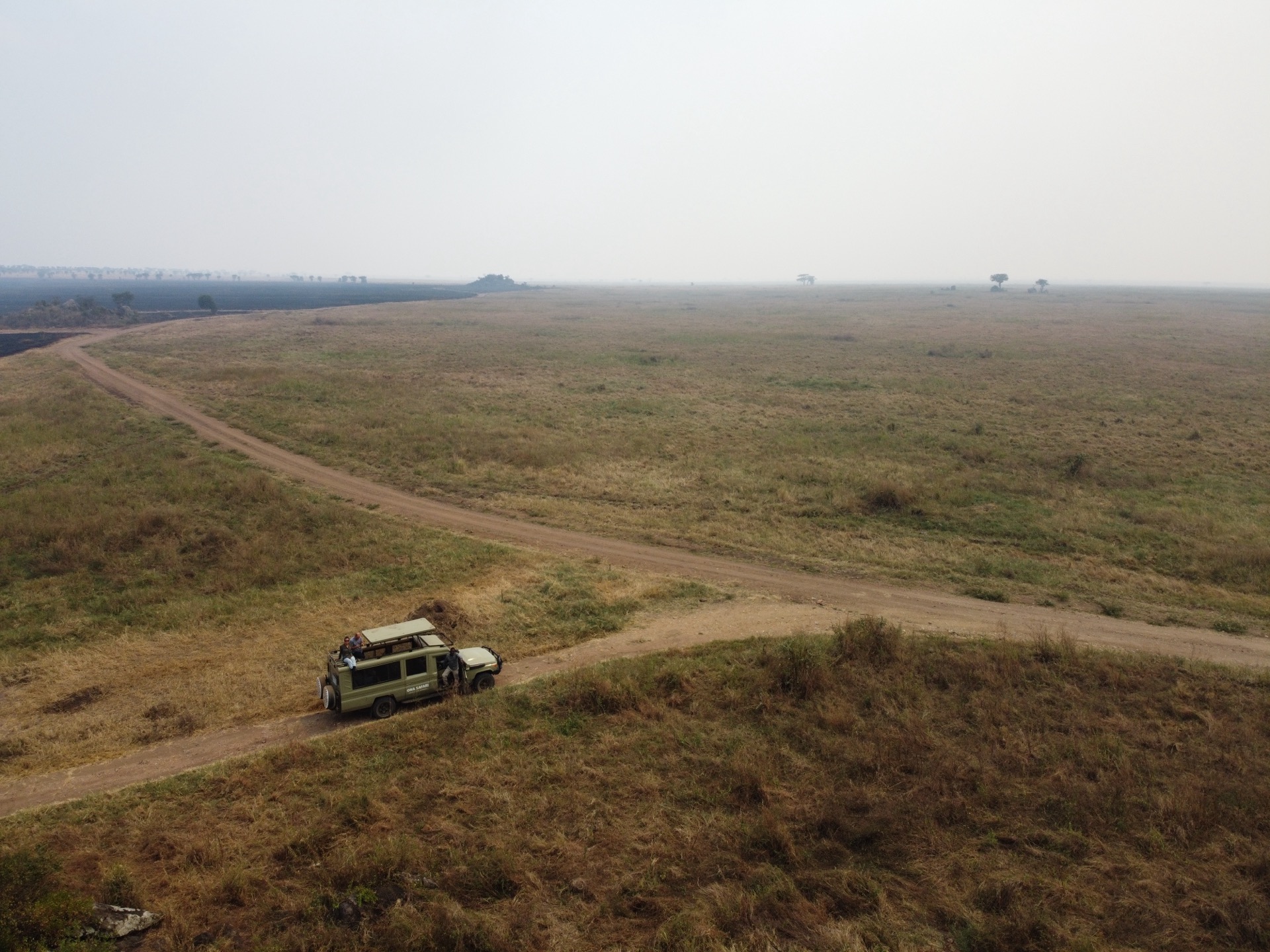
Safari combination. Zanzibar is approximately 1 hour by air from Arusha — the gateway to Tanzania’s Northern Circuit. Serengeti, Ngorongoro Crater, Tarangire, Lake Manyara. The classic structure — 7 to 10 days safari followed by 5 to 7 days Zanzibar — is one of the best itineraries in international travel, completely seamless on routing, visa zone, and logistics. Condor flies direct from Frankfurt to Zanzibar year-round in about 9 hours 10 minutes. You can be on the Serengeti at sunrise and on a Zanzibar beach by dinner, with no routing complications. Mauritius offers no equivalent safari combination. Getting from Mauritius to a Tanzania safari requires routing through Nairobi or Dar es Salaam — adding at minimum a full travel day each direction. Almost no one does this combination. For anyone with a safari in their plans, this single factor makes the decision.
Cultural depth. Stone Town — Mji Mkongwe — was inscribed as a UNESCO World Heritage Site in 2000 (List #173), recognized as an outstanding example of a Swahili coastal trading town. The Old Fort was built by the Omanis between 1698 and 1701 on the ruins of a Portuguese chapel. Sultan Said moved his court from Muscat to Stone Town around 1832, bringing with him the commercial empire that dominated the East African coast and the spice trade. Clove trees were introduced to Zanzibar in the early 19th century; the island became one of the world’s most important spice hubs. Freddie Mercury was born in Stone Town in 1946. Taarab music — a living hybrid of Swahili poetry, Egyptian orchestral tradition, and Indian melody — is performed here regularly, not as a tourist exhibit. Forodhani Gardens Night Market serves Urojo soup, Zanzibar pizza, and mshikaki from open-air grills most evenings. Mauritius has the Le Morne Brabant UNESCO Cultural Landscape (inscribed 2008) and a genuine Creole, Indian, and Chinese cultural mix — but no equivalent of Stone Town as a walkable, layered historic city. If cultural immersion matters, this comparison is not close.
Marine encounters. Mafia Island — reachable from Zanzibar by flight — runs whale shark snorkeling trips at USD 60–100 per person, with reliable sightings during the October to March season. This is one of the world’s best whale shark experiences. Mauritius does not have an equivalent. For divers, Pemba Island’s western walls deliver visibility of 30–60 metres and conditions that serious divers rate among the finest in the Indian Ocean. Mnemba Atoll, off Zanzibar’s northeast coast near Matemwe, is a protected marine reserve with an active CORDAP coral restoration project running through September 2027. The total marine encounter variety — whale sharks, Pemba Channel walls, Mnemba reef fish, spinner dolphins at Kizimkazi — is stronger here.
Kitesurfing. Paje, on Zanzibar’s east coast, is East Africa’s premier kitesurfing destination. The Kusi trade wind runs June through October — southerly, consistent, with enough strength for all levels. The shallow lagoon at low tide is ideal for beginners. The outer reef builds chop for advanced riders. Multiple schools operate from the beach. If kitesurfing is on your agenda, Zanzibar is the clear answer.
Mauritius’s strengths: four genuine advantages
Luxury resort infrastructure. Mauritius has decades of investment in high-end international tourism. The headline resorts — many owned by global hotel groups with long-established properties — deliver a level of consistent polish that is difficult to match on Zanzibar. Zanzibar’s luxury tier exists and is good; it is smaller and less uniformly polished. For a traveler whose benchmark is the very top end of the resort market and who does not want rougher edges at all, Mauritius is the more reliable choice.
Golf. Mauritius has internationally recognized golf courses set against ocean views — a genuine part of the travel product for many European visitors. Zanzibar has none. If golf is part of your holiday plan, this ends the comparison.
Direct European flights. Mauritius has historically had more direct flight connections from major European markets — particularly UK and French departures — than Zanzibar. This means fewer connections and easier routing for some European travelers. Zanzibar is improving (Condor direct from Germany is strong, and Ethiopian, Turkish, and Qatar routes cover most hubs), but Mauritius has a more established European flight network overall.
Infrastructure reliability. Mauritius’s roads, electricity, and water are more uniformly reliable than Zanzibar’s, where power cuts are occasional outside of resort generators and road quality varies significantly away from the main routes. For a traveler who wants zero friction, this matters. Zanzibar’s infrastructure has improved substantially and most resorts operate independently, but Mauritius has a more consistent baseline.
Head-to-head: what each wins
| Factor | Zanzibar | Mauritius |
|---|---|---|
| Price / budget | Substantially cheaper at every tier | Higher price point throughout |
| Safari combination | Natural and easy (1 hr to Arusha) | Not practical |
| Cultural depth | Stone Town UNESCO, 2,000 years of history | Le Morne UNESCO, Creole/Indian/Chinese mix |
| Whale sharks | Mafia Island (Oct–Mar), USD 60–100/person | Not available |
| Kitesurfing | Paje — East Africa’s top destination | Limited |
| Diving | Pemba Channel walls, Mnemba Atoll | Good reefs, marine parks |
| Luxury resorts | Good; smaller tier than Mauritius | World-class; more established |
| Golf | None | Internationally recognized courses |
| Direct EU flights | Improving; Condor direct from Germany | More options from UK / France |
| Infrastructure | Variable; good at resorts | More uniformly reliable |
| Entry cost | USD 50 visa + USD 44 ZIC insurance | No visa for EU/UK travelers |
Choose Zanzibar if…
- You are combining with a Tanzania safari. Serengeti, Ngorongoro, Kilimanjaro — Zanzibar is the natural beach finish to the mainland leg. Same visa zone, one hour by air, completely seamless routing. This is the strongest single reason for most East Africa-bound travelers.
- Budget matters at all. At every category from budget guesthouses to mid-range boutiques to luxury resorts, Zanzibar delivers more for less. The mandatory entry costs — USD 50 visa plus USD 44 ZIC insurance — are fixed and transparent. From there, you are in a genuinely affordable destination.
- You want cultural immersion. Stone Town is a UNESCO World Heritage city that you can spend days in without running out of things to see and think about. If a place to absorb — not just a beach to lie on — is part of what you want from a trip, Zanzibar is the only answer here.
- Whale sharks or Pemba diving are on your list. Mafia Island’s whale shark season is reliable and the experience is accessible. Pemba Channel diving is world-class for experienced divers. Neither has an equivalent in Mauritius.
- Kitesurfing is part of your trip. Paje’s Kusi wind season, June through October, is consistent enough to plan a kite trip around.
- You want a destination that feels genuine. Zanzibar is not frictionless. It has texture. Dhow builders still work on Nungwi beach. The Jambiani women’s seaweed farming cooperative — Mwani Mamas — earns real livelihoods from the east coast lagoon. Stone Town’s lanes are lived in, not curated. For travelers who want that, it matters.
- You are a first-timer to East Africa. Zanzibar is an exceptional first introduction — manageable, English-speaking, welcoming, with enough layered depth to reward any length of stay.
Choose Mauritius if…
- You want a pure luxury resort holiday with no rough edges. Mauritius has refined the international resort product over decades. If the benchmark is total polish and you do not want to think about infrastructure variability or local complications, Mauritius delivers this more consistently.
- Golf is part of the trip. Mauritius has internationally recognized courses. There is nothing equivalent on Zanzibar.
- You are flying from the UK or France without mainland African plans. Mauritius has stronger direct connections from those specific markets and if you are not combining with a safari, the routing advantage is real.
- The safari is not in the picture. If a Tanzania safari is not part of your plans now or in the near future, the biggest single advantage Zanzibar holds disappears. Without the safari combination, the choice becomes more genuinely balanced between a polished resort island and a cultural destination.
What both destinations genuinely share
Both are Indian Ocean islands with warm water, coral reefs, and white-sand beaches. Both are excellent honeymoon destinations — they deliver romance differently, but both deliver it. Both have decent snorkeling accessible by day trip. Both have tropical climates and are broadly viable year-round, with best and shoulder seasons. Both are safe for tourists and widely visited by Europeans. Neither requires a long-stay visa for most European nationalities.
The overlap is real. If someone said “just pick one for a beach holiday” and context was unavailable, either would be a reasonable answer. The differences only matter when you know what the traveler actually wants.
The honest comparison
I live on Zanzibar. I am biased. With that acknowledged: I think Zanzibar is the correct choice for a larger proportion of the travelers who search “Zanzibar vs Mauritius” than most articles admit.
The reason is simple. Most European travelers who search this comparison are thinking about East Africa. They have probably also looked at Tanzania safari packages. The Zanzibar-safari combination is so natural — same country, same visa, one hour by air — that choosing Mauritius and then wanting to do a safari later means a completely separate, more expensive trip. Mauritius is lovely. It is also a standalone destination that combines with nothing around it in the same way.
Mauritius is the right answer for a specific profile: the traveler who wants a pure high-end resort holiday, plays golf, flies from London or Paris, and has no interest in adding a safari to the itinerary at any point. That is a real traveler. But it is a narrower profile than the general “Indian Ocean” searcher.
Zanzibar has the cultural moat. Stone Town is irreplaceable — there is nothing in Mauritius that looks like those coralline-ragstone lanes with carved Omani doors and 300-year-old mosques. Once you have been in Stone Town for an afternoon, the Mauritius comparison shifts in ways a brochure cannot fully capture.
My honest advice: if you are combining with a safari, the decision is already made. If you want golf and a pure resort experience, choose Mauritius without hesitation. If you are genuinely undecided and this is your first Indian Ocean trip, Zanzibar gives you more — more culture, more variety, more adventure, more food — for less money.
Comparing Zanzibar to other Indian Ocean islands? See Zanzibar vs Seychelles — Seychelles edges Zanzibar on pure beach aesthetics but cannot match the safari combination or cultural depth. For the overwater bungalow question, Zanzibar vs Maldives covers why the Maldives wins on that specific product but falls far behind on price and cultural context. Comparing Zanzibar to other popular island destinations? The Zanzibar vs Bali guide breaks down the surfing, yoga, temple culture, and crowd differences — two different island travel philosophies. For a deeper dive into Zanzibar vs an Asian beach destination — including the whale shark and safari combination case for Zanzibar — see Zanzibar vs Thailand. For the full Tanzania safari that makes the Zanzibar case, see the Tanzania and Zanzibar itinerary guide. For where to stay once you have decided on Zanzibar, the Zanzibar where to stay guide covers every area with honest trade-offs.
Frequently asked questions
Is Zanzibar or Mauritius better value for money?
Zanzibar is substantially better value at every price tier. Budget and mid-range accommodation, food, and activities are significantly cheaper on Zanzibar than equivalent options in Mauritius. Mauritius's resort market is geared toward higher price points, particularly at the luxury end. If budget is a consideration, Zanzibar delivers more experience per dollar spent. This cost difference is even more pronounced when you factor in the safari combination — a Tanzania Northern Circuit safari plus Zanzibar beach still typically costs less than a Mauritius luxury resort holiday for the same number of nights.
Can you combine Zanzibar with a safari and Mauritius with a safari?
Zanzibar combines naturally and easily with a Tanzania safari — same visa zone, same country, short flight between Zanzibar and Arusha (the gateway for Serengeti, Ngorongoro, Kilimanjaro). This is one of travel's great natural itineraries. Mauritius does not combine with a safari in any natural way — it is a separate destination requiring a separate flight to mainland Africa. If a safari is part of your plans, Zanzibar is the clear choice; Mauritius is a standalone Indian Ocean holiday.
Is Zanzibar or Mauritius better for diving and snorkeling?
Both are excellent coral reef destinations. Zanzibar has world-class diving at Mnemba Atoll, Pemba Island (known for its steep walls and strong currents), and Mafia Island (whale sharks October–March, one of the world's best whale shark sites). Mauritius has good reefs and marine protected areas but no whale shark equivalent. For pure coral reef variety and the whale shark experience, Zanzibar (including Mafia) has a stronger card to play. For casual snorkeling from a resort, both are comparable.
Which is better for a honeymoon: Zanzibar or Mauritius?
Both are excellent honeymoon destinations. The choice comes down to what kind of honeymoon you want. Mauritius offers more consistently polished luxury resort experiences with strong established honeymoon packages, infinity pools, spas, and golf for romantic add-ons. Zanzibar offers a mix of boutique luxury, more authentic atmosphere, and the option to combine a romantic safari week with the beach — a Serengeti honeymoon followed by Zanzibar is genuinely extraordinary. Kendwa beach on Zanzibar and the resorts around Matemwe are as romantic as anything Mauritius offers at comparable price points, but at significantly lower cost.
Are direct flights better from Europe to Zanzibar or Mauritius?
Mauritius generally has more direct flight options from major European hubs and more frequent connections overall. Zanzibar is served internationally by Ethiopian Airlines, Turkish Airlines, Qatar Airways, Kenya Airways, flydubai, and European charters — but most European travelers connect through one of these hubs rather than flying direct. From Germany, Condor flies direct to Zanzibar from Frankfurt year-round (since November 2025) plus Munich, Düsseldorf, and Zurich seasonally, with the Frankfurt to Zanzibar nonstop around 9 hours 10 minutes. The flight time difference is modest — both are long-haul from Europe — but Mauritius has historically had more options from UK and French markets specifically.
Is Zanzibar or Mauritius more culturally interesting?
Zanzibar significantly. Stone Town is a UNESCO World Heritage Site with 2,000 years of Swahili coast history — Omani palaces, the former slave market, dhow builders, Freddie Mercury's birthplace, taarab music, Forodhani night market. It is a living old city, not a theme park. Mauritius has the Le Morne Brabant Cultural Landscape (maroon slave history, UNESCO 2008) and a rich Creole, Indian, and Chinese cultural mix, but no equivalent of Stone Town as a walkable historic city. For travelers who want culture alongside the beach, Zanzibar is the stronger choice.