
Facts & prices checked: 2026-06-25
Miombo woodland covers approximately 2.7 million km² across south-central Africa — from Angola in the west to Tanzania in the east — making it the largest woodland ecosystem on the continent. In Tanzania, it is the dominant vegetation type across the south and west, forming the ecosystem of Ruaha, Nyerere, Katavi, and Mahale. Yet virtually no mainstream safari guide covers it. Travelers fly into the southern circuit and find something visually and ecologically distinct from the northern savanna, without any framework to understand what they are looking at or why the wildlife is different.
This guide covers what miombo woodland is, what it looks like through the seasons, and specifically which animals are miombo specialists — species that are common here and essentially absent from the Serengeti system.
What miombo woodland is
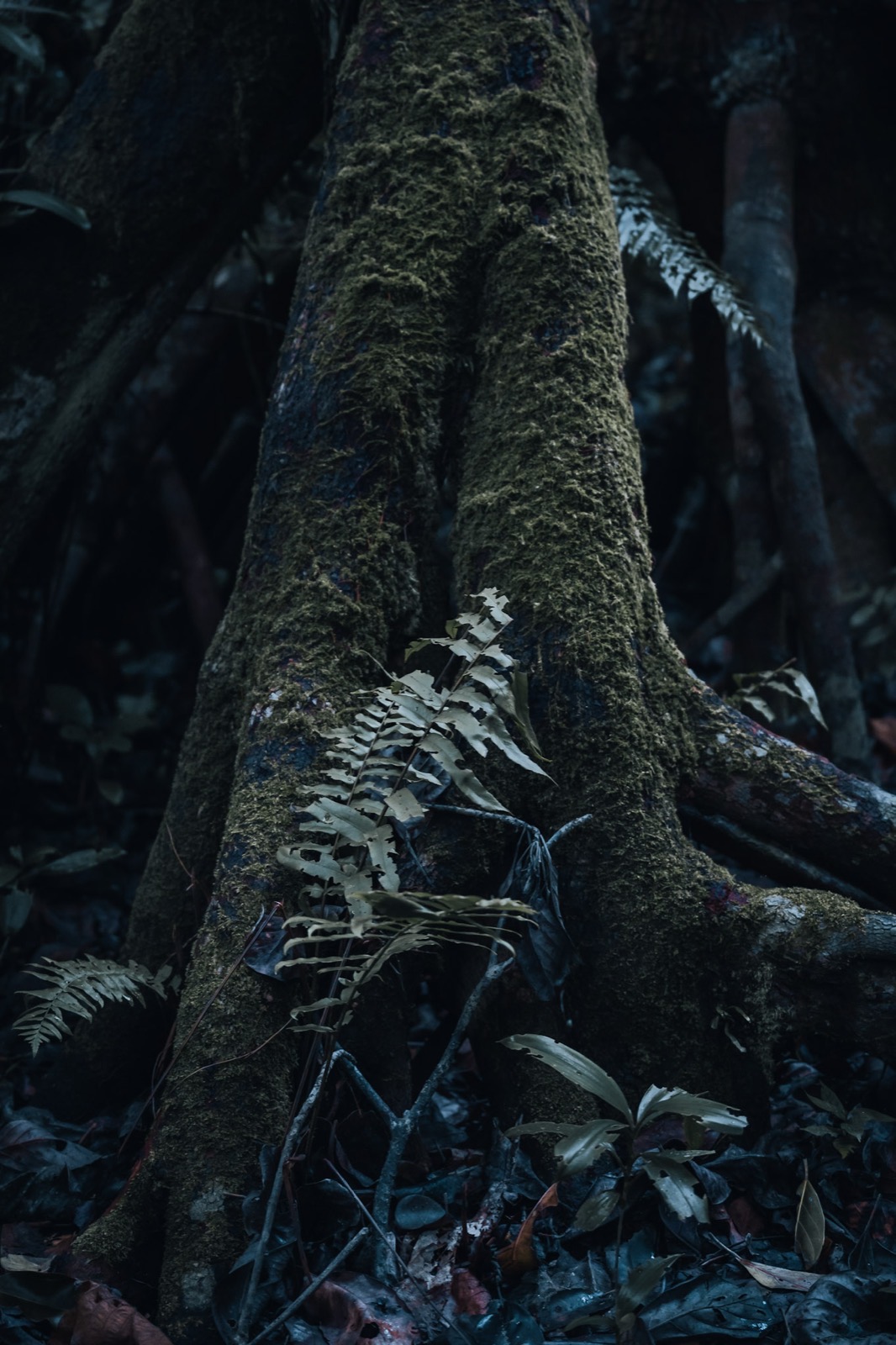
Miombo is defined by its dominant trees: Brachystegia and Julbernardia, both leguminous genera in the family Fabaceae with distinctive leaf shapes and a characteristic pale green to silver-grey appearance when the light catches the canopy. “Miombo” comes from the Swahili and Bantu-language name for Brachystegia — the tree that names the ecosystem.
The biome extends across south-central Africa from Angola and Zambia through Tanzania, Mozambique, Zimbabwe, and Malawi. Total area: approximately 2.7 million km². This makes miombo Africa’s largest woodland biome and one of the most significant ecosystems on the continent — supporting, directly or indirectly, over 300 million people who depend on it for food, water, medicine, and timber.
The underlying geology explains the ecosystem’s character. Miombo sits over ancient crystalline basement rocks — Precambrian granite and gneiss that have been weathering for hundreds of millions of years. The resulting soils are shallow, acidic, and nutrient-poor. Trees are slower-growing and cannot reach the heights of forest on deeper, richer soils. The nutrient poverty that makes miombo poor for agriculture also makes it remarkably intact: it was simply not worth clearing in most of its range until population pressure and charcoal demand increased in recent decades.
In Tanzania, miombo is the vegetation type of the interior plateau — the high ground that sits between the coastal strip and the Rift Valley. The parks of Nyerere (30,893 km²), Ruaha (20,226 km²), and Katavi (4,471 km²) protect the largest blocks of intact miombo remaining in the country, and collectively represent one of Africa’s most significant intact miombo landscapes.
What miombo looks like through the seasons
Unlike the treeless or lightly treed grasslands of the Serengeti — or the dense, closed-canopy forest of Mahale’s chimpanzee habitat — miombo woodland has a distinctive appearance that changes dramatically by season.
The canopy typically covers 20–80% of the sky. Enough to provide shade and to screen movement — this is not open savanna. Not so dense that visibility is lost at more than 50 metres. The trees grow at 8–20 metres. Tall enough to cast shadow. Short enough that you can see their full form from a vehicle.
In the dry season (June–October), most miombo trees are semi-deciduous. Many shed their leaves, and the woodland opens. Grass turns from green to gold. Light quality changes — the lower sun angle of the dry season, filtered through bare or thinly-leaved canopy, produces a warm, directional light that photographers recognise immediately. Animals moving through the open woodland are more visible than in the wet season. The grass is low enough that you can see from a vehicle seat down to ground level through the trees.
In the early rains (October–November), something unexpected happens. The miombo trees flush new leaves before the rains arrive — a phenomenon ecologists call “dry season flushing” or “pre-rain leaf flush.” The new growth is often vivid: copper, bronze, russet, orange-red. The woodland turns warm tones weeks before any significant rain. It is one of the most visually striking periods in the ecosystem and one that most safari calendars do not mention because the standard advice is “go in the dry season.” If you are in Ruaha in late October, you may find yourself in a woodland that looks like a Southern Hemisphere autumn, in the tropics, days before the first heavy rains.
In the wet season (November–May), the woodland is green, the grass grows to 1.5 metres or more, and animals disperse. Wildlife density per square kilometre drops significantly. The ecosystem is beautiful — miombo green season is when migratory bird species are present, when elephant herds are spread across the interior — but it is not when the concentrated wildlife encounters happen.
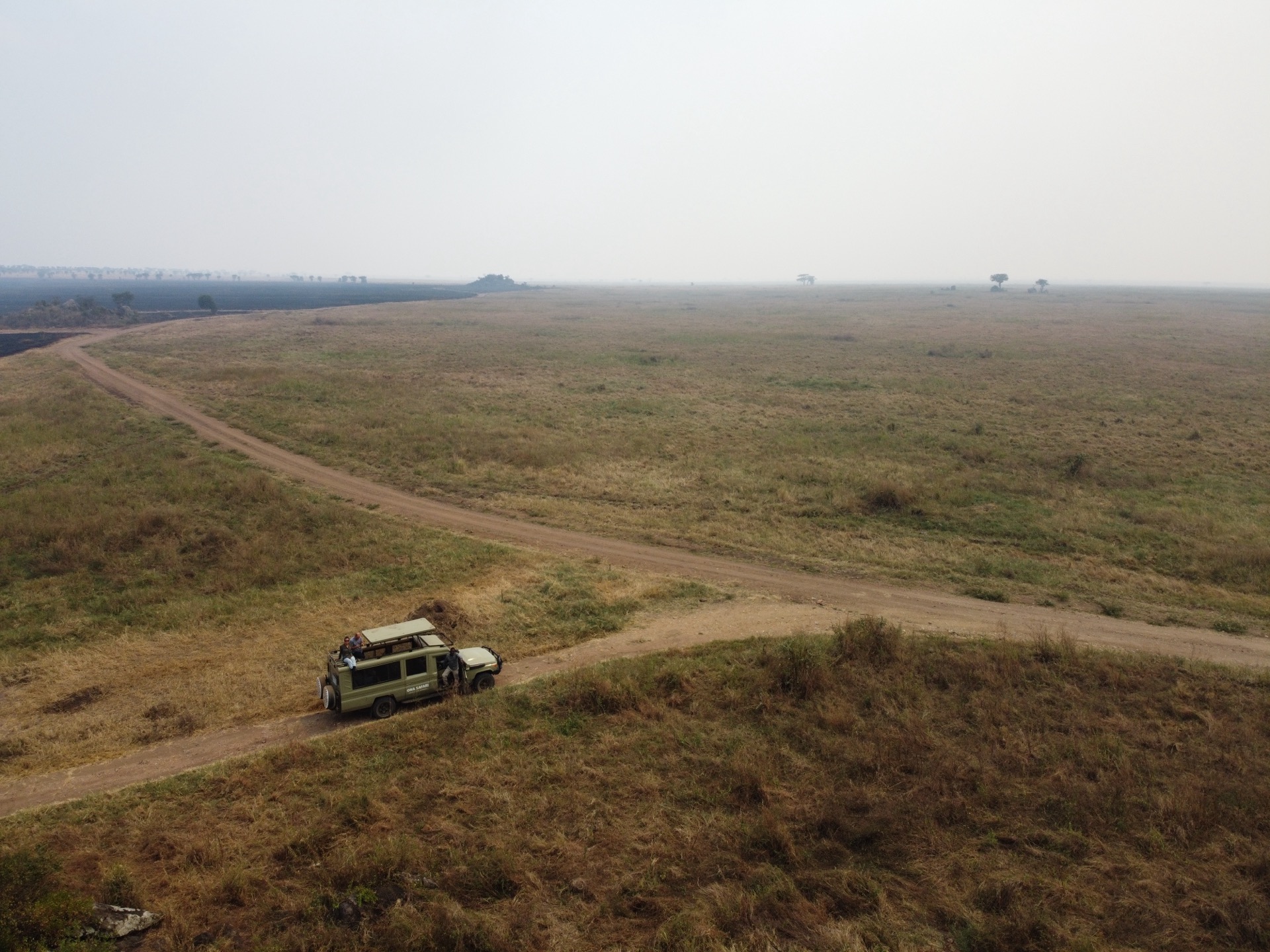
Fire is part of the miombo cycle. By October, after months without rain, the dry grass and accumulated leaf litter are combustible. Game management areas and national parks conduct controlled burns to reset the ecosystem, create new growth, and maintain habitat for grazing species. In some areas you will see burn lines — patches of black ash and emerging green shoots — alongside unburned woodland sections. Miombo ecology is adapted to fire. The Brachystegia trees have fire-resistant bark, and many species regenerate quickly from the base if their canopy is burned.
The miombo specialists: sable, roan, kudu, puku
This is the core reason miombo woodland matters to safari travelers. Certain species have evolved with the ecosystem and are found in miombo woodland — and essentially nowhere else in Tanzania’s safari system.
Sable antelope (Hippotragus niger) are the defining species of Tanzania’s southern circuit. Mature males are jet black with white facial markings and massive scimitar-shaped horns that curve backward over the body — among the most striking antelopes on the continent. Females and young animals are chestnut brown. Sable are listed as Vulnerable on the IUCN Red List. They require the specific grass type and woodland structure of miombo — the semi-open canopy, the intermediate grass height, the particular seed grasses that mature in miombo conditions. Ruaha, Nyerere, and Katavi all have resident sable populations. The northern circuit parks essentially do not. If you have done three trips to the Serengeti and have never seen a sable antelope, that is precisely why — it is not that you missed them, they are genuinely absent.
Sable move through woodland rather than open ground, and sightings often involve watching an animal materialise from between trees, move through a gap in the canopy, and disappear again. The woodland screens them. Early mornings, when sable move to water or open clearings, and late afternoons when they move out to feed in open sections, give the best opportunities for unobstructed views.
Roan antelope (Hippotragus equinus) are large — one of Africa’s biggest antelope species — with a reddish-brown coat, distinctive black-and-white facial markings, and long backward-curving horns. They share ecological habitat with sable in Tanzania’s miombo parks. Roan occur in Katavi and are confirmed present in the wider Ruaha and Nyerere ecosystems. The global roan population is estimated at approximately 60,000 mature individuals. Tanzania’s populations are concentrated in the southern and western circuit. Roan are less commonly seen than sable in any given park visit — they are genuinely scarcer and more wary — but their presence is another diagnostic indicator of miombo woodland.
Greater kudu (Tragelaphus strepsiceros) are the largest of Africa’s spiral-horned antelopes. Mature bulls carry corkscrew horns that can reach 1.8 metres in length. The body is rufous-grey with narrow white body stripes — a pattern that provides camouflage in woodland. Kudu are common throughout Ruaha, particularly in the mixed thornbush and miombo woodland sections away from the main river. They are essentially absent from the open Serengeti plains. In Ruaha, kudu are one of the antelopes that walking safari guides use most frequently to demonstrate what can be approached quietly on foot — their camouflage makes them findable before they detect you if you move carefully.
Puku (Kobus vardonii) are a medium-sized antelope resembling an impala but golden-yellow throughout — there is no colour differentiation between male and female. They are associated with floodplain areas adjacent to miombo, rather than the woodland itself, and in Tanzania are found primarily in the Katavi floodplains where the Katuma River and its associated wetlands create ideal puku habitat. Puku are uncommon in Tanzania compared to their range in Zambia, and a Katavi sighting is genuinely specialist.
Wild dogs and the southern circuit predator story
Tanzania holds an estimated 2,300+ wild dogs — Africa’s largest national population. The global population of African wild dogs (Lycaon pictus) is approximately 6,600 adults and yearlings in 39 subpopulations; fewer than 7,000 remain in the wild. Tanzania’s share of this population is concentrated overwhelmingly in the miombo and associated ecosystems of the southern and western circuit.
Nyerere National Park holds an estimated 800–1,000 wild dogs — one of Africa’s largest documented populations within a single protected area, based on a 2025 camera-trap survey that recorded approximately 222 individuals with a density of 2.14 per 100 km². The Ruaha-Katavi ecosystem is a current WCS research priority for establishing baseline population data. The Tanzania wild dogs guide covers the full ecology, hunting behaviour, and how to find them.
Wild dogs are not miombo-exclusive — they range across varied habitats — but they are heavily concentrated in miombo and associated ecosystems for reasons that are structural. Miombo parks have lower human encroachment than the northern circuit. They have fewer roads and less vehicle traffic, which reduces road-kill mortality. The Nyerere, Ruaha, and Katavi park systems are large enough that wild dog packs can hold territories of hundreds of square kilometres without repeatedly crossing park boundaries. The Ruaha Carnivore Project has reduced retaliatory killings of wild dogs, lions, and other predators by 80% in its core study area over more than a decade.
Lions are present throughout Tanzania’s miombo parks. Ruaha holds approximately 10% of the world’s lion population — a figure that indicates just how significant this single park is for the species globally. Lion prides in Ruaha average around 12 members. In the dry season, as the Great Ruaha River becomes the primary water source for the ecosystem, prey concentrations at the river produce predator-prey interactions of a scale and frequency that rivals anything in the northern circuit.
Leopards in Ruaha’s miombo woodland sections show a density of approximately 3.23 per 100 km² in peer-reviewed camera-trap studies — adapted to the woodland cover and the riverine fringe habitat where prey is concentrated.
Cheetahs are present but less abundant in miombo than on open savanna. The woodland character of the ecosystem suits leopards more than cheetahs, which are optimised for sprint-based hunting in open ground.
Miombo birds
Tanzania has over 1,100 recorded bird species — one of the highest national totals in Africa. A significant proportion of those species are miombo specialists. Birders who have done only the northern circuit, with its characteristic mix of savanna grassland species, are often genuinely surprised by the species turnover when they arrive in Ruaha or Nyerere.
Miombo woodland has its own endemic and near-endemic bird community. Species that are common in the southern circuit and essentially absent in the north include:
Miombo Wren-warbler (Calamonastes undosus) — a small, active warbler that moves through the understorey of miombo woodland; its call is one of the characteristic sounds of the ecosystem.
Stierling’s Woodpecker (Dendropicos stierlingi) — a miombo specialist that forages on Brachystegia trees; one of the defining bird species for identifying true miombo habitat.
Bohm’s Bee-eater (Merops boehmi) — closely associated with miombo woodland; a small, green bee-eater that perches in the canopy and is uncommon outside its core range.
Racket-tailed Roller (Coracias spatulatus) — arguably the most visually striking of the miombo specialist birds; a large roller with elongated outer tail feathers and vivid blue-violet plumage; seen throughout Ruaha and Nyerere.
Martial Eagle (Polemaetus bellicosus) — the largest eagle in Africa by weight; commonly seen in southern circuit parks, where large tree-studded woodland provides the nesting habitat and open country for hunting large prey. Seen on nearly every Ruaha drive in the dry season.
Yellow-billed Stork and other waterbird species concentrate at the Rufiji River and Great Ruaha River in the dry season, adding an entirely different layer to the bird list on top of the woodland specialists.
Katavi’s floodplains support over 450 recorded bird species — adding the wetland specialist community to the miombo woodland baseline.
For birders, the southern circuit represents a fundamentally different Tanzania from the northern parks. Species like the Bohm’s Bee-eater and Stierling’s Woodpecker are essentially unavailable elsewhere in Tanzania and are regional targets for visiting birders. A combined Nyerere-Ruaha itinerary in the dry season, specifically guided for birds, is one of the most productive miombo birding trips available anywhere in the biome.
Why miombo is under-appreciated — and when to go
Several structural factors have kept miombo woodland out of the mainstream safari narrative.
The Great Migration is the world’s most marketed wildlife event. It is Serengeti-specific and it defines most first-time Tanzania safari itineraries. The parks that deliver it — Serengeti, Ngorongoro, Tarangire, Manyara — are the ones that receive the infrastructure investment, the guide training depth, and the media coverage.
Logistics compound this. The northern parks are accessible from Kilimanjaro International Airport via road or direct charter. The southern circuit requires either a flight to Dar es Salaam and onward connection, or access via Iringa for Ruaha. These extra logistics filter out casual travelers.
Wet season dispersion is the most ecologically honest reason. In the wet season, miombo animals spread across vast areas. Wildlife density per square kilometre in the wet season is genuinely lower than in the Serengeti during the Migration. This is not a myth — it is accurate for the wet season. What most guides do not add is the dry season correction.
In the dry season (June–October), as water sources disappear across the interior plateau, wildlife has no choice but to concentrate at permanent water. The Rufiji River in Nyerere, the Great Ruaha River in Ruaha, and the Katuma River floodplain in Katavi become the only water for hundreds of kilometres of surrounding miombo. Elephants, buffalo, hippos, lions, leopards, wild dogs, sable, kudu, and every other species converge on these river corridors. Hippo pools in Katavi can hold up to 600 animals. Buffalo herds on the Katisunga Plains reach 2,000–4,000 animals. Elephant herds of 50–200 gather at Great Ruaha pools simultaneously. All of this with a fraction of the vehicles that would be present at a comparable Serengeti sighting.
The crowd contrast is real and measurable. Katavi National Park receives fewer than 2,000 visitors per year. In the same period, the Serengeti receives hundreds of thousands. A sighting of any kind in Katavi is private — you may be the only vehicle at a pool of 300 hippos, watching lions patrol the bank. This is not an unusual occurrence. It is the normal experience in these parks.
Miombo’s carbon significance is worth understanding for any traveler who follows conservation. The slow-growing Brachystegia trees accumulate carbon over centuries in both their wood and the soil below. Miombo woodland is one of Africa’s most significant carbon stores, and deforestation of miombo at the edges of protected areas — primarily for charcoal production — is a major conservation and climate concern. The intact miombo protected within Nyerere, Ruaha, and Katavi represents not only wildlife habitat but a globally significant carbon reserve that park tourism fees help sustain.
Tim’s first encounter with miombo
My first time in Ruaha, I arrived having done the Serengeti twice. I knew what to expect from a Tanzania safari: the open plains, the lion on the termite mound, the vast herds in the distance. I expected a lesser version of the same experience, further south, with fewer vehicles.
What I got was something completely different.
The approach into the park was the first signal. The road narrowed. Trees closed in — not forest, but real trees, 10 metres tall, touching over the track in places. The light through the canopy was different: patchy, directional, moving with the breeze. When I stepped out for a morning walk with the guide and ranger, the ground felt different underfoot — not the grassy turf of the Serengeti but compacted earth with leaf litter, roots surfacing, the smell of dry vegetation.
The bird sounds were completely unfamiliar. I had to ask the guide to identify almost everything. In the Serengeti I could name most of what I heard. Here I was starting over.
An hour into the walk, the guide stopped and pointed into a screen of Brachystegia trees about 80 metres ahead. I could not see anything. He handed me the binoculars and directed my eye to a specific gap in the canopy. A sable antelope bull was standing completely still in the shade, watching us.
We waited. The guide did not move and did not speak. After about four minutes, the sable walked slowly to the left, crossed a gap in the trees, and stood broadside in full sunlight with the golden grass behind him. The contrast was startling: jet black body, white facial markings, the great backward-curving horns. In the open savanna you see an animal in full context — the landscape, the sky, the herd. In the woodland, you get a frame. The trees on either side, the gap, the animal filling it — and then it was gone.
I have not seen anything like it in the northern parks. It is not that one is better than the other. They are genuinely different ecosystems producing genuinely different encounters. The miombo woodland provides a screen that open savanna does not, and when an animal steps through that screen into the light, the moment has a quality that the open grassland encounter does not.
Planning the southern circuit? The Ruaha write-up covers the park’s elephant herds, antelope specialists, and walking safari options in detail. The wild dog page covers Nyerere and Ruaha’s world-significant painted dog populations. For the remote western miombo experience, the Katavi National Park guide explains what dry-season concentration at the Katuma River actually looks like on the ground.
Frequently asked questions
What is miombo woodland?
Miombo is a woodland ecosystem dominated by trees of the genera Brachystegia and Julbernardia — leguminous trees with distinctive leaf shapes, typically growing at 8–20 metres height with an open canopy. The name 'miombo' comes from the local name for Brachystegia. The ecosystem covers approximately 2.7 million km² across south-central Africa — Angola, Zambia, Zimbabwe, Mozambique, Malawi, and Tanzania — making it Africa's largest woodland biome. Unlike the open savanna grasslands of the Serengeti, miombo has enough canopy cover to feel like woodland while remaining open enough for good wildlife viewing. In early rains (October–November), miombo trees flush new leaves in vivid copper and orange before the rains arrive — one of the most visually striking periods in the ecosystem.
What animals are specific to miombo woodland?
Several species are miombo specialists — common in miombo woodland and essentially absent from Tanzania's northern circuit savanna parks. Sable antelope (Hippotragus niger) are the signature species: males are jet black with white facial markings and massive backward-curving scimitar horns; females and young are chestnut brown. They are listed as Vulnerable on the IUCN Red List. Roan antelope (Hippotragus equinus) are also miombo-associated — estimated at about 60,000 mature individuals in Africa, with Tanzania populations concentrated in the southern and western circuit parks. Greater kudu (large spiral-horned antelope) prefer the woodland edge habitat. Wild dogs — Tanzania holds an estimated 2,300+ individuals, Africa's largest national population — are overwhelmingly concentrated in miombo and associated ecosystems in the southern and western circuit.
Which Tanzania parks have miombo woodland?
The major miombo national parks and game reserves are in southern and western Tanzania: Nyerere National Park (30,893 km², Tanzania's largest), Ruaha National Park (20,226 km², home to approximately 10% of the world's lion population), Katavi National Park (4,471 km², fewer than 2,000 visitors per year), Mahale Mountains National Park (forest-miombo mosaic), and Mikumi National Park (accessible from Dar es Salaam). The Selous Game Reserve ecosystem (of which Nyerere is the protected core) is one of the largest protected miombo landscapes in Africa. The northern circuit parks (Serengeti, Ngorongoro, Tarangire) are savanna and mixed ecosystems with minimal miombo.
When is the best time to see wildlife in miombo woodland?
The dry season (June–October) is the best time. In the wet season, animals disperse across vast miombo woodland and are difficult to find. As water sources dry up, wildlife concentrates at permanent rivers and waterholes — the Rufiji River in Nyerere, the Great Ruaha River in Ruaha, and the Katuma River floodplain in Katavi. The concentrations at permanent water in the deep dry season (August–October) can be extraordinary: hundreds of elephants, buffalo herds, hippo pods, and predators following the prey — all within vehicle range of river camps. This is when miombo wildlife viewing rivals or exceeds the northern circuit, with far fewer tourists.
Why is miombo woodland less famous than the Serengeti ecosystem?
Several factors: the Great Migration is the world's most marketed wildlife event and is Serengeti-specific; the northern parks are logistically easier from Arusha and Kilimanjaro International Airport; miombo woodland has lower wildlife density during the wet season when herds are dispersed; and open grassland is more photogenic for standard wildlife photography than woodland, where trees often partially obscure animals. In the dry season, miombo wildlife concentration at permanent water rivals the savanna, with a fraction of the vehicle traffic. Many travelers who've done the northern circuit twice find the southern circuit — lower crowds, sable antelope, wild dogs, walking safaris — offers a completely different kind of safari.
Are sable antelope hard to see in Tanzania?
In the southern and western circuit parks, sable antelope are not particularly rare — Ruaha, Nyerere, and Katavi all have them. They are simply absent from the northern circuit parks. The challenge is that sable move through woodland rather than open grassland, so sightings can be brief — the woodland canopy provides natural screening. Early mornings and late afternoons when sable move to water or open clearings give the best viewing opportunities. The males' jet-black coloration against golden dry-season grass creates some of the most striking images of any African antelope.