
Facts & prices checked: 2026-06-25
The single most common mistake visitors make when planning a Ruaha safari is treating it like the Serengeti and assuming the dry season is the only viable time to go. Ruaha’s wildlife calendar is more nuanced than that — and the low season is genuinely underrated in a way that the Serengeti’s is not.
This guide breaks down every month in Ruaha by what you will actually encounter on the ground: wildlife behaviour, accessibility, camp availability, and the specific opportunities that each season offers that the others don’t.
For the full overview of what makes Ruaha worth the journey — its elephant herds, lion population, African wild dogs, antelope species, and how to combine it with Nyerere — see our complete Ruaha profile.
Why timing matters more in Ruaha than in most parks
Ruaha sits in the semi-arid miombo woodland of south-central Tanzania. Unlike the Serengeti’s year-round grassland or Ngorongoro’s permanently water-rich crater floor, Ruaha has pronounced wet and dry seasons that dramatically change two things: where wildlife can be found, and which parts of the park are physically accessible.
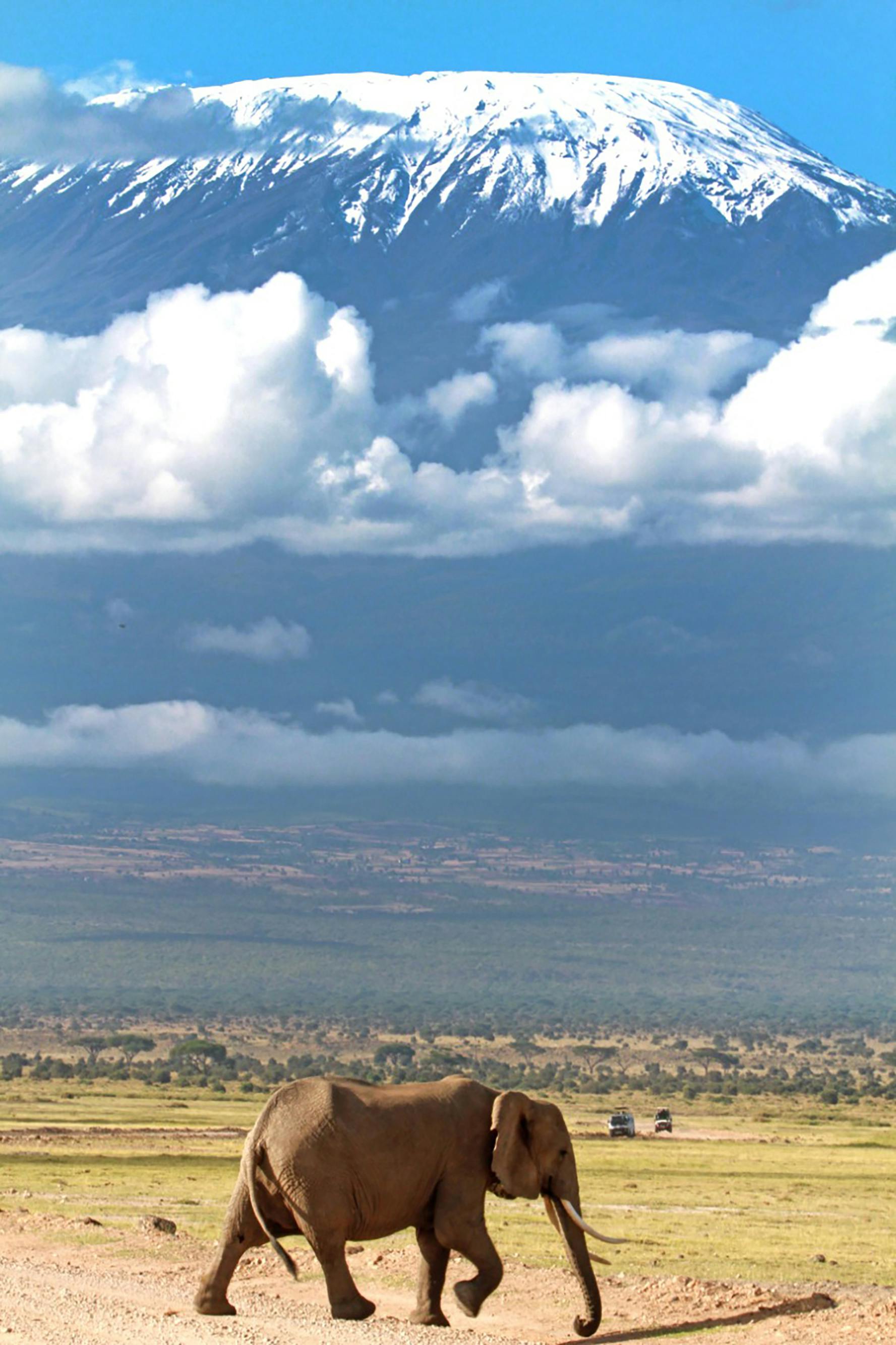
In the dry season, the Great Ruaha River — a major tributary of the Rufiji, draining approximately 68,000 km² of catchment — drops to a series of deep pools and sandy stretches. This is the mechanism that makes Ruaha extraordinary: as the surrounding bush dries, everything that needs water moves toward the river corridor. Elephant herds of 50–200 animals, buffalo concentrations of up to 30,000 animals in the wider ecosystem, hippo pods compressed into the last deep pools, crocodiles on exposed sandbanks, and the lions, leopards, and cheetahs that follow all of this prey.
In the wet season, the river fills and spreads. Animals disperse across the park’s full 20,226 km². The landscape turns green and spectacular. And the park becomes logistically challenging: many tracks become impassable, some areas are inaccessible entirely, and camps that sit in low-lying areas along the river may reduce services or close.
June: the dry season opens
June is when Ruaha comes into focus for the dry season. The long rains have ended, vegetation is starting to thin, and wildlife is beginning to concentrate toward permanent water sources.
What to expect in June:
- Elephant herds begin appearing at the Ruaha River in reliable numbers, though concentrations build through July and August
- Lions are active throughout the park; dry-season lion visibility improves as vegetation thins
- Wild dog packs maintain territories — sightings require local knowledge but are possible
- Hippo pods along the river are established in their dry-season positions
- Ground hornbill and other resident bird species are reliably findable
- Ruaha’s dry season has no rain, clear skies, and temperatures of around 20–28°C in the day
Practical notes: June is shoulder season — availability at premium camps is generally good, prices are below the July–August peak, and the park is significantly quieter than it will be in August. For visitors who want dry-season quality without peak-season pricing and crowds (already minimal compared to the northern circuit), June is the best-value entry point into Ruaha’s dry season.
July to September: peak wildlife viewing
This is Ruaha at its most concentrated and dramatic. Wildlife watching gets progressively better as the dry season goes on — July is excellent, September is arguably better still, and the weeks in between represent some of the most productive game-viewing available anywhere in Tanzania.
What drives July–September:
- Elephant herds reach peak river concentrations; groups of 50–200 animals at the water simultaneously are regularly documented. Some of these are breeding herds, some are large bachelor groups with impressive old bulls — Ruaha has some of the largest-tusked individuals remaining in Tanzania, partly because the park’s remoteness kept it relatively protected during the worst poaching decades
- Lions are at their most visible: vegetation is low, the river corridor concentrates prey, and Ruaha’s ~10% share of the world’s lion population is on display. The Baobab Pride — documented at over 30 lions — operates in Ruaha, one of the largest stable prides recorded in East Africa
- Buffalo concentrations along the river produce lion-buffalo interactions regularly; Ruaha’s lion prides are Tanzania’s most documented specialists at hunting Cape buffalo
- Leopards use the riverine woodland intensively — most reliably found at dawn and dusk, but middle-of-day sightings occur where the shade trees and thickets meet the water
- African wild dogs maintain pack territories; dry season is considered the best period for sightings, with some packs reliably located by experienced camp guides
- Hippo pods are compressed into the last deep pools — hippos sometimes numbering around 50 per group in the remaining water
- Nile crocodiles are highly visible on exposed sandbanks
What July–September also means: This is peak season, and availability at Ruaha’s best camps is limited. Jabali Ridge (Asilia Africa, 8 suites), Kwihala Camp (Nomad Tanzania, river access, exceptional guides), and Jongomero (8 tents, exclusive concession) are often fully booked 6–9 months ahead for July and August. Prices are at their annual high — these are all-inclusive luxury camps in the USD 700–1,200 per person per night range at peak.
If you are targeting peak season, book as early as possible. September is sometimes easier to book than July or August and offers comparable game-viewing with animals still fully concentrated at the river and vegetation thin enough to see well.
October: the birder’s window opens
October sits at a transition point: the dry season is technically still running, but the short rains can arrive any time from late October onward. Wildlife quality is still excellent — animals remain concentrated and vegetation is still low — and the migratory birds begin arriving.
Ruaha has a checklist of over 571 bird species. October to January is when Palearctic migrants from Europe, Asia, and Madagascar arrive, substantially increasing daily species counts. Migratory warblers, raptors, and shorebirds integrate with the resident community that includes the Ruaha red-billed hornbill (endemic to Tanzania, with a limited range in the Rift Valley area in and around Ruaha), the Ruaha sunbird (described as a distinct species only in 2004), and the southern ground hornbill.
October is the best compromise month for visitors who prioritise birds and want good mammal viewing: the wildlife concentration of the dry season is still largely intact, and the first migrants are already adding to the checklist.
Availability improves in October — many camps see peak season wind down in late September, and October offers better rates with wildlife still excellent.
November: the transition
November marks the start of the short rains. For most of the month, weather is unpredictable: some days of rain, some clear. The bush is starting to green up. Wildlife disperses slightly from the river as other water sources begin to fill.
What November offers:
- Wildlife is still very good through most of the month — the dry-season concentrations have not yet fully dispersed
- Calving season begins: predator-prey interactions are active as wild dogs and lions target newborn antelope
- Migratory birds are in and building; November is often cited as the best birdwatching month in Ruaha by specialist guides
- Camp prices begin to drop from peak-season levels
- Availability at premium camps is generally good
- Vegetation starts turning green, which some photographers prefer for the colour contrast
What November does not offer: the certainty of dry-season wildlife viewing. Some morning drives will produce extensive river corridor sightings; others may require more searching as animals spread across the park.
December to February: the green season
December to February is Ruaha’s low season, and it is genuinely underrated. This is the time when I would recommend Ruaha to photographers who want something beyond the standard dry-season postcard, or to travellers who want the park’s wildlife quality without ever sharing the experience with another safari vehicle.
What the green season delivers:
- Elephants are present year-round — with around 10,000 animals in the park’s ecosystem, you will see elephants in December. What changes is their behaviour: no longer concentrated in river lines but moving through thick bush, sometimes in smaller groups spread across woodland habitat. Large bulls are findable with good guiding
- Lions are present and hunting actively — calving season produces easy prey, and prides with cubs move through the green landscape. Lions do not migrate and Ruaha’s population is resident year-round
- Wild dogs are pupping during December to March — packs are temporarily anchored to den sites, which makes them more reliably locatable than at any other time of year. This is the best season for extended wild dog encounters
- Birdwatching: November to February is the peak of Ruaha’s birdwatching calendar. January and February are usually dry and hot, offering excellent birdlife alongside resident species. Breeding plumage on resident birds is at its best
- Camp prices are at their annual low; some premium camps offer significant reductions for December to February bookings
- The park is extraordinarily quiet — some game drives involve seeing no other vehicles for an entire morning
The limitations: Vegetation is dense, which makes sightings harder and photographs with clear backgrounds more difficult. Some tracks in low-lying areas are soft and some camps reduce services or close entirely for part of December to March. Confirm with your specific camp before booking — this varies significantly by property.
March to May: avoid
The long rains arrive in March and peak in April through May. This is the one period to avoid Ruaha entirely. Tracks become impassable for 4WD vehicles, many camps close for the season, and the few that remain open operate at reduced service levels. Msembe Airstrip remains accessible by air in most conditions, but the camp infrastructure and driving conditions are not appropriate for most international visitors.
Month-by-month quick reference
| Month | Wildlife | Birds | Accessibility | Camp Availability | Notes |
|---|---|---|---|---|---|
| June | Excellent | Good | Full | Good | Best value dry-season entry |
| July | Peak | Good | Full | Limited | Book 6–9 months ahead |
| August | Peak | Good | Full | Limited | Busiest month |
| September | Peak | Good + migrants arriving | Full | Better than Aug | Slightly easier to book |
| October | Very good | Excellent | Full | Good | Best birding start; shoulder season |
| November | Good | Peak | Most tracks open | Good | Transition; good birding |
| December | Good | Excellent | Most camps accessible | Best rates | Wild dogs at den sites |
| January | Good | Peak | Variable | Good rates | Green season elephant in bush |
| February | Good | Peak | Variable | Good rates | Calving; active predators |
| March | Deteriorating | Good | Tracks closing | Many camps close | Avoid |
| April | Poor | Moderate | Most tracks closed | Most camps closed | Avoid |
| May | Poor | Moderate | Most tracks closed | Most camps closed | Avoid |
How to combine Ruaha with the rest of Tanzania
With Nyerere National Park (southern circuit): The standard combination is 3–4 nights in each park, with a 60–90 minute connecting flight between them. The same dry-season window (June–October) is best for both. Book both simultaneously — availability at Ruaha and Nyerere camps is correlated in peak season.
With Zanzibar: Ruaha to Zanzibar requires routing through Dar es Salaam — a 90-minute flight from Msembe to DAR, then 20 minutes from DAR to Zanzibar. The complete southern circuit from Dar arrival to Zanzibar completion is achievable in 10–12 days.
With Serengeti and northern circuit: The northern and southern circuits share the same dry-season peak, so a single trip combining both requires 16–18 days minimum to do justice to each. Most visitors choose one circuit per trip.
For detailed logistics on combining the southern circuit parks, see the Tanzania southern circuit guide. For what to pack and how to prepare for a fly-in safari, see the pre-departure logistics guide.
Practical planning: what to book before the season
Ruaha requires more advance planning than the northern circuit because the camp inventory is much smaller. Jabali Ridge (8 suites), Kwihala Camp, and Jongomero (8 tents) between them have perhaps 50 beds at the premium level. In peak season (July–August), those 50 beds serve a global demand.
For peak season (July–September), book camps 6–9 months ahead. For domestic flights (Msembe Airstrip from Dar or Arusha), book at least 3–6 months ahead with Coastal Aviation, Auric Air, or Safari Air Link — these operate on limited schedules and fill quickly.
For shoulder season (June, October) and low season (November–February), bookings of 2–3 months ahead are typically sufficient.
Luggage limit is approximately 15 kg soft-sided baggage per person on all Ruaha-bound bush flights. Hard-shell suitcases are not accepted on most light aircraft.
Related guides: Ruaha overview · Tanzania southern circuit · Tanzania dry season safari · Tanzania green season safari · Tanzania birdwatching
Frequently asked questions
When is the best time to visit Ruaha National Park?
June to October is the dry season and the best overall window for wildlife viewing. July to September is the peak for elephant concentrations at the Great Ruaha River, where herds of 50–200 animals gather daily. Lions — Ruaha holds approximately 10% of the world's population — are most reliably found along the river corridor in dry season. Avoid March to May, when the long rains make most tracks impassable and many camps close entirely.
Is Ruaha worth visiting in the green season (November–February)?
Yes, with adjusted expectations. December to January (the early green season) is the best compromise window: camp prices are lower, vegetation is green, calving season begins, and predators — including wild dogs — are often on active hunts. Ruaha's elephant population of around 10,000 individuals is present year-round; dry-season river concentrations are exceptional, but the green season offers elephant sightings in woodland habitat with fewer other vehicles than any time of year.
What is the best time for birdwatching in Ruaha?
October to January. Ruaha has a checklist of over 571 bird species including Palearctic migrants from Europe and Asia that arrive from October onward. Breeding plumage is at its best November to February. The Ruaha red-billed hornbill — endemic to Tanzania with a limited range in the Rift Valley area in and around Ruaha — is resident year-round, but most visible in the dry woodland during the dry season (June–October). Specialist birding guides recommend November as the compromise window for combining good wildlife with peak bird counts.
Can you visit Ruaha in July and August?
Yes — July and August are peak season in Ruaha, with the best elephant concentrations at the Great Ruaha River and the highest lion and predator activity. The limitation is availability: premium camps like Jabali Ridge, Kwihala Camp, and Jongomero fill 6–9 months ahead for July and August. Prices are at their annual high. Book early or consider June or September for similar quality with slightly better availability.
What is Ruaha like in November and December?
November marks the beginning of the short rains and the transition out of peak season. Wildlife remains good through November — the grass starts to grow but animals are still concentrated from the dry season. December opens the low season: prices drop, availability improves, and the park turns green. Some camps reduce services or close for December to February. Ruaha in December is genuinely quiet — you may complete a full morning game drive without seeing another vehicle.
How does the best time for Ruaha compare to the Serengeti?
Ruaha's dry season (June–October) aligns with the Serengeti's dry season, so both parks are at their best in the same window — which means you are competing for camps across the southern and northern circuit simultaneously if you try to combine them. One advantage of Ruaha: the park's remoteness means peak-season crowds are still a fraction of the Serengeti's. Even in August, the busiest month, Ruaha game drives routinely produce extended wildlife encounters with no other vehicles present — a contrast the Serengeti cannot offer at the same season.