
Facts & prices checked: 2026-06-25
Tanzania’s peak safari season runs July to October. The bush is dry, the grass is short, and animals cluster at the remaining water sources — which is exactly why it is busy. Vehicles queue at big-cat sightings. Lodges book months ahead at full price. The landscape has turned brown and dusty. For the counterpoint on what that peak dry season actually delivers — the water-concentration mechanics, Great Migration Mara River crossings (western corridor May–June then northern Serengeti July–October), sub-seasonal nuances, park comparisons, and the crowd and pricing reality for peak July–August — read the Tanzania dry season safari guide.
The green season (November to April) is when Tanzania looks like itself: emerald plains under dramatic cumulus skies, wildflowers on the Serengeti grasslands, waterholes full and animals dispersed across wide country. It is also when lodge rates drop by 30 to 50 percent, the parks are genuinely quiet, and the most dramatic single wildlife event of the year — the wildebeest calving at Ndutu — happens in a window that most travellers miss entirely.
This guide covers what the green season actually delivers, what makes it harder than peak, and which parks reward each month from November through April.
Why the green season works
The case against the green season is straightforward: rain can make some roads impassable, long grass hides smaller predators, and a handful of remote camps close in April and May. These are real trade-offs and this guide does not gloss over them.
The case for the green season is more interesting. First: the landscape. The Serengeti’s short-grass plains, brown and dusty by October, transform into something close to the original savannah photographs — rich green, wide open, with dramatic afternoon cloud formations that are simply absent in the dry season. For photography, the green season is often the better backdrop.
Second: the wildlife events that do not exist in peak season. The wildebeest calving at Ndutu (January–February) is the highest predator-activity period in the Serengeti calendar. The arrival of over 1,100 recorded bird species — a large portion of them Palearctic migrants present only November to April — turns parks like Tarangire and Lake Manyara into world-class birding destinations.
Third: the crowd difference. A July game drive in the Serengeti can involve 15 or 20 vehicles at a lion sighting. A January game drive on the same plains might have two or three. That difference changes the experience completely.
When exactly is the green season
Tanzania’s green season is not one thing — it has distinct sub-periods with different implications for safari.
Short rains (November–December): The first rains arrive in November, typically as afternoon and evening showers rather than all-day downpour. Morning game drives usually run clear. The landscape greens within days of the first rains. This is the quietest period on the northern circuit and one of the best windows for birdwatching as Palearctic migrants arrive from Europe and Asia.
Between the rains (January–February): The short rains have typically eased by late December, leaving the country green but not wet. The long rains have not yet arrived. January and February on the Serengeti are warm, dry, and relatively sunny — and coincide precisely with the wildebeest calving season at Ndutu. This period is not rainy and is genuinely one of the strongest safari windows of the year.
Long rains (late March–April/May): More persistent rain arrives from late March. April is the heaviest month on the northern circuit — Arusha receives approximately 340 mm in April alone, compared to roughly 15 mm in August. Roads in some parks become difficult. Nyerere closes end of March to May 31. Some Katavi camps close April to May. The Serengeti’s northern and central zones remain accessible; the crater rim road at Ngorongoro is sealed asphalt and stays open. For budget-minded travellers, April and May offer the deepest discounts and nearly empty parks.
What is better in the green season
Wildebeest calving at Ndutu (January–February). The most important green season event in the Serengeti calendar. Approximately 500,000 wildebeest calves are born over a concentrated 6-8 week season on the short-grass plains of Ndutu, south of the central Serengeti. The herd is stationary during calving in a way it never is during the river crossings — which makes sightings predictable. Predator activity is higher than at any other time of year: cheetahs, hyenas, jackals, wild dogs, and lions all converge on the newborn surge. I think this is the single most dramatic period in the Serengeti, and most travellers have never heard of it.
Migratory birds. Tanzania records over 1,100 bird species — the third highest total in Africa. A large proportion are Palearctic migrants present only from October/November through March/April, arriving from Europe and Asia for the East African summer. Storks, eagles, harriers, rollers, and bee-eaters all appear in November and are gone by May. Birding in Tarangire during the green season (November to April) is significantly richer than in the dry season.
Breeding plumage on resident birds. The wet season is nesting season, which means resident birds are in full breeding plumage during the green months. Weaver colonies are in bright yellow. Male widowbirds trail absurdly long tail feathers. Bishops are vivid red and orange. The visual difference from drab dry-season plumage is striking even for non-birders.
Baby animals. Giraffe calves, elephant calves, zebra foals, and impala lambs are all born around the wet season. Predators with young cubs — lions, cheetahs, wild dogs — are also more commonly observed from December through March as females give birth before or during the rains. The Serengeti’s famously high cub mortality means January and February are the best months to find young cheetah families.
No crowds. In July and August, a big predator sighting in the central Serengeti will attract a dozen vehicles within minutes. In January, the same sighting might have two or three. In November, you can drive the Serengeti for a morning without seeing another vehicle. The quietness is not incidental — it changes the texture of the experience.
Lower prices. Green season rates at many mid-range and luxury camps drop 30 to 50 percent below peak. A 7-day northern circuit budget camping safari costs roughly USD 1,800 to 2,400 in low season versus USD 2,400 to 4,200 in peak. The savings compound when flights and accommodation cost less simultaneously.
What is harder in the green season
Muddy roads in some parks. The most significant practical limitation. Black cotton soil becomes greasy after rain and can make tracks impassable in some park zones. The worst affected areas are: Nyerere (Rufiji basin roads, closed end of March to May 31), Katavi (closed April to May at most camps), and some low-lying zones in the southern Serengeti and Ndutu area where camps sit on seasonal soil. Ngorongoro’s main road is sealed asphalt throughout. The central and northern Serengeti’s main tracks remain accessible year-round.
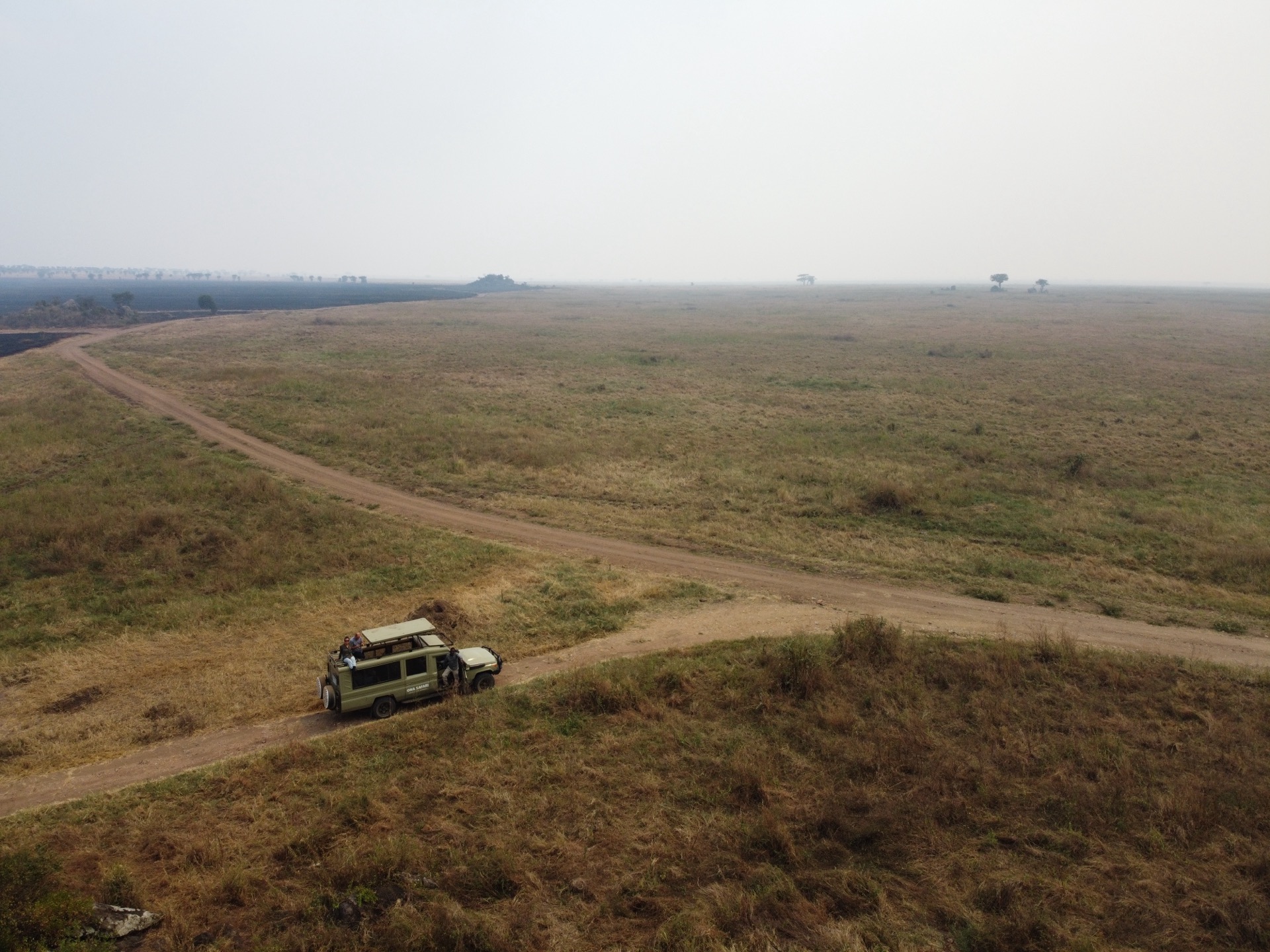
Long grass. In the dry season, grass is short and animals are visible across the plains. By January the grass has grown significantly, and by March it is at its tallest. Smaller predators — caracals, servals, African wildcats — disappear into it. Even larger predators like lions can be difficult to spot when lying in dense grass. This is the most consistent complaint from green season visitors who expected dry-season visibility. The trade-off: the predators are still there and the vegetation context is often more interesting.
Some camps closed. A handful of the most remote camps close during the heaviest rains. Katavi’s main camps typically close April to May. Some Nyerere camps on flood-prone river sites close end of March through May. The major destinations — Ngorongoro, central Serengeti, Tarangire, Ruaha, Lake Manyara — all operate year-round with full services.
Dispersed wildlife. In the dry season, animals concentrate at water sources making them predictable. In the green season, water is everywhere so wildlife disperses across a wider area. You may drive longer to find the same density of animals. This is most noticeable on open plains parks; less noticeable in Ngorongoro Crater, where geography concentrates wildlife regardless of season.
Park-by-park guide
Ngorongoro Crater — excellent year-round. The crater floor holds roughly 25,000 animals year-round regardless of rain, because the volcanic bowl traps permanent water and grassland. The 30 black rhinos, resident lion prides, elephant herds, and enormous buffalo concentrations do not leave in the wet season. In the green season the crater floor turns vivid green; the walls develop dramatic mist and cloud layers. For photography, the green season version of Ngorongoro is often more compelling than the dry-season dust. The crater descent road is sealed, so road access is unaffected by rain. Daily conservation fees apply year-round and do not discount for green season visits.
Serengeti — January–February is a peak event; rest is very good. January and February are not off-peak in the Serengeti — they are calving season at Ndutu, and they represent some of the best game viewing of the year. The south of the park near Ndutu fills with wildebeest, the predator activity is intense, and the grass on the short-grass plains is still relatively manageable. November and December bring quiet, green conditions and arriving migratory birds. March is the beginning of the long rains and the tail of calving — still good. April and May bring heavier rain and some road limitations in the south, but the central Serengeti near Seronera remains accessible and the park is genuinely empty.
Tarangire — excellent in November–December. Tarangire’s dry-season claim to fame is the largest elephant concentration on the northern circuit, as elephants from across the ecosystem converge on the Tarangire River during the drought. When the short rains arrive in November, this concentration is still in place — and migratory birds are arriving simultaneously. November is arguably Tarangire’s best month because it combines concentrated elephants with the start of excellent birdwatching. From January onward, elephants begin to disperse into the wider ecosystem as water becomes available elsewhere. Birding in Tarangire remains excellent through April.
Ruaha — open year-round, with some service reductions. Ruaha operates year-round and remains open through the long rains, though some camps reduce to skeleton services from January to March (the quietest months). The Great Ruaha River holds water year-round, providing reliable game viewing along the bank corridor. The green landscape is beautiful. Predators — Ruaha has significant lion, leopard, and cheetah populations — are present but harder to spot in the long grass. Walking safaris, one of Ruaha’s signature offerings, continue in the green season.
Lake Manyara — excellent for waterbirds in green season. The soda lake’s water level rises significantly in the wet season, attracting thousands of flamingos and a wide range of waterbirds. If flamingos are a priority, the green season is the better choice. The groundwater forest stays green. Tree-climbing lions are present year-round. Entry is USD 35.40 per person per day — the lowest fee on the northern circuit.
Katavi — avoid April and May. Katavi is one of Tanzania’s most remote and rewarding parks for experienced safari-goers, but it is a dry-season destination. Most camps close April to May due to flooding and road access issues. The best Katavi experience is July to October, when wildlife concentrates around the Katuma River and seasonal pools. Do not plan a Katavi itinerary around the green season months.
What to pack for the green season
A lightweight rain jacket is the most important addition. In November and December, expect brief afternoon showers — a packable shell with hood is sufficient. For the long rains of April, pack something more substantial. Either way, all-day rain is unusual; you are mostly managing afternoon downpours.
Lighter, more breathable clothing than you would bring for dry season. The green season is warmer and more humid than the peak months, particularly at lower elevations. Mornings are cool but mid-day temperatures can be significantly higher than July.
Waterproof protection for camera gear. Even brief showers can soak equipment quickly from a game vehicle. A dry bag or waterproof insert for your camera bag is cheap insurance.
Waterproof footwear if you are doing walking activities. Bush walking in wet conditions means wet feet otherwise.
Binoculars. They matter in every season, but in the green season with longer grass and dispersed wildlife, a good pair earns its weight faster.
Check camp opening dates before booking. A small number of camps close in April to May. Verify directly with the lodge or your operator.
The case for January and February
I was at Ndutu in February during calving season. It is the best single month I have spent in the Serengeti, and it is not peak season by any conventional measure.
The plains were green. The afternoon skies built into cumulus towers that turned the light extraordinary by 4 pm. We had one cheetah hunt, two lion kills, and a hyena pack working the wildebeest herds — all before 9 am on consecutive mornings. The Ndutu area was busy for the calving zone (it always is in February), but outside that corridor we had the park to ourselves.
November is my other choice over the July–October peak. The short rains in the Serengeti are brief and usually afternoon events — morning game drives are clear. The park is genuinely empty. The migratory birds have just arrived from Europe and the resident birds are in breeding plumage. Lodge rates are 30 to 50 percent lower than August. And you will not queue for a lion sighting.
The green season is not a compromise. Chosen correctly — January or February for calving and predator action, November for birding and quiet — it is the better choice. The travellers who know this tend not to advertise it.
For a full overview of what Tanzania’s parks deliver month by month, see the Tanzania when-to-go guide. Calving season in detail: Serengeti calving season guide. For birdwatching specifics including which Palearctic migrants to expect and when: the migrant bird calendar. Northern circuit parks and what each one delivers: Tanzania best national parks.
Frequently asked questions
Is a green season safari in Tanzania worth it?
Yes — with the right park and month. The best cases for green season: January–February at Ndutu for wildebeest calving (arguably the best single wildlife event in the Serengeti calendar, with ~500,000 calves born over a 6-8 week season and extremely high predator activity); November–December for quiet Serengeti game viewing with green landscape and arriving migratory birds; Ngorongoro Crater year-round (the green season version is arguably better than peak season — greener floor, dramatic skies, same resident wildlife). The weakest case for green season: Katavi (most camps closed April–May) and remote Nyerere camps on flood-prone sites.
When is the green season in Tanzania?
The green season covers two distinct periods: 'short rains' (November–December), which typically bring afternoon/evening showers that rarely disrupt a full safari day; and 'long rains' (late March–April/May), which are more persistent and can affect road access in some parks. January–February falls between the two rain periods and is actually one of the best months — the calving season at Ndutu is in full swing, the landscape is green from the short rains, and crowds are low. April is the heaviest month; some remote camps close and some roads in Nyerere become impassable.
Which parks are best for a green season Tanzania safari?
Ngorongoro Crater: excellent year-round; the green season floor with dramatic cloud backdrop is often more photogenic than dry-season dust. Serengeti in January–February: the calving season at Ndutu is a peak event regardless of season. Tarangire in November–December: resident elephants still concentrated before dispersal, migratory birds arriving. Lake Manyara: higher water levels bring more flamingos and waterbirds. Ruaha: open year-round, beautiful in green season though some camps reduce services. Avoid: Katavi (most camps close April–May), remote Nyerere areas in April–May (flooded roads).
How much cheaper is a green season Tanzania safari?
Green season rates at mid-range and luxury lodges drop significantly compared to peak July–October. Many camps reduce rates by 30–50 percent in the green season months, with the steepest cuts in April–May. The saving on accommodation more than offsets the modest additional cost of rain gear or a more conservative game-drive schedule. Budget and mid-range camps often see the largest proportional reductions. Ask specifically about green season rates — some properties do not advertise the reduction prominently on their headline pricing.
What wildlife is unique to the green season in Tanzania?
Migratory birds (November–April): Tanzania has over 1,100 recorded bird species, with a large proportion being Palearctic migrants from Europe and Asia present only in these months — storks, eagles, harriers, rollers, bee-eaters, and waders. Resident birds are in breeding plumage during the wet season: weavers, bishops, widowbirds. Wildebeest calving (January–February, Ndutu): approximately 500,000 calves born over a 6-8 week season, the highest predator activity of the year. Baby animals: giraffe calves, elephant calves, zebra foals, and impala lambs are all born around the wet season — predators with cubs are more commonly sighted.
What should I pack for a green season Tanzania safari?
A lightweight rain jacket — afternoon showers in November–December are brief but frequent; for the long rains (March–April), pack something with hood coverage. Lighter, breathable clothing than you would bring for dry season (the wet season is warmer and more humid). Waterproof covering for camera equipment or a dry bag in your vehicle. Waterproof footwear for walking activities. Check camp opening status before booking — a handful of the most remote camps close April–May. Wildlife-wise, expect to drive longer for some animal sightings in long grass; a good pair of binoculars matters more in green season than dry season.