
Facts & prices checked: 2026-06-24
Mikumi is the park most Tanzania itineraries skip, and for most travellers that is a mistake they do not notice until they look at the logistics of the alternatives. It sits 4 hours by road from Dar es Salaam on the TANZAM Highway — the only major Tanzanian national park where you can arrive by bus, rental car, or private transfer without boarding a domestic aircraft. That accessibility is its defining feature, and it matters more than the wildlife comparison with more famous parks.
I send guests here who are arriving into or departing from Dar es Salaam and want a safari without the cost and complexity of a full fly-in. For two or three days with good lions, hippos, and elephants, it works.
What makes Mikumi different
The TANZAM Highway — Tanzania’s main road to Zambia — passes directly through Mikumi National Park. This is unusual in Africa: a major tarmac road cutting through active game country, where elephants cross and lions rest in the grass beside the verge. Most visitors arriving by road see their first wildlife before they have even reached the park gate. The park is 3,230 km² — not large by Tanzanian standards, but substantial enough for a 2–3 night visit to feel varied.
Mikumi’s geographical position matters for another reason. It shares an ecological boundary with the Selous-Nyerere ecosystem to the south — one of the largest wilderness areas in Africa. Wildlife moves between the two systems. Elephants and African wild dogs that range within the broader ecosystem cross into Mikumi seasonally. This is why the occasional wild dog sighting in Mikumi is possible even though it is not a reliable destination for them: the corridor connects to populations that are large enough (particularly in Nyerere, with 800–1,000 wild dogs) to produce wandering individuals.
Wildlife: the Mkata Flood Plain
The heart of Mikumi for game viewing is the Mkata Flood Plain — the open grassland and seasonal wetland in the northern section of the park, closest to the main gate and where most safari lodges are positioned. In the dry season (June–October), the Mkata River is the primary water source for the surrounding area and animals concentrate here predictably.
Lions are Mikumi’s headline. The park has a reputation for reliable lion sightings that is well-earned — the open flood plain makes them visible in a way that the denser bush of southern Nyerere or the tree cover of Tarangire does not. Lion prides in Mikumi are not numerous, but the landscape makes them findable. Morning drives on the flood plain regularly produce encounters.
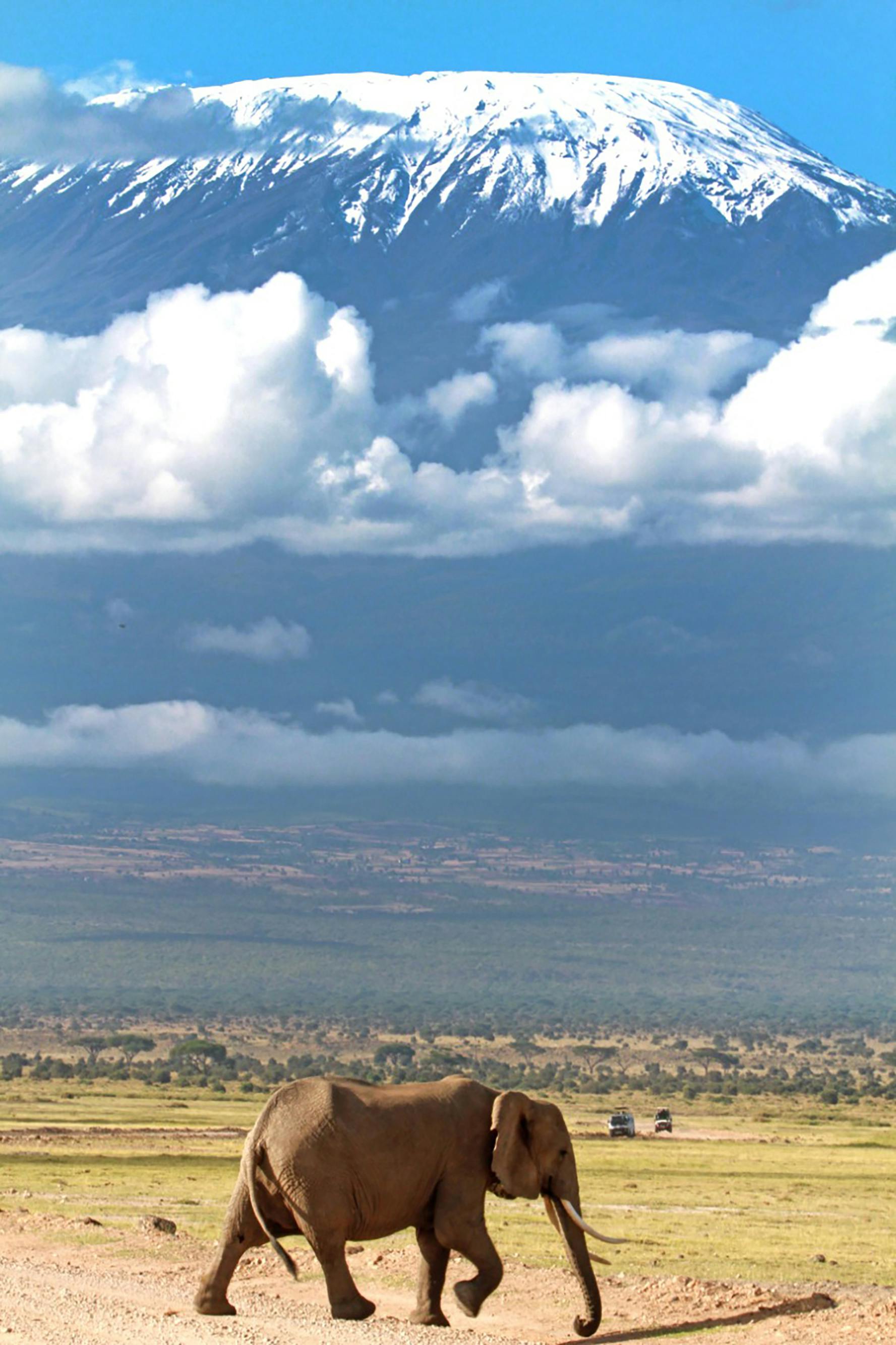
Elephants move through in family groups year-round, with the largest congregations during the dry season when they are drawn to the remaining water and vegetation at the Mkata River. Groups of 20–50 are common in July and August; larger aggregations are possible.
Masai giraffe are abundant in the areas of mixed woodland and open bush that border the flood plain. The tall individuals visible above the treeline as you drive in are often the first wildlife sighting for arriving guests.
Hippos are reliable at the Mkata River — present in pools year-round and most visible in the early morning when they are still at the water’s edge before retiring into deeper pools for the heat of the day. Numbers fluctuate with the season and water levels, but a morning drive that includes a river stop will almost always produce hippo sightings.
Zebra and wildebeest are abundant on the flood plain, particularly in the dry season. The open grassland concentrates large mixed herds that provide the broad backdrop of African plains game that most visitors associate with Tanzania safari.
Cape buffalo move in medium-sized groups through the woodland areas and gather near water. Unlike the huge herds of the central Serengeti, Mikumi’s buffalo are in groups of tens to low hundreds — still impressive and a reliable sighting.
Spotted hyena are common, particularly on evening and early morning drives. Baboons and warthog are omnipresent. Vervet monkeys inhabit the woodland edges.
Leopards are present but infrequently seen — the bush density in the riverine woodland gives them good cover. Ask your guide if there are known individuals with territories near the main drive circuits; some individuals in regularly patrolled areas become reliably findable.
The Mkata River corridor
The Mkata River is Mikumi’s central ecological feature — the reason the flood plain holds wildlife during the dry season and the landmark around which most morning drives are planned. The river runs west to east through the northern park section, passing through a combination of riverine woodland (fever trees, sycamore figs, and acacias) and open grassland.
Hippo pools occur at regular intervals along the river, and the areas where the water is shallow enough for wildlife to drink are the productive spots for patient observation. Watching a herd of zebra or buffalo approach a river crossing while a lion pride lies in the shade 200 metres away on the opposite bank is the Mikumi morning experience.
Nile crocodiles are resident in the Mkata pools. They are large, slow, and easy to overlook against the banks — the guide will know where to look.
Getting there
The most important fact about Mikumi access: the TANZAM Highway (A7) is a sealed road in good condition for most of its length from Dar es Salaam to the Mikumi area. This means the drive is in a standard vehicle for most of the journey, with the transition to dirt track only on the specific lodge access roads within the park.
By self-drive vehicle: Approximately 300 km from Dar es Salaam via the A7. In good traffic conditions, allow 4 hours. A 4WD is recommended for lodge access roads within the park, though the main circuit routes are generally manageable in a standard high-clearance vehicle in the dry season. Vehicle rental in Dar es Salaam runs approximately USD 80–120 per day.
By bus: Long-distance buses operating the Dar–Morogoro–Iringa route (Dar Express, Linjemoto, and others from Ubungo terminal) stop at Mikumi Town on the park boundary. The journey takes 4–5 hours. From Mikumi Town, guides with vehicles are available for hire at approximately USD 60–80 per day. This is the budget option and works, though organising guides in advance through the lodges removes uncertainty on arrival.
By domestic flight: Coastal Aviation operates scheduled and charter flights between Julius Nyerere International Airport (DAR) and Mikumi Airstrip — approximately 30–40 minutes. This eliminates the road journey and costs approximately USD 80–120 one-way per person. It is the option for travellers who want to combine Mikumi and Nyerere in the same trip without the 4-hour road segment.
Costs: a realistic budget
Park fees (TANAPA 2024/25): USD 35.40 per adult per day — Mikumi sits in TANAPA’s lowest fee tier alongside Ruaha, Katavi, and Rubondo, well below the Serengeti (USD 82.60) or Ngorongoro (USD 70.80 plus the USD 295 per-vehicle crater descent fee).
Accommodation:
- Budget camps outside the park boundary: USD 30–60 per person per night
- Mid-range (Zikomo Safari Camp, Mikumi Wildlife Camp): USD 150–300 per person per night
- Upper mid-range (Foxes Mikumi Safari Camp): approximately USD 300–500 per person per night
Realistic 3-night estimate (2 people, mid-range accommodation, self-drive):
- Vehicle rental 4 days at USD 100/day: USD 400
- Accommodation 3 nights × 2 people at USD 200/person: USD 1,200
- Park fees 3 days × 2 people at USD 35.40: USD 212.40
- Total: approximately USD 1,812 for two people, or USD 906 per person
For a tighter budget using the bus arrival, local guides, and budget-camp accommodation, the cost can be reduced substantially — to approximately USD 675 per person for a 3-night trip. This is the figure cited in the German guide and reflects the lowest reasonable end of the cost range.
Birding in Mikumi
Mikumi’s bird list exceeds 400 species, making it one of the stronger birding parks in the southern Tanzania circuit without being specifically marketed as a birding destination. The mix of flood plain, riverine woodland, and miombo bushland in the southern sections creates multiple habitat types within a compact area.
Key species for visiting birders: Crowned crane (both common and East African grey crowned, often on the flood plain), southern ground hornbill (impressive and loud), African fish eagle on the river, martial eagle, various vulture species at kills, lilac-breasted roller, and the full suite of savannah specialists. Woodland kingfisher and palm-nut vulture in the riverine areas. The dry season is the primary window for the resident species; the green season (November–March) adds Palearctic migrants from Europe and Asia.
Combining Mikumi with Nyerere
The road south from Mikumi connects the park to the boundary of Nyerere National Park — approximately 100 km and roughly 90 minutes’ drive. This makes a road-to-road combination possible for travellers with 4WD vehicles and the logistics for self-guided or operator-guided driving between the parks.
The more common arrangement for international visitors: drive to Mikumi, spend 2–3 nights, then take the short domestic flight from Mikumi Airstrip to a Nyerere airstrip (approximately 20 minutes, significantly less than the road alternative) for the more remote and fly-in Nyerere experience. This gives the southern circuit’s essential contrast — Mikumi’s accessible road-entry wildlife and Nyerere’s boat safaris and walking — at a combined cost that is lower than entering Nyerere by fly-in from Dar for the full trip.
See the Nyerere park write-up for the boat safari and wild dog detail.
Best time to go
June to October (dry season): The productive window. Low vegetation on the flood plain improves visibility. Animals concentrate at the Mkata River. Roads are firm and easily navigable. July to September is the peak for lion sightings and large elephant groups. Daytime temperatures are comfortable; mornings on the game drives are cool.
December to March: The short rains followed by a drier period. Wildlife disperses somewhat but the Mkata River retains water and the flood plain game is still present. Dense green vegetation makes the park look different and the birding improves with returning migrants. Quieter, with lower accommodation prices.
April to May (long rains): The period to avoid for most visitors. Tracks within the park can become impassable after heavy rain. Some camps reduce operations or close. Wildlife is most dispersed. Access is possible but the experience is compromised.
Practical details
Vehicle: 4WD is recommended for lodge access roads and for reaching the more remote sections of the park. The main circuit near the flood plain is generally accessible in high-clearance 2WD during the dry season; ask your lodge about specific road conditions on arrival.
Self-drive: Mikumi is one of the few Tanzanian national parks where self-drive is genuinely feasible — the main circuit is not complex, signage is reasonable, and the park is compact enough that navigation without a guide is manageable. However, a local guide adds meaningfully to wildlife sightings, particularly for cats and rarer species. Most lodges can arrange a guided drive even for self-drive visitors.
Getting to Zanzibar from Mikumi: Fly back to Dar (either via domestic flight from Mikumi Airstrip or by road), then take the ferry or short domestic flight to Zanzibar (ZNZ). The ferry from Dar’s ferry terminal to Stone Town takes approximately 2 hours on the fast service. The domestic flight is 20 minutes. See the Zanzibar getting-there guide for the full logistics.
The honest verdict
Mikumi is not the Serengeti. The wildlife density is lower, there are no rhino, and the landscape is less dramatic than the Ngorongoro Crater rim. What it is: the most accessible road-entry safari in Tanzania, with reliable lions and elephants, a good lodge tier at lower cost than the northern circuit, and a logical staging point before or after Dar es Salaam. For first-time visitors to Tanzania who want a genuine two- or three-night safari without the complexity of flying between multiple northern circuit parks, it is the honest, underappreciated recommendation.
For the Tanzania park fees breakdown including Mikumi’s current TANAPA rates, see the fees guide. For how Mikumi fits within the broader Tanzania circuit, see the national parks comparison, or browse the full Tanzania safari hub for every park and planning guide.
Frequently asked questions
What makes Mikumi worth visiting?
Mikumi is the only major Tanzanian national park you can reach by road from Dar es Salaam without a domestic flight — 4 hours on the TANZAM Highway. This makes it the most accessible safari option for travellers arriving at DAR with limited time or limited budget. Despite its accessibility, it has reliable lion and elephant sightings, the Mkata Flood Plain for large concentrations of plains game, and enough wildlife for a solid 2–3 night safari.
What animals will you see in Mikumi?
Reliable sightings include lions (Mikumi is known for consistent lion encounters, particularly on the Mkata Flood Plain), elephants in family groups, Masai giraffe, zebra, wildebeest, Cape buffalo, hippos in the Mkata River, spotted hyena, baboons, and warthog. Leopards are present but rarely seen. African wild dogs occasionally pass through from the adjacent Selous-Nyerere ecosystem. No black rhino.
How do you get to Mikumi from Dar es Salaam?
By road: approximately 300 km, roughly 4 hours on the TANZAM Highway (A7) toward Zambia. The highway passes through the park — you will see animals from the road. By bus: Dar Express, Linjemoto, and similar services stop at Mikumi Town on the park boundary; vehicles and guides are available locally. By domestic flight: Coastal Aviation flies DAR to Mikumi Airstrip in approximately 30–40 minutes if you want to save the drive.
How much does a Mikumi trip cost?
Park fee: USD 35.40 per person per day (TANAPA 2024/25) — Mikumi is in TANAPA's lowest fee tier, well below the Serengeti's USD 82.60. Self-drive vehicle rental from Dar: approximately USD 80–120 per day. Mid-range accommodation (Zikomo Safari Camp, Foxes Mikumi): USD 150–500 per night. A realistic 3-night, mid-range trip for two people works out to approximately USD 906 per person — significantly cheaper than a comparable northern-circuit or southern fly-in safari.
Can you combine Mikumi with Nyerere National Park?
Yes — this is the standard southern circuit budget route. Drive from Dar to Mikumi (4 hours, 2–3 nights), then continue approximately 100 km south to Nyerere's boundary, or take a short domestic flight from Mikumi Airstrip to a Nyerere airstrip (~20 minutes). This gives you Mikumi's road-accessible wildlife as a cheaper entry to the southern circuit before the more remote and more expensive Nyerere component.
What is the best time to visit Mikumi?
June to October is the dry season and the best time for game viewing — vegetation is low, animals concentrate at the Mkata River and flood plain, and road conditions are good. July to September is the peak window for both wildlife density and reliable lion sightings. The green season (November through May) has dense vegetation and fewer visitors, but wildlife disperses and sightings are more variable. Avoid April to May (heavy rains, some tracks impassable).
Is Mikumi good for a first Tanzania safari?
Yes, for the right expectations. Mikumi is simpler to access and less expensive than the northern circuit or the southern fly-in parks. Wildlife is genuinely good — not at Serengeti scale, but solid for lions, elephants, and plains game. If you are new to Tanzania and want a safari without the complexity of a full northern circuit or without the cost of a fly-in to Nyerere or Ruaha, Mikumi is the honest entry-level recommendation.