
Facts & prices checked: 2026-06-25
Tanzania safari accommodation marketing is one of travel’s great confidence games. “Tented camp” appears on a USD 150/night canvas structure with a zippered door — and on a USD 1,500/night plunge-pool suite whose only canvas element is a decorative exterior wall. “Eco lodge” can mean solar panels and composting toilets, or it can mean a concrete block building near a nature reserve. “Luxury camp” is applied to properties across a USD 400–2,000 price range.
This guide cuts through the terminology and explains what actually matters when comparing Tanzania safari accommodation: the five practical categories, the crucial inside-park vs private-concession distinction, what mobile camps and fly camps are, and the one factor that predicts game drive quality better than any accommodation category.
The terminology problem
The Tanzania safari accommodation market has no regulated terminology. Any operator can call any property a “tented camp,” “eco-lodge,” “luxury camp,” or “safari lodge” regardless of what the property actually is. This creates genuine confusion for first-time visitors researching online.
The useful distinctions are not the label but the specifics:
- Construction type: Canvas walls (lets you hear the bush, more immersive, less weatherproof) vs solid walls (better insulation, quieter, less immersive)
- Scale: A 4-tent camp means 8–12 guests maximum; a 40-room lodge means 80+ guests sharing the same roads
- Location type: Inside a national park (TANAPA rules apply) vs private concession (operator’s own rules)
- Activities included: Whether game drives, park fees, guide time, and specialist activities are bundled
- Guide employment model: Camp-employed naturalist vs freelance driver-guide contracted per trip
These five dimensions define the experience. The marketing label does not.
Budget camping — TANAPA public campsites
Price range: USD 200–300 per person per day (all-inclusive), often less if self-organizing
Tanzania National Parks (TANAPA) operates public campsites inside most national parks. Public campsite fees are USD 35.40 per person per night at Serengeti and Ngorongoro Conservation Area; special campsites (exclusive use, set apart from public areas) cost USD 70.80 per person per night at Serengeti.
What TANAPA public campsites provide: a designated pitch, basic pit latrine block, sometimes a communal cold shower. What they do not provide: tents, sleeping equipment, food, vehicles, or guides. Budget operators supply all of this — tent, cook, camp kitchen, sleeping bag. The vehicle and guide are hired separately or as part of a package.
A 7-night northern circuit budget camping safari costs approximately USD 1,800–2,400 per person in low season, or USD 2,400–4,200 in peak season, including park fees. For a full breakdown of what drives that total — park entry fees by park, vehicle costs, and guide fees — see the park-by-park cost guide.
The wildlife experience at a public campsite has no equivalent at a lodge. I have woken to hyenas circling the food storage at a Serengeti public campsite at 3 a.m. — that is not a complaint, it is the point. You are inside the park, not on the rim. At dawn you hear lion calls before you hear coffee poured. For travelers who are comfortable in basic outdoor conditions, this is not a compromise — it is the more immersive version of Tanzania.
The practical downsides: no private bathroom, cold water, no game drives included in a base rate, noise from both wildlife and neighboring groups, and cook-prepared camp food that varies entirely by operator quality. Shared vehicles on a budget package typically carry 6–7 people.
For the full breakdown of Tanzania camping options — public vs special vs fly camping, what mobile tented operators provide, night-time wildlife at camp (hyenas, lions, elephants at water points), star-gazing under zero light pollution, and the 7-day northern circuit camping circuit — see the Tanzania camping safari guide.
Mid-range tented camps and lodges
Price range: USD 100–500 per person per night
The most consequential quality jump in Tanzania safari accommodation happens in this range. Mid-range tented camps (the classic definition) are permanently sited structures: canvas walls on a solid timber or concrete platform, en-suite bathroom with a flush toilet and hot shower (usually solar), a private veranda, and electricity for a few hours in the evening.
What mid-range typically includes: accommodation, all meals (full board — breakfast, lunch, and dinner), twice-daily game drives in camp vehicles, an employed guide-driver. Park fees and conservation charges are often — but not always — listed separately. Always clarify.
The “tented camp experience” at mid-range is what most travelers picture when they imagine a Tanzania safari: the sound of the bush through canvas walls at night, a communal mess tent for meals, a campfire after dark, morning drives starting before dawn. The guide is usually a camp employee rather than a freelance contractor, which means they know the property’s territory and have logged time in the specific ecosystem.
Mid-range Serengeti lodges typically cost USD 300–600 per person per night. In Karatu (Ngorongoro gateway), well-reviewed mid-range accommodation runs approximately USD 150 per person per night. The variation within this bracket is large — a USD 150/night camp and a USD 500/night camp are both “mid-range” but differ enormously in guide quality, vehicle exclusivity, and food.
High-end permanent camps
Price range: USD 300–600+ per person per night
High-end permanent camps are distinguished from mid-range primarily by exclusivity: fewer guests, private vehicles with a maximum of 4–6 people, and naturalist guides employed and trained by the camp rather than contracted in. Most have assigned vehicles — your guide, your vehicle, your itinerary — rather than shared camp vehicles rotating passengers.
At this level, multiple game drives per day are included (not a fixed morning/afternoon slot). Bush dinners and special experiences — dining by a river, sundowners at a scenic point — are standard rather than exceptional. En-suite bathrooms have reliable hot water (boiler or solar backed-up by a generator). The camps are often smaller: 6–12 tents rather than 20–40.
Properties in private concessions at this level offer night drives and walking safaris, which are unavailable inside national parks. Night drives in Tanzania’s open ecosystems reveal species that are almost invisible by day — genets, civets, bushbabies, porcupines, owls, and on rare occasions aardvarks or honey badgers. Tarangire has received particularly strong reviews for night drive wildlife.
The Sanctuary Swala Camp in Tarangire, as one example, published 2025–2026 rates of USD 1,250–1,650 per person per night — at the top of this bracket moving into luxury. Namiri Plains (Serengeti, eastern zone, specialist cheetah territory) lists from USD 740 per person per night.
Luxury and ultra-luxury camps
Price range: USD 600–2,000+ per person per night
The defining feature of Tanzania’s luxury tier is not the room — it is exclusivity. A USD 600–2,000/night camp is not primarily selling you better wildlife (location and guide determine that) — it is selling you fewer people sharing the experience.
A well-designed luxury camp typically has 4–8 tents maximum. You have a private vehicle and a guide assigned exclusively to your party. Other guests in the camp are at most 8–16 people; in a “sole use” booking, no other guests exist. Specialist activities are available on request: private walking with an armed tracker, fly camping extensions, specialist birding, helicopter transfers. Spa facilities, gourmet dining, and premium beverages are standard. The Elewana Serengeti Explorer lists from USD 900–1,450 per room per night (full board). Ker & Downey Africa’s journeys range from USD 850–3,000 per person per night.
At the ultra-luxury end, “sole use” properties — where your group books the entire camp — command significant premiums. Thanda Island, off the Tanzanian coast, charges from USD 40,750 per night for exclusive use (off-peak season), rising to USD 45,750 per night in peak season (mid-December to early January) — plus mandatory conservation and marine park levies.
One important caveat: exclusivity and wildlife quality are separate variables. A beautifully appointed luxury camp in a less productive wildlife zone can deliver a more forgettable game drive than a well-located mid-range camp in the right part of Serengeti’s central ecosystem. Spending more buys you privacy, service, and activities. It does not automatically buy you better wildlife encounters.
Mobile camps — following the wildlife
Mobile camps are a distinct category with a specific purpose: following seasonal wildlife movement rather than staying in one fixed location year-round. The physical camp — tents, kitchen, staff mess, dining structure — is struck and moved 2–4 times per year.
The most common application is the Great Migration in the Serengeti ecosystem. A mobile camp might be positioned on the Mara River in July–August for river crossings; on the western corridor in May–June for crossings there; and on the short grass plains of Ndutu in January–February for calving season. A fixed-location Serengeti lodge sits in one zone regardless of where the migration is; a mobile camp is always in the best position for your specific travel dates.
Mobile camps use special campsites — exclusive-use TANAPA sites that are booked months in advance and cost USD 70.80 per person per night (Serengeti special campsite rate). This, combined with the additional logistics of moving the camp infrastructure, makes mobile camps more expensive than fixed-location equivalents. The Great Migration Mobile Camp — a 5-tent operation — starts from approximately USD 365 per person sharing (excluding Serengeti park fees). Legendary Serengeti Mobile moves to three different areas following the migration. The Tanzania mobile camps guide covers specific camp names, seasonal positions, and how to book.
Mobile camp infrastructure is intentionally simple: no plumbed toilets or permanent showers (hot water is bucket-and-shower, and can be inconsistent after long driving days). The trade-off for that simplicity is being front-row for wildlife that fixed camps miss entirely.
Fly camps — one night in the bush
A fly camp is a single-night camp set up specifically for one group, usually as a 1–2 night extension of a main fixed camp, and reached by walking rather than driving.
The sequence: your guide leads you on a 2–3 hour walk from the main camp in the afternoon. A small crew has gone ahead to set up a simple camp at a scenic location — a kopje, a riverbank, a raised viewpoint. The setup is minimal: bedrolls or lightweight cots under a fly sheet or the open sky, a camp cook, a small kitchen, a campfire. There are no other guests. You eat, watch the stars, listen to the night (with the ranger on watch nearby), and walk back in the morning.
Fly camps are most common in Tanzania’s southern and western circuits, where walking safaris are part of the standard offering: southern Ruaha, the Nyerere/Selous ecosystem (which offers boat safaris, walking safaris, fly camping, and night drives), and Katavi. They are rarely available inside the northern circuit’s national parks, where TANAPA walking safari rules are more restrictive. As a reference point, Asilia Africa’s Naboisho Camp (Kenya’s Masai Mara conservancy, not Tanzania) prices its fly camping extension at approximately USD 175 per person per night — a useful benchmark, though Tanzania southern-circuit operators set their own rates.
A fly camp is not a comfortable experience in the conventional sense — you are sleeping in the bush with minimal separation from the night. It is the most stripped-down version of Tanzania safari: just the bush, the sounds, your guide’s knowledge, and nothing else.
Inside the national park vs private concession — the most important distinction
This distinction determines which activities are available on your safari, more than any other single factor.
Inside Tanzania National Parks (TANAPA rules):
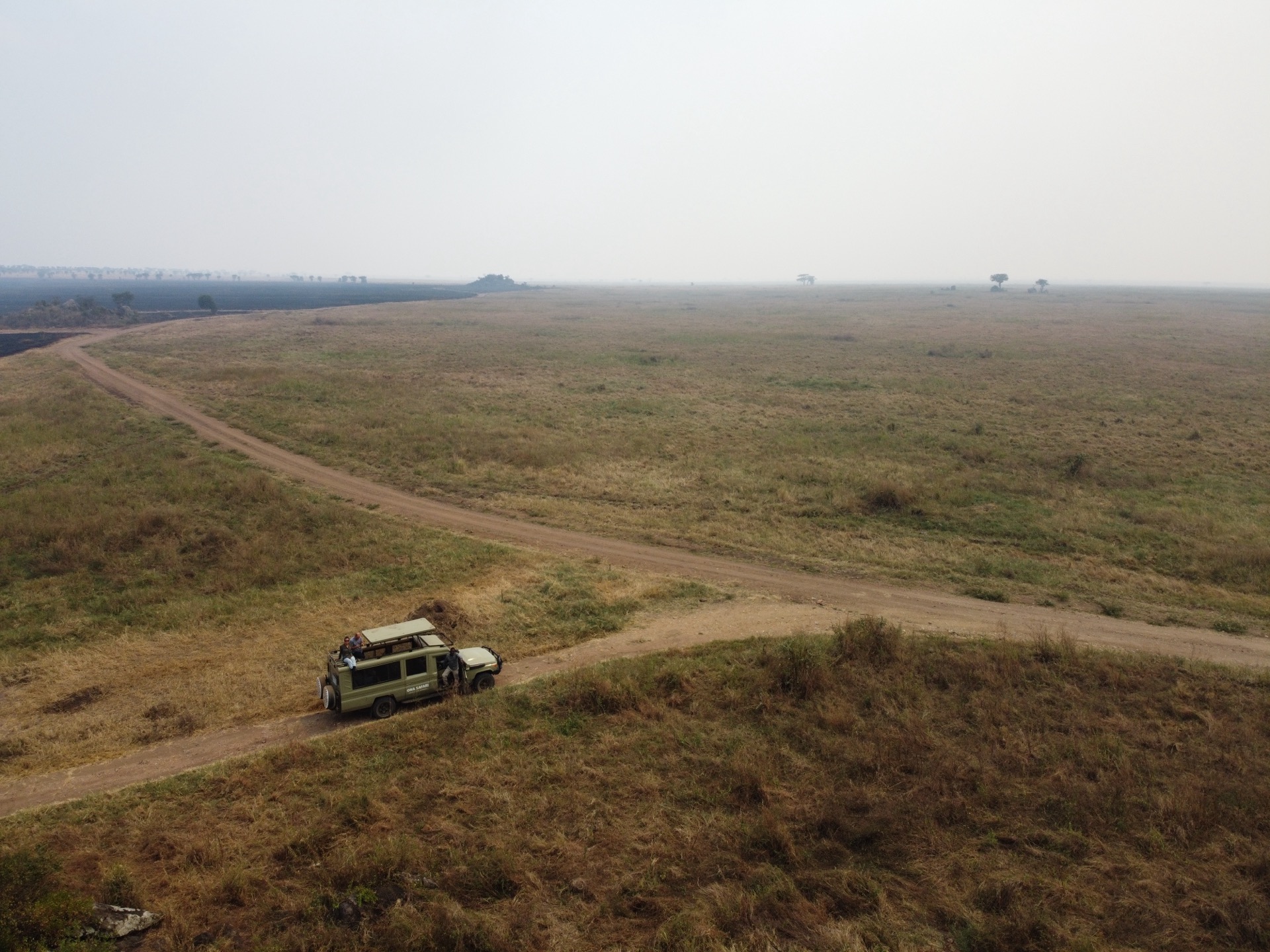
- Game drives permitted during daylight hours only
- No night drives
- No walking safaris except on specifically designated walking trails (rare, specific parks only)
- Fixed campsite locations
- Conservation fees paid in addition to accommodation: public campsites USD 35.40 per person per night; special campsites USD 70.80 per person per night (Serengeti); Tarangire entry fee USD 59 per adult per day; Ngorongoro crater descent USD 295 per vehicle
Private concessions (private land, community Wildlife Management Areas, or conservancies):
- Night drives available
- Walking safaris available (with licensed armed ranger)
- Flexible game drive timing (before dawn, after dusk)
- Often fewer other vehicles on the same roads
- Conservation fees go partly to the concession and the community
- Fewer formal restrictions on camp location flexibility
The same camp brand may have properties in both categories. Tarangire has received particularly strong reviews for its concession camps offering night drives — “the best night drive ever” is a specific guest review associated with Kuro Tarangire camp, and the lake environment is noted as offering a “soft landing” experience for first-time safari visitors who want both national park game drives and night drives.
Always ask directly: “Is this camp inside the national park boundary, or on a private concession?” The answer changes what you can do each evening.
The practical checklist when comparing camps
Six questions to ask before confirming any Tanzania safari accommodation:
1. Guide qualifications and employment model Is the guide a camp employee with a defined territory and years of experience in this specific ecosystem, or a freelance driver-guide contracted by the operator? Employed naturalist guides at better properties have studied the same area across seasons and years. Freelance guides vary from excellent to unqualified. Ask: how many years has this specific guide worked this specific park?
2. Vehicle capacity Maximum 4–6 people per vehicle produces a meaningfully different experience from 7–8+. In a 4-person vehicle, every person has a window seat and unobstructed sightlines. Stopping time, positioning, and the intimacy of the experience all improve with fewer people. Ask for the stated maximum per vehicle before booking.
3. Location specificity “Near Serengeti” can mean inside the central plains, on the western corridor, in the northern Mara ecosystem, or 45 minutes from the nearest park gate. Each is a different wildlife experience. Ask for the grid reference or the specific zone. The same month produces dramatically different wildlife in different zones.
4. What is genuinely included In Tanzania safari pricing, “fully inclusive” can mean accommodation and meals only, or it can mean meals, all drinks, all game drives, all park fees, laundry, and transfers. It rarely means everything. Clarify: are park fees included? Are park fees added to the per-night rate as a separate line? Are transfers included? Are drinks included? Budget camps sometimes omit park fees from the headline rate — the actual cost can be USD 35–70/person/day higher than quoted.
5. Inside park or private concession As above — this single answer determines whether night drives and walking safaris are available, which is often the most significant differentiator in the experiential quality of a safari.
6. Conservation accreditation Membership in organizations like the Tanzania Private Conservation Society, or Rainforest Alliance certification, indicates a property has met some level of vetted environmental and social standards. Not universal, but worth checking for travelers who care about conservation impact.
Southern circuit accommodation: Mikumi as a road-accessible entry
For travellers combining Tanzania’s southern circuit with Dar es Salaam or Zanzibar, Mikumi National Park is the one exception to the southern circuit’s fly-in model. Mikumi lies approximately 300 km from Dar on the A7 highway — the only major southern circuit park with a tarmac road to the gate and no domestic flight required.
Mid-range camps inside and immediately adjacent to the park — Zikomo Safari Camp, Mikumi Wildlife Camp, Foxes Mikumi Safari Camp — run USD 150–500 per person per night and are positioned near the Mkata Flood Plain, where lions, elephants, hippos, and buffalo concentrate in the dry season (June–October). TANAPA public campsites within the park provide the budget option at USD 35.40 per person per night. The entry fee for Mikumi is USD 35.40 per adult per day — the lowest tier in the TANAPA system.
For travellers doing a Mikumi day trip from Dar rather than staying, the Mikumi day trip guide covers the fee breakdown, what time to leave Dar, which wildlife is realistic in a one-day window, and an honest comparison of the day trip versus a 2-night stay. For the full Mikumi accommodation overview and southern circuit context, see the Mikumi National Park guide.
The guide matters more than the thread count
The best safari I’ve been on was not at the most expensive camp. It was at a mid-range property in the southern circuit where the camp manager was also the head guide. He had worked the same area for 12 years and knew individual animal behavior patterns — which waterhole the elephant matriarch used on hot afternoons, which termite mound the leopard used as a lookout, the exact hour the lions came to the river. He found wildlife in places other vehicles never stopped to look.
A USD 1,500/night camp with a first-year guide gives you a beautiful room and a forgettable game drive. A USD 250/night camp with a guide who knows every kopje in a 30 km radius gives you a safari you will talk about for years.
When you are comparing Tanzania safari accommodation options, spend as much time asking about the guide as about the room. Ask who leads the game drives, how long they have specifically worked that ecosystem, whether they are camp employees or contracted per-group. The answer is the most reliable predictor of your safari experience — far more reliable than the accommodation category.
Frequently asked questions
What is the difference between a tented camp and a lodge in Tanzania?
Tanzania safari marketing uses both terms inconsistently — 'tented camp' can describe anything from a USD 150/night canvas tent on a wooden platform to a USD 1,500/night villa with canvas exterior walls and a private plunge pool. The meaningful distinctions are: (1) canvas vs solid construction (canvas lets you hear the night and is considered more 'safari'); (2) number of tents/rooms (smaller properties are more exclusive); (3) location — inside a national park or private concession (determines available activities); (4) included activities — whether game drives, park fees, and guide time are included in the rate. Focus on these specifics rather than the 'camp' vs 'lodge' label.
What is a fly camp in Tanzania?
A fly camp is a single-night bush camp set up specifically for one group as an extension of a main safari camp. A ranger guides you on a 2–3 hour walk from the main camp; a small camp crew has set up a simple bedroll camp at a scenic location — a kopje, a riverbank, or a viewpoint. There are no other guests. You sleep under the stars or a simple flysheet, with a cook and campfire. In the morning you walk back. Fly camps are most common at properties in the southern circuit (Ruaha, Nyerere ecosystem, Katavi) where walking safaris are part of the camp's offering, and are priced as an add-on — Asilia Africa quotes fly camping at approximately USD 175 per person as a camp extension.
What is the difference between a national park camp and a private concession camp in Tanzania?
This distinction controls what activities are available. Camps inside Tanzania National Parks (TANAPA) must follow TANAPA rules: game drives are daylight-hours only, no night drives, no walking safaris except on designated trails, fixed camp locations. Conservation fees (approximately USD 35–70 per person per day depending on the park) are paid in addition to accommodation. Camps in private concessions (private or community land adjacent to national parks) operate under their own rules: night drives are usually available, walking safaris are usually available, and timing is flexible. The same camp company may have properties in both categories — always confirm which applies before booking if night drives or walking matter to you.
What is a mobile camp in Tanzania?
A mobile camp follows the wildlife seasonally — the physical camp is struck and relocated 2–4 times per year to be in the best position for wildlife viewing. Most commonly associated with the Great Migration in the Serengeti ecosystem. Mobile camps use special campsites that are booked months in advance, and rates typically start from around USD 365 per person sharing (Great Migration Mobile Camp, excluding Serengeti fees) up to USD 1,500+ at premium operators. The advantage over fixed camps: the camp optimises for the best wildlife at your specific visit date, rather than being in one fixed location year-round.
What does 'fully inclusive' mean at a Tanzania safari camp?
At a properly fully inclusive Tanzania camp, the rate covers: accommodation, all meals (full board), all game drives in camp vehicles, guide time, laundry, and often local beverages. What it often does NOT cover: national park or conservation area fees (USD 35–70 per person per day depending on the park); international flights; transfers to and from the camp; premium beverages; and any specialist activities such as helicopter flights, fly camping, or specialist photographic guiding. Always clarify what 'fully inclusive' includes before comparing rates, as camps define it differently.
Does a more expensive Tanzania safari camp mean better wildlife viewing?
Not necessarily. Wildlife viewing quality depends primarily on location in the ecosystem, time of year relative to seasonal wildlife movement, and guide knowledge and skill. A well-located mid-range camp in the right zone at the right time with an experienced guide often delivers better game drives than an ultra-luxury camp in a less optimal location. Higher-end camps offer more exclusivity, flexibility (night drives, walking), and more service — but not necessarily more wildlife encounters. Spending time with a guide who has worked the same area for 10+ years often matters more than the nightly rate.