
Facts & prices checked: 2026-06-25
A Tanzania mobile safari camp is not a compromise. It is the most deliberate wildlife positioning available — a camp that goes to the migration rather than waiting for the migration to come to it.
Permanent lodges are built where land was available, permits were granted, and infrastructure could be installed. Mobile camps are positioned where the Great Migration is happening right now. That difference defines everything about the experience.
What is a mobile safari camp?
A mobile camp — also called a seasonal camp, fly camp, or migration camp — is a temporary tented operation that is fully erected for one season, then completely struck and moved (or stored) when the rains arrive and make roads impassable or the migration moves on.
Nothing is permanent. The tents, wooden platforms, dining furniture, kitchen equipment, sleeping beds, bathroom fittings, and staff accommodation all arrive by vehicle at the start of the season and leave at the end. The only things left behind are tyre tracks, which the bush reclaims within weeks.
What this means in practice:
- The camp is positioned specifically where the migration is — not where a building existed when someone applied for a permit 15 years ago
- Tent numbers are deliberately small: most quality mobile camps run 6–12 tents, for a total of 10–20 guests maximum
- All-inclusive pricing is standard: meals, game drives, park fees, and usually laundry are bundled into the nightly rate
- Some operators move the same camp multiple times in one season — following the herds from the calving plains to the northern Serengeti river crossing areas as the year progresses
What mobile camps are not:
Not budget. Top Tanzania mobile camps price at USD 500–1,500+ per person per night at peak season. Some ultra-luxury operators sit above that range entirely. The premium reflects positioning, intimacy, and the real cost of operating a temporary camp deep inside a national park with no permanent infrastructure.
Not rough. The best mobile camps have proper queen or twin beds with good mattresses, en-suite or very private bathrooms (bucket shower or hot-water shower pumped to a tent), proper cooking from a camp kitchen, and attentive service. Nomad Serengeti Safari Camp, for example, operates with six spacious en-suite tents — the size is deliberate. That is the entire point.
Not self-catering. These are fully-serviced operations with camp staff, dedicated guides, and proper meals.
Calving season: southern Serengeti and Ndutu (December–March)
The calving season runs from late December to March, peaking in February across the southern Serengeti short-grass plains and the Ndutu area. The Great Migration involves more than 1.2 million wildebeest and 300,000 zebra annually — and in February, hundreds of thousands of calves are born across the Ndutu plains in a concentrated window of a few weeks.
This is the most predator-dense period anywhere in Africa. Lion, cheetah, leopard, hyena, and wild dog all converge on the calving herds. The visual contrast — newborn wildebeest learning to walk within minutes of birth while predators hunt through the same herd — is relentless and intense. The open short-grass plains give long sight lines unavailable in thicker bush.
Mobile camps targeting calving season position around Ndutu Lake, south of the Serengeti proper, inside the Ngorongoro Conservation Area. Unlike the river crossing season, calving is more predictable in timing — February is almost always where the peak concentration occurs. For visitors who can only travel once and want to maximise their odds of sustained wildlife drama, the calving season and Ndutu deliver more consistent spectacle than waiting for a river crossing.
Who the calving season suits: Photographers wanting open plains and multiple species in frame at once. Visitors interested in the full predator-prey cycle rather than a single dramatic event. Travellers who find the crossing’s unpredictability frustrating but still want migration-scale wildlife.
Grumeti River (June–July)
By June, the herds have moved north from the southern plains, through the central Serengeti, and begun arriving at the Grumeti River in the western corridor. The Grumeti is the migration’s first major river obstacle — home to approximately 3,000 Nile crocodiles, some reaching 17 feet in length, that wait through the dry months for exactly this arrival.
Mobile camps positioned in the Grumeti area offer the early crossing drama before the August peak. There are fewer camps here than in the north, which means this window is less crowded and — relatively — easier to book without the extreme 9–18 month lead times of the northern Serengeti peak season. July is when some herds begin pushing toward the Mara River in the north while others continue crossing the Grumeti.
The Grumeti advantage: The western corridor sees fewer tourists than the northern Serengeti in peak season. The crocodile behaviour at the Grumeti crossings is intense. For visitors with flexibility who can travel in June or early July, this is an underused window.
The Grumeti limitation: Timing the Grumeti crossings is no more predictable than timing the Mara crossings. The herds arrive when conditions are right — not on a fixed date. A guide’s radio network and 3–4 nights minimum are essential for any crossing-season visit.
Mara River crossings: northern Serengeti (July–October)
This is the peak. Late July to early September sees the highest concentration of Mara River crossing activity, as wildebeest and zebra push across from the Serengeti into Kenya’s Masai Mara and back again. The crossings typically peak between late July and early September — July and August are the most consistently active months, with some crossing activity extending into October.
The Kogatende area in the northern Serengeti, and the Lamai Triangle north of the Mara River, position camps closest to the active crossing sites. Mobile camps in this zone place guests within game-drive distance of multiple crossing points along the Mara River. Permanent lodges exist in the north — Lamai Serengeti and Sayari Camp both have strong reputations — but the mobile camps position specifically for where crossing activity is detected that week.
The booking reality: Top northern Serengeti mobile camps for July–October book 9–18 months in advance. This is not marketing exaggeration. These camps operate with 6–12 tents maximum. At 12 tents and a 3-night minimum, a single week of capacity is 12 × 3 = 36 guest-nights. That sells out months ahead. The Kogatende season runs approximately from late May to late November; peak months of August and September are the first to fill.
Mara River crossings are not guaranteed. The wildebeest move when conditions and instinct combine — not on schedule. An experienced guide’s radio network is the real asset: when a crossing begins building at a particular point, guides in the field share coordinates in real time. Your guide’s network matters as much as your camp’s position.
What to expect in a mobile camp
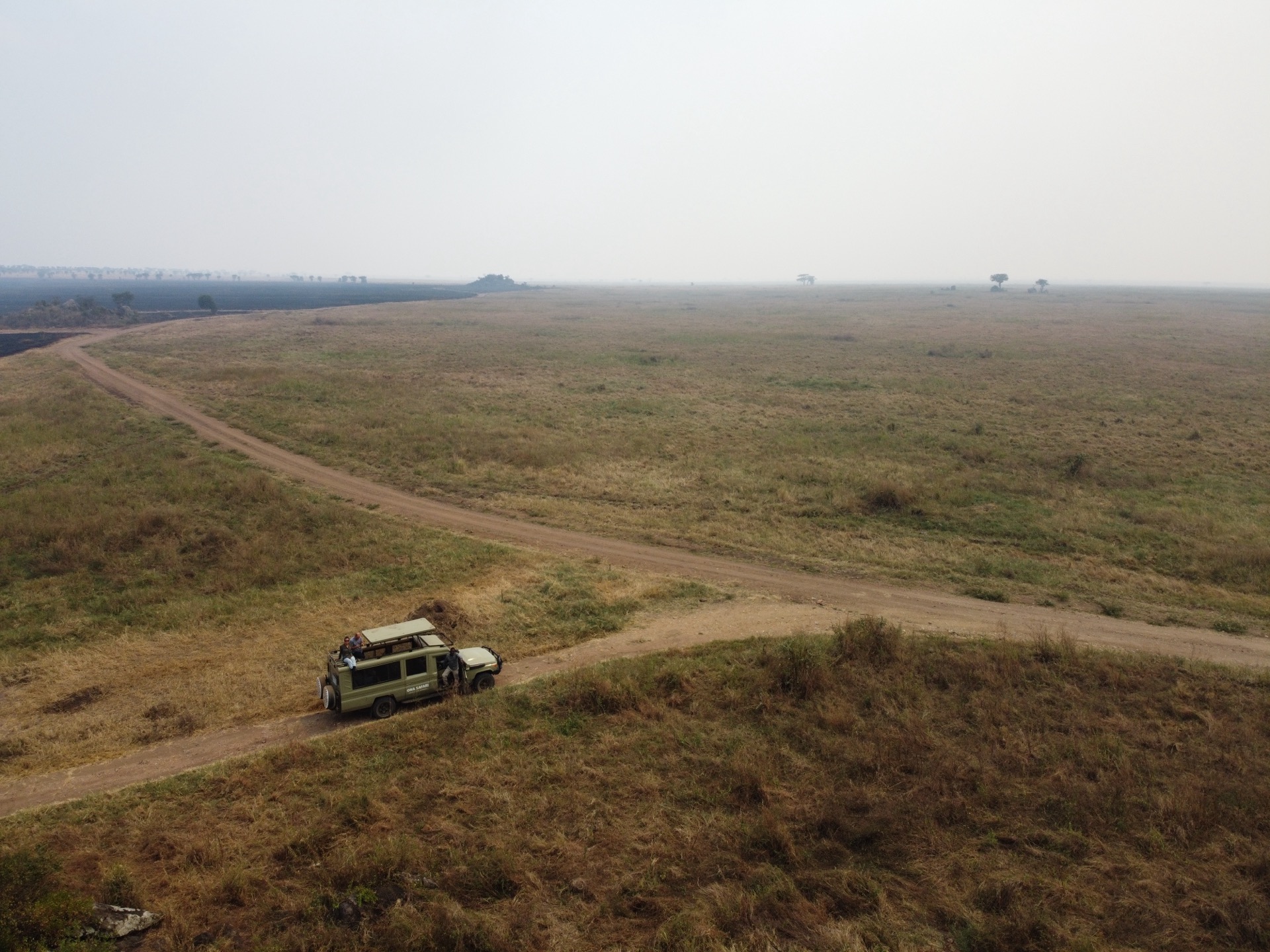
Arrival: Almost always by light aircraft to a Serengeti airstrip — Seronera, Kogatende, Lamai, or Grumeti. Your camp manager or guide meets you at the strip. The drive to camp is often a game drive itself.
Tents: Canvas walls, solid wooden floor platforms, zipped openings, and proper beds inside. Interior quality varies from functional-and-clean to carefully curated (handmade furniture, rugs, curated lighting). Power runs on solar and generator with battery-charging facilities; a power bank is useful for charging-heavy nights.
Bathroom: En-suite or walking distance, depending on camp design. Hot water is standard in top operations, though some mobile camps have reported variable hot water supply — confirm with your operator. Compost toilets are common in the most remote concessions.
Food: Full camp kitchen producing proper meals. Three-course dinners around a fire are standard. Dietary requirements are accommodated if flagged well in advance. Camp cooking in remote Serengeti is a genuine logistical achievement — the quality tends to surprise first-time visitors.
Game drives: Private vehicle per tent or shared among the whole small group. Morning and afternoon drives are standard. Night drives depend on concession rules — some areas permit them, the national park proper does not.
Wildlife in camp: Animals walk through regularly. Zebra and elephant visit most camps. Hyena, particularly at night, are frequent. In northern Serengeti positioning during peak season, lions can and do pass through camp. There are no fences. This is the mobile camp experience: not separated from the wildlife by distance, infrastructure, or a perimeter. Camp staff brief guests on night protocols — use a torch, make noise, don’t walk unaccompanied after dark. The sounds from inside your canvas tent are the genuine African bush, not a curated approximation of it.
Mobile camp vs permanent lodge: the honest comparison
The case for a mobile camp:
- Positioned exactly where the migration is, updated seasonally or even weekly
- Intimate — 10–20 guests is a fundamentally different experience from a 50-room lodge
- Animals come to you; the camp is inside the wildlife ecosystem, not adjacent to it
- The experience is stripped to its essentials: wildlife, bush, meals, guides
The case for a permanent lodge:
- Infrastructure certainty: pool, consistent staffing, defined building standards
- Easier booking (more capacity, longer available windows)
- Some permanent lodges are extraordinary: Singita Sabora Tented Camp starts from USD 2,210 per night and is one of the finest properties in Africa
- Better for children and for guests who need reliable amenities
The mixed itinerary: Most experienced Tanzania safari planners recommend combining both. A permanent lodge (or two) for arrival, acclimatisation, and consistent quality — followed by 3–4 nights at a migration-following mobile camp for the concentrated wildlife positioning that permanent camps cannot replicate. The contrast between the two enhances both experiences.
What mobile camps cannot offer: A pool, a spa, a gym, or the predictability of a fixed building. If these matter, a mobile camp is not the right fit. If they don’t matter, a mobile camp is usually the better wildlife choice.
Booking, cost, and lead time
Price range: Mobile migration camps in Tanzania typically price at USD 500–1,500+ per person per night at quality operations, all-inclusive. The 2026 range for premium tented camps in Tanzania is broadly USD 400–700 per person per night at the lower end of premium, rising to USD 1,200–2,000 per person per night at top-tier operations. Ultra-luxury mobile operators sit above this.
What all-inclusive covers: Meals, game drives, park fees, camp activities, and usually laundry. Alcohol is excluded by some operators and included by others — always confirm. International and domestic flights to the airstrip are always separate. Tips are always separate and expected.
Booking windows:
- July–October (Mara River crossings): 9–18 months ahead for the best camps
- January–March (calving, Ndutu): 3–6 months is usually sufficient; December and January are competitive
- June (Grumeti): 3–6 months; easier to book than peak north season
Light aircraft transfers: Most mobile camps require a bush flight to the nearest Serengeti airstrip. Luggage limits on light aircraft are approximately 15 kg soft-sided bag per person — plan your packing before booking if you intend to fly in.
Is a mobile camp right for you?
A mobile camp is the right choice if:
- The migration is the primary reason for your Tanzania visit
- You want intimacy over amenities
- You can commit 3–4 nights minimum (one night is not enough to experience a mobile camp properly)
- You are willing to book 6–12 months ahead for peak season
- You understand that some elements — specific crossing days, hot-water reliability at very remote camps, charging for devices — are less predictable than in a permanent lodge
A mobile camp is probably not the right choice if:
- You need consistent high-end infrastructure (pool, spa, gym, guaranteed air conditioning)
- You are travelling with young children whose minimum age requirement may not meet camp policy
- You are visiting Tanzania for a single night as an add-on
- Budget is the primary constraint — mid-range Serengeti lodges give excellent wildlife at USD 300–600 per person per night and represent better value for guests not specifically seeking migration positioning
The Tim observation: I’ve spent time at camps with better food than many European restaurants, and at camps that were canvas and campfire with three-course meals that appeared from a kitchen tent that looked like it had no right to produce them. The defining mobile camp moment is different from any lodge experience: waking at 5:30am, hearing lions calling 400 metres from your tent, and starting your game drive before the sun fully clears the horizon. No lobby. No check-in desk. You’re just there, in the middle of it. That is either exactly what you want or exactly what you don’t. Mobile camps give you no distance from the answer.
→ Related guides: Great Migration guide — timing, zones, what to expect · Serengeti calving season (January–March) · Serengeti: when to go · Tanzania safari costs — fees, accommodation, total budgets · Tanzania luxury safari guide · Northern Circuit route planning · Ngorongoro Crater essentials · Tanzania safari preparation · Tanzania and Zanzibar itinerary
Frequently asked questions
What is a mobile safari camp in Tanzania?
A mobile safari camp is a fully-serviced tented camp that operates seasonally and moves to follow the Great Migration across the Serengeti ecosystem. Unlike permanent lodges, everything — tents, furniture, kitchen equipment, bedding, dining tent, staff — is temporary and can be dismantled. Most mobile camps run 6–12 tents, giving them an intimate character impossible to replicate at larger permanent lodges. The defining experience is being positioned exactly where the migration is happening, often with animals passing through camp at night.
How much do Tanzania mobile camps cost?
Mobile camps are premium accommodation. Most top migration camps price at USD 500–1,500+ per person per night, typically all-inclusive (meals, game drives, park fees, laundry). Peak season (July–October, Mara River crossings) commands the highest rates. Some ultra-luxury mobile camp operators exceed these ranges significantly. The price premium over a standard permanent lodge reflects the positioning (following the migration), the intimacy (small group size), and the high cost of operating a temporary camp in a remote park. Budget travellers should look at permanent lodges in the Serengeti for more price range.
When should I book a mobile camp for the Mara River crossings?
9–18 months in advance for July–October peak season. The best mobile camps for the Mara River crossing period in the northern Serengeti have limited capacity (often 10–12 guests total) and fill many months ahead. For the 2024–2025 season, some top operators were already taking bookings in early 2024. If you want a specific window — say, peak crossing month of August — the earlier you contact your operator, the better. For the calving season (December–March), 3–6 months is usually sufficient but December and January are still competitive.
What is included in a mobile camp package?
Top mobile camp packages are typically fully all-inclusive: all meals (breakfast, bush lunch, afternoon tea, three-course dinner), unlimited game drives in a private vehicle, park fees, laundry, and camp activities. Some operators exclude alcohol and tips; others include house wines and spirits. What is not included: international and domestic flights to the Serengeti airstrip, pre-/post-safari accommodation, and personal items. Always confirm the inclusions before booking — the headline price means different things from different operators.
How do mobile camps compare to permanent Serengeti lodges?
The main difference is positioning: mobile camps follow the migration while permanent lodges are fixed in one location. If the calving is in Ndutu in January, a mobile camp is at Ndutu; if the crossings are at the Mara River in August, the camp moves north. Permanent lodges compensate with infrastructure advantages — pools, spa facilities, more consistent staffing ratios, and guaranteed building standards. The best permanent lodges (Singita Sasakwa, &Beyond Klein's Camp, Four Seasons Migration Camp) are extremely luxurious. Many Tanzania itineraries combine both.
Is it safe to sleep in a mobile camp in the Serengeti?
Yes — mobile camps operate safely throughout the season, and the experience of wildlife around camp is part of the appeal, not a risk. There are no perimeter fences. Animals walk through camp regularly — zebra, elephants, hyena, and occasionally lions or leopards. Guides brief guests on how to move around at night (use your torch, make noise, never walk unaccompanied in the dark). Camp staff are experienced and attentive. The sounds of the bush at night from inside a properly staked canvas tent are entirely safe and genuinely extraordinary.