
Facts & prices checked: 2026-06-24
The phrase “luxury safari” gets applied to almost anything above budget camping. After several trips to the Serengeti and Ngorongoro — staying at everything from mid-range tented camps to private concession properties — I can tell you that the word is genuinely misleading if you bring hotel-style expectations.
Real luxury on a Tanzania safari is not about thread-count or whether the bar stocks single malt. It is about access and expertise: what your guide can do, where your vehicle can go, and how many other jeeps are in the same valley while you are watching a lion bring down a wildebeest.
What luxury actually buys on a Tanzania safari
The three things that separate a true luxury safari from a well-priced mid-range one:
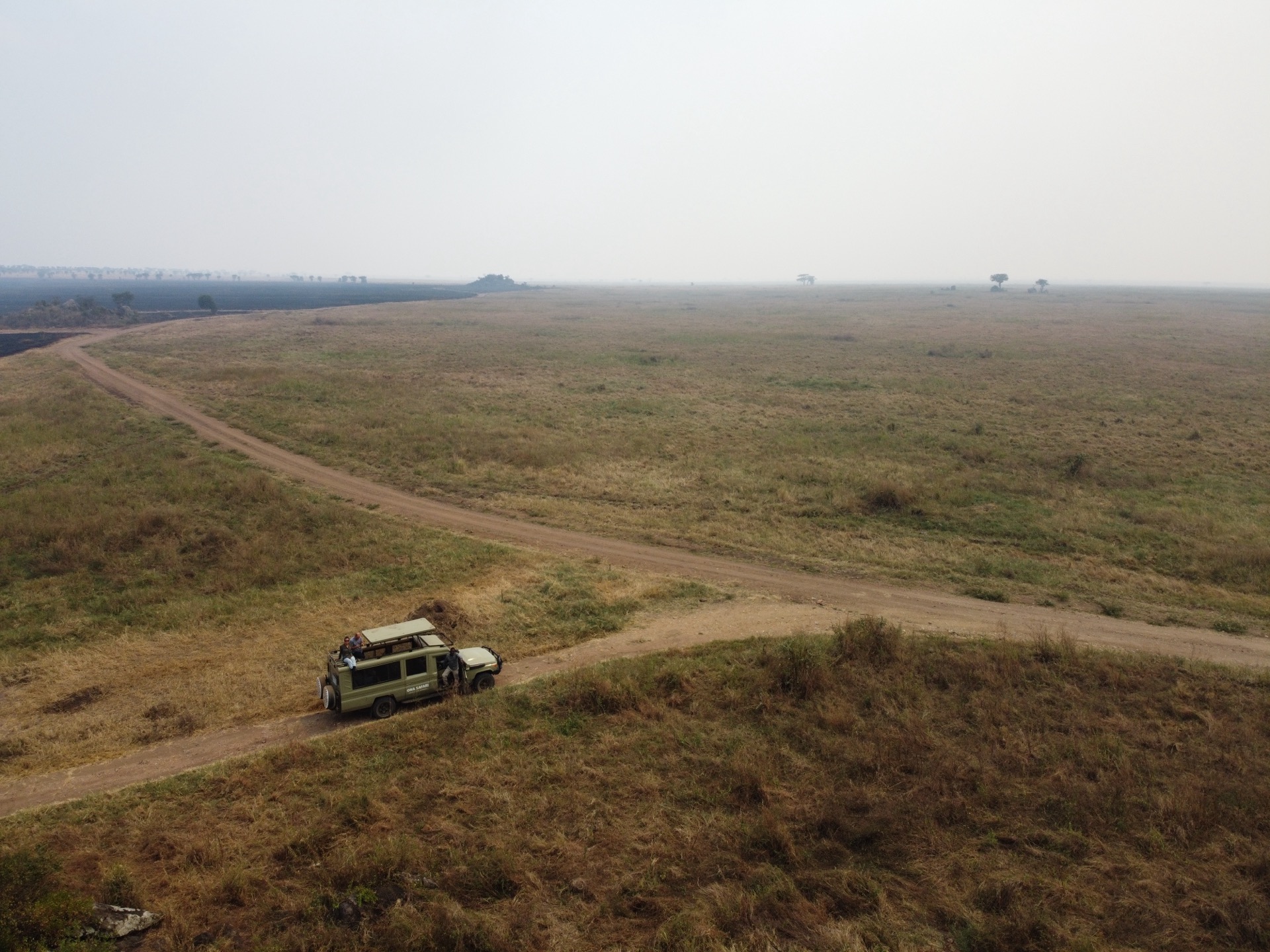
1. A private vehicle — not shared with other guests Most mid-range operators sell seats in a shared vehicle with up to six passengers. A luxury operator gives you the vehicle. You set the pace. You stay with an animal for 90 minutes if you want. You move when you are done. This is the biggest single quality-of-experience upgrade on a safari.
2. Night drives — only available on private concessions Tanzania’s national parks prohibit driving after dark. Private concessions on park boundaries operate under different rules and allow night drives — the only way to see leopard hunting, hyena packs working, aardvark, and civets. If a camp is inside a national park boundary, there are no night drives, regardless of price. Confirm this before booking.
Most luxury camps in private concessions offer night drives — something impossible inside Tanzania’s national parks. The Tanzania night safari guide covers where night drives are available (Grumeti, northern Serengeti private camps, Tarangire conservancies), what you see (aardvark, aardwolf eating 300,000 termites per night, springhare, bushbaby, civet, genet, nocturnal predators), and why the sensory experience of a night drive is as different from a day drive as the species list.
3. Walking safaris — and what “walking” actually means Walking safaris are available at a handful of Tanzania camps, most notably in Ruaha, parts of Nyerere, and some Serengeti concession properties. On a walking safari you are on foot with an armed ranger and a guide — you can approach trees, tracks, dung, insects, and small details that a game drive completely bypasses. The quality varies enormously: a genuine walking programme with experienced guides is categorically different from a “bush walk” that covers 400 metres around the camp perimeter.
What luxury doesn’t change:
- The weather and the roads (equally uncomfortable for everyone in the wet season)
- Wildlife density in the main parks (the Serengeti has the same animals regardless of which camp you sleep in)
- The hot air balloon (USD 599/person — booked separately, available to all guests)
Private concessions vs national parks
This is the most important distinction in Tanzania safari planning, and most guides either miss it or bury it.
Tanzania’s national parks — Serengeti, Ngorongoro Conservation Area, Tarangire, Lake Manyara — are public land managed by TANAPA or NCAA. Anyone with a valid permit can enter. During peak season (July–October), the central Serengeti around Seronera can have 30+ vehicles at a single predator sighting. Rules inside national parks include: no off-road driving, no driving after dark (typically 6:30pm), no walking outside a vehicle except at designated areas.
Private concessions are blocks of land adjacent to or within the broader ecosystem, leased from the government or community by operators. They operate under separate licensing. In a private concession you can:
- Drive off-road to follow animals through the bush
- Go out after dark on night drives
- Do walking safaris with armed guides
- Have the land to yourself — most concessions allow only a handful of vehicles
The Singita Grumeti Reserves cover approximately 350,000 acres (~1,416 km²) of private western Serengeti concession — comparable in area to the Serengeti’s central zone — shared by a handful of guests. The contrast with the public park experience is not subtle.
Private concession camps cost more because they pay significant land fees and restrict guest numbers to protect the experience. You are paying for the absence of other vehicles as much as for anything else.
Tanzania’s private game conservancies — Singita Grumeti (~1,416 km² adjacent to the western Serengeti), Mwiba Ranch, and Ruaha private concessions — take the luxury safari a step further with activities impossible inside national parks: night game drives, off-road vehicle access, and walking safaris. The Tanzania private conservancies guide covers the full landscape of options and how to match the right reserve to your itinerary.
The best areas for luxury camps
Northern Serengeti — Lamai / Kogatende sector The northern Serengeti, around the Mara River, delivers the Great Migration river crossings from July into October. Wildebeest crossings are famously unpredictable day-to-day — planning 3–4 nights in the north significantly improves your odds. Camps here sit on or near the Mara River and give you access to one of the most dramatic wildlife spectacles on the planet. This is the most sought-after luxury booking in Tanzania; expect to reserve 9–12 months ahead for July and August.
Ndutu area — calving season, January to February The Ndutu area (southern Serengeti/Ngorongoro Conservation Area border) is the calving ground: from late January through February, hundreds of thousands of wildebeest calves are born within weeks of each other. Predator activity is extraordinary. Camps here are small, the landscape is open, and the wildlife concentration rivals anything the dry season produces. The 2023 TAWIRI aerial census counted over 1.3 million wildebeest in the broader Serengeti–Mara ecosystem — the calving concentration in Ndutu is a specific chapter of that story.
Ngorongoro rim and crater floor Ngorongoro is not a national park — it is a separate Conservation Area under NCAA with its own fee structure (USD 70.80/person/day entry, plus USD 295/vehicle for each crater descent). Rim camps give you sunrise into the crater; afternoon descents with a private vehicle are remarkable. The crater supports approximately 20 black rhinos — one of the few places in Tanzania where spotting one is realistic.
Ruaha — the serious bush Ruaha National Park is remote, rarely covered in mainstream safari itineraries, and genuinely wild. Few camps, difficult roads, extraordinary elephant and predator populations. Walking safaris are possible and the landscapes — baobab-dotted escarpments, the Great Ruaha River — are completely different from the Serengeti’s grass plains. If the Serengeti is the chapter everyone reads, Ruaha is the appendix that turns out to be better than the main text.
What to expect at a top Tanzania camp
The daily rhythm: A luxury camp typically runs two game drives per day — a morning drive departing around 6am and an afternoon/evening drive leaving around 4pm, returning after dark if on a private concession. Midday is for sleeping. Bush breakfasts in the field, sundowners on a termite mound, and dinners under canvas or open sky are not marketing language — they are standard practice at well-run camps.
What is included:
- Full board (all meals, non-alcoholic drinks; alcohol usually included at true luxury camps)
- Private vehicle and dedicated guide (your vehicle for the trip, not pooled)
- All camp activities (walking safaris, night drives where available, bush meals)
- Laundry (at most camps, daily or every two days)
- Park fees (usually bundled — always verify per camp)
What is not included:
- International flights
- Tanzania visa (USD 50 for most nationalities)
- Hot air balloon over Serengeti (USD 599/person — always separate)
- Bush flights between camps (USD 150–300/segment depending on distance)
- Conservation fees at Ngorongoro (check if bundled)
- Tips (USD 10–25/person/day for the guide; a shared camp-staff tip box on top)
Guide quality vs tent quality: I have stayed in beautiful tents with indifferent guides and ordinary tents with extraordinary guides. The guide is the product. Ask before booking: What is the guide’s wildlife track record? How long have they been at this property? What is the policy if a guide leaves?
Price guide: entry-level to ultra-luxury
Tanzania safari pricing is layered — what you see quoted online rarely matches the all-in cost once you add park fees, concession fees, VAT, and flights. These bands cover the accommodation and activity component:
| Category | Per person per night | Notes |
|---|---|---|
| Budget camping | USD 200–300 | Shared vehicle, group sizes, basic facilities |
| Mid-range lodge | USD 300–500 | Shared or private vehicle; some park fees included |
| Entry-level luxury | USD 500–700 | Private vehicle, small camps, better locations |
| True luxury | USD 700–1,000 | Private concessions, night drives, walking safaris |
| Ultra-luxury | USD 1,000–1,500+ | Singita Grumeti, top Ndutu properties, peak season |
| Private island extension | USD 2,150+ | Mnemba Island Lodge (&Beyond): from USD 2,150/person/night + USD 100 conservation fee; max 24 guests across 12 bandas |
The hot air balloon adds USD 599/person on top of any tier — it includes the TANAPA ballooning fee and a champagne breakfast.
A 7-night luxury northern circuit safari — private vehicle, 3 nights Serengeti concession, 2 nights Ngorongoro rim, 2 nights Tarangire — typically runs USD 5,000–8,000/person all-in before international flights. True luxury versions of the same itinerary exceed USD 10,000/person in peak season.
The hot air balloon: worth adding?
The Serengeti hot air balloon is USD 599/person for a shared flight — typically 1 hour in the air, ending with a champagne bush breakfast. It includes the TANAPA USD 40 ballooning permit fee.
Is it worth USD 599? My honest view: once, yes. As the signature morning of a longer safari, it is spectacular — the Serengeti at 5:30am from 300 metres, herds moving below, first light. It is not a substitute for a game drive and adds nothing to wildlife observation that a skilled guide can’t match at ground level. The champagne breakfast in the bush afterwards is surprisingly good.
Best timing:
- Calving season (January–February): herds dense, predator activity high — the most photogenic balloon conditions
- Migration north (July–October): river crossings are not visible from the balloon (happens at ground level), but the sheer scale of the migration herds from altitude is memorable
What it doesn’t do: allow you to choose where you go (wind-dependent), let you get closer to animals than a vehicle, or replace the patience of a long game drive with a guide who knows where the leopard slept last night.
Planning timeline and booking tips
Lead time:
- Peak season (July–October, especially July–August): 9–12 months minimum for the best northern Serengeti concession camps
- Calving season (January–February): 6–9 months — demand has grown significantly
- Shoulder season (October–November, March): 3–4 months sufficient; some deals available
Why a Tanzania specialist adds value at the luxury level: At the USD 500+ per night tier, a general travel agent or online booking platform misses too much: which concessions had drought problems this season and are offering deals, which camp’s lead guide just left, which route suits your specific wildlife priorities. A Tanzania-specialist operator with ATTA membership and on-the-ground contacts knows things that aren’t on a website.
What to ask before booking:
- Is the vehicle private to my group for every game drive?
- Are night drives available (and is the camp on a private concession)?
- What are the guide’s qualifications and how long have they been at this property?
- What happens if a bush flight is delayed — is there contingency ground transfer?
- Are park fees and concession fees fully included, or billed separately on departure?
Red flags: A camp that won’t confirm private vehicle in writing. An operator who doesn’t know the specific guide name at your booked property. Quotes that exclude “taxes and levies” without specifying what those are.
Combining with Zanzibar
The classic Tanzania luxury itinerary ends with Zanzibar — and the logistics are easy. Arusha to Zanzibar (ZNZ) is roughly a 1-hour flight with multiple carriers daily. Kilimanjaro International Airport (JRO) to Zanzibar is similar; Dar es Salaam (DAR) to Zanzibar is 20 minutes by air or 2 hours by fast ferry.
Luxury beach options:
- North coast (Nungwi area): Boutique resorts with ocean sunsets, established dive operations, lively beach bars — the most social of Zanzibar’s luxury options
- East coast (Michamvi, Matemwe): Quieter, longer stretches of beach, world-class kitesurfing at Paje, tidal patterns to account for
- Mnemba Island Lodge (&Beyond): The fully exclusive island option — 12 bandas, maximum 24 guests, from USD 2,150/person/night plus USD 100 conservation fee. The atoll is the marquee diving and snorkelling site off northeast Zanzibar; go early in the day before the day-trip boats arrive
Suggested duration:
- Minimum safari+beach: 9 nights (5 safari + 4 Zanzibar) — workable but tight
- Comfortable: 12–14 nights (7 safari + 5–7 Zanzibar)
- Ideal: 16 nights (8–9 safari, 2 nights Arusha gateway, 5–6 Zanzibar)
Book the Zanzibar extension when you book the safari — the best small properties fill quickly, especially for the Mnemba concession and peak Nungwi resorts in July–August.
What makes a guide exceptional
The luxury camps market their tents, plunge pools, and chef’s tables. The actual product — the thing that determines whether your safari was the best week of your life or an expensive but ordinary nature programme — is the guide.
An exceptional Tanzania safari guide:
- Reads animal behaviour ahead of an event. Not reacting to a kill — positioning for one. The difference between arriving at a cheetah hunt two minutes before and arriving four minutes after.
- Knows the territory personally. The specific termite mound where the female leopard rests after a morning kill. The crossing point the wildebeest use first when water levels drop. This knowledge is hyperlocal and non-transferable — a great guide from Ngorongoro is not necessarily a great guide on the Mara River.
- Manages the vehicle well. Quiet engine approach, no sudden movements, positioning for light not just proximity. Other vehicles follow a good guide’s vehicle because they know something is about to happen.
- Understands what you want. Time with a single lion for a photographer. Fast movement for a family with short attention spans. Depth for a naturalist. The best guides ask at the first briefing and adapt every morning.
When you pay USD 600–1,000/night at a luxury camp, roughly 40–50% of that value sits with the guide. Ask who it will be before you commit.
How does Tanzania compare to Botswana for a luxury safari traveler? The Tanzania vs Botswana guide breaks down the Okavango Delta model versus the Serengeti, near-private game viewing in both destinations, and which suits a traveler prioritizing migration versus seclusion.
At the highest end of safari travel, photographic safaris represent some of the best-value luxury spend — the Tanzania photographic safari guide explains what to look for, when to go, and why the Serengeti calving season in January–February is the premier photography window.
→ Related: Tanzania safari costs — all park fees and accommodation tiers explained · Best national parks in Tanzania, ranked · Serengeti National Park — seasons, zones, and planning · Ngorongoro Crater — fees, wildlife, and what to expect · Balloon safari Tanzania — USD 599 explained · Zanzibar Mnemba Island — &Beyond dive lodge · Tanzania safari preparation — what to bring and when to book · Tanzania photographic safari · Tanzania overview
Frequently asked questions
What makes a Tanzania safari 'luxury'?
Three things distinguish a luxury safari from a standard one: exclusivity (private vehicle and guide, not shared with other guests; small camp sizes of 8–16 tents), access (private concessions adjacent to national parks where night drives and walking safaris are allowed — activities banned inside national park boundaries), and service quality (full-board including park fees, expert guides with genuine knowledge, personalized itineraries). Premium amenities — canvas walls, en-suite bathrooms, plunge pools — are expected but secondary. The guide makes or breaks a luxury safari; the tent is just where you sleep.
How much does a Tanzania luxury safari cost?
Rates vary significantly by location and season. Entry-level luxury (what the industry sometimes calls 'premium midrange'): USD 500–700/person/night all-inclusive. True luxury camps on private concessions: USD 700–1,000/person/night. The top properties — Mnemba Island Lodge, Singita's Grumeti Reserves (~350,000 acres of private Serengeti concession), the top Ndutu properties during calving season — exceed USD 1,500/person/night in peak season. Park fees, internal flights, and the hot air balloon (USD 599/person) are often additional or camp-specific.
When is the best time for a luxury Tanzania safari?
Two peak windows, each with distinct appeal. July–October (dry season): short grass, animals around water, Serengeti river crossings in the north (Lamai/Kogatende). January–February: wildebeest calving in the Ndutu area (southern Serengeti/Ngorongoro Conservation Area), extraordinary predator activity. These are also the most competitive and expensive seasons — book 6–12 months ahead for the best camps. Green season (March–May, November) offers lower rates, excellent birding, and fewer vehicles; some camps close; road conditions can be difficult.
What is included in a Tanzania luxury safari?
Full-board (all meals, soft drinks at camp), twice-daily game drives in a private vehicle with a dedicated guide, laundry service, park fees (check per-camp — some include, some add separately), and usually internal airstrip transfers within the safari. Not typically included: international flights, visa (USD 50), hot air balloon (USD 599/person, booked separately), and alcoholic beverages at many camps.
Should I use a travel agent for a luxury Tanzania safari?
Yes — for luxury specifically, a Tanzania-specialist travel agent adds genuine value that booking direct often doesn't provide. They know which camps are underperforming a given season, can guarantee private vehicles (critical — some camps officially offer private but sneak shared), have on-the-ground contacts for weather-related contingencies, and often have preferred rates. Look for operators with ATTA membership, Tanzania Tourism Board certification, and genuine on-the-ground presence. Budget operators who 'specialize' in everything are not the same thing.
Can I combine a luxury Tanzania safari with Zanzibar?
Yes — and this is one of the world's classic travel combinations. 5–7 days on the Serengeti/Northern Circuit, then Arusha to Zanzibar (1-hour flight, dozens of daily connections). Zanzibar beach extensions at luxury level: north coast boutique resorts (Nungwi area) for sunsets; east coast hideaways (Michamvi) for quiet and the kite scene. Mnemba Island Lodge (from USD 2,150/person/night) is the fully exclusive island option, accommodating a maximum of 24 guests across 12 bandas. Budget 12–16 days total for a proper safari-and-beach combination.