
Facts & prices checked: 2026-06-25
Tanzania and Botswana are the two names that come up most often when serious safari travelers ask which African destination to prioritise. I have spent time on the Serengeti’s open plains watching wildebeest columns move at dawn, and I have talked with enough Southern Africa travellers to understand what the Okavango Delta does to a person who has never been on the water in the middle of the African bush. They are genuinely different experiences. This guide gives you the honest comparison so you can choose the right destination — or plan a trip that does both.
Two completely different safari experiences
The Tanzania vs Botswana question is not really a “better or worse” comparison. It is a comparison of two distinct philosophies of safari travel.
Tanzania’s model is built on scale and diversity. The Serengeti covers 14,763 km² of open savannah. The wildebeest migration is the world’s largest overland animal movement — the 2023 TAWIRI aerial census counted 1,366,109 ± 231,741 wildebeest on a continuous 800 km clockwise loop. You share this landscape with other safari vehicles, but the landscape is large enough that crowding is relative. The same Tanzania trip can include the Serengeti, the Ngorongoro Crater (the world’s largest intact, unflooded volcanic caldera), a beach extension to Zanzibar (1-hour flight from Arusha), and a climb toward Kilimanjaro’s Uhuru Peak at 5,895 m. Nowhere else in Africa delivers this range in one itinerary.
Botswana’s model is the opposite: concentrated exclusivity in a unique wetland ecosystem. The Okavango Delta is flooded seasonally by the Okavango River, creating an inland sea that supports wildlife in a completely different way from any savannah. Game viewing happens by mokoro (dugout canoe), motorboat, and on foot as much as by vehicle. The tourist numbers in Botswana’s concession areas are deliberately low — the whole model is designed so you may be the only vehicle at a sighting. You pay more for this. The experience you get is qualitatively different from anything Tanzania offers.
Choosing between them depends on what kind of safari experience you are actually looking for.
Tanzania’s case: scale, diversity, and the migration
Tanzania wins the “more of everything” argument by a wide margin, and several of its advantages are simply unavailable anywhere else in the world.
The wildebeest migration — the defining reason to choose Tanzania. The 2023 TAWIRI aerial census counted 1,366,109 ± 231,741 wildebeest in the Serengeti–Mara ecosystem. This is the largest overland animal migration on earth. The herd moves in a roughly 800 km clockwise annual loop driven by rainfall — there is no month when the migration is not happening somewhere in the ecosystem, only different positions in that loop. The calving season on the southern short-grass plains around Ndutu runs January to March, with tens of thousands of wildebeest calves born within weeks of each other under intense predator pressure. The northern Serengeti Mara River crossings happen July to September. Nothing in Botswana is comparable.
The Serengeti and northern circuit ecosystem. The Serengeti alone covers 14,763 km² — vast enough that even in peak season (July–October) the northern reaches feel remote. Ngorongoro Crater — the world’s largest intact, unflooded volcanic caldera, formed approximately 2.5 million years ago — holds roughly 25,000 large mammals on a 260 km² crater floor, including a resident population of around 20–30 black rhinos — a large share of Tanzania’s national total of approximately 263 (2024 data) — making it the best single site in East Africa for black rhino viewing. Tarangire draws massive elephant concentrations around the Tarangire River each dry season from July to October.
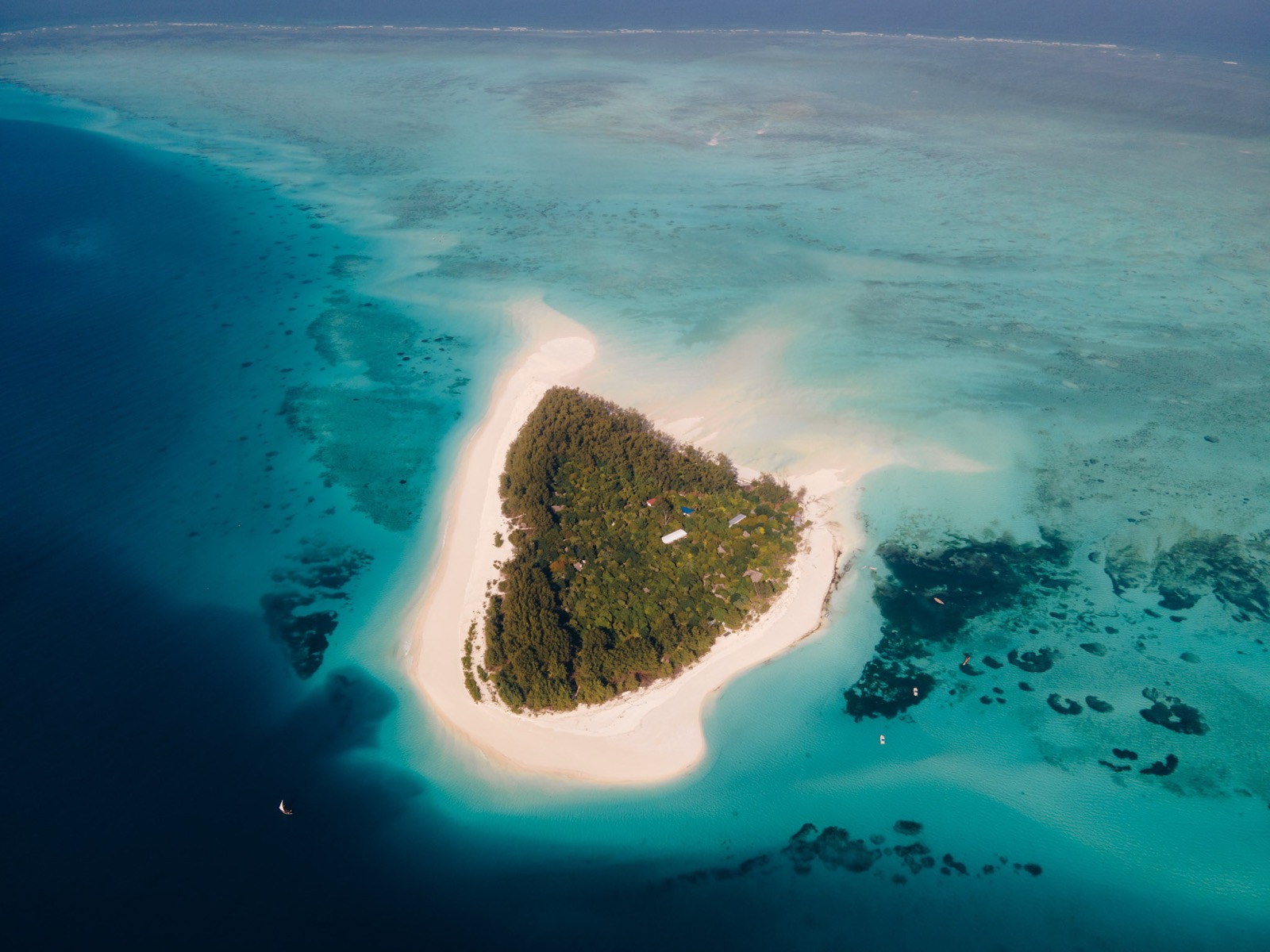
The Zanzibar combination. After Serengeti and Ngorongoro, travelers can fly from Arusha or Kilimanjaro Airport directly to Zanzibar — approximately 1 hour and 5 minutes by air — for a beach extension that no landlocked Southern African destination can match. The mandatory Zanzibar ZIC inbound insurance is USD 44 per adult (effective since 1 October 2024), and Tanzania’s tourist visa is USD 50 for a single entry. The logistics are simple and the combination — open-plains safari followed by Indian Ocean beach — is one of the world’s classic travel itineraries.
Price accessibility. Tanzania has more price tiers than almost any other safari destination. Budget camping safaris exist alongside mid-range lodges and ultra-luxury private concession camps. Tanzania’s park fees — Serengeti at USD 82.60 per adult per day in peak season (TANAPA rates), Ngorongoro at USD 70.80 per person plus USD 295 per vehicle for a crater descent — are significant, but the range of camp types and group-versus-private vehicle structures means the total trip cost can be shaped to a real budget. Botswana does not offer this range.
More international connections. Kilimanjaro International Airport (JRO) and Dar es Salaam (DAR) are served by carriers including KLM, Ethiopian Airlines, Qatar Airways, and Turkish Airlines, among others — with direct and one-stop connections from most major hubs. Botswana’s main entry points are more limited, and most require routing through Johannesburg, which adds a stop and cost.
I have arrived at Kilimanjaro on a Tuesday morning flight from Amsterdam and been in the Serengeti by Tuesday afternoon. That speed of access matters when planning a two-week trip with a firm end date.
Botswana’s case: the Okavango and seclusion
Botswana’s appeal is harder to quantify than Tanzania’s — it is not about the size of the herd or the altitude of the mountain. It is about a kind of wildlife experience that simply does not exist on the open savannah.
The Okavango Delta — a unique ecosystem. The Okavango River flows from Angola into northern Botswana and then does something remarkable: instead of reaching the ocean, it floods into the Kalahari desert, creating a seasonal inland wetland the size of a small country. The result is a mosaic of channels, papyrus reed beds, lily-covered lagoons, and forested islands that fills with water each year and then slowly recedes. During the high-water season, elephants swim between islands, hippos surface metres from a mokoro, and the papyrus edges produce birdlife that does not exist anywhere on the Serengeti plain. A morning on the water in the Okavango is a categorically different experience from a morning in a game-drive vehicle on the Serengeti. Neither is better — they are different things.
Near-private game viewing — the real Botswana advantage. Botswana’s entire tourism model is built around high-value, low-volume access. The government limits visitor numbers and the concession areas are privately managed with strict caps. In the Okavango concessions and the Linyanti and Kwando areas to the north, you will often be the only vehicle at a predator sighting. The contrast with the Serengeti in peak season — where multiple vehicles can cluster around a lion sighting within minutes of the first radio call — is stark. For a traveler who finds shared game viewing intrusive, Botswana’s concession model solves the problem by design.
Chobe and the elephant concentration. Chobe National Park in northern Botswana, along the Chobe River, is famous for one of Africa’s most concentrated elephant populations. Boat safaris on the river are the standard activity — elephants crossing the river in the late afternoon, with hippos and crocodiles sharing the same water, give you a wildlife interaction that no land-based game drive fully replicates.
Walking safaris as a primary activity. Botswana’s private concession areas have developed walking safaris into a central offering rather than an add-on. In Tanzania’s national parks, walking outside a vehicle is largely restricted or managed differently. In Botswana’s concessions, a morning walk with an armed ranger and an expert guide — tracking lion prints, reading spoor, approaching a buffalo herd on foot — is available as a main daily activity at most camps. For travelers who want human-speed, sensory-scale engagement with the bush rather than vehicle-speed game viewing, Botswana’s walking programme is the best version of that product in Africa.
Makgadikgadi Pans. Southeast of the Delta, the Makgadikgadi salt pans — ancient lakebed exposed as a vast flat expanse — flood seasonally and attract enormous concentrations of flamingos and pelicans. The landscape is like nothing else in Africa: a white horizon in every direction, flickers of pink flamingo, absolute silence. It is one of Southern Africa’s stranger, more memorable scenes.
Wildlife comparison: who wins what
Rather than a ranking, here is an honest breakdown by species and experience type:
Wildebeest migration: Tanzania only. The 2023 TAWIRI aerial census recorded approximately 1.4 million wildebeest in the Serengeti–Mara ecosystem. Botswana has no equivalent.
Elephant: Both, different character. Tanzania holds approximately 60,000–66,000 elephants (recovered from 43,000 in 2014), with concentrations in Tarangire July–October and significant populations in Nyerere and Ruaha. Botswana’s Chobe is often cited as Africa’s most concentrated elephant area, best seen by boat on the Chobe River. Tanzania’s elephants are more frequently encountered on land drives; Botswana’s river and wetland setting gives them a different context.
Black rhino: Tanzania has a clear advantage. The 2024 data puts Tanzania’s black rhino population at approximately 263 individuals, with Ngorongoro Crater the best single viewing site in the country and one of the best in Africa. Botswana does not have a significant wild black rhino population.
Lions: Both are excellent. Tanzania’s lion population is approximately 17,000 (2024 census data) — the largest in Africa. Ruaha alone holds roughly 10% of the world’s lion population. Botswana’s private concession areas produce good lion sightings at lower vehicle density. Tanzania’s open-plains habitat makes daylight lion hunting more visible; Botswana’s night drives on private concessions give you lions after dark, which Tanzania’s national parks prohibit.
Wild dogs: Both, with Tanzania having the numbers. Nyerere National Park holds an estimated 800–1,000 wild dogs — Africa’s largest single population. The Ruaha-Katavi landscape is another important zone. Botswana’s concessions in the Linyanti and Kwando areas also have reliable wild dog sightings, particularly in denning season. If wild dogs are the primary target, Tanzania’s southern parks give you the greatest probability.
Birding: Both are exceptional. The Okavango Delta gives Botswana an edge for waterbirds — herons, kingfishers, jacanas, fish eagles, and species that simply do not exist in the Serengeti. Tanzania’s breadth of habitats — savannah, forest edge, crater lake, coast — gives the greater total species count across a full trip.
Walking safaris: Botswana advantage for concession walking as a primary programme. Tanzania’s national parks restrict walking; walking exists at specific camps in Ruaha and Nyerere but is less central to the experience than in Botswana.
Price and access
Tanzania operates across multiple price tiers. Budget camping safaris in shared vehicles exist alongside USD 500–1,000+ per person per night luxury concession properties. Park entry fees stack up — Serengeti and Nyerere at USD 82.60 per adult per day, Ngorongoro at USD 70.80 plus USD 295 per vehicle for a crater descent, Tarangire at USD 59 per adult per day — but the camp types range from shared tented camps to exclusive private properties. International flights are direct from major European hubs. A Tanzania safari can be calibrated to a genuine budget constraint in a way that Botswana cannot.
Botswana is a premium-tier destination almost without exception. The high-value, low-volume model means that concession fees are substantial and built into lodge rates, most remote camps are accessed by charter plane (which adds significant cost per transfer), and the visitor caps are enforced by price as much as by policy. For comparable service quality, Botswana will cost more than Tanzania. The trade-off you are paying for is real: fewer vehicles, more seclusion, the Delta ecosystem, and a qualitatively different game-viewing experience.
If you are comparing like-with-like — a private luxury camp on a private concession in both destinations — the wildlife experience is different but the exclusivity argument applies to both. Tanzania’s Singita Grumeti Reserves cover approximately 350,000 acres (~1,416 km²) of private western Serengeti concession. The seclusion there is comparable to Botswana’s concession areas; it is not that Tanzania cannot offer private game viewing, it is that Tanzania can also offer non-private game viewing at a much lower price point, which Botswana largely cannot.
Who should choose which
Choose Tanzania if:
- You want to witness the wildebeest migration — the world’s largest overland animal movement, unavailable anywhere else
- You want a beach extension on the same trip (Zanzibar, 1-hour flight from Arusha)
- You want Africa’s highest peak, Kilimanjaro (5,895 m at Uhuru Peak), as part of the same itinerary
- You are working to a real budget ceiling — Tanzania has more price tiers
- This is your first safari and you want the classic open-plains, big-cat experience
- You want maximum ecosystem diversity in a single trip: savannah, crater, island, mountain
- You are flying from Europe and want the most direct connections
Choose Botswana if:
- The Okavango Delta is specifically what you want — mokoro canoes, papyrus channels, wetland wildlife
- You prioritise near-private game viewing and specifically want to avoid the multi-vehicle dynamic in Tanzania’s national parks during peak season
- Walking safaris as a primary activity are central to what you want from the trip
- Budget is genuinely flexible and you would rather pay more for fewer vehicles than less for more vehicles
- You have already done a Tanzania-style open-plains safari and want a categorically different experience
Best of both — the East and Southern Africa combination: Fly into Nairobi or Kilimanjaro, do the Tanzania northern circuit (7–10 days), add Zanzibar (3–4 days), then fly via Johannesburg or Nairobi to Maun or Kasane in Botswana (4–7 days for the Okavango or Chobe). This is a 2–3 week trip covering two completely different ecosystems. It is one of the most satisfying Africa itineraries available and, for serious Africa travelers, often described simply as “Africa in one trip.” It requires careful logistical sequencing, particularly around the internal charter flights in Botswana, which have small seat capacity and fill quickly.
Can you do both?
Yes — and the combination is more achievable than it looks on a map.
The routing works because both countries route through Johannesburg’s OR Tambo Airport (JNB) and Nairobi’s Jomo Kenyatta (NBO). From Nairobi or Dar es Salaam at the end of the Tanzania leg, you can connect to Maun (the Botswana Okavango gateway) or Kasane (Chobe gateway) with a Johannesburg stop. The connection adds travel time but is operationally straightforward.
Suggested 2–3 week combined itinerary:
- Days 1–2: Arrive Kilimanjaro, acclimatise in Arusha, gear check
- Days 3–6: Tarangire National Park (dry season elephant concentration)
- Days 7–10: Serengeti — central zone plus northern Mara River area (timing-dependent)
- Days 11–12: Ngorongoro Crater (black rhino, dense predator–prey populations)
- Days 13–15: Zanzibar (Nungwi or east coast; recovery from safari, Indian Ocean beach)
- Day 16: Fly Zanzibar → Johannesburg → Maun
- Days 17–20: Okavango Delta (private concession camp; mokoro, boat, walking safaris)
- Day 21: Fly home from Maun or Kasane
This itinerary covers the main migration circuit in Tanzania, the Zanzibar combination, and the Okavango Delta — three of Africa’s most compelling wildlife and landscape experiences. The total cost is significant: you are paying Tanzania park fees plus Botswana concession access plus internal charter flights on both ends. But as an Africa experience it is close to comprehensive.
Book the Botswana component 6–12 months in advance. The best Okavango concession camps operate with very limited bed capacity and fill quickly once the peak season calendar opens.
Planning your trip
Tanzania season:
- June–October (dry season): Best overall game viewing — short grass, animals concentrated around water, Mara River crossings in the northern Serengeti July–September. Book the northern Serengeti 9–12 months ahead for August.
- January–February (calving): Wildebeest calving on the Ndutu plains, extraordinary predator action. Fewer vehicles than peak dry season. One of the most underrated windows on the Serengeti.
- November–December and March–May (wet seasons): Lower rates, excellent birding, green landscape. Some camp roads become difficult. Long rains March–May are the main low season.
Entry requirements for Tanzania:
- Passport valid at least 6 months beyond intended stay with one blank page minimum
- Tourist visa: USD 50 single-entry for most nationalities; USD 100 multiple-entry for US citizens (available on arrival at major airports or online via visa.immigration.go.tz)
- If extending to Zanzibar: mandatory ZIC inbound insurance USD 44 per adult, purchased at inbound.visitzanzibar.go.tz before travel — the QR receipt is checked at immigration
Flight hubs for Tanzania: Kilimanjaro International Airport (JRO) for the northern circuit; Dar es Salaam (DAR) for the southern parks and coast. Served by KLM, Ethiopian Airlines, Qatar Airways, Turkish Airlines, Condor (seasonal direct from Germany to Zanzibar), and others.
Botswana season: The Okavango Delta is most active during high water (June–August), when the seasonal flood peaks and wildlife concentrates on islands. Dry season (July–October) is also prime time for game viewing across all Botswana parks. The Makgadikgadi Pans are best visited November–April when seasonal rains arrive.
Thinking about East Africa more broadly? The Tanzania vs Kenya guide covers how the Serengeti and Masai Mara compare on migration timing, park fees, and which country suits a budget-conscious traveler versus a wilderness-depth traveler. For a Southern Africa extension specifically, the Tanzania vs Botswana comparison starts and ends with the Okavango Delta — it is the single experience Botswana has that Tanzania cannot replicate, and the migration is the single experience Tanzania has that Botswana cannot.
→ Related: Tanzania national parks — ranked by experience type · Serengeti National Park — seasons, zones, and planning · Ngorongoro Crater — fees, wildlife, and what to expect · Tanzania safari costs — all park fees explained · Zanzibar as a safari beach combo · Tanzania northern circuit · Tanzania luxury safari
Frequently asked questions
Is Tanzania or Botswana better for a first safari?
Tanzania is the stronger choice for most first-time safari travelers. It has more international flight connections with fewer layovers, a wider range of price points from budget camping to ultra-luxury, the world's most famous wildlife spectacle in the wildebeest migration, and the Zanzibar beach extension that gives a complete East Africa trip in one itinerary. The Serengeti also delivers the safari image most travelers have in their head before they ever book a trip — open plains, enormous herds, and reliable big-cat sightings. Botswana's Okavango Delta is extraordinary but generally better appreciated after a Tanzania-style savanna safari gives you a baseline.
Which is more expensive — Tanzania or Botswana?
Botswana is generally more expensive than Tanzania for comparable-quality experiences. Botswana's tourism model is deliberately high-value and low-volume — concession fees are built into lodge rates, visitor numbers are capped, and the remote access via charter planes to most camps adds significant cost. Tanzania has a much wider range of price tiers: budget group camping safaris, mid-range lodge circuits, and ultra-luxury camps all operate in the same parks. Tanzania's standard park entry fee for the Serengeti is USD 82.60 per adult per day in peak season (TANAPA rates); Ngorongoro adds a USD 70.80 per person entry fee plus a USD 295 per vehicle crater service fee. For travelers with a firm budget ceiling, Tanzania gives far more flexibility.
Does Tanzania have the wildebeest migration and Botswana does not?
Correct. The wildebeest migration — the 2023 TAWIRI aerial census counted 1,366,109 ± 231,741 wildebeest on a continuous 800 km clockwise circuit between the Serengeti in Tanzania and the Masai Mara in Kenya, plus hundreds of thousands of zebra and Thomson's gazelle — is unique to the Serengeti ecosystem. Botswana does not have this migration. Botswana's Makgadikgadi Pans host a smaller zebra migration seasonally, but it is a different scale and character. If witnessing the wildebeest migration is a primary safari goal, Tanzania is the correct destination.
What is the Okavango Delta and why is it unique to Botswana?
The Okavango Delta is a massive inland river delta in northern Botswana where the Okavango River floods seasonally into the Kalahari desert rather than reaching the ocean. The result is a temporary inland wetland of channels, papyrus islands, and flood plains that supports extraordinary wildlife — elephants, hippos, lions, wild dogs, and countless birds — accessed primarily by mokoro (traditional dugout canoe), small motorboats, and charter flights to isolated bush camps. No other safari destination has an equivalent. The boat- and canoe-based game viewing is what makes Botswana's Okavango irreplaceable and categorically different from Tanzania's open-plains experience.
Can I do both Tanzania and Botswana in one trip?
Yes, and it is one of East and Southern Africa's great combinations. The typical routing: fly into Nairobi or Kilimanjaro (JRO), do the Tanzania northern circuit — Serengeti, Ngorongoro, Tarangire (7–10 days) — then optionally add Zanzibar (3–4 days via 1-hour flight), then fly via Johannesburg or Nairobi to Maun or Kasane for the Okavango or Chobe (4–7 days). This is a 2–3 week itinerary covering two completely different ecosystems. It is ambitious but logistically achievable and often described as 'Africa in one trip.' Book internal charter flights early — both Tanzania bush strips and Botswana camp airstrips operate with very limited seat capacity.
Is the wildlife better in Tanzania or Botswana?
Neither is objectively better — they suit different wildlife priorities. Tanzania has approximately 1.4 million wildebeest in the Serengeti migration (2023 TAWIRI census: 1,366,109 ± 231,741), about 263 black rhinos (2024 data), roughly 17,000 lions across the country, a recovering elephant population of around 60,000–66,000, and an estimated 800–1,000 wild dogs in Nyerere — Africa's largest single wild dog population. Botswana has Africa's most famous elephant concentrations in Chobe, excellent predator viewing in private concessions, and extraordinary bird diversity in the Okavango Delta. Tanzania's open-plains habitat makes lion and cheetah sightings more visually dramatic. Botswana's bush and water environments suit different wildlife interactions. If you want the migration, Tanzania. If you want the Delta, Botswana.