
Facts & prices checked: 2026-06-24
Tanzania and Kenya share one of the great wildlife systems on earth — the same wildebeest migration, the same Mara River, the same red-oat grassland that spreads across both countries without caring about the border. I have driven that border more than once, and the landscape on either side looks identical. What differs is everything else: park structure, pricing, what you can do beyond the game drive, and how crowded it gets. This guide gives you the honest comparison, park by park and decision by decision, so you can choose the right country for your specific trip rather than defaulting to whichever travel magazine happened to run a feature that week.
The same ecosystem, two countries
The Great Migration does not stop at the border. Traditionally cited at approximately 1.3 million wildebeest (a 2023 TAWIRI aerial census counted 1,366,109 ± 231,741), the herd moves in a continuous 800 km clockwise loop between the Serengeti in Tanzania and the Masai Mara in Kenya, driven entirely by rainfall and grass. There is no month when the migration is not happening somewhere — only different positions in that loop. The border between Tanzania and Kenya bisects the ecosystem rather than defining it.
This means the fundamental choice between the two countries is really a question of: which part of the loop do you want to follow, at what time of year, and with what other experiences around it? Both countries offer genuine, world-class wildlife. The difference is in the extras — what is attached to each end of the safari, what the park system looks like beyond the shared grassland, and what your money buys on each side.
The Great Migration: who wins?
Neither country wins outright — each is better at different months.
The wildebeest spend November to June in Tanzania, including the calving season on the short-grass plains around Ndutu in January and February. Calving is one of the most dramatic wildlife events in Africa: tens of thousands of wildebeest calves born within a few weeks, with lions, cheetah, and hyena working the edges constantly. This is Tanzania’s best season for cat action and almost entirely a Tanzanian experience — the Masai Mara is empty of the herd at this time.
The herd pushes north into Kenya July to October — the famous Mara River crossing period. This is when the wildebeest gather at the river in their thousands and charge into crocodile-filled water, sometimes twice a day, sometimes not at all for several days running. The river crossing is genuinely the most dramatic single moment the migration produces, and the best viewing is from the Kenyan side. The Tanzanian far north (Kogatende, Lamai Wedge) does see crossings too, but the most accessible and photographed crossing points are in Kenya.
The honest summary: calving season (January–February) is a Tanzania-only advantage. Mara River crossings (July–October) are a Kenya advantage, though Tanzania’s northern corridor participates. Everything in between — the migration moving through central Serengeti in April and May — is a Tanzania advantage by default.
Costs: Kenya has the edge
Tanzania’s park fees are among the highest in Africa. The Serengeti entrance fee runs USD 82.60 per adult per day in peak season, USD 70.80 in the short low season (TANAPA rates). Ngorongoro adds a separate NCAA entry fee of USD 70.80 per person per day plus a crater service fee of USD 295 per vehicle for any descent into the caldera — a figure that surprises nearly every first-time visitor because it appears nowhere in the headline price. Nyerere charges USD 82.60 per person per day; Tarangire is lower, at USD 59. These fees are layered: park entry, concession fees for in-park lodges, and vehicle fees all stack up separately, all per 24 hours.
Kenya’s Masai Mara entry fees are lower, and the private conservancy model around the Mara means there are more mid-range and budget options competing for the same traveller. The overall operator market is more competitive, with more domestic flight options and better road access reducing transfers costs.
The industry observation across operators working both countries: comparable quality — same lodge tier, same game drive hours, same guide experience level — tends to run 20–30% higher on the Tanzania side. This is not a reason to avoid Tanzania, but it is a real budget variable. If you are working to a tight ceiling, Kenya stretches further.
Wildlife variety: Tanzania’s deeper bench
The Masai Mara is outstanding. In August and September it may be the single best game-viewing area in Africa. But it is one park, running about 1,510 km² of designated national reserve (plus surrounding conservancies). Tanzania’s park system offers something different in scale.
The Serengeti alone covers 14,763 km² — nearly ten times the Mara reserve — with altitude ranging from 1,140 m to over 2,000 m, producing distinct habitats in the same park. The Ngorongoro Crater is the world’s largest intact, unflooded volcanic caldera, and the 260 km² crater floor holds roughly 25,000 large mammals in a permanent, closed ecosystem. It is the best single place in East Africa to see black rhino.
Then there is the southern circuit that Kenya simply cannot match. Ruaha covers 20,226 km² — Tanzania’s second-largest national park — with huge lion prides, strong leopard sightings, and one of East Africa’s better wild dog populations. Nyerere (formerly the Selous) covers approximately 30,893 km² and holds an estimated 800–1,000 wild dogs, the largest single population in Africa. Boat safaris on the Rufiji River add an entirely different dimension to the experience. Katavi, in remote western Tanzania, remains one of the most untouched parks on the continent.
Kenya’s parks outside the Masai Mara — Amboseli, Tsavo, Samburu — are excellent. But Tanzania’s total depth across its park network, from the northern circuit down through the southern wilderness, gives it a bench Kenya cannot replicate.
Infrastructure: Kenya’s advantage
Road quality, domestic flight networks, and general tourism logistics favour Kenya for most travellers. The road from Nairobi to the Masai Mara — roughly 270 km — is well-maintained and used by budget overland operators as well as private fly-in guests. Kenya’s domestic aviation is competitive, with multiple airlines serving the main airstrips and prices that reflect a mature market.
Tanzania’s northern circuit is also well-served from Arusha: bush flights into the Serengeti, Ngorongoro, and Tarangire are reliable and frequent during the main season. The problem is the southern circuit. Ruaha and Nyerere require fly-in access from Dar es Salaam, adding cost and complexity. Some Tanzanian park roads become difficult in the long rains (March–May) — the Serengeti’s western corridor and some Ruaha tracks require a vehicle with serious clearance in wet season. Kenya’s main safari routes are generally more weather-tolerant year-round.
For a first-time safari visitor unfamiliar with African travel logistics, Kenya’s infrastructure removes friction in a way Tanzania cannot always match outside the northern circuit.
Kilimanjaro and Amboseli: the cross-border quirk
One comparison that always comes up: Kilimanjaro is in Tanzania, but the classic photograph of Kilimanjaro — elephants in the foreground, the mountain behind — is taken from Amboseli National Park in Kenya. Tanzania has the summit; Kenya has the view.
If climbing Kilimanjaro is on the list, you are starting in Tanzania regardless. The mountain is entirely within Tanzanian borders and the trek is a Tanzanian permit. Amboseli in Kenya is worth a night for the landscape photography — the combination of the dry lake bed, large elephant herds, and the mountain is extraordinary — but it cannot be mistaken for a Kilimanjaro experience.
For most itineraries that include the mountain, Tanzania wins by default: climb from Moshi or Arusha, recover, then move to the Serengeti. If the mountain itself is not on the list and Amboseli is purely about elephants and landscape, Kenya handles it cleanly.
Beach combination: Tanzania wins
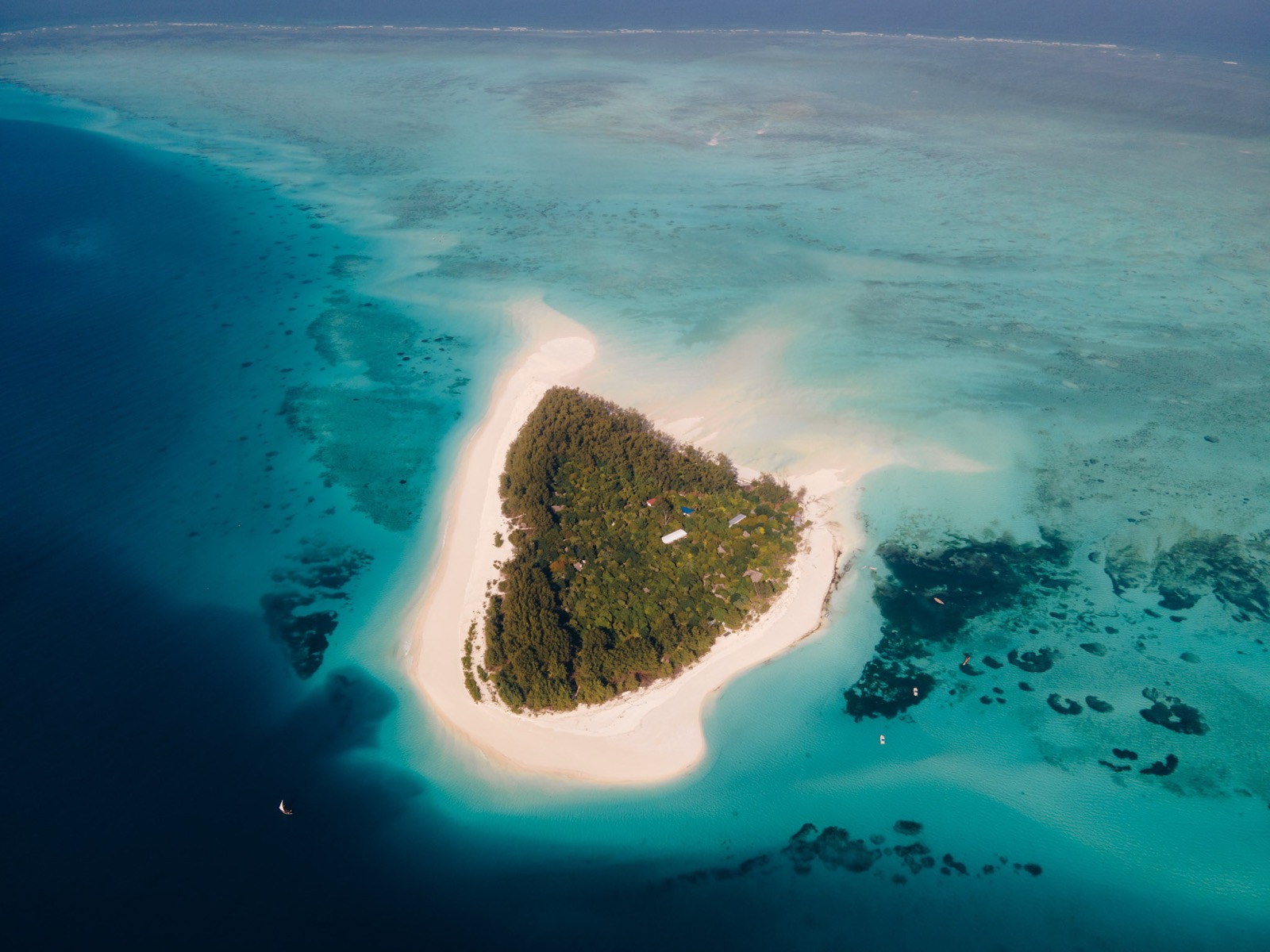
This is Tanzania’s clearest advantage for any traveller who wants to combine a safari with the coast. Zanzibar is a direct 1-hour flight from Arusha — or a 1h15–2h hop depending on the routing. After 7 days in the bush, arriving on Zanzibar’s east coast, dropping bags at a beach lodge, and spending three or four days doing nothing at all is a rhythm that works exceptionally well. The contrast — dust and game drives replaced by Indian Ocean water and fresh seafood — is part of what makes a Tanzania trip feel complete rather than simply thorough.
Kenya has the coast too: Diani Beach, Watamu, Malindi. These are legitimate options, particularly from Mombasa. But the logistics are more complex — Mombasa is a separate flight or an overnight train from Nairobi, and the beach resorts have historically had more variable quality than Zanzibar’s better properties. The Zanzibar combination is cleaner, shorter, and more consistently executed. I have done the Arusha–Zanzibar transfer dozens of times; it is one of the most satisfying transitions in African travel.
Wilderness and off-grid: Tanzania wins
If the goal is to spend three days without mobile signal, without seeing another vehicle at a sighting, and with the option of a walking safari at dawn — Tanzania’s southern circuit is the destination, and Kenya has no close equivalent at the same scale.
Ruaha and Nyerere are genuinely remote. Walking safaris in Nyerere with an armed ranger, following wild dog tracks along a sand river with no vehicle noise within earshot, is a different category of experience from anything the Masai Mara’s vehicle-dense ecosystem can offer. The Selous/Nyerere ecosystem historically had low visitor numbers, and while numbers are growing, it remains far quieter than the northern circuit or the Mara.
Kenya’s private conservancies around the Masai Mara do offer walking safaris and night game drives (not permitted inside the national reserve), and some of these concessions are genuinely good. But the wilderness scale — thousands of square kilometres of near-empty bush — is a Tanzania strength that has no match north of the border.
Decision table: 10 traveller profiles
| Traveller profile | Recommendation | Key reason |
|---|---|---|
| First-time safari, any budget | Tanzania (northern circuit) | Serengeti + Ngorongoro combination is unmatched as an introduction |
| First-time safari, tight budget | Kenya (Masai Mara) | 20–30% cheaper for comparable quality; good operator competition |
| Mara River crossing is the specific goal | Kenya, July–October | Best crossing viewing is from the Kenyan side |
| Calving season / predator action | Tanzania, January–February | Ndutu calving plains are entirely in Tanzania |
| Beach combination required | Tanzania | Zanzibar is 1 hour from Arusha; no equivalent in Kenya |
| Second safari, already done northern circuit | Tanzania (southern circuit) | Ruaha + Nyerere are unlike anything in Kenya |
| Walking safari is the priority | Tanzania (Nyerere or Ruaha) | Best walking safari concessions in Africa |
| Kilimanjaro on the list | Tanzania | The mountain is entirely in Tanzania |
| Amboseli elephant photography | Kenya | Kilimanjaro backdrop from Amboseli is a Kenyan exclusive |
| Combined East Africa loop | Both | Nairobi → Mara → Tanzania → Zanzibar is a natural circuit |
Can you do both?
Yes, and a combined circuit is one of the best ways to see East Africa if you have 12–14 days. The most common route: fly into Nairobi, two to three nights in the Masai Mara (July–October for crossing season, otherwise one of Kenya’s other parks), cross into Tanzania by road or by air through Kilimanjaro or Arusha, then run the northern circuit — Tarangire or Ngorongoro first, then the Serengeti — before flying to Zanzibar for the coast.
The Tanzania–Kenya border crossing at Namanga (between Arusha and Nairobi) is straightforward and well-used by overland operators. A single-entry visa for each country applies. Note that the East Africa Tourist Visa does not cover Tanzania (it only covers Kenya, Uganda and Rwanda), so a Kenya–Tanzania combination always needs two separate visas — Kenya’s own tourist visa plus Tanzania’s.
The combined loop takes the crossing drama and infrastructure ease of Kenya and pairs it with the wildlife depth, wilderness scale, and beach combination of Tanzania. It costs more than one country alone, and it requires a minimum of 10 days to do without feeling rushed — 14 days is more honest. But it is the fullest version of East African safari travel available, and it uses both countries for what they are genuinely best at.
FAQ
Is Tanzania or Kenya better for the Great Migration? Both — but at different times. The wildebeest herd spends November–June in the Serengeti (Tanzania), calving in the Ndutu area January–February. They cross into the Masai Mara (Kenya) July–October — the Mara River crossing is the most dramatic part. For the crossing: Kenya July–October. For calving season or the Serengeti before the crowds: Tanzania December–March.
Is Tanzania more expensive than Kenya for safaris? Generally yes. Tanzania’s park fees are higher and the emphasis on higher-end camps in parks like the Serengeti drives costs up. Kenya has a more competitive budget and mid-range operator market. For comparable quality lodges, Tanzania tends to run 20–30% higher.
Can I do both Tanzania and Kenya in one trip? Yes — a common route: fly into Nairobi, Masai Mara (3–4 nights), cross into Tanzania (Serengeti → Ngorongoro → Arusha → Zanzibar). The border crossing is straightforward. Add a minimum of 10 days for the combined loop — 14 is more comfortable.
Which country has better safari infrastructure? Kenya, for most regions. Roads from Nairobi to the Masai Mara are better maintained than some Tanzanian park roads during wet season. Kenya also has more domestic flight routes and more competitive pricing in budget and mid-range.
What about Kilimanjaro and Amboseli? Kilimanjaro is in Tanzania — the mountain itself is a Tanzanian climb. Amboseli National Park is in Kenya, and the classic view of elephants with Kilimanjaro as backdrop is photographed from the Kenyan side. Tanzania has the summit, Kenya has the view.
Is the wildlife quality better in Tanzania or Kenya? Tanzania edges ahead on overall wildlife density and diversity — the Serengeti is larger than the Masai Mara, Ngorongoro is a concentrated ecosystem unlike anything in Kenya, and the remote southern parks add depth Kenya can’t match. But the Masai Mara in peak season (August–September) rivals the Serengeti at its best.
Comparing Tanzania to other major safari destinations? The Tanzania vs South Africa safari guide breaks down self-drive accessibility, migration vs rhino, Cape Town vs Zanzibar, and the budget difference between the two destinations.
Planning a Southern Africa extension? The Tanzania vs Botswana guide covers how the Serengeti ecosystem compares to the Okavango Delta, the price and access difference between East and Southern Africa safari, and the ideal 2–3 week itinerary for doing both.
→ Related: Tanzania national parks · Tanzania northern circuit · Zanzibar as a safari beach combo · Tanzania safari costs
Frequently asked questions
Is Tanzania or Kenya better for the Great Migration?
Both — but at different times. The wildebeest herd spends November–June in the Serengeti (Tanzania), calving in the Ndutu area January–February. They cross into the Masai Mara (Kenya) July–October — the Mara River crossing is the most dramatic part. For the crossing: Kenya July–October. For calving season or the Serengeti before the crowds: Tanzania December–March.
Is Tanzania more expensive than Kenya for safaris?
Generally yes. Tanzania's park fees are higher and the emphasis on higher-end camps in parks like the Serengeti drives costs up. Kenya has a more competitive budget and mid-range operator market. For comparable quality lodges, Tanzania tends to run 20–30% higher.
Can I do both Tanzania and Kenya in one trip?
Yes — a common route: fly into Nairobi, Masai Mara (3–4 nights), cross into Tanzania (Serengeti → Ngorongoro → Arusha → Zanzibar). The border crossing is straightforward. Add a minimum of 10 days for the combined loop — 14 is more comfortable.
Which country has better safari infrastructure?
Kenya, for most regions. Roads from Nairobi to the Masai Mara are better maintained than some Tanzanian park roads during wet season. Kenya also has more domestic flight routes and more competitive pricing in budget and mid-range.
What about Kilimanjaro and Amboseli?
Kilimanjaro is in Tanzania — the mountain itself is a Tanzanian climb. Amboseli National Park is in Kenya, and the classic view of elephants with Kilimanjaro as backdrop is photographed from the Kenyan side. Tanzania has the summit, Kenya has the view.
Is the wildlife quality better in Tanzania or Kenya?
Tanzania edges ahead on overall wildlife density and diversity — the Serengeti is larger than the Masai Mara, Ngorongoro is a concentrated ecosystem unlike anything in Kenya, and the remote southern parks add depth Kenya can't match. But the Masai Mara in peak season (August–September) rivals the Serengeti at its best.