
Facts & prices checked: 2026-06-25
What a photographic safari actually means
A standard Tanzania safari and a photographic safari share the same parks and the same animals. What differs is the infrastructure around the experience — and that infrastructure determines whether you come home with photographs worth printing.
Four things separate a genuine photographic safari from a standard one:
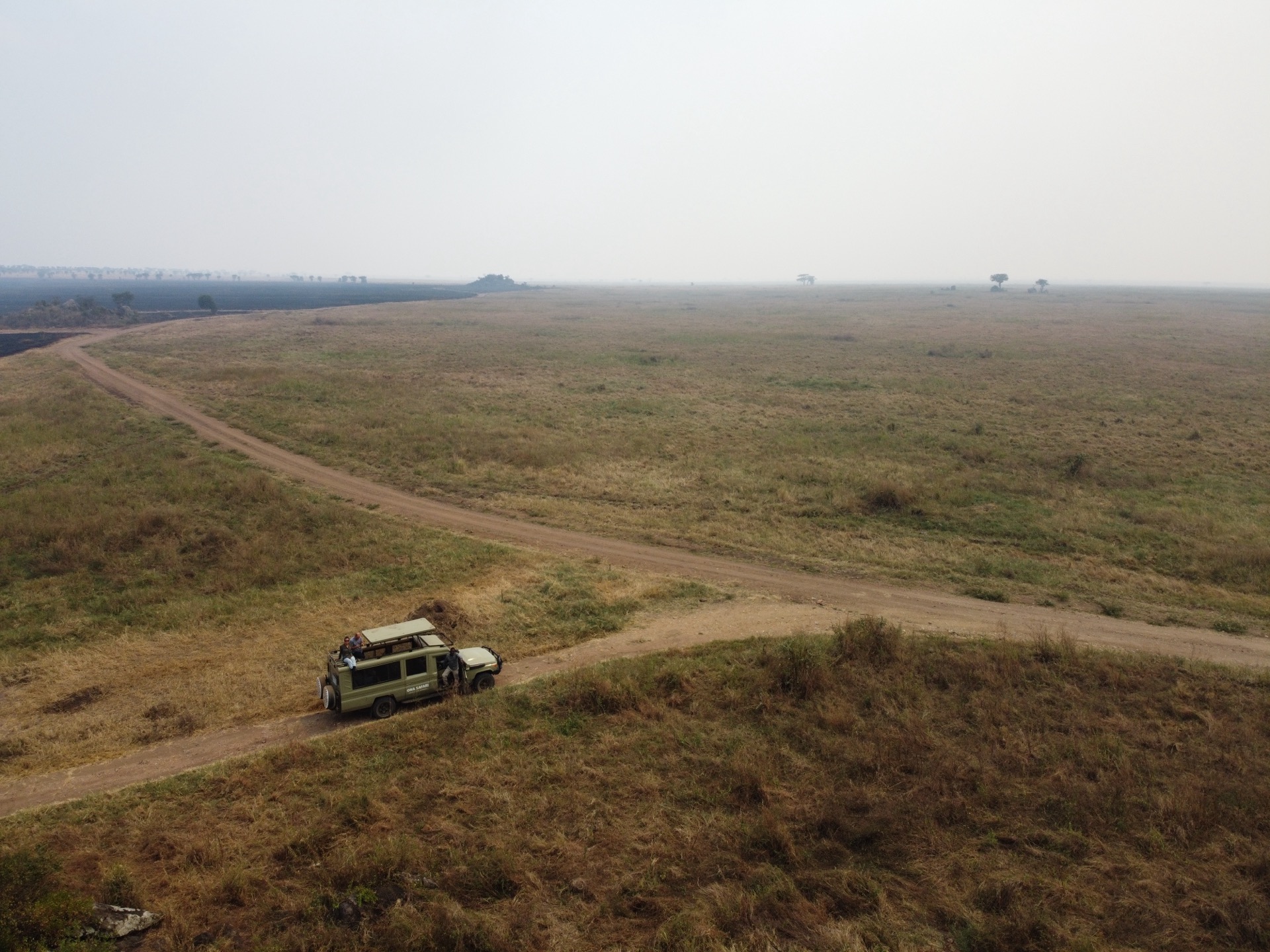
1. The vehicle. A photographic safari vehicle is open-sided or fully open-top — no roof structure interrupting your shooting angle, no window glass to shoot through. The wheel arches and doors are modified to act as stable platforms or support points. Bean bags are mounted or provided at each seat. Multiple power outlets allow you to charge batteries on the move. Standard safari vehicles with roof hatches are workable; vehicles designed for photographers are substantially better.
2. The guide. A photography guide knows two things a standard guide may not: light direction and animal behaviour. Knowing that the impala is there is not enough — knowing that the light comes from the east at 07:00 and you need the vehicle 30 metres further south to get the sun behind you is what makes or breaks a shot. Photography guides also read animal behaviour as a predictive tool: a lioness watching a distant wildebeest herd behaves differently in the minutes before she begins stalking, and a guide who recognises that keeps you at the location rather than moving on.
3. Timing. Standard safaris leave at 06:00 and return at 10:00, then go out again at 16:00 and return at 18:00. These windows roughly correspond to golden hours — but only roughly. Photographic safaris extend the morning drive to capture the full golden hour and may delay departure by 15–20 minutes if conditions warrant. More importantly, they do not rush between sightings to hit a midday lodge deadline.
4. Pace. The most important photographs on a wildlife safari rarely come from the first five minutes with a subject. They come from minute 25, when the lion stops watching the vehicle, when the cheetah begins grooming, when the elephant turns into the light. Most standard safari vehicles spend 5–10 minutes at a sighting and move on. Photographic safaris budget 20–45 minutes with a single subject and treat time as the core resource.
Why Tanzania is a photographic destination
Tanzania’s photographic advantages come from geography and ecology, not from marketing. The Serengeti’s open grassland — the result of volcanic ash soils and decades of wildebeest grazing — eliminates the tree cover that makes photography in many other African reserves difficult. You can see 3 km across the plains, and your subject is silhouetted against sky or grass, not hidden in scrub.
The density of predators in the northern circuit is the other factor. Tanzania consistently holds some of Africa’s highest concentrations of lion, leopard, cheetah, and wild dog. In the Ngorongoro Crater — a 260 km² volcanic bowl — the wildlife cannot leave. That concentration means a 4-hour circuit of the crater floor will typically yield more productive photographic opportunities than a full day in a park with lower density.
The third factor is the Migration. No other single wildlife event in Africa produces the volume and variety of dramatic photography that the wildebeest migration does — from the calving plains of Ndutu in January and February, through the long columns moving north from May to July, to the Mara River crossings from July to October.
Season and park combinations for photographers
January–February: Calving season, Ndutu (southern Serengeti)
Wildebeest calving peaks in February on the Ndutu Plains in the southwestern Serengeti. Approximately 8,000 calves are born per day during the peak window. The predator response is immediate — this is the highest density of cheetah hunts, lion ambushes, and hyena interceptions of the year. The light in January–February is softer than the dry season because of intermittent cloud cover, which photographers tend to prefer. There are fewer vehicles than the July–October peak.
March–May: Green season, full circuit
The long rains (March–May) are the least-visited period. The Serengeti in long rains is green, atmospheric, and nearly empty of tourist vehicles. The photographic quality of an isolated cheetah on green grass with a dramatic storm sky behind it is different from anything possible in the dry season. Many camps either close or reduce rates significantly. The photography is for those who actively prefer the solitude.
June–October: Dry season crossings, northern Serengeti
The dry season concentrates wildlife at water sources and produces the Mara River crossings, typically from July to October. The crossings are unpredictable day-to-day — plan a minimum of 3–4 nights in the northern Serengeti (around Kogatende or Lamai) to have a reasonable probability of witnessing one. The light in July–August is harsher than the calving season — midday is bright and flat — but the crossing action is high contrast and dramatic.
Namiri Plains in the central-eastern Serengeti, open since 2013 after 20 years as a research sanctuary, is one of the best-stocked cheetah areas in the Serengeti. It starts from USD 740 per person per night.
November–December: Short rains, transitional period
The short rains (late October–November) bring wildebeest returning south and dramatic sky backgrounds. The photography between storms — golden late-afternoon light against dark storm clouds — is striking. Camp prices are typically lower than peak season.
Serengeti: the headline photographic park
The Serengeti is the park that most photographers come to Tanzania for, and it rewards focus on the right zone at the right time.
Ndutu area (January–March): The southwestern tip of the Serengeti ecosystem, technically in the Ngorongoro Conservation Area, is the calving ground. It is the correct zone for January–March photography. Stay in the Ndutu area camps rather than commuting from a central Serengeti lodge — the action is distance-sensitive and a 45-minute drive eats productive morning light time.
Central Serengeti (year-round): The Seronera Valley holds year-round resident lion prides and leopard in the riverine fig trees. This is the zone that produces the classic Serengeti lion kopje shots — lions silhouetted on granite outcrops with plains behind them. The photographic holy grail in Tanzania is a leopard with a tree-stored kill in golden-hour backlight. The Tanzania leopards guide covers which park, which timing, and how to maximize your chances — including the Seronera Valley radio network that experienced guides use to track individual animals.
Northern Serengeti (July–October): The Lamai triangle and Mara River area is the crossing zone. Positioning at a specific crossing point for several mornings — rather than moving between sightings — is the most effective strategy. A good guide will have a read on which crossing point the herds are approaching and will commit to it.
Green season (March–May): The Serengeti with no other vehicles, green grass, and storm-light. If you can tolerate the occasional afternoon rain (and that usually means better photographs, not worse ones), this is the most photographically distinctive version of the Serengeti.
I spent five days in the northern Serengeti in late July. We arrived at the Mara River at 06:15 each morning and positioned at the same crossing point every day. On day four, 2,000 wildebeest crossed within 90 minutes. The images from those 90 minutes were better than anything from the previous three days combined. Patience and commitment to a single location, not constant movement, produces the results.
Ngorongoro Crater: bowl photography
The Ngorongoro Crater is 260 km² of enclosed volcanic bowl at 1,700 m altitude. Wildlife cannot leave. That means — on any given morning — you are essentially guaranteed to find lion, elephant, buffalo, zebra, and the highest density of black rhino in Tanzania. It is the closest Tanzania gets to a guaranteed wildlife photography location.
The crater rim light: The eastern rim of the crater sits higher than the floor. At sunrise, shooting from the eastern rim, you look down into the crater with the rising sun illuminating the floor from behind and above you. The mist that collects in the crater in cool mornings burns off by 08:00–09:00, but in that window it creates atmospheric layered shots that are different from anything available on the open plains.
The descent: The crater floor is accessible only by 4×4 vehicles with a tare weight under 3,500 kg, and only during permitted descending hours. The descent takes approximately 30 minutes on steep, winding roads. A crater service fee of USD 295 per vehicle per descent applies, in addition to the Ngorongoro Conservation Area entry fee of USD 70.80 per adult per day.
The midday limitation: Even in the crater, midday light (10:00–15:00) is flat and harsh. The photographic window in Ngorongoro is 06:00–10:00 and 15:30–18:00. A serious photography itinerary treats the crater as a morning-only excursion and either returns to the rim for afternoon shots or departs for another park.
Predator concentration: The crater holds an unusually high density of lions — a stable resident population rather than wide-ranging individuals. This means predictable territory locations, familiar faces among the prides, and guides who know where specific prides are on any given morning.
Tarangire and Lake Manyara: the underrated parks
Both parks are usually treated as one-day stops on the way to the Serengeti. For photography, they deserve more attention.
Tarangire: The visual element that makes Tarangire photographs immediately recognisable is the baobab. These ancient trees — some estimated at over 1,000 years old — provide foreground structure and scale that the open Serengeti cannot. A herd of elephants moving past a baobab at first light produces an image with depth and texture.
Tarangire’s photographic season is July–October, when the Tarangire River becomes one of the few water sources in a dry landscape and elephant herds — sometimes 50–100 animals — concentrate along it. The entry fee is USD 59 per adult per day. The park is 118 km southwest of Arusha — easily incorporated as the first night of a northern circuit itinerary.
Lake Manyara: The famous tree-climbing lions of Lake Manyara are a genuinely unusual behaviour — lions resting in acacia trees, photographed from below or at eye level depending on vehicle position. The behaviour is documented but unpredictable: not all prides climb, and timing is not guaranteed. Ask your guide specifically which areas the climbing prides currently occupy. Lake Manyara is about 126 km from Arusha and works well as a half-day photography stop.
Flamingos appear at Lake Manyara when water levels and alkalinity are right — check conditions before building your itinerary around them, as the lake fluctuates significantly.
Equipment guide
Lens minimum: 400mm. The Serengeti plains put distance between you and most subjects. A cheetah hunting at 200 metres, a male lion at a kopje 150 metres away, a bird of prey riding thermals — all of these require 400mm or more to fill the frame usefully. 500–600mm is significantly better for birds and distant predators. If you shoot a mirrorless system, bring your longest glass and consider a 1.4× teleconverter.
Bean bags: Most specialist camps provide bean bags for the vehicle. They are substantially better than a monopod or tripod in a moving vehicle, conforming to the vehicle surface and dampening vibration. If your camp does not provide them, a camera backpack or rolled fleece works as an improvised alternative.
Dust: The Serengeti is extremely dusty in the dry season (June–October). Fine volcanic dust penetrates poorly sealed bags and can damage sensors during lens changes. Bring a proper camera bag with a rain cover or dust seal. Change lenses with the bag acting as a wind shelter. A rocket blower is more useful than lens cloths for clearing dust from glass.
Power: Most camps — including remote tented camps — have solar power sufficient to charge batteries and cards overnight. Confirm with your specific camp before departing, but this is rarely a problem at established operators.
Drones: Do not bring a drone expecting to fly it freely. Tanzania requires TCAA (Tanzania Civil Aviation Authority) registration and operational approval — a process that includes Ministry of Defense clearance, and for national park operation, separate TANAPA approval. This multi-authority process typically takes several weeks. TCAA registration is issued only to Tanzania citizens, residents, and registered companies — not visiting tourists. TANAPA prohibits drone flight over wildlife in most circumstances even with approvals. Applications must be submitted at least one month before arrival. If you are a commercial filmmaker, engage a specialist fixer who holds the necessary permits.
Choosing the right operator
The word “photographic safari” appears in the marketing of most mid-to-high-end operators. It does not always mean the same thing. Here are four questions that distinguish operators with real photography infrastructure from those who use the term loosely:
1. “Do you offer a private or dedicated photography vehicle?” A shared vehicle with 6 passengers cannot be positioned correctly for photography — there will always be someone in the wrong seat, blocking the angle, or wanting to move on. A genuine photographic safari requires either a private vehicle or a purpose-configured photography vehicle with ≤4 photographers.
2. “Does our guide have specific wildlife photography training or experience?” A guide who has worked alongside professional wildlife photographers for several seasons understands light direction, behaviour prediction, and composition. This is different from being a good wildlife guide. Push for specifics — names of photographers they’ve worked with, seasons they’ve operated photography vehicles.
3. “Are your game drive times flexible for golden hour?” Standard operations have fixed return times linked to catering and camp logistics. A photography-focused operator structures catering around the photography, not the other way around.
4. “What is the maximum vehicle occupancy during game drives?” Four is the maximum for serious photography. Six is workable but compromised. Eight in a shared vehicle is not a photographic safari.
On pricing: luxury safari camps in Tanzania range from USD 600 to over USD 2,000 per person per night at the top end, with the highest-spec photographic camps and private vehicle add-ons sitting in the USD 900–1,500+ per person per night range. The private vehicle surcharge (often USD 150–300 per day) is one of the best value upgrades available if you’re serious about photography.
Common photographic mistakes on Tanzania safaris
Shooting during midday. Harsh overhead light from 10:00–15:00 produces flat colours, severe shadows under eyes and ears, and bleached skies. Animals also rest during midday. Experienced photographers use this time to rest, edit, and plan the afternoon position. If you find yourself at a significant sighting at noon, make the exposure you can — but do not expect midday light to produce your best images.
Chasing volume instead of depth. The classic mistake is moving vehicle-to-vehicle: see a lion, stay 8 minutes, hear about a leopard 4 km away, drive there, arrive as it disappears into bush. The better strategy is to commit to one subject for the full available light window. The 35 minutes I stayed with a female lion at dusk produced my best Serengeti photograph — not despite missing other sightings, but because of it.
Bringing too short a lens. A 70–200mm lens is frustrating for 80% of Tanzania wildlife photography. It works for elephants alongside the vehicle and close lion sightings — but those are a fraction of what you’ll encounter. The open plains make 400mm the entry point, not the maximum.
Missing the foreground. Tanzania’s most distinctive images use the landscape itself. Golden Serengeti grass as a foreground element. A baobab silhouetted against a storm sky in Tarangire. The Ngorongoro crater rim mist as atmosphere in the background. Most photographers look for the animal and forget to look for the frame around it.
Arriving without enough time. A photographic safari needs a minimum of 7 nights in the field to see the full arc of a location’s potential. 4-night itineraries in one zone are possible, but they leave no buffer for the crossings that don’t happen on day one, the rain that costs you a morning, the morning when the light is exceptional and you’d want to stay.
For those who want to understand Tanzania’s parks as photography locations — golden hour windows, equipment specifics per park, and drone permit details — the Tanzania photography guide covers the technical logistics in full. For the broader northern circuit route — which parks to combine, how many nights per zone, and how to move between them — see the northern circuit route breakdown. For cost structure — park fees, accommodation tiers, and what drives the price difference between camps — see the complete price breakdown.
→ Related: Tanzania photography guide — golden hour, equipment, and park logistics · Tanzania safari costs — all park fees and accommodation tiers explained · Serengeti National Park — seasons, zones, and planning · Ngorongoro Crater — fees, wildlife, and what to expect · Tanzania’s luxury camp roundup · Tanzania safari preparation — what to bring and when to book · the Tanzania hub page
Frequently asked questions
What makes a photographic safari different from a standard safari?
Four main differences. First: the vehicle — a photographic safari uses an open-sided or open-top Land Cruiser with bean bags, stable platforms, and multiple power outlets rather than a standard closed-roof vehicle. Second: the guide — a photography guide knows light direction, animal behaviour cues, and vehicle positioning for composition; a standard guide may be excellent for wildlife identification but not for photography. Third: timing — standard safaris follow fixed morning/afternoon windows; photographic safaris are timed to golden hour (first and last hour of light). Fourth: pace — staying 30–40 minutes with one sighting instead of chasing volume.
When is the best time for wildlife photography in the Serengeti?
Depends what you want to photograph. January–February (calving season in the Ndutu area of southern Serengeti): dramatic predator-prey shots, lion cubs, cheetah hunts, cloud-softened light — the most accessible dramatic wildlife photography in Tanzania. July–September (northern Serengeti, Mara River): wildebeest crossing action, crocodile ambushes — high drama but harsher light. March–May (green season): deep-green background, dramatic skies, very few vehicles — the lonely, atmospheric Serengeti that most tourists never see. October–November: wildebeest moving south, good skies, transitional light.
What lens do I need for a Tanzania safari?
400mm equivalent is the practical minimum for wildlife photography in Tanzania's open parks. For serious bird photography or distant subjects across the Serengeti plains, 500–600mm is significantly better. A 70–200mm is useful for environmental portraits of large animals close to the vehicle (elephant interactions, close lion sightings) but will frustrate you for 80% of wildlife encounters at range. Bring a 1.4× or 2× teleconverter if you want to extend your focal range without additional weight. Image stabilisation is essential — game drive vehicles vibrate.
Are drones allowed on Tanzania safaris?
Drones are restricted, not freely allowed. Tanzania Civil Aviation Authority (TCAA) requires registration and a permit for all drone operation — commercial or recreational. In national parks, the Tanzania National Parks Authority (TANAPA) has an additional permit requirement and most parks effectively prohibit recreational drone flight within park boundaries without specific clearance. Some specialist photography operators have TANAPA permits for controlled drone use in specific areas. If drone footage is important to your trip, clarify with your operator before booking — do not assume permission exists.
What should I look for in a photographic safari operator?
Ask four specific questions before booking: (1) 'Do you offer a private or dedicated photography vehicle?' — a shared standard safari vehicle is not suitable for serious photography. (2) 'Does our guide have wildlife photography training or experience?' — this distinguishes real photography operators from marketing language. (3) 'Are your game drive times flexible for golden hour?' — if the answer is 'we leave at 6am and return at 10am,' that's not a photographic safari. (4) 'What is the maximum vehicle occupancy?' — photography needs space for equipment and for positioning without being blocked by other passengers.
What are the best Tanzania parks for wildlife photography?
Each park has a different photographic strength. Serengeti (Ndutu area Jan–Feb, north July–Oct): scale and drama — the Migration photography can only happen here at this scale. Ngorongoro Crater: concentrated wildlife in a bowl, crater rim mist in morning light, reliable predator encounters. Tarangire: unique baobab foreground elements, elephant herds at the river in dry season, good bird life. Lake Manyara: tree-climbing lions (photographed in acacia branches), flamingo shots when water levels right. Ruaha: remoter, big cats, wild dog sightings, less pressure from other vehicles — good for composed, unhurried shots.