
Facts & prices checked: 2026-06-24
Tanzania has five ecosystems that are dramatically different as photography locations, and treating them as interchangeable is the most common mistake. Ngorongoro and Serengeti are not the same photographic experience. Tarangire is unlike either. Understanding what each offers before you go determines whether your safari images have character or are generic.
The five parks as photography locations
Ngorongoro Crater: the most photogenic concentration
The Ngorongoro Crater is a collapsed volcanic caldera 19 km in diameter. The crater floor supports one of the highest densities of large mammals on earth — lions, hyenas, black rhino, wildebeest, flamingos, and elephants, all within an enclosed bowl that makes wildlife observation predictable in a way the open plains are not.
The photographic advantage: The crater walls. The descent into Ngorongoro takes approximately 30 minutes by 4x4, and the rim sits at 2,200–2,300 m. At sunrise, shooting from the eastern rim into the crater, the sun comes up behind you and illuminates the crater floor in warm orange light with no overhead shadows. This is the moment that makes Ngorongoro photographs distinct from anything shot in Serengeti — the backlighting, the scale, the enclosed horizon.
Where to position: The viewing area on the eastern crater rim at 06:00 is worth the early alarm. The descent itself (steep, narrow, single track) is not photographable while driving — concentrate on the floor rather than the descent.
Black rhino: Ngorongoro is one of the few places in Tanzania where black rhino can be seen. They are rare (fewer than 30 resident in the crater) and skittish. Sightings are not guaranteed. When they occur, they are typically distant — a 400mm minimum for any usable frame.
Flamingos: The alkaline crater lakes support flamingo populations that vary with water levels and season. When present (typically June–October), they create one of the most distinctive wildlife colour contrasts in the region.
Practical restriction: Only registered 4x4 vehicles with permits can descend into the crater. The floor visit is typically limited to a full morning or afternoon session. No overnight camping on the crater floor.
Serengeti: open plains and kopjes
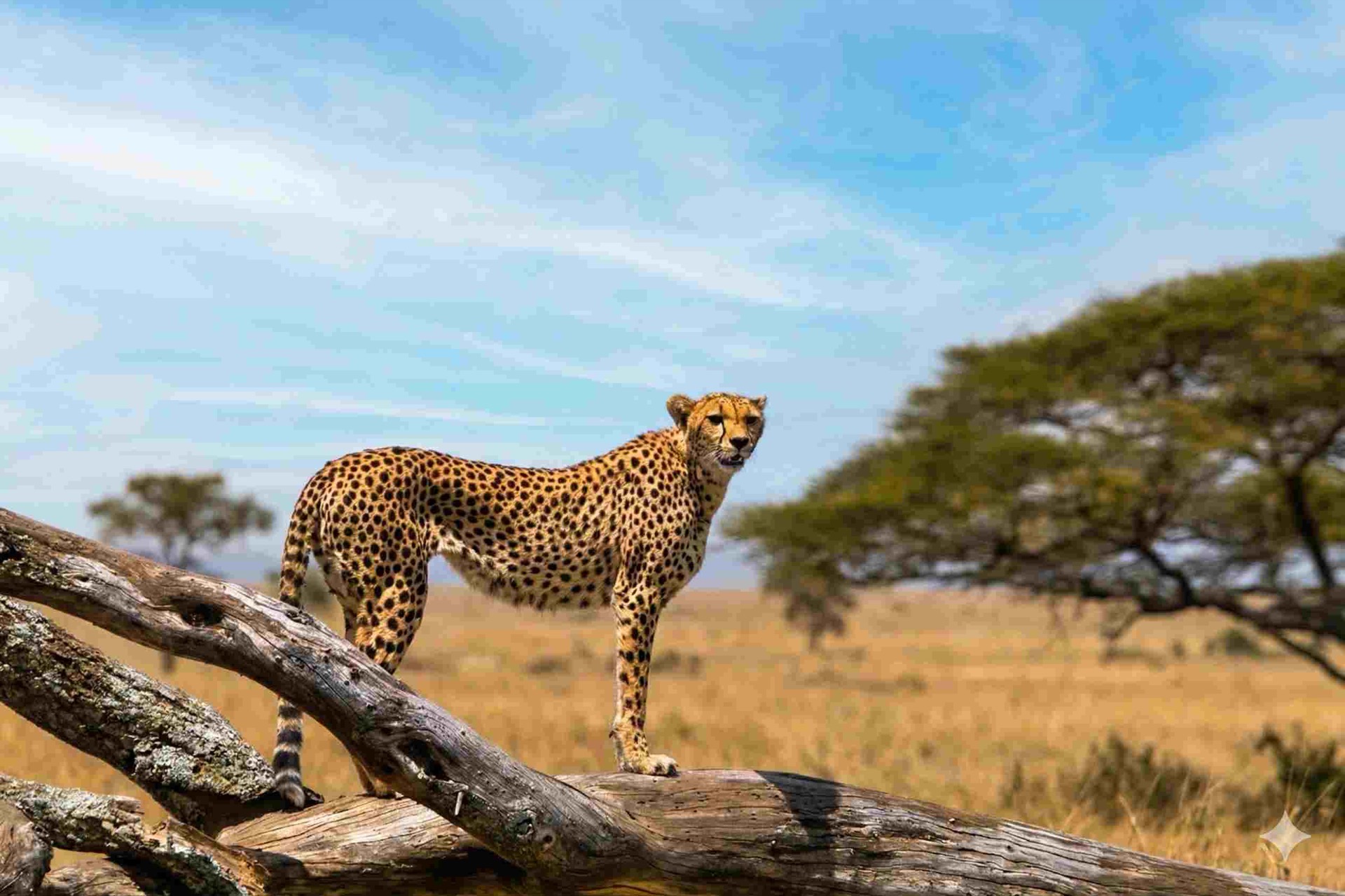
The Serengeti is where most safari photography fails or succeeds on the question of patience. The plains are vast, animals are dispersed, and the light changes rapidly. The photographers who return from the Serengeti with strong images are the ones who spent time at a specific location — a kopje, a river crossing point, a pride’s known territory — rather than driving.
Kopjes: The granite outcrops of the Serengeti are formed where volcanic ash and soil have eroded to expose ancient granite strata. Lions use kopjes as territorial markers, lookout points, and resting places — particularly in the afternoon when the rock holds warmth. A kopje with a resident pride is the most reliably productive photographic location in the Serengeti.
The migration crossings: July–October river crossings (wildebeest and zebra crossing the Mara River in the northern Serengeti) are the most spectacular mass-wildlife photography event in East Africa. They are not guaranteed daily — crossings happen when the herds decide, not on a schedule. Patience over multiple mornings at a crossing point is required. Early arrival (before other vehicles) determines your position at the riverbank.
Calving season: February–March calving in the southern Serengeti (around Ndutu) produces different but equally compelling photography — newborns within hours of birth, predator-prey interactions concentrated around the calving herds, and the most dramatic early-morning light over the short-grass plains.
The horizon: Serengeti plains photography works best with the camera near ground level — from the vehicle roof hatch or an elevated seat, not a standard door window. The open horizon is the defining visual element; shooting from too high a position cuts the foreground and loses the sense of scale.
Tarangire: elephants and baobabs
Tarangire is the most distinctive visual environment in northern Tanzania. The combination of the Tarangire River, the dry-season elephant concentrations (hundreds of elephants gather here June–October when other water sources dry up), and the ancient baobab trees creates a composition that is immediately identifiable as Tanzania in a way that generic savanna photographs are not.
The baobabs: most of Tarangire’s baobabs are estimated at 500 to 900 years old, per the National Audubon Society. They photograph best at golden hour when the low sun creates shadow texture on the bark and the elephant herds move between trees. At midday the baobabs are bleached and flat. Plan the morning or late-afternoon game drive specifically for the baobab stands in the central park area.
Elephant herds: In peak dry season (July–September), the Tarangire River area sees elephant concentrations of hundreds of individuals — one of the largest remaining aggregations of elephants in Africa. Close-range photography (vehicle distance) of large herds is more accessible here than in Serengeti.
Birds: Tarangire has one of the highest bird species counts of any park in Tanzania. Yellow-collared lovebirds, superb starlings, and various hornbill species are constantly present in the acacia woodland. For bird photography, a 400mm is the minimum useful reach.
Lake Manyara: tree-climbing lions and flamingos
Lake Manyara is a compact park (220 km²) with a specific set of photographic subjects. It is worth half a day, not a full safari base.
Tree-climbing lions: Lake Manyara is one of the few locations in East Africa where lions are documented to routinely rest in tree branches. The behaviour is not fully explained — theories include escaping insects or heat, or a learned behaviour from a specific pride. Sightings are not guaranteed but occur regularly. When they do, the composition — a lion draped across a branch against the green canopy — is unlike any standard savanna lion photograph.
Flamingos: The alkaline lake shoreline supports a large flamingo population when water levels are appropriate. From the park road, pink bands of flamingos extending along the shoreline to the horizon are photographable with a 300mm+ lens.
The Rift Valley wall: The western boundary of the park is the Rift Valley escarpment — tall, dramatic, and best photographed in morning light before haze builds.
Golden hour: timing in Tanzania
Tanzania sits 2–5 degrees south of the equator, which means day length varies little throughout the year (approximately 12 hours of daylight year-round) and golden hour is short and repeatable.
Morning golden hour: 06:00–07:30. The sun rises fast near the equator — the window from first warm light to overhead sun is approximately 90 minutes. For game drives, departing the lodge by 05:45 puts you in position by 06:00.
Afternoon golden hour: 17:00–18:30. The best light is 17:30–18:00; most game drives return by 18:30 per park rules.
Midday: 10:00–15:00 is the period with the worst photographic light — harsh overhead sun, bleached colours, animals resting in deep shade. Experienced photographers use this time to edit, rest, and plan the afternoon position.
Practical note: The equatorial sun moves faster across the sky than at higher latitudes. A shot that works at 06:30 may not work at 07:15 — the light angle changes rapidly. Set specific morning objectives (I want to be at this kopje at first light) rather than general ones.
Equipment: what Tanzania’s conditions require
Dust
The dry season (June–October) in northern and southern Tanzania involves fine volcanic dust on every unsealed road. The dust infiltrates everything — memory card slots, battery compartments, and eventually sensors. In practice:
- Keep cameras in dry bags between shots on dusty game drives
- Use a rocket blower rather than cloths for sensor cleaning (cloths smear dust into the sensor surface)
- Clean the front lens element with a dry cloth after each drive, not during (rubbing dust across glass scratches)
- Zoom lenses pump air when extending — this draws dust toward the rear element and potentially the sensor. Extend your zoom before leaving the lodge, keep it at a middle focal length during transit, adjust at the animal
Vibration
Safari vehicle engines and unsealed tracks generate sustained vibration that can fatigue camera electronics and loosen lens mounts. For longer safaris:
- Do not leave cameras sitting on the metal floor or hard seat — they absorb vibration directly
- Use a padded insert (camera bag, beanbag) to absorb vibration when resting the camera
- Shoot during moments of vehicle rest (engine off, windows down) when possible — vibration blur is a real issue at telephoto lengths even at fast shutter speeds when the vehicle is running
Heat
The equatorial sun can heat camera bodies rapidly if left on a dashboard or in direct sun. Electronics overheat less at 30°C than at 45°C (dashboard surface temperature in direct sun). Keep gear in the shade of the vehicle and in a bag between shots. Memory cards can fail with sustained heat — carry backup cards.
Drone and filming permits: what the rules actually say
Tourist photography (still photos, hand-held video)
No permit required beyond park entry. Use your camera freely.
Drone operation in Tanzania
Required before flying:
- TCAA registration (Tanzania Civil Aviation Authority, RPAS Regulations 2018) — required for all drones regardless of size
- Ministry of Defense and National Service approval
- Tanzania Film Board approval
- TANAPA (Tanzania National Parks) approval for any flight within a national park
This multi-authority approval process typically takes several weeks and is rarely completed by individual tourist visitors. Most safari operators and guides advise strongly against attempting to fly drones in national parks without completed approvals — TANAPA rangers enforce a no-fly policy over wildlife, and confiscation is the documented outcome.
Even with approvals: Flying a drone near large mammals in a national park is prohibited by TANAPA. The applications and approvals are principally for documentary and commercial filming operations, not tourist aerial photography.
Commercial filming and video production
For any paid video production, media assignment, or commercial photography in Tanzania:
Tanzania Film Board permit:
- Standard permit: USD 1,000
- Expedited permit: USD 3,000
- Apply minimum 30 days in advance
- Permit is valid for maximum 3 months
- Permit is valid mainland Tanzania only — Zanzibar requires separate approval from the Tanzania Film Censorship Board plus local Zanzibar authority
Zanzibar filming permits: Separate from the mainland permit. Requires Tanzania Film Censorship Board approval plus endorsement from the High Commission of Tanzania. Applicable to any commercial media production.
Tourist photography is not commercial production. If you are taking photographs for your own use, blog posts, or personal social media (non-commercial), you do not need Film Board permits. The permit system is specifically for paid assignments, documentary crews, and commercial use.
Park-specific photography logistics
| Park | Best for | Best time in-park | Specific tip |
|---|---|---|---|
| Ngorongoro | Concentrated wildlife, rhino, flamingos | 06:00–10:00 (crater descent) | Sunrise from eastern crater rim before descent |
| Serengeti | Migration crossings, kopje lions | 06:00–10:00 and 16:00–18:00 | Pre-position at a crossing point for multiple mornings |
| Tarangire | Elephant herds, baobabs | 06:00–09:00 (morning light on baobabs) | Request a position near the Tarangire River at first light |
| Lake Manyara | Tree-climbing lions, flamingos | 07:00–10:00 | Ask guide specifically about tree-climbing lion territory |
| Serengeti Ndutu | Calving, predator-prey | Feb–March, all-day | Wide-angle for calving scenes; 400mm for cheetah hunting |
For combining Tanzania photography with a Zanzibar photography extension, see the Zanzibar photography guide — it covers Stone Town carved doors, east coast tidal flat photography, drone registration for Zanzibar, and portrait ethics in Muslim communities. For the full northern circuit logistics — which parks to combine with how many nights — see the northern circuit route breakdown. For Serengeti season-specific guidance (when the migration is where), see our Serengeti season notes. For Ngorongoro in detail — descent logistics, conservation fee, crater wildlife — see the Ngorongoro descent details.
For those who want to build an entire trip around photography, the Tanzania photographic safari guide covers what separates a true photography safari from a standard one — dedicated vehicles, photography-trained guides, golden hour timing, and which park and season combinations work best.
Photographers who also climb get a completely different kind of light: sunrise from Uhuru Peak, above the cloud line, is unlike anything at savanna altitude. If you’re planning a summit attempt around a photography trip, the Kilimanjaro Northern Circuit climbing route has the quietest camps on the mountain and the longest acclimatization arc — worth knowing about if you want the summit sunrise without sharing Barafu Camp with fifty other climbers on summit night.
Frequently asked questions
Do I need a permit to take photos on a Tanzania safari?
No — standard tourist photography (still camera, smartphone, no drone) requires no permit. Park entry fees are the only requirement. The permit system applies specifically to: (1) commercial filming and video production, which requires a Tanzania Film Board permit (USD 1,000 standard, USD 3,000 expedited, apply 30 days in advance); and (2) drone operation, which requires TCAA registration plus approvals from the Ministry of Defense, Film Board, and TANAPA (the national parks authority). Tourist photographers do not need any permits.
Can I use a drone in Tanzania national parks?
Technically possible with the correct approvals, but practically difficult. Drone operation in Tanzania requires registration with the Tanzania Civil Aviation Authority (TCAA) under the RPAS Regulations 2018, plus separate approvals from the Ministry of Defense and National Service, the Tanzania Film Board, and TANAPA (Tanzania National Parks). The approvals process takes significant time. Most safari operators advise against bringing drones to national parks because the multi-authority permit process is rarely completed by casual visitors. TANAPA has strict rules about drone operation near wildlife.
Which Tanzania park is best for photography?
It depends on the subject and season. Ngorongoro Crater is the most photogenic for concentrated wildlife — the crater walls create natural backlighting at sunrise and the density of animals on the crater floor is exceptional. The Serengeti's granite kopjes (rock outcrops where lions rest) are the classic elevated-angle wildlife shot. Tarangire is the best for elephant herds against baobab trees — a composition found almost nowhere else in Africa. Lake Manyara is the best for tree-climbing lions and flamingos.
What time of day is best for safari photography?
Golden hour: 06:00–07:30 and 17:00–18:30. Tanzania sits 2–5 degrees south of the equator, so golden hour is short, warm, and consistent year-round. The 06:00 game drive (most lodges offer this) catches the light that eliminates shadows, and animals are most active in the cool of the morning. Midday (10:00–15:00) produces harsh overhead light, flat colours, and animals in shade — avoid important photographic objectives at this time.
What lens do I need for Tanzania safari photography?
The most versatile single lens for Tanzania wildlife is a zoom in the 100–400mm range (full-frame) or 70–300mm equivalent on a crop sensor. This covers approaching lions on a kopje, elephant herds at distance, and bird detail. A 24–70mm or 16–35mm is useful for landscape work (Ngorongoro crater rim at sunrise, Serengeti plains panorama). A fast prime (85mm f/1.8 or 135mm f/2) is useful for the golden hour when light is low. Avoid carrying multiple bodies with long primes on a standard game drive — the vibration from the vehicle is a bigger issue than prime sharpness at short distances.
How do I protect camera equipment on safari?
Dust and vibration are the two primary risks, not rain. Game drive vehicles on unsealed tracks produce significant vibration that can loosen lens mounts and damage electronics over time. Carry cameras in a padded insert inside a dry bag or camera-specific backpack, not loose on the vehicle floor or seat. Use a lens cloth for the front element (dust is constant on dry-season tracks). A rocket blower for sensor cleaning is worth carrying. Keep memory cards in a case, not loose in a pocket. The equatorial sun can heat electronics rapidly — keep gear in the shade and avoid leaving a camera on a hot vehicle dash.