Facts & prices checked: 2026-06-24
I have been photographing Zanzibar for years from a hotel on the east coast, and the patterns are consistent. The light here is extraordinary at the right moment and punishing at the wrong one. The subjects are genuinely extraordinary — you do not need to hunt for them. What you need is timing.
The five best photography locations
1. Stone Town carved doorways — early morning
The doorways of Stone Town are one of the most photographed architectural details in East Africa. The tradition of elaborate carved wooden doors — geometric patterns, chains, fish, lotus flowers — dates to the 18th and 19th centuries, when Arab and Omani merchants built palaces and townhouses that communicated wealth and social standing through their entrances.
The photography challenge is the alleys. The lanes of Stone Town are narrow and run north-south, east-west in a pattern that is not grid-regular. The doors are recessed, often in shadow, and the walls opposite can be lit harshly by midday sun or deep in shadow depending on the time and the alley direction.
Best light: 06:30–08:30, before the direct sun climbs above the buildings. The early morning gives you soft, reflected light bouncing off whitewashed walls, low contrast, and — crucially — no crowds. By 09:30 the alleys fill with tuk-tuks, vendors, and other photographers.
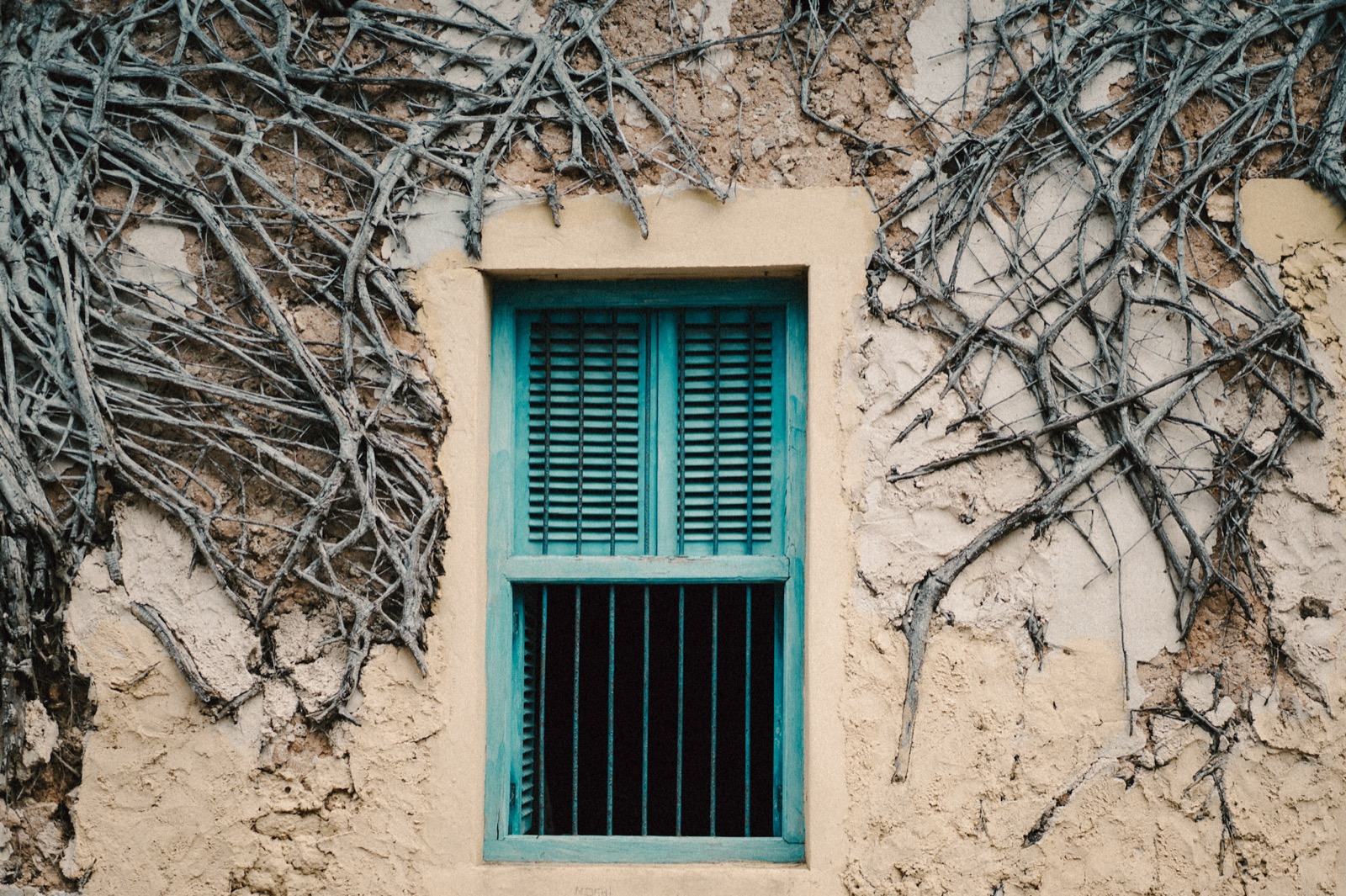
Specific focus: the deeper carved doors are in the streets running parallel to the waterfront, south of the Forodhani Gardens. The most photographed is the teal-painted door on Hurumzi Street — the colour catches the morning light differently from the aged brown wood of the older examples. Both are worth the time.
Practical note: do not photograph the entrance to the Aga Khan Mosque or the Malindi Mosque without specific permission. Religious sites are not appropriate photography subjects without a direct invitation.
2. East coast tidal flat at dead low tide
This is the shot that defines the east coast to me, and it is almost impossible to replicate elsewhere in Zanzibar.
At dead low tide on the east coast — particularly at Michamvi, Jambiani, and Paje — the reef flat extends several hundred metres from the beach. The water depth drops to ankle-to-knee level. The surface, when the wind is calm (usually early morning, before 09:00), becomes a near-perfect mirror. You can walk hundreds of metres out across a perfectly reflective surface with the sky and the odd fisherman casting a silhouette.
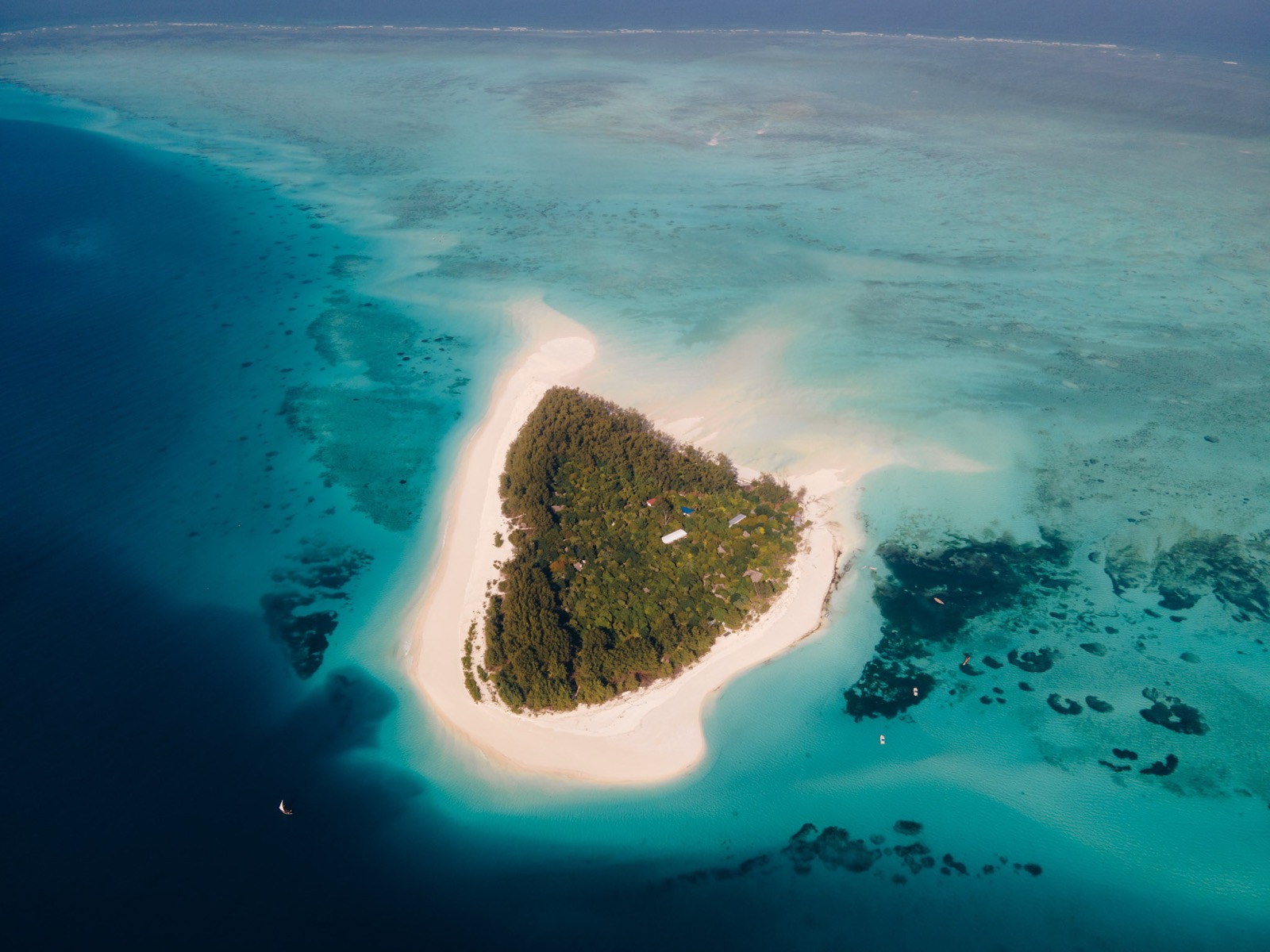
For aerial work, this is where the colour gradation is most dramatic: the reef flat runs from pale turquoise to deep blue in distinct bands depending on depth, reef cover, and sand type. The DJI shots of the Mchanga sandbank (off Michamvi Pingwe) are the most vivid expression of this — a sandbar that appears and disappears with the tide, surrounded by colour-gradient water.
Timing: check the tide chart before you go. Dead low tide is the window — typically a 1–2 hour window twice a day, and the morning low (often 07:00–09:00 during peak season) coincides with the best light. The afternoon low at 15:00–17:00 catches golden-hour light but the wind is usually up by then, which ripples the mirror surface.
Drone note: register with TCAA before using a drone here. The east coast tidal flat is open water (no restricted airspace over public beaches), but you must be registered.
3. Nungwi and Kendwa at sunset
The north tip of Zanzibar faces west, which makes Nungwi and Kendwa the only major beach areas on the island with a direct Indian Ocean sunset over open water.
The light here from 17:30 changes by the minute. The dhow silhouettes in the final 20 minutes before the sun touches the horizon are the classic Zanzibar image — and they are genuine, not staged; the local fishing boats return to the beach roughly at this time.
Access: you do not need to stay in Nungwi to shoot the sunset. The beach is public. The headland between Nungwi and Kendwa has a viewpoint from a raised promontory — it is the best angle for the widest horizon shot and separates you slightly from the beach bar crowds. Arrive by 17:00 to walk it before the light peaks.
Drone note: do not fly over the beach when it is crowded with people. A calm weekday morning, before tourists are out, is the safest window for drone work at Nungwi.
4. Forodhani Gardens from 17:30
Forodhani opens as a food market from roughly 18:00, but the best photography light starts earlier — around 17:30, when the stall holders are setting up and the warm afternoon light catches the smoke from the grills, the faces at work, and the colour of the produce laid out.
By 18:30 the sun has dropped and the market runs under artificial light — the warm orange glow of bulbs against the dark blue of the harbour behind it. This is its own kind of shot, but it requires a higher ISO and faster lens than the golden-hour setup.
Portrait approach: stall holders at Forodhani are generally accustomed to photographers, but ask before you shoot faces. A small purchase — a samosa, a sugarcane juice — before asking creates the right context for a portrait request.
Do not photograph: the harbour immediately to the left of Forodhani contains the police marine unit wharf and security vessels. Do not shoot in that direction with a long lens, and particularly not with a drone.
5. Jozani Forest and the red colobus
The Zanzibar red colobus is found only on this island — approximately 5,862 individuals worldwide as of the most recent survey. Jozani-Chwaka Bay National Park is where most of them live, and they are habituated to humans to a degree that allows photography at close range.
The monkeys move through the canopy in groups of 20–30 and come to the ground for specific feeding opportunities. A patient approach — sit, move slowly, keep sound low — gets you within 3–5 metres of curious individuals.
Light: the forest interior is low-light even at noon. A fast lens (f/1.8–f/2.8, 50–85mm equivalent) is better here than a zoom. If you have a zoom, go 100–400 for detail shots of faces in the canopy.
Timing: the monkeys are most active in the early morning (08:00–10:00) when they are feeding and moving. Midday they rest in the canopy and are less interesting to shoot.
Entry: USD 12, mandatory guide included. The guide knows where the troops are and communicates quietly to move you into position.
Sunrise photography: the east coast advantage
Zanzibar’s east coast faces the Indian Ocean — which means it is the only side of the island where you can photograph the sun rising over open water. The west coast (Stone Town, Nungwi, Kendwa) gets sunsets; the east coast gets sunrises.
Sunrise occurs between 06:00 and 06:30 throughout the year, with the earliest times in December. The best east coast locations for sunrise photography:
- Matemwe (northeast coast): clean sand, fewer tourists at dawn, and a clear eastern horizon with no visible land. The reef structure to the north provides foreground interest at low tide.
- Paje and Bwejuu: the broadest tidal flat on the east coast. At dead low tide and flat-calm conditions before the Kusi wind picks up, the mirror surface here reflects the entire sunrise sequence — colours that shift from pale grey to deep orange inside a twenty-minute window.
- Michamvi: the Mchanga sandbank off Michamvi Pingwe is the east coast’s most dramatic aerial subject, but from the beach at ground level it is also one of the cleanest sunrise angles — low, flat, and unobstructed.
- Jambiani: at low tide, the Mwani Mamas — a local women’s seaweed farming cooperative, part of an industry with more than 23,000 farmers island-wide, over 80% of them women — wade out into the lagoon before 07:00. The silhouette of women working the seaweed lines against a dawn sky is among the most distinctive photography available on the island. The general scene is visible from the public beach; ask permission before photographing anyone individually.
During the Kusi season (June–October), the southeast wind drops to near-calm in the early morning before picking up by 09:00. This creates a glass surface for roughly an hour after sunrise — the window for the mirror-flat tidal shot. During the Kaskazi season (December–March), the northeast wind is often active earlier and the east coast accumulates seaweed, which changes the foreground character of beach-level shots though not aerial drone work over open water.
I arrived at Matemwe at 06:05 on a June morning and the tidal flat was completely still — the kind of surface that makes a wide-angle composition work, with the first pink light hitting the water and a single figure walking out from the beach. By 07:30 the Kusi had the surface broken. The window is real and it is short.
Drone rules in Zanzibar: what you need to know
Tanzania requires all drones (remotely piloted aircraft / RPAS) to be registered with the Tanzania Civil Aviation Authority (TCAA) before operation. This applies regardless of drone size or weight. The requirement comes from the RPAS Regulations 2018 and is confirmed on the TCAA primary-source website.
An older guideline suggested that drones under 7 kg were exempt from registration. The TCAA position conflicts with this — registration is mandatory.
Practical steps before your trip:
- Register your drone with TCAA online before arrival
- Keep the registration document on your phone and accessible offline
- Carry the registration with you during any drone flight
What you cannot photograph with a drone:
- Government buildings, courts, prisons
- Military or police installations
- The harbour or naval/marine police areas
- Near airports or airstrips (standard approach corridors apply)
Where drone flying works well:
- The east coast tidal flat (open reef, public beach, no restricted airspace)
- The Mchanga sandbank from Michamvi
- Open water and reef from a boat (with the boat operator’s agreement)
- Rural areas away from villages and government buildings
Important: Zanzibar has its own administrative structure separate from mainland Tanzania. If you research drone rules and find mainland-specific guidance, verify it applies to Zanzibar also — some regulations differ.
Photography by season: choosing your window
June–October (Kusi season) — the best overall window. The southeast trade wind brings dry conditions, clear skies, and low humidity. East coast beaches are at their clearest — minimal seaweed, maximum water colour contrast for aerial work. The Kusi wind itself runs at 13–25 knots in Paje, so the tidal mirror-flat occurs only in the early morning before the wind picks up. For drone work targeting the tidal reflection shot, plan flights between 06:00 and 08:00.
December–early March (Kaskazi season) — good with caveats. The northeast trade wind brings a second dry period, warm temperatures, and calm seas. The key issue: seaweed accumulates primarily on east coast beaches during the Kaskazi season, most heavily at Paje, Jambiani, and Bwejuu. Aerial shots of the tidal flat look different — seaweed creates textural interest but reduces the clean turquoise-to-blue colour gradient that makes the east coast photograph so distinctively. Stone Town, Nungwi, and sunset work are unaffected. February is the hottest month, with temperatures reaching 35°C — keep cameras out of direct sun and store SD cards in a shaded, ventilated bag, not in a black case in direct heat.
April–May — avoid. April is the worst month for photography: peak long rains, heavy seaweed buildup, persistent cloud cover, and rough conditions that ground drones and flatten the light. May begins to dry but conditions remain variable week to week.
November — transitional. The short rains arrive in November and are typically briefer and less severe than the long rains. Windows of good light appear between rain squalls, and the post-rain vegetation makes forest interiors deep-green and photographically interesting for Jozani visits.
For anyone visiting once and wanting to cover the broadest range of subjects — tidal flat drone work, Stone Town dawn, Nungwi sunset, Jozani forest — the most predictable conditions across all of them are June to early October.
Portrait photography and consent
Zanzibar is over 99% Muslim. In Muslim communities, photographing people — and particularly women and girls — without explicit permission is culturally inappropriate and will cause genuine offence.
The rule is simple: always ask first. Most people will say yes or decline directly. If someone declines, respect it immediately and do not photograph from a distance anyway.
Contexts where the rule applies most strongly:
- Stone Town market, especially in women-run stalls
- Villages near mosques on Friday
- Fishing villages anywhere on the east coast
- Schools and domestic spaces visible from the road
Where norms are more relaxed:
- Resort beach areas, where international tourist culture is the norm
- Forodhani market, where vendors are accustomed to tourists and photographers
- Safari and excursion contexts (boat crew, guides usually welcome photography)
Do not photograph police officers, soldiers, or uniformed officials. In Tanzania this is prohibited by law and can result in confiscation of equipment.
Equipment: protecting your gear
Zanzibar’s environment is hard on cameras:
- Humidity: camera electronics and internal lens elements fog with rapid temperature changes (air-conditioned room to outdoor heat). Let equipment acclimatise before shooting — leave bags partially open for 10 minutes when moving outside.
- Salt spray: boat trips to Mnemba, Prison Island, or Safari Blue involve spray. A waterproof bag for the boat and a UV filter on every lens are minimum protection. Wipe salt off lens elements immediately.
- Sand: east coast beaches are fine, white sand that gets into everything. Never change lenses on the beach. Use a cap over the rear element when swapping.
- Heat: CF and SD cards can fail in sustained heat. Keep cards in a shaded, ventilated bag, not in a black case in direct sun.
Camera security in Stone Town and on the move
Avoid visible camera bags in Stone Town market areas. A dedicated camera bag — identifiable by its shape, padding bulk, or manufacturer logo — marks you as carrying expensive equipment near the Darajani market and the alley approaches to Forodhani. Use a plain day pack or a nondescript shoulder bag without brand markings. The camera body can live in an interior compartment; nothing needs to be visible externally until you are ready to shoot.
Pack camera gear in carry-on luggage, not checked bags. The connection flights between Zanzibar airport and Dar es Salaam on smaller propeller aircraft involve manual handling on the tarmac with no conveyor, and checked bags on these routes are more exposed to rough handling. A camera body and lenses packed in a padded insert inside a carry-on avoids this entirely. The same applies to airport transfers on your way home: anything irreplaceable travels with you.
Night photography on the east coast beach requires a local contact. The east coast is unlit and unpatrolled after dark. Several travel photography accounts specifically flag that night shooting in Zanzibar — astrophotography on the beach, long-exposure tidal flat work — is not advisable alone. The east coast at Jambiani and Matemwe faces open Indian Ocean with minimal horizon light pollution, and the Milky Way galactic core is visible from May to October. The photography is worth planning for; the logistics require someone who knows the area.
At Forodhani market in the evening: keep a wrist strap on the camera when working in the crowd. The market is busy, the light levels require a slower, more deliberate approach, and both conditions reduce your peripheral awareness. A neck or wrist strap adds no weight and eliminates the most common drop-and-grab scenario in market environments.
The shots I keep coming back to
I have been photographing the east coast long enough to know which shots are the ones that actually capture what this place is. The tidal flat at 06:45 with a fisherman walking out in ankle-deep water towards a horizon of bands of blue. The Stone Town door at 07:00 when the light is sideways and the carving throws shadows you cannot get at noon. The red colobus in the fig tree with one hand hanging down.
These are not difficult to find. They require timing — the tide chart, the early alarm, the patience to wait for the monkeys to move into position. They do not require expensive equipment or technical expertise. Zanzibar does the work; the photographer just needs to be there at the right moment.
Zanzibar’s 6°S latitude makes it one of the most rewarding night photography destinations in the region — the Southern Cross sits high in a dark south-eastern sky, the Milky Way galactic core transits overhead May-October, and the east coast beaches at Jambiani and Matemwe face open Indian Ocean with zero horizon light pollution. The Zanzibar stargazing guide covers the best months and moon-phase windows, optimal locations for dark-sky shooting, what the tidal beach reflection effect looks like, and how to preserve dark adaptation while shooting.
Sunset photography is among the most rewarding shooting on Zanzibar — the Zanzibar sunset guide covers the best spots (Kendwa, Stone Town waterfront, dhow cruises), timing, composition tips, and the east/west coast geography that surprises most first-timers. For where to base yourself to access different photographic subjects — east coast for tidal flat, Matemwe for Mnemba, Nungwi for sunsets — see the guide to choosing a base. For Stone Town in depth including the carved-door heritage and the specific alleys worth walking, see the deep dive on Stone Town. For Jozani in full detail — walk route, red colobus facts, getting there — see the Jozani deep dive. For Mnemba Atoll aerial and snorkelling photography, see the Mnemba guide. When to visit for the best light and conditions — seasonal wind, tidal rhythms, rain that grounds drones — is covered in the Zanzibar when to go guide.
Frequently asked questions
Do I need a permit to fly a drone in Zanzibar?
Yes. Tanzania requires all remotely piloted aircraft (drones) to be registered with the Tanzania Civil Aviation Authority (TCAA) before operation — regardless of size or weight. This requirement comes from the RPAS Regulations 2018. Register at the TCAA website before your trip. An older guideline claimed drones under 7 kg are exempt, but the official TCAA position is that registration is required for all operators. Do not fly without registration — confiscation is the likely outcome.
What are the best photography spots in Zanzibar?
The top five: (1) Stone Town carved wooden doorways in early morning light — 06:30–08:30 before tourists arrive and the harsh midday sun makes shadow-contrast unmanageable. (2) East coast tidal flat at dead low tide — the exposed reef creates a mirror flat that shoots impossibly wide. (3) Nungwi and Kendwa for sunsets — the west-facing north tip gets the full Indian Ocean horizon. (4) Forodhani market from 17:30 onwards — the light changes every five minutes as the sun drops over the sea wall. (5) Jozani Forest — the red colobus monkeys are curious, close, and tolerant of cameras if you move quietly.
Can I photograph people in Zanzibar?
Always ask first. Zanzibar is over 99% Muslim, and photographing people — particularly women and girls — without explicit permission is both culturally inappropriate and likely to cause offence. The norm is to ask directly; most people will agree or decline clearly. Street photography without consent is frowned upon in the Stone Town market, near mosques, and in fishing villages. On the beach at resort areas, norms are more relaxed but asking is still the right approach.
What is the best time of day for photography in Zanzibar?
Golden hour twice a day: 06:00–07:30 (soft flat light from the east, minimal shadows in Stone Town alleys, blue water reflection before the wind picks up) and 17:30–19:00 (warm orange light from the west, Forodhani market setting up, Nungwi sunset). Avoid 10:00–15:00 — the equatorial sun is directly overhead and creates harsh shadows, bleached colours, and unflattering contrast.
Is it legal to photograph government buildings in Zanzibar?
No. Photographing police, military, courts, prisons, government buildings, and harbours is illegal in Tanzania and subject to confiscation of equipment and detention. The list is broader than it appears — if in doubt about whether a building qualifies, do not shoot. This applies to both ground photography and drone footage.
What camera equipment do I need in Zanzibar?
The biggest practical challenge is the environment, not the light. Zanzibar's combination of humidity, salt spray, sand, and heat is hard on camera equipment. Essentials: a dry bag or sealed case for beach and boat trips, silica gel packets inside your bag, a UV filter on every lens (reduces haze and protects the front element from salt), and lens cloths for salt spray. A zoom range covering 24–200mm handles most situations. For aerial work, a consumer-grade DJI drone with good stabilisation captures the tidal flat and the atoll colours well.
What are the best and worst months for photography in Zanzibar?
June to October (Kusi season) is the best overall window: dry conditions, clear skies, seaweed-free east coast beaches, reliable drone conditions. December to early March is a viable second window — the Kaskazi northeast trade wind brings a second dry period, though seaweed accumulates on east coast beaches from January onwards, most heavily at Paje, Jambiani, and Bwejuu. Avoid April and May: peak long rains, heavy seaweed, overcast skies, and conditions that ground drones and flatten natural light. February is the hottest month — temperatures can reach 35°C — which increases risk to camera electronics and SD cards.
Are there altitude and distance limits for drones in Tanzania?
Yes. Tanzania's TCAA regulations set a maximum altitude of 121 metres above ground level. Drones may not be flown within 3 kilometres of a domestic airport or 5 kilometres of an international airport. Night flying is prohibited. Drones are banned in all national parks — this applies to Jozani-Chwaka Bay National Park (where the red colobus live) and all other gazetted protected areas. Flying without proper authorisation can result in drone confiscation and fines of up to one million Tanzanian shillings.
Do I need a separate permit for professional or commercial photography in Zanzibar?
Yes. Professional filming or photography in Tanzania (mainland and Zanzibar) requires a media permit endorsed by your relevant embassy before arrival. Applications go through the Tanzania Film Board. For drone filming specifically, additional clearances are required from TCAA, the Tanzania Film Board, and the Ministry of Defense and National Service — three separate approvals. If you plan any commercial or journalistic work, begin the process at least one month before arrival. Initial drone permit enquiries go to [email protected].