
Facts & prices checked: 2026-06-25
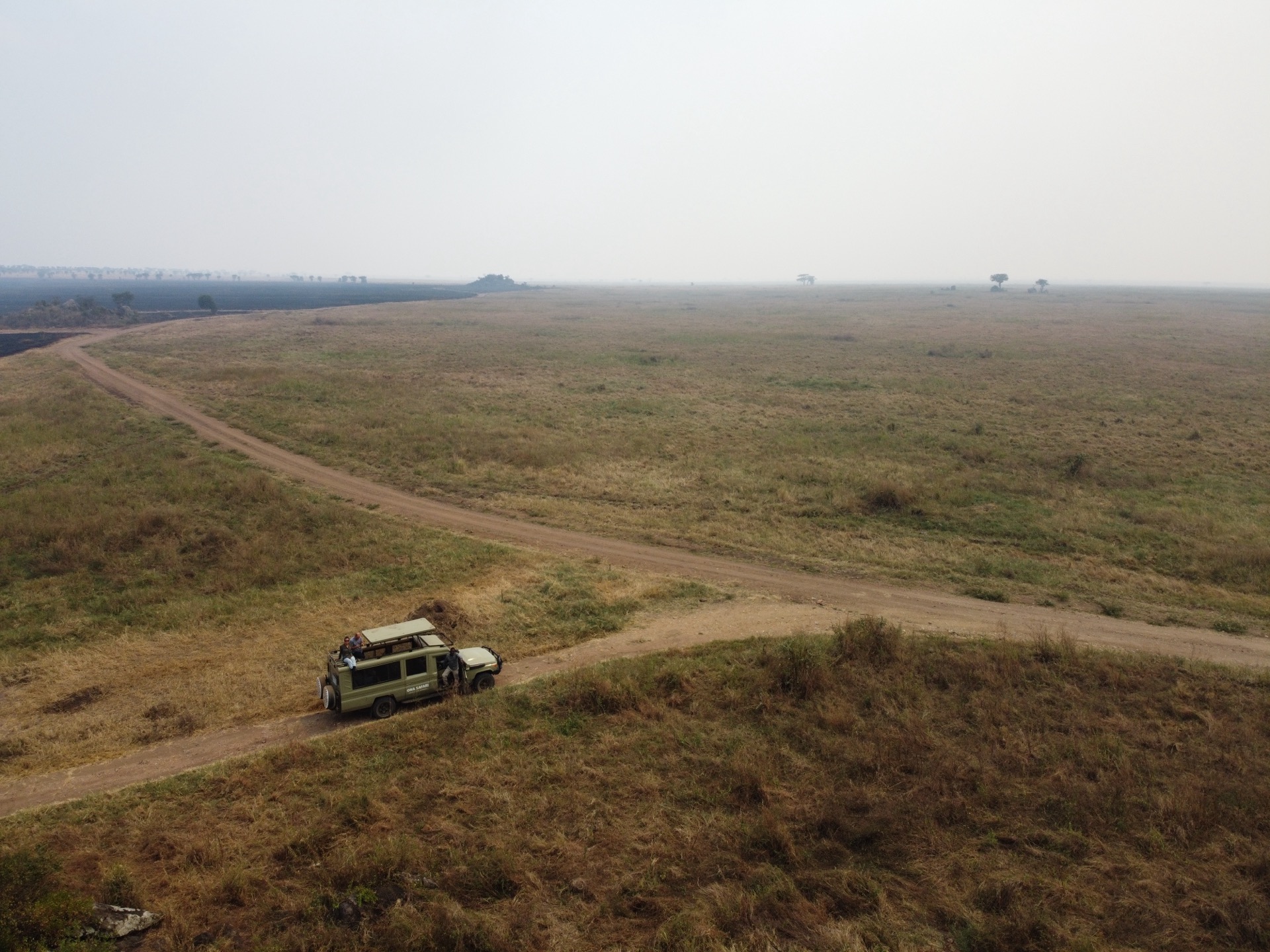
Tanzania’s national parks are extraordinary — but they come with rules. All vehicles must stay on designated tracks. No driving after dark. No walking safaris outside designated areas. Peak season in the central Serengeti can mean 30+ vehicles at a single cheetah sighting. Private game conservancies were built to offer the opposite: exclusive territory, activities unavailable inside parks, and a fundamentally different relationship between the guest and the bush.
This guide covers how private conservancies work, what Tanzania’s main options are, and who should pay the premium.
Why private conservancies exist
Tanzania’s national parks — Serengeti, Ngorongoro Conservation Area, Tarangire, Lake Manyara, Ruaha — are managed by TANAPA (Tanzania National Parks Authority) or, in the case of Ngorongoro, by the NCAA. These are public lands with public access rules. The rules exist for legitimate reasons: protecting wildlife from vehicle pressure, preventing habitat degradation from off-road driving, managing the tourism carrying capacity of a park that handles hundreds of thousands of visitors per year.
The consequences for the visitor are real, though. Inside Serengeti National Park, you must stay on the track even if a leopard walks 200 metres into the bush and settles into a tree. You must be back at camp or outside the park boundary before nightfall. You cannot get out of your vehicle. You share every sighting with whatever other vehicles reach it first.
Private conservancies solve these problems through a different land tenure model. A private operator leases land adjacent to a park — from the government, from local communities, or on former agricultural land — and operates under a separate concession licence with different activity permissions. The land is used exclusively (or near-exclusively) by the operator’s guests. The number of vehicles active in the area at any time is controlled.
The result is a different calibre of encounter, at a significantly higher price.
The four key activities
Private conservancies are worth understanding through the four activities they make available — each impossible or severely restricted inside Tanzania’s national parks.
Night game drives
Serengeti National Park rules do not permit driving after around 6:30 PM. Every national park operates the same restriction. Night drives are only available on private concessions bordering select parks — Lake Manyara and Tarangire have concession-run night drive programmes nearby — but even these areas have denser habitat that limits how useful night driving actually is.
On a private conservancy, night drives are a standard inclusion. The guide uses a hand-held spotlight to scan the tree line and grass while you drive in darkness. Lions, leopards, and spotted hyenas shift into active hunting mode. Aardvarks — Africa’s most secretive nocturnal animal, rarely glimpsed even on night drives — emerge. Spring hares, civets, genets, porcupines, bushbabies, and nightjars fill in the darkness. The bush sounds entirely different: frogs, owls, insects in chorus.
The night drive is the activity that most consistently surprises people who have done Africa before. You can spend a week in Serengeti and never have anything like it.
Tanzania’s national parks don’t allow night drives — only private conservancies do. The Tanzania night safari guide covers what’s available and where (Grumeti, northern Serengeti camps, Tarangire conservancies, southern circuit), the full nocturnal cast (aardwolf eating 300,000 termites per night, springhares with orange-red eye-shine, civet on its nightly route, honey badger), and why the experience is fundamentally different from a day drive.
Off-road driving
Tanzania safari park rules require vehicles to stay on designated tracks and roads — the rule is clear across TANAPA parks. When an animal moves off the track, your vehicle stays on it. At busy sightings, vehicles queue on the road and you view from a fixed position.
In a private conservancy, your guide can leave the track entirely. Following a lion pride into a thicket, positioning upwind of an elephant herd, getting ahead of a hunting cheetah to wait — all of this is possible. The difference between watching a leopard in a tree from a fixed queue of vehicles and approaching it through grass until you are close enough to hear it breathing is not marginal. It is the difference between observing wildlife and experiencing it.
Walking safaris
A walking safari with an armed ranger and professional guide is the oldest form of safari, and the least replicable by vehicle. At foot level, you read tracks. You find dung beetles rolling their balls. You smell the change in the air when you approach an elephant wallow. Your guide stops and crouches and points out a millipede, a dung pile, a feather arrangement that explains what happened here three hours ago.
Tanzania regulations require that walking safaris be accompanied by at least one qualified armed ranger, with maximum group sizes controlled and a mandatory safety briefing before any walk. The guide manages risk through tracking and landscape-reading, not through avoiding wild areas. Walking in well-managed conservancies is genuinely safe — but the experience feels anything but sanitised.
Walking safaris are available in Nyerere National Park, and in some Tarangire-area camps, but the most consistent walking programmes are on private concessions with purpose-built walking routes and guides whose primary expertise is on foot.
For the full walking safari guide — areas, format options (morning walk vs multi-day fly-camp), what to bring, and the tracking experience explained — see our dedicated walking safari page.
Exclusivity and no vehicle queues
Most private conservancies enforce strict limits on the number of vehicles active in a given area. In practice this means: when you find a leopard, you find it. There is no radio call sending 15 other vehicles to your coordinates. You can sit with a sighting for as long as you want.
In peak season at Serengeti Seronera, vehicle queues at major predator sightings are a well-documented phenomenon. Twenty or more vehicles around a single cheetah family is not unusual. Private conservancies are structurally built to prevent this.
Singita Grumeti Reserve
Singita Grumeti is Tanzania’s flagship private wildlife area — by size, by conservation investment, and by the quality of what it offers.
The reserve covers approximately 350,000 acres (~1,416 km²) of private land in the western Serengeti ecosystem, adjacent to Serengeti National Park’s western corridor. To put that in perspective: 1,416 km² is larger than some national parks. Singita shares this area among a handful of small camps with a total guest count that leaves the vast majority of the reserve empty at any given time.
The Grumeti River runs through the reserve. This is the same river that cuts west through the Serengeti and into Speke Gulf on Lake Victoria — the first major obstacle the wildebeest face as they move north on the Great Migration. The river is home to approximately 3,000 Nile crocodiles, including giants reaching 17 feet in length and up to 70 years old. From May to September, and particularly May to June when the herds push west through the Grumeti area, the river crossings here are quieter and less visited than the famous Mara crossings in the north — but the crocodile drama is equally intense.
Singita has invested heavily in anti-poaching operations across the reserve since taking on the concession. Poaching in the area has declined significantly as a result, and wildlife numbers have recovered. The organisation publishes conservation impact data and runs community development programmes alongside the wildlife protection work.
Several camps operate within the Grumeti concession, including Singita Sabora Tented Camp (rates from USD 2,210/night per person), Singita Faru Faru Lodge (open year-round), and the Singita Serengeti House at substantially higher rates for exclusive-use groups. All activities — night drives, off-road driving, walking safaris, hot air ballooning — are available within the reserve.
For travelers specifically targeting the Great Migration: the Grumeti River crossings happen roughly May to June, earlier than the Mara crossings in the north. Wildebeest moving through the western corridor between June and July will cross through Singita Grumeti’s territory.
Ngorongoro Conservation Area private lodges
The Ngorongoro Conservation Area (NCA) is not a national park. It is a UNESCO World Heritage Site managed by the NCAA (Ngorongoro Conservation Area Authority) under a unique co-management model with the Maasai communities who live within the area. This distinction matters for what you can do here.
Several private lodges within the NCA have concession agreements that give them exclusive areas, and some have walking rights in zones where standard tourist vehicles don’t operate. The NCA’s management structure allows more flexibility than TANAPA parks for operators who have invested in community partnerships and infrastructure.
The NCA also includes areas beyond the famous crater floor — the Ndutu region to the south, Olduvai Gorge, the crater highlands — where private lodges with appropriate concessions can offer different activities from the mass-market crater descent. Entry fees for the NCA are charged in addition to lodge rates.
The crater floor itself is accessed by all vehicles paying the daily fee (USD 295 per vehicle per crater descent, in addition to person-day fees). What a private NCA lodge gives you is the concession area outside the main tourist circuits, and in some cases the ability to do morning walks in the highlands or the crater rim in areas that standard tour vehicles never reach.
Mwiba Ranch and Ruaha private areas
Mwiba Wildlife Reserve
Mwiba Ranch sits west of Ngorongoro, adjacent to the Ngorongoro Conservation Area and in the broader ecosystem that connects the NCA with the western Serengeti corridor. It was established on former cattle ranch land that had been significantly degraded, and the conservation model here is rewilding: restoring native habitat and reintroducing species that had been lost.
The reserve is part of a wildlife corridor that links the Ngorongoro ecosystem westward, creating movement routes for elephants, lions, leopards, cheetahs, and wild dogs across a landscape larger than any individual protected area. Activities at Mwiba include walking safaris, night drives, fly camping, and horseback safaris — on land where none of the TANAPA park restrictions apply.
For travelers interested in the conservation story alongside the game viewing, Mwiba represents a different proposition from Singita Grumeti: not a long-established private reserve in a proven wildlife area, but an active rewilding project where the wildlife recovery is something guests can observe and participate in.
Ruaha private concessions
Ruaha National Park is Tanzania’s second-largest national park and holds one of Africa’s largest lion populations. It remains significantly less visited than the northern circuit. Several private lodges operate on concessions that adjoin the park boundary, with exclusive areas where park rules do not apply.
Walking safaris are particularly strong around Ruaha. The park’s combination of open miombo woodland, rocky river courses, and dense vegetation patches gives professional walking guides consistent opportunities to demonstrate what foot-level safari can offer — tracking, reading, interpreting. The predator density and the presence of large herds of buffalo make wildlife encounters frequent and substantive.
Camps in the Ruaha private concession area operate their own walking programmes on the concession land, where the guide has full flexibility to follow animals and adapt routes without any track restriction.
The cost reality and how to choose
Private conservancies in Tanzania are expensive by any measure. Daily rates at premium private concessions typically run USD 600–2,000+ per person per night, all-inclusive. Singita properties exceed USD 2,000/person/night at upper camps and lodge configurations. This is significantly more than mid-range Serengeti lodges, and in some cases three to five times the cost.
What the premium buys is specific: activities unavailable inside national parks (night drives, off-road driving, walking safaris), the structural absence of vehicle competition at sightings, and usually a direct funding connection to anti-poaching and community programs. Budget travelers are better served by national parks, which offer extraordinary wildlife access at a fraction of the price. Private conservancies are for travelers who have done Tanzania once or twice and want a different level of experience, or first-time visitors with the budget to compress the full range of safari activities into one trip.
How to match the right reserve to your priorities:
- Migration with exclusivity (May-July): Singita Grumeti — western corridor crossings, Grumeti River crocodiles (~3,000 resident), night drives and off-road access unavailable in the adjacent Serengeti park
- Ngorongoro with walking access: NCA private concession lodges — walking programmes on the crater highlands and concession areas, Maasai community access, crater descents in a private vehicle
- Rewilding corridor story: Mwiba Ranch — wildlife recovering on former ranch land, corridor conservation connecting NCA westward, horseback safaris and fly camping
- Big predator country with walking safaris: Ruaha private concessions — large lion population, walking-focused programs in miombo woodland, far less visited than the northern circuit
Most private conservancy itineraries work best in combination with national park time: one or two nights in a private area for the exclusive experience, combined with Serengeti or Ngorongoro days for the scale and variety that national parks uniquely offer.
What the night drive actually showed me
The first time I watched a lion hunt was on a night drive in a private conservancy in the western Serengeti ecosystem. The guide spotted the pride moving at 7 PM, drove ahead, killed the engine and the lights and waited in a dry lugga about forty metres from a game trail.
Three minutes later the lions came past. The guide clicked the spotlight on at low intensity. One lioness — she was close enough that I could see the yellow-green eye-shine without the light — paused and looked directly at the vehicle. The pause lasted about three seconds. Then she kept walking. The rest of the pride followed without breaking stride.
You cannot have that experience in Serengeti National Park. The rule against night drives exists for legitimate reasons; the park carries an enormous volume of vehicles and wildlife protection requires those rules. Private conservancies that operate with lower vehicle numbers and professional guides can manage night activity responsibly. Both models are sound — but they are not the same experience, and if you have been to Tanzania before and want a different kind of encounter with the same wildlife, a night in a private conservancy is the most direct way to get there.
For the complete landscape of luxury camp options across Tanzania’s north — private vehicles, seasonal migration timing, and how concession camps integrate with national park days — see our concession camp options. For the Serengeti’s four zones and how to choose between Seronera, the Western Corridor, and the northern Mara sector, see the Seronera-to-Mara zone breakdown. The Grumeti River crossings are part of the broader migration calendar covered in the northern circuit route breakdown. For the Ngorongoro Conservation Area’s entry fees, crater logistics, and how a private rim camp changes the experience, see the crater’s entry fees and logistics. If you are planning a multi-location itinerary that includes both a private conservancy and national park time, the Tanzania 7-day safari itinerary covers how to sequence the northern circuit with private concession days.
Frequently asked questions
What can you do in a private conservancy that you can't do in a national park?
Three activities are unavailable or severely restricted in most Tanzania national parks (TANAPA): night game drives (prohibited in Serengeti and most others after around 6:30 PM); off-road vehicle driving (all vehicles must stay on designated tracks inside parks); and unrestricted walking safaris (walking is prohibited without special permits in most TANAPA parks). Private conservancies adjacent to parks permit all three, plus they enforce limits on the number of vehicles per sighting — so you won't encounter the queues of 15–20 vehicles that form at major Serengeti predator sightings in peak season.
Is Singita Grumeti Reserve worth the premium over a Serengeti lodge?
Singita Grumeti is worth considering for travelers who have already experienced Serengeti National Park and want a different tier of access. The reserve (~1,416 km²) is in the western migration corridor — wildebeest cross the Grumeti River through the reserve May-July, with approximately 3,000 Nile crocodiles resident in the river. Night drives and off-road access are included. The premium is substantial (Singita Sabora rates start at USD 2,210/night per person) but includes all activities and the exclusive-use area. For a first Tanzania safari, a well-chosen Serengeti lodge is better value; for a return visit, Singita Grumeti is the step-up option.
Can you walk with lions in Tanzania's private conservancies?
Walking safaris in private conservancies are not walking with lions — they are guided walks in wild bush with an experienced professional guide, in areas that may have lions, leopards, elephants, and buffalo. The guide manages risk through tracking, reading the landscape, and maintaining appropriate safe distances when large predators are present. Tanzania regulations require that walking safaris be accompanied by at least one qualified armed ranger, with controlled group sizes. The point is not proximity to dangerous animals — it is the foot-level experience of reading tracks, finding insects, and experiencing the bush in a way that no vehicle can replicate.
What is a night game drive actually like?
Night drives typically begin at dusk (6:00–6:30 PM) and run for 2–3 hours. Your guide uses a hand-held spotlight to scan the bush; vehicle lights are off except when needed. The experience is fundamentally different from daytime: lions, leopards, and hyenas are actively hunting; aardvarks, spring hares, genets, and civets emerge; the bush sounds change dramatically. Seeing predators on an active hunt at close range — the movement, the coordination — is one of the most memorable things you can do on safari and is simply not available in most national parks. Night drives are not permitted inside any national park — they're only available on private concessions, including those bordering Lake Manyara and Tarangire.
How do I get to a private conservancy in Tanzania?
Most private conservancies are accessed by charter flight from Dar es Salaam, Arusha, or from an adjacent national park airstrip. Singita Grumeti has its own airstrip in the western Serengeti and connects to Arusha via charter (approximately 1.5 hours) or to Serengeti Seronera airstrip. Mwiba has its own airstrip connecting to Arusha. Ruaha private camps use the Ruaha area strips. Your lodge arranges all transfers as part of the all-inclusive rate; most private conservancies do not offer self-drive access.
Are private conservancies better for wildlife than national parks?
Not necessarily for volume of wildlife — the Serengeti has more wildebeest and more lions per square kilometre than most private areas. Private conservancies are better for the quality of the individual encounter: closer approach, no vehicle competition, ability to spend unlimited time with a sighting, night activity, and walking access. National parks offer scale and density at a lower price point. The ideal Tanzania safari combines both: one or two nights in a private conservancy for the exclusive experience, balanced with national park time for the scale and variety.