
Facts & prices checked: 2026-06-25
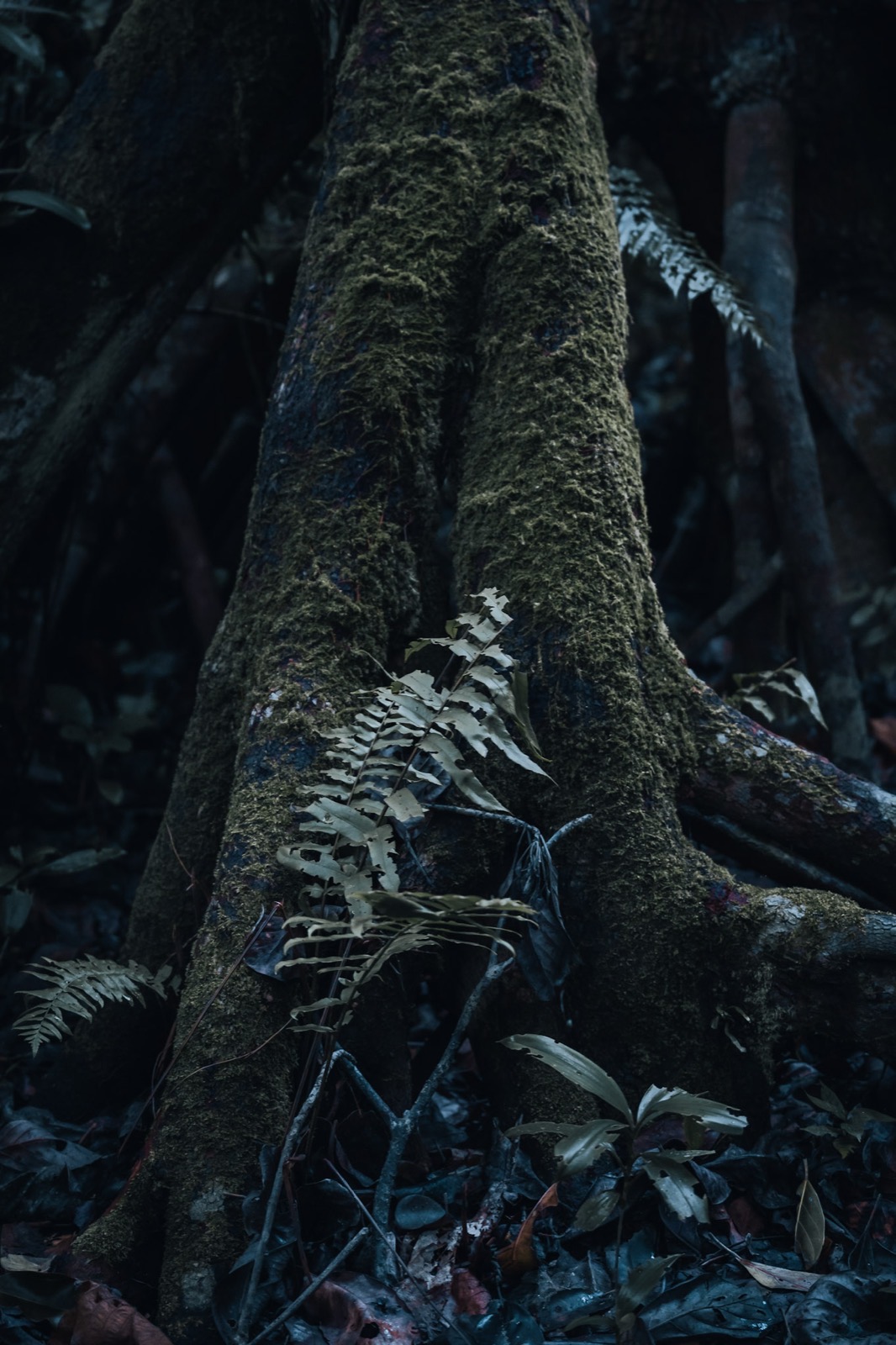
Udzungwa Mountains National Park is the Tanzania that 99% of safari itineraries skip. There are no game-drive vehicles inside the park, no open savannah, and no Big Five guarantees. Instead: intact ancient rainforest that has survived since the last Ice Age, two Critically Endangered primate species found nowhere else on Earth, Sanje Falls dropping 170 m through three stages, and 25 of East Africa’s most restricted-range bird species concentrated in a single mountain block. Entry costs USD 35.40 per adult per day — the same lowest fee tier as Ruaha and Mikumi.
The park sits in the Eastern Arc Mountains, a WWF Global 200 Ecoregion and Conservation International biodiversity hotspot that runs in an arc through southern Kenya and Tanzania. Of the 13 mountain blocks in the Eastern Arc, Udzungwa is one of the most intact and the most biologically significant for vertebrate life. At least 96 vertebrate species are endemic to the Eastern Arc as a whole; Udzungwa holds a disproportionate share of them. The Nyerere–Udzungwa Wildlife Corridor was officially designated Tanzania’s first legal wildlife corridor in April 2025, recognising the ecological link between Udzungwa and Nyerere National Park to the east.
| Park entry fee | USD 35.40 per adult per day (non-resident, 2024/25) |
| Location | Eastern Arc Mountains, southern Tanzania |
| Access | Foot only — no internal roads |
| Endemic primates | Iringa red colobus (CR); Sanje crested mangabey (CR) |
| Key waterfall | Sanje Falls — 170 m, three stages |
| Restricted-range birds | 25 of 34 Tanzania-Malawi mountain EBA species |
| Best months | June–October; December–March |
| From Iringa | 2–4 hours by road |
Why add Udzungwa to a Serengeti itinerary?
The Serengeti delivers something Udzungwa cannot: guaranteed density of large mammals across open plains at speed, with game-drive vehicles that can cover 100 km in a day. Udzungwa delivers something the Serengeti cannot: an intact rainforest ecosystem, endemic wildlife found nowhere else on Earth, and the specific kind of wilderness that requires moving at human speed through ancient forest rather than viewing it from a window.
These are not competing experiences — they are fundamentally different ones. The practical argument for adding Udzungwa is circuit efficiency: it belongs on the Southern Tanzania circuit alongside Nyerere and Ruaha, not as a replacement for the Northern Circuit. A 10-day itinerary covering Nyerere, Ruaha, and Udzungwa — with Udzungwa as the hiking finale before flying home from Dar es Salaam — is well-established and achievable. African Budget Safaris advertises exactly this combination as a 10-day Tanzania private safari.
The honest counterpoint: Udzungwa is a harder, muddier, lower-comfort experience than anywhere on the Northern Circuit. The trails are steep. The humidity is real. The primates do not appear on schedule. I walked the Sanje Falls trail in the early dry season and reached the viewpoint at the top of the main drop in about three and a half hours — the last section above the second stage is scrambling rather than walking, and it was worth every metre of it.
The two endemic primates — two of Africa’s rarest
Udzungwa protects two primate species that exist nowhere else on Earth, both Critically Endangered on the IUCN Red List.
Iringa red colobus (Piliocolobus gordonorum) is the flagship. It is a large, striking monkey — red-brown back, pale underside, characteristic loud warning bark — that moves in groups through the forest canopy at various altitudes. The Sanje Falls trail passes through primary colobus habitat in the first half of the approach, and sightings are common enough that guides plan around them rather than treating them as unexpected encounters. I watched a group of what I estimated at thirty or forty individuals at close range for about twenty minutes at the edge of a forest clearing — they were low enough in the canopy that we were at eye level with the lower animals, and none of them appeared especially concerned. The contrast with habituated chimpanzee trekking (where you know exactly what you’ll see and for how long) is that here the encounter feels genuinely unscripted.
Sanje crested mangabey (Cercocebus sanjei) was first formally described from Udzungwa specimens in 1980. It is smaller and less commonly encountered than the colobus, occurring mainly in mid-altitude forest zones. Bushmeat hunting is documented as a significant threat to the mangabey population — camera trap data from the park confirms significant negative impacts on the mammal community from illegal hunting — which makes every sighting more meaningful.
Common chimpanzee presence is documented in the park’s northern forest zones, though chimpanzees are not habituated here and are not reliably encountered on standard trails. If chimpanzees are the primary wildlife objective, Gombe Stream or Mahale are the correct destinations; Udzungwa adds them as an occasional forest encounter rather than a guarantee.
The Eastern Arc Mountains as a whole harbour at least 96 strictly endemic vertebrate species — 10 mammals, 19 birds, 29 reptiles, and 38 amphibians. Walking through Udzungwa is walking through one of the highest-density concentrations of endemic vertebrate life on the African continent.
Sanje Falls — the main trail
Sanje Falls is the most popular day hike in the park and the natural starting point for a first visit.
- Height: 170 m — one of the highest waterfalls in Tanzania’s national park circuit, dropping in three distinct stages
- Trail: most popular day trail in the park; half-day; approximately 4 hours round trip
- Start: Sanje village, close to the park gate near Mang’ula
- Guide requirement: mandatory for all trails; guide fees are charged separately from park entry
- What to expect on trail: dense lowland and lower montane forest; Iringa red colobus typically encountered before the midpoint; the trail becomes steeper above the first stage; the top viewpoint above the main 170 m drop is the destination
- Swimming: possible in the pools at the base in the dry season
- Best start time: depart by 07:00 — afternoon cloud reduces the falls view and makes the descent slippery
A second waterfall trail, the Sonje (sometimes Njokamoni) trail, is the other frequently hiked route and is described as less visited, with good colobus habitat and a different forest character.
For multi-day options: the Mwanihana Trail involves a 2-night camping expedition; the Lumemo Trail is a 6-day route crossing the full park. Trail options range from a 1-hour Sonjo walk to full multi-day expeditions spanning up to 5–6 days, all on foot.
Multi-day expeditions: the full trail menu
The Sanje Falls day hike is the entry point — but Udzungwa has one of the most varied trail menus of any Tanzania national park, and the multi-day options enter forest zones that the standard day trail never reaches.
- Sonjo walk (1 hour): the shortest option, for visitors with limited time or who want to test the forest before committing to the full Sanje route. Still enters primary forest and gives realistic colobus sighting chances from the gate area.
- Sanje Falls day hike (6 km, 4–5 hours, 450 m elevation gain): the park’s most popular trail. The total distance is 6 kilometres with 450 metres of ascent to the upper viewpoint — steeper than it reads on paper, with scrambling in the final section above the second stage.
- Overnight Sanje hike: the same Sanje route extended to include a night in the forest, reaching altitude zones above the standard viewpoint and giving access to the forest at the time of day — dusk and early morning — when bird and primate activity is highest.
- Mwanihana Trail (2 nights): a more demanding expedition reaching the park’s high montane forest zones. Mwanihana is the route for serious birders targeting high-altitude Eastern Arc endemics not found in the lowland Sanje corridor.
- Lumemo Trail (3–5 days): the park’s longest route. Various configurations give a hike of 38 kilometres (3 days, 2 nights at a leisurely pace) up to 65 kilometres over 5 days, depending on entry and exit point. The official TANAPA trail description rates the Lumemo moderate to difficult in places, with long steep sections. A four-night version is also offered by park-registered operators.
All multi-day trails require camping inside the park. The Twiga Campsite operates inside the park boundary as the main base for overnight stays; the Lumemo route has additional designated campsites at intervals along the route. Camping gear must be brought in or arranged through a local operator — there is no lodge-standard accommodation inside the park boundary.
Planning note: all trails in Udzungwa require a guide hired at or through the park. For multi-day routes, the guide must be booked in advance — the park cannot always supply a qualified multi-day guide for the Mwanihana or Lumemo on the day of arrival. For the Sonjo walk, advance booking is still recommended; the TANAPA guidance specifies pre-booking through the park or your lodge for even the shortest walks. Camping gear (tent, sleeping bag, cooking equipment) must be carried in or arranged through a local operator, as nothing is provided along the trail.
I walked the opening kilometre of the Lumemo Trail during a visit when I had an extra half-day after completing Sanje, and the contrast in forest character within a single kilometre of leaving the main trail was immediate: denser understorey, wetter underfoot, noticeably quieter — fewer birds calling, which the guide said meant we were moving into territory where the colobus troop had not passed recently. The Lumemo is not for anyone who found the Sanje trail physically easy. It is for people who want to understand what this forest actually is, rather than its most accessible edge.
Birdwatching — Eastern Arc endemic zone
Udzungwa supports 25 of the 34 restricted-range bird species found in the Tanzania-Malawi mountain Endemic Bird Area — a concentration that draws specialist ornithologists from around the world to a single mountain block.
Udzungwa Forest Partridge (Xenoperdix udzungwensis) is the headline target. Described in 1991, it was considered one of the most significant ornithological discoveries of the 20th century in Africa — a completely unknown genus of partridge found only in the forests of Udzungwa and, in small numbers, the Rubeho Mountains. Finding it requires time, patience, and a specialist guide who knows the right altitude zones and calling times.
Rufous-winged Sunbird is a Tanzanian endemic found in the Udzungwa forest, one of the most sought-after sunbirds in East Africa for birders completing a Tanzania endemic list.
The Eastern Arc Mountains as a whole are one of the continent’s 19 Endemic Bird Areas (African mainland count). Tanzania is home to over 1,100 recorded bird species, and the Eastern Arc contributes disproportionately to that total through its restricted-range endemic community. Tanzania’s top birding sites include Udzungwa alongside Serengeti, Lake Manyara, Tarangire, Ruaha, and Nyerere.
Best birdwatching seasons: November to February (breeding plumage, peak song, maximum species activity); June to October (dry season, easier trail access, good visibility through less dense understory). The different altitude zones — from lowland forest at 300 m to montane forest above 2,000 m — host distinct bird communities, so a guide who works across multiple altitudes will deliver a significantly richer species list than a self-guided walk.
Chameleons and other reptiles
The Eastern Arc Mountains are a global hotspot for chameleon diversity. Udzungwa and the Southern Highlands are specifically identified in the scientific literature as supporting new chameleon species discoveries — a new species (Kinyongia msuyae) was described from Udzungwa and the Southern Highlands in 2015. Three documented species occur in Udzungwa:
- Trioceros deremensis: endemic to the Eastern Arc, found at 800–2,300 m elevation
- Trioceros laterispinis: occurs in Udzungwa at 1,300–2,000 m; a higher-elevation specialist
- Trioceros tempeli: also called the Tanzania mountain chameleon or Udzungwa double-bearded chameleon
Evening guided walks (where offered by the park) are the most productive setting for chameleon sightings — they are cryptic in daylight and easier to spot with a head torch at the forest edge.
The Nyerere–Udzungwa Wildlife Corridor
In April 2025, Tanzania formally designated the Nyerere–Udzungwa Wildlife Corridor as the country’s first legal wildlife corridor, protected under the Wildlife Conservation Regulations of 2018. The designation recognises what ecologists have documented for years: wildlife including elephant and African wild dog moves between Nyerere National Park to the east and Udzungwa’s rainforest highlands, and that movement is ecologically essential for population viability in both areas.
The corridor matters in a practical sense for anyone building a Southern Tanzania itinerary. When you stand inside Udzungwa’s forest, you are not in an isolated protected fragment — you are at the western end of a landscape-level conservation zone connected to Nyerere National Park, which covers 30,893 km² and ranks among the largest protected wildlife areas in Africa. The two parks together protect a complete ecological transect from coastal and riverine habitat to ancient rainforest highlands.
Magombera Nature Reserve sits within this corridor zone. Established in January 2019 and covering 26 km², Magombera occupies a strip of lowland forest between Nyerere (formerly Selous Game Reserve) and the Udzungwa park boundary, providing a linked habitat block for species crossing between the two major protected areas. The reserve was created specifically to formalise protection of a critical wildlife movement zone that had previously been ungazetted and therefore vulnerable to agricultural conversion.
For the itinerary-builder: the standard Southern Tanzania circuit pairing Nyerere and Udzungwa is not just a clever combination of two different wildlife experiences. It is a visit to two ends of a single connected ecosystem — and since April 2025 that connection has been formally recognised and legally protected by the Tanzanian government. Few other multi-park itineraries anywhere in Africa can make that claim about the space between their component destinations.
Practical logistics
Getting there: From Iringa, 2–4 hours by road. The nearest town to the park gate is Mang’ula, which is served by public bus from Dar es Salaam (approximately 6 hours). Udzungwa is approximately 1 hour’s drive from Mikumi National Park — making the Mikumi–Udzungwa pairing the most natural short circuit for visitors arriving and departing through Dar es Salaam.
Park entry: USD 35.40 per adult per day (non-resident, 2024/25 TANAPA rates). This places Udzungwa in the same fee tier as Ruaha, Mikumi, Katavi, Mkomazi, and Rubondo Island — the lowest tier of any major Tanzania wildlife area.
Guide requirement: Mandatory for all hiking trails. Guide fees are charged separately from the entry fee at the park gate. Do not attempt to walk without one — beyond the regulations, the forest is genuinely easy to disorient yourself in above the lower trail sections.
Accommodation: Twiga Campsite operates inside the park boundary. A range of guesthouses and small lodges operate near Mang’ula gate. There are no luxury lodges at or inside Udzungwa — this is a camping and basic accommodation destination.
What to bring: Leech socks (essential March–June and in wet periods); waterproof hiking boots; a full rain layer (altitude and forest create their own weather); binoculars — essential for both primates and birds; insect repellent; at least 2 litres of water per person for the Sanje trail.
Trail closure: Most trails become inaccessible during the main rainy season, March–May. The dry season, June–October, is the recommended window for all standard trails including Sanje Falls. December–February is a viable second window — slightly wetter than the main dry season but with significantly higher bird activity.
Southern Tanzania circuit: The standard combination is 3–4 nights Nyerere + 3–4 nights Ruaha + 2 nights Udzungwa, totalling 10–12 days. Alternatively, Mikumi (accessible by road, 1 hour from Udzungwa) + Udzungwa 4–5 days is a compact circuit achievable without domestic flights. The Nyerere–Udzungwa Wildlife Corridor was formally designated Tanzania’s first legal wildlife corridor in April 2025 — wildlife including elephant and wild dog is documented moving between these two protected areas along the corridor.
Author’s note
Udzungwa is the park I recommend to travellers who message me saying they’ve already done the Serengeti and want something genuinely different on a second Tanzania trip. The honest description: it is not comfortable, it is not the place for anyone whose primary measure of a safari is game density, and the wildlife encounters are not guaranteed or staged. What it delivers is the specific sensation of being inside a functioning ancient ecosystem — a forest that has been continuous since before the Ice Age, with animals that are not there for visitors and birds that have not been studied to exhaustion. For that, there is no equivalent in Tanzania.
→ Related guides: what a Tanzania trip costs, park by park · Mikumi National Park — road-accessible safari from Dar · Nyerere National Park — boat safaris, wild dogs, walking · Ruaha National Park — Tanzania’s second-largest park · full birding site list · Tanzania national parks comparison · full country planning hub
Frequently asked questions
What makes Udzungwa Mountains different from other Tanzania national parks?
Udzungwa is a rainforest park — not a savannah game-drive destination. There are no road vehicles inside the park; all access is on foot. The park sits in the Eastern Arc Mountains, a WWF Global 200 Ecoregion and Conservation International biodiversity hotspot, and protects two Critically Endangered primate species found nowhere else on Earth. It is best described as a hiking, birdwatching, and primatology destination — not a Big Five safari.
What primates can I see in Udzungwa?
The two headline species are both Critically Endangered endemics: the Iringa red colobus (Piliocolobus gordonorum), found only in Udzungwa, and the Sanje crested mangabey (Cercocebus sanjei), first described from Udzungwa in 1980 and not found outside the park. Both species are regularly encountered on the Sanje Falls trail. Common chimpanzees are also documented in the park's northern zones, though they are not habitually encountered on standard trails.
How high is Sanje Falls and how long is the hike?
Sanje Falls is 170 m high — one of the highest waterfalls in Tanzania's national park circuit. The Sanje Waterfalls trail is the park's most popular day hike, typically described as a half-day trek of approximately 4 hours round trip. The waterfall drops in three stages and is accessible from Sanje village near the park gate. A guide is mandatory for all trails. Trails can be slippery from March to May (long rains).
When is the best time to visit Udzungwa Mountains?
The best hiking conditions are June to October (main dry season) and December to March (short dry season). Trails can become inaccessible during the main rains from March to May, with April the wettest month. June is noted as an especially good month — dry enough for good trail conditions while the forest is still dense and green immediately after the rains. Bird activity peaks November to February during breeding season.
How do I get to Udzungwa Mountains National Park?
From Iringa, the drive to Udzungwa takes 2–4 hours depending on route. The park gate is near Mang'ula village, which is accessible by public bus from Dar es Salaam. Udzungwa is approximately 1 hour's drive from Mikumi National Park, making the Mikumi–Udzungwa combination a natural short circuit from Dar. The park has no internal roads — all movement inside is on foot.
Is Udzungwa Mountains good for birdwatching?
Yes. Udzungwa is one of Tanzania's most significant birding sites, supporting 25 of the 34 restricted-range bird species found in the Tanzania-Malawi mountain Endemic Bird Area. The flagship species is the Udzungwa Forest Partridge (Xenoperdix udzungwensis), an Eastern Arc endemic first described in 1991 and considered one of the most significant ornithological discoveries of the 20th century in Africa. The Rufous-winged Sunbird is a Tanzanian endemic found here alongside numerous other Eastern Arc specialists.
What is the total daily cost including guide fee?
Park entry is USD 35.40 per adult per day (non-resident, 2024/25 TANAPA rates). Guide fees are charged separately at the park gate — reported at approximately USD 20 per person per day. Total minimum cost for a Sanje Falls day hike is therefore around USD 55 per person before accommodation and transport. Multi-day trails add campsite fees at the park's designated campsites. The Twiga Campsite inside the park boundary is the main base for overnight expeditions, with additional campsites along the Lumemo route.
What is the difference between the Sanje, Mwanihana, and Lumemo trails?
Sanje Falls trail is a 6 km day hike gaining 450 m in elevation — the park's most popular trail, suitable as a half-day excursion taking 4–5 hours. The Mwanihana Trail is a 2-night expedition that reaches higher-altitude montane forest zones with a different bird community from the lowland Sanje trail. The Lumemo Trail is the park's longest route, covering 38–65 km depending on route configuration and taking 3–5 days; the official TANAPA description rates it moderate to difficult with long steep sections. All multi-day trails require camping inside the park.