
Facts & prices checked: 2026-06-16
The honest answer first: Zanzibar does not have one best beach, it has the right beach for how you actually spend a day at the sea. The single biggest factor is tide, and it splits the island in two. The north swims like the Med. The east is a tidal lagoon that empties and fills twice a day. Get that one decision right and everything else falls into place.
The east coast’s famously clear water is tide-dependent — the beach changes completely between high and low tide. The Zanzibar swimming guide covers the 2.5–3.5-metre tidal range that defines east coast beach days, beach-by-beach swim conditions (Nungwi and Kendwa for any-tide swimming vs east coast high-tide-only), water temperatures year-round (26–29°C), jellyfish seasons, sea urchin hazards on the reef flat, and why north coast protection makes it the better choice for families.
North coast: Nungwi and Kendwa for swimming
If your holiday is “wade in whenever I like”, go north. Nungwi and Kendwa sit on the northwest corner where the reef sits far out and the tidal swing is gentle. You can swim at midday, at 4pm, more or less when you want.
Kendwa is the calmer of the two and the more reliable for deep water across the tide. It is the spot I send guests who simply want to float. Nungwi village beach is livelier, with dhow boats, dive centres and a string of bars, and it gets busy and a touch chaotic in the middle of the day. The two are a 25-30 minute walk apart along the sand at the right tide, or a short taxi.
Trade-off: the north is the most developed part of the coast. You pay for the swimming with more crowds, more touts and a less private feel than the east. If solitude matters more than all-day swimming, this is not your coast.
Southeast: Paje for kite and a young crowd
Paje is the engine room of Zanzibar’s kitesurfing scene. From roughly mid-June to September, and again December to February, the trade wind comes cross-shore and the flat lagoon at low tide turns into a beginner-friendly playground. The beach has the most energy on the island: kite schools, smoothie bars, a backpacker-to-flashpacker crowd, and a proper social scene after dark.
If you do not kite, Paje is still a fine, wide, white beach, but understand you are sharing it with hundreds of kites on a windy afternoon. Non-kiters who want quiet should look just up the coast to Bwejuu or down to Jambiani.
East coast: Jambiani, Michamvi, Matemwe and the tide truth
This is my coast. I run a hotel at Michamvi Pingwe, and the question I answer most is some version of “where has the sea gone?”. Here is the truth nobody puts in the brochure: behind the reef, the tide pulls the water out roughly 400m to 1km twice a day, exposing sand and seagrass flats. It comes back within a few hours. You do not lose swimming, you schedule it around the high-tide windows, which shift about 50 minutes later each day.
Once you accept that rhythm, the east is the best of Zanzibar. The sand is blinding white and far wider than the north. At low tide you walk out to the reef, watch the seaweed farmers working their plots, and find starfish in the warm shallows. At high tide you swim off your own stretch with almost nobody on it.
- Jambiani — long, traditional fishing village, low-key guesthouses, the most authentic village feel.
- Bwejuu — quieter neighbour to Paje, good middle ground.
- Michamvi — the peninsula that catches sunset on its western (Michamvi Kae) side, a genuine rarity on an east coast. The Pingwe side is calm and uncrowded.
- Matemwe — northeast, long and quiet, the launch point for Mnemba atoll snorkelling and diving, which is the best in-water day on the island.
Satellite beaches and offshore sandbanks
Beyond the main island, a few offshore spots add another dimension to the beach picture.
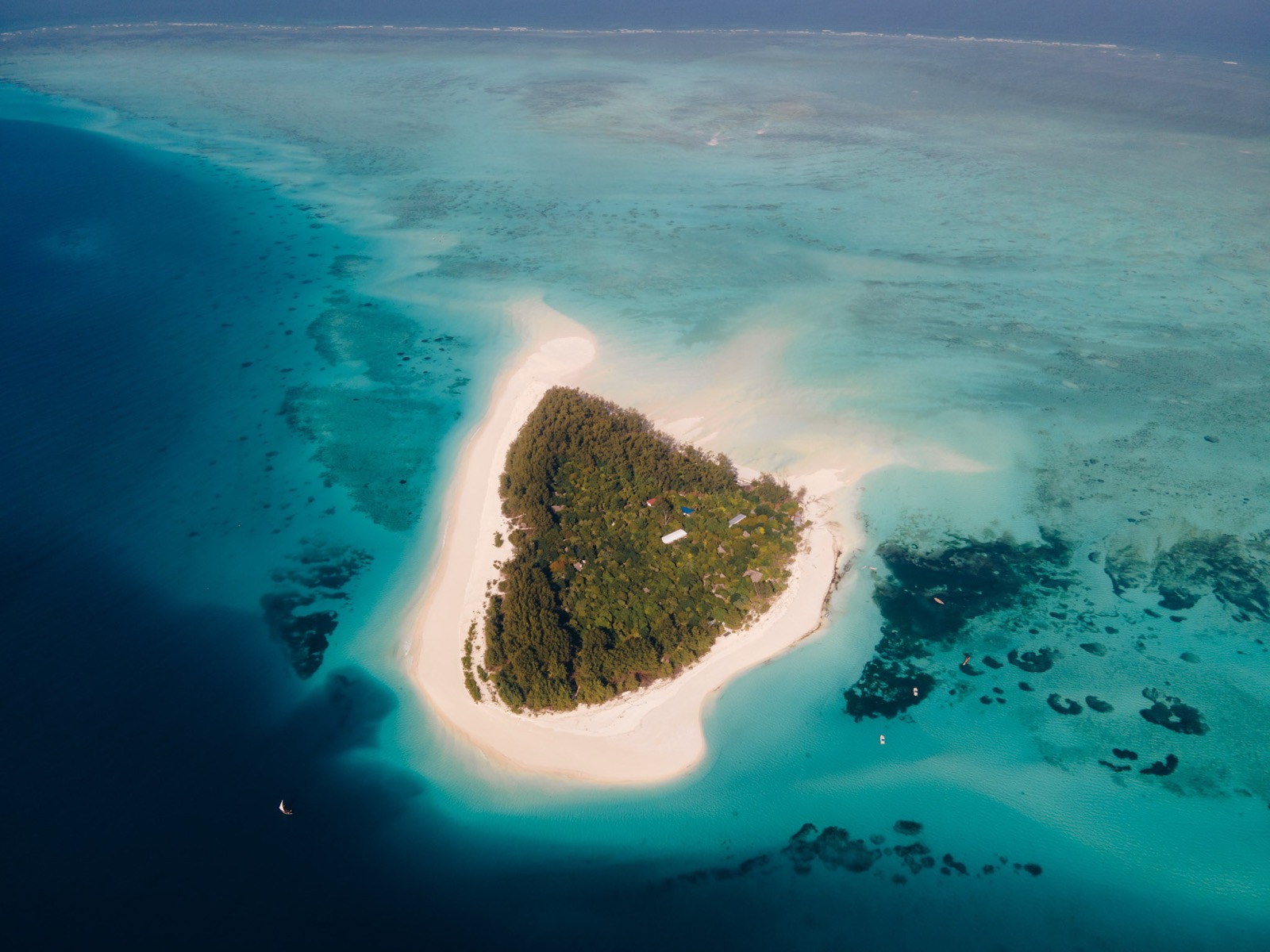
Mchanga sandbank: A tidal sandbank a short wade or swim from Michamvi Pingwe that appears at low tide. White sand surrounded by shallow turquoise water with a coral edge — the kind of shot you see in Zanzibar imagery. It is at its best on a running ebb in the morning. We arrange it for guests at Matlai; most east-coast properties near Michamvi can do the same. It disappears at high tide.
Prison Island (Changuu): A 20-minute boat ride from Stone Town, now famous for its population of Aldabra giant tortoises. The beach is calm and sheltered, good for children, with the tortoises a reliable and photogenic addition. Half-day trip from Stone Town; boats run regularly. Entry is USD 22 per person (raised from USD 4 by a September 2025 fee hike).
Chumbe Island: A protected coral reef island and wildlife sanctuary 12 km south of Stone Town, accessible only through advance booking at Chumbe Island Coral Park. The reef is exceptional — some of the best untouched coral anywhere around Zanzibar — and access is deliberately limited to protect it. Day trips from Stone Town include guided reef snorkel, forest walk, and a meal. Price is higher than average (USD 115 per person for the day — USD 90 CHICOP base rate + USD 25 government levy) because of the conservation premium, but the reef is the real thing.
Mnemba Atoll: Privately owned by an upmarket lodge, so you cannot land, but the outer reef around the atoll is open to day trippers and is the best snorkel site around Zanzibar. Launched from Matemwe beach. Worth every bit of the 40–70 USD per person for a group trip.
Beach safety essentials
A few things that the brochure version of Zanzibar never mentions:
Sea urchins are common on rocky reef edges and along shallow seagrass areas at low tide. Wear reef shoes or thick-soled sandals when walking the flats at low tide — especially on the east coast where you will cross some seagrass.
Rip currents are uncommon inside the lagoon (the reef usually breaks the major swells) but can occur around reef gaps and at certain tidal states. If you feel water pulling you offshore while swimming, move parallel to the beach, not against the current.
Sun intensity: The equatorial sun here is more direct than most European visitors expect, and the sea wind masks it. First-day sunburn is the most common complaint among new arrivals. Apply high-SPF sunscreen before you get to the beach, not on it.
Seaweed season: The east coast hosts a seaweed farming industry, and floating seaweed can appear in the water and on the beach particularly in certain months (often October–November and April–May around tidal shifts). It is harmless and clears with the tide, but can look uninviting on arrival. Ask your hotel when they last had seaweed on the beach.
What to skip
Skip booking an east-coast beach for daily lap swimming if you are not willing to look at a tide chart. Every season a few guests arrive expecting north-coast water on the east coast and spend the first day disappointed before the penny drops. Either pick the north, or come east and enjoy what the east actually is. Also skip the pressure to “do” both coasts in a short trip: the transfer across the island is around 1h to 1h30, and shuttling burns half a day each way.
Travel times from the airport: how far is each beach?
Zanzibar’s airport (ZNZ) sits on the southwestern tip of the island, close to Stone Town. Every beach is a drive from there, and the distances matter more than people expect when arriving tired or with children.
- Nungwi: approximately 1 hour 30 minutes from ZNZ airport, the longest transfer of the main beaches. The road improved significantly in the last few years and is now sealed most of the way; the final stretch can be rough.
- Kendwa: a short walk or 5-minute drive from Nungwi, so also around 1 hour 30–40 minutes from the airport.
- Paje: approximately 55 minutes from ZNZ airport — less than Nungwi, though it can stretch with traffic on the main east-road junction.
- Jambiani: roughly 1 hour 20 minutes, just south of Paje.
- Matemwe: approximately 50 minutes from ZNZ airport — the closest of the major north-east beaches and the quickest drive for a northerly location. Matemwe is underrated as a base partly because of this access.
- Michamvi / Michamvi Pingwe: around 1 hour 15 to 1 hour 30 minutes — the furthest of the east-coast villages, noticeably more than Paje.
- Stone Town: 15–20 minutes from the airport.
All transfers are handled by your hotel or a pre-arranged taxi. Negotiate the rate in advance; airport taxi touts will quote high. Hotel-arranged transfers are typically USD 20–40 per car depending on distance.
Michamvi Pingwe: the east coast exception on tides
Every east-coast beach faces the tidal reality — the sea retreats far at low tide. Michamvi Pingwe is the notable exception. The geometry of its bay means it retains swimmable depth at nearly all tidal states, making it the only east-coast location where you can consistently swim at low tide without walking the flats. This is a genuine practical difference if daily swimming is important to you, not just a marketing claim. I know the bay because Matlai sits right on it — at true low tide, the water in the bay stays deep enough to float rather than expose seagrass.
Mnemba Atoll: the best snorkelling site, but not a public beach
Mnemba Atoll sits off the northeast corner of the island, a 10–15 minute boat ride from Matemwe beach. The island itself is privately operated by andBeyond, so there is no public beach access and only lodge guests stay on the atoll. But the outer reef around Mnemba is open to day-trip boats, and the snorkelling and diving there is the best in Zanzibar waters — clearest water, most intact coral, most diverse reef fish. A group snorkel day trip from Matemwe typically costs USD 40–70 per person including boat and guide. The best visibility is from June to October and December to February; avoid transition months when rain stirs up sediment.
Mnemba is also one of the key sites for spotting humpback whales on seasonal passage (June–September) and spinner dolphins year-round. Your boat guide will know if a pod is nearby.
Kitesurfing in Paje: schools, costs and the right season
Paje is the clearest choice on the island if kitesurfing is a priority — it is the only beach with the infrastructure, the schools, and the consistent wind to make it work.
Season: The main kitesurfing seasons run mid-December to mid-March (Kaskazi, the northeast monsoon) and June to mid-September (Kusi, the southeast trade wind). Aquaholics Zanzibar — which started as a surf school in 2014 and grew into a full watersports centre — identifies both windows as the main season. For beginners, mid-June through mid-October gives the most reliable side-onshore wind direction, which is safer for learning. Mid-December wind can be inconsistent; at 10 knots or under, lesson chances drop significantly.
Costs:
- Private 1-hour lesson: USD 90 (Aquaholics); group lesson (2 students sharing) USD 55
- 4-hour beginner course: USD 305 private
- 6-hour course: USD 450 private / USD 250 group
- 8-hour course: USD 570 private
- 9-hour group course: USD 375
- 10-hour course: USD 700 private
- 12-hour group course: USD 480
Both Aquaholics and B4-Kitesurf are IKO-certified schools on Paje beach. Aquaholics also offers stand-up paddleboard tours (~2 hours, at a separate rate) for non-kiters in the group.
The flat, low-tide lagoon at Paje is genuinely ideal for beginners — shallow, away from the reef, and forgiving on crashes. I have watched first-timers progress from zero to riding upwind in four days here. If you have three or four days and a genuine interest in learning, Paje in kite season is one of the best and most affordable places to get your IKO card in the Indian Ocean.
Non-kiters should be aware that on a busy afternoon, the beach is dominated by kite lines — beautiful to watch, but the beach itself is less relaxing than Jambiani or Michamvi.
Prison Island and Chumbe: day-trip beaches near Stone Town
Stone Town has two notable offshore day-trip destinations that combine beach time with a secondary experience.
Prison Island (Changuu Island): The island sits 5.6 km northwest of Stone Town — a 20–30 minute boat ride from Forodhani Gardens pier. Despite the name, it functioned more as a British quarantine station from 1893 than as an actual prison, and it never operated as a slave facility as is commonly claimed. Today it is primarily known for a population of Aldabra giant tortoises. Entry fee is USD 22 per person as of late 2025 (up from USD 4); boat hire for the round trip runs approximately USD 30–40 for the boat. Note that since November 2024, touching and feeding the tortoises is no longer permitted — a rule introduced to reduce stress on the animals. Several Zanzibar travel forums now rate Prison Island as lower priority for experienced travellers; the experience is better with children for whom the tortoises are a genuine highlight.
Chumbe Island Coral Park: 12 km south of Stone Town, Chumbe is a Marine Protected Area — widely cited as the first privately managed marine park in the world. Access is by advance booking only, and visitor numbers are deliberately limited to protect the reef. A full day visit includes a guided reef snorkel (some of the best-preserved, least-bleached coral around Zanzibar), a forest walk through the island’s coastal forest, and a meal. Price is USD 115 per person for the day (USD 90 CHICOP base rate + USD 25 government levy), reflecting the conservation premium. The reef quality is markedly better than most easily accessible snorkel sites near Zanzibar town — if you are coming from a diving background and want a comparison point for the coast’s reefs, Chumbe is the honest benchmark.
My recommendation: Prison Island is easy and fine for a half-day with children. Chumbe is the serious option if reef quality matters to you.
Beach facilities and practicalities
A few things that differ significantly between coasts:
Sunbeds and umbrellas: Most hotels on all coasts provide them for guests. On public beach stretches at Nungwi and Paje, beach vendors rent them independently. Expect USD 3–8 per set per day, which usually includes a drinks service.
Food and drinks on the beach: Nungwi and Paje have the most beach bars and restaurant options within walking distance. The east coast villages (Jambiani, Matemwe, Michamvi) are more dependent on your hotel’s restaurant — the next place to eat can be a 20-minute walk or a taxi away. This is part of the seclusion appeal, but worth knowing if you like spontaneity.
Seaweed farming: The east coast between Paje and Michamvi hosts a large seaweed farming community, particularly the women of Jambiani and Paje. Low tide reveals rows of staked frames where farmers tend their plots. It is a genuine local industry and worth understanding — the Jambiani guide covers it in more detail.
Alcohol: Zanzibar is a predominantly Muslim island. Drinking on the beach is not illegal but should be done at your hotel, not on open public beaches near mosques or village centres. Resort beach areas are fine; discretion at village beaches is expected.
Photography: Photographing local women without permission, particularly Muslim women in head coverings, is considered rude and can cause genuine offence. Ask first, accept no graciously, and do not treat the village as a set.
So, which one?
- Want to swim any time, accept crowds: Kendwa, then Nungwi. → Best for families: see Zanzibar with children.
- Want to kite or want nightlife: Paje.
- Want wide, quiet sand and the real island, happy to plan tides: Michamvi, Jambiani or Matemwe.
- Want a sunset over the sea on the east: Michamvi Kae.
If the choice between north coast and east coast is the real decision, the Zanzibar north coast vs east coast comparison explains what actually changes between the two sides of the island. For the day-by-day mechanics of tide timing and getting between coasts, see our Zanzibar travel guide and the best time to visit Zanzibar. The east coast tides guide explains why swim windows shift daily and why it matters where you stay. Mnemba Atoll and other dive sites are covered in the full dive-site rundown. For Paje in full detail — kite schools, timing, what the village is actually like — see the full Paje breakdown; for Jambiani the fishing village and seaweed collective, see its own page. See our east coast where-to-stay guide for which villages and properties suit different budgets and preferences. For a full island-wide area comparison — north coast vs east coast vs Stone Town — with price tiers and traveller-type recommendations, see the Zanzibar where-to-stay guide. For how Zanzibar’s beaches compare to other Indian Ocean destinations, see the Zanzibar vs Maldives comparison. Visiting in October or November? The Zanzibar rainy season guide explains what the short rains actually mean for beach travel.
Frequently asked questions
Which Zanzibar beach has the best swimming at all tides?
Kendwa on the northwest tip is the most reliable for deep water at any tide, with Nungwi close behind. The east coast is gorgeous but goes shallow and walkable at low tide.
Why does the water disappear on the east coast?
The east coast sits behind a reef with a wide tidal lagoon. At low tide the sea retreats 400m to 1km, leaving sand and seagrass flats. It returns within a few hours, so you swim and snorkel around the high-tide windows.
Where should I go for kitesurfing?
Paje is Zanzibar's kite capital, with steady cross-shore wind from roughly mid-June to September and again December to February. Schools and board storage line the beach.
Is Nungwi too busy now?
Nungwi village beach can feel crowded with boats and bars, especially midday. Kendwa, a 25-30 minute walk or short drive south, is calmer and better for swimming.
When is the worst weather for beaches?
The long rains run roughly mid-March to May, when many east-coast hotels close. April is the wettest. June to October and December to February are the strongest beach months.
Can I walk between Michamvi and Paje?
At low tide you can walk much of the southeast shoreline between Paje, Bwejuu and toward Michamvi on the sand. Plan a few hours and check the tide so you are not caught by the incoming water.
What does a kitesurfing lesson in Paje cost?
At Aquaholics Zanzibar, a private 1-hour lesson is USD 90 (a group lesson sharing an instructor with one other student runs USD 55). Course packages run USD 305 for 4 hours up to USD 700 for 10 hours privately, or USD 250–480 for the group equivalents. Board-only rental (for experienced riders) is cheaper by the day for multi-day bookings. The main season runs mid-June to mid-September and mid-December to mid-March; beginners get the best, most consistent side-shore wind from mid-June through mid-October.
What are the best day-trip beaches near Stone Town?
Prison Island (Changuu Island, 5.6 km northwest, 20–30 min by boat) is the most-visited — now primarily known for Aldabra giant tortoises, though as of November 2024 touching and feeding the tortoises is no longer allowed. Boat return is roughly USD 30–40 for the boat; entry fee USD 22 per person since a September 2025 fee hike (was USD 4). Chumbe Island Coral Park, 12 km south of Stone Town, is a protected marine sanctuary and the first privately managed marine park in the world — day visits cost USD 115 per person (USD 90 CHICOP base rate + USD 25 government levy) and include a guided reef snorkel, forest walk, and meal. Chumbe is the better underwater experience; Prison Island the easier half-day.