
Facts & prices checked: 2026-06-25
| Species / sighting | J | F | M | A | M | J | J | A | S | O | N | D |
|---|---|---|---|---|---|---|---|---|---|---|---|---|
| Wildebeest calving (southern Serengeti/Ndutu) — Late Jan–Mar, peak concentrated in February on the Ndutu Plains | ||||||||||||
| Mara River crossings (northern Serengeti) — Typically July–August, extending into September | ||||||||||||
| General dry-season wildlife visibility — June–October dry season — broadly the best window for safari wildlife across Tanzania |
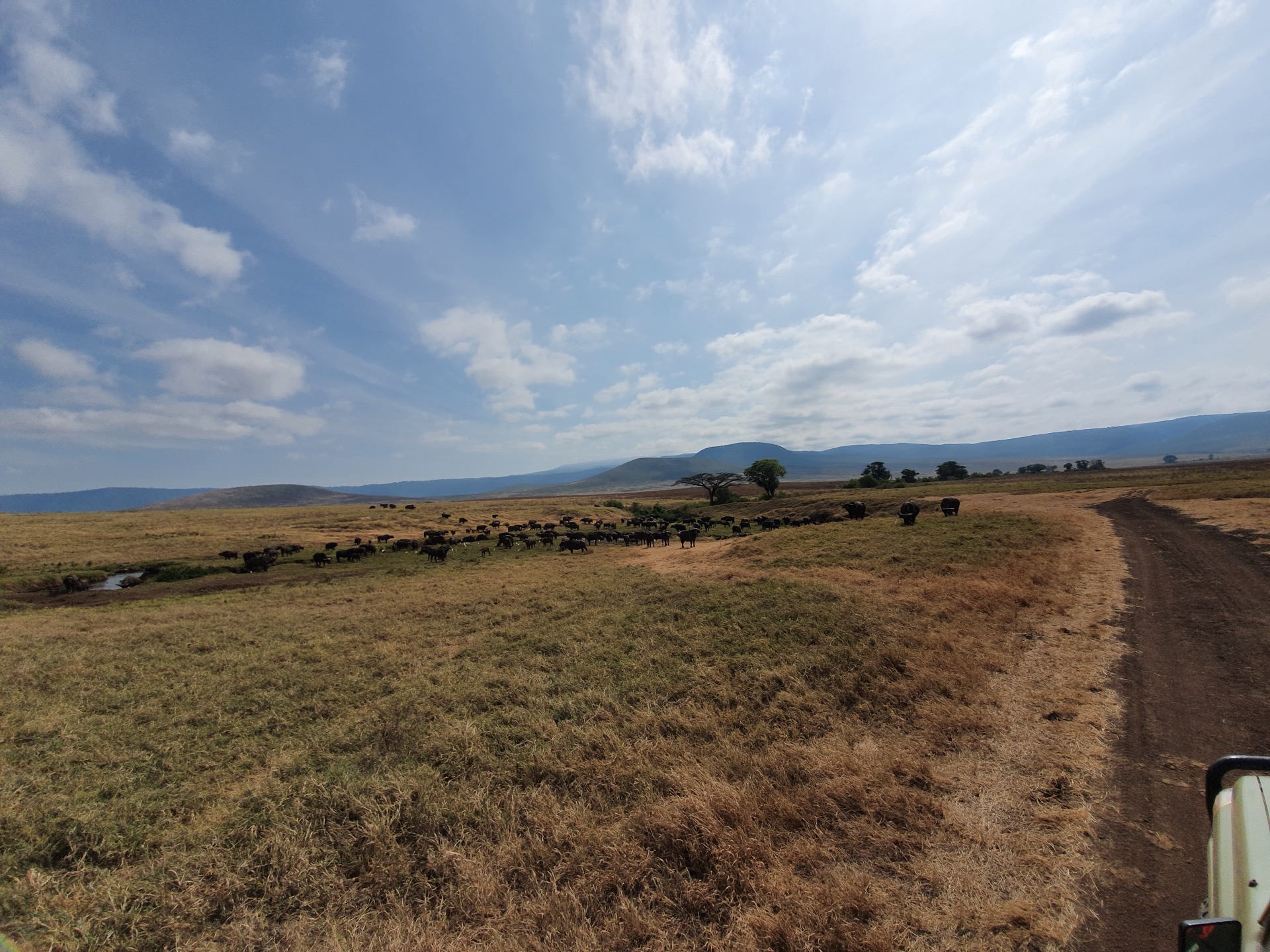
The Great Migration is not a single event you schedule. It is a continuous, year-round loop — 1,366,109 wildebeest (TAWIRI 2023) plus several hundred thousand zebra following rainfall and fresh grass in a roughly 800 km clockwise circuit. The herds are always somewhere in the Serengeti ecosystem. The question is not “when is the migration?” but “where is the migration now, and does that match what you want to see?”
Tanzania gets the migration for roughly 8 months of the year. The two events most worth understanding — calving season and the Mara River crossings — happen entirely within Tanzania’s calendar. This guide maps the full circuit, month by month.
The annual circuit — where the herds are by month
| Month | Location | Highlight |
|---|---|---|
| January | Ndutu / South Serengeti | Calving begins |
| February | Ndutu / South Serengeti | Peak calving; ~8,000 calves/day; peak predators |
| March | South to Central Serengeti | Calving continues; herds begin north movement |
| April | Central Serengeti | Long rains; herd dispersal; lowest prices |
| May | Western Corridor | Herds bunching before Grumeti; Grumeti crossings begin |
| June | Western Corridor / Grumeti | Grumeti River crossings; ~3,000 Nile crocodiles |
| July | North Serengeti / Mara | Mara crossings begin; herds also at Grumeti |
| August | North Serengeti | Peak Mara River crossings |
| September | North Serengeti / Kenya | Peak crossings continue; Masai Mara also active |
| October | North Serengeti returning south | Last major Mara crossings; herds start south |
| November | Central Serengeti | Return south; short rains green the plains |
| December | South Serengeti / Ndutu | Pre-calving gathering; early births begin |
The pattern is a tendency, not a timetable. Rainfall is the actual driver — a good March rain can hold herds south longer; a dry April can push them north earlier. Treat the month zones as positioning guides, not guarantees.
Calving season — Ndutu, January to March
The calving season is the single most reliable wildlife spectacle in the Serengeti ecosystem, and it happens entirely within Tanzania.
The southern short-grass plains — the Ndutu area straddling the Ngorongoro Conservation Area and Serengeti boundary — are where the wildebeest have calved for thousands of years. The grass here grows on mineral-rich volcanic ash soil from Ngorongoro Crater. It is short, nutritious, and critically: it is low enough that a newborn calf can see a predator coming within minutes of birth. The wildebeest evolved to calve here specifically because the visibility advantage reduces mortality.
At peak February, around 8,000 calves are born every day. The calving window is compressed by evolutionary design: synchronised births overwhelm predator capacity. A lion can only kill so many calves per day; if 8,000 are born simultaneously, most survive despite the odds. The strategy is called predator swamping, and you can watch it play out in real time.
Every predator in the southern Serengeti converges during calving. Lion prides extend their range. Cheetah mothers with cubs concentrate on the plains — this is the world’s best window for observing cheetah hunts in open terrain. Hyena clans follow the herds. Leopards work the acacia tree lines at the plain’s edges. I have been in the southern Serengeti during February and seen three separate hunts within two hours without driving more than five kilometres. The density is real, not marketing.
Why calving is underrated: Most travel marketing pushes the Mara crossings because they photograph dramatically. But calving season has 30–40% lower lodge rates, far fewer vehicles, a more predictable daily structure (the calves and predators are there every morning; you are not waiting for a river event), and wildlife interaction at close range. A newborn calf stands within minutes of birth and runs with the herd within an hour. The birth itself is fast and the subsequent predator interest is immediate. It is harsh and honest — and it is consistently delivered.
Access to Ndutu: The Ndutu area falls in the Ngorongoro Conservation Area rather than Serengeti National Park, which means different entry fees and some different access rules. The nearest fly-in airstrip is Ndutu. Road access from Karatu (the Ngorongoro gateway town) takes approximately 2 hours. Most northern circuit itineraries that time for calving add 2–3 nights here between Ngorongoro Crater and the central Serengeti.
The recommended window for calving is mid-January to February, with February being the peak. The broader season runs late December to March.
Grumeti River crossings — Western Corridor, June to July
The Grumeti River crossings are the migration’s first major water obstacle — and one of the most underappreciated wildlife events in Tanzania.
The Grumeti River runs through the western corridor of Serengeti National Park, draining westward into the Speke Gulf of Lake Victoria. As the herds move north in May and June, they bunch before the river. The crossing window is most productive May to July, with the best action targeted around May to June when herds concentrate before the crossing.
The Grumeti is renowned for its resident Nile crocodiles. Approximately 3,000 crocodiles live in the river system, some reaching 17 feet in length and up to 70 years old. These are large, old ambush predators that have learned the rhythm of the migration over decades. They wait patiently. The wildebeest cross in smaller herds than the Mara — this is not a 50,000-animal flood — and the crossing dynamics are more tentative, with the herds often attempting several false starts before committing.
The Grumeti zone is the least-visited part of the Serengeti circuit. The bush is thicker here — closed woodland and riverine forest rather than the open plains of the north. The feel is remote. If you are in Tanzania specifically for the crossing spectacle but want to avoid the vehicle density of the north Serengeti in August, the Grumeti in late May or June is a genuine alternative.
Singita Grumeti Reserve, adjacent to the national park’s western corridor, covers approximately 350,000 acres and offers night game drives and off-road access not possible inside park boundaries.
Mara River crossings — North Serengeti, July to October
The Mara River crossings are the world’s most-photographed wildlife event. Thousands of wildebeest and zebra enter crocodile-filled water simultaneously, and for a few minutes the crossing point is pure chaos.
The crossing zone in Tanzania sits near Kogatende and Lamai in the northern Serengeti, against the Kenya border. The Mara River forms the boundary — the same crossings can be watched from Tanzania’s Kogatende bank or Kenya’s Masai Mara side. The Tanzania side is typically less crowded with vehicles during peak season.
Mara River crossings peak in August and September. Late July to August is the most consistent window. Some crossings continue into October as herds return south.
What actually happens: A crossing begins when herds gather at the river bank. One animal — not necessarily a leader, sometimes a lone zebra — steps into the water. The herd follows in a rush. Nile crocodiles, some of the largest in East Africa, take the weak and the slow at the bank. The main body of the herd crosses in minutes. The entire event can involve 5,000 or 50,000 animals. Then it ends, and the surviving animals continue north.
The drama is real. The unpredictability is also real, and worth understanding before you book.
The honest account: A crossing cannot be guaranteed on any specific day. Herds gather at the crossing point and then turn back. They do this repeatedly — sometimes 5 or 6 false starts over 2 days before a crossing happens. The best guides position at the correct river bend (a natural curve that gives a perpendicular view of the animals entering water), watch the herd’s front edge behaviour, and track movements via radio with other guides. But the herd makes the decision, and the herd is not consulting a schedule.
The correct approach is to build in 3–4 nights in the north Serengeti during July–September. One afternoon is not enough. Plan for days of waiting at the river, and on the day a crossing happens — particularly if it involves large numbers — it will justify everything.
Crossing scale varies enormously. Some events involve 5,000 animals crossing in 15 minutes. Others involve 50,000 animals in multiple waves over an hour. Both qualify. Do not expect the movie version every time. Do expect that a real crossing, at any scale, is one of the most concentrated wildlife moments in East Africa.
Tanzania or Kenya — which side for the Mara crossings?
The crossings happen along the Tanzania-Kenya border. You can watch from either side.
Tanzania (north Serengeti, Kogatende/Lamai): Typically fewer vehicles at crossing points. Further and more expensive to reach — fly-in from Arusha takes approximately 1 hour 15 minutes to 1 hour 30 minutes to north Serengeti airstrips, versus a significantly shorter drive from Nairobi to the Masai Mara. The Serengeti ecosystem is much larger, with quieter areas around the crossing zones. Kogatende is the main Tanzania crossing area.
Kenya (Masai Mara): Easier and cheaper to access from Nairobi — the Masai Mara is roughly 1 hour by light aircraft from Wilson Airport, or a 5–6 hour drive. The Mara ecosystem is smaller, and the crossing concentration can be higher but so can the vehicle count. One-way flights from Nairobi to Masai Mara are typically USD 200–250 per person.
The honest comparison: Tanzania gives a quieter, more spacious experience if you have the budget and time to reach the north Serengeti. Kenya gives easier logistics and can work well for a shorter itinerary centred on Nairobi. The migration crosses in both directions regardless of which bank you are on.
Month-by-month decision guide
January–February (Ndutu, calving): The right choice for: first-time migration visitors, anyone who cannot plan 4+ nights at a single river location, visitors who want predictable daily drama rather than event-based waiting. Lower cost (30–40% below August peak), fewer vehicles, maximum predator density of the year.
March–May (central and western Serengeti): Transition months. March and April are the long rains — roads can be difficult, some camps close, prices are lowest. The green season is genuinely beautiful and birding is exceptional. For wildlife: productive but not the headline migration months.
May–June (Grumeti, western crossings): Good for visitors who want crossing drama without the north Serengeti crowds. The Grumeti’s ~3,000 resident crocodiles and remote character make this a rewarding window for experienced safari visitors.
July–October (north Serengeti, Mara crossings): The crossing season. July and August are the strongest months; September continues well; October sees the last crossings before herds return south. Book north Serengeti camps at minimum 6 months in advance for August. Peak-season prices apply — a mid-range camp in the north Serengeti in August costs 30–70% more than the same category in February.
November–December (central and south Serengeti): The herds return south as the short rains green the plains. December is the start of the pre-calving gathering in the south. Shoulder-season prices with good wildlife.
Practical — getting to each migration zone
Ndutu / calving zone: Fly-in from Arusha to Ndutu airstrip (approximately 1 hour). Road access from Karatu takes around 2 hours via the Ngorongoro Conservation Area. Most northern circuit itineraries route Arusha → Tarangire → Ngorongoro → Ndutu → Seronera (central Serengeti). Note that Ndutu is in the Ngorongoro Conservation Area, not Serengeti National Park — different entry fees apply.
Grumeti / western corridor: Road access from the western gate is a long drive. Most visitors reach the western corridor by domestic flight to Grumeti airstrip. Fewer camps than the north or central Serengeti.
North Serengeti / Kogatende: Fly-in from Arusha to Kogatende or Lamai airstrip (approximately 1 hour 15 minutes to 1 hour 30 minutes). This is the most remote zone and the most expensive to reach. Book camps for August and September at least 6 months in advance — this is the peak demand period for the entire Tanzania safari calendar.
Calving versus crossings — Tim’s honest take
I have spent time at both. My recommendation for first-time migration visitors is calving season at Ndutu.
The Mara crossings are extraordinary when they happen. The problem is “when they happen.” You can drive 2 hours to the crossing point, wait all morning, watch the herd gather and turn back three times, and leave without a crossing. This happens regularly. The experienced safari visitor plans for it by building 4+ nights in the north. The first-time visitor who has 2 nights in the north Serengeti built into an existing itinerary has a real chance of missing the crossing entirely.
Calving season doesn’t have this problem. The calves are being born every day for 6–8 weeks. The predators are there every morning. You will see a hunt — probably multiple hunts — on a 3-night Ndutu visit in February. The birth rate is roughly 8,000 calves per day at peak. The spectacle is not waiting for a single event; it is immersed in a landscape that is operating at maximum ecological intensity for weeks.
The Mara crossings are worth the trip if you plan around them properly: 4 nights minimum in the north, July–September window, north Serengeti or Kenya side depending on budget. But for a first encounter with the Great Migration, the calving season at Ndutu in February is the more reliable and often more emotionally affecting experience.
Related guides
- Serengeti National Park — zones, camps, how many days
- Tanzania safari costs — park fees, camp tiers, seasonal pricing
- Tanzania wildebeest — species biology, calving strategy, population
- Tanzania northern circuit — full park sequence from Arusha
- Tanzania best time to visit — month-by-month across all parks
Frequently asked questions
When is the best time to see the Great Migration?
It depends on which experience you want. Calving season runs January to March (peaking in February) in the Ndutu area south of the Serengeti — around 8,000 calves born daily at peak, with every lion, cheetah, and hyena clan in the southern Serengeti converging. This is more predictable and has fewer vehicles than crossing season. Mara River crossings run July to October in the north Serengeti (Kogatende/Lamai area) — the most dramatic individual events but unpredictable by day. Build in at least 3–4 nights if crossings are your goal.
What are the Mara River crossings?
The Mara River crossings happen when wildebeest and zebra herds reach the north Serengeti border river and a lead animal enters the water. Thousands follow within minutes. Nile crocodiles — some reaching up to 17 feet in the Grumeti and Mara systems — take the weak and the slow. A crossing can involve 5,000 to 50,000 animals. The event is entirely unpredictable: herds can gather for hours and turn back, or cross at dawn before you arrive. The key is positioning with your guide at the correct river bend and waiting. Peak crossings are August and September.
Do I need to go to Kenya to see the Great Migration?
No. Tanzania holds the migration for approximately 8 months of the year. Calving season (January–March, Ndutu) and Grumeti River crossings (June–July, western corridor) are entirely within Tanzania. The Mara River crossings (July–October) happen along the Tanzania-Kenya border — the north Serengeti's Kogatende and Lamai areas give you the same crossings from the Tanzania side, typically with fewer vehicles than Kenya's Masai Mara.
How many wildebeest are in the Great Migration?
The most recent official count is 1,366,109 wildebeest ± 231,741 (TAWIRI 2023 aerial point survey of the Serengeti–Mara ecosystem). This is the government authority figure. A 2025 AI satellite survey (Oxford/PNAS Nexus) produced a lower estimate; the traditional 1.5–2 million figure cited widely by tour operators is not supported by the current data. Write '1,366,109' if you want the scientific number, or 'over a million' if you want a round figure.
Is calving season or the Mara River crossings better?
Different experiences. Calving (January–March, Ndutu): around 8,000 calves born daily at peak, maximum predator density, shorter drive times from Ngorongoro, fewer vehicles, more predictable drama. Grumeti crossings (June–July): approximately 3,000 resident Nile crocodiles, smaller herds, first major river obstacle on the migration route, quieter and less visited. Mara crossings (July–October): the world's most-photographed wildlife event, herds of tens of thousands entering water simultaneously, Nile crocodiles up to 17 feet, totally unpredictable timing. First-time visitors who cannot build in 4+ nights in the north are often better served by calving season.
What camps are best for the Mara River crossings?
The main crossing zone is accessed from camps in the north Serengeti near Kogatende and Lamai. Book at minimum 6 months in advance for August and September — peak crossing month camps at this level sell out quickly. Seasonal mobile camps that move with the herds offer the closest proximity. The Kogatende area (Tanzania side) is generally less vehicle-dense than Kenya's Masai Mara camps during peak season.