
Facts & prices checked: 2026-06-25
I take guests into the Tanzanian bush every season from our hotel on Zanzibar’s east coast. The advice I find myself giving most — the things people wish they had known — is almost never about the wildlife itself. It is about what the experience actually looks and feels like: the structure of the day, the patience it rewards, and the specific surprises that catch first-time visitors off guard.
What a day on safari actually looks like
A standard Tanzania safari day follows the same rhythm across nearly every camp and lodge:
05:30–06:00: Wake-up call. Coffee, tea, and a light breakfast or biscuits before departure. The reason to leave early is not tradition — it is animal behaviour. Dawn is when predators are most active, when the light is best, and when temperatures are low enough for open-roof vehicle travel to be comfortable.
06:00–10:00: Morning game drive. This is the most productive window of the day. Predators that hunted through the night may still be on a kill. Lions are on the move before the heat forces them into shade. Cheetahs, which hunt in daylight, are beginning to scan for prey. Leopards, primarily nocturnal, are still active in the first 30–40 minutes. Birds are loudest and most visible. The light from the east is warm and photogenic.
10:00–10:30: Return to camp, or a picnic breakfast inside the park if your operator includes this.
10:30–15:30: Rest time. This is non-negotiable in the heat of the dry season. The midday hours are when lions are under acacias and barely visible, when cheetahs have finished hunting and are panting in the shade, when most prey animals are standing still and conserving energy. Many guests sleep. If your camp or lodge is near a waterhole, this is also when to watch from camp — animals drink throughout the day and something unexpected often comes in without any driving at all.
15:30–16:00: Afternoon game drive departs. As temperatures drop and shadows lengthen, prey animals begin moving to water and pasture, and the predators respond. The afternoon drive ends at park closing time — typically 18:00–19:00 depending on the park — often with a sundowner (a drink taken at sunset, sometimes inside the park if your operator arranges it).
19:30: Dinner, often communal at camp or lodge tables. In smaller camps, this is when guides discuss what they observed, what the radio network heard from other guides, and what to look for tomorrow.
What surprises first-time visitors most: The silence. A good game drive is not constant motion — it is periods of slow driving interrupted by long stops. A lion lying in grass 80 metres away, watched for 25 minutes, doing almost nothing, can be the defining encounter of a trip. The impulse to keep moving is the wrong instinct.
The dust: In the dry season (June–October), road dust on game drives is substantial, especially in the Ngorongoro Conservation Area and central Serengeti. A buff neck gaiter or light scarf makes a significant difference in comfort. Pack it in your day bag, not your main luggage.
The cold at dawn: In July–August, standing in the roof hatch on the Serengeti plains at 06:15 with the vehicle moving is cold. Bring a fleece or light down jacket. You will take it off by 09:30, but you will need it for the first hour.
The 15 kg soft-bag rule — understanding why it matters
Bush flights in Tanzania use small light aircraft — typically 4–12 seat aircraft — where every kilogram is calculated for load and balance. The standard weight limit is 15 kg (33 lbs) total per person, including carry-on, in a soft-sided bag only.
Hard-sided suitcases do not fit in small aircraft holds and are not accepted. The allowed dimensions for most operators are approximately 30 cm × 30 cm × 70 cm.
Actual limits vary: some operators allow 20 kg, ZanAir allows 15 kg checked luggage plus 5 kg hand luggage. Confirm your specific limit when booking. A few operators offer an “XL seat” option that allows 30 kg at additional cost.
Practical implications:
- Pack light — there is no choice on a safari circuit using bush flights.
- Most camps and lodges provide same-day or overnight laundry service, often included in the rate. You do not need 7 days of clothing for a 7-day trip.
- A duffel bag or backpack is the correct luggage format. A roll-aboard suitcase is not.
- If you are adding a Zanzibar beach extension after your safari, most Arusha hotels offer secure left-luggage storage — often at no charge — so you can leave a larger bag while on safari.
What to wear
Clothing choices matter in Tanzania because of both practicality and animal behaviour.
Colour: Choose neutral tones — khaki, tan, olive, sand, brown. The two colours to avoid are black and blue: tsetse flies are significantly more attracted to these, and bites are unpleasant. White is also poor — it shows dust immediately and can reflect light in ways that disturb animals at close range.
Sun protection: Tanzania sits at approximately 3° south of the equator. Sun intensity is higher than northern-hemisphere visitors expect, even on cloudy days or when a breeze makes it feel cool. A long-sleeved, lightweight, UV-protective shirt is more effective than sunscreen alone for the arms and back of the neck. SPF 50 is still needed for face, hands, and any exposed areas.
Layering: The temperature variation between dawn and midday can be substantial. At Ngorongoro, the crater rim sits at 2,300 m — cold at night and cool in the morning even in July. The Serengeti at dawn in the dry season can require a fleece. By 11:00 the same vehicle is hot. One warm layer plus a light base layer covers both ends.
Footwear: Closed-toe shoes or light hiking footwear for any walking safari or nature walk. Sandals are perfectly fine at camp and at lodges; they are not appropriate if you are walking in bush.
What to bring
Binoculars: The single most useful safari tool that most first-timers undervalue. At 200 metres — a typical leopard sighting distance in thick vegetation — the difference between 8× binoculars and the naked eye is the difference between seeing a shape and watching an animal breathe. The 8×42 and 10×42 configurations suit safari best: high magnification is less important than the wide field of view and steady image at the roof hatch. Borrow from your camp if you do not own a pair.
Camera: A modern smartphone camera handles most situations within 30–50 metres. For longer distances, a 200 mm optical lens (on a mirrorless or DSLR body) covers most safari subjects adequately. 400–500 mm produces professional results for cheetah hunts and birds of prey, but is expensive and heavy. If you are not buying specifically for this trip, use what you have — and borrow the binoculars.
Charging: Most camps and lodges have mains power or a generator for evening charging. Vehicles typically have a 12V socket for charging during drives. Tanzania uses Type G (UK 3-pin) and Type D outlets at 230V / 50 Hz. Bring a Type G adapter; most modern chargers (phones, cameras) handle 100–240V automatically and just need the socket adapter.
Cash in USD: Tips are paid in USD cash. Bring small-denomination bills (USD 1, 5, 10, 20). USD 20–25 per vehicle per day for your guide is the standard; a 7-day safari means roughly USD 140–175 total for the guide, split between however many people share the vehicle, plus USD 70–105 per person for camp staff (at USD 10–15/day). Take more than you think you need — there is no ATM at Seronera.
Malaria prophylaxis: Atovaquone/proguanil (Malarone) is the most commonly prescribed option for Tanzania safaris. Start 1–2 days before arrival, continue for 7 days after return. Pack medications in their original labelled packaging and keep them in your carry-on. A travel clinic consultation 4–6 weeks before departure is the right way to confirm the right drug for your itinerary — some anti-malarial options are not suitable for everyone.
Water: Bottled water is the correct choice for drinking, brushing teeth, and any situation where the source is unclear. Most camps and lodges provide sealed bottled water. In-vehicle water is typically provided on game drives. Avoid ice from uncertain sources; stick to bottled or boiled water throughout.
Reading wildlife — what your guide knows that isn’t obvious
The best use of a safari guide is asking them to narrate what they see in real time. Most visitors ask “what is it?” rather than “what is it doing and why?” The second question is where the experience changes.
Lions: A lion resting in shade at 09:30 may not move for 4–5 hours. This is not boring — it is normal. Return to the same animal late afternoon if your guide knows its territory. A lion that was under a tree all morning may be on a kill by 18:00. The decision to stay with an animal versus move on is the guide’s most important call; experienced guides make it based on what the animal is looking at, where other pride members are, and what they hear on the radio network.
Cheetahs: The most diurnal of Tanzania’s large cats — they hunt in full daylight, usually before the heat builds. A cheetah scanning from the top of a termite mound between 07:00 and 09:00 is almost certainly in pre-hunt mode. The direction of its gaze, the position of its tail, and whether it is crouched or upright will tell your guide whether to stay and watch or position further along the cheetah’s likely run line.
Leopards: Present across Tanzania in high densities but nearly invisible during daylight because they rest motionless in trees. The best leopard sightings happen in the first and last 30 minutes of legal driving time, when crepuscular animals are still moving. If your guide says “there is a leopard in that sausage tree” and you cannot see it at all, that is the correct level of camouflage. Look for the hanging tail or the shape of a leg. Binoculars help enormously.
Waterholes and staying still: In the dry season, waterholes concentrate wildlife better than any driving circuit. Asking your guide to stop at a waterhole and wait quietly for 20–30 minutes will almost always produce more than another loop of road. A lone bull elephant arrives, drinks, leaves. Two giraffe approach, hesitate, approach again. A family of warthogs. A martial eagle on the dead tree above. None of this happens if the vehicle is moving.
Behaviour signals worth learning: When a herd of zebra or wildebeest suddenly freezes simultaneously, something in the grass changed — a scent or infrasonic signal they received before you did. Watch where they are looking. That is where to position the vehicle.
Safety and behaviour in the vehicle
Stay in the vehicle. This is not a rule for your personal safety only — it is about how animals perceive the vehicle. A Land Cruiser with people inside reads as one large entity; when you stand up in the roof hatch, you are visible as an individual but still perceived as part of the vehicle. The moment someone steps outside, animals recalibrate their threat assessment. The rule is absolute.
No sudden loud noises: Low voices, no sudden gestures, camera shutters at minimum. At a predator sighting within 40 metres, the less movement from the vehicle, the longer the animal stays.
Clothing colours at the roof hatch: Bright orange hats or red jackets at the roof hatch are visible to animals in ways that vehicles typically are not. This is when neutral clothing becomes most important — not because it is mandatory, but because it affects the quality of the encounter.
Medical evacuation cover: AMREF Flying Doctors membership costs USD 30 per person for 14 days and covers aeromedical evacuation anywhere in the region. It is not an insurance product in the conventional sense — it is a membership in a network that prioritises rescue flights for members. A medevac flight without membership costs USD 10,000–50,000+. The USD 30 is the best money you will spend on preparation that you will (hopefully) never need to use.
What I did not expect — and you might not either
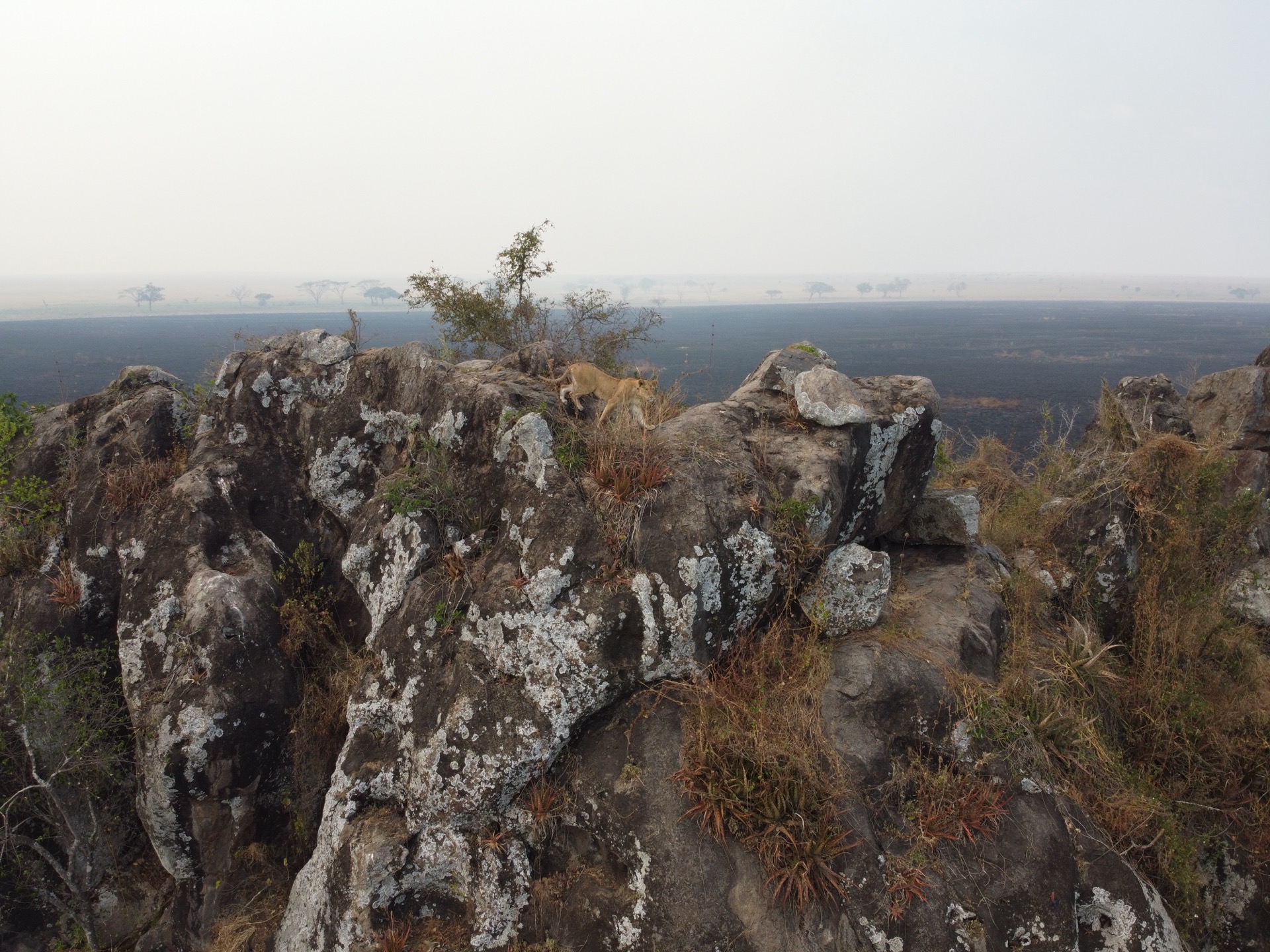
When I first went into the Serengeti, I expected the wildlife to be the constant — I thought we would be moving between sightings. What I did not expect was that the most absorbing part of the trip would be a 40-minute stop watching a lioness with four very small cubs on a kopje. She was not doing much. The cubs were wrestling badly. Other vehicles came and went. We stayed. At the 35-minute mark, she stood, called the cubs in a low rumble I felt more than heard, and led them off the kopje to a second lioness waiting in the shadow. We had watched the handoff of a crèche — two females sharing cub-raising responsibility — without knowing that was what we were waiting for.
My guide knew. He had seen this female, which he called by the notch pattern in her left ear, make this same walk to the same second female six times over two dry seasons. That knowledge — patient, accumulated, specific — is what you are hiring when you book a guide. Give the guide space to use it. Stay where they stop. Ask what they see.
AuthorBlock
Tim Hennig runs Matlai, a boutique hotel on Zanzibar’s east coast. He has spent years in and out of Tanzania’s northern circuit and southern parks, taking guests from the coast into the bush and listening to what surprises them on their first trip. This guide is the version of those conversations.
Related guides
- Tanzania safari costs 2026 — full fee breakdown, lodge categories, and what to budget
- Tanzania safari preparation checklist — vaccinations, documents, and what to book in advance
- Tanzania big cats: lion vs leopard vs cheetah — where to see all three and how to tell them apart
- Tanzania best time to visit — month-by-month breakdown of migration, weather, and wildlife
- Northern Circuit sequence guide — the Serengeti, Ngorongoro, Tarangire sequence explained
- Tanzania overview — planning your trip from scratch
Frequently asked questions
What should I know before my first Tanzania safari?
Three things matter most. First, wildlife viewing works by stopping and watching — not driving loops looking for animals. A lion at a waterhole at 06:30 is worth staying with for 45 minutes; another loop of the road is worth less. Second, bush flights impose a 15 kg soft-bag total limit including carry-on — hard-sided suitcases are not accepted. Third, tip your guide in USD cash: USD 20–25 per vehicle per day is the standard, and tips are the primary income for guides, not a bonus.
What is the 15 kg bag limit for Tanzania safari?
Bush flights (small aircraft between Serengeti, Ngorongoro, Ruaha, and other airstrips) impose a total weight limit of approximately 15 kg per person, including hand luggage, in a soft-sided bag. Maximum dimensions are roughly 30 cm × 30 cm × 70 cm. Hard-sided suitcases do not fit in small aircraft holds. Some operators allow 20 kg, and ZanAir allows 15 kg checked plus 5 kg hand luggage — confirm with your specific operator. Most camps provide same-day laundry service, so packing light is very manageable.
What should I wear on a Tanzania safari?
Neutral colours: khaki, olive, tan, brown. Avoid black and blue — tsetse flies are significantly more attracted to these colours. Avoid white, which shows dust and draws insects. Layer: the Serengeti at dawn in July–August can be cold in the open roof hatch even though midday temperatures are warm. Long sleeves in a lightweight, UV-protective fabric protect better than sunscreen alone at Tanzania's latitude of approximately 3°S. Closed-toe shoes for any walking; sandals are fine at camp.
How much should I tip on a Tanzania safari?
Tanzania safari guide tipping standard: USD 20–25 per vehicle per day for your guide. For a separate driver, USD 2–15 per transfer. Camp staff tips are usually collected in a communal tip box at camp — USD 10–15 per guest per day for the general camp crew is typical. Bring USD bills in small denominations; tips are given in cash at the end of the safari, directly to your guide.
Do I need malaria tablets for a Tanzania safari?
Yes. Malaria risk is present across Tanzania below 1,800 m elevation — including the Serengeti, Tarangire, Nyerere, and Zanzibar. Only higher-altitude Ngorongoro highlands carry lower risk. Atovaquone/proguanil (Malarone) is the most commonly recommended prophylaxis for Tanzania: start 1–2 days before arrival, continue for 7 days after return. Doxycycline is a cheaper alternative; mefloquine is a third option. Consult a travel clinic — the right choice depends on your itinerary and medical history.
What time do game drives start in Tanzania?
Dawn game drives typically begin at 06:00–06:30, often with coffee and biscuits beforehand. The reason is animal behaviour: predators are most active at first light, and temperatures are at their lowest for comfortable wildlife viewing from an open roof hatch. The morning drive runs until 09:30–10:30. Afternoon drives begin at 15:30–16:00 and run until the park closing time, typically 18:30–19:00. Staying in the vehicle at a sighting during these windows almost always produces more action than driving circuits.