
Facts & prices checked: 2026-06-25
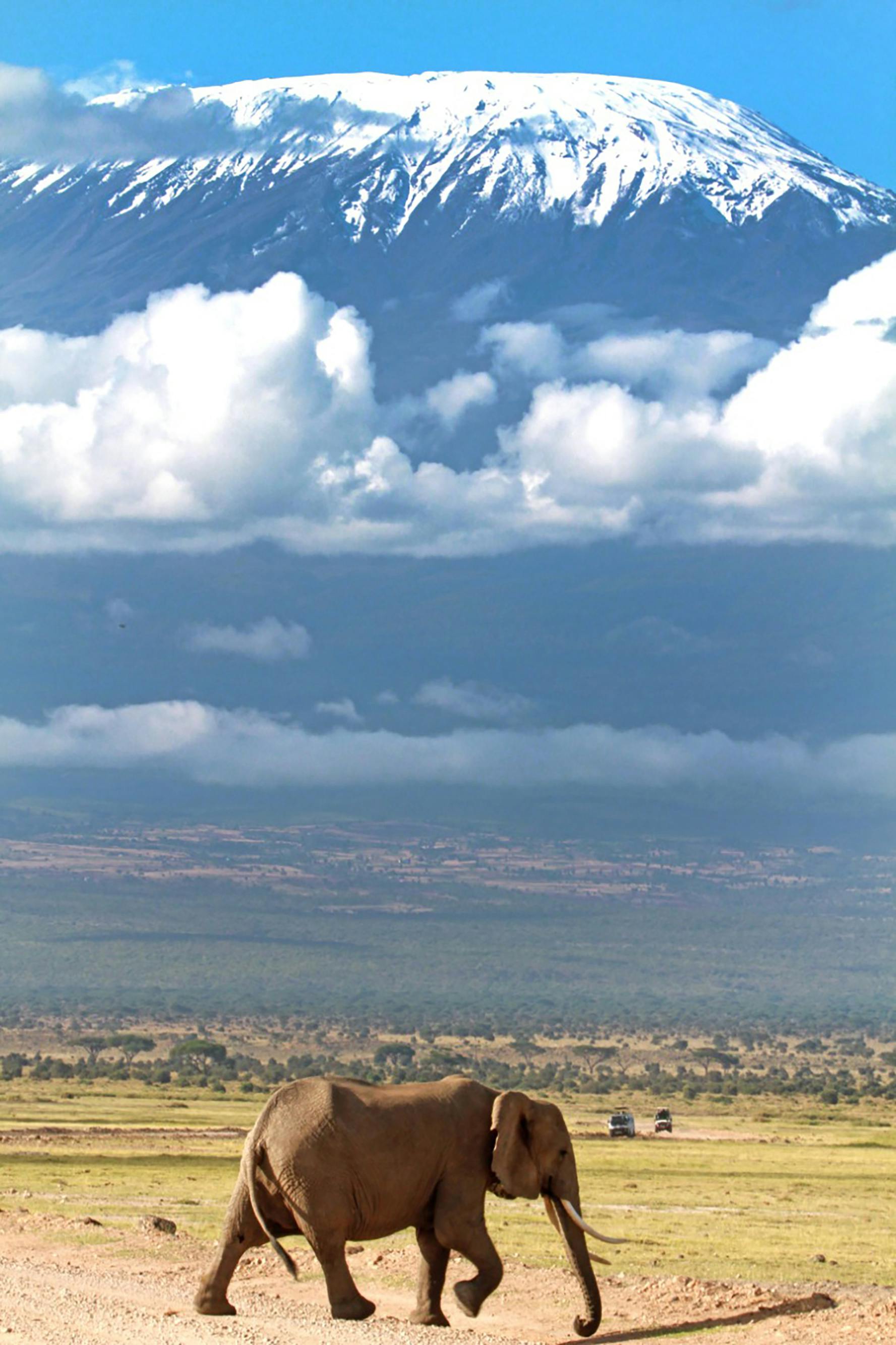
Mount Meru stands 4,566 metres above the floor of Arusha National Park, 25 kilometres east of Arusha town, and roughly 70 kilometres west of Kilimanjaro — a fact that matters when you reach the summit on a clear morning and find Africa’s highest peak filling the entire southeast horizon. Most Kilimanjaro visitors never hear about Meru. That is the most useful thing I can tell you before you read any further.
I have guided guests through both mountains. The difference is not just in the numbers — 4,566 m versus 5,895 m, 3–4 days versus 6–8 days, USD 800–1,500 versus USD 2,800+. The difference is in what the mountain feels like. On Kilimanjaro above 4,000 m, you are on a big, cold, treeless slope with 40 to 100 other trekkers arriving at the same crater rim at 06:30. On Meru’s summit ridge at 05:45, you are alone with your guide, Kilimanjaro rising above cloud to the southeast, and absolute silence.
Mount Meru at a glance
| Height | 4,566 m (14,980 ft) |
| Rank | Tanzania: 2nd highest; Africa: 5th highest |
| Volcanic type | Active stratovolcano; last eruption 1910 |
| Location | Arusha National Park, 25 km east of Arusha |
| Standard route | Momella Route |
| Duration | 3–4 days |
| Armed ranger | Mandatory (buffalo on lower slopes) |
| Park entry fee | USD 59/day peak season, USD 53.10/day low season |
| All-inclusive cost | USD 800–1,500 per person |
| Best months | June–October, January–February |
Meru vs. Kilimanjaro — which to choose?
This is the question most people who reach my inbox are actually asking, even if they phrase it differently. The honest answer is: they are different mountains with different purposes.
| Mount Meru | Mount Kilimanjaro | |
|---|---|---|
| Height | 4,566 m | 5,895 m |
| Duration | 3–4 days | 6–8 days |
| All-inclusive cost | USD 800–1,500 | USD 2,800–4,000+ |
| Crowds | Minimal — a fraction of Kilimanjaro traffic | Heavy in July–October peak |
| Wildlife on the mountain | Buffalo, colobus, giraffe, leopard | Virtually none above moorland |
| Flamingos + lakes | Momella Lakes at the base | None |
| Summit view of Kili | One of Africa’s finest — full profile | You’re on top of Kili |
| Technical difficulty | Exposed summit ridge, non-technical | Non-technical throughout |
| Best for acclimatisation? | Excellent — reaches 4,566 m | Not applicable |
My recommendation: If you are doing Kilimanjaro on this trip, do Meru first. If you only have 3–4 days and do not need to reach 5,895 m, Meru gives more per day: more wildlife, more drama, lower cost, and no queues. If Africa’s highest point is your goal, Kilimanjaro is the objective — but do not skip Meru research in the planning.
The Momella Route — day by day
The Momella Route is the only standard route up Mount Meru. It begins at Momella Gate on the northeastern side of Arusha National Park and gains approximately 3,000 vertical metres to the summit.
Day 1: Momella Gate to Mirikamba Hut
From Momella Gate, the trail immediately enters the lower forest zone of Arusha National Park. This is where the buffalo are. The armed ranger leads; the group walks in formation. I have done this approach half a dozen times and it never stops being an unusual experience — you are on a mountain trekking route and the primary safety concern is not altitude but herbivores.
The lower zone also offers some of the best wildlife of the entire route. Masai giraffes browse in the acacia woodland. Hippos inhabit the Momella Lakes visible below the trail. The seven lakes — Big Momella, Small Momella, and five others — are shallow alkaline pans that attract both Greater and Lesser flamingos, their pink density varying by season. This approach view, with flamingo-lined lakes and the open crater wall above, is one of the more unusual arrival scenes in mountain trekking.
Mirikamba Hut sits at the edge of the montane forest, roughly mid-slope. Wooden hut, basic but adequate. The evening view west is the first point where the scale of the Meru caldera — formed when the eastern wall collapsed approximately 7,800 years ago — becomes apparent.
Day 2: Mirikamba Hut to Saddle Hut
The upper forest zone on the Mirikamba-to-Saddle Hut section is where the Guereza colobus monkeys are. These are the striking black-and-white colobus with the long white mantle and tail — they make a loud, barking territorial call at dawn that carries through the forest. Most visitors see them between Mirikamba and the tree line. They are not difficult to find; they are impossible to miss when present.
The trail breaks out of forest into the open heath zone as it approaches Saddle Hut, and the view opens to the full summit crater wall. The hut sits below the eastern summit ridge. From here, Little Meru — a subsidiary peak at around 3,820 m — is visible to the right. An afternoon scramble to Little Meru is the standard acclimatisation option: an extra 300+ metres of elevation gain, with a view down into the Arusha National Park plains and back toward Kilimanjaro if cloud permits.
Day 3: Saddle Hut to Socialist Peak and Descent
The summit attempt begins at midnight. The reason: Meru’s summit is above the cloud layer in early morning on most days; a midnight departure targets the summit for 05:30–06:30, when the air is calm, cold, and clear, and Kilimanjaro rises in the first alpenglow.
The trail from Saddle Hut climbs the crater rim to Rhino Point, then follows the exposed summit ridge west to Socialist Peak. This ridge section — approximately 400 metres of scrambling and ridge walking with drops on both sides — is the most demanding part of the route and requires focused movement. In poor visibility or high wind, it demands attention. In calm, clear pre-dawn, it is the finest hour of the entire climb.
The Kilimanjaro view: From Socialist Peak at dawn, Kilimanjaro rises 70 km to the southeast, its glaciated caldera floating above the cloud layer. The two mountains are roughly the same height of cloud base at this hour, which means you are looking at Kilimanjaro in full profile — not glimpsed below cloud but above it, in clear air. I have been on both summits. The Meru summit view of Kilimanjaro is more dramatic than the Kilimanjaro summit view of anything. Standing on Africa’s highest peak, the world is grey-brown rock and cloud. Standing on Meru, the world is Kilimanjaro.
The descent from Socialist Peak returns to Saddle Hut, then down to Mirikamba or all the way to Momella Gate depending on whether the itinerary is 3-day or 4-day.
Day 4 (4-day option): Descent to Momella Gate
The extended option allows a more relaxed descent through the colobus and buffalo zones, with time to revisit the Momella Lakes viewpoint in morning light when flamingos are most active.
Wildlife on the route — what makes Meru unique
Mount Meru is the only major trekking mountain in East Africa where you are likely to encounter wildlife on the mountain itself, not just at the base. This is a consequence of the route passing through Arusha National Park throughout — you are inside the park from Momella Gate to the summit.
Cape buffalo: Present on the lower slopes, particularly the lower forest zone on Days 1 and 4. The armed ranger protocol exists specifically for buffalo encounters. Rangers have decades of experience reading buffalo body language and know when to hold the group and when to move. In practice, most groups observe buffalo from a safe distance without incident — but the risk is real and the ranger is not ceremonial.
Guereza colobus monkeys: Arusha National Park is one of the best places in Tanzania to see these monkeys. The upper forest zone on the Mirikamba section is reliable. They are large, conspicuous, and vocal — the dawn bark reverberates through the forest for several hundred metres.
Giraffe: In the Arusha National Park lower zone, particularly near Momella Gate. Masai giraffes at 1,800–2,000 m altitude, before the mountain forest begins.
Flamingos: Both Greater and Lesser flamingo species use the Momella Lakes. The seven alkaline lakes are visible from the lower trail and accessible by canoe as a separate park activity (independent of the mountain climb).
Hippos: Present in the Momella Lakes. Occasionally visible from the lakes approach.
Leopard: Sightings have been documented on the upper slopes of Mount Meru. Rangers with long experience in the park report occasional sightings. Not reliable, but documented — and at 3,000+ m altitude, one of the more unusual places to find a leopard anywhere on earth.
Blue monkeys: Also present in the forest zone alongside the colobus, though less conspicuous.
The summit experience
The summit ridge of Mount Meru is the part that most distinguishes it from other accessible East African peaks. The section between Rhino Point and Socialist Peak involves genuine scrambling — hands on rock, narrow path, drop to the right — in the dark, at 4,200–4,566 m. It is not technical climbing, but it requires more engagement than the standard Kilimanjaro summit slopes.
Socialist Peak (the highest point) is the crater rim of the extinct volcano. The caldera interior has a secondary cone rising from the floor. The circular crater wall, the exposed ridge approach, the 7,800-year-old collapse scar of the eastern wall — this is a geologically dramatic summit environment.
The practical variable that determines summit experience more than anything else is cloud timing. On a good day — clear air, Kilimanjaro above cloud, first light on the eastern horizon — this is one of the most affecting views available in East Africa without a plane. On a poor day (cloud at 3,500 m, summit in cloud), Socialist Peak is cold, white, and gives you back nothing. This is why timing matters: June–October peak dry season gives the most reliable clear mornings.
Practical logistics
Getting there
Arusha National Park is approximately 25 km from Arusha town, a 40-minute drive. Momella Gate is the main gate for Meru climbs. All operators in Arusha who offer Kilimanjaro also offer Meru — book through an established operator rather than via street-level brokers.
Permits and fees
Arusha National Park charges USD 59 per person per day in peak season, USD 53.10 in low season (2023–2024 TANAPA rate, VAT already included). A ranger guiding fee applies per group per day in addition. Hut fees at Mirikamba and Saddle Hut are included in most package prices.
An all-inclusive guided package — permits, guide, armed ranger, porter, hut accommodation, meals — runs USD 800–1,500 per person for a 3–4 day climb, depending on group size and operator. A group of three has been quoted USD 1,450 per person all-in. Budget minimum packages start from around USD 900. The fee floor for the park alone (4-day climb, 2023–2024 season) is USD 350 per adult.
This is substantially cheaper than Kilimanjaro, where KINAPA fees alone for an 8-day Lemosho route total approximately USD 930 before operator costs.
What to bring
The summit ridge reaches sub-zero temperatures at night, regardless of season. Essential layering: base layer, insulation (down or synthetic), windproof shell, gloves, balaclava. Poles are useful for the summit ridge descent. Headlamp essential for the midnight summit departure. Boots rated to at least 0°C.
For the lower forest and buffalo zones: no specific gear requirements beyond standard trekking kit. The approach is warm and humid.
Porters and guides
Porters are mandatory (most operators include them in the package). They carry hut-to-hut loads up to a standard weight limit. A guide with knowledge of the mountain’s wildlife patterns — specifically the buffalo zones and colobus forest sections — significantly improves the experience.
Combining Meru and Kilimanjaro
The standard protocol: complete Meru (3–4 days), rest 2–3 days in Arusha, then start Kilimanjaro. Many Arusha operators offer this combination as a single package. The acclimatisation benefit is real — reaching 4,566 m on Meru before attempting 5,895 m on Kilimanjaro reduces altitude-related failure risk. For climbers who have never been above 3,500 m, this combination is the most reliable path to a Kilimanjaro summit.
If Meru’s solitude is what sold you, the pairing that keeps that feeling going is the Rongai route — Kilimanjaro’s only approach from the north, and the one route on the mountain with a comparable wilderness feel and real wildlife on the lower slopes.
Tim’s note
Standing on Meru’s summit ridge at 05:45 — Kilimanjaro filling the southeast horizon, both peaks above the cloud layer, in absolute silence because there are no other trekkers — that is the view and the silence that the Kilimanjaro summit cannot offer. Up there, Kili’s crater and the queue of 50 trekkers arriving simultaneously is somewhere below the clouds, invisible. From Meru, you just see the mountain itself. Perfectly. I go back when I can.
Related guides
- Tanzania northern circuit — Serengeti, Ngorongoro, Tarangire, Lake Manyara in sequence
- Tanzania safari costs — full fee breakdown for all northern circuit parks
- Kilimanjaro routes comparison — which route, how many days, success rates
- Arusha — airport logistics, one-day options, safari gateway
- Tanzania big cats — lions, leopards, cheetahs across Tanzania’s parks
- Tanzania birdwatching — 1,100 species including Arusha NP flamingos and forest endemics
- Tanzania overview — country guide, regions, and planning
Frequently asked questions
Should I climb Mount Meru or Kilimanjaro?
Different objectives. Mount Meru (4,566 m, 3–4 days, USD 800–1,500 all-in) is shorter, cheaper, and far less crowded, with wildlife on the mountain — Cape buffalo, colobus monkeys, giraffes — that Kilimanjaro (5,895 m, 6–8 days, USD 2,800–4,000+) cannot match. Kilimanjaro is the higher, longer, harder challenge. Many climbers do Meru first as acclimatisation, then Kilimanjaro 3 days later — a combination that dramatically improves Kilimanjaro summit success rates by reaching 4,566 m before attempting 5,895 m.
How long does it take to climb Mount Meru?
The standard Momella Route takes 3–4 days: Day 1 from Momella Gate to Mirikamba Hut through the lower forest and buffalo zone; Day 2 from Mirikamba Hut to Saddle Hut through upper forest with Guereza colobus monkeys, with an optional afternoon scramble to Little Meru; Day 3 midnight departure from Saddle Hut, summit at dawn, descent to Mirikamba; Day 4 descent to Momella Gate. Most operators offer both 3-day and 4-day schedules.
Is Mount Meru dangerous?
The main hazard is Cape buffalo on the lower slopes — which is why an armed park ranger is mandatory for all Mount Meru climbs. The summit ridge between Rhino Point and Socialist Peak is exposed and involves scrambling; care is required in low visibility or wind. Altitude risk above 4,000 m is real (headache, nausea, fatigue) but less severe than Kilimanjaro — acclimatise properly and descend if symptoms worsen.
Can I see Kilimanjaro from the summit of Mount Meru?
Yes — this is one of the finest mountain views in Africa. From Socialist Peak (4,566 m), Kilimanjaro rises approximately 70 km to the southeast. On a clear morning at dawn, Kilimanjaro's entire cone rises above the cloud layer. The view from Meru is arguably better than the view from Kilimanjaro's own summit — from the top of Kilimanjaro you are looking at the crater; from Meru you see the full mountain in profile, floating in cloud.
Does climbing Mount Meru help acclimatise for Kilimanjaro?
Yes, significantly. Reaching 4,566 m on Meru before attempting Kilimanjaro's 5,895 m gives your body a meaningful pre-acclimatisation advantage. The standard protocol is to complete Meru, rest 2–3 days in Arusha, then begin the Kilimanjaro climb. Many guided operators in Arusha offer a combined Meru + Kilimanjaro package with the correct rest interval built in.
What wildlife will I see on Mount Meru?
Cape buffalo on the lower slopes (your armed ranger leads the group through buffalo territory on Day 1). Guereza colobus monkeys (striking black-and-white, make loud barking calls) in the upper forest on Day 2. Giraffe in the Arusha National Park approach zone near Momella Gate. Flamingos — both Greater and Lesser — on the seven Momella Lakes visible from the lower slopes. Leopard sightings have been documented on the upper slopes. Hippos are present in the Momella Lakes.
What does it cost to climb Mount Meru?
All-inclusive guided packages (permits, guide, porter, hut fees, armed ranger, meals) range from USD 800 to USD 1,500 per person for a 3–4 day climb, depending on group size and operator. The Arusha National Park entry fee is USD 59 per person per day in peak season, dropping to USD 53.10 in the low season. Budget packages start from around USD 900; group-of-3 packages have been listed at USD 1,450. This is substantially cheaper than Kilimanjaro, where fees alone exceed USD 900 before guide costs.
When is the best time to climb Mount Meru?
June to October (dry season) and January to February (short dry window) give the best summit visibility — the Kilimanjaro view from the top requires clear skies. Avoid March to May (long rains) and November (short rains can significantly reduce summit visibility). The dry season is also best for the Momella Lakes flamingos and for safe buffalo-zone navigation on the approach.