
Facts & prices checked: 2026-07-18
I live on Zanzibar’s east coast and run a boutique hotel. Week after week, families arrive with us — some straight after their safari, some before the adventure begins. I hear what worked for them and what they underestimated. This guide is distilled from those conversations.
From what age does Tanzania really make sense?
This is the question I hear most often. The honest answer depends on three factors: the park, the child, and the expectation.
Under 5 years old: &Beyond and many other well-regarded operators won’t take children under 5 on regular game drives at all. Early morning drives (5:30am), hours on dirt tracks, no nap in the vehicle — that overwhelms young children. For this age group, I recommend Zanzibar beach time, with a short day trip to the Ngorongoro Crater as the only safari component.
5–8 years old: An excellent age for a first Tanzania experience. Children are fascinated by wildlife, have enough stamina for morning drives, and can actively engage with what the guide explains. Focus: Tarangire (elephant density right at the vehicle) and Ngorongoro (compact area, short distances).
9–13 years old: The ideal age for a first full Northern Circuit safari. Children bring patience for the Serengeti, take an interest in animal behaviour and the migration, and can fully enjoy a 7-day safari rhythm.
From 14 years old: Walking safaris become possible with most operators. Kilimanjaro climbs have no fixed minimum age — it depends on fitness.
Most safari experts — and the experience described here — recommend 6 years as a realistic minimum age for full Tanzania game drives. Not as a ban, but as an honest assessment: a bored, exhausted child spoils the experience for everyone.
Best parks for families — and why
Not every park in Tanzania suits families equally well. Here’s my honest ranking:
Tarangire: my first recommendation for families
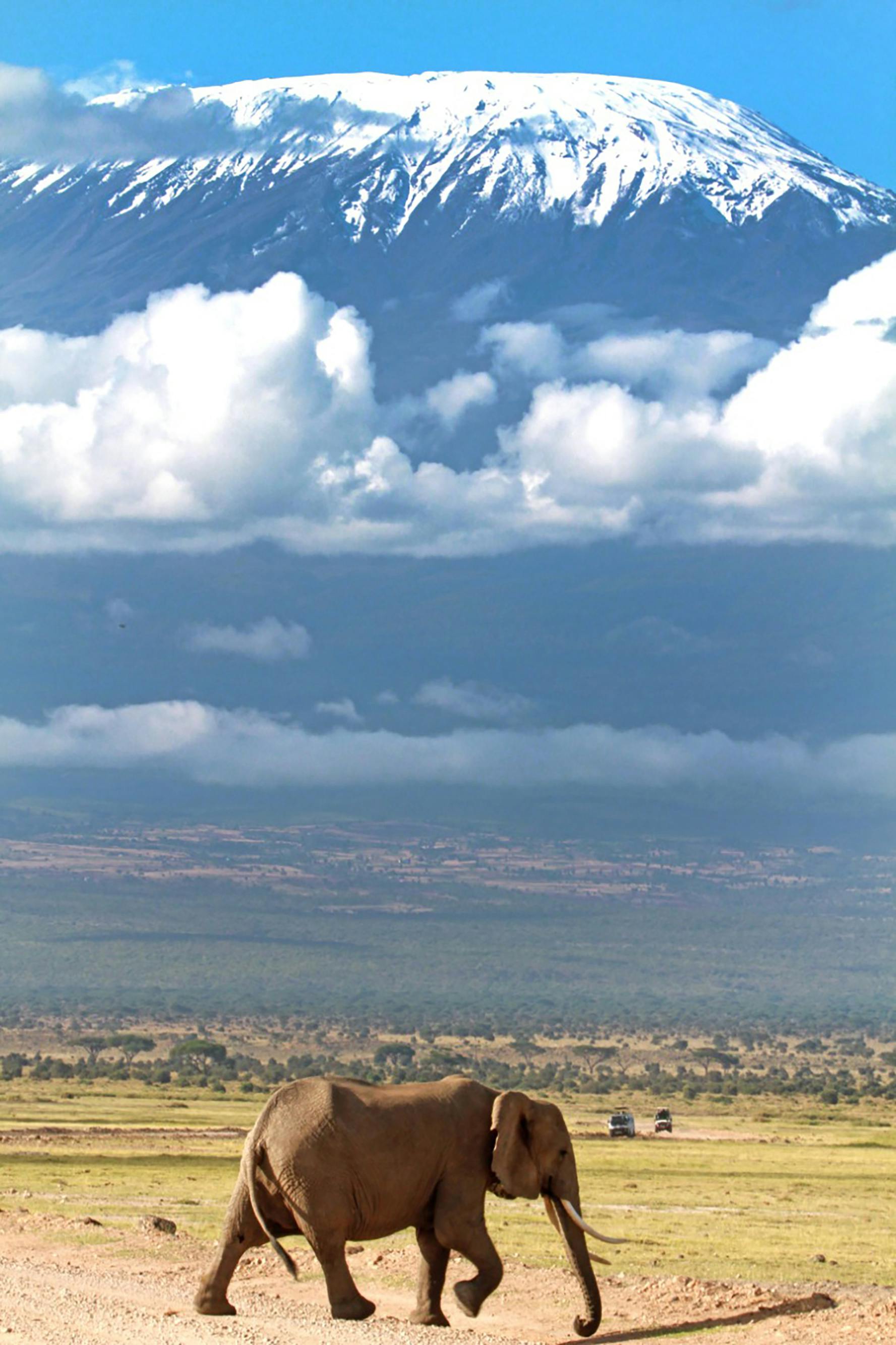
Tarangire is often the strongest experience for families — and less crowded than Ngorongoro or the Serengeti. In the dry season (July–October), the park has Tanzania’s largest elephant concentrations: herds of 50 to 200 animals at the Tarangire River. Kids love elephants. Almost without exception.
The animals come because the Tarangire River is the only permanently available water in the region during the dry season. Once the rains return (from November), elephants and other large animals disperse again across the surrounding plains outside the park. That makes July to October the most reliable window for elephant sightings.
What else strengthens Tarangire for families: the pace is more relaxed than in the Serengeti’s Seronera centre. Lower vehicle density. Good visibility. Children typically sit in the pop-up roof hatch of the safari vehicle — the elephants come close enough that you can smell them. Entry: around USD 59/adult/day.
Ngorongoro Crater: best wildlife concentration for first-timers
The Ngorongoro Crater (260 km², a 610 m deep caldera formed roughly 2.5 million years ago) is the most efficient wildlife experience in Tanzania for families. In a confined space, roughly 25,000 large animals concentrate — lions, elephants, buffalo, hippos, about 30 rare black rhino. Children reliably see more wildlife here in four hours than in two days of open savanna.
Entry fees: USD 70.80 per adult, USD 23.60 per child (5–15 years), children under 5 free. The crater conservation fee (USD 295/vehicle/descent) applies per vehicle — for families of four or more, it spreads out more efficiently than for couples.
The Ngorongoro picnic site at the Ngoitokitok Spring is a family moment in its own right: hippos in the pool 20 metres from the table, marabou storks, vultures. An unbooked rest spot for lunch.
No minimum age for the crater visit — the floor is only reached by vehicle, no walking required. Even children aged 3–4 can join without any trouble.
Serengeti: the strongest experience from age 9
The Serengeti is the strongest Tanzania experience for children aged 9 and up — the scale (14,763 km²), the migration (traditionally ~1.3 million wildebeest and zebra, though newer satellite data show significantly lower numbers in places), the predator diversity. For children under 8, on the other hand, the open plain and the distance to the animals (200–400 m) can feel underwhelming.
For families choosing the Serengeti: the central Seronera Valley as a home base — higher wildlife density, shorter distances, resident year-round. Serengeti entry: USD 82.60/day for adults in peak season.
Skip for families with children under 10: Mahale Mountains (long forest hikes, chimpanzees), Katavi (extremely remote, dry heat), Ruaha (walking-safari focus, limited family infrastructure).
The main topic for every parent: malaria
The question that worries parents most — and that they underestimate the most — is malaria. All of Tanzania below 1,800 m altitude is a malaria zone (confirmed by the CDC and Canadian health authorities). That applies to the Serengeti, the Ngorongoro crater floor, Tarangire, and all of Zanzibar.
Prophylaxis for children: Atovaquone/proguanil (Malarone) is the preferred prophylaxis for children, because a paediatric dosage exists and the course is short before and after the trip. Doxycycline is only suitable from age 8–12. Mefloquine (Lariam) requires a long lead time and is less often recommended for children.
What matters most: a travel-medicine consultation 6–8 weeks before departure with a tropical-medicine or travel doctor. Not your family GP, who may not have current resistance profiles and paediatric dosing on hand.
Insect protection for children: DEET 20–30% for children from age 2 (CDC recommendation). Insect-repellent bands and stickers aren’t effective enough against malaria risk — apply spray or lotion to all exposed skin. Long sleeves and long trousers after sunset, when mosquitoes are most active.
Altitude at Ngorongoro: The crater rim sits at roughly 2,300 m — malaria risk is markedly lower there than on the crater floor. Even so: keep taking prophylaxis continuously, don’t pause it for individual altitude sections.
Rabies vaccination for children: Safari operators such as Asilia Africa explicitly recommend a pre-exposure rabies vaccination for children, since children tend to touch or approach animals. Discuss this with your travel-medicine doctor.
Measles: The CDC recommends full MMR protection for all international travellers to Tanzania — infants between 6 and 11 months receive an early dose.
Zanzibar for families: what actually works
For many families, Zanzibar is the best part of the trip — because the activities are immediately engaging for every age, without requiring patience or waiting time.
Jozani Forest and the red colobus monkeys
Jozani is Zanzibar’s only national park (50 km², established 2004) and home to the Zanzibar red colobus (Piliocolobus kirkii) — a species found exclusively on Unguja, Uzi, and Vundwe and nowhere else on Earth. IUCN status: Endangered (EN). The full island population was counted at 5,862 individuals in 342 groups in the 2013–2015 census.
The monkeys are habituated — they approach visitors on their own initiative. Children suddenly find themselves standing a metre from an animal looking straight at them. This isn’t safari wildlife-watching from a vehicle, but a direct encounter. Guided walks are mandatory (included in the entry fee). Opening hours: 7:30am–5:00pm daily.
Jozani Park is 35–38 km southeast of Stone Town — about 40–45 minutes’ drive. Combining it with Prison Island on the same day works well.
An extra detail for curious children: Jozani’s entry fees go to park management and are partly reinvested in local community projects, including schools. That’s an easy thing to explain to them.
Prison Island (Changuu) — giant tortoises you’re allowed to touch
Prison Island lies 5.6 km northwest of Stone Town — a 20 to 30 minute boat ride from the Forodhani Gardens. The island is home to Aldabra giant tortoises, some over 100 years old. Entry: USD 22 per person (raised from USD 4 in a September 2025 fee hike). Since November 2024, touching and feeding the tortoises is no longer allowed, but children can watch them up close. Boat price (round trip): roughly USD 30–40 depending on negotiation.
For very young children, this is often the highlight of the entire trip — more tangible, direct, and emotional than even the best wildlife sightings from a vehicle.
An interesting story for curious kids: the island was actually called Quarantine Island — from 1893 it served as a British quarantine station (including for smallpox), not primarily as a prison. The name “Prison Island” is historically inaccurate.
Mnarani Turtle Centre in Nungwi
In northern Zanzibar, Nungwi has the Mnarani Marine Turtle Conservation Pond — a natural lagoon with young green and hawksbill turtles. Five turtle species occur in Tanzania’s coastal waters, IUCN-listed from Vulnerable to Critically Endangered. The turtles are raised here and later released. For families staying in Nungwi: an ideal half-day excursion.
Zanzibar’s beaches: which coast for which family
Not every Zanzibar beach is equally safe for young children. The east coast (Paje, Jambiani, Matemwe) has strong tidal swings: at low tide, wide sand flats lie exposed; at high tide, the beaches narrow. For swimmers with children, timing matters.
The north coast (Nungwi, Kendwa) is the better choice for families with young children: sheltered lagoon bays, little tidal influence, swimmable year-round. Nungwi and Kendwa also have the densest offering of family-friendly accommodation.
I live on the east coast: the tides are, for us, part of the character of the place. Perfect for kitesurfers, sometimes challenging for young children. For anyone who wants to swim with a young child without watching a tide chart: the north coast.
Forodhani Night Market in Stone Town
The Forodhani Night Market, from 6:00pm, is a universal experience for children of every age — grilled seafood, sugarcane juice, chapati, Zanzibar pizza cooked right there over open flames. Cheap, loud, vivid, and not staged for Instagram. One of the most honest encounters with everyday Zanzibar culture.
Practical family logistics
Private vehicle vs. shared vehicle
For families with children, a private vehicle is almost always the better choice — even though it costs more. The advantage: you can linger at a sighting when your child is thrilled, turn back early when they’re exhausted, and the guide can match pace and explanations to the children’s age and attention span. In a shared vehicle with other travellers, all of that becomes a compromise.
A family safari-day rhythm
The classic safari day suits families well: an early morning drive (6:00–10:00am, the animals’ main activity window) → return to the lodge → lunch → pool or nap (12:00–3:30pm) → afternoon drive (4:00–6:30pm). The midday break isn’t a luxury — it’s the buffer that recharges children for the afternoon.
For families with children under 7: book only the morning drive and leave the afternoon drive free. Two game drives a day is often too much for young children.
Luggage: take the 15 kg limit seriously
Bush flights between safari destinations (Serengeti–Arusha, Tarangire–Serengeti) accept roughly 15 kg of soft luggage per person — including children. Hard-shell suitcases don’t fit in the small Cessna aircraft. For families with young children: nappies, a travel cot, and young-child equipment all have to fit within this limit. Nappies are easy to buy in Arusha — but not inside the national park.
What children should really wear on safari
- Neutral colours: khaki, beige, olive, light grey
- No white (dust settles on it instantly), no bright blue or neon orange (spooks animals or draws attention)
- No camouflage patterns — banned for civilians in Tanzania, including children
- Long-sleeved shirt for morning and evening drives (cool even in July)
- Closed shoes for evenings at camp (snakes, scorpions at dusk)
Zanzibar entry insurance for families
Since October 2024, mandatory insurance has been required for all non-residents entering Zanzibar. Prices: USD 44 per adult, USD 22 per child (3–17 years), free for children under 3. Booking is only through visitzanzibar.go.tz — the QR-code receipt is checked on arrival. This isn’t a formality — without this insurance, there’s no entry stamp.
For a family of 2 adults and 2 children (3–17 years): USD 44 + 44 + 22 + 22 = USD 132 total.
Yellow fever vaccination for children
Tanzania only requires proof of yellow fever vaccination for travellers arriving from or transiting through yellow-fever-endemic countries. The age threshold: from 1 year. For most families flying directly from Europe or North America without transiting an endemic country, no yellow fever vaccination is required. Confirm in advance with a travel-medicine doctor.
Recommended family trips by age
The right itinerary depends heavily on the children’s ages. These three building blocks have proven themselves in practice:
Youngest children (under 6): beach first, Ngorongoro as a bonus
- Zanzibar north coast (Nungwi or Kendwa): 7–10 days, swimmable year-round, Prison Island, night market
- Ngorongoro Crater: 1–2 days as a day trip from the hotel (no multi-day safari needed)
- Jozani Forest: half a day, colobus monkeys up close
Why: Zanzibar’s activities require no stamina, no early starts, and no long drives. The Ngorongoro Crater packs in so much wildlife in a small area that even short attention spans are fully satisfied.
Middle children (6–12 years): Northern Circuit safari + Zanzibar
- Tarangire (2 days): elephant herds at the river, baobabs
- Ngorongoro (2 days): crater floor, picnic at the hippo pool
- Serengeti Seronera (2–3 days): lions, cheetahs, predator diversity
- Zanzibar (5–7 days): beach, Jozani, Prison Island, Stone Town
The safari sequence starts with Tarangire — dense elephants as an immediate, low-frustration entry point — and builds up to the wide-open Serengeti.
Teenagers (from 14): deeper into the wilderness
- Nyerere (boat safari on the Rufiji, wild dogs): wilder, less touristic
- Ruaha (big predators, elephants, hippos in the Ruaha River): for more experienced safari families
- Kilimanjaro climb: no official minimum age, depends on fitness
Tim’s family observation
The most surprising pattern I see with families: the children always spot what the adults miss first. I’ve watched parents staring at lions while their five-year-old pointed at a dik-dik in the tall grass — ten metres from the vehicle, completely missed by the adults. Children sit at the right height in the roof hatch, they’re less filtered, and they look in every direction, more broadly.
On Zanzibar, it’s the slowness: families who stay a week on the north coast settle into a rhythm they don’t know at home. Breakfast on the beach, snorkelling with no schedule, the night market, back to the beach. Children don’t need organising for that — they need time and water.
The second pattern: children who experience safari and Zanzibar in one trip talk about both for years afterward — but they talk about the elephants and the tortoises first. Not the lions, not the most luxurious camp. The encounter where you can smell or touch the animal is the one that stays.
Planning your next steps
Anyone planning the Northern Circuit for a family trip finds the full route — parks, timing, and cost breakdown — in the Northern Circuit trip planner. For the right combination of safari and beach holiday: combining safari and Zanzibar. The complete Ngorongoro cost breakdown — crater conservation fee, entry, accommodation — is in the full costs page.
For anyone considering exploring Zanzibar over several weeks: Zanzibar’s best time to visit and beaches compared — important for working out which coast suits families with children best, in which month. Full Tanzania safari overview: the main Tanzania guide.
Frequently asked questions
From what age does a Tanzania safari make sense?
Most safari experts recommend a minimum age of 6 for Tanzania safaris. &Beyond and other operators decline children under 5 on game drives. For children between 3 and 5, the Ngorongoro Crater works well as a day trip (high wildlife density, short waits) — the open Serengeti, with its wide plains and long waits, generally does not.
Which malaria prophylaxis is suitable for children?
All of Tanzania below 1,800 m is a malaria zone — this applies to children too. Atovaquone/proguanil (e.g. Malarone) is the most common recommendation for children, since a paediatric dosage exists. Doxycycline is only suitable from age 8–12. What matters most: a travel-medicine consultation 6–8 weeks before departure. In addition: 20–30% DEET insect repellent for children, long sleeves after sunset.
What does entry cost for children in Tanzania's national parks?
Children between 5 and 15 pay reduced entry fees: Ngorongoro USD 23.60 (versus USD 70.80 for adults), Serengeti also USD 23.60/day (versus USD 82.60 for adults in peak season). Children under 5: free. The Ngorongoro crater conservation fee (USD 295/vehicle/descent) applies regardless of a child's age — for families of 4 or more it spreads out well.
Which park is the most family-friendly?
Tarangire is my favourite for families: reliably high elephant density (herds of 50–200 animals) at the river in the dry season, a compact park, good visibility from the vehicle. Ngorongoro Crater is ideal for younger children — 260 km², dense wildlife population, short distances between sightings. The Serengeti is strongest for children aged 9+, once they can process the scale and the migration story.
What are the best family activities in Zanzibar?
Jozani Forest: roughly 5,862 Zanzibar red colobus monkeys on the island in total, habituated, actively approach visitors. Prison Island: Aldabra giant tortoises, USD 22 entry (raised from USD 4 in September 2025), a 20–30 minute boat ride from Stone Town (5.6 km). Forodhani Night Market in Stone Town for grilled food. Nungwi/Kendwa: sheltered lagoons without strong tidal currents — ideal for young children.
How does the luggage limit for children work on bush flights?
The 15 kg soft-bag limit on bush flights applies to every passenger — including children. Hard-shell suitcases don't fit in the small Cessna aircraft. For families, that means nappies, toys, and young-child equipment all have to fit within this 15 kg limit. Advance planning is essential — there's no buffer for spontaneous extra luggage.
How much does the mandatory Zanzibar insurance cost for children?
Since October 2024, Zanzibar has required mandatory insurance (ZIC) for all non-residents. The price: USD 44 per adult, USD 22 per child aged 3 to 17, free for children under 3. Booking is only through visitzanzibar.go.tz — the QR-code receipt is checked on arrival.
Do children need a yellow fever vaccination for Tanzania?
Tanzania only requires proof of yellow fever vaccination for travellers arriving from or transiting through yellow-fever-endemic countries. The age threshold is 1 year. For most families flying directly from Europe or North America without transiting an endemic country, no yellow fever vaccination is required. Confirm with a travel-medicine doctor in advance.