
Facts & prices checked: 2026-07-18
Every Tanzania and Zanzibar guide tells you the same thing: “buy a local SIM.” Almost none of them tell you which network to pick, what a real bundle actually costs once you’re standing at the counter with a queue behind you, or why your phone quietly stops working the moment your safari vehicle crosses into the Serengeti. This guide covers all of it, with the numbers.
I’ve lived on Zanzibar year-round running a small hospitality business, which means patchy connectivity isn’t an abstract travel inconvenience for me — it’s a Tuesday. What follows is what I’ve actually seen work, cross-checked against carrier pricing pages and traveler reports.
Quick facts
| Category | Detail |
|---|---|
| Main carriers | Vodacom, Airtel, Tigo (rebranded Yas), Zantel, Halotel |
| Cheapest physical SIM + starter bundle | Vodacom: 1,000 TZS SIM + 10,000 TZS for 5 GB/7 days = 11,000 TZS (~USD 4.50) |
| Where to buy on arrival | Vodacom counter outside Dar es Salaam’s international terminal; Zanzibar’s airport; Stone Town’s Darajani Bazaar |
| Registration requirement | Passport + biometric fingerprint scan — Tanzanian law since 2019 |
| eSIM availability | Yes — Airalo (from USD 4.50), SimCorner, Yesim, GlobaleSIM, Holafly, and others all sell Tanzania-wide plans |
| Strongest coverage | Vodacom nationally; Zantel on Zanzibar’s North Coast |
| Weakest coverage | Inside the Serengeti’s core — no network infrastructure within the park boundary |
The networks: Vodacom, Airtel, Tigo (now Yas), Zantel, and Halotel
Five networks operate across Tanzania and Zanzibar, and which one you land on shapes your whole trip more than most packing lists admit.
Vodacom has the widest overall coverage of any Tanzanian carrier — it reaches Dar es Salaam, the towns along the Central Railway line, and most places tourists actually go, including 5G in some of Zanzibar’s lesser-visited towns and transit hubs. It’s the safe default.
Airtel runs a decent rural network too, and it’s the network most guides recommend as a backup. Here’s the honest complication: some travel guides say Airtel actually beats Vodacom specifically inside the Serengeti and Ngorongoro, while others rank Vodacom best in exactly those same parks. I’ve seen both claims often enough that I don’t think either is simply wrong — coverage varies camp to camp and season to season, which is precisely why carrying a backup option matters more here than in most destinations.
Tigo — worth knowing it’s now branded Yas in shops, though old signage and guides still say Tigo — has historically undercut Vodacom on price; one comparison found roughly 7.5 GB for about USD 6.50 against pricier Vodacom equivalents. Yas also topped one 2025 mobile-speed report at 33.5 Mbps download, the fastest of the major networks that quarter.
Zantel operates mainly on Zanzibar and is the network locals on Zanzibar’s own Tripadvisor forum most often recommend for the North Coast specifically, with decent 4G in Stone Town.
Halotel, launched in October 2015, expanded fast — it now claims coverage across all 26 Tanzanian regions and over 85% population coverage, with a particular reputation for reaching rural corners of Zanzibar that other networks skip.
My own line is Vodacom, mostly out of inertia rather than a rigorous comparison test — it’s what the first shop I walked into sold me, and it has never given me a reason to switch. If you want one clean rule: Vodacom for the safety net, Airtel as a genuinely fine backup, and don’t overthink Tigo/Yas or Zantel unless you’re spending your whole trip in one specific area they’re known to serve well.
Physical SIM or eSIM — which one actually makes sense
If you’re staying more than a few days and want the cheapest data per gigabyte, buy a physical SIM. If your phone is unlocked and eSIM-capable and you’d rather land with data already working, use an eSIM instead — you’ll pay a real premium for that convenience.
The case for a physical SIM is mostly about money. A Vodacom SIM plus a week of 5 GB runs about USD 4.50 total; the cheapest Airalo Tanzania eSIM pack is USD 8 for just 2 GB. For self-driving travelers specifically, one overland guide puts it plainly: a cheap local SIM is often more reliable and cheaper than leaning on an international phone plan, full stop.
The case for eSIM is about friction, not price. No queue, no handing over your passport at a counter, no waiting for a fingerprint scanner that may or may not be working that day. Digital nomads and remote workers increasingly treat eSIMs as one option alongside carrier global roaming plans and old-fashioned local SIMs — not a replacement for either, just another tool. Some eSIM products go further: SimCorner’s Tanzania plan automatically switches between the Airtel and Vodacom networks for redundancy, something a single physical SIM simply can’t do.
My honest take: if you’re only in the country a week and your phone supports eSIM, the convenience is worth the extra few dollars. Past two weeks, or if you’re trying to keep costs tight, walk into a shop and register a physical SIM — the savings add up.
Buying a SIM on arrival — airport counters vs. town shops
The fastest option, by a clear margin, is the Vodacom store sitting immediately outside the international terminal at Dar es Salaam’s airport — buying and registering a SIM there reportedly takes about five minutes, no more complicated than buying a bottle of water. One Dar es Salaam forum thread even lists five separate operators with airport counters: Vodacom, Zantel, Tigo, Airtel, and Halotel, all within easy reach of arrivals.
Flying straight into Zanzibar instead? You can pick up a SIM at the island’s own airport just as easily.
The one thing to know: airport SIM shops generally charge more than the same product bought in town. If you’re not in a hurry, Stone Town has two solid alternatives — Darajani Bazaar, just outside the old town, is a long-standing spot travelers use, and Airtel and Vodacom both run proper shops scattered through the center as well. Bring your passport either way; no shop, official or otherwise, will register a line without one.
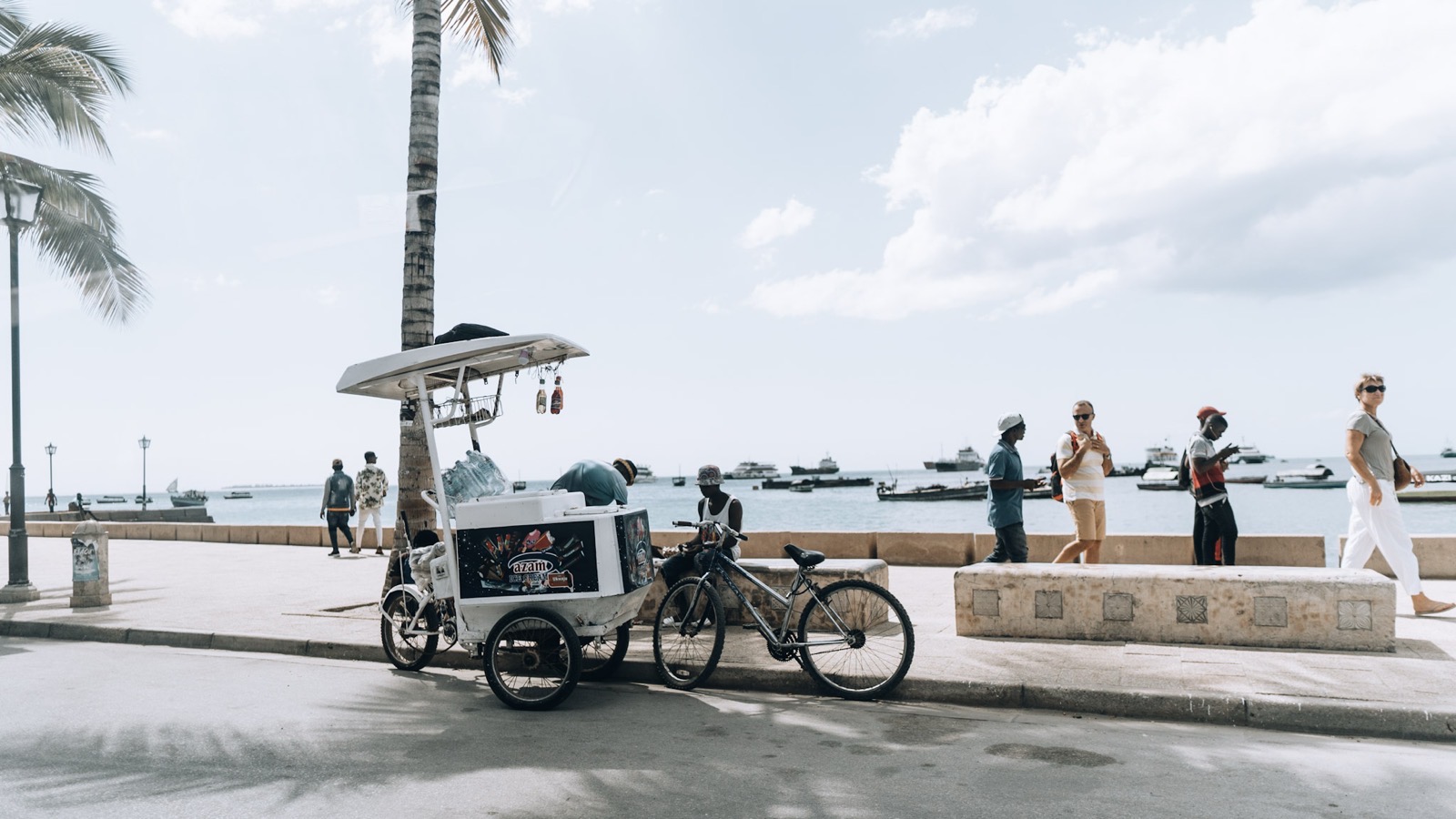
I bought my own Zanzibar line at a small shop off Creek Road rather than the bazaar itself, mostly because it was closer to where I was staying that week. The process was identical to what people report at the airport counters: passport out, fingerprint scanned, SIM handed over, done. The bazaar and the backstreet shop cost the same; the only real variable was which queue was shorter that afternoon.
Registration: why immigration wants your passport and your fingerprint
Tanzania has required biometric SIM registration since a 2019 rule change, and there is genuinely no way around it — every network insists on it, for every SIM, for every buyer, tourist or resident.
The process in practice:
- Hand over your passport (the physical document, not a photo of it, in most official shops)
- The agent scans your fingerprint on a small biometric reader at the counter
- Your details go into the network’s registration system — Vodacom states it retains this data for up to 10 years while the line stays active
- You walk out with an activated SIM, usually within minutes
One video guide I’ve seen mentions that unofficial sellers sometimes handle registration for an extra fee outside the formal system. I’d skip that route entirely — it saves you nothing meaningful and puts your passport details through a process you can’t verify. Official shops are everywhere and the legitimate process takes barely longer.
If you’re the kind of traveler who finds fingerprint scanners mildly unsettling in an unfamiliar country, I understand the instinct, but this is standard, uneventful, and over in under a minute in my experience — closer to renewing a library card than anything more invasive.
What you’ll actually pay — SIM and data bundle prices
Here’s where guides get vague and I’d rather just give you the numbers.
Vodacom (official bundle pricing):
| Bundle | Validity | Price |
|---|---|---|
| SIM card itself | — | 1,000 TZS |
| 400 MB + 100 SMS | 24 hours | 1,000 TZS |
| 1 GB | 7 days | 2,500 TZS |
| 5 GB | 7 days | 10,000 TZS |
| ~4.9 GB | 30 days | 10,000 TZS |
| 20 GB | 30 days | 50,000 TZS |
Airtel (official bundle pricing):
| Bundle | Validity | Price |
|---|---|---|
| SIM card itself | — | 1,500-2,000 TZS (varies by shop) |
| 950 MB-1 GB | 7 days | 2,000-2,100 TZS |
| 10 GB | 30 days | 20,000 TZS |
| 35 GB | 30 days | 60,000 TZS |
A few things worth knowing beyond the tables. Vodacom’s own out-of-bundle rate — what you pay if you burn through your data before topping up again — runs about 0.26 TZS per KB, which adds up fast if you forget to check your balance; stick to bundles. A Vodacom prepaid SIM stays valid for 180 days from your last top-up, which matters if you’re the kind of traveler who buys a line on one trip and comes back a year later expecting the same number — you probably won’t get it.
Zanzibar specifically tends to run slightly cheaper for data than the mainland average: long-stay visitors commonly report around 30 GB for roughly USD 12, and local SIMs with data across Tigo, Vodacom, and Airtel are generally available for USD 5 to 15 depending on the bundle. As a rough rule across the country: expect USD 1-10 for the SIM itself and USD 5-20 for a data package big enough for a normal trip.
Coverage: Zanzibar and the coast vs. Serengeti, Kilimanjaro, and the bush
Zanzibar and the coastal strip get solid coverage; the interior safari parks and Kilimanjaro do not, and you should plan your trip around that gap rather than be surprised by it.
On Zanzibar itself, internet quality is genuinely inconsistent enough that one well-traveled forum thread describes it as simply “hit or miss,” with the standard advice being to buy a local data SIM as a backup rather than rely on your hotel’s Wi-Fi alone. In fairness, Vodacom has pushed 5G into some lesser-known Zanzibar towns and transit points beyond the obvious tourist strip, so coverage has improved — it’s uneven improvement, not universal.
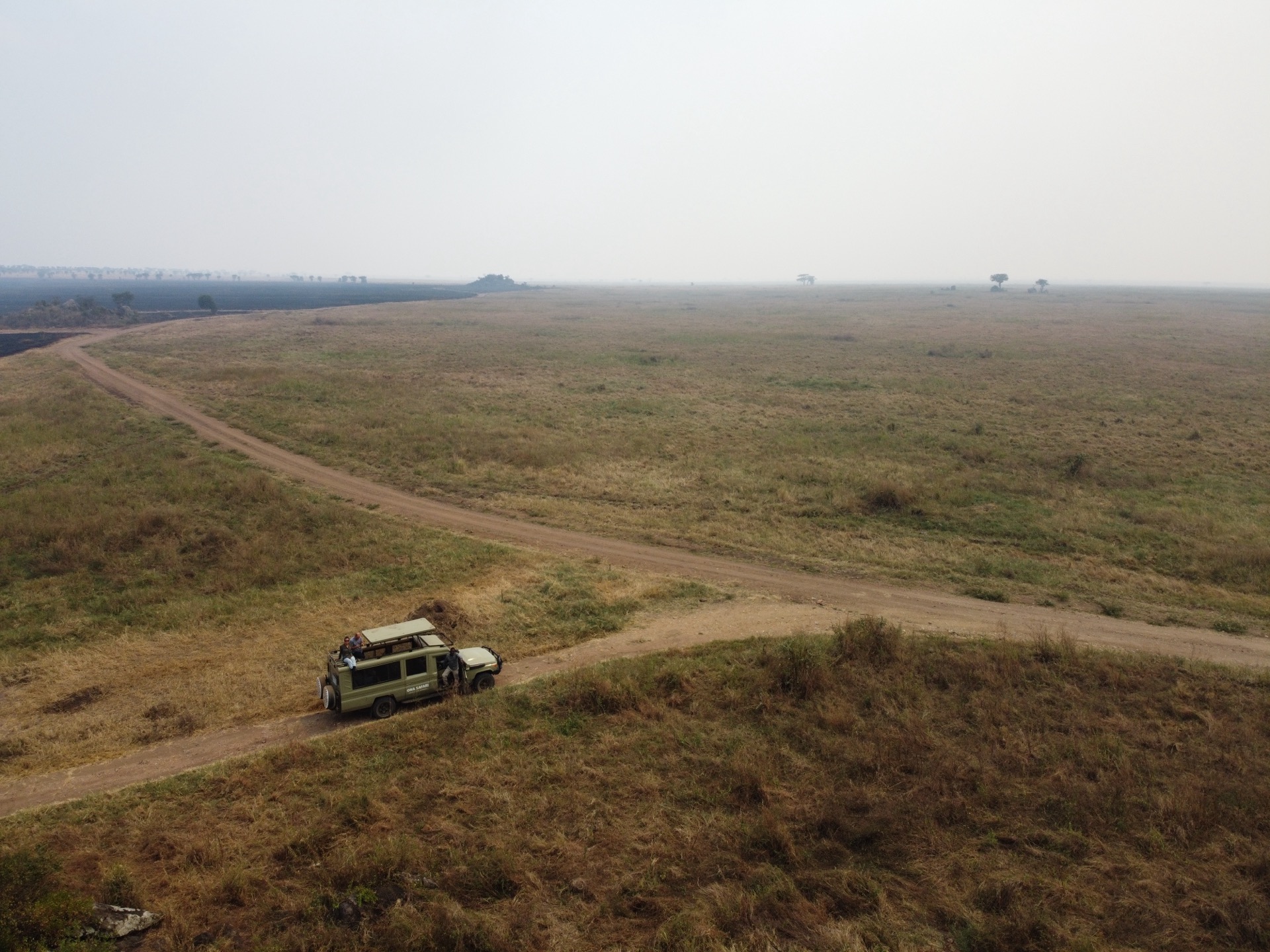
Head inland to the safari parks and the picture changes sharply. One eSIM provider states outright that there’s no mobile network infrastructure inside the Serengeti’s actual park boundaries — not weak signal, no infrastructure at all. That said, main camps and lodges near the park’s edges frequently do get a usable signal, with Vodacom reported reaching a good number of them. The practical result: expect connectivity at your camp in the evening and none whatsoever during the middle of a game drive. Travelers have reported genuine dead zones crossing through Serengeti, Tarangire, and Ngorongoro alike — not just slow data, no bars at all.
Kilimanjaro is its own case. There’s no consistent or reliable cellular service anywhere on the mountain; one operator claims climbers occasionally get a single window to send a message home during the ascent, but I’d treat that as a pleasant surprise rather than something to rely on. If you’re climbing, tell the people expecting to hear from you that radio silence for several days is completely normal, not a problem.
My honest advice: don’t build your trip around staying reachable in the parks. Download offline maps, tell people at home your rough schedule before you fly, and treat any signal at camp as a bonus rather than a given.
International eSIM providers — the queue-skipping alternative
If you’d rather land with data already active than deal with any counter at all, half a dozen established eSIM brands sell Tanzania-specific plans — you’ll pay more per gigabyte than a local SIM, but the setup happens before you even board the flight.
Budget-friendly entries:
- Airalo — from USD 4.50, with named tiers at USD 8 for 2 GB, USD 11 for 3 GB, USD 15.50 for 5 GB, and USD 26 for 10 GB
- GlobaleSIM — plans from USD 4, aimed squarely at travelers, digital nomads, and business users needing GPS, video calls, and remote-work-grade data
- GoMoWorld — from €3.99
- Revolut — in-app eSIM plans from £1.50 for existing Revolut customers, one of the cheapest entry points if you already bank with them
- Yesim — plans starting at USD 7.80
Mid-tier and flexible options:
- SimCorner — 7-day and 45-day validity options with data allowances up to 50 GB, using both the Airtel and Vodacom networks for redundancy; its unlimited-style plan gives 3 GB of high-speed data every 24 hours before throttling to 128 kbps
- OneSimCard — a broader international roaming SIM, not Tanzania-specific, advertising rates from as low as USD 0.01/MB across 130+ countries — worth a look if Tanzania is one stop on a longer multi-country trip
The expensive-but-simple option:
- Holafly sells genuinely unlimited data for Zanzibar specifically, priced from USD 20.90 for 3 days up to USD 104.90 for 30 days. Independent travel-coverage guides are blunt about it: convenient, but “very expensive.” I’d only recommend it if you truly never want to think about a data cap again and money isn’t the deciding factor.
Round-up articles covering this space also mention Nomad, GigSky, and Ubigi as further alternatives worth a look if none of the above fit your phone or your budget.
Bottom line on eSIM vs. physical SIM pricing: for a two-week trip, a physical Vodacom or Airtel SIM plus bundles will almost always beat any eSIM on straight cost per gigabyte. The eSIM options earn their premium in convenience — activation before you land, no passport handed across a counter, and in SimCorner’s case, automatic network switching. Pick based on which of those two things — money or friction — actually bothers you more.
Before you fly, make sure the rest of your kit is sorted too — the full safari packing checklist covers the 15 kg bush-flight luggage limit and what’s actually worth the weight, and the Tanzania health and vaccinations guide covers malaria prophylaxis and the practical medical-care gaps in remote safari areas that matter just as much as your data plan. For the entry paperwork itself, see Tanzania entry requirements and Zanzibar entry requirements; for cash and card logistics once you land, Tanzania currency and money covers what ATMs actually give you and where the best exchange rates are. If Zanzibar is your arrival point, getting to Zanzibar covers the flight and ferry options that get you to the SIM counter in the first place.
Frequently asked questions
Which mobile network should I choose in Tanzania and Zanzibar?
Vodacom for most travelers — it has the widest overall coverage in the country, spanning Dar es Salaam, the Central Railway towns, and most tourist areas. Airtel is a solid backup, and some sources even rate it above Vodacom inside the Serengeti and Ngorongoro specifically. If you're spending most of your trip in Stone Town or Zanzibar's North Coast, Zantel is worth a look too — locals on Tripadvisor's Zanzibar forum consistently name it as the strongest option there.
Do I need my passport to buy a SIM card in Tanzania?
Yes, without exception. Every network — Vodacom, Airtel, Tigo/Yas, Zantel, Halotel — requires a passport for registration, and Tanzanian law has mandated biometric fingerprint scanning for every SIM since a 2019 rule change. Vodacom states it keeps registration data on file for up to 10 years. There's no way around this at an official shop, and you shouldn't want one — unofficial registration workarounds exist but add an extra fee and legal risk with no real upside.
Where can I buy a SIM card when I land?
At Dar es Salaam's airport, a Vodacom store sits immediately outside the international terminal, and buying plus registering a SIM there reportedly takes about five minutes. If you're flying straight into Zanzibar, you can pick one up at the island's airport too. In Stone Town, Darajani Bazaar (just outside the old town) and the Airtel/Vodacom shops scattered through the center both work — expect to pay somewhat more at the airport than you would in town.
How much mobile data do I actually need for a two-week trip?
For photo uploads, maps, and WhatsApp on a beach-and-safari trip, 10 GB comfortably covers two weeks for one person — a local bundle of roughly that size runs about USD 8 to 12 depending on the network. If you're a heavy streamer or working remotely, Vodacom's 20 GB/30-day bundle (50,000 TZS) or Airtel's 35 GB/30-day option (60,000 TZS) gives real headroom. Zanzibar-specific packages of around 30 GB for about USD 12 are common among long-stay visitors.
Will my phone work in the Serengeti or on Kilimanjaro?
Patchily, and you should plan around that rather than assume it. One eSIM provider states flatly that there's no mobile network infrastructure inside the Serengeti's park boundaries, though main camps and lodges near the edges often do get a Vodacom signal. Kilimanjaro has no consistent cellular service on the mountain — some operators claim climbers get an occasional window to send a message, but treat that as a bonus, not a plan. Tell people at home you'll be unreachable for days at a time.
Is an eSIM better than a physical SIM for Tanzania?
It depends what you're optimizing for. A physical SIM is cheaper per gigabyte — a Vodacom SIM plus a week of 5 GB data costs around USD 4.50 total, versus Airalo's cheapest Tanzania eSIM pack at USD 8 for 2 GB. An eSIM wins if your phone supports it and you want data live the moment you land, no counter, no passport photo, no fingerprint scan. SimCorner's eSIM even switches between Airtel and Vodacom automatically for redundancy, which a single physical SIM can't do.
Can I just use my home carrier's roaming instead of a local SIM?
You can, but it's almost always the expensive option, and East Africa roaming rates from European and North American carriers add up fast on a two-week trip. If you do plan to roam, disable data roaming by default, rely on Wi-Fi hotspots at your hotel, and confirm your specific roaming rate with your carrier before you fly — UK EE customers, for example, need to text ROAMING to 150 to activate it at all. For most visitors, a USD 1 to 10 local SIM plus a data bundle is simply cheaper.
Can I use M-Pesa as a tourist with a local Tanzanian SIM?
Yes, and a lot of longer-stay visitors do — but you need a registered local SIM and phone number first, since M-Pesa (Vodacom's mobile money service) is tied to the number, not just the handset. An agent at a Vodacom shop can register the wallet, link your SIM, and set a PIN in the same visit where you buy the SIM itself. It's genuinely useful for taxi fares, market stalls, and smaller guesthouses that don't take cards.