
Facts & prices checked: 2026-06-25
Tanzania’s peak safari season runs July to October. The bush is dry, the grass is short, and animals concentrate at the few remaining water sources. Lodges book out months ahead. Vehicles queue at big-cat sightings. The landscape has turned brown. And for many travellers, the green season — November through April — is simply written off without much thought.
That assessment is wrong, at least for most of those months. This guide makes the honest case for the green season, covers what actually improves and what genuinely gets harder, and tells you which months are worth it and which one to skip.
Tanzania’s season calendar, honestly
Tanzania’s seasons are not two-speed. They have distinct sub-periods that behave very differently.
July–October (long dry season): Peak safari season. Short grass, water-concentrated wildlife, clear air. Also: the most vehicles, highest prices, most advance booking required. July and August in the central Serengeti mean 10–20 vehicles at a single lion sighting. This is peak for a reason, but it has real costs.
November–December (short rains): The short rains — locally called the Vuli — arrive in November as afternoon and evening showers. Morning game drives usually run clear. The landscape turns green within days. Migratory birds from Europe and Asia begin arriving. Prices drop 30–40% from August peak levels. This is the quietest month on the northern circuit, and one of the most pleasant times to be in the Serengeti.
January–February (between the rains): The short rains ease by late December. January and February are often warm, sunny, and relatively dry — and they coincide exactly with the wildebeest calving season at Ndutu. This period is not rainy. It is, by most measures, the strongest wildlife window of the year. Park entry fees drop from the July–October peak rate.
March–April (long rains begin): March is the transition month — can be fine, can be wet. April is the heaviest rain month across the northern circuit; Arusha receives roughly 340 mm in April compared to about 15 mm in August. Roads in some park zones flood. Several camps close for maintenance. Animals disperse in tall grass and become harder to spot.
May (long rains peak): The weakest month. Roads impassable in some parks, many remote camps closed, wildlife scattered. The parks are empty and prices are the lowest of the year, but visibility is poor.
June (transition to dry): Camps reopen, vegetation starts drying. Conditions improve quickly through the month. By late June the short-grass plains are transitioning back toward dry-season conditions.
February — the case for the “secret peak”
February is the month I would choose over any month in July–October, and I am aware of how that sounds.
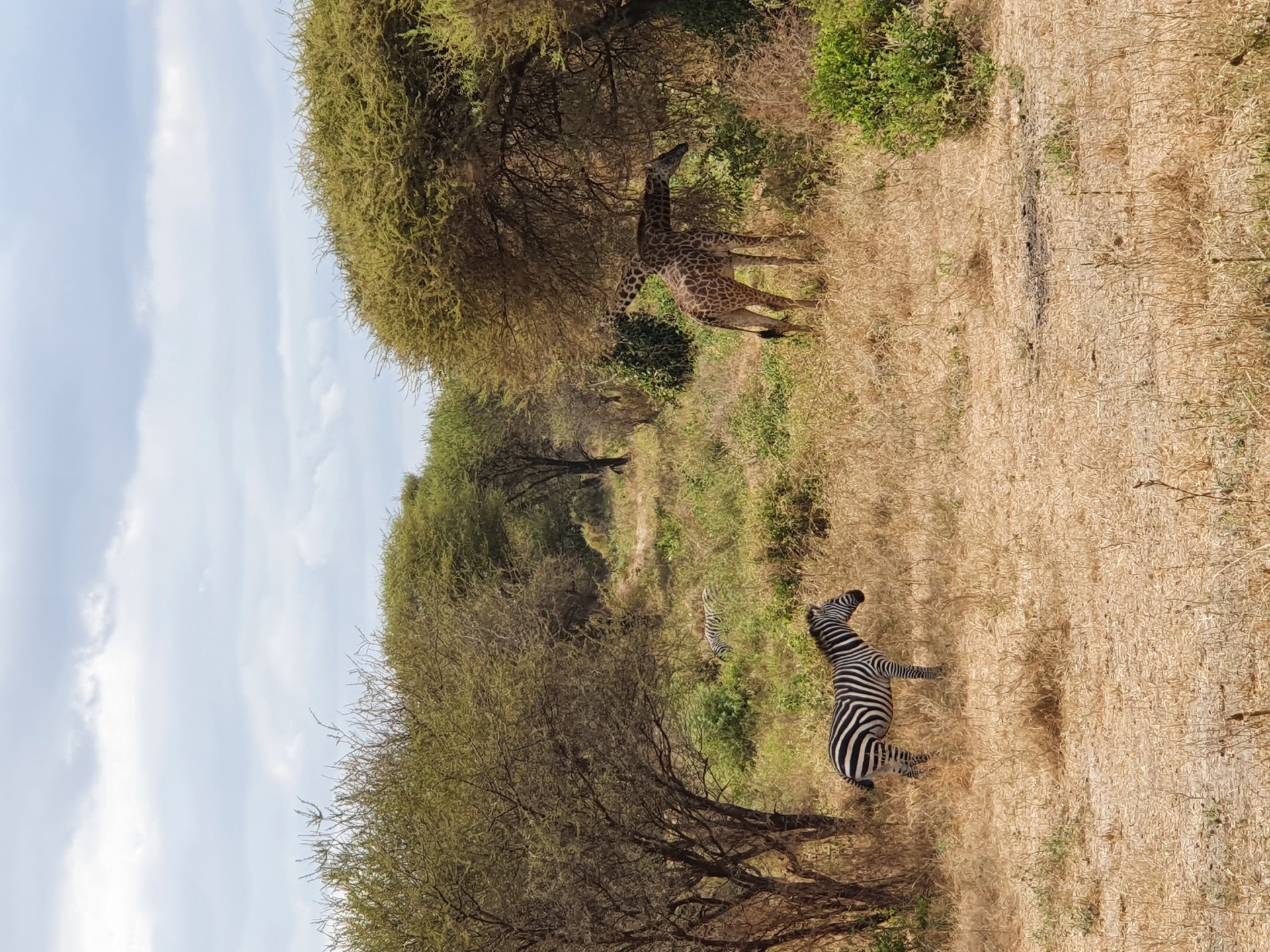
The wildebeest calving season peaks in February on the Ndutu short-grass plains, in the southern Serengeti. Approximately 500,000 calves are born over a roughly 6-8 week season. The herd is stationary in a way it never is during the famous northern river crossings — which means sightings are predictable. Every predator in the ecosystem converges: lions, cheetahs, hyenas, wild dogs, jackals. Predator density at Ndutu in February is higher than at any other time or place in the Serengeti calendar.
The wildebeest calving season — peaking February at Ndutu in the southern Serengeti — is the single event that most convincingly shows why the green season is underrated. The calving season guide at Tanzania wildebeest migration calendar gives the full circuit breakdown, from the calving phase through the Grumeti and Mara River crossings.
I was at Ndutu during calving season. On consecutive mornings before 9am: one cheetah hunt, two lion kills, a hyena pack working the wildebeest edges. The plains were green. The afternoon sky built into cumulus towers that turned the light extraordinary. We had two other vehicles in the calving zone that morning; the surrounding area was empty.
The Ndutu area was busy by Ndutu standards, which means perhaps 8–10 vehicles in the active calving corridor. The same sighting in the central Serengeti in August would have had 20. Outside the Ndutu corridor we had the park entirely to ourselves.
Why travellers miss it: “February is rainy season” is the common assumption. It is not accurate. January and February fall in the drier inter-season between the two rain periods. February in the Serengeti is warm, mostly clear, and excellent.
Prices: Camp rates are substantially below the July–October peak — the same property that charges peak rates in August will typically be at green season rates in February.
November — the best-value month
November is my second choice over any peak-season month, and for different reasons from February.
The short rains arrive in November. These are typically brief afternoon showers — not all-day downpour. A standard game drive runs from 06:00 to 10:30 (morning), back for lunch, then 15:30 to sunset. The afternoon showers usually arrive between those windows or at their tail end.
What November delivers:
- Green landscape immediately after the first rains — the Serengeti’s plains transform from brown to vivid green within days. For photography, this is a completely different backdrop from the dry-season dust.
- Palearctic migrant birds beginning to arrive from Europe and Asia. Tanzania records over 1,100 bird species, with a significant proportion being winter migrants present only November through April: storks, harriers, rollers, bee-eaters, eagles. Tarangire’s birding list expands substantially in November.
- The wildebeest herds moving south toward Ndutu, preparing for the calving season that peaks in February. Predator activity increases as the herds return to the short-grass plains.
- Elephant concentration at Tarangire still in place before the wet-season dispersal. November is arguably Tarangire’s best month: dry-season elephant concentrations overlapping with the first migratory birds.
- Prices 30–40% lower than August at most mid-range and luxury operators. A 7-day northern circuit budget camping safari costs approximately USD 1,800–2,400 in low season versus USD 2,400–4,200 in peak season.
- Genuinely empty parks. A morning game drive in the central Serengeti in November with no other vehicles is a normal experience.
April–May — the one period to avoid
April is the only month I would advise most travellers to avoid. May as well, with exceptions for the budget-minded and experienced.
The long rains — the masika — peak in April and May across Tanzania. The rain is persistent and heavy, not the brief afternoon showers of November. April brings roughly 340 mm of rain in Arusha, compared to 15 mm in August. Roads in some park zones flood and become impassable.
Practical consequences:
- Nyerere National Park closes end of March through May 31 due to wet-season flooding on the Rufiji basin roads.
- Katavi’s main camps typically close April through May.
- Some low-lying camps in the southern Serengeti near seasonal black-cotton-soil areas become inaccessible.
- The central and northern Serengeti’s main tracks remain accessible year-round; Ngorongoro’s crater descent road is sealed asphalt and always open.
Wildlife: Animals are present but dispersed across the landscape because water is everywhere. Long grass (at its tallest in April–May) makes smaller predators difficult to spot. You may drive considerably longer for the same density of sightings you would have in February.
The honest case for April–May anyway: Prices are the lowest of the year. Parks are genuinely empty — a predator sighting means your vehicle alone. Experienced operators with good local knowledge and high-clearance vehicles can have an excellent April trip in accessible zones. If budget is the primary constraint and you are flexible, April in the central Serengeti and Ngorongoro is workable with the right operator.
What the green season has that the dry season doesn’t
These events and conditions are specific to November–April and unavailable July–October.
Wildebeest calving (January–February). Approximately 500,000 calves born over a 6-8 week season on the Ndutu short-grass plains. Predator density at its annual maximum. This event does not exist in the dry season. If you are choosing between attending this and attending the northern river crossings, the calving is more predictable (the herds are stationary) and the predator activity is more concentrated.
Migratory birds. Over 1,100 bird species are recorded in Tanzania; a large proportion are Palearctic winter migrants from Europe and Asia present only October through April. Species present only in the green season include many storks, harriers, rollers, bee-eaters, and waders. Resident birds are simultaneously in breeding plumage — weavers, bishops, widowbirds — which is significantly more vivid than their dry-season appearance.
Baby animals. Giraffe calves, elephant calves, zebra foals, and impala lambs are born around the wet season. Predator cubs — lions, cheetahs, wild dogs — are often sighted from December through March. Female cheetahs in particular are more commonly observed with young cubs in this period.
Green landscape for photography. The Serengeti in July is brown. In January it is emerald. Dramatic cumulus cloud formations build across the horizon in the green season. The light quality with high clouds and clear mornings is fundamentally different from the dry-season haze. If photography is a priority, the green-season backdrop is often the better choice.
No crowds. In July and August, radio communication between guides means 20 vehicles arrive at a cheetah sighting within 15 minutes. In January, you may be the only vehicle. In November, you can game-drive the central Serengeti for a full morning without seeing another tourist vehicle. The quietness is not incidental — it changes the entire texture of being in the bush.
Price. Camp rates drop 30–50% at mid-range and luxury properties in green-season months. The Serengeti adult park fee drops from USD 82.60 to USD 70.80 per day in low season (VAT-inclusive). These savings compound across a multi-week itinerary.
Park-by-park green season guide
Ngorongoro Crater — excellent year-round. The volcanic bowl traps permanent water and grassland, holding roughly 25,000 large animals on the floor regardless of rain. Lions, buffalo, hippos, black rhino, flamingos — none of this changes seasonally. The sealed crater descent road is unaffected by rain. In the green season, the crater floor turns vivid green against dramatic cloud backdrops; the scenery is often more photogenic than the dry-season dust. For most of the year, Ngorongoro is the strongest argument for a green-season northern circuit.
Serengeti — January–February is a peak event. January and February are not off-season in the Serengeti — they are the calving season at Ndutu, and they represent some of the best game viewing of the year. November and December offer quiet, green conditions with arriving migratory birds. March is the end of calving and the beginning of the long rains — still worth doing. April and May are the weakest months in the south, though the central zone near Seronera and the north remain accessible.
Tarangire — excellent in November. Tarangire’s dry-season claim is its elephant concentration: herds converge on the Tarangire River as water disappears elsewhere, pulling in up to 3,000 elephants between July and October. When the short rains arrive in November, this concentration is still in place. Simultaneously, migratory birds start arriving. November in Tarangire is the overlap of two excellent seasons. From January onward elephants disperse; Tarangire becomes a good but not exceptional park until the following dry season.
Lake Manyara — better in green season for waterbirds. The soda lake’s water level rises significantly in the wet season, attracting higher numbers of flamingos and waterbirds. If flamingos are a priority, the green season is the better choice. Entry is USD 35.40 per adult per day — the lowest fee on the northern circuit. Tree-climbing lions are present year-round.
Nyerere and Katavi — avoid April–May. Nyerere closes end of March through May 31 due to flooding. Katavi’s main camps close April–May. Both are rewarding parks in other months and should be considered on their own merits for the rest of the year, but green-season planning around them requires careful date management.
Packing for the green season
Waterproof layer. A packable rain jacket with hood handles November–December’s brief showers. For March–April, pack something more substantial — the long rains are persistent. In January–February, rain is minimal and a light layer suffices.
Lighter clothing. The green season is warmer and more humid than the dry season, particularly at lower elevations. Mornings are cool on the crater rim (5–10°C at 2,300m) but mid-day temperatures are higher than July.
Camera protection. Waterproof bag or dry insert for your camera gear. Brief showers from an open-top vehicle can soak equipment quickly.
Waterproof footwear. For walking activities, Ndutu in February can be muddy around waterholes. Waterproof boots earn their space.
Binoculars. Matter in every season; matter more in the green season when long grass reduces visibility for smaller animals. A good pair — 8×42 minimum — is more important in green season than dry.
Check camp openings before booking. A small number of camps close April–May. Confirm directly with the lodge or operator before finalising dates.
The honest summary
The green season requires choosing correctly. Choose February for the calving — it is the Serengeti calendar’s most extraordinary event. Choose November for quiet, birds, and value. Avoid April and May unless you are experienced, flexible, and focused on budget. Everything between those poles is a genuine trade-off rather than an outright mistake.
The travellers who know the green season well tend not to advertise it. The parks in February feel like the Serengeti was always meant to be experienced: green, quiet, and extraordinary.
For the full northern circuit park sequence and logistics, see the Tanzania safari overview. For the complete month-by-month breakdown of where the Great Migration is throughout the year — calving at Ndutu, Grumeti River crossings, Mara River crossings — see the Tanzania wildebeest migration calendar. For park fees by season, see the current TANAPA fee schedule. The dedicated green season deep-dive goes deeper on the park-by-park case and green season photography conditions.
Frequently asked questions
Is Tanzania good for safari in the wet season?
Yes — with the right month. February at Ndutu is exceptional: approximately 500,000 wildebeest calves born over a 6-8 week season, with every predator in the ecosystem converging on the calving zone. This is arguably the best single wildlife event in Tanzania and it only happens during the green season. November is genuinely quiet, less expensive, and excellent for birding. The only months that are genuinely difficult are April and May, when persistent long rains make some roads impassable and several remote camps close.
When is wildebeest calving in Tanzania?
Wildebeest calving peaks in February at Ndutu, on the short-grass plains of the southern Serengeti. The season typically runs from late January to early March — a roughly 6–8 week season — peaking in February. Approximately 500,000 calves are born in this period, drawing cheetahs, lions, hyenas, and wild dogs in higher densities than any other time of year.
Is Tanzania cheaper in the green season?
Yes. Camp rates on a 7-day northern circuit budget camping safari run approximately USD 1,800–2,400 in low season versus USD 2,400–4,200 in peak season. Many mid-range and luxury lodges drop rates 30–50% in green-season months, with the steepest discounts in April–May. November is typically the best value month that still delivers excellent wildlife viewing.
Which months should you avoid for Tanzania safari?
April and May are the weakest months. Persistent long rains make roads impassable in some park zones, Nyerere closes end of March through May 31, Katavi camps typically close April–May, and wildlife is dispersed in tall grass that reduces visibility. March is the beginning of the long rains but can still be worthwhile, particularly in Ngorongoro and the central Serengeti. All other months have genuine merit depending on your priorities.
What is the short rainy season in Tanzania?
Tanzania's short rains run November to December, arriving as afternoon and evening showers rather than all-day downpour. Morning game drives typically run clear. The landscape greens within days of the first rains. November and December are the quietest months on the northern circuit, with lower prices, arriving migratory birds, and green scenery. By late December the short rains have usually eased.
Can you see calving wildebeest in Tanzania?
Yes — Ndutu, on the southern edge of the Serengeti and adjacent to the Ngorongoro Conservation Area, is the calving ground. Late January through early March, peaking in February. Approximately 500,000 calves are born over a compressed 6-8 week season, the herds are stationary in a way they never are during the northern river crossings, and predator density is at its annual maximum. This is one of the most dramatic wildlife events in Africa and it is almost entirely missed by travellers who assume the green season is bad.